Jeff Galloway, a member of the 1972 U.S. Olympic team who for decades inspired elite athletes and countless everyday runners by promoting a run-walk-run strategy, whether in a marathon or just a neighborhood jog, died Wednesday at age 80.
Galloway had a hemorrhagic stroke and died at a hospital in Pensacola, Florida, daughter-in-law Carissa Galloway said.
His influence was evident in the final days of his life: Throngs of people posted videos online, hoping for Galloway's recovery from emergency neurosurgery and thanking him for advice that boosted their confidence and took them to race starting lines.
Galloway's family announced the surgery on Feb. 20 and invited the public to express support.
Jim Vance, an elite endurance sports consultant in San Diego, said Galloway was a “pioneer” in getting people to run.
“He removed the barrier to entry, which was mostly mental,” Vance told The Associated Press. "Running isn't supposed to be a suffer-fest. It should be something peaceful, something enjoyable, so people can enjoy running and not dread it.”
Galloway survived heart failure in 2021 and was still hoping to complete another marathon after logging more than 230 during his lifetime.
“My mission now, at the age of 80-plus, is to show that people can do things that are normally not done, and can do them safely,” he told The New York Times in December.
Galloway's run-walk-run method began in 1974 when he agreed to teach a running class through Florida State University, two years after competing in the 10,000 meters at the Olympics. He figured it might attract customers to Phidippides, his new store for runners.
“None had done any running for at least five years. So we started walking with a few one-minute jogs,” Galloway said on his website.
“I spent some time with each group, during the runs, to adjust the frequency of walk breaks so that no one was huffing and puffing — even at the end,” he said. “Walk breaks kept the groups together. Everyone passed the final exam: finishing either a 5K or a 10K with smiles on their faces.”
Galloway believed walking during a run reduced the risk of injury, conserved energy and kept confidence afloat.
“I’ve been using them ever since," he said, “continuing to fine-tune the ratios of running to walking based upon pace per mile and individual needs.”
And Galloway even had his own recipe. He walked through every water station during the 1980 Houston marathon and finished with a faster time, 2:16:35, than his previous run-only 26.2 mile (42.1 kilometer) races, the Times reported.
He shared his running philosophies through books, websites and retreats. Galloway was the official training consultant for runDisney, a series of races at Walt Disney Co. resorts, and would be among the runners. Many admirers went online to offer tributes after his recent surgery.
“I never thought I would be a runner. I never thought I'd run a half marathon,” Karen Bock-Losee of Jacksonville, Florida, said in a video. “I'm 70 years old and I've run several since my 60th birthday when I discovered Galloway running. I just want to say thank you.”
Susan Williams recalled seeing Galloway as she struggled toward the end of a half marathon in Murray, Kentucky, in 2011.
“You passed me, and my butt was cramping,” she said. “You turned around and came back. You talked me through it. It was awesome.”
Bobby McGee, a Colorado-based running coach, said Galloway's run-walk-run approach made running more accessible to the masses.
"When a group of people in any kind of run — from marathons to fun runs — get together afterwards they talk about their time,” McGee said. “Nobody asks them if they ran the whole thing.”
Galloway is survived by two sons and six grandchildren.
Associated Press reporter Audrey McAvoy in Honolulu contributed to this story.
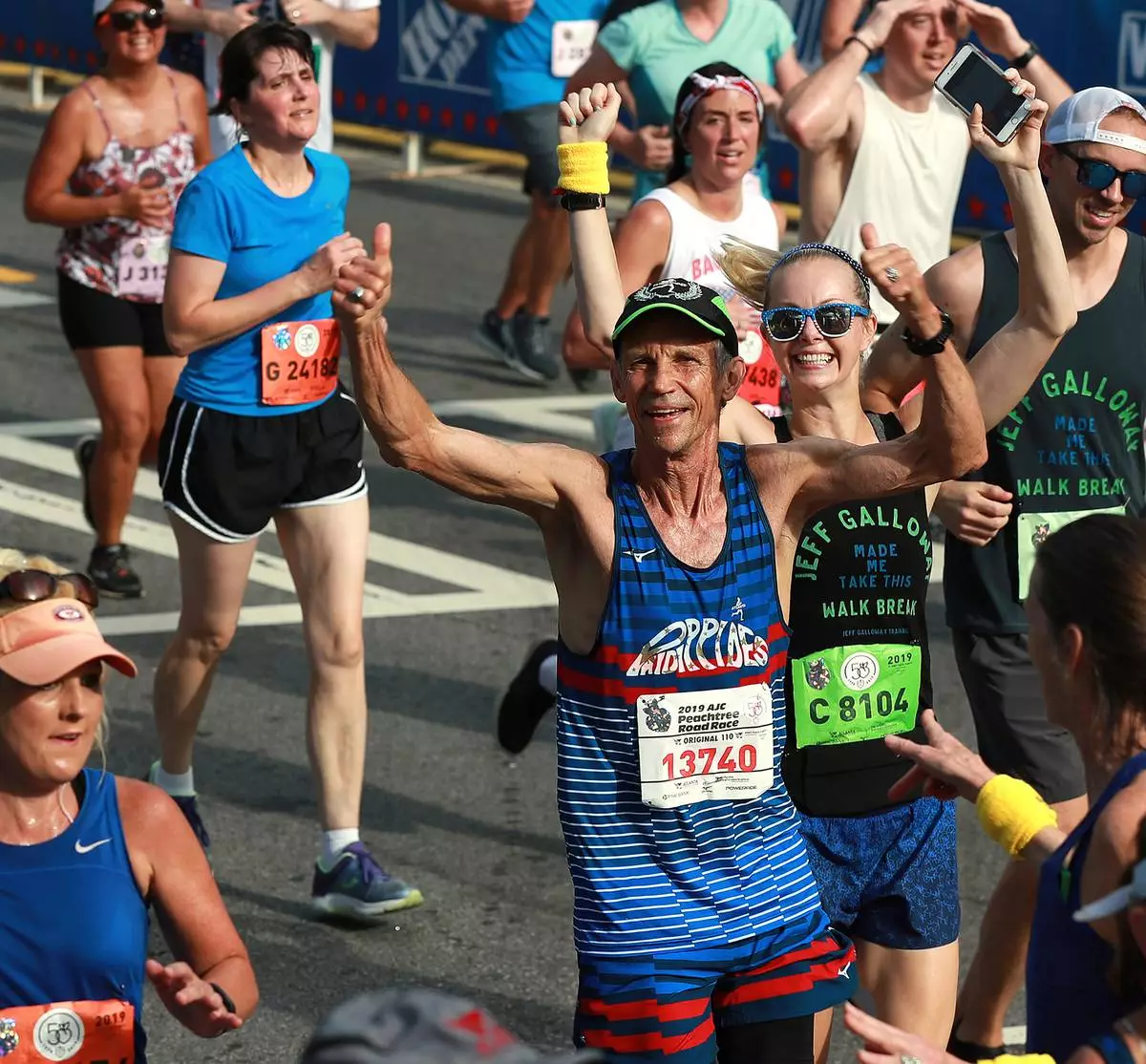
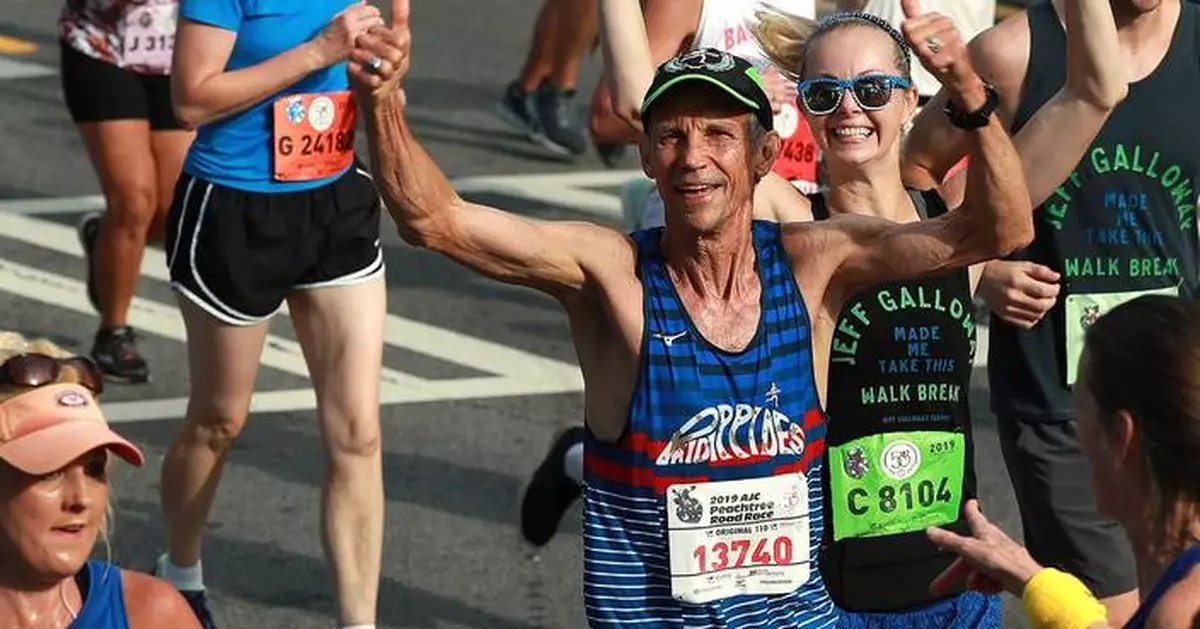
FILE - Jeff Galloway, the first winner of the race at its original running, gives a double thumbs up as he heads to the finish line in the 50th AJC Peachtree Road Race, Thursday, July 4, 2019, in Atlanta. (Curtis Compton//Atlanta Journal-Constitution via AP, File)
BATA, Equatorial Guinea (AP) — Pope Leo XIV told inmates at one of Equatorial Guinea’s notorious prisons on Wednesday that they are not alone, as he delivered a message of hope during a visit that drew attention to prison conditions, human rights abuses and injustices that campaigners have denounced for years here.
Leo’s visit to the prison in the Central African port city of Bata followed in the tradition of Pope Francis, who frequently met with inmates on his foreign visits to give them a message of hope.
But Leo’s stop, at the end of his four-nation African tour, took on added significance after it emerged that Equatorial Guinea was one of several African nations that have been paid millions of dollars in controversial deals with the Trump administration to receive migrants deported from the U.S. to countries other than their own.
While none of those migrants are being held at Bata, the visit put the spotlight on Equatorial Guinea’s overall human rights record and its judiciary, which rights campaigners have criticized for its lack of independence, arbitrary detentions and other abuses.
“You are not alone. Your families love you and are waiting for you. Many people outside these walls are praying for you,” Leo told the inmates in Spanish. “If any of you fear being abandoned by everyone, know that God will never abandon you, and that the Church will stand by your side.”
The inmates, all dressed in new neon orange and beige uniforms, had gathered in a central courtyard of the prison, which appeared to have been recently painted salmon pink. As soon as he started speaking, a huge rainstorm opened, drenching the inmates.
In his remarks, Leo also reminded authorities that justice is meant to protect society, but that incarceration is not meant to be punishment alone.
“To be effective, it must always promote the dignity and potential of every person,” he said. “True justice seeks not so much to punish as to help rebuild the lives of victims, offenders and communities wounded by evil.”
After Leo left, the drenched inmates broke into a raucous dance party in the courtyard as the rain continued to pour, shouting “Libertad! Libertad! Libertad!” (Freedom, freedom, freedom).
Leo began the day with Mass in Mongomo, an eastern city on the border with Gabon that has experienced major development since Equatorial Guinea’s oil boom in the 1990s.
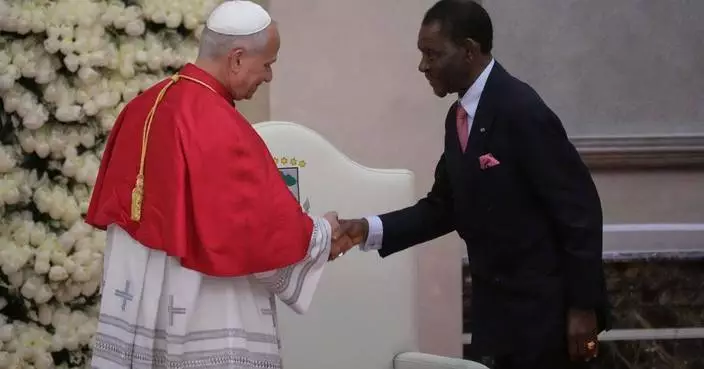
President Teodoro Obiang Nguema Mbasogo, who has been accused of widespread corruption and authoritarianism in his four-decade rule, comes from Mongomo and the city has benefited from government investment and infrastructure, even though no official institutions are located here.
While more than half of Equatorial Guinea’s population lives in poverty, Mongomo boasts opulent buildings, curated gardens behind gilt-tipped gates, an 18-hole golf course and is the starting point of the lone highway in the country, linking the city to Bata on the west coast.
Obiang and his wife were on hand for Leo’s Mass, as was their son, Teodoro “Teddy” Nguema Obiang, the country’s vice president who was convicted of embezzling millions of euros by a French court, which handed him a three-year suspended sentence, a 30 million euro ($35.2 million) fine and ordered the seizure of his luxury homes and cars in France worth tens of millions of euros. The country has protested the seizures at the International Court of Justice.
Last year, the United States gave the younger Obiang a temporary waiver on U.S. corruption sanctions so he could travel to a U.N. gathering and visit other American cities. Obiang also met with U.S. Deputy Secretary of State Christopher Landau.
The Vatican said an estimated 100,000 people attended the Mass, most standing in the grand entryway to Mongomo’s Basilica of the Immaculate Conception. The monumental church was consecrated in 2011 and is modeled on St. Peter’s Basilica in the Vatican.
In his homily, Leo urged all citizens to work together to build a society “capable of engendering a new sense of justice,” where there is “greater room for freedom” and where “the dignity of the human person always may be safeguarded.”
He urged everyone, according to their roles, to work to “serve the common good rather than private interests, bridging the gap between the privileged and the disadvantaged.”
“My thoughts go to the poorest, to families experiencing difficulty and to prisoners who are often forced to live in troubling hygienic and sanitary conditions,” he said.
Equatorial Guinea’s prisons and justice system have been repeatedly faulted by the United Nations and condemned by human rights groups and the U.S. State Department.
In its 2023 report on the country, the U.S. listed a host of abuses, including arbitrary or unlawful killings and arrests, political detentions, torture, life-threatening prison conditions and “serious problems” with the judiciary’s independence.
Speaking to journalists at the Bata prison, Equatorial Guinea Justice Minister Reginaldo Biyogo Ndong denied the rights abuses and said the country’s prison and justice systems respect international human rights laws. He said the country's justice system features an “enviable” infrastructure and that it's “ready to guarantee human rights, fundamental rights.”
On the eve of his prison visit, 70 human rights organizations published an open letter to Leo, urging him to speak out especially about the U.S. deportation of migrants here and encourage African nations to not be complicit.
“These practices circumvent humanitarian protections, expose refugees to detention and coercion, and subject individuals to refoulement, in direct contravention of international law,” they wrote.
In the run-up to Leo’s arrival, the government released nearly 100 people who had been arrested in a 2022 crackdown on street violence, according to a local lawyer, who requested anonymity given the country’s human rights record.
The lawyer termed the releases one “positive outcome” of the visit but also noted that the government still hasn’t taken action on releasing jailed activists and politicians.
EG Justice, a rights group which has repeatedly denounced the detention of political prisoners in Equatorial Guinea, urged Leo to use his moral authority to speak out about abuses and the detention of activists and politicians especially.
“There are individuals — prisoners of conscience, and human rights activists — in detention whose cases raise serious humanitarian and due process concerns,” said Tutu Alicante, a U.S.-based activist who runs the EG Justice group.
Monika Pronczuk contributed to this report from Malabo.
Associated Press religion coverage receives support through the AP’s collaboration with The Conversation US, with funding from Lilly Endowment Inc. The AP is solely responsible for this content.
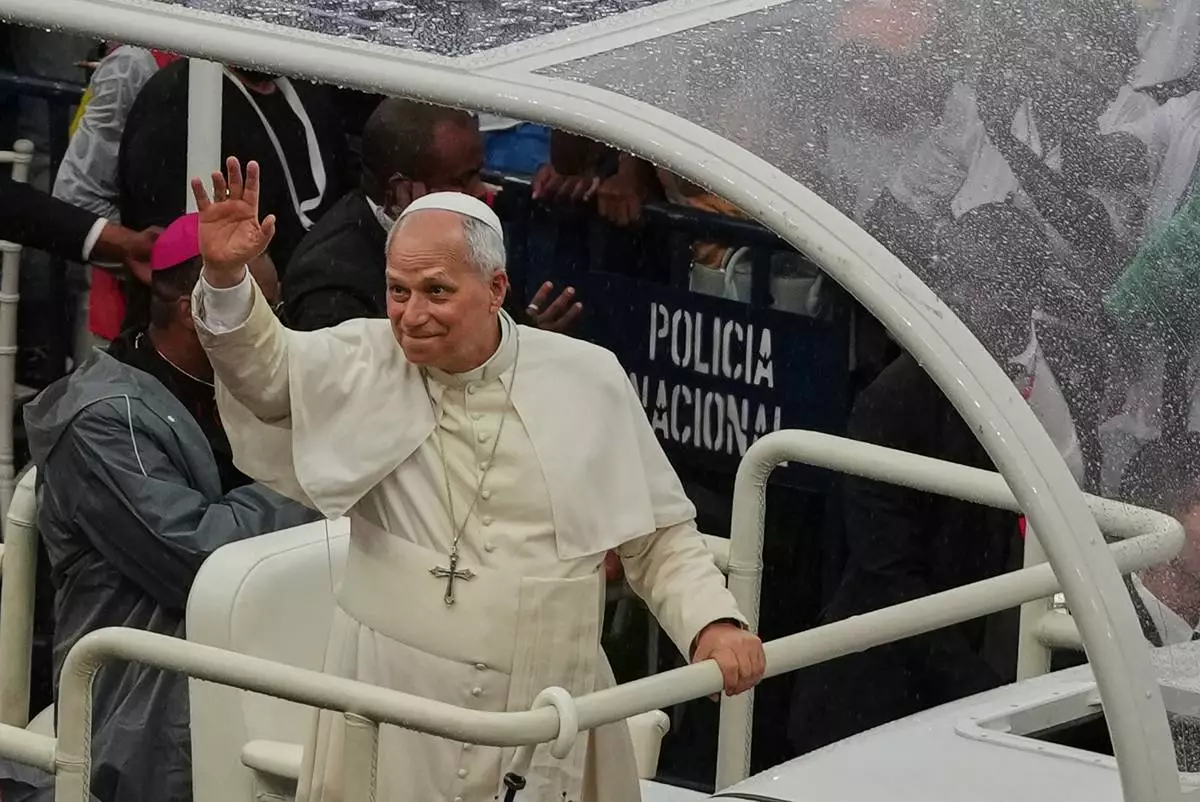
Pope Leo XIV arrives at Estadio de Bata Stadium in Bata, Equatorial Guinea, on the 10th day of an 11-day pastoral tour of Africa, Wednesday, April 22, 2026. (AP Photo/Misper Apawu)
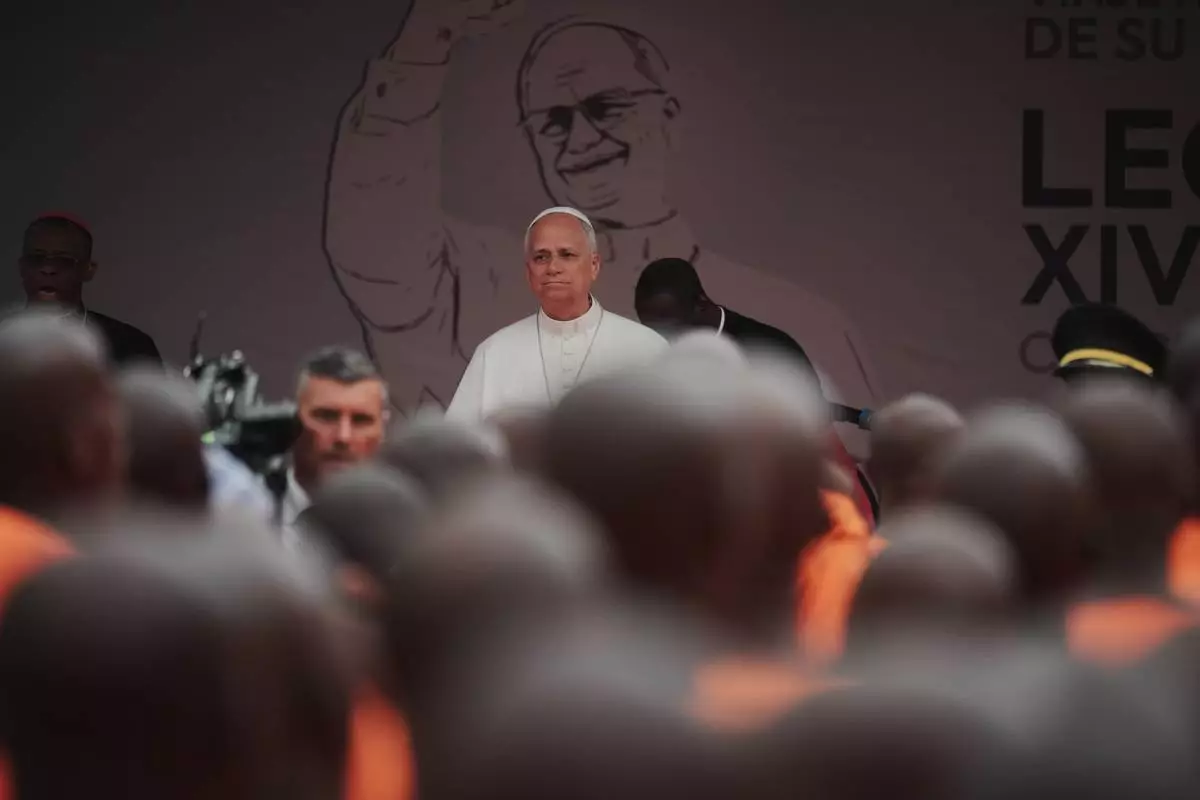
Pope Leo XIV visits the Bata Prison, Equatorial Guinea, Wednesday, April 22, 2026. (AP Photo/Andrew Medichini)
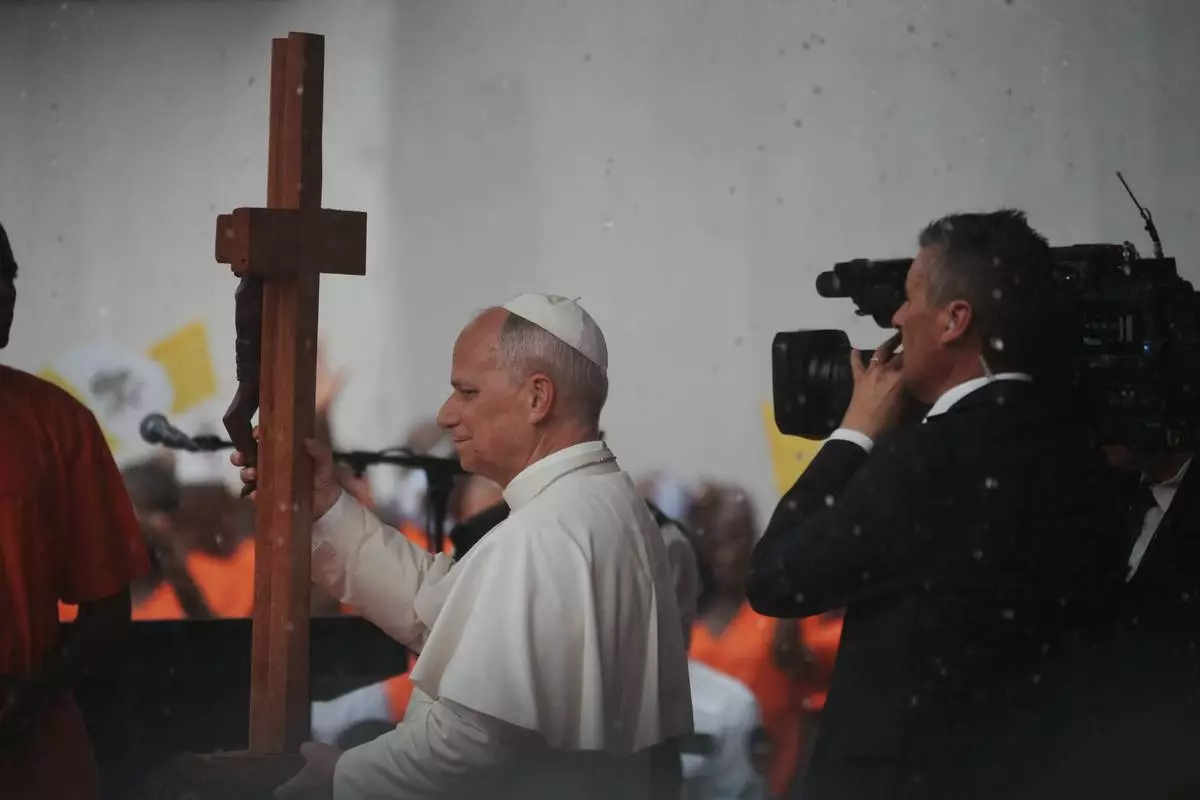
Pope Leo XIV visits the Bata Prison, Equatorial Guinea, Wednesday, April 22, 2026. (AP Photo/Andrew Medichini)
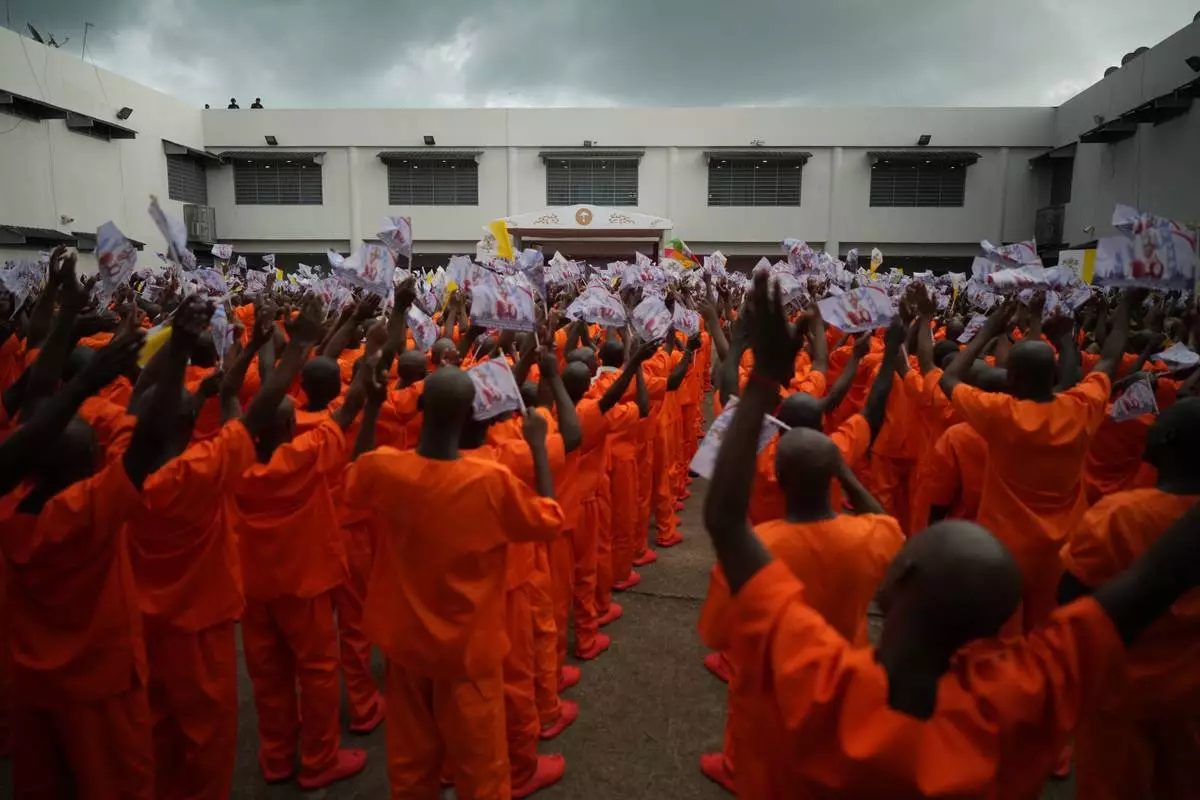
Inmates of the Bata Prison meet with Pope Leo XIV during his visit to Equatorial Guinea, Wednesday, April 22, 2026. (AP Photo/Andrew Medichini)
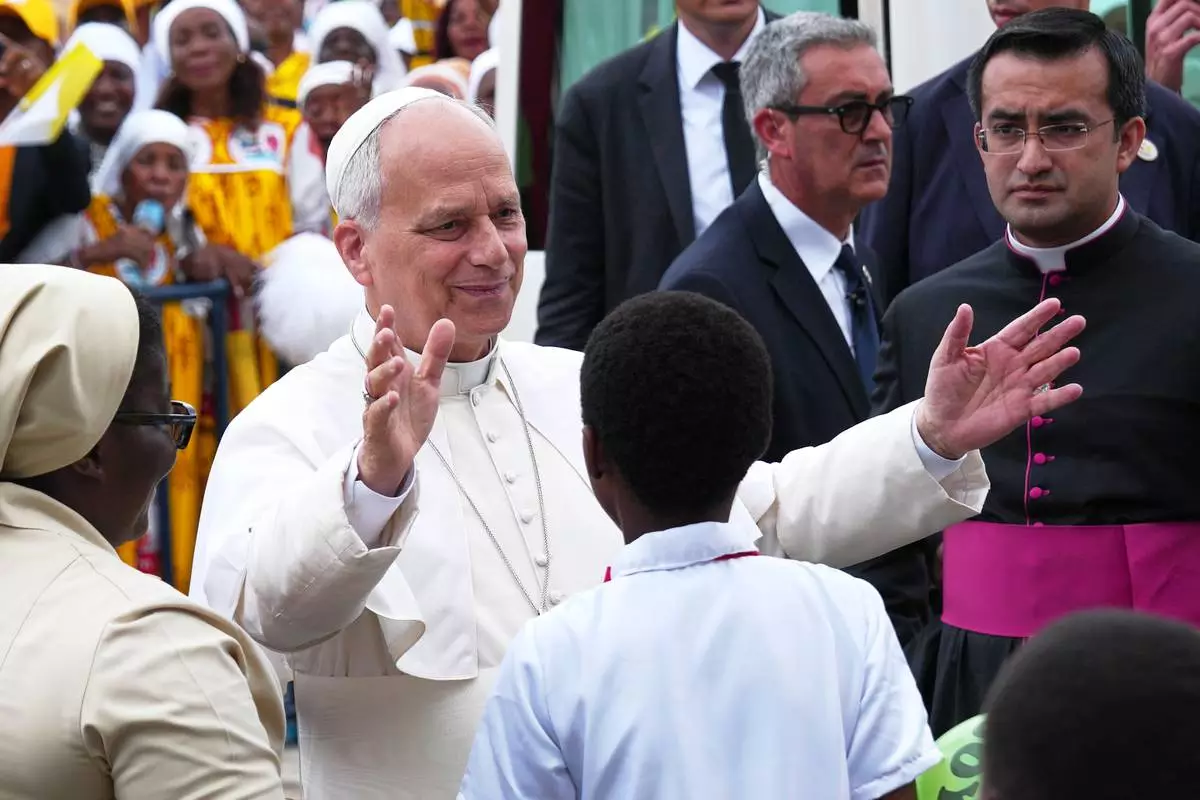
Pope Leo XIV arrives at the Basilica of the Immaculate Conception on the 10th day of his 11-day pastoral visit to Africa, in Mongomo, Equatorial Guinea, Wednesday, April 22, 2026. (AP Photo/Misper Apawu)
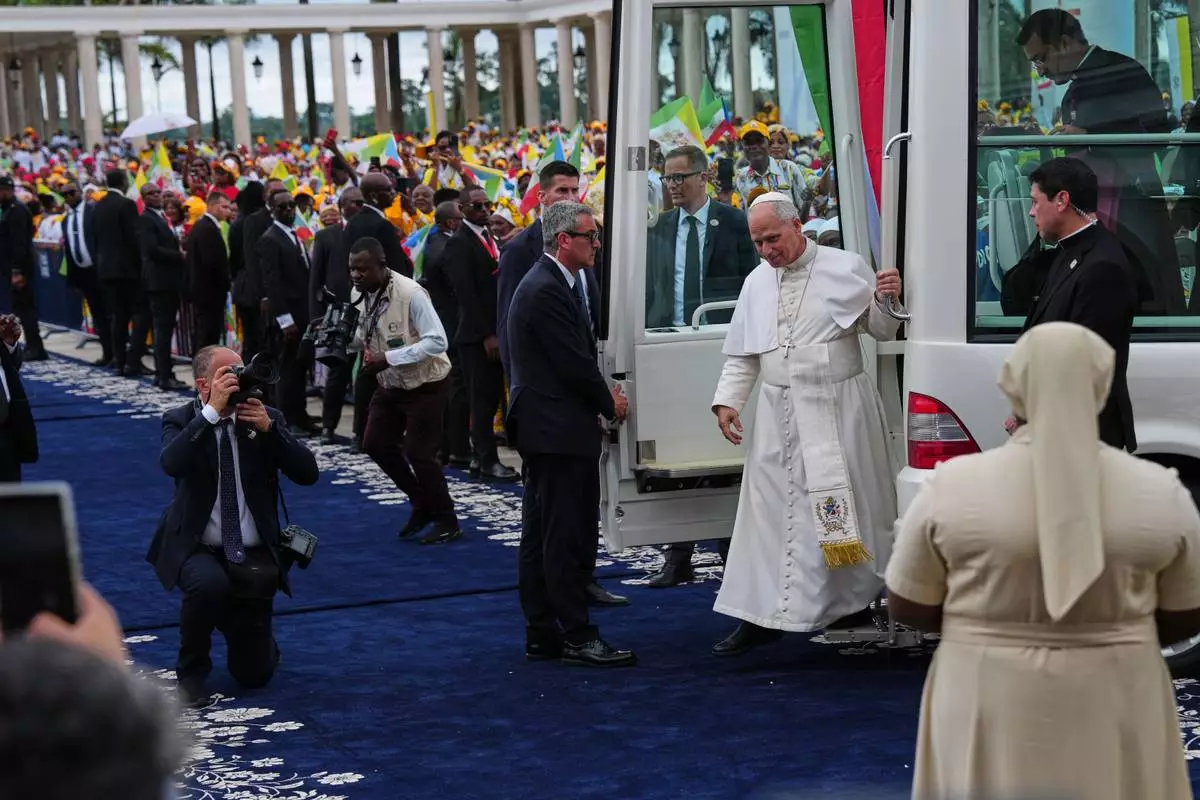
Pope Leo XIV arrives at the Basilica of the Immaculate Conception on the 10th day of his 11-day pastoral visit to Africa, in Mongomo, Equatorial Guinea, Wednesday, April 22, 2026. (AP Photo/Misper Apawu)
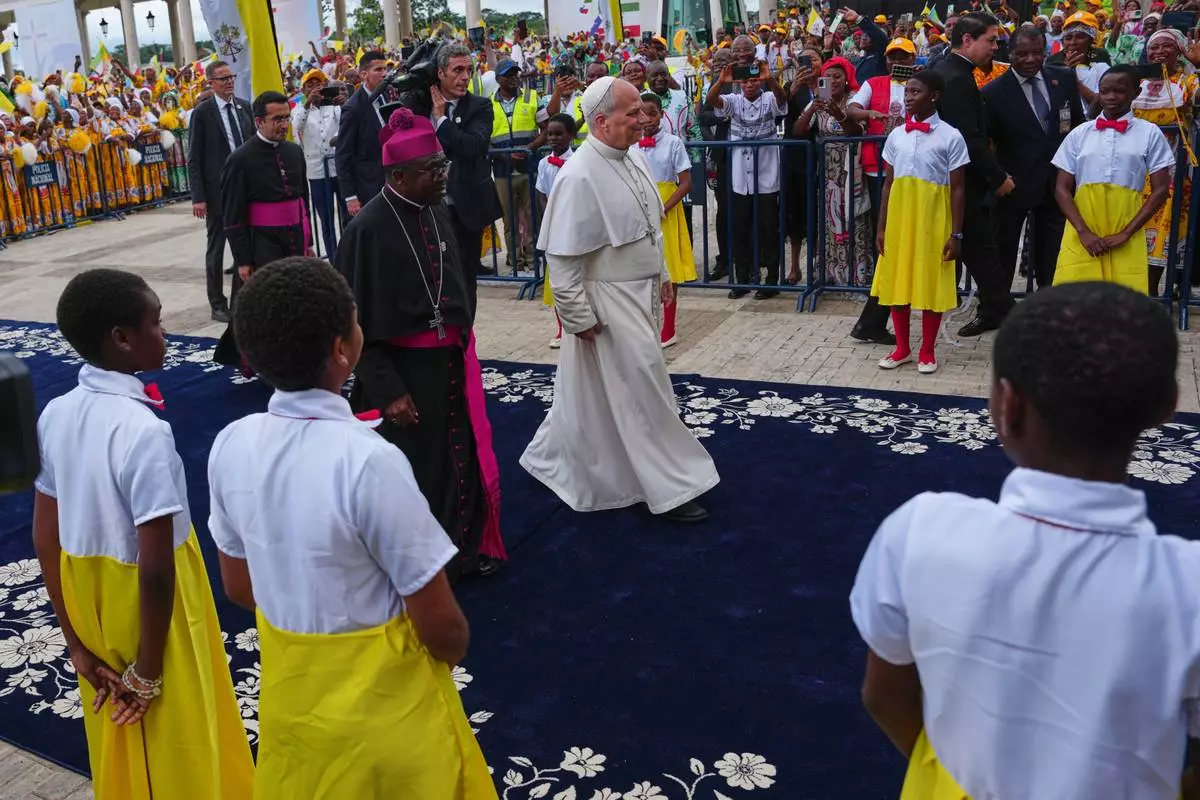
Pope Leo XIV arrives at the Basilica of the Immaculate Conception on the 10th day of his 11-day pastoral visit to Africa, in Mongomo, Equatorial Guinea, Wednesday, April 22, 2026. (AP Photo/Misper Apawu)
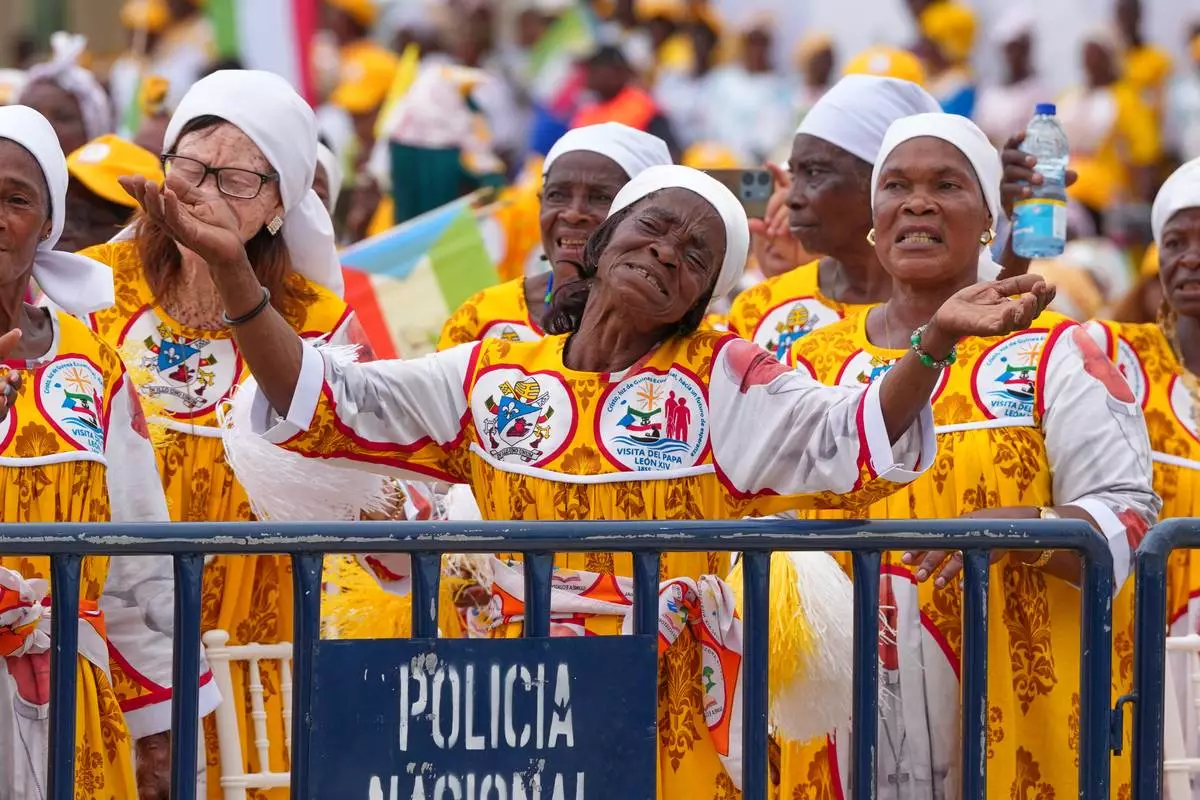
Faithful wait for the arrival of Pope Leo XIV at the Basilica of the Immaculate Conception, on the 10th day of his 11-day pastoral visit to Africa, in Mongomo, Equatorial Guinea, Wednesday, April 22, 2026. (AP Photo/Misper Apawu)
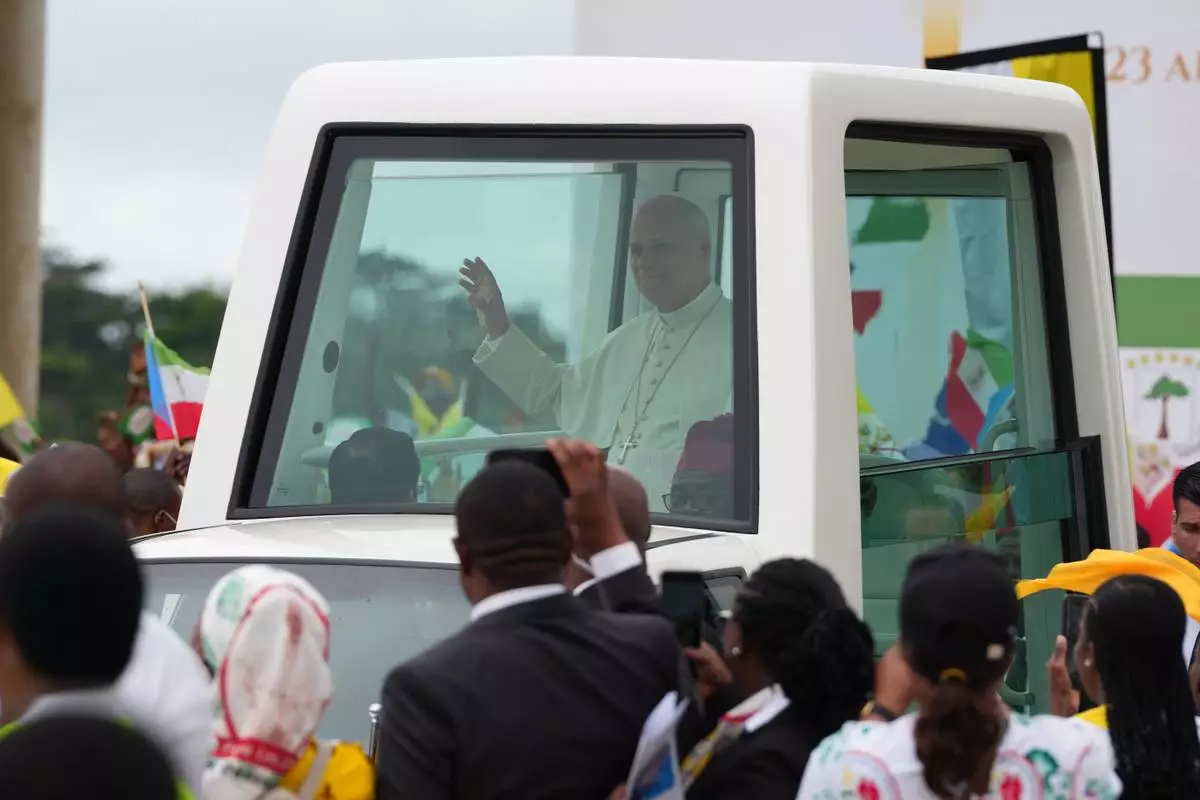
Pope Leo XIV arrives at the Basilica of the Immaculate Conception on the 10th day of his 11-day pastoral visit to Africa in Mongomo, Equatorial Guinea, Wednesday, April 22, 2026. (AP Photo/Misper Apawu)
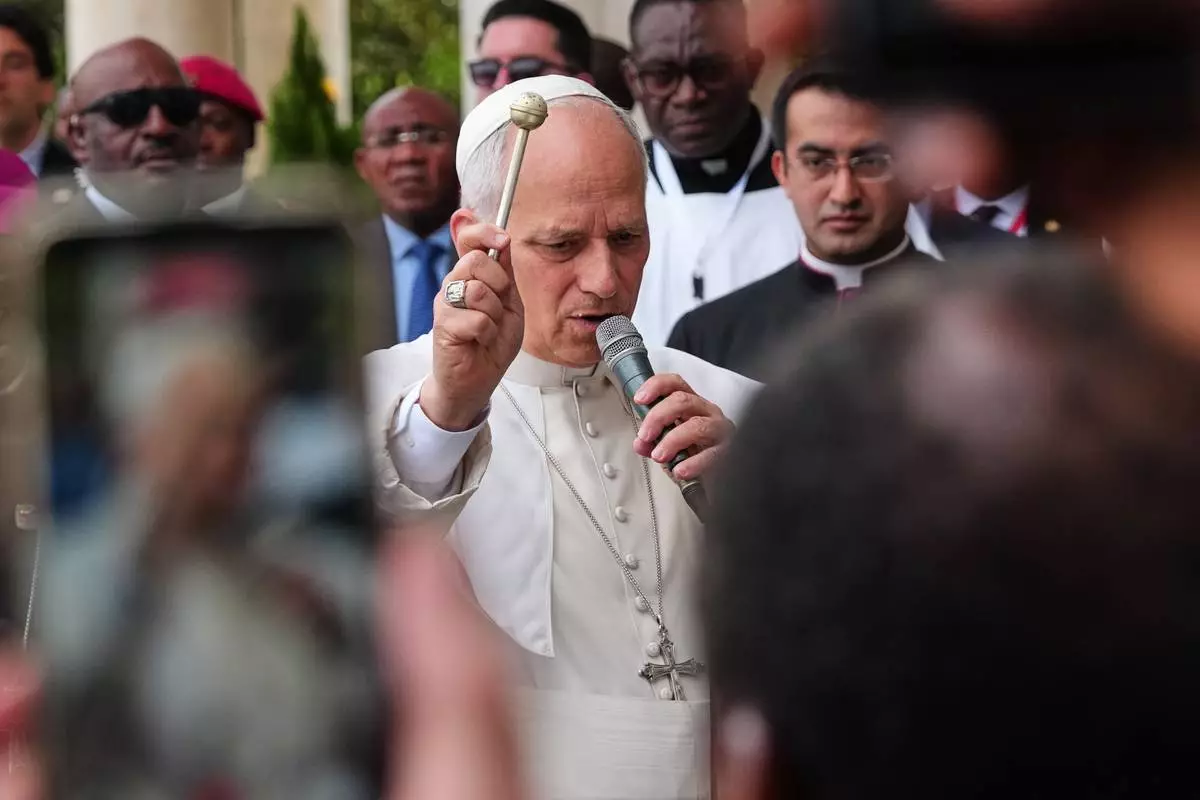
Pope Leo XIV blesses the faithful at the Basilica of the Immaculate Conception in Mongomo, Equatorial Guinea, Wednesday, April 22, 2026. (AP Photo/Misper Apawu)
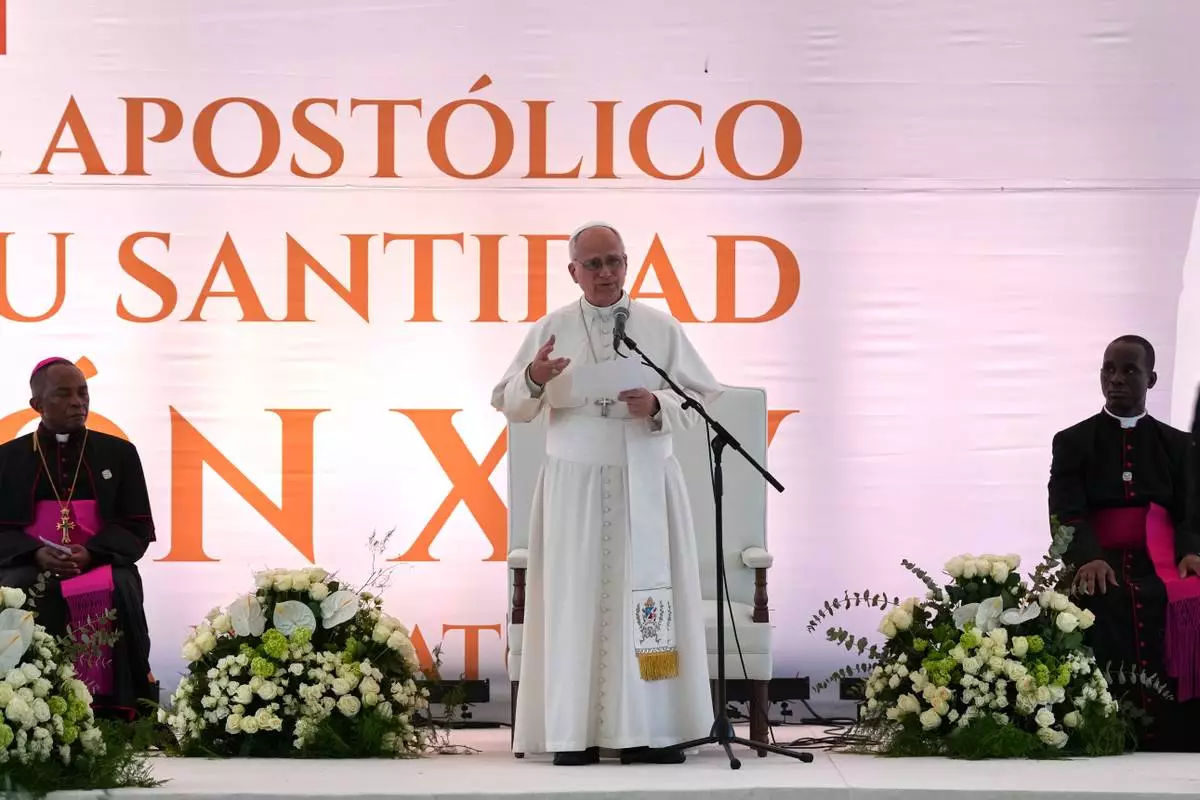
Pope Leo XIV, delivers a speech during his meeting with the staff and patients of the "Jean Pierre Olie" Psychiatric Hospital in Malabo, Equatorial Guinea, Tuesday, April 21, 2026. (AP Photo/Misper Apawu)
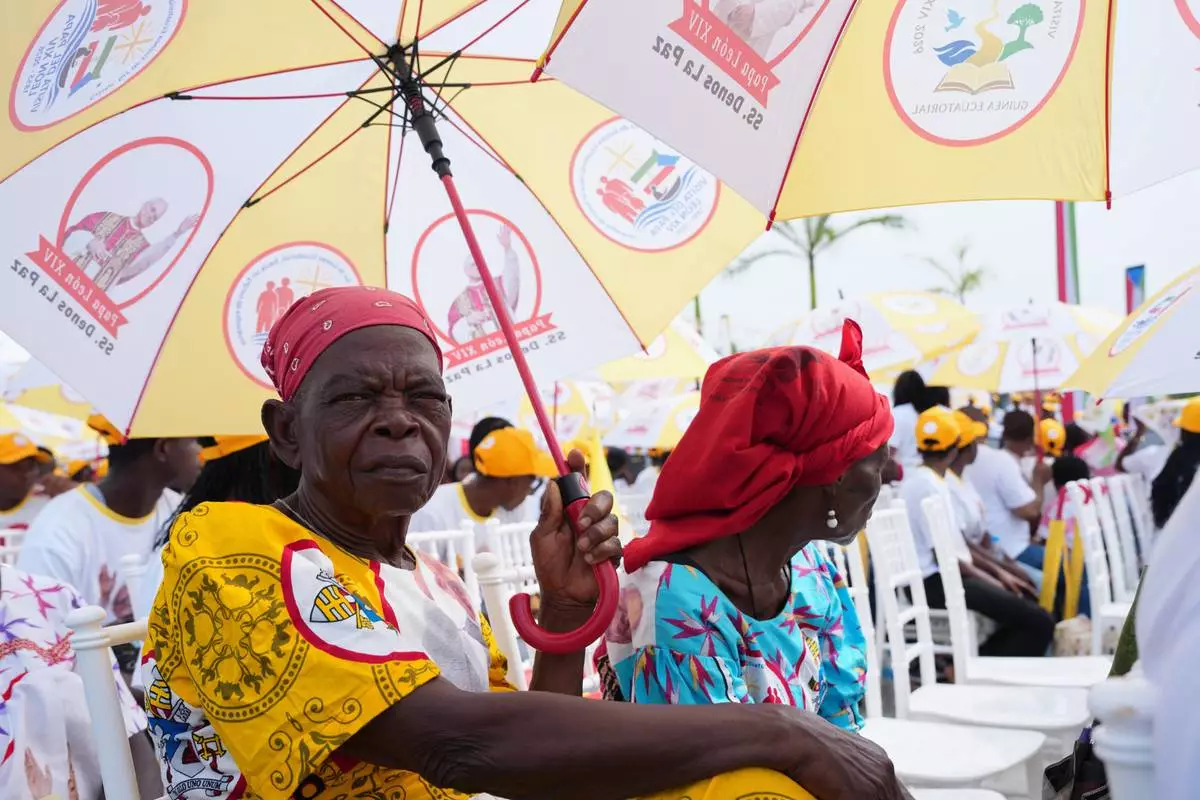
Faithful wait for the arrival of Pope Leo XIV on the occasion of his meeting with representatives of the world of culture in Malabo, Equatorial Guinea, Tuesday, April 21, 2026, on the ninth day of his 11-day pastoral visit to Africa. (AP Photo/Misper Apawu)
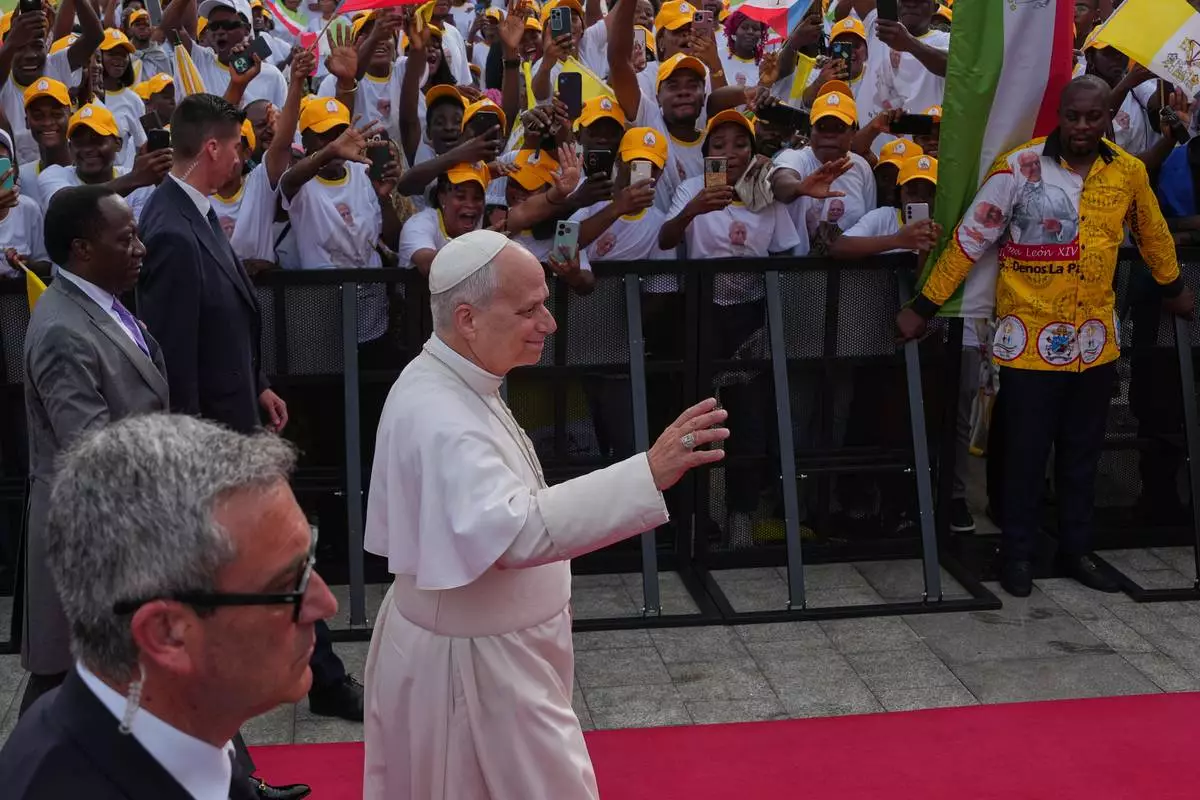
Pope Leo XIV waves to the faithful prior to the start of a meeting with representatives of the world of culture in Malabo, Equatorial Guinea, Tuesday, April 21, 2026, on the ninth day of his 11-day pastoral visit to Africa. (AP Photo/Misper Apawu)
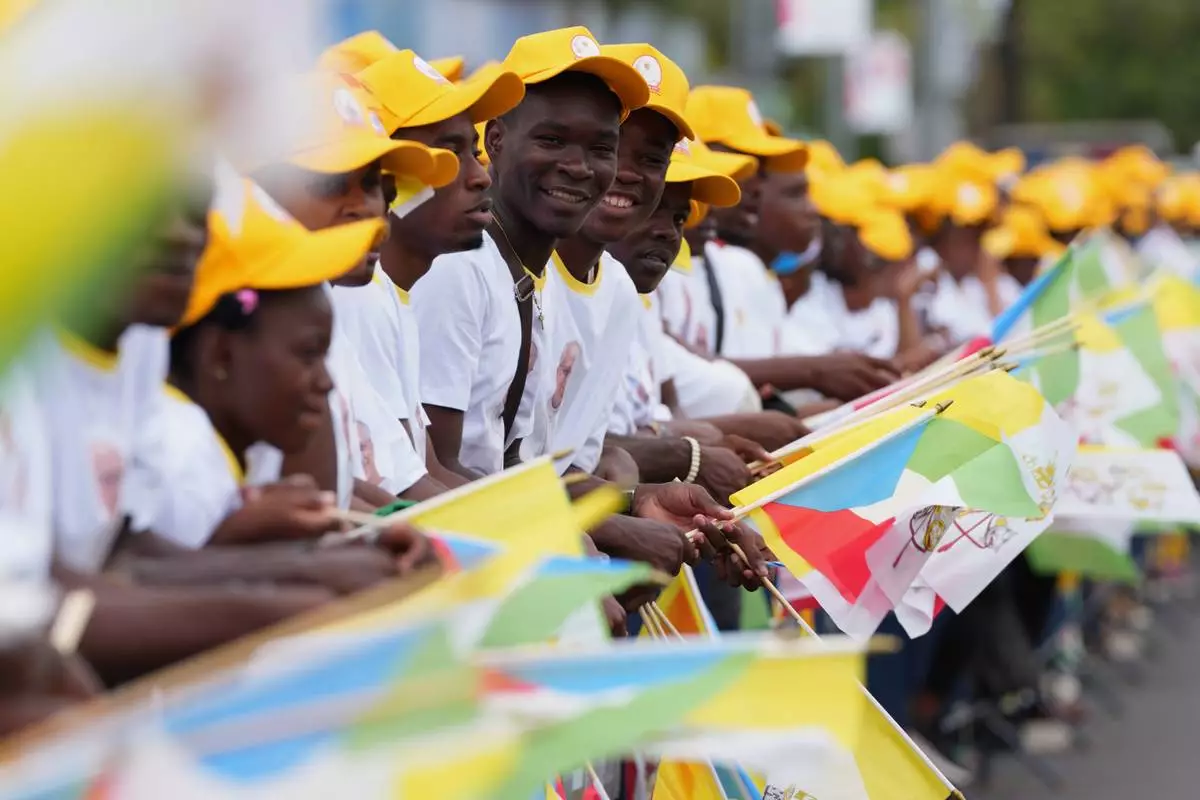
Faithful wait for the arrival of Pope Leo XIV at the airport in Malabo, Equatorial Guinea, Tuesday, April 21, 2026. (AP Photo/Misper Apawu)
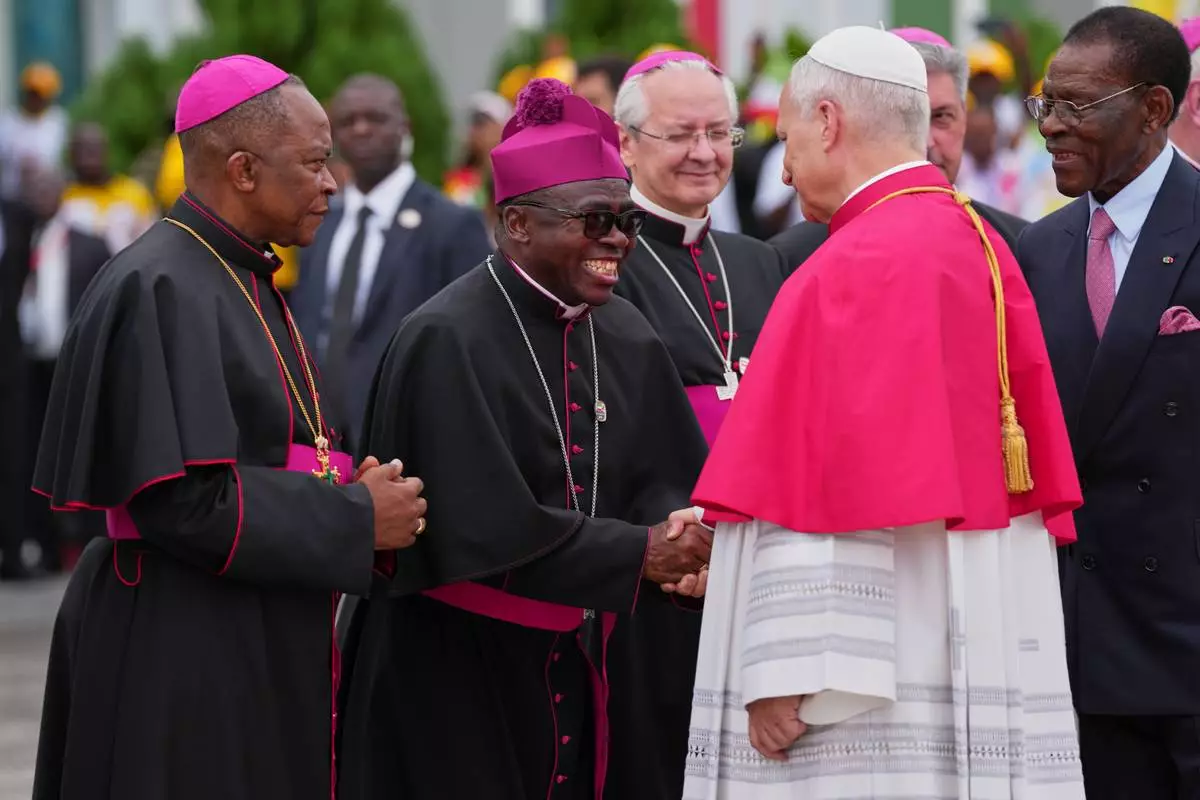
Pope Leo XIV, flanked by Equatorial Guinea's President Teodoro Obiang Nguema Mbasogo, right, is welcomed by Archbishop Juan Nsue Edjang Mayé, left, and Juan Domingo-Beka Esono Ayang upon his arrival at Malabo International Airport in Malabo, Equatorial Guinea, Tuesday, April 21, 2026. (AP Photo/Misper Apawu)