ANAHEIM, Calif. (AP) — Joel Quenneville became the second coach in NHL history to win 1,000 games with the Anaheim Ducks' 6-5 comeback victory over the Edmonton Oilers on Wednesday night.
Quenneville joined Scotty Bowman in an exclusive hockey club with a milestone win in the Ducks’ first game back from the Olympic break.
Click to Gallery
Anaheim Ducks center Mason McTavish, left, falls after colliding with Edmonton Oilers defenseman Mattias Ekholm, right, during the first period of an NHL hockey game Wednesday, Feb. 25, 2026, in Anaheim, Calif. (AP Photo/Gregory Bull)
Edmonton Oilers center Ryan Nugent-Hopkins, left, celebrates his goal with teammates during the first period of an NHL hockey game against the Anaheim Ducks Wednesday, Feb. 25, 2026, in Anaheim, Calif. (AP Photo/Gregory Bull)
Edmonton Oilers center Connor McDavid, left, looks to pass as Anaheim Ducks defenseman Ian Moore defends during the second period of an NHL hockey game Wednesday, Feb. 25, 2026, in Anaheim, Calif. (AP Photo/Gregory Bull)
Anaheim Ducks center Leo Carlsson (91) looks to pass as Edmonton Oilers defenseman Darnell Nurse defends during the first period of an NHL hockey game Wednesday, Feb. 25, 2026, in Anaheim, Calif. (AP Photo/Gregory Bull)
Cutter Gauthier scored the tiebreaking goal with 1:14 to play for the Ducks, who erased a pair of two-goal deficits. Leo Carlsson had a goal and two assists in his first appearance since Jan. 10 for the Ducks, who have won six straight home games and 10 of 12 overall to leapfrog the Oilers into second place in the Pacific Division.
Zach Hyman and Evan Bouchard scored late in the second period to put the Oilers ahead, but Carlsson and Olen Zellweger scored early in the third to even it again for Anaheim.
Rookie Matt Savoie then converted a rebound late in a power play for his 10th career goal, but Beckett Sennecke answered 46 seconds later with a slick wrist shot for his 19th goal — tops among NHL rookies.
Gauthier then converted a rebound of Carlsson's shot, setting off a wild celebration inside a sold-out Honda Center.
Jack Roslovic and Ryan Nugent-Hopkins scored for Edmonton. Connor McDavid had two assists, giving the Olympic silver medalist an NHL-best 98 points in 59 games.
Ian Moore and Alex Killorn scored for the Ducks, and Lukas Dostal made 22 saves.
Tristan Jarry made 20 saves before getting pulled for Connor Ingram after Sennecke's tying goal with 13:21 to play.
Carlsson was outstanding in his return to the Ducks’ lineup after missing the final 11 games before the break with a thigh injury that kept him out of the Olympics.
Mikael Granlund didn’t play for Anaheim after captaining Finland to bronze in Milan. None of the Oilers’ Olympians sat out as they opened a three-game California road trip.
Oilers: At Los Angeles on Thursday.
Ducks: Host Winnipeg on Friday.
AP NHL: https://apnews.com/NHL

Anaheim Ducks center Mason McTavish, left, falls after colliding with Edmonton Oilers defenseman Mattias Ekholm, right, during the first period of an NHL hockey game Wednesday, Feb. 25, 2026, in Anaheim, Calif. (AP Photo/Gregory Bull)

Edmonton Oilers center Ryan Nugent-Hopkins, left, celebrates his goal with teammates during the first period of an NHL hockey game against the Anaheim Ducks Wednesday, Feb. 25, 2026, in Anaheim, Calif. (AP Photo/Gregory Bull)

Edmonton Oilers center Connor McDavid, left, looks to pass as Anaheim Ducks defenseman Ian Moore defends during the second period of an NHL hockey game Wednesday, Feb. 25, 2026, in Anaheim, Calif. (AP Photo/Gregory Bull)

Anaheim Ducks center Leo Carlsson (91) looks to pass as Edmonton Oilers defenseman Darnell Nurse defends during the first period of an NHL hockey game Wednesday, Feb. 25, 2026, in Anaheim, Calif. (AP Photo/Gregory Bull)
SEOUL, South Korea (AP) — South Korea has relaunched a fact-finding commission into its past human rights violations, with a key focus on the extensive fraud and malfeasance that corrupted the nation’s historic foreign adoption program.
The Truth and Reconciliation Commission, the third in the country’s history, began accepting new cases Thursday, months after the previous one’s mandate ended in November with more than 2,100 complaints unresolved.
The new commission will inherit those cases, including 311 submissions by Korean adoptees from the West that were either deferred or incompletely reviewed before the second commission halted a landmark investigation into adoptions in April last year, following internal disputes over which cases warranted recognition as problematic.
Advocates say interest among adoptees is far higher this time, with hundreds already seeking investigations, including many from the United States, who were underrepresented in the previous inquiry even though American parents were by far the biggest recipients of Korean children over the past seven decades.
But investigators who served on the previous commission said it could take months — possibly until May or June — for the new probes to actually get underway. The government has yet to appoint a chair to lead the commission, which has not formed investigative teams and will initially be run by civil servants assigned to receive and register cases.
The new commission, established under a law passed in January expanding its investigative mandate, will also investigate other human rights abuses potentially attributable to the government, including civilian killings around the 1950-53 Korean War, repression during the military dictatorships of the 1960s to 1980s, and decades-long abuses of inmates at welfare facilities.
Under the commission’s three-year mandate, applications for investigation must be submitted until Feb. 25, 2028, although the commission has the power to extend the deadline and mandate for up to five years. Adoptees could also submit their applications with the South Korean embassies or consulates in the countries they live in.
South Korea sent thousands of children annually to the West from the 1970s to the early 2000s, peaking at an average of more than 6,000 a year in the 1980s. The country was then ruled by a military government that saw population growth as a major threat to its economic goals and treated adoptions as a way to reduce the number of mouths to feed, contributing to what’s now possibly the world’s largest diaspora of adoptees.
The suspension of the prior adoption probe in 2025 followed a nearly three-year review of cases across Europe, the U.S. and Australia, during which the second commission confirmed human rights violations in just 56 of 367 complaints filed by adoptees.
Still, the commission issued a significant interim report concluding that the government bears responsibility for a foreign adoption program riddled with fraud and abuse, driven by efforts to reduce welfare costs and carried out by private agencies that often manipulated children’s backgrounds and origins.
The report, which challenged a longstanding narrative shared in South Korea and receiving nations in the West that adoptions were driven mainly by humanitarian concerns, broadly aligned with previous reporting by The Associated Press.
The AP investigations, in collaboration with Frontline (PBS), drew from thousands of documents and dozens of interviews to show how South Korea’s government, Western nations and adoption agencies worked in tandem to supply some 200,000 Korean children to parents overseas, despite years of evidence that many were being procured through corrupt or outright illegal means.
During the height of adoptions in the 1970 and '80s, thousands of children were listed as abandoned to appear adoptable under Western laws, although records suggest most had known relatives. Adoption agencies paid hospitals and orphanages for newborns and other children, and in some cases switched children’s identities to keep adoptions moving when a child died, was too sick to travel, or was reclaimed by birth families. Prioritizing their domestic child demands, Western governments ignored the signs of rampant fraud and sometimes pressured the South Korean government to keep the kids coming.
The previous commission’s report, which also highlighted these problems, prompted a rare apology from South Korean President Lee Jae Myung in October. His government later announced plans to phase out the country’s dwindling foreign adoptions by 2029.
The December announcement came as U.N. human rights investigators expressed “serious concern” over what they described as Seoul’s failure to ensure truth-finding and reparations for violations tied to past adoptions. South Korea approved overseas adoptions of just 24 children in 2025.
Boonyoung Han, an adoptee activist and co-leader of the Danish Korean Rights Group, which led most adoptee applications to the previous commission, said the group submitted more than 300 cases to the newly launched commission Thursday. Once investigative teams are formed, the submissions will be reviewed before the commission decides whether to pursue investigations into those, along with the 311 cases carried over.
While most of the new applications came from adoptees in Denmark, Han said U.S. adoptees were the second largest group.
Investigators from the previous commission say a broader review of the systemic problems would require closer scrutiny of adoptions to the United States, where citizenship gaps affecting adoptees have also drawn concern as U.S. President Donald Trump pushes aggressive deportations. U.S. adoptees accounted for a smaller number of complaints received by the second commission, most of which were filed by adoptees in Europe.
Some adoptees hope to use the commission’s findings to file damages suits against the South Korean government or their adoption agencies, which would otherwise be difficult because South Korean law places the burden of proof entirely on plaintiffs in civil cases. The new law grants the third commission stronger investigative powers than its predecessor, including the authority to seek search warrants through prosecutors if individuals or institutions refuse to provide evidence.
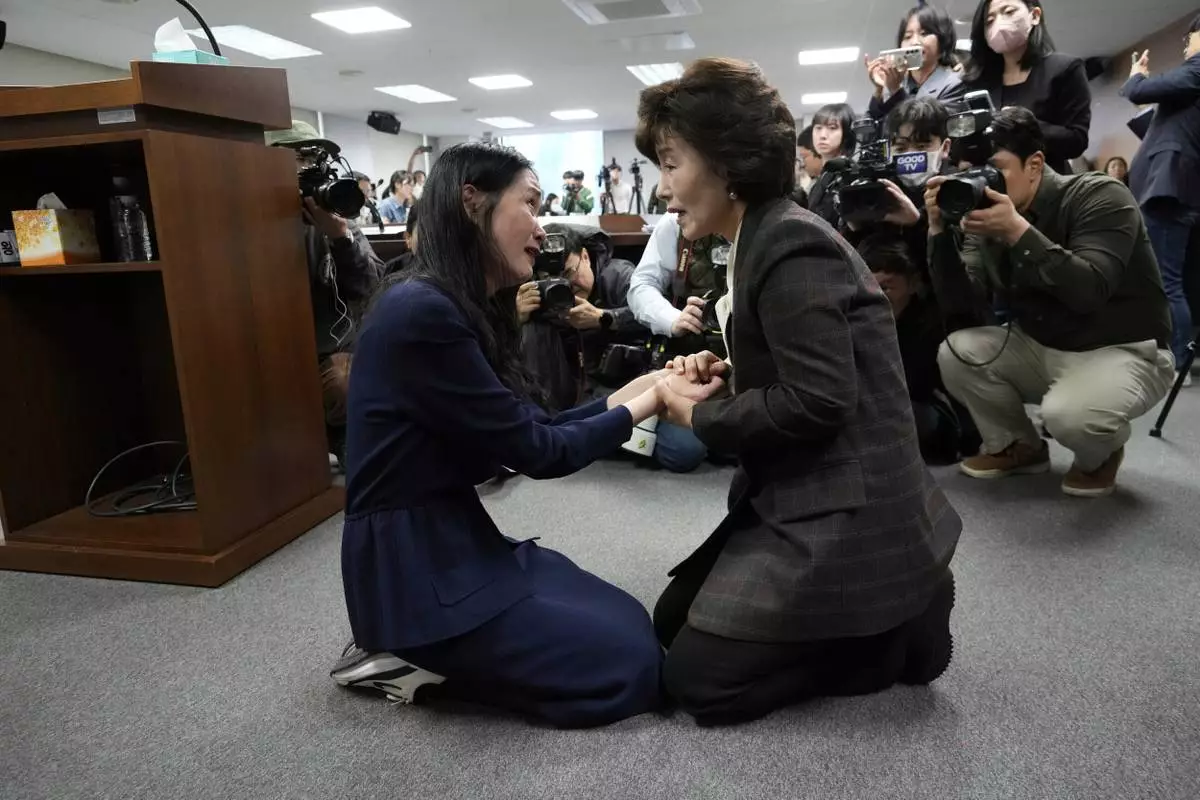
FILE - Truth and Reconciliation Commission Chairperson Park Sun Young, right, comforts adoptee Yooree Kim during a press conference in Seoul, South Korea, on March 26, 2025. (AP Photo/Ahn Young-joon, File)
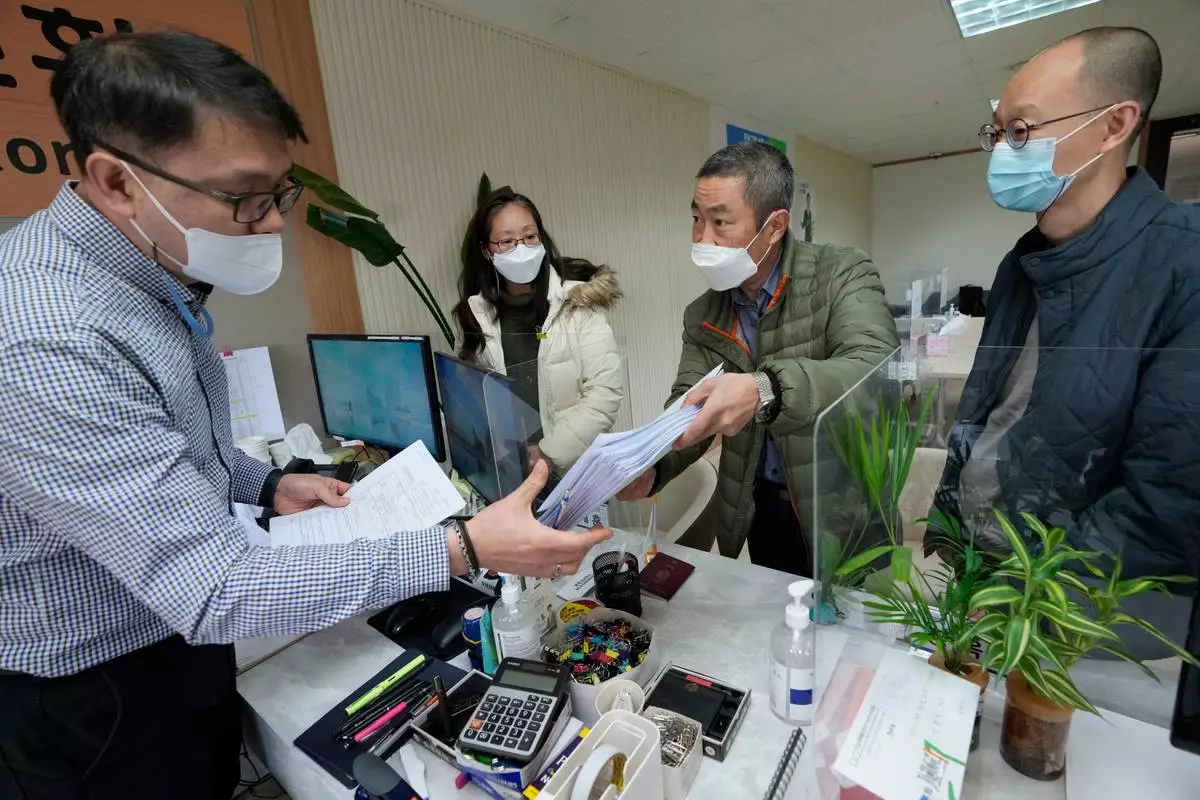
FILE - Peter Møller, second from right, attorney and co-founder of the Danish Korean Rights Group, submits the documents at the Truth and Reconciliation Commission in Seoul, South Korea, Nov. 15, 2022. (AP Photo/Ahn Young-joon, File)