A study commissioned by the Southeastern Conference and the Big Ten concluded that allowing conferences to pool their media rights — a key proposal among some looking to solve money problems in college sports — would generate less revenue than if the leagues continue the decades-old practice of selling their own games.
The idea of pooling media rights has been touted by some lawmakers and sports leaders as the best way to supercharge revenue and ensure college sports remains solvent in a new, more-expensive era brought on by name, image and likeness (NIL) payments to college players.
The study, a copy of which was shared Thursday with The Associated Press, estimated that at the rate leagues like the SEC, Big Ten, Atlantic Coast Conference and Big 12 are increasing the value of their media rights, they would outperform one much-cited projection that said schools could add $7 billion in worth over the next decade or so by pooling the rights.
“The ... proposal not only fails to produce more revenue than the current conference structure but also introduces a dangerously unworkable model and new risks to the college sports landscape,” the paper said.
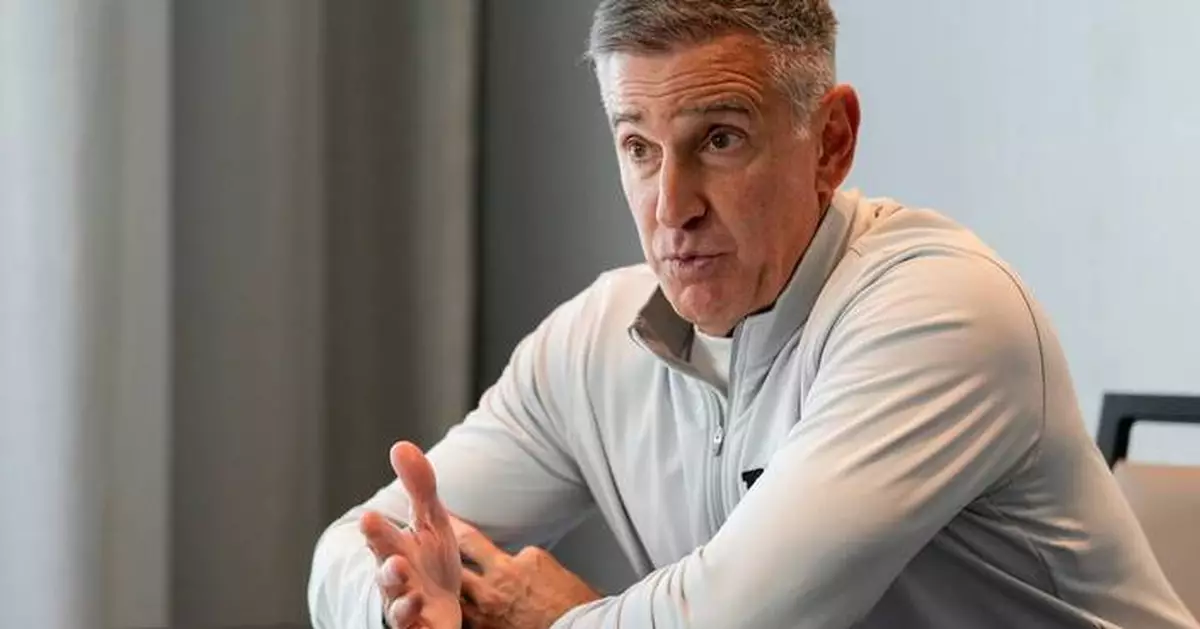
The $7 billion projection is the brainchild of Cody Campbell, the billionaire head of the board of regents at Texas Tech, who established a nonprofit called Saving College Sports, which is the focal point of the paper's analysis.
Both Campbell and a Democrat-backed bill in the Senate, called the SAFE Act, have proposed rewriting the 1961 Sports Broadcasting Act, which bars the conferences from combining their TV rights.
Campbell has acknowledged that the unspooling of TV contracts that have varying expiration dates between the league and broadcasters would take years. The SCS proposes creating an independent entity charged with maximizing revenue, with options to sign on to what could be a reworked Sports Broadcasting Act within 12 years.
He has been critical of conference commissioners, saying that rather than looking at the big picture, “all they care about is what happens to them. And I think that is fundamentally the problem.”
The SEC's Greg Sankey shot back at that by saying Campbell's views “reflect a fundamental misunderstanding of the realities of college athletics.”
Sankey and Big Ten commissioner Tony Petitti hired the FTI Consulting Firm, which pokes holes in virtually all of Campbell's assumptions, including the idea that college sports could replicate NBA and NFL revenues by pooling their games.
The study said the NBA's recent $6.9 billion-a-year deal spread across a number of national networks and streamers “reflect a number of market dynamics and are not simply the result of 'aggregation.'”
“Instead, the NBA was successful in selling smaller packages of games to larger numbers of distributors thereby increasing market demand and adding additional media partners for smaller packages,” the report said.
The relatively small number of NBA (30) and NFL (32) teams compared to the 136 that would be part of a college pool (if every school agreed to participate) makes those deals more manageable, according to FTI.
The study also took a historical perspective, including a reference to a seismic shift in college football TV rights in the early 1980s.
After the Supreme Court declared that the NCAA's pooling of games violated antitrust laws, schools formed the College Football Association to package games. The study said that arrangement produced less revenue: $43.6 million, compared to $69.7 million under the NCAA package.
That spurred Notre Dame to leave the group, followed by a steady exodus by the conferences, which led to the system that is in place today in which all the leagues parcel out their own media rights, mostly to ESPN, CBS, Fox and NBC.
“Decentralization also helps preserve the unique character of college sports — an incredibly important brand attribute,” the study said.
Get poll alerts and updates on the AP Top 25 throughout the season. Sign up here and here (AP News mobile app). AP college football: https://apnews.com/hub/ap-top-25-college-football-poll and https://apnews.com/hub/college-football
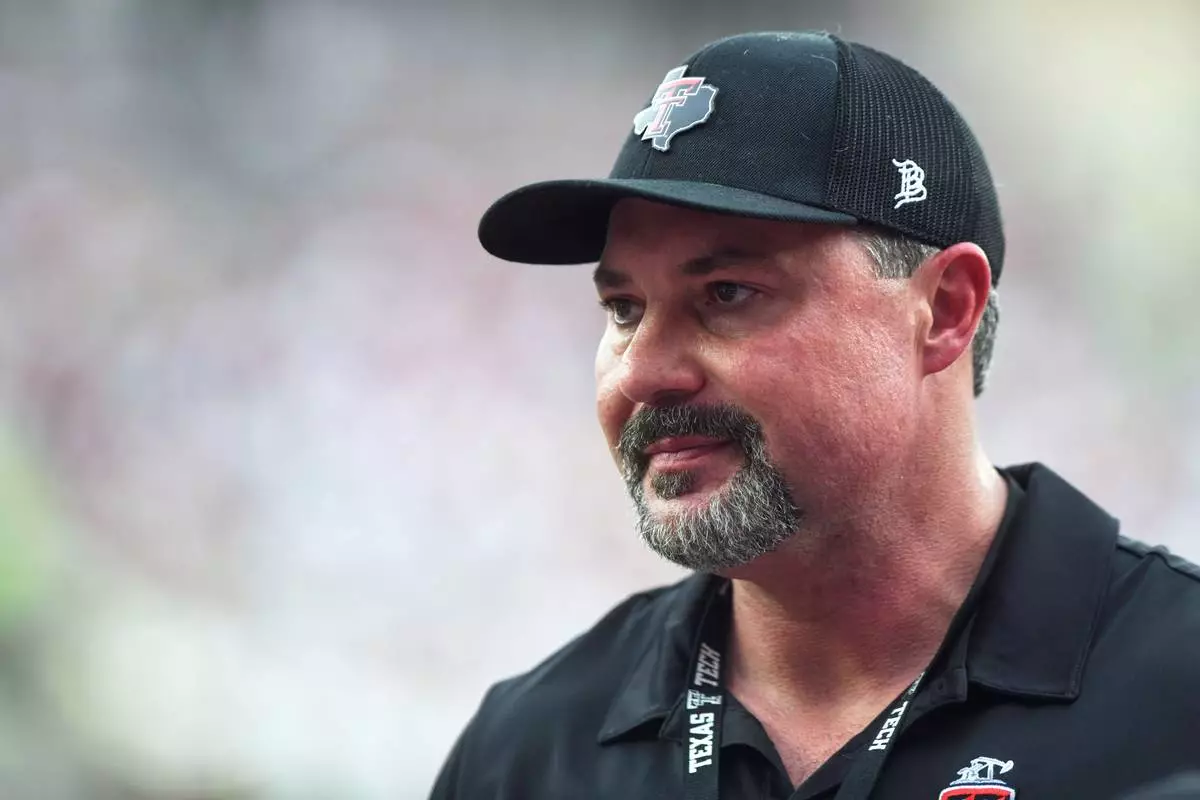
FILE - Cody Campbell walks on the field before a NCAA college football game between Texas Tech and Oregon State, Sept. 13, 2025, in Lubbock, Texas. (AP Photo/Annie Rice, File)
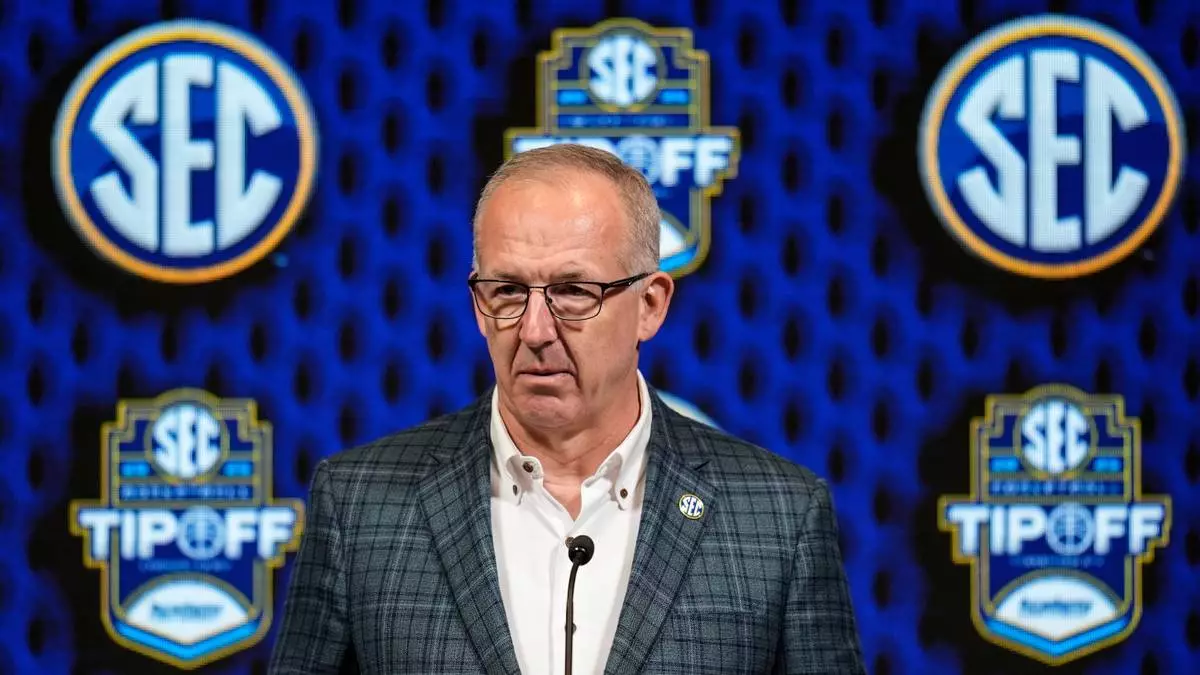
FILE - Greg Sankey, commissioner of the Southeastern Conference, speaks during NCAA college basketball women's SEC Media Day, Wednesday, Oct. 16, 2024, in Birmingham, Ala. (AP Photo/Mike Stewart,File)
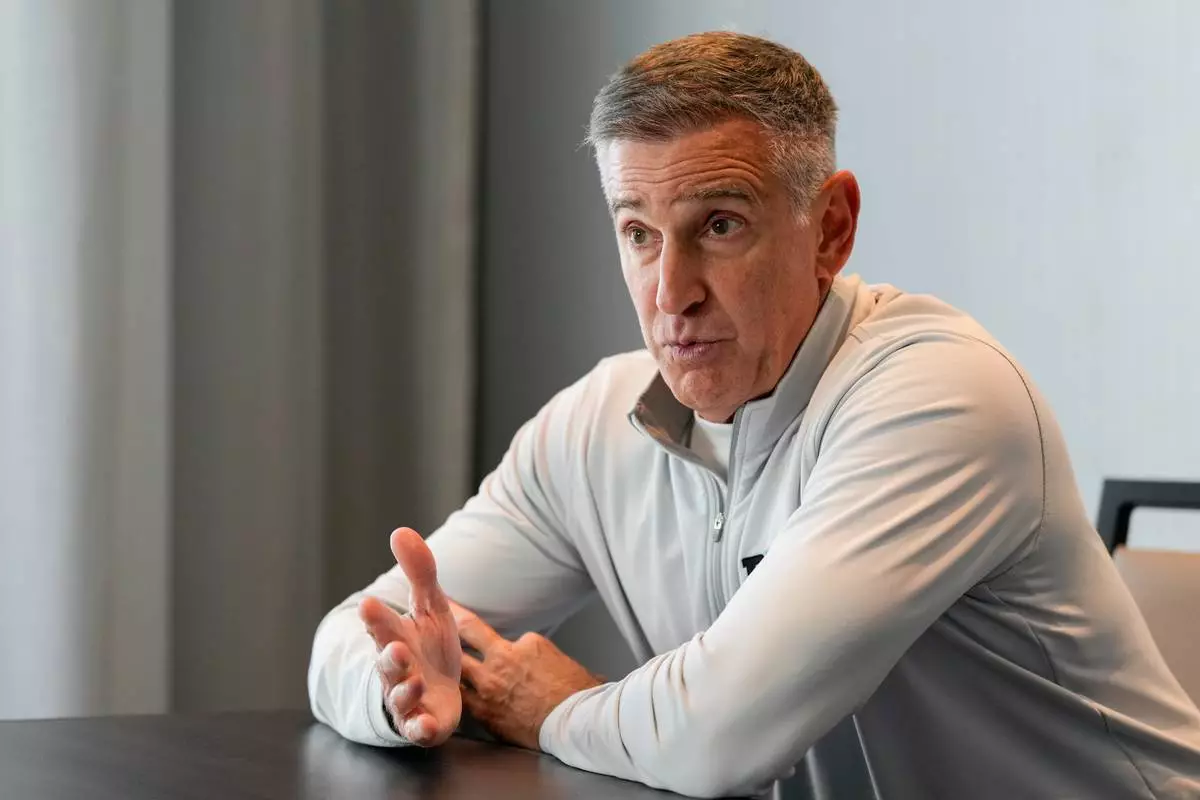
FILE - Big Ten Conference commissioner Tony Petitti speaks during a news conference after meetings between the Southeastern Conference and Big Ten Conference, Thursday, Oct. 10, 2024, in Nashville, Tenn. (AP Photo/George Walker IV,File)
Iran and the United States were holding indirect talks in Geneva on Thursday over Tehran's nuclear program.
The talks come as America has assembled the largest fleet of warplanes and aircraft in the Mideast in decades as part of President Donald Trump's efforts to force Iran into a deal after it saw nationwide protests against its theocracy.
Here's a timeline of the tensions over Iran's atomic program:
1967 — Iran takes possession of the Tehran Research Reactor supplied by America under the “Atoms for Peace” program.
1979 — U.S. ally Shah Mohammad Reza Pahlavi, fatally ill, flees Iran as popular protests against him surge. Ayatollah Ruhollah Khomeini returns to Tehran and the Islamic Revolution sweeps him to power. Students seize the United States Embassy in Tehran, beginning the 444-day hostage crisis. Iran’s nuclear program goes fallow under international pressure.
August 2002 — Western intelligence services and an Iranian opposition group reveal Iran’s secret Natanz nuclear enrichment facility.
June 2003 — Britain, France and Germany engage Iran in nuclear negotiations.
October 2003 — Iran suspends uranium enrichment under international pressure.
February 2006 — Iran announces it will restart uranium enrichment following the election of hard-line president Mahmoud Ahmadinejad. Britain, France and Germany walk out of stalled negotiations.
June 2009 — Iran’s disputed presidential election sees Ahmadinejad reelected despite fraud allegations, sparking protests known as the Green Movement and a violent government crackdown.
October 2009 — Under U.S. President Barack Obama, the U.S. and Iran open a secret back-channel for messages in the sultanate of Oman.
July 2012 — U.S. and Iranian officials hold secret face-to-face talks in Oman.
July 2015 — World powers and Iran announce a long-term, comprehensive nuclear agreement that limits Tehran's enrichment of uranium in exchange for the lifting of economic sanctions.
May 8, 2018 — Trump unilaterally withdraws the U.S. from the nuclear agreement, calling it the “worst deal ever.” He says he’ll get better terms in new negotiations to stop Iran’s missile development and support for regional militias. Those talks don’t happen in his first term.
May 8, 2019 — Iran announces it will begin backing away from the accord. A series of regional attacks on land and at sea blamed on Tehran follow.
Jan. 3, 2020 — A U.S. drone strike in Baghdad kills Gen. Qassem Soleimani, the architect of Tehran’s proxy wars in the Middle East.
Jan. 8, 2020 — In retaliation for Soleimani’s killing, Iran launches a barrage of missiles at military bases in Iraq that are home to thousands of American and Iraqi troops. More than 100 U.S. service members suffer traumatic brain injuries, according to the Pentagon. As Iran braces for a counterattack, the Revolutionary Guard shoots down a Ukrainian passenger plane shortly after takeoff from Tehran’s international airport, reportedly mistaking it for a U.S. cruise missile. All 176 people on board are killed.
July 2, 2020 — A mysterious explosion tears apart a centrifuge production plant at Iran’s Natanz nuclear enrichment facility. Iran blames the attack on archenemy Israel.
April 6, 2021 — Iran and the U.S. under President Joe Biden begin indirect negotiations in Vienna over how to restore the nuclear deal. Those talks, and others between Tehran and European nations, fail to reach any agreement.
April 11, 2021 — A second attack within a year targets Iran’s Natanz nuclear site, again likely carried out by Israel.
April 16, 2021 — Iran begins enriching uranium up to 60% — its highest purity ever and a technical step from weapons-grade levels of 90%.
Feb. 24, 2022 — Russia launches its full-scale invasion of Ukraine. Moscow ultimately will come to rely on Iranian bomb-carrying drones in the conflict, as well as missiles.
July 17, 2022 — An adviser to Iran’s supreme leader, Kamal Kharrazi, says Iran is technically capable of making a nuclear bomb, but has not decided whether to build one.
Oct. 7, 2023 — Hamas militants from the Gaza Strip storm into Israel, killing around 1,200 people and taking 251 others hostage, beginning the most intense war ever between Israel and Hamas. Iran, which has armed Hamas, offers support to the militants. Regional tensions spike.
Nov. 19, 2023 — Yemen’s Houthi rebels, long supported by Iran, seize the ship Galaxy Leader, beginning a monthslong campaign of attacks on shipping through the Red Sea corridor that the U.S. Navy describes as the most intense combat it has seen since World War II. The attacks mirror tactics earlier used by Iran.
April 14, 2024 — Iran launches an unprecedented direct attack on Israel, firing over 300 missiles and attack drones. Israel, working with a U.S.-led international coalition, intercepts much of the incoming fire.
April 19, 2024 — A suspected Israeli strike hits an air defense system by an airport in Isfahan, Iran.
July 31, 2024 — Ismail Haniyeh, a Hamas leader, is assassinated during a visit to Tehran after the inauguration of reformist President Masoud Pezeshkian. Israel later takes responsibility for the assassination.
Sept. 27, 2024 — An Israeli airstrike kills Hezbollah leader Hassan Nasrallah in Lebanon.
Oct. 1, 2024 — Iran launches its second direct attack on Israel, though a U.S.-led coalition and Israel shoot down most of the missiles.
Oct. 16, 2024 — Israel kills Hamas leader Yahya Sinwar in the Gaza Strip.
Oct. 26, 2024 — Israel openly attacks Iran for the first time, striking air defense systems and sites associated with its missile program.
Jan. 20, 2025 — Trump is inaugurated for his second term as president.
Feb. 7, 2025 — Iran's Supreme Leader Ayatollah Ali Khamenei says proposed talks with the U.S. are “not intelligent, wise or honorable.”
March 7, 2025 — Trump says he sent a letter to Khamenei seeking a new nuclear deal with Tehran.
March 15, 2025 — Trump launches intense airstrikes targeting Houthi rebels in Yemen, the last members of Iran's self-described “Axis of Resistance” capable of daily attacks.
April 7, 2025 — Trump announces the U.S. and Iran will hold direct talks in Oman. Iran says they'll be indirect talks, but confirms the meeting.
April 12, 2025 — The first round of talks between Iran and the U.S. take place in Oman, ending with a promise to hold more talks after U.S. Mideast envoy Steve Witkoff and Iranian Foreign Minister Abbas Araghchi “briefly spoke” together.
April 19, 2025 — The second round of talks between the U.S. and Iran are held in Rome.
April 26, 2025 — Iran and the U.S. meet in Oman a third time, but the negotiations include talks at the expert level for the first time.
May 11, 2025 — Iran and the U.S. meet in Oman for a fourth round of negotiations ahead of Trump's trip to the Mideast.
May 23, 2025 — Iran and the U.S. meet in Rome for a fifth round of talks, with Oman saying the negotiations made "some but not conclusive progress."
June 9, 2025 — Iran signals it won't accept a U.S. proposal over the nuclear program.
June 12, 2025 — The Board of Governors at the International Atomic Energy Agency finds Iran in noncompliance with its nuclear obligations. Iran responds by announcing it has built and will activate a third nuclear enrichment facility.
June 13, 2025 — Israel launches its war against Iran. Over 12 days, it hits nuclear and military sites, as well as other government installations.
June 22, 2025 — The U.S. intervenes in the war, attacking three Iranian nuclear sites.
June 23, 2025 — Iran responds to the U.S. attack by targeting a military base in Qatar used by American troops, causing limited damage.
June 24, 2025 — Trump announces a ceasefire in the war.
July 25, 2025 — Iranian and European diplomats hold talks in Istanbul over Iran's nuclear program.
Aug. 8, 2025 — France, Germany and the United Kingdom warn Iran in a letter that it will reimplement U.N. sanctions if there is no “satisfactory solution” to the nuclear standoff by Aug. 31.
Aug. 28, 2025 — France, Germany and the United Kingdom say they've started the process to “snapback” U.N. sanctions on Iran.
Sept. 9, 2025 — Iran and the International Atomic Energy Agency reach a deal over potentially starting inspections, but questions remain over its implementation.
Sept. 19, 2025 — U.N. Security Council declines to stop “snapback” sanctions on Iran.
Sept. 26, 2025 — U.N. Security Council rejects China and Russia's last-minute effort to stop “snapback.”
Sept. 28, 2025 — U.N. reimposes “snapback” sanctions on Iran barring any last-minute diplomacy.
Dec. 28, 2025: Protests break out in two major markets in downtown Tehran after the Iranian rial plunges to a record low — 1.42 million rials to one U.S. dollar — compounding inflationary pressure and pushing up the prices of food and other daily necessities.
Jan. 3, 2026: Khamenei says “rioters must be put in their place,” in what is seen as a green light for security forces to begin more aggressively putting down the demonstrations.
Jan. 8, 2026: Following a call from Iran’s exiled crown prince, a mass of people shout from their windows and take to the streets in nationwide protests. The government responds by blocking the internet and international telephone calls in a bid to cut off the country of 85 million from outside influence. An ensuing security force crackdown kills thousands and sees tens of thousands detained.
Jan. 13, 2026: Trump says he has called off any meetings with the Iranians and promises that unspecified “help is on its way.”
Jan. 26, 2026: The aircraft carrier USS Abraham Lincoln and three accompanying warships arrive in the Middle East amid Trump’s threats to attack.
Feb. 3, 2026: A U.S. Navy fighter jet shoots down an Iranian drone approaching the Lincoln in the Arabian Sea. Iranian fast-attack boats attempt to stop a U.S.-flagged ship in the Strait of Hormuz.
Feb. 6, 2026: Iran and the U.S. hold indirect nuclear talks in Oman, with the head of the U.S. military's Central Command also coming.
Feb. 17, 2026: Iran and the U.S. hold talks in Geneva while Tehran says it has temporarily closed the Strait of Hormuz, the narrow mouth of the Persian Gulf through which a fifth of all oil traded passes.
Feb. 26, 2026: Iran and the U.S. hold another round of talks in Geneva as America assembles the largest fleet of warplanes and aircraft in the Mideast in decades.
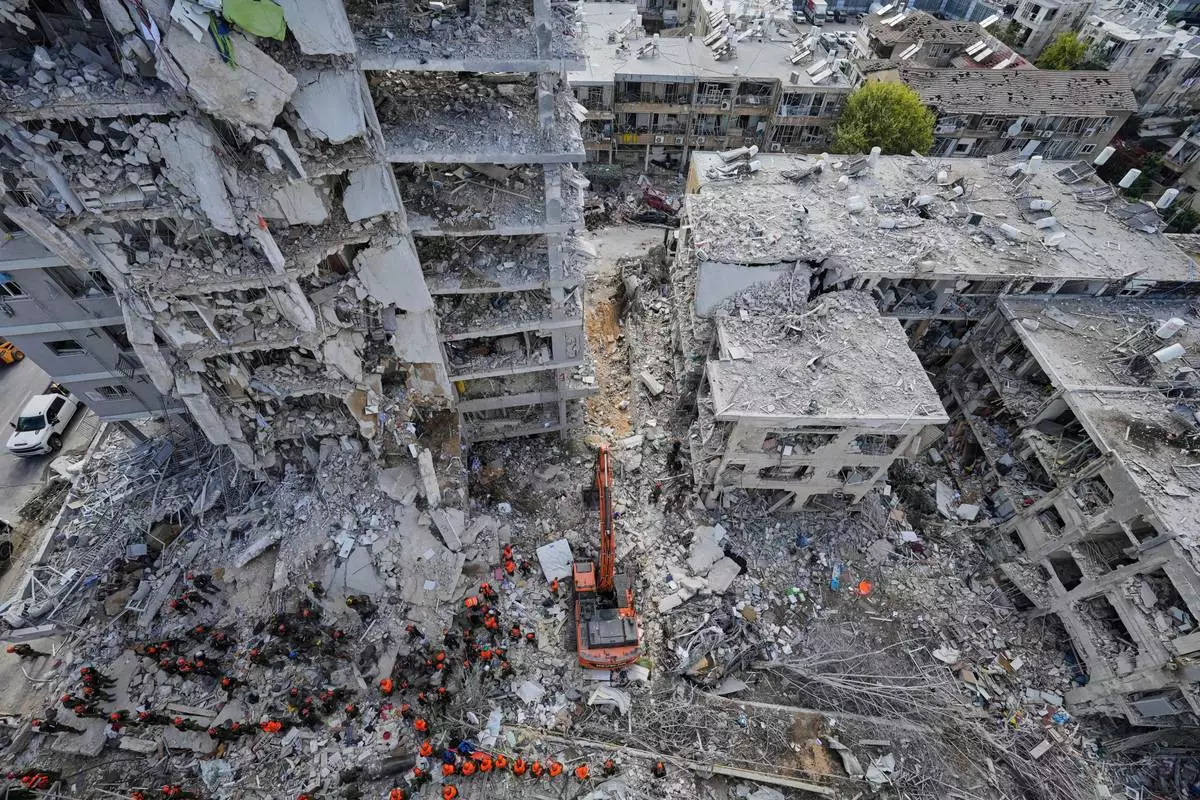
FILE - Israeli soldiers search through the rubble of residential buildings destroyed by an Iranian missile strike in Bat Yam, central Israel, June 15, 2025. (AP Photo/Baz Ratner, File)
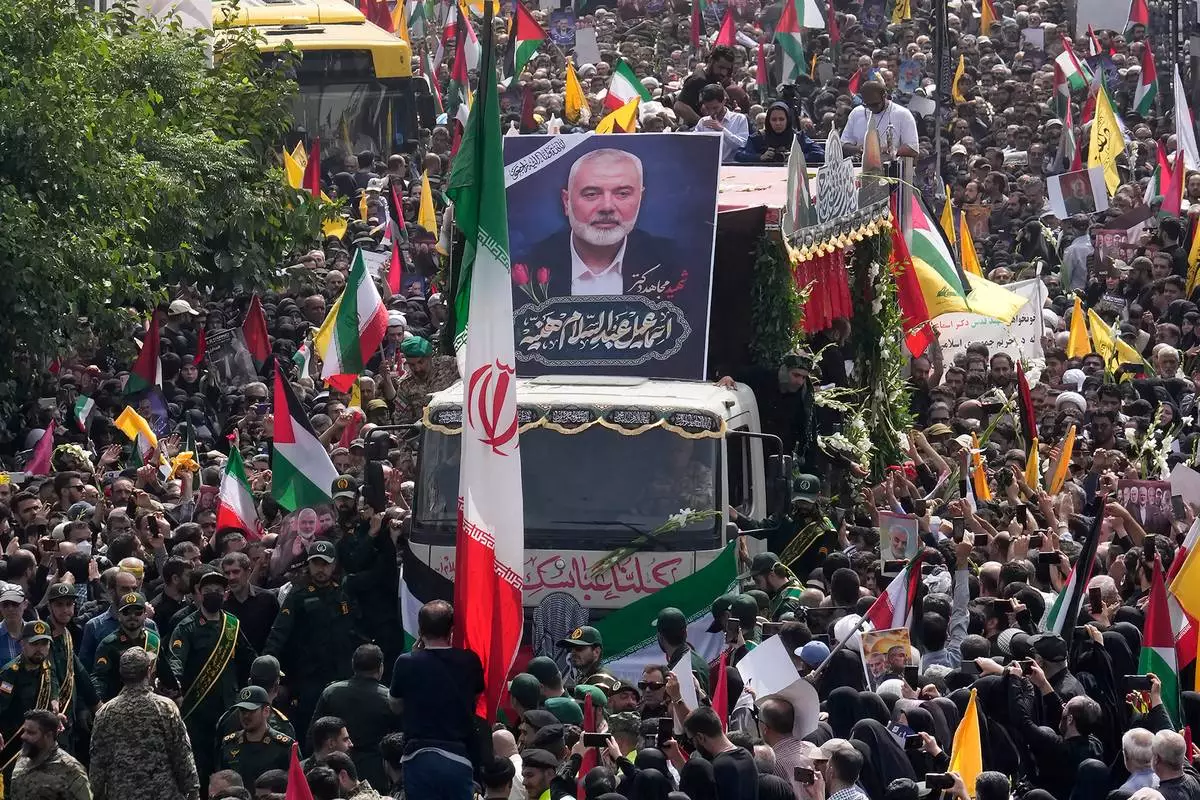
FILE - Iranians follow a truck, center, carrying the coffins of Hamas leader Ismail Haniyeh and his bodyguard who were killed in an assassination blamed on Israel, during their funeral ceremony at Enqelab-e-Eslami (Islamic Revolution) Sq. in Tehran, Iran, Aug. 1, 2024. (AP Photo/Vahid Salemi, File)
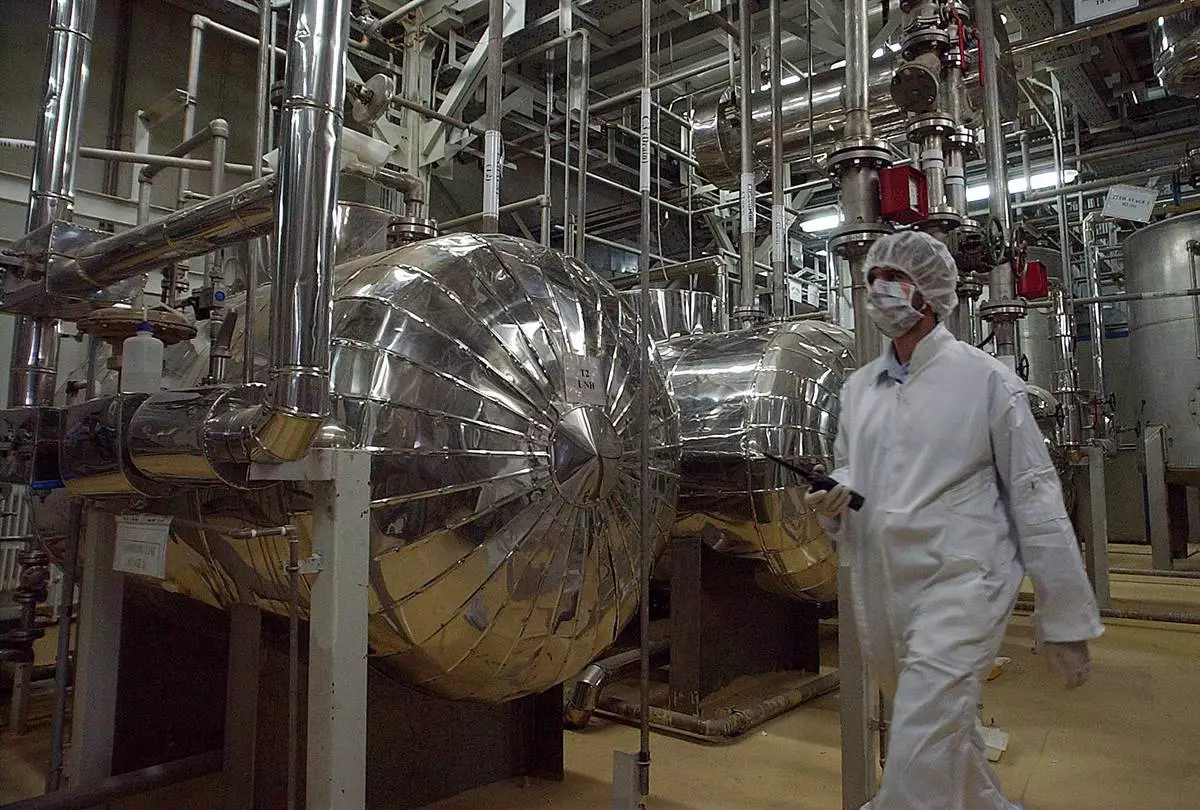
FILE - An Iranian security official in protective clothing walks through part of the Uranium Conversion Facility just outside the Iranian city of Isfahan, March 30, 2005. (AP Photo/Vahid Salemi, File)
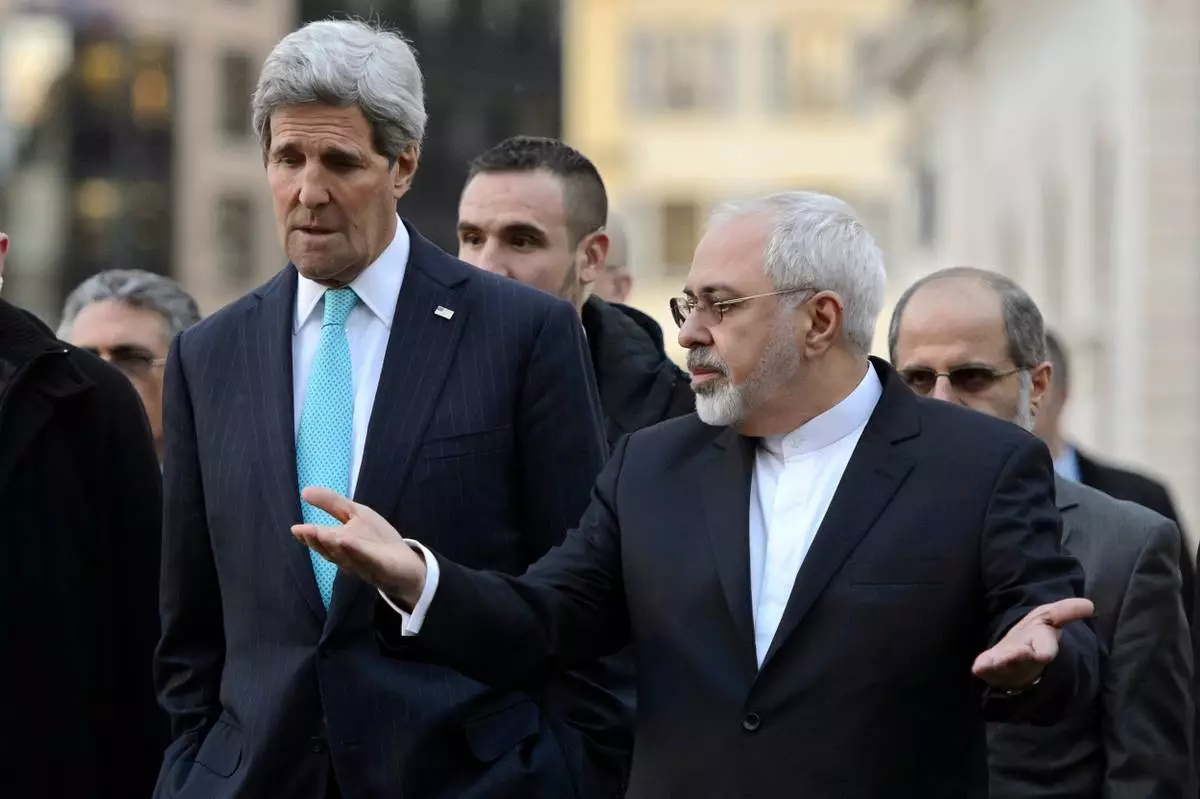
FILE - U.S. Secretary of State John Kerry, left, listens to Iranian Foreign Minister Mohammad Javad Zarif as they walk in the city of Geneva, Switzerland, Jan. 14, 2015, during a bilateral meeting ahead of the next round of nuclear discussions. (Martial Trezzini/Keystone via AP, File)
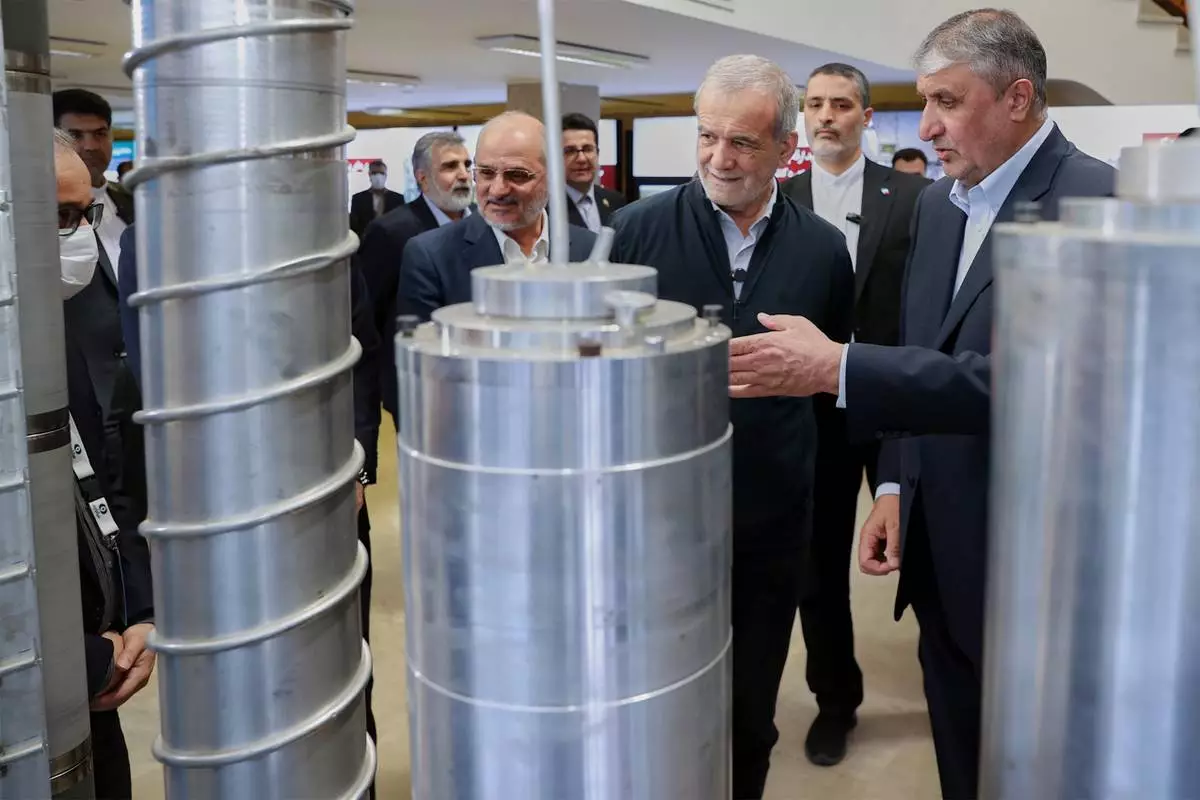
FILE - In this photo released by the Iranian Presidency Office, President Masoud Pezeshkian, second right, listens to the head of Atomic Energy Organization of Iran Mohammad Eslami as he visits an exhibition of Iran's nuclear achievements, in Tehran, Iran, on April 9, 2025. (Iranian Presidency Office via AP, File)