COPENHAGEN, Denmark (AP) — Danish Prime Minister Mette Frederiksen on Thursday called an early general election for March 24, as the country digests a standoff with U.S. President Donald Trump, who has designs on Greenland, a semiautonomous territory of Denmark.
Voters in the Scandinavian country, a NATO and European Union member, will determine who sits in the Folketing, or parliament. It has 179 seats — 175 of which go to lawmakers representing Denmark and two apiece to lawmakers from Greenland and the kingdom's other semiautonomous territory, the Faroe Islands.
“It is now up to you, the voters, to decide what direction Denmark will take over the next four years. And I am looking forward to it,” Frederiksen, 48, said as she made her announcement in parliament.
Trump’s push for U.S. control of Greenland, which culminated in his short-lived threat last month to impose new tariffs on Denmark and several other European countries, was a major challenge for the Danish government over the past year.
Frederiksen likely hopes that her handling of the Greenland crisis, in which she appeared straight-talking and tough, will give her a boost with Danish voters. Last month, she warned that an American takeover of Greenland would amount to the end of the NATO military alliance.
Polls also show a bump in the popularity of the prime minister’s Social Democrats during recent weeks which were dominated by the looming Greenland crisis.
Some Danish citizens have been so upset with the U.S. president’s frequent talks about seizing Greenland that they participated in protests and even boycotted American goods in supermarkets.
After Trump backed down on his Greenland threats last month, the U.S., Denmark and Greenland started technical talks on an Arctic security deal.
Still, the prime minister made clear earlier this month that she remains wary about the Greenland issue. Asked at the Munich Security Conference whether the crisis had passed, she replied: “No, unfortunately not. I think the desire from the U.S. president is exactly the same. He is very serious about this theme.”
Frederiksen, a center-left Social Democrat, has become known for her strict immigration policies, which are among the toughest in Europe.
Last month, her government unveiled a legal reform allowing the deportation of foreigners who have been sentenced to at least one year of unconditional imprisonment for serious crimes Years before other countries on the continent tried to outsource asylum request procedures to third countries or set up so-called “return hubs” for rejected asylum seekers outside the European Union, Fredriksen pitched such ideas.
A general election must be held at least every four years but the prime minister can call one at any time. The last election was held on Nov. 1, 2022, and resulted in a three-party coalition that crosses the left-right divide.
Frederiksen has led Denmark since mid-2019. She currently heads a government with the Liberal Party of Defense Minister Troels Lund Poulsen and the centrist Moderate party of Foreign Minister Lars Løkke Rasmussen, a former prime minister. If she gets re-elected, it would be her third term.
As she announced the election on Thursday, Frederiksen said in parliament: “This will be a crucial election for us, because in the next four years, we as Danes and as Europeans will really have to stand on our own two feet."
"We must define our relationship with the US. We must arm ourselves to ensure peace on our continent. We must keep Europe together," she added referring to Russia's ongoing war on Ukraine, which is now in its fifth year.
———
Grieshaber reported from Berlin. Associated Press journalist Geir Moulson, also in Berlin, contributed.
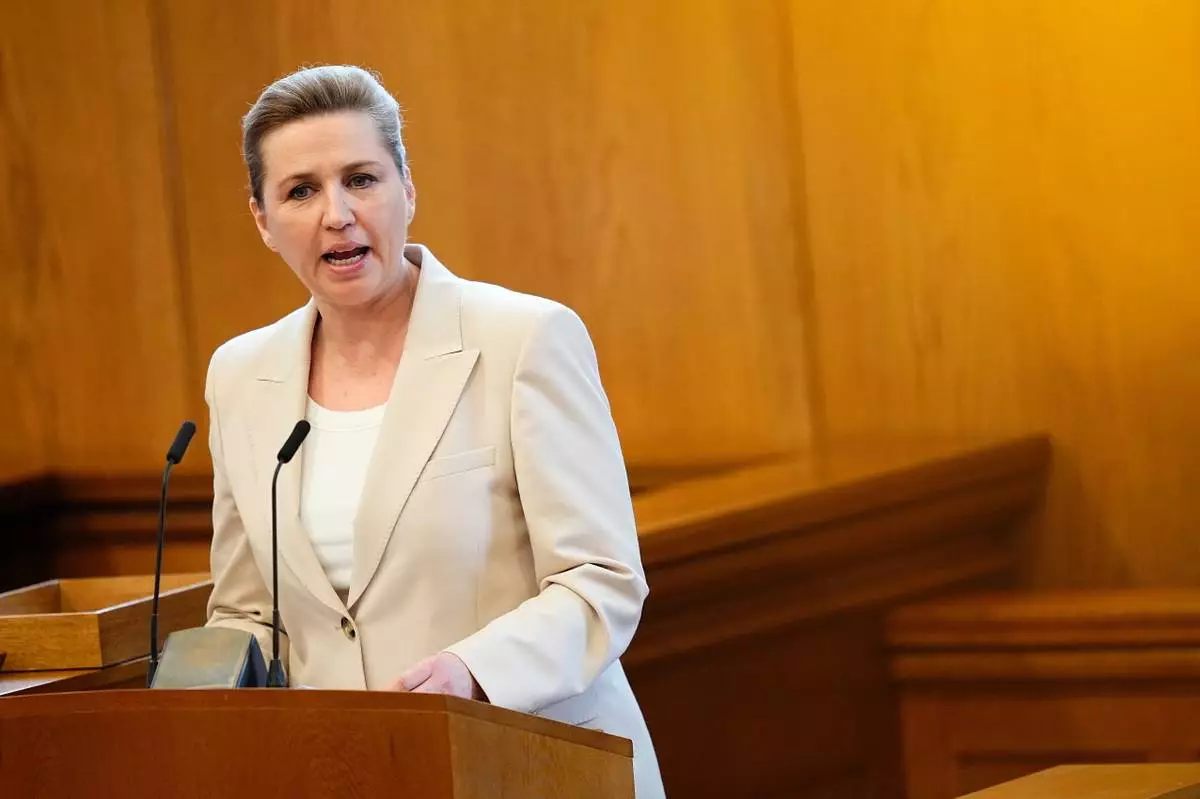
Danish Prime Minister Mette Frederiksen announces an upcoming parliamentary election, in the Parliament Hall at Christiansborg, in Copenhagen, Thursday, Feb. 26, 2026. (Thomas Traasdahl/Ritzau Scanpix via AP)
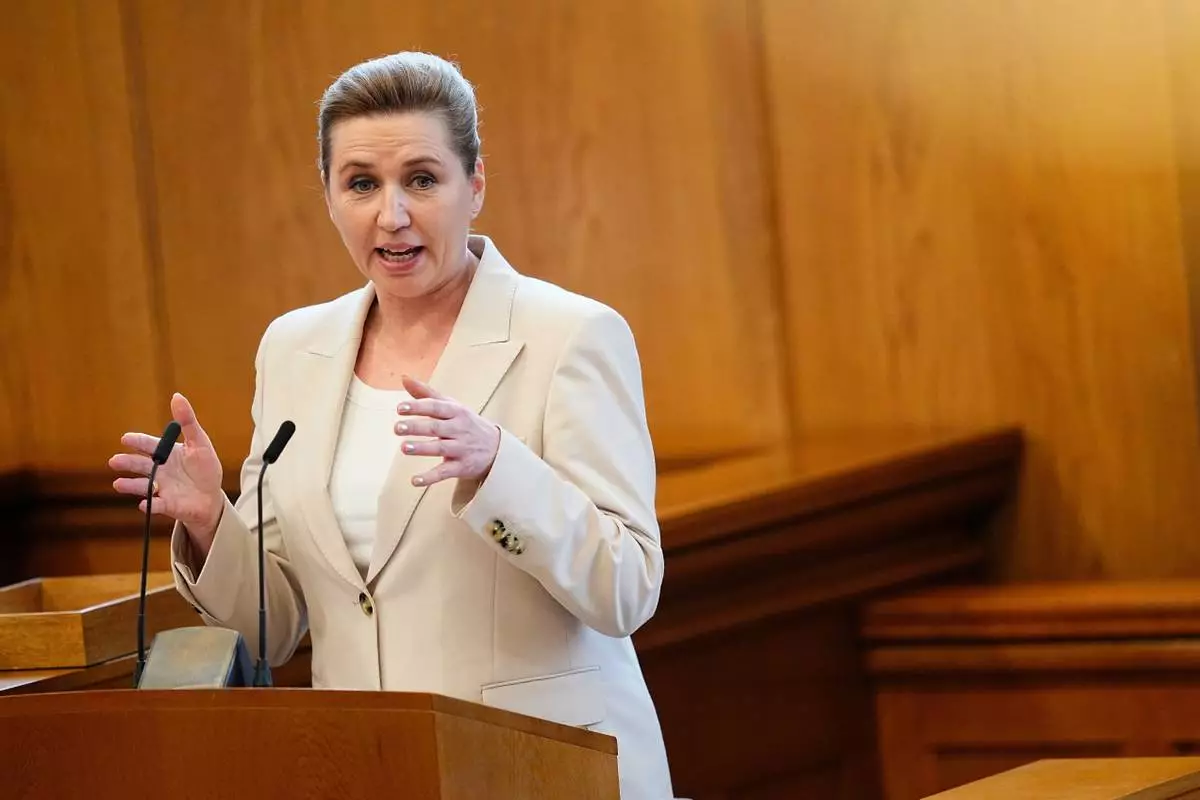
Danish Prime Minister Mette Frederiksen announces an upcoming parliamentary election, in the Parliament Hall at Christiansborg, in Copenhagen, Thursday, Feb. 26, 2026. (Thomas Traasdahl/Ritzau Scanpix via AP)
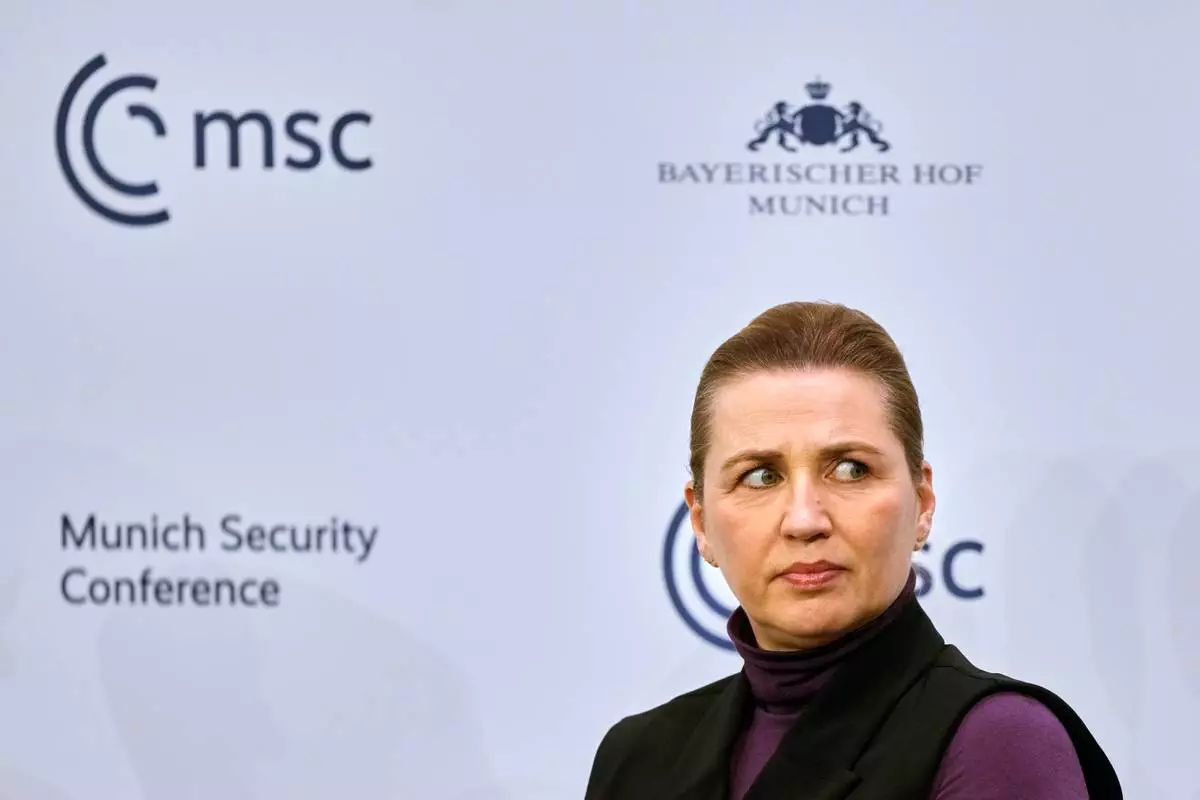
Denmark's Prime Minister Mette Frederiksen during a panel discussion at the Munich Security Conference in Munich, Germany, Saturday, Feb. 14, 2026. (AP Photo/Michael Probst)
KYIV, Ukraine (AP) — Russia launched a barrage of 420 drones and 39 missiles at Ukraine overnight, President Volodymyr Zelenskyy said Thursday, hours before U.S. and Ukrainian envoys held more talks in Geneva on ending the war that is now in its fifth year.
The bombardment, which included 11 ballistic missiles, targeted critical infrastructure and residential areas across eight regions of Ukraine, Zelenskyy said. Dozens of people, including children, were injured, officials said, though authorities did not immediately publish a confirmed total.
Zelenskyy said late Wednesday he had spoken by phone with U.S. President Donald Trump and thanked him for his “efforts and engagement” in pursuing peace negotiations.
The U.S.-brokered talks between Moscow and Kyiv are continuing but are deadlocked on the issue of Ukrainian territory that Russia claims as its own.
Zelenskyy has pushed for a summit with Russia's President Vladimir Putin, saying a face-to-face meeting could be decisive in unlocking an agreement, but the Kremlin has rebuffed that proposal beyond inviting the Ukrainian president to Moscow, which Zelenskyy refused.
Trump representatives Steve Witkoff and Jared Kushner, who were also discussing nuclear negotiations with Iran in Geneva before turning to the war in Europe, met with Rustem Umerov, the head of Ukraine’s National Security and Defense Council. They also joined Trump’s call with Zelenskyy.
The envoys were to discuss economic support and the recovery of Ukraine, ways of attracting investment to the country and frameworks for long-term cooperation, Umerov said on X.
Also, the meeting would look at preparations for the next round of trilateral negotiations involving Russia and consider possible further exchanges of prisoners, according to Umerov.
Washington is looking to keep momentum in its yearlong push to stop the fighting and overcome deep enmity between the warring countries.
Ukrainian and European officials have accused Putin of feigning interest in peace negotiations, hoping to avoid punitive U.S. measures such as additional sanctions while pressing forward with the invasion.
On the streets of Kyiv, people expressed some skepticism about the negotiations and how far Ukrainian concessions should go in return for a peace deal.
“Of course we want peace, we really want it,” said Vitalina Yefimenko, 55, who lives in the southern Ukraine city of Mykolaiv, voicing concern that Russia would invade again in the future.
“But I think that even if something is given up, we will be next — the south. It’s very frightening. Should I leave for another country? I don’t want to,” she said.
Kyiv resident Roman Cheremisienov, 56, said he didn’t trust the Trump administration’s motives, alleging that “current U.S. policy is aimed not so much at achieving peace in Ukraine as at business interests” close to the American president.
Dariia Kuzmenko, a 33-year-old psychology consultant, said Ukraine must hold its nerve because Russia’s economy is suffering under international sanctions over its invasion.
“We need to keep up the pressure, keep defending our position, and our politicians must not give up or be afraid,” Kuzmenko said.
Russia returned 1,000 bodies of fallen soldiers to Ukraine, and got back 35 bodies of its fallen troops, Vladimir Medinsky, the head of the Russian delegation at previous talks with Ukraine, said Thursday. He did not say when the exchange happened.
Ukraine’s Coordination Headquarters for the Treatment of Prisoners of War later confirmed the return, though it referred to “bodies which, according to preliminary information provided by the Russian side, may belong to Ukrainian defenders.”
Russia struck gas infrastructure in the Poltava region and electrical substations in the Kyiv and Dnipropetrovsk regions, Zelenskyy said. Emergency crews responded in five other regions, as well as in the capital.
Ukraine’s air defenses shot down most of the Russian missiles, Zelenskyy said, crediting Western partners for timely delivery of additional air defense interceptors. Ukraine needs foreign help to sustain its fight against Russia’s bigger forces.
Ukrainian Foreign Minister Andrii Sybiha urged allied countries to provide more military aid.
“When the whole world demands Moscow to finally stop this senseless war, Putin bets on more terror, attacks and aggression,” Sybiha said in a post on the Ministry of Foreign Affairs website.
The Russian Defense Ministry said its air defenses shot down 17 Ukrainian drones overnight over a number of Russian regions, as well as the Black and Azov Seas.
Ukraine's domestically developed long-range drones have struck oil refineries, fuel depots and military logistics hubs deep inside Russia.
Meanwhile, Russia continued to push allegations of a purported plot by European nations to provide Kyiv with a nuclear bomb, without providing any evidence.
The Kremlin-controlled lower house of the Russian parliament on Thursday unanimously approved an address urging the United Nations and European lawmakers to prevent the alleged plan.
It followed a statement by the Russian foreign intelligence service on Tuesday alleging that France and the U.K. were planning to covertly transfer nuclear weapons or components of a “dirty bomb” device.
British and French officials said the claim was a lie.
Kamila Hrabchuk and Dan Bashakov in Kyiv, Ukraine, contributed to this story.
Follow AP’s coverage of the war in Ukraine at https://apnews.com/hub/russia-ukraine
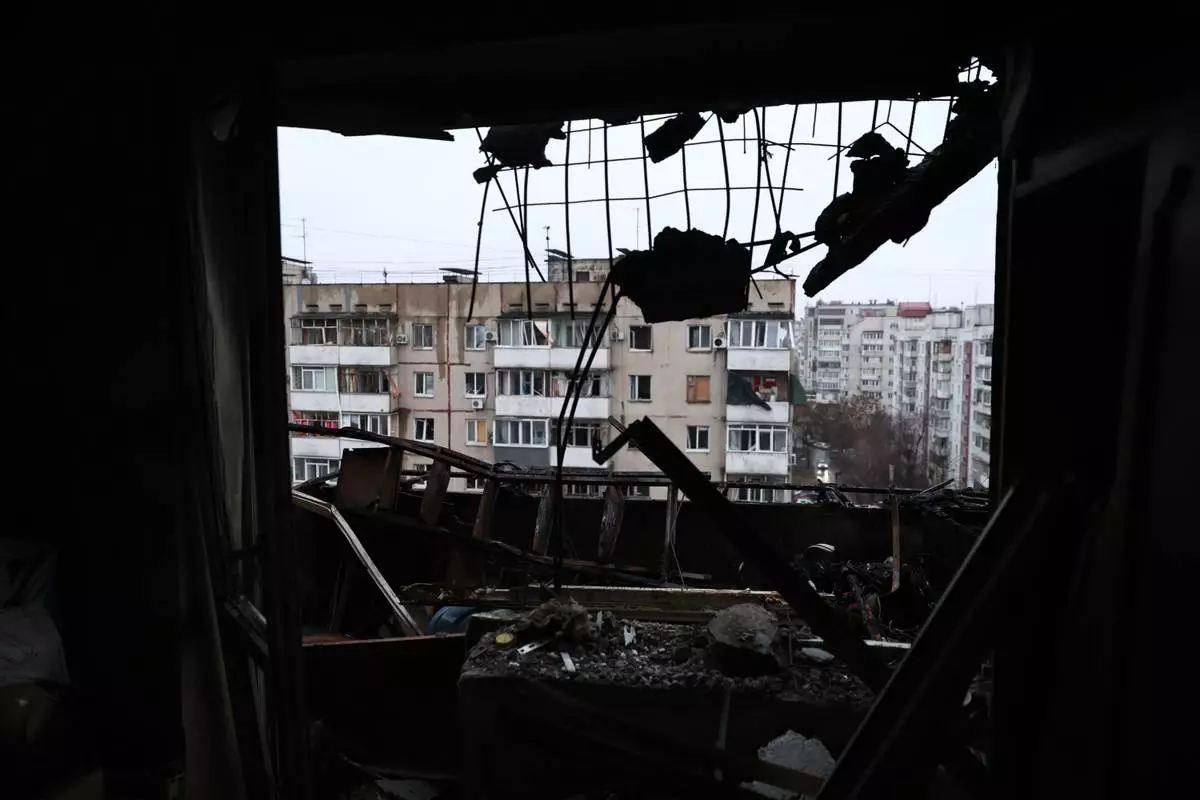
Residential neighbourhood is seen from the broken window of a damaged apartment building hit by a Russian drone in Zaporizhzhia, Ukraine, Thursday, Feb. 26, 2026. (AP Photo/Kateryna Klochko)
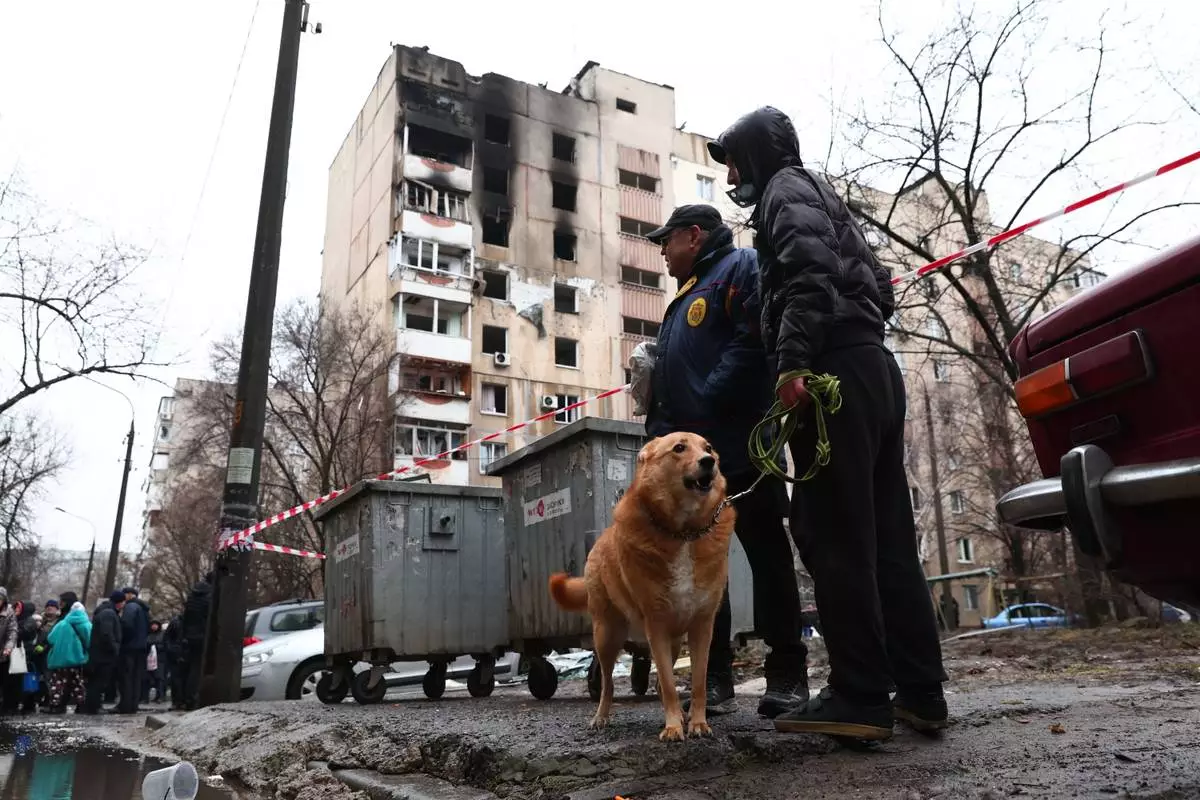
Local residents walk a dog near a damaged apartment building hit by Russian drone in Zaporizhzhia, Ukraine, Thursday, Feb. 26, 2026. (AP Photo/Kateryna Klochko)