Skip to Content Facebook Feature Image

Walz unveils anti-fraud package after Trump administration threatens to halt Medicaid funds

News

Walz unveils anti-fraud package after Trump administration threatens to halt Medicaid funds
News

News

Walz unveils anti-fraud package after Trump administration threatens to halt Medicaid funds

2026-02-27 06:25 Last Updated At:06:30

ST. PAUL, Minn., (AP) — Gov. Tim Walz denounced the Trump administration's latest threat to withhold federal funds from Minnesota as another step in a “retribution” campaign as he unveiled a package of legislation Thursday intended to fight fraud in public programs, a persistent problem that provided an impetus for the federal government's immigration crackdown in Minnesota.

The Democratic governor made the announcement a day after Vice President JD Vance said the administration would “temporarily halt” some Medicaid funding to Minnesota over fraud concerns, as part of what he described as an aggressive drive against the misuse of public funds. Walz's proposals were in the works well before Vance's announcement. They followed other initiatives Walz launched previously to try to come to grips with a problem that eventually helped lead him to drop his bid for a third term.

“This is a targeted retribution against a state that the president doesn’t like,” Walz said at a news conference, where he said the administration is using the same kind of “false information” on fraud as a “pretext” the way it did to justify Operation Metro Surge, in which the Department of Homeland Security sent over 3,000 federal officers into Minnesota.

The Trump administration’s move to freeze the Medicaid funds was part of a larger effort to spotlight fraud around the country. The administration had previously cited allegations of fraud involving day care centers run by Minneapolis-area Somali residents as a reason for a massive enforcement surge there.

One Minnesota federal prosecutor last December estimated that the total fraud across several programs could exceed $9 billion. But John Connolly, the state’s Medicaid director, told reporters Thursday the state has no evidence to substantiate such a high figure.

Other fraud cases in Minnesota have included a $300 million pandemic food fraud scheme revolving around the nonprofit Feeding Our Future, in which 78 defendants have been charged, with at least 57 convictions so far, in what prosecutors call the largest COVID-19-related fraud scheme in the country.

The governor's long list of proposals is aimed at better detection and oversight, strengthened investigative and enforcement authority and increased criminal penalties. One of them is the creation of a centralized Office of the Inspector General to lead fraud prevention efforts. The state Senate passed a bipartisan inspector general bill last year. But it remains stalled in the House amid disagreements over whether it should have law enforcement authority or, as the Walz administration prefers, just focus on investigations and leave enforcement up to the existing state Bureau of Criminal Apprehension.

Dr. Mehmet Oz, the administrator for the Centers for Medicare and Medicaid Services, said at a news conference Wednesday with Vance that the government would hold off on paying $259.5 million to Minnesota for Medicaid, the health care safety net for low-income Americans. Oz said the money would be delivered only after Minnesota implements "a comprehensive corrective action plan to solve the problem.” And he gave Walz 60 days to respond.

“How does taking and punishing children and elderly have anything to do with fighting fraud?” Walz countered. He added that the Trump administration has given his team no guidance for how to address its concerns, nor any opportunity to show the work that Minnesota has already done over the years to fight fraud. His administration estimates that 1.2 million Minnesotans could be hurt.

Officials at the Minnesota Department of Human Services, which administers Medicaid, noted that withholding $259.5 million — retroactive to the fourth quarter of 2025 — follows earlier federal action to withhold more than $2 billion in annual Medicaid funding to the state. The agency said the state submitted a corrective action plan earlier, and is still in the process of appealing that decision.

The state agency said it has implemented several new processes and reforms to prevent and detect Medicaid fraud since 2024. The changes included identifying areas at high risk of fraud, imposing stricter controls such as criminal background checks on providers, and more unannounced site visits.

Walz and Minnesota Attorney General Keith Ellison are both scheduled to appear before the U.S. House Oversight Committee next Wednesday for a hearing on misuse of federal funds in Minnesota's social service programs.
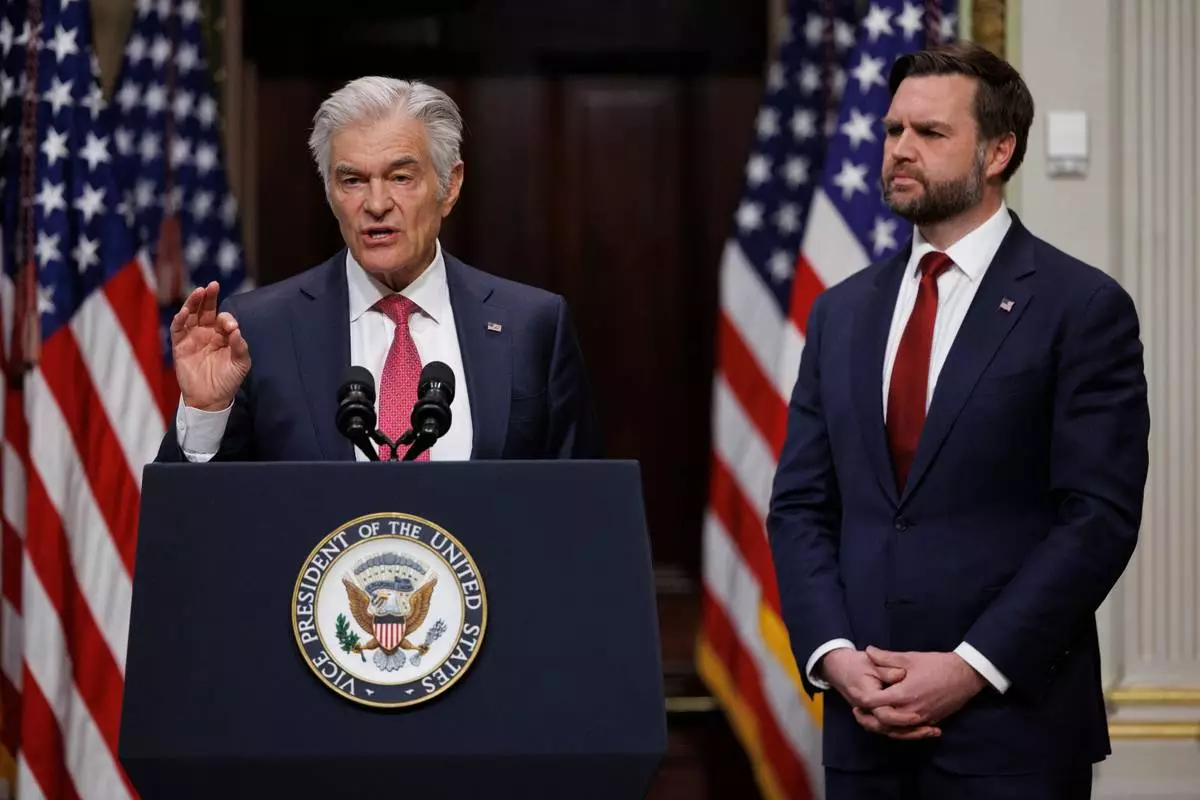
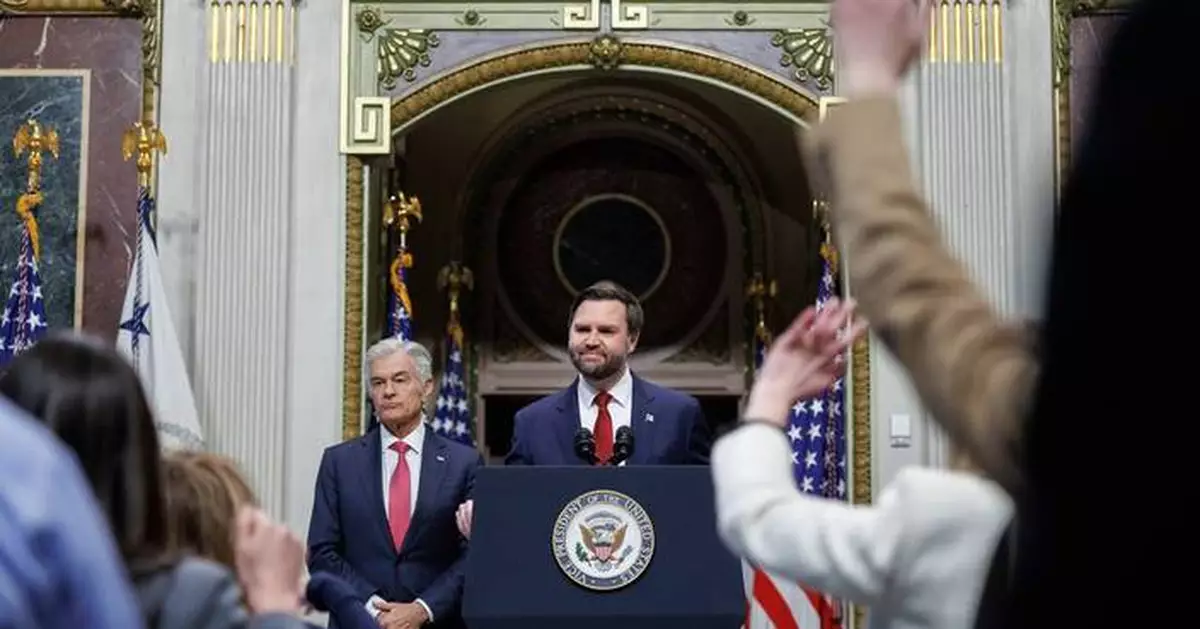
Administrator for the Centers for Medicare & Medicaid Services Dr. Mehmet Oz speaks beside Vice President JD Vance during a news conference on efforts to combat fraud, in the Old Eisenhower Executive Office Building on the White House campus Wednesday, Feb. 25, 2026, in Washington. (AP Photo/Tom Brenner)
Administrator for the Centers for Medicare & Medicaid Services Dr. Mehmet Oz speaks beside Vice President JD Vance during a news conference on efforts to combat fraud, in the Old Eisenhower Executive Office Building on the White House campus Wednesday, Feb. 25, 2026, in Washington. (AP Photo/Tom Brenner)
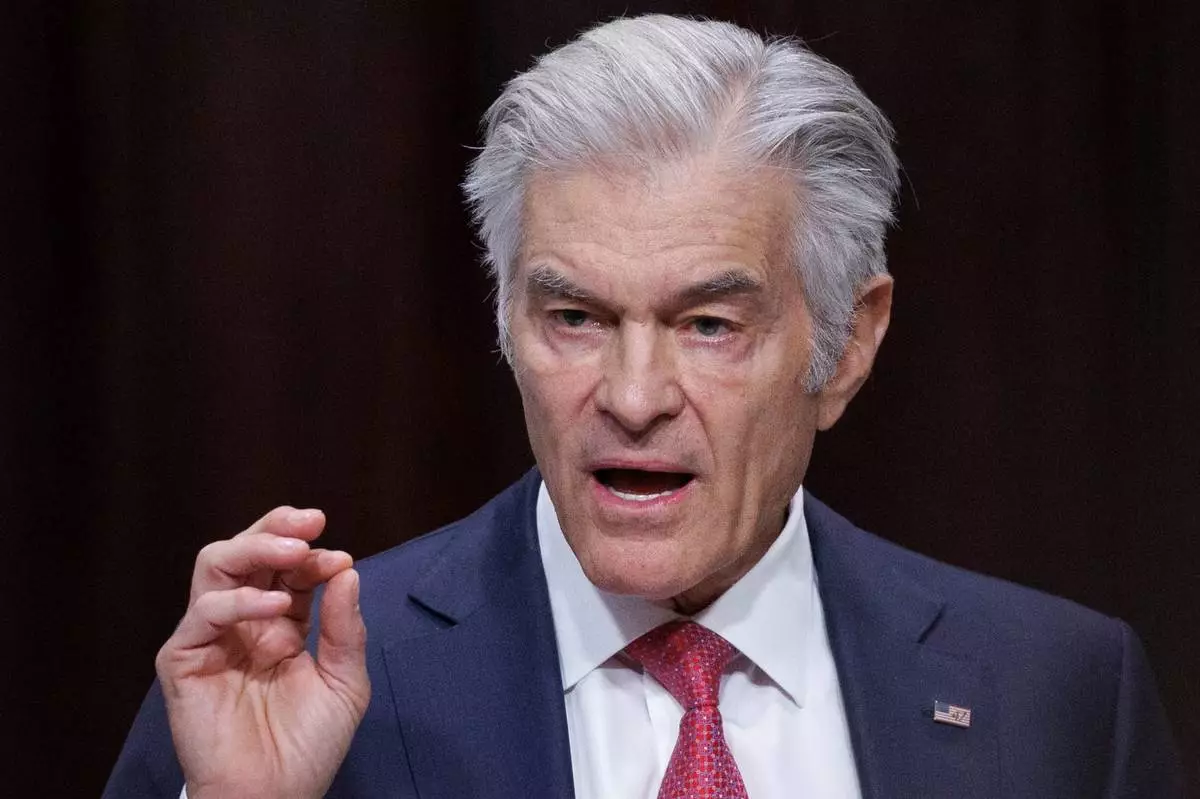
Administrator for the Centers for Medicare & Medicaid Services Dr. Mehmet Oz speaks during a news conference in the Old Eisenhower Executive Office Building on the White House campus Wednesday, Feb. 25, 2026, in Washington. (AP Photo/Tom Brenner)
Administrator for the Centers for Medicare & Medicaid Services Dr. Mehmet Oz speaks during a news conference in the Old Eisenhower Executive Office Building on the White House campus Wednesday, Feb. 25, 2026, in Washington. (AP Photo/Tom Brenner)
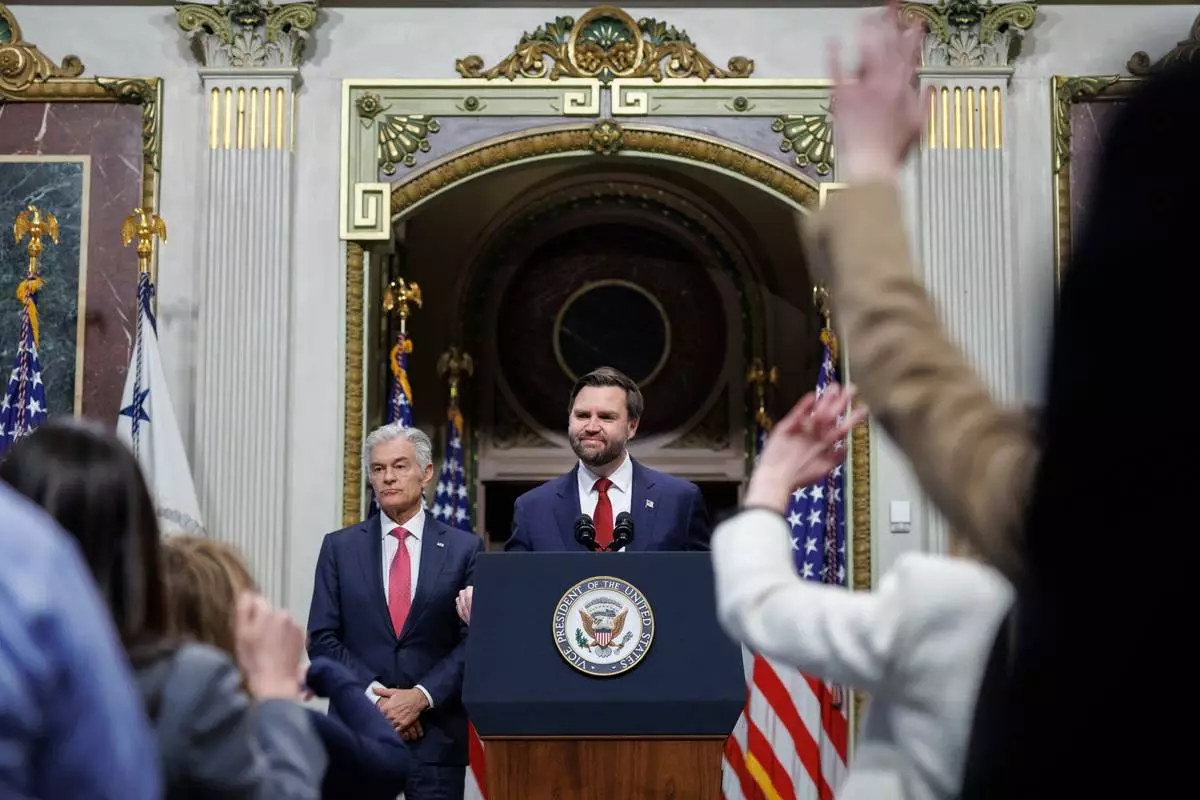
Vice President JD Vance and Administrator for the Centers for Medicare & Medicaid Services Dr. Mehmet Oz take questions from reporters following remarks on the administration's efforts to combat fraud during a news conference in the Old Eisenhower Executive Office Building on the White House campus Wednesday, Feb. 25, 2026, in Washington. (AP Photo/Tom Brenner)

Vice President JD Vance and Administrator for the Centers for Medicare & Medicaid Services Dr. Mehmet Oz take questions from reporters following remarks on the administration's efforts to combat fraud during a news conference in the Old Eisenhower Executive Office Building on the White House campus Wednesday, Feb. 25, 2026, in Washington. (AP Photo/Tom Brenner)
DUBAI, United Arab Emirates (AP) — The ceasefire in the Iran war hangs in the balance as Pakistan's capital stands prepared for possible new talks between Tehran and Washington.

The two-week ceasefire was set to expire at 0000 GMT Wednesday (8 p.m. ET Tuesday.) Neither the U.S. nor Iran have publicly confirmed timing of any new talks or plans to extend the ceasefire, but sudden changes have been the norm in the lead-up to past rounds of talks.

Here’s what to know about where the ceasefire stands, the possible talks in Pakistan and other issues surrounding the war:

Two regional officials told The Associated Press on Tuesday that the United States and Iran have signaled they will hold a new round of talks. Pakistan-led mediators received confirmation that top negotiators, U.S. Vice President JD Vance and Iran’s parliament speaker Mohammad Bagher Qalibaf, are expected to arrive in Islamabad early Wednesday to lead their teams, the officials told The Associated Press.

As of Tuesday evening, Pakistan’s Information Minister Attaullah Tarar said Iran had not formally confirmed it would participate in more talks, noting the looming deadline.

“An Iranian decision to attend the talks before the end of the two-week ceasefire is critical,” he said in a post on X.

The White House said Vance was still in Washington, and gave no word on whether he would be traveling to Pakistan.

Serious challenges face any upcoming talks, about the future of the Strait of Hormuz, Iran's nuclear program and other issues. Meanwhile, Iran targeted ships in the strait over the weekend. The U.S. also attacked and boarded one Iranian vessel that tried to outrun the American naval blockade in the strait — signaling that the situation remains volatile and a resumption of the war isn't out of the question.

The current truce between Iran, Israel and the United States began April 8 after multiple deadlines posed by U.S. President Donald Trump that threatened Iran’s very “civilization” at one point.

Iranian attacks targeted Gulf Arab states and Israel after it had started. Another mysterious attack struck an Iranian oil refinery on an island as well that afternoon. However, the ceasefire has broadly held.

An earlier round of negotiations between Iran and the U.S. was held in Pakistan from April 11 into the early morning the following day. Vance took part in the highest-level talks between America and Iran since the 1979 Islamic Revolution, which ended without an agreement.

Since this weekend, authorities in Islamabad have made preparations similar to those that accompanied the first talks, suggesting another round loomed. The White House has said that Vance would be returning to Islamabad for a new round of talks in the coming days with envoys Steve Witkoff and Jared Kushner.

The Strait of Hormuz, the narrow mouth of the Persian Gulf through which 20% of all natural gas and oil passes, remains effectively closed over Iranian attacks in the waterway. That included some attacks Saturday. There's also a fear that Iran mined a portion of the strait used by transiting ships during peacetime. Since the war, Iran reportedly has been charging as much as $2 million a vessel to allow them to pass. Opening the strait remains a key focus of negotiations and Tehran's strongest leverage against Washington, particularly as countries around the world have begun rationing energy and warning of shortages of jet fuel. The United States, meanwhile, has begun blocking ships from Iranian ports. The U.S. Navy attacked an Iranian container ship that tried to run through the U.S. blockade this weekend, with Marines rappelling onto it from helicopters.

All of Iran’s highly enriched uranium remains in the country, likely entombed at enrichment sites bombed by the U.S. during a 12-day war last June. Iran hasn’t enriched since then but maintains it has the right to do so for peaceful purposes and denies seeking nuclear weapons. Trump, along with Israel, has called for Iran to completely dismantle its nuclear program and give up its stockpile. Iran rejected that in its 10-point proposal for ending the war.

__ AP reporters Sam Metz in Ramallah, West Bank, Samy Magdy in Cairo and Munir Ahmed in Islamabad contributed reporting.

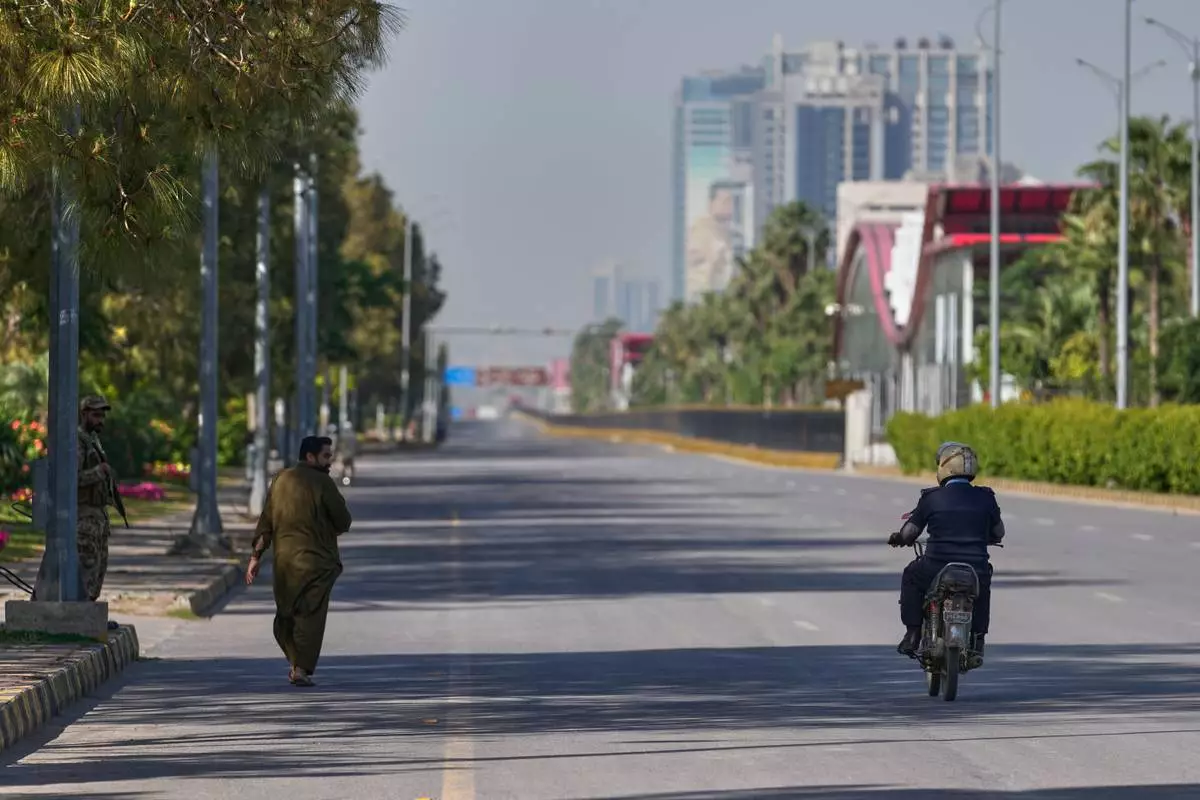
An army soldier, left, walks as police officer drives motorcycle on an empty road ahead of second round of negotiations between the U.S. and Iran, in Islamabad, Pakistan, Monday, April 20, 2026. (AP Photo/Anjum Naveed)

An army soldier, left, walks as police officer drives motorcycle on an empty road ahead of second round of negotiations between the U.S. and Iran, in Islamabad, Pakistan, Monday, April 20, 2026. (AP Photo/Anjum Naveed)

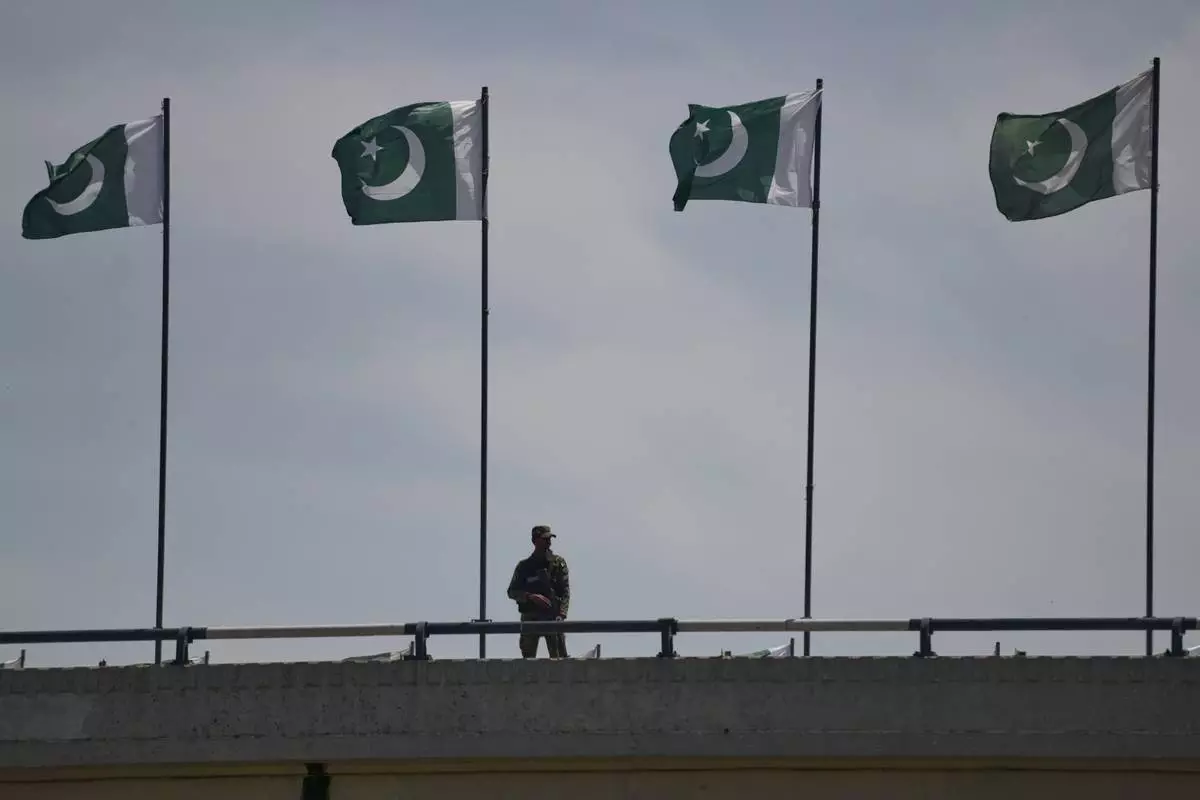
A soldier stands guard on a bridge ahead of second round of negotiations between the U.S. and Iran, in Islamabad, Pakistan, Monday, April 20, 2026. (AP Photo/M.A. Sheikh)

A soldier stands guard on a bridge ahead of second round of negotiations between the U.S. and Iran, in Islamabad, Pakistan, Monday, April 20, 2026. (AP Photo/M.A. Sheikh)

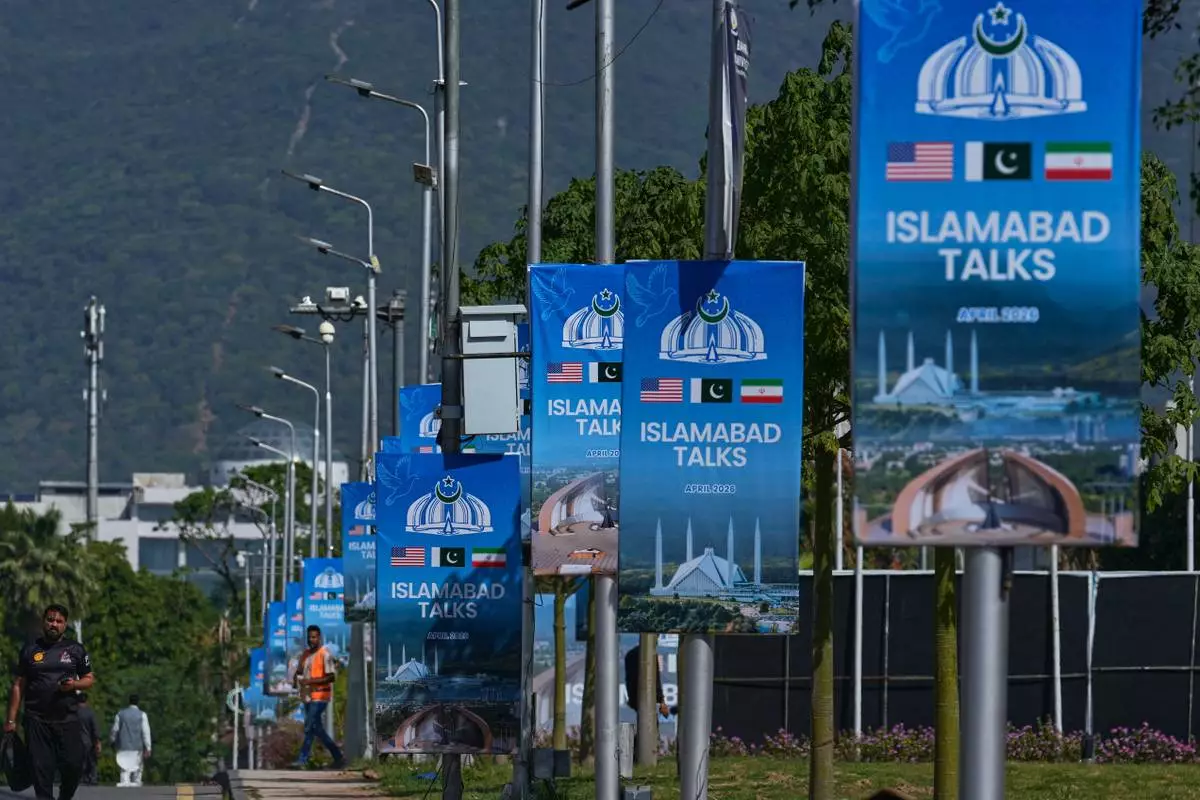
Workers walk past billboards near the Serena Hotel ahead of the second round of negotiations between the U.S. and Iran, in Islamabad, Pakistan, Monday, April 20, 2026. (AP Photo/Anjum Naveed)

Workers walk past billboards near the Serena Hotel ahead of the second round of negotiations between the U.S. and Iran, in Islamabad, Pakistan, Monday, April 20, 2026. (AP Photo/Anjum Naveed)

Recommended Articles