Government announces 2026-27 Land Sale List (with video)
The Secretary for Development, Ms Bernadette Linn, today (February27) announced the Government's 2026-27 Land Sale List.

The Secretary for Development, Ms Bernadette Linn, Photo source: reference image
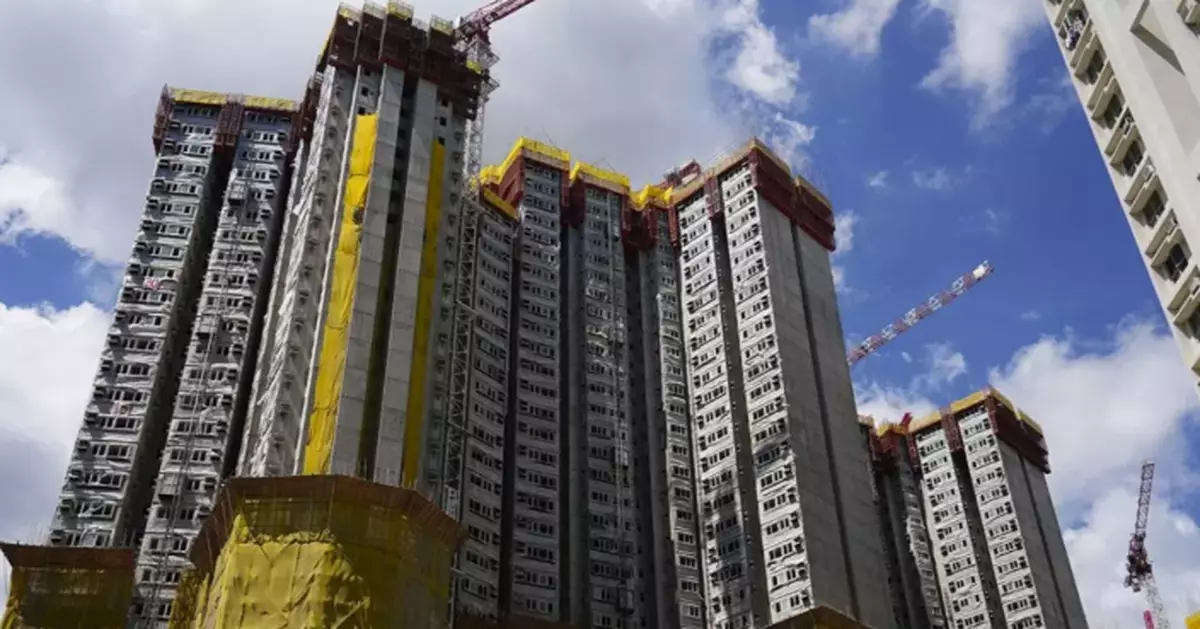
The 2026-27 Land Sale List covers nine residential sites, capable of providing about 6650 flats, including three residential sites in the pilot area under large-scale land disposal in Hung Shui Kiu/Ha Tsuen New Development Area in the Northern Metropolis, and the tender invitation will close on July 3, 2026.
Apart from sites rolled out by the Government, for railway development and transit-oriented development, projects expected to launch/complete tender in 2026-27 include MTR Corporation Limited (MTRCL)'s Tuen Mun A16 Station (Package 2) development project and the residential site earmarked for transit-oriented development for the Smart and Green Mass Transit System in Kai Tak. These two projects are expected to provide a total of about 6810 flats. In addition, the Urban Renewal Authority (URA) plans to take forward its projects at To Kwa Wan Road/Wing Kwong Street and Bailey Street, Kowloon City, providing about 2120 flats in total. As for private development/redevelopment projects, with reference to the figures in the past decade, the supply in the next financial year is estimated to be 7000 flats.
Taking into account the estimated land supply from all sources, the private housing land supply in 2026-27 is estimated to have a capacity to produce about 22580 flats. Amongst them, over 15 000 flats (around 70 per cent) are projects led by and co-ordinated by the Government. For the next five years, the Government will make available land for the production of about 98 000 private housing units. The Government will continue to play a co-ordination role and adjust the pace of disposal and other land supply sources. The Government will also continue to announce disposal arrangements on a quarterly basis in a pragmatic and paced manner after careful consideration of market conditions and other relevant factors.
As regards commercial sites, the 2026-27 Budget announced that, in view of the vacancy rate in the non-residential property market, the supply and demand, the Government will not put up general commercial sites for sale in the coming year. That notwithstanding, the Government will continuously review the use of commercial sites for residential or other more flexible uses. For example, the Development Bureau has earlier invited the market to submit expressions of interest for post-secondary student hostel development on three sites originally intended for commercial use, and will put up one or more of these sites in the coming year subject to market response.
As for industrial floor space, the aforementioned tender for the pilot area under large-scale land disposal in Hung Shui Kiu / Ha Tsuen New Development Area includes three Enterprise and Technology Park sites, supplying about 280000 square metres of industry floor area.
Reviewing the private housing land supply in 2025-26, the Government sold all five residential sites rolled out in this financial year and have a total capacity to produce about 2555 flats. Taking into account other sources of land supply, including railway development projects (2 570 flats), projects of the URA (990 flats) and private development/redevelopment projects (including 8 990 flats and 1 405 flats from projects requiring and not requiring lease modification respectively), the aggregate private housing land supply in 2025-26 is estimated to have a capacity to produce about 16510 flats, exceeding the annual supply target (13 200 flats) by around 25 per cent.
For the first quarter of 2026-27, i.e. April to June 2026, the Government will put up for tender a residential site in Tung Chung, which is capable of producing about 990 flats. Ms Linn said that the site sits on a harbourfront location and will be served by the future Tung Chung East Station, which would be attractive to the market. The MTRCL is also considering to put up for tender its development project at Tuen Mun A16 Station (Package 2) during the quarter, providing about 5510 flats. In addition, for private development/redevelopment projects, one lease modification case is expected to be executed in the first quarter, capable of providing about 175 flats. Assuming the above project from the MTRCL will be rolled out in the first quarter, total supply from various sources is expected to be about 6 675 flats.
The Government will continue to make reference to market situation and other supply sources, so as to announce the Land Sale Programme on a quarterly basis. Depending on the market situation, the Government may also put up additional sites to respond to market changes.
The 2026-27 Land Sale List can be found on the Lands Department's website (www.landsd.gov.hk).
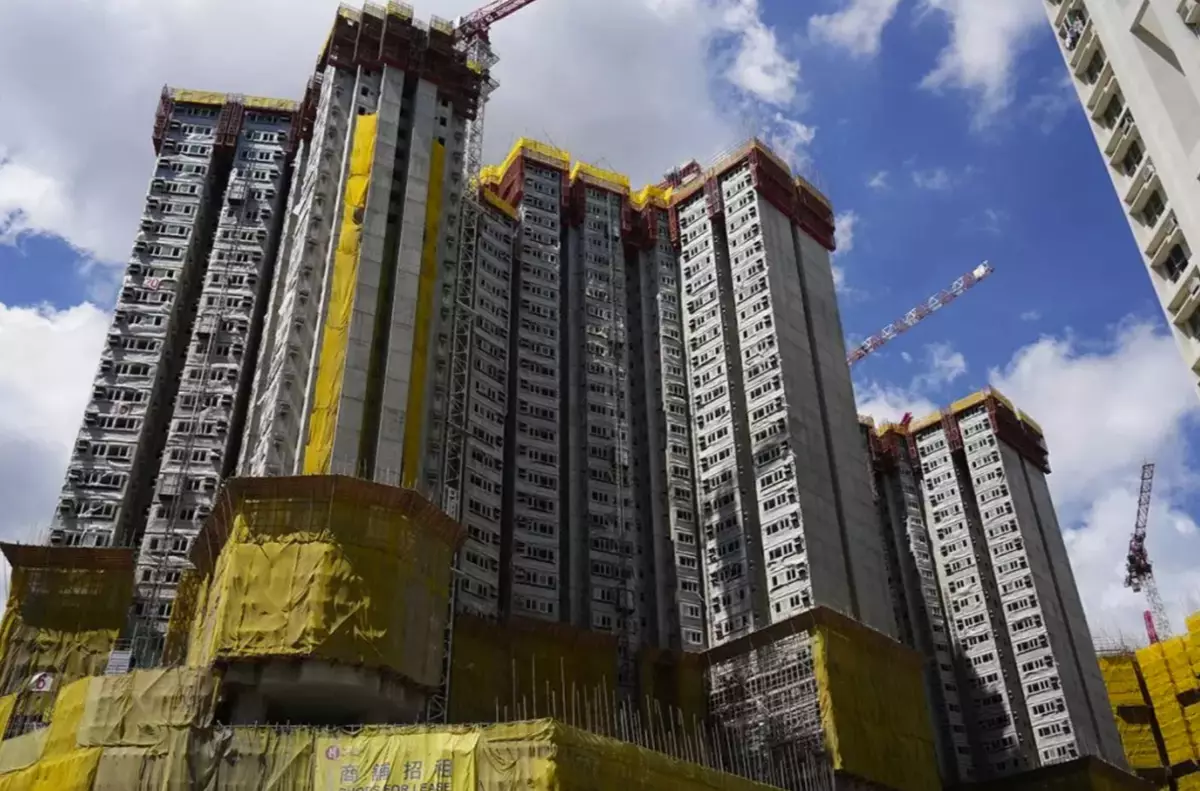
Photo by Bastille Post
Opening remarks by SED at LegCo Finance Committee special meeting
Following is the English translation of the opening remarks by the Secretary for Education, Dr Choi Yuk-lin, at the special meeting of the Legislative Council Finance Committee today (April 16):
Chairman,
Education is the key to nurturing talent. To proactively align with the National 15th Five-Year Plan, the Government of the Hong Kong Special Administrative Region (HKSAR) strives to develop Hong Kong into an international hub for education and high-calibre talent, and promote the integrated development of education, technology and talent, thereby contributing to the building of a leading country in education. In line with the national strategies of educational digitalisation and invigorating the country through science and education, we are also advancing digital education to cultivate a new generation of innovation and technology talent. The Government's expenditure on education is $112 billion in 2026-27, accounting for about 13.3 per cent of the total government expenditure. It includes $102.3 billion of recurrent education expenditure, around 17.1 per cent of the total recurrent government expenditure.
In order to consolidate and develop the unique advantages of Hong Kong's highly internationalised and diversified education system under "one country, two systems", we will continue to implement new initiatives in 2026/27 to promote the development of a high-quality education system.
For post-secondary education, we will make good use of the Task Force on Study in Hong Kong to promote Hong Kong's quality resources in academic studies, scientific research and international co-operation. The University Grants Committee (UGC) has allocated $40 million in the 2025-28 triennium to the eight UGC-funded universities to promote the "Study in Hong Kong" brand, with a view to attracting top-notch talent globally. Meanwhile, to further accelerate the development of the Northern Metropolis University Town, the Government will roll out three sites at the Hung Shui Kiu/Ha Tsuen New Development Area shortly for the UGC-funded universities and the universities of applied sciences to apply for development of campuses and related supporting facilities. The Government has also earmarked $10 billion for providing loans to support such projects in the Northern Metropolis.
The Education Bureau (EDB) has also intensified its efforts to promote digital education. In the 2025-28 triennium, the UGC-funded universities will introduce a total of 27 undergraduate programmes related to STEAM (science, technology, engineering, arts and mathematics), including AI, creative industries, and data science, to create opportunities for young people to make the most of their talent, and nurture professionals across various aspects by integrating technology with traditional disciplines through interdisciplinary curricula.
Regarding self-financing post-secondary education sector, starting from the 2027/28 academic year, we will give priority consideration to AI-related programmes under the Study Subsidy Scheme for Designated Professions/Sectors to encourage institutions to be more proactive in offering such programmes to nurture innovation and technology talent for the digital era. We also support the Vocational Training Council in incorporating AI applications and related content into the compulsory generic information technology module of all Higher Diploma programmes, ensuring that the talent nurtured are equipped for future development trends.
For primary and secondary education, the EDB will release the Blueprint for Digital Education Development in Primary and Secondary Schools this year. This will encompass strategies such as optimising the interface between primary and secondary curricula of information technology and innovation and technology education, setting out an AI literacy learning framework, and enhancing AI training for teachers to foster a digital education atmosphere on campus. In addition, the EDB has set aside $2 billion in the Quality Education Fund to support digital education in primary and secondary schools, covering curricula optimisation, teacher training enhancement, digital infrastructure optimisation, and provision of resource support to schools, etc, of which, approximately $500 million is earmarked for the AI for Empowering Learning and Teaching Funding Programme, a three-year initiative starting from the 2025/26 school year. Each successful publicly funded school applicant will receive a one-off funding of $500,000 to acquire essential equipment and tools for integrating AI into learning and teaching, implement school-based AI education projects, and subsidise students' participation in activities related to AI literacy.
The EDB set up the Task Force on Optimising Grants for Schools last year to reform and integrate various subsidies to schools in an innovative approach. Over the past year, the Task Force has deliberated on the usage of the various subsidies and consulted the education sector extensively. Based on the principles of streamlining administration and delegating authority; removing barriers and restrictions; enabling flexible deployment; increasing efficiency as well as using public funds prudently, the Task Force has come up with various enhancement measures to facilitate the development needs and long-term planning of kindergartens, primary and secondary schools.
We will continue to enhance and optimise education quality, while taking care of students' physical and mental well-being. We have regularised the Three tier School-based Emergency Mechanism in secondary schools and extended it on a trial basis to Primary Four to Six, to strengthen support for students in need. We will also continue to step up promotion of school mental health through the 4Rs Mental Health Charter, encourage more school personnel to receive training related to mental health first aid, and continue to provide "gatekeeper training" for parents.
Teachers are the key to providing quality education. We have been enhancing the professional competencies and broadening the horizons of teachers and school principals through diversified professional development programmes and activities. In addition, we will enhance the teacher registration mechanism, and explore amending the Education Ordinance to introduce the practising certificate and regular renewal requirements, so as to ensure that all school teachers in Hong Kong are fit and proper persons, thus upholding the professionalism of the teaching force.
The Government is now drawing up a macroscopic, strategic and forward-looking five-year plan for the first time for Hong Kong. In the area of education development, we will map out more comprehensive and precise strategies, so as to strengthen Hong Kong's ability to attract high-calibre talent, promote high-quality development of education, and better integrate into and serve the overall national development by contributing with Hong Kong's strength.
This concludes my introduction. Thank you, Chairman.
Source: AI-found images