NEW YORK (AP) — Neil Sedaka, the hit-making singer-songwriter whose boyish soprano and bright melodies made him a top act in the early years of rock ‘n' roll and led to a second run of success in the 1970s, has died.
Sedaka, whose hits included “Breaking Up Is Hard to Do” and “Laughter in the Rain,” died Friday at age 86.
Click to Gallery
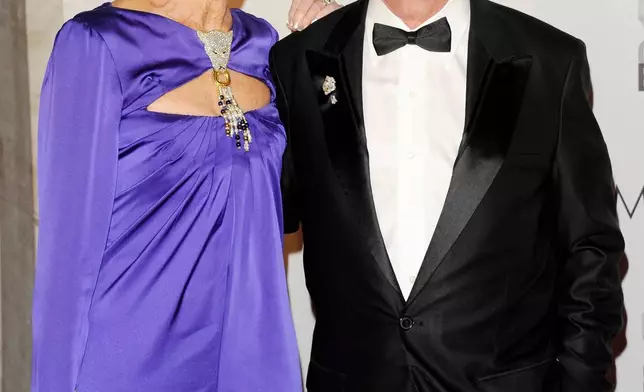
FILE - Composer Neil Sedaka, and his wife, Leba Sedaka, attend the New York City Ballet's gala opening night of Paul McCartney's "Ocean's Kingdom" on Thursday, Sept. 22, 2011 in New York. (AP Photo/Evan Agostini, File)
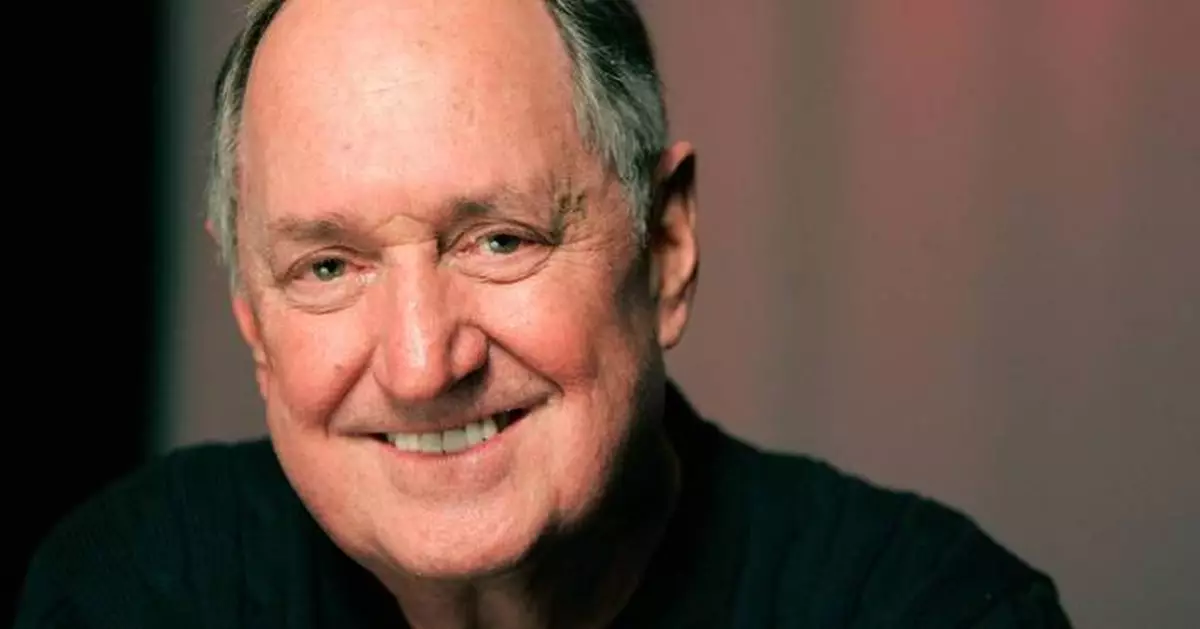
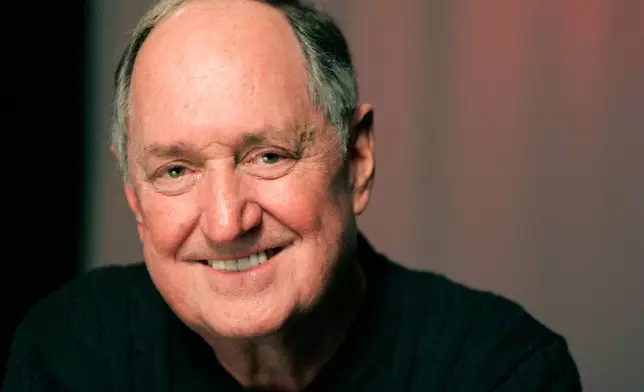
FILE - Neil Sedaka poses for a portrait in New York, Monday, April 30, 2012. (AP Photo/Charles Sykes, File)
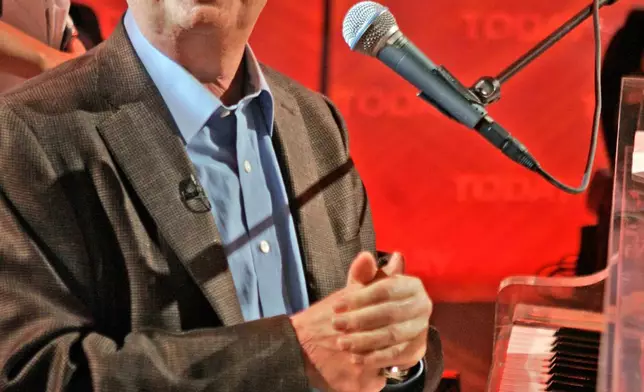
FILE - Singer and song writer Neil Sedaka appears on the NBC "Today" television show in New York Thursday Oct. 25, 2007. (AP Photo/Richard Drew, File)
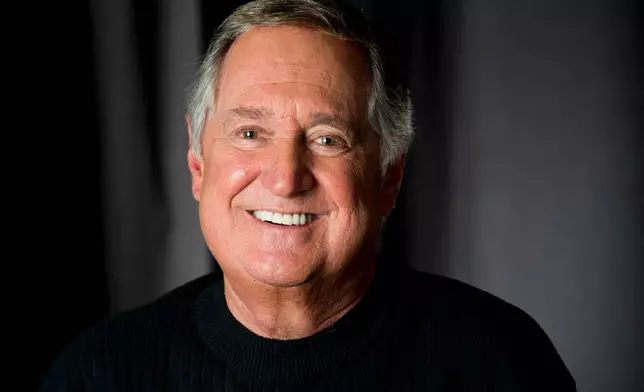
FILE - Recording artist Neil Sedaka poses for a portrait Tuesday, Jan. 26, 2010 in New York. (AP Photo/Jeff Christensen, File)
“Our family is devastated by the sudden passing of our beloved husband, father and grandfather, Neil Sedaka,” his family said in a statement. “A true rock and roll legend, an inspiration to millions, but most importantly, at least to those of us who were lucky enough to know him, an incredible human being who will be deeply missed.”
No other details of his death were immediately available.
A key member of the Brill Building songwriting factory, Sedaka teamed with lyricist and boyhood neighbor Howard Greenfield on songs that reflected the teen innocence of the post-Elvis, pre-Beatles era of the late 1950 and early 1960s, including “Happy Birthday Sweet Sixteen,” “Calendar Girl” and “Oh! Carol,” a lament for his high school sweetheart, Carole King.
After a long dry spell, he reemerged with such smashes as “Laughter in the Rain” and “Bad Blood.” The Captain & Tennille's cover of his “Love Will Keep Us Together” was a chart-topper in 1975.
Short and dark-haired, with a big smile and high-pitched voice, he was a Juilliard-trained, Brooklyn-born son of a Jewish taxi driver who began performing as a teen and kept at it for decades.
Sedaka still played dozens of concerts a year well into his 80s. He retained the enthusiasm and broad vocal range of his youth and never tired of the standards he had sung hundreds of times.
“Past 70, Pavarotti told me the vocal cords are not what they used to be. I’m very fortunate that my voice has held,” he told The Associated Press in 2012. “It’s nice to be a legend, but it’s better to be a working legend.”
Sedaka’s songs sold millions worldwide and have been covered by a range of performers, from Elvis Presley and Frank Sinatra to The 5th Dimension and Nickelback. Sedaka helped propel the career of Connie Francis with “Stupid Cupid” and “Where the Boys Are,” the latter for the soundtrack of the movie with the same name. The Captain & Tennille received a best-album Grammy thanks largely to “Love Will Keep Us Together” and included a nod to Sedaka at the end of the song, when Toni Tennille exclaimed “Sedaka’s back!”
Sedaka grew up in Brooklyn’s Brighton Beach neighborhood, pampered by his grandparents, aunts and mother in a two-bedroom apartment he shared with 11 relatives. He has a street there named in his honor, Neil Sedaka Way.
But his music compensated for his unpopularity as a kid, he once recalled. His talent was recognized by a second-grade teacher who urged his homemaker mother, Eleanor, to buy him a piano. She went to work in a department store to pay for a secondhand upright and managed his career for years, as did his wife, Leba.
Sedaka loved songwriting and never quit, but he craved performing.
“Once a performer, always a performer. It’s that adrenaline rush. It’s like a natural high when you’re in front of an audience, and if you get that standing ovation, it’s infectious,” he told the AP.
At 16, Sedaka was chosen by Arthur Rubenstein in a contest as the city’s best high school piano student and performed on a classical radio station as a prize. It was the same year he discovered rock ‘n’ roll, when he performed a song, “Mr. Moon,” he had written with Greenfield, his classmate at Abraham Lincoln High School.
“I sang it in the auditorium for a ballyhoo show and I remember there was a bit of a riot. The kids were jumping and screaming,” Sedaka said. “After that I was able to go into the sweet shop with the tough kids with the leather jackets.”
After high school, and then Julliard, Sedaka and Greenfield were signed to Don Kirshner’s Aldon Music, where they scored their first hit with Francis, “Stupid Cupid.”
In 1958, at age 19, Sedaka signed with RCA Victor Records and his first single, “The Diary,” enjoyed modest success. He began touring and promoting his songs through regular TV appearances on Dick Clark’s “American Bandstand” and “Shindig!”
At the Brill Building, Sedaka and Greenfield were joined by other up-and-coming writers and lyricists including Neil Diamond, Paul Simon and King.
“Neil Sedaka was so talented, and he inspired me to follow my dream of being a songwriter,” King said on her Facebook page Friday. “With love and gratitude and condolences to his family.”
Micky Dolenz of the Monkees also paid tribute to Sedaka, saying on Instagram that he was “one of those rare songwriters who could do it all.”
From 1959 to 1962, Sedaka had 10 records in the Top 10, including “Calendar Girl,” “Oh! Carol,” “Happy Birthday Sweet Sixteen” and “Next Door to an Angel.” But in the mid-1960s, the Brill Building sound, influenced by the doo-wop groups of the New York City streets, was pushed off the charts by the Beatles -led British Invasion and the psychedelic and protest music that followed. Sedaka would endure 13 years “in the wilderness,” as he described it to the AP.
Sedaka was among the lucky, however, enjoying a renaissance that began in the mid-’70s thanks to the patronage of Elton John, whom he met at a party after Sedaka moved his wife and two kids to England to take advantage of his lingering popularity there. John signed him to his fledgling, U.S.-based Rocket Records label, providing him a chance at more hits with the album “Sedaka’s Back.”
At Rocket, Sedaka and a new writing partner, Philip Cody, topped charts with “Bad Blood” and the joyous “Laughter in the Rain.” He also achieved a rare feat with “Breaking Up Is Hard to Do.” His original up-tempo version went No. 1 in 1962. He rerecorded it as a slow ballad in 1975 and that, too, went No. 1.
He recorded five albums from 1972 to 1976. They included hits “Standing on the Inside,” “That’s Where the Music Takes Me” and “Our Last Song Together,” about his breakup with Greenfield, with whom he began writing songs when Sedaka was only 13 and Greenfield 16.
He was inducted into the Songwriters Hall of Fame, but the Rock & Roll Hall of Fame eluded him despite a fan petition drive.
Sedaka married wife Leba in 1962. They had two children. Daughter Dara recorded a duet with dad in 1980, “Should’ve Never Let You Go.” It was a hit, but she never joined him in the music business. Son Marc is a film and television writer.
AP Entertainment Writers Mark Kennedy in New York and Andrew Dalton in Los Angeles contributed. Leanne Italie, the principal writer of this story, retired in January.
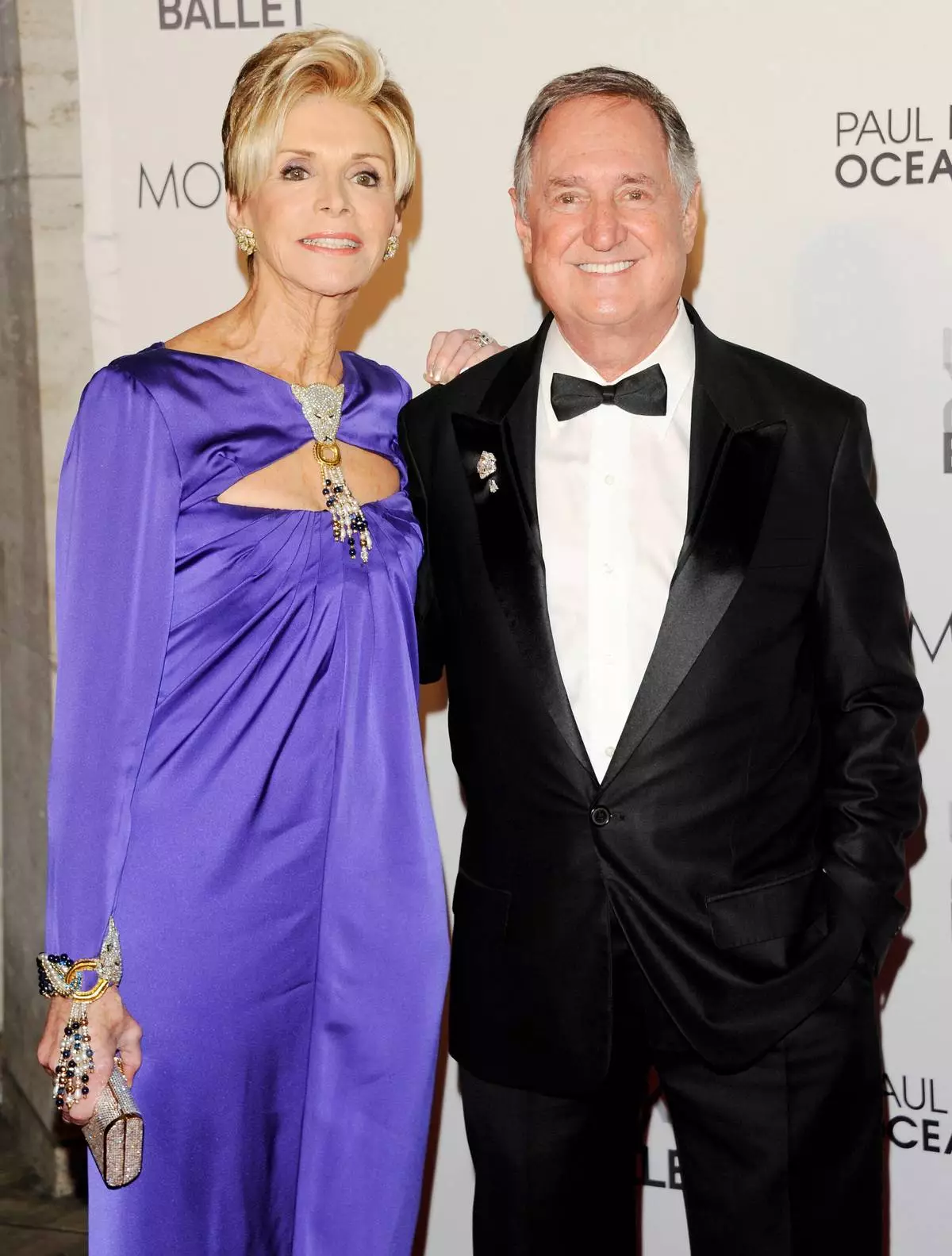
FILE - Composer Neil Sedaka, and his wife, Leba Sedaka, attend the New York City Ballet's gala opening night of Paul McCartney's "Ocean's Kingdom" on Thursday, Sept. 22, 2011 in New York. (AP Photo/Evan Agostini, File)
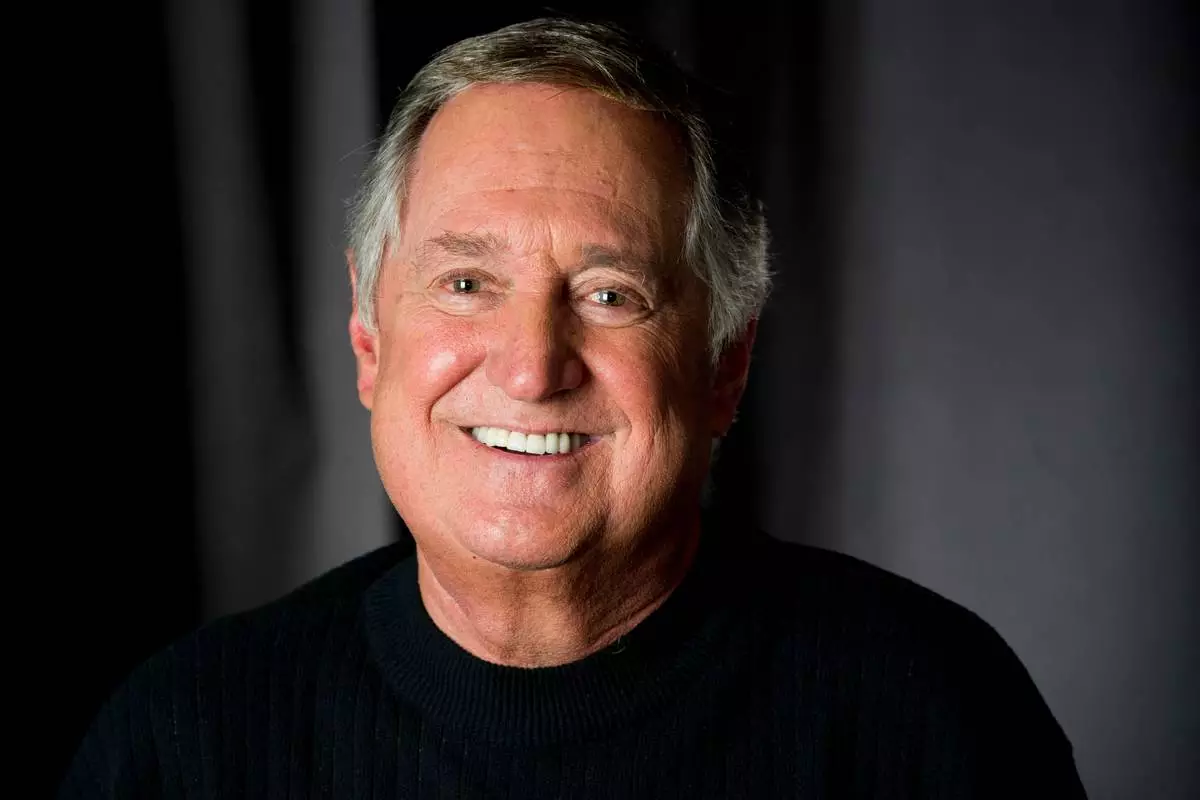
FILE - Neil Sedaka poses for a portrait in New York, Monday, April 30, 2012. (AP Photo/Charles Sykes, File)
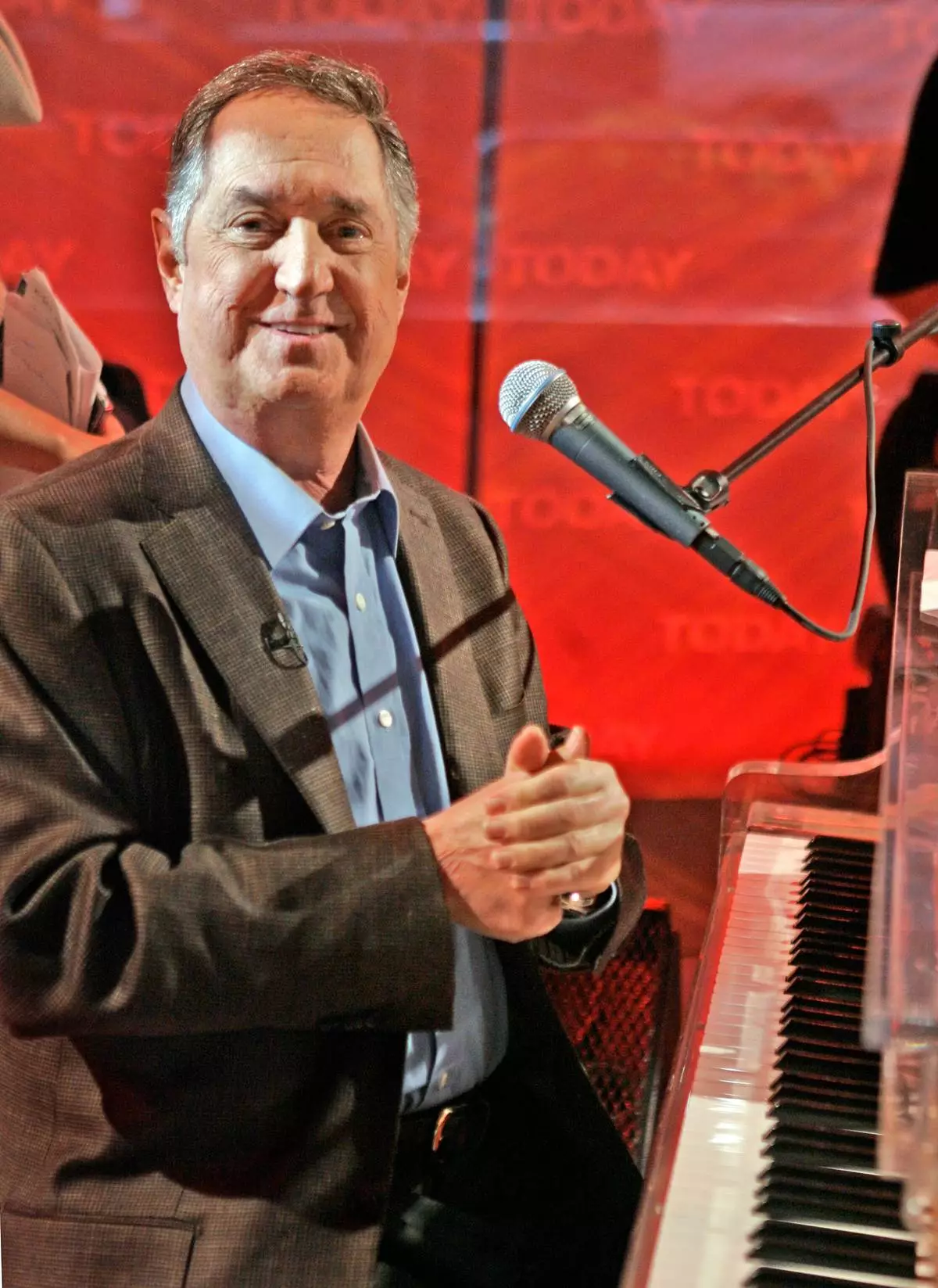
FILE - Singer and song writer Neil Sedaka appears on the NBC "Today" television show in New York Thursday Oct. 25, 2007. (AP Photo/Richard Drew, File)
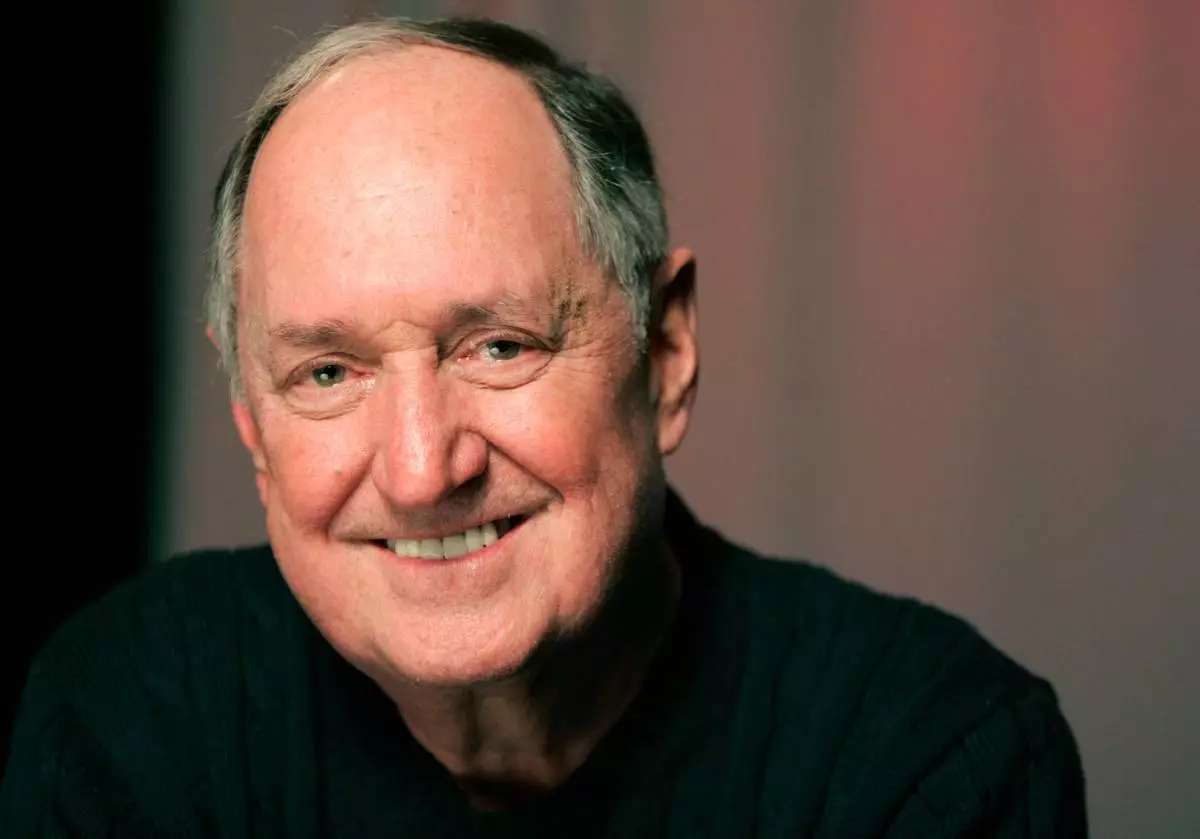
FILE - Recording artist Neil Sedaka poses for a portrait Tuesday, Jan. 26, 2010 in New York. (AP Photo/Jeff Christensen, File)
WASHINGTON (AP) — President Donald Trump had something urgent to address while flying back to Washington from his luxury Mar-a-Lago estate on a recent Sunday.
It wasn’t the Iran war, nor the still-going partial government shutdown over Department of Homeland Security funding. He wanted to talk about a monumental issue of a different kind, hoisting up large artist renderings of the $400 million White House ballroom he’s building, complete with hand-carved “top-of-the-line” Corinthian columns.
“I’m so busy that I don’t have time to do this. I’m fighting wars and other things,” Trump said before extensively detailing plans for “the greatest ballroom anywhere in the world.”
His divided attention has become a Democratic point of attack and a concern for some Republicans who worry he’s not spending enough time on issues that voters care most about ahead of November’s midterm races.
The contrast was on full display Thursday, when, as Trump flew to Las Vegas to discuss tax cuts for Americans earning tips, his administration was pushing ahead with plans to build a 250-foot Triumphal Arch near the Lincoln Memorial replete with a Lady Liberty-like statue and a pair of golden eagles.
The president’s ability to speak to the concerns of working people has always seemed incongruous with his biography as a billionaire real estate developer. Yet his populist policies and emphasis on the economy during his 2024 campaign helped catapult him back to the White House.
Republican strategist Rick Tyler noted that, when Trump first ran for president in 2016, his wealth was a selling point.
“While other people, like Mitt Romney, played down how rich he was, Trump was giving free helicopter rides at the Iowa State Fair,” Tyler said. “People loved it.”
Still, Trump’s preoccupation with some of the gilded trappings of the presidency, as more Americans worry about bills, has drawn accusations that he’s a modern-day Marie Antoinette.
“‘Fighting wars’ and surging gas prices, yet Trump has time to brag about his billionaire backed ballroom,” Sen. Andy Kim, a New Jersey Democrat, responded on X to Trump’s Air Force One presentation.
Democratic California Gov. Gavin Newsom, a potential 2028 presidential hopeful, has been more direct in comparing Trump to the last queen before the French Revolution, who has come to embody extravagant opulence — even posting an AI-generated image of Trump's face on her body on social media.
"TRUMP ‘MARIE ANTOINETTE’ SAYS, ‘NO HEALTH CARE FOR YOU PEASANTS, BUT A BALLROOM FOR THE QUEEN!’ Newsom wrote in October 2025, at the start of a 43-day government shutdown.
Asked about opponents invoking Marie Antoinette, White House spokesman Davis Ingle said Trump “is going to go down in history as the most successful and consequential president in our lifetime.”
“His successes on behalf of the American people will be imprinted upon the fabric of America and will be felt by every other White House that comes after him," Ingle said in a statement.
The president faced similar critiques during his first term. But lately he's been unabashed about accusations he’s disconnected from Americans' worries about high costs, which could leave Republicans with an uphill battle to retain control of Congress.
About two-thirds of Americans said Trump is “out of touch” with the concerns of most people in the United States today, according to an ABC News/Washington Post/Ipsos poll from February, though the same percentage said the same about the Democratic Party.
Presidents are usually removed from voters, separated by layers of security and surrounded by adoring subordinates. In her book “Why Presidents Fail And How They Can Succeed Again,” Elaine Kamarck argues that presidents get too focused on their own political narratives rather than the public's concerns. Yet, when it comes to Trump, “All of this stuff is frankly unique to him.”
She pointed to the ballroom as well as Trump's other White House renovations, soon adding his signature to paper currency, and renaming the Kennedy Center after himself.
“It's a reflection, I think, of his own background as a businessman and somebody who made his fortune selling his name," said Kamarck, who worked in Bill Clinton’s White House.
While Trump focuses on the ballroom and other Washington projects, some public work projects in other parts of the country have languished.
Joe Meyer, the former mayor of Covington, Kentucky, spent years pushing for critical improvements to the Brent Spence Bridge connecting his town with Cincinnati, a project listed as a top federal priority dating back to Trump's first administration.
Federal funds for improvements were approved under President Joe Biden but held up by a Trump-ordered review. Work is now finally set to begin later this year, though delays will likely limit design options and slow the project, Meyer said.
“The ballroom is Washington inside-baseball,” Meyer said. “The bridge is just a wreck. It’s frustration that we’ve been dealing with forever.”
Trumpeting new tax deductions for tips, Trump staged ordering McDonald's to the Oval Office — which he has crammed with gold flourishes — and tipped the grandmother making the delivery $100. When she described large medical bills from her husband’s cancer treatments, Trump said she should bring him to an upcoming UFC fight on the White House lawn.
When hundreds of farmers were invited to the White House for an agricultural policy speech, they stood on the South Lawn beside a tractor that had been painted gold. It drizzled, but Trump stayed dry, addressing them from a covered second-floor balcony.
“You don’t mind rain,” the president told the farmers below.
He then flew to Miami for a conference of Saudi investors who, the president noted, were too rich to be impressed by U.S. families scrounging to save up $5,000.
“I know they’re looking like, ‘What the hell is $5,000?’" Trump joked. "Their shoes cost them more than $5,000."
When asked in February, meanwhile, for his message to young people wanting to buy a home, Trump replied: “Save a little longer. Wait a little longer."
Members of the Cabinet have also fed the perception that Trump's promised “ Golden Age ” may not be arriving for everyone. Health Secretary Robert Kennedy Jr. advised Americans to buy liver instead of beef.
“If you go and buy a steak, it’s still pretty expensive. But if you buy the cheaper cuts, it’s great meat. And it is very, very affordable. Or liver, or, you know, all these alternatives,” he told podcast host Joe Rogan.
Agriculture Secretary Brooke Rollins said people could still afford meals consisting of “a piece of chicken, a piece of broccoli, corn tortilla and one other thing.”
The White House has sought to show that Trump is attuned to voter concerns by sending the president to politically competitive parts of the country to trumpet his efforts to lower costs. But Trump has stepped on the message by insisting that affordability concerns are a Democratic “hoax.”
Texas-based Republican consultant Brendan Steinhauser said he thinks that Trump “can kind of get away with" building a ballroom because voters have come to expect that from him as a brash dealmaker and businessman.
But Steinhauser said he worries that dramatic increases in gas prices and a potentially weakening economy could resonate with voters. Ahead of the midterms, Steinhauser said, Democrats could score points “trying to make it more about Trump and his oligarch friends.”
Associated Press writers Linley Sanders in Washington and Ali Swenson in New York contributed to this report.

President Donald Trump gestures after a roundtable event about no tax on tips, Thursday, April 16, 2026, in Las Vegas. (AP Photo/Alex Brandon)
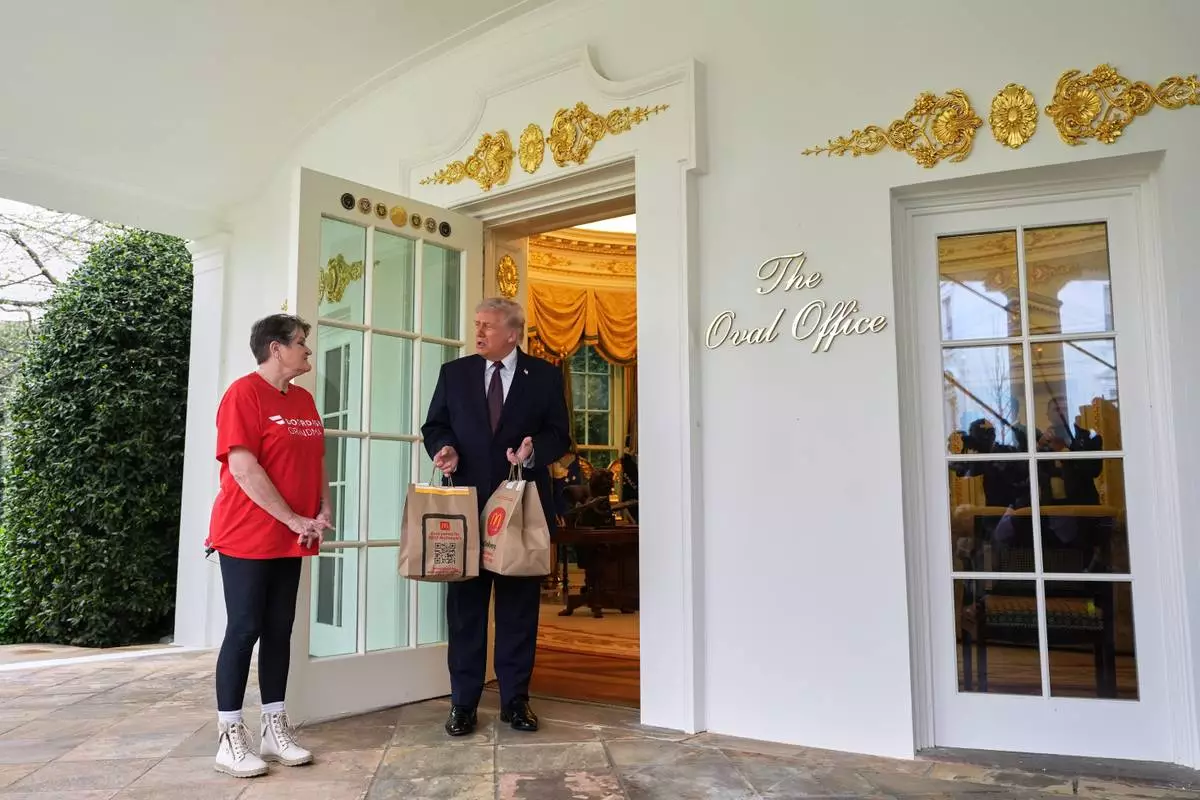
ADDS NAME SHARON SIMMONS - President Donald Trump speaks to Sharon Simmons, a Dasher from Arkansas, who delivered him two bags of McDonald's food outside the Oval Office of the White House, Monday, April 13, 2026, in Washington. (AP Photo/Alex Brandon)

White House press secretary Karoline Leavitt holds up an artist rendering of the new triumphal arch as she speaks with reporters in the James Brady Press Briefing Room at the White House, Wednesday, April 15, 2026, in Washington. (AP Photo/Alex Brandon)
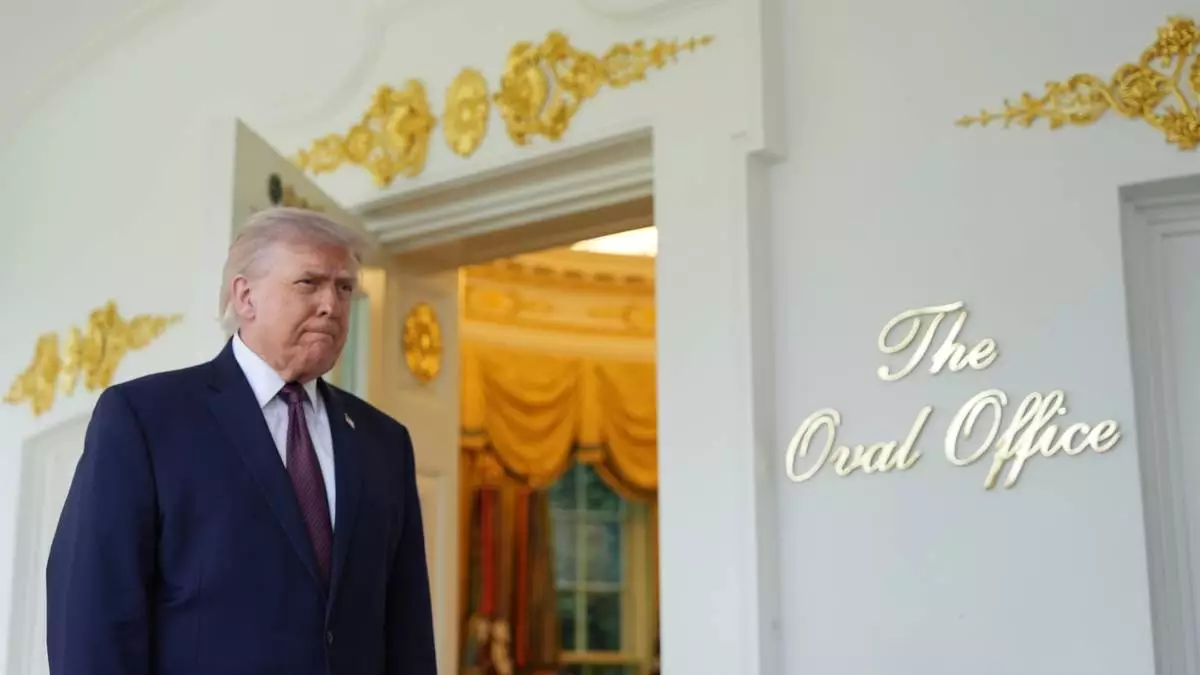
President Donald Trump speaks outside the Oval Office of the White House, Monday, April 13, 2026, in Washington. (AP Photo/Alex Brandon)