The United States and Israel on Saturday launched "major combat operations" against Iran, plunging the war-torn Middle East into a new round of violent conflicts.
U.S. President Donald Trump said the objective "is to defend the American people by eliminating imminent threats" from Iran, and the Israeli Defense Ministry said the country launched a "preemptive" strike against Iran "to remove threats to Israel."
In Tehran, missiles hit areas near the offices of both Iranian Supreme Leader Ali Khamenei and President Masoud Pezeshkian. Iranian sources said that both leaders remain unhurt.
Israeli-U.S. airstrikes also struck a girls' school in southern Iran, killing at least 60 students, with 80 others injured, Hossein Kermanpour, head of the Iranian Health Ministry's public relations, said in a post on social media. Dozens more are reportedly still trapped under rubble.
Iran closed its airspace while the attacks were ongoing. Mobile phone services have been cut in parts of Tehran.
Iran has retaliated with a series of counterattacks against Israel and U.S. targets across the region, with explosions reported in Bahrain, Qatar, Kuwait, Jordan, the United Arab Emirates (UAE), and Saudi Arabia, among other countries.
Israel's Defense Minister Israel Katz declared a special and immediate state of emergency in all areas of Israel. Sirens were sounded across Israel to warn the public to prepare for the possibility of Iranian retaliation. Israeli airspace has been closed to civilian flights, according to Israeli Airports Authority.
In response to the sharp regional escalation, several countries have slammed their airspace totally or partially shut, and multiple airlines have canceled flights to the Middle East.
The attacks against Iran came after the U.S.-Iran nuclear talks concluded in Geneva on Thursday. Tensions between the United States and Iran were soaring amid massive U.S. military buildup in the Middle East and the stalled nuclear talks.
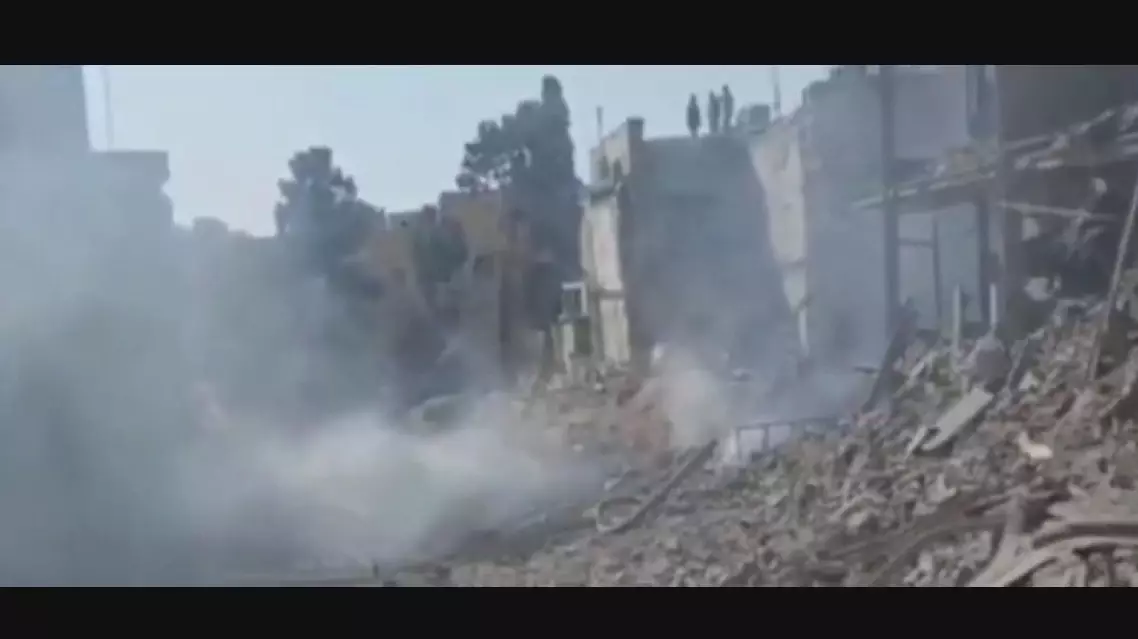
US, Israel launch major attacks against Iran, trigger retaliations