The U.S. and Israel launched a major attack on Iran on Saturday, and U.S. President Donald Trump called on the Iranian public to “seize control of your destiny” by rising up against the Islamic leadership that has ruled the nation since 1979.
Supreme Leader Ayatollah Ali Khamenei died in the attack, along with other high-ranking military officials. Trump on social media called it “the single greatest chance for the Iranian people to take back their Country” hours before Iranian state media reported the death, without elaborating on a cause.
Yet even if Iran’s top leaders were killed, regime change is not guaranteed.
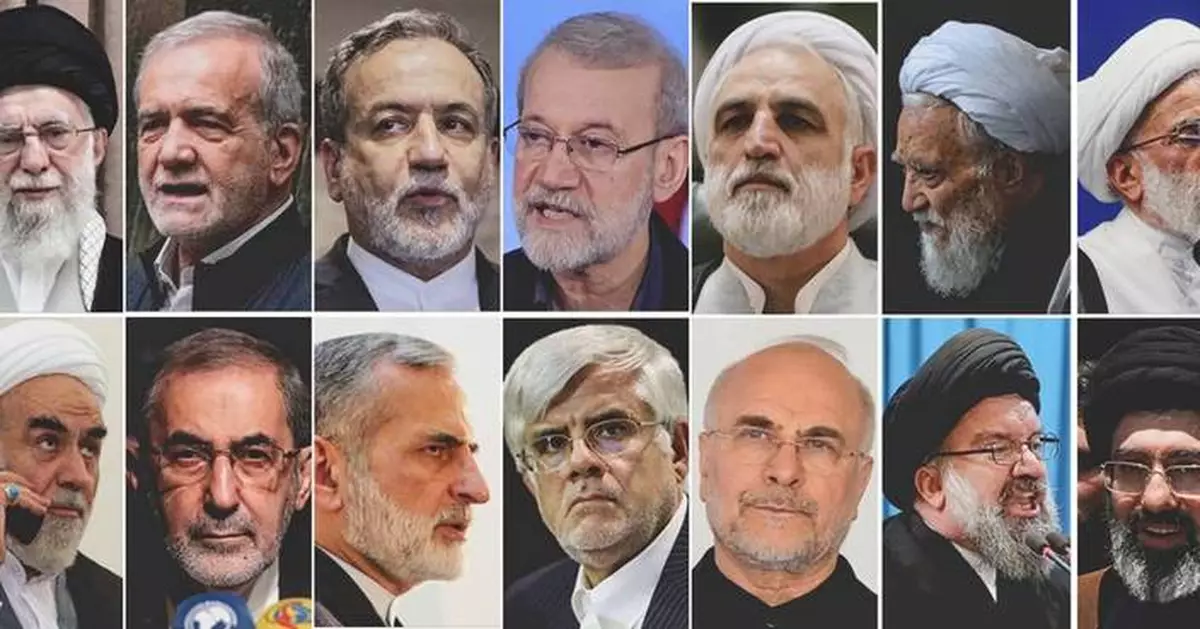
Here is a look at Iran's top political and spiritual leaders.
In 1989, Khamenei became Iran's supreme leader after the death of Ruhollah Khomeini, the founder of the Islamic Republic of Iran. Khamenei played an important role in the movement that overthrew Shah Mohammad Reza Pahlavi in the 1979 revolution.
The 86-year-old Khamenei is Iran's commander-in-chief, who has the final say on all policy and religious matters. Iran's paramilitary Revolutionary Guard, the force that safeguards the Islamic Republic, answers directly to him.
Khamenei has been in charge during previous crackdowns on protesters in Iran. He recently said Iran was ready to retaliate against any American attack.
One of the first strikes Saturday hit near Khamenei's offices. Iranian state television and the state-run IRNA news agency reported the 86-year-old’s death on Sunday, hours after Trump said Khamenei was killed in a joint American-Israeli operation.
The president of Iran is broadly seen as a reformist. A former heart surgeon, Pezeshkian took office on July 28, 2024. The president is the second-highest ranking official in Iran, acting as the head of government that handles daily administration, economic policy and implements the Supreme Leader's decrees.
Iranians elect a president and parliament for four-year terms.
Iran's foreign minister is a longtime diplomat and was a key negotiator in the now-defunct 2015 nuclear deal. He was appointed on Aug. 21, 2024.
Days before Saturday's attack, Araghchi warned that a conflict with the U.S. would be “a devastating war” and reiterated Tehran’s interest in a peaceful solution ahead of this week's high-stakes talks.
Larijani hails from one of Iran's most famous political families. A former parliamentary speaker and senior policy adviser, he was appointed to advise Khamenei on strategy in nuclear talks with the Trump administration.
In January, the U.S. imposed additional sanctions against Iranian officials, including Larijani, who were accused of repressing nationwide protests challenging Iran’s theocratic government.
The U.S. Treasury Department accused him of being one of the first officials to call for violence against Iranian protesters.
A conservative jurist and hard-line prosecutor, Mohseni Ejehi has been chief justice since 2021. He is widely regarded as a Khamenei loyalist.
Mohseni Ejehi was quoted by state media in January as saying that there would be “no leniency” for those behind the wave of unrest.
Movahedi Kermani is the head of the 88-seat clerical body responsible for appointing the next Supreme Leader. The Assembly of Experts is Iran's version of the Vatican's College of Cardinals.
Jannati is the de facto leader of Iran's Guardian Council, a 12-member body that vets candidates for office as well as legislation, and rules out individuals it believes are incompatible with Iran’s Islamic theocratic system. It consists of six Islamic theologians and six legal experts.
The council can disqualify presidential candidates who are perceived as not being aligned with the Supreme Leader.
Golpayegani is an Islamic cleric and longtime confidant of Khamenei. He heads the Supreme Leader's office.
A physician by training, Velayati was previously Iran's foreign minister, and is a top adviser to Khamenei on international affairs. He is involved in the country's nuclear policy.
Kharazi is a trusted adviser to Khamenei on foreign policy, especially during the recent nuclear talks with Washington.
A former diplomat and foreign minister, Kharazi previously represented Iran at the United Nations. He has held numerous governmental, diplomatic and academic posts.
Aref serves as one of the primary deputies to the president and leads cabinet meetings when the president is absent. He liaises between the president and parliament.
A former mayor of Tehran and Revolutionary Guard general, Ghalibaf was reelected parliamentary speaker on May 27, 2025. He is a conservative politician who was linked to student crackdowns in 1999 and 2003.
Khatami belongs to Iran's 12-member Guardian Council and is an influential prayer leader and religious figure loyal to the Supreme Leader. He is a member of Iran’s Assembly of Experts and has long been known for his hard-line views.
In January, Khatami called for the death penalty for protesters detained in a nationwide crackdown, and described those taking part in the unrest as “butlers” of Netanyahu and “Trump’s soldiers.”
Khamenei's second-eldest son is a midranking cleric and the Supreme Leader's rumored successor. He has close ties with Iran's Revolutionary Guard. Mojtaba served in the armed forces during the Iran-Iraq war, and is said to wield influence behind the scenes as his father's gatekeeper.
Nasirzadeh became defense minister in 2024 after serving in leadership roles in Iran's army and air force and was among the Iranian ministers who threatened retaliatory strikes on U.S. bases in the Middle East, including before last June's U.S. and Israeli strikes on Iranian nuclear facilities.
Israel said on Saturday that he was killed in the war's opening strikes that hit locations where military leaders were gathered. Iranian state television confirmed his death on Sunday, along with Iran’s chief of army staff, Gen. Abdol Rahim Mousavi. __
Melanie Lidman in Tel Aviv, Israel, and Josef Federman in Jerusalem contributed.
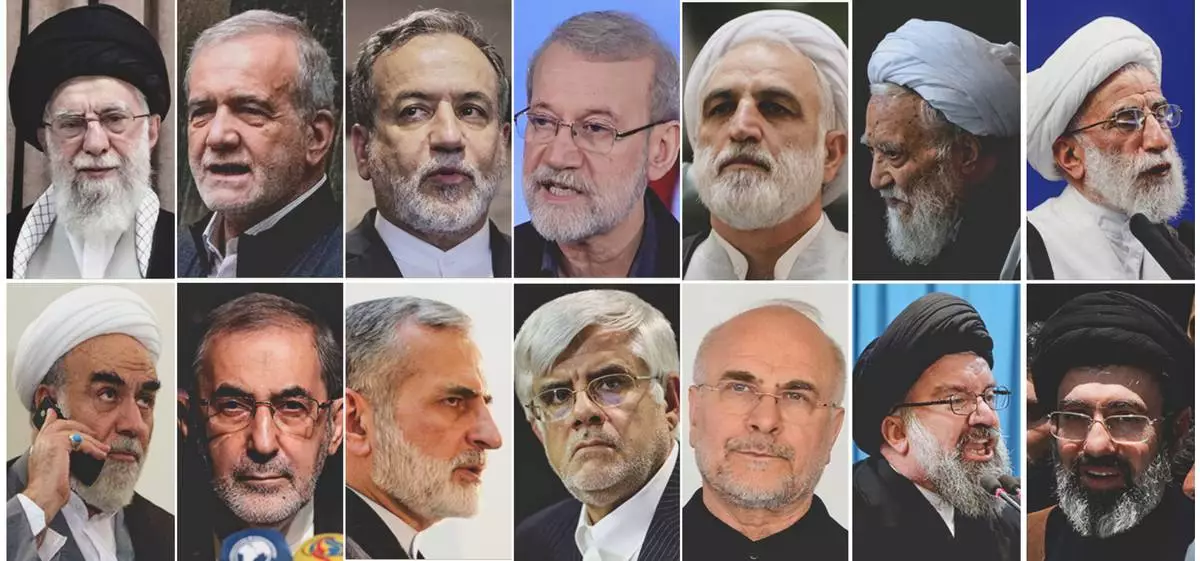
FILE - This combo of file photos show Iran's key political and religious figures, top row, from left, Supreme Leader Ayatollah Ali Khamenei, President Masoud Pezeshkian, Foreign Minister Abbas Araghchi, Khamenei Adviser on Public Policy Ali Larijani, Chief Justice Gholam Hossein Mohseni Ejehi, Head of Assembly Experts Mohammad-Ali Movahedi Kermani and Secretary of Guardian Council Ahmad Jannati, bottom row, from left, Khamenei's Chief of Staff Mohammad Golpayegani, Khamenei Adviser on International Affairs Ali Akbar Velayati, Khamenei Adviser on Foreign Policy Kamal Kharazi, First Vice President Mohammad Reza Aref, Parliament Speaker Mohammad Bagher Ghalibaf, Tehran Friday Prayer Imam Ahmad Khatami and Son of Supreme Leader Mojtaba Khamenei. (AP Photo/File)
The U.S. Navy's forcible seizure of an Iranian-flagged cargo ships threw doubt on an announcement from President Donald Trump that U.S. negotiators will head to Pakistan on Monday for another round of talks with Iran.
Trump's announcement Sunday had raised hopes of extending a fragile ceasefire set to expire by Wednesday, but Iran has not confirmed it will attend.
Trump also said the U.S. forcibly seized the cargo ship that tried to circumvent a naval blockade near the Strait of Hormuz on Sunday, the first such interception since the blockade of Iranian ports began last week.
He said a U.S. Navy guided missile destroyer in the Gulf of Oman “stopped them right in their tracks by blowing a hole in the engineroom” and that U.S. Marines had custody of the vessel, named Touska, and were “seeing what’s on board!”
Iran’s joint military command said Tehran will respond soon and called the U.S. seizure an act of piracy.
The escalating standoff threatened to deepen the energy crisis roiling the global economy and push the two countries toward renewed fighting that has killed at least 3,000 people in Iran, nearly 2,300 in Lebanon, 23 civilians and 15 soldiers in Israel and more than a dozen in Gulf Arab states. Thirteen U.S. service members have also been killed.
Here is the latest:
Pakistan’s Interior Minister Mohsin Naqvi met U.S. Chargé d’Affaires Natalie Baker at the U.S. Embassy in Islamabad on Monday.
The meeting focused on strengthening Pakistan-U.S. relations and preparations for a second round of talks scheduled to take place in Islamabad this week, Naqvi’s office said.
The statement did not specify when the talks are expected to begin.
Naqvi briefed Baker on security arrangements, saying special measures had been taken to ensure the safety of visiting delegations.
“We have made comprehensive security arrangements for our distinguished guests,” Naqvi said in the statement.
Baker offered an appreciated for Pakistan’s role in easing regional tensions and efforts to facilitate dialogue.
Pakistani authorities on Monday prepared to host a second round of talks between Iran and the United States, despite questions about whether the negotiations will take place.
Pakistan has intensified diplomatic contacts since Sunday with Washington and Tehran to ensure the talks proceed as soon as Tuesday, officials said on the condition of anonymity because they were not authorized to speak to the press.
Prime Minister Shehbaz Sharif spoke by phone late Sunday with Iranian President Masoud Pezeshkian, Sharif’s office said in a statement that did not mention the planned talks.
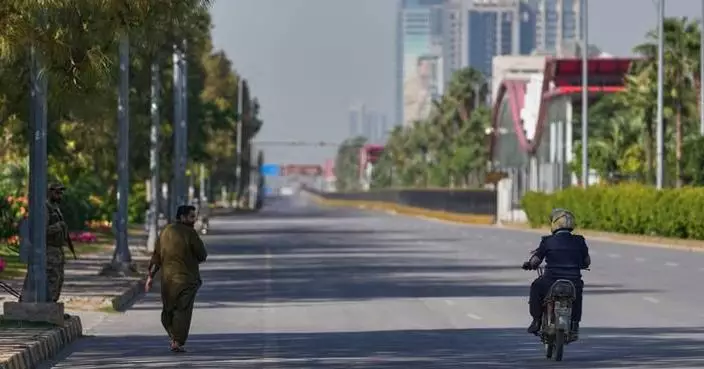
Authorities began closing key roads and stepping up security in the capital Islamabad over the weekend, particularly around a luxury hotel where the delegations are expected to meet.
Authorities deployed troops at checkpoints, closed tourist sites and instructed major hotels to limit bookings to ensure availability.
Iran on Monday offered a new death toll for the war with Israel and the United States, with its forensic chief saying at least 3,375 people had been killed in the conflict.
The figure came from Abbas Masjedi, the head of Iran’s Legal Medicine Organization.
Masjedi, quoted by the judiciary’s Mizan news agency and other outlets Monday, said only four of the dead remain unidentified.
His comments did not break down casualties among civilians and security forces, instead just saying 2,875 were male and 496 were female.
Masjedi said 383 of the dead were children 18 years old and under.
Masjedi’s figures raised questions about whether or not they included security force members, particularly given the levels of intense bombings targeting military bases and arsenals in the country.
Iran said Monday it hanged two men it accused of setting fire to buildings on behalf of the Israeli intelligence service Mossad.
An Iranian exiled opposition group earlier claimed the men as members and alleged their charges stemmed from events that happened after they already had been detained.
The Mizan news agency of Iran’s judiciary identified the men hanged as Mohammad Masoum Shahi and Hamed Validi.
The Mujahedeen-e-Khalq opposition group identified Shahi as Nima Shahi.
The MEK said the men had been “subjected to interrogation and torture” and convicted over an incident that happened before their detention.
This brings to eight the total number of MEK members executed since the start of the war.
Activists and rights groups say Iran routinely holds closed-door trials in which defendants are unable to challenge the accusations they face.
Hezbollah said it detonated explosives Sunday afternoon in an attack against Israeli forces in southern Lebanon.
The group said in a statement Monday that bombs planted by Hezbollah fighters exploded and destroyed four tanks in a convoy of eight tanks that was passing the village of Deir Siryan.
It was the first claim of an attack by Hezbollah since a 10-day ceasefire went into effect at midnight Thursday.
The Israeli military did not immediately comment.
Tehran says restrictions on Iranian oil come with a price
Iran’s first vice president, Mohammad Reza Aref, says global fuel prices could stabilize only if economic and military pressures on Iranian oil exports end.
“One cannot restrict Iran’s oil exports while expecting free security for others,” Aref wrote on X. “The choice is clear: either a free oil market for all, or the risk of significant costs for everyone.”
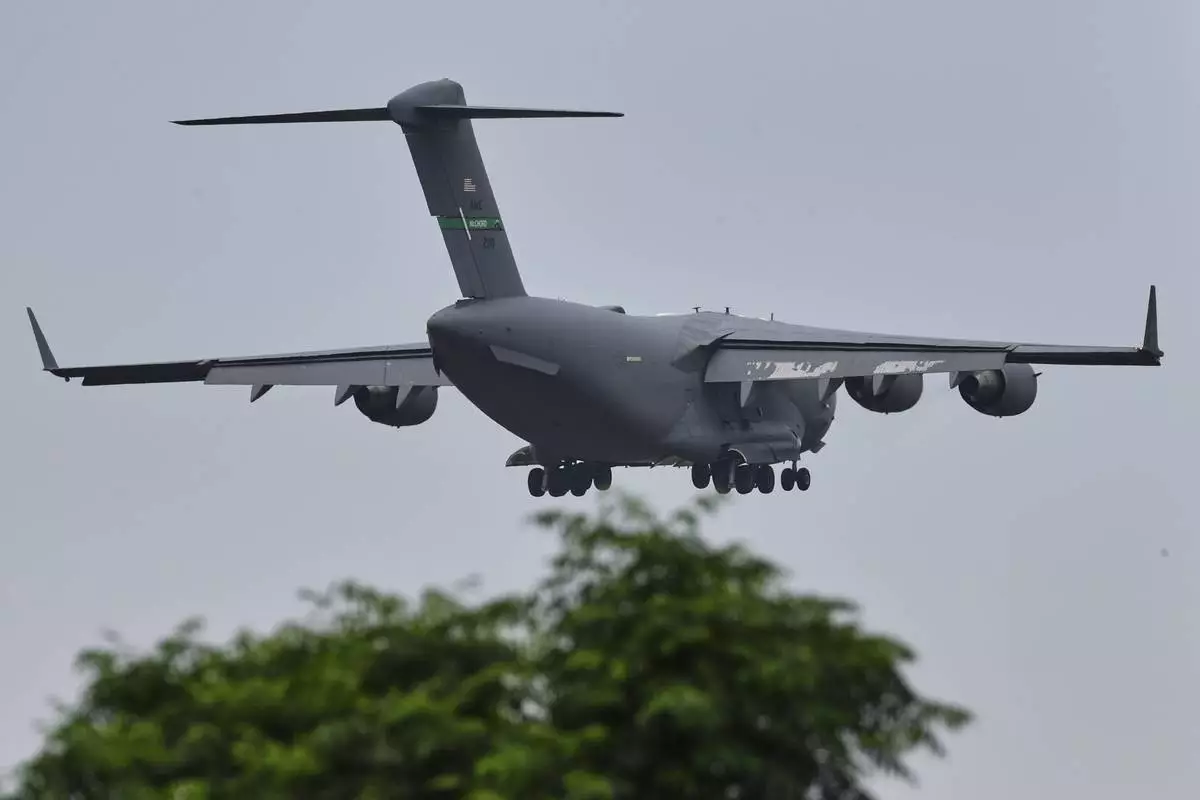
A U.S. Air Force Boeing C-17 Globemaster III transport aircraft prepares to land at Nur Khan airbase, ahead of second round of negotiations between the U.S. and Iran, in Rawalpindi, Pakistan, Monday, April 20, 2026. (AP Photo/Ehsan Shahzad)
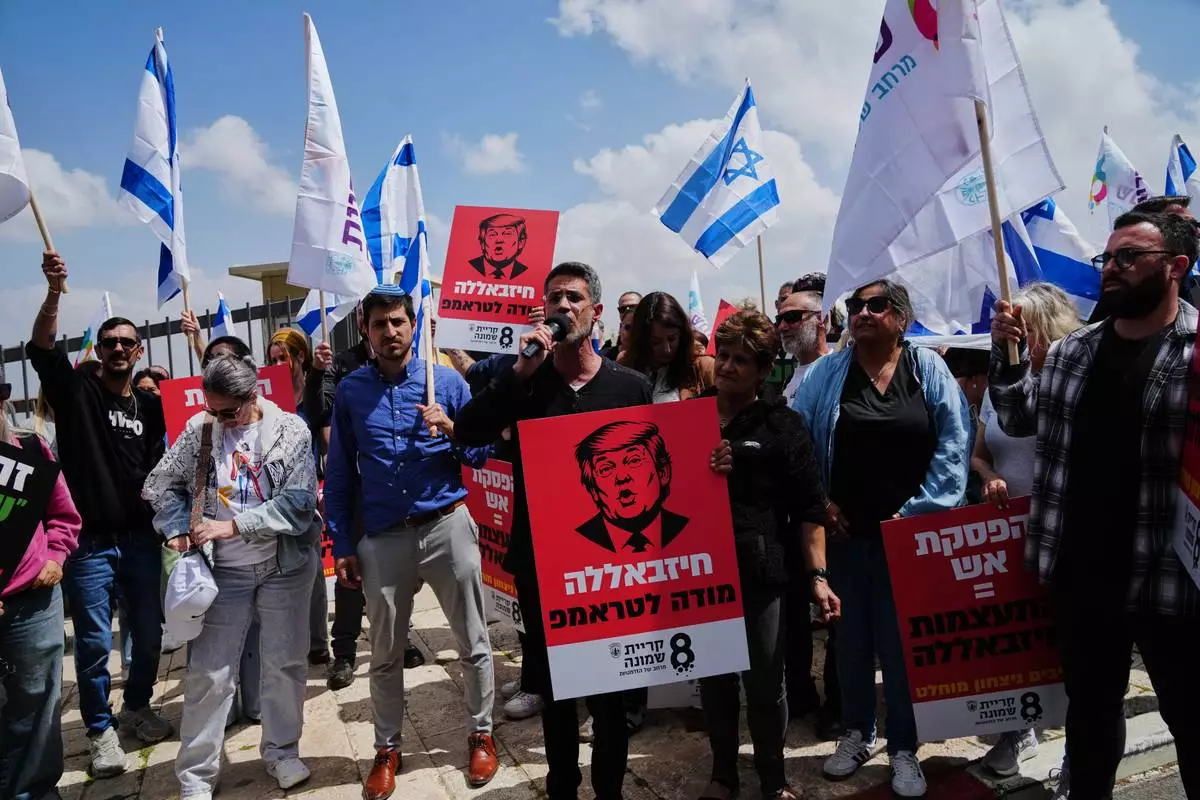
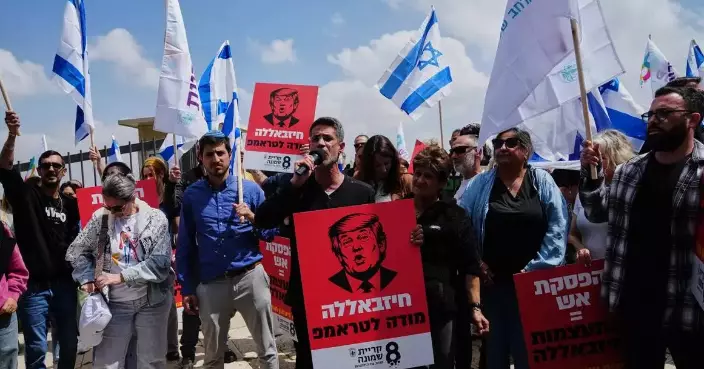
Residents of northern Israel living near the Lebanese border protest the security situation, outside the U.S. Embassy in Jerusalem Sunday, April 19, 2026. Hebrew on a sign bearing an image of President Trump reads "Hezbollah thanks Trump." (AP Photo/Mahmoud Illean)
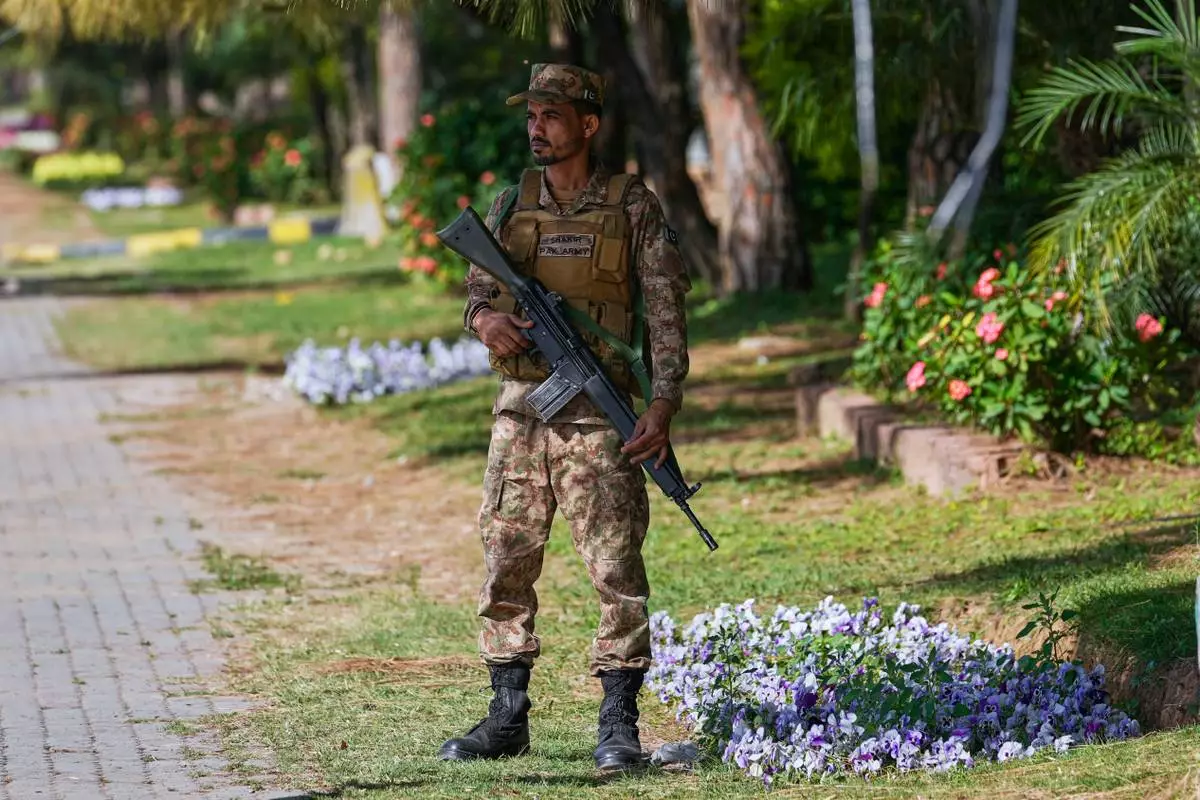
An army soldier stands guard on a roadside to ensure security ahead of the second round of negotiations between the U.S. and Iran, in Islamabad, Pakistan, Monday, April 20, 2026. (AP Photo/Anjum Naveed)
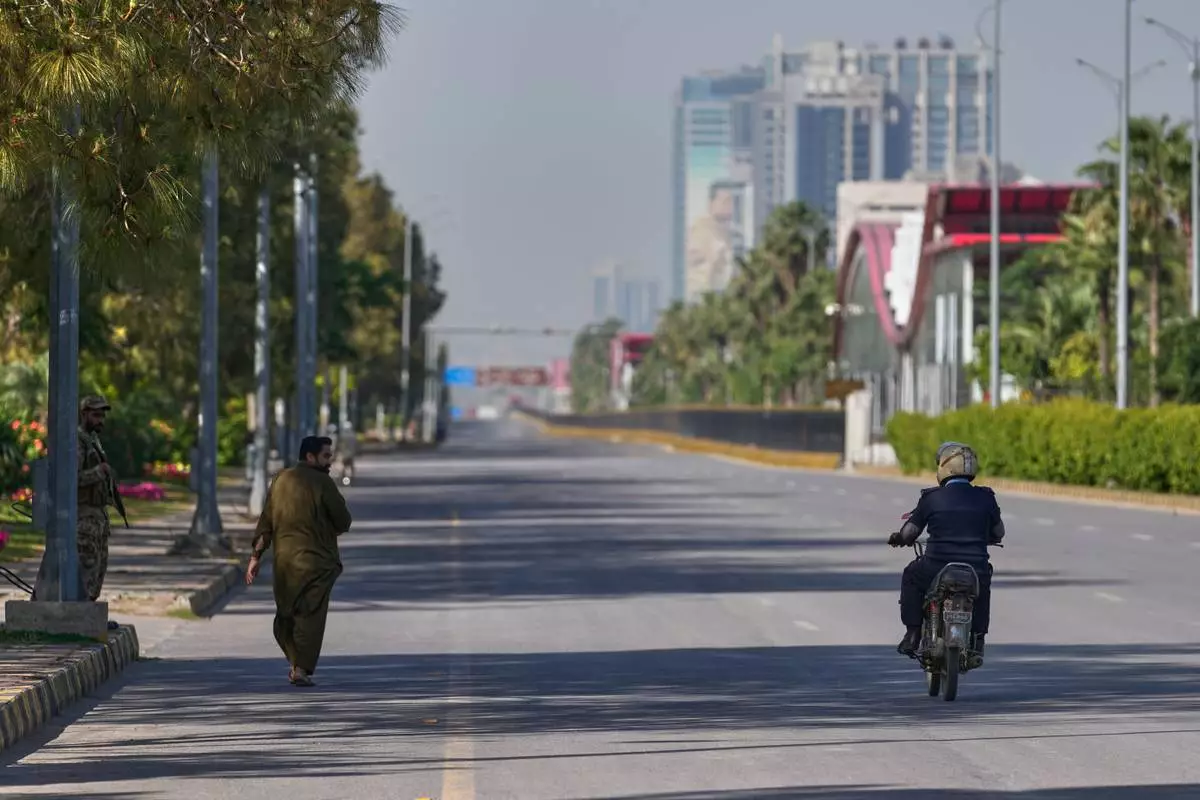
An army soldier, left, walks as police officer drives motorcycle on an empty road ahead of second round of negotiations between the U.S. and Iran, in Islamabad, Pakistan, Monday, April 20, 2026. (AP Photo/Anjum Naveed)
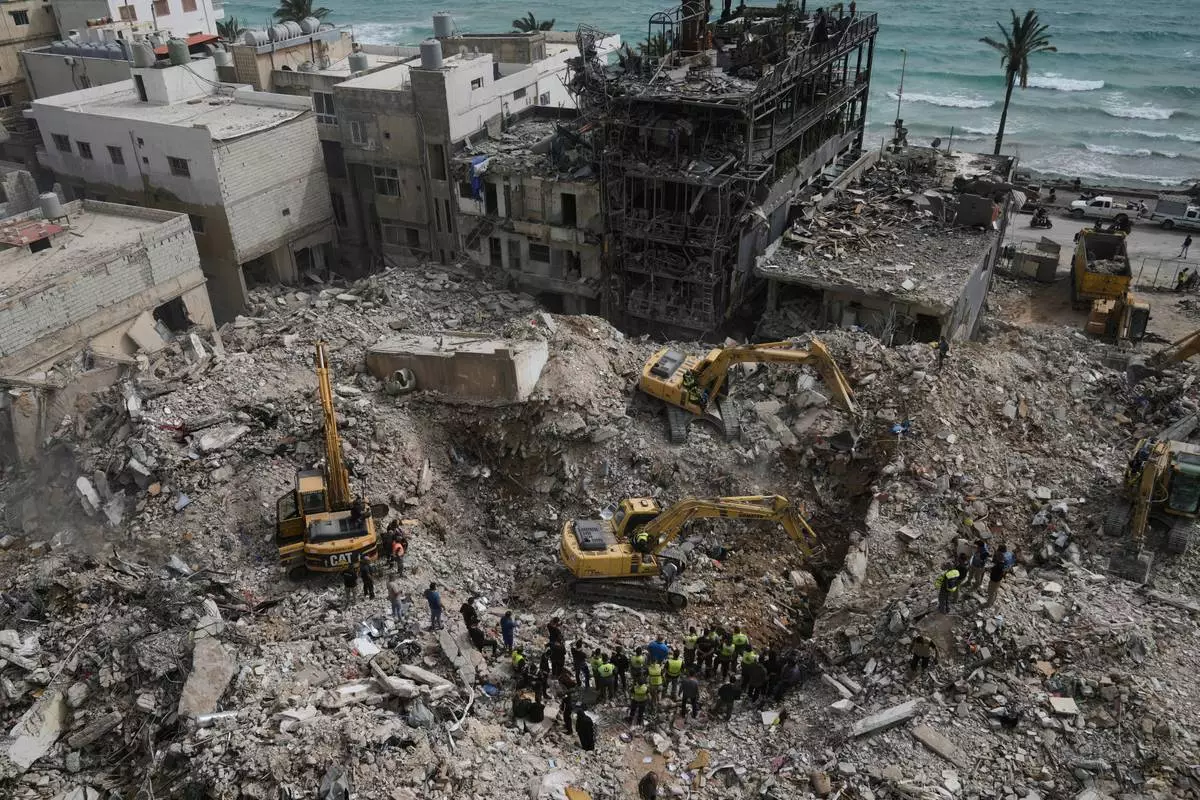
Excavators remove rubble from buildings destroyed in Israeli airstrikes on Thursday as rescuers search for victims in the city of Tyre, southern Lebanon, Saturday, April 18, 2026. (AP Photo/Bilal Hussein)
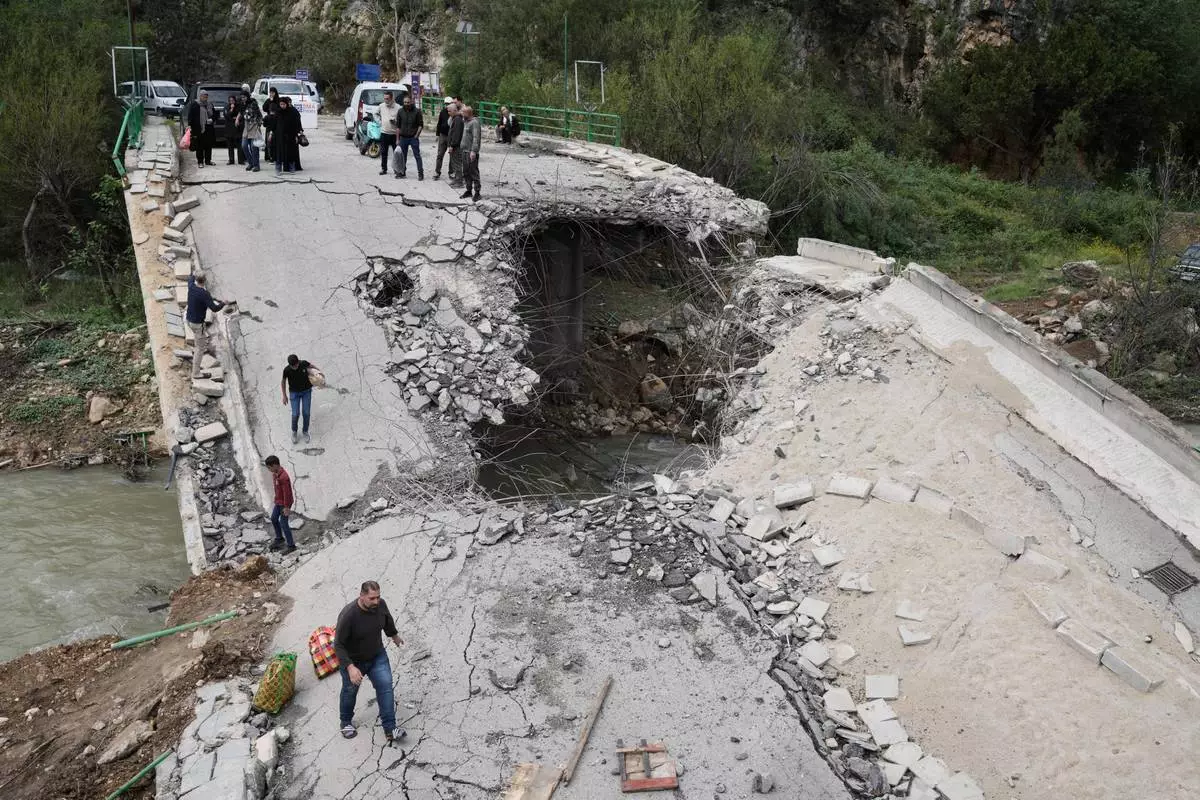
Displaced people cross a destroyed bridge as they return to their villages, following a ceasefire between Hezbollah and Israel, in Tayr Felsay village, southern Lebanon, Sunday, April 19, 2026. (AP Photo/Bilal Hussein)