CAIRO (AP) — Some of the jubilation was open and even raucous — people dancing in Iranian streets, honking car horns in celebration, screaming joyfully from windows and rooftops over the killing of the country's supreme leader. But as bombardment by the United States and Israel fell from the air for a second day Sunday, many expressed fear and uncertainty over what direction Iran will take.
The death of Ayatollah Ali Khamenei, who stood at the pinnacle of Iran’s Islamic Republic for nearly four decades, along with a number of top military leaders in the first day of the U.S.-Israeli campaign, stunned Iranians and stirred a mix of complex emotions in a divided nation.
“Inside, we are in party mode,” said one man in northern Tehran who expressed joy over Khamenei's death. He was reached via messaging apps. “But unless we are safe from them, people are not celebrating publicly because they are ruthless and even more vengeful.”
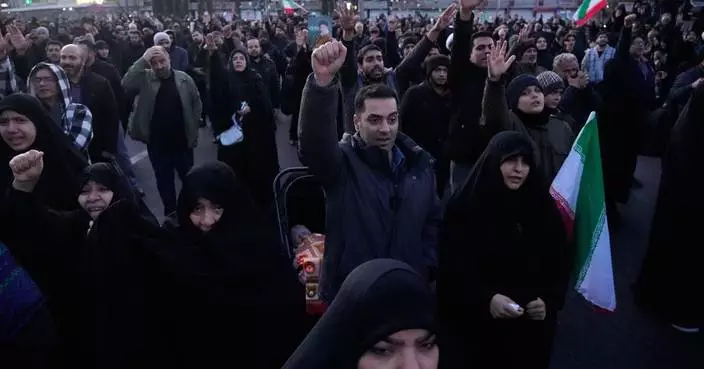
Authorities moved to show public support, rallying massive crowds in several cities to mourn a leader that state media declared a martyr. Video run on state media — verified by the AP — showed tens of thousands filling the sprawling main squares of the southern and central cities of Isfahan and Yazd, waving Iranian flags and chanting, “Death to America.”
Several of those who joined past anti-government protests, reached by The Associated Press on Sunday, said the state’s security grip remained too strong to go out for a new round of mass demonstrations, despite calls by U.S. President Donald Trump for Iranians to “seize their government.” With communications into Iran unstable, AP contacted eight Iranians, some of whom spoke on condition of anonymity for security reasons.
Golshan Fathi, a woman living in Tehran, said the Basij paramilitary, which played a key role in the bloody crushing of mass protests last month, was showing a heavy presence in the streets of the capital. A doctor in the northern city of Rasht said Basijis pulled one man out of his car after he honked his horn in celebration.
Iranian society at the moment, Fathi said, is living “between hope and fear."
Iranian society is deeply divided. Hundreds of thousands marched in the streets across Iran last month, chanting “Death to Khamenei” in what were likely the biggest protests ever against the clerics' rule in place since 1979. A bloody crackdown crushed the street movement, but not the bitterness against the government. At the same time, large numbers of loyalists remain tied to the system for religious, social or patronage reasons.
Iran’s leadership quickly moved to show it was still in control even after the deaths of Khamenei, the defense minister, army chief of staff and a top security adviser. President Masoud Pezeshkian said a new leadership council had begun its work, and the foreign minister said a new supreme leader would be chosen in “one or two days.”
Parliament speaker Mohammad Bagher Qalibaf delivered an address on state TV on Sunday, saying the government and military did not depend on individuals.
“We prepared ourselves for these moments and set plans for all scenarios,” he said, “even for after the martyrdom of our dear Imam Khamenei.”
State media announced Khamenei’s death just after dawn on Sunday. Celebrations erupted in some areas. Videos circulating online and verified by the AP showed dozens cheering and dancing and cars honking their horns in the streets of Karaj, a city near Tehran. Fathi in Tehran and the doctor in Rasht said cheers and celebratory chants were heard from windows and rooftops around their neighborhoods.
“It was one of the best nights, if not the best night, of our lives,” the doctor said in a voice message. “It was actually my first time ever smoking a cigarette. ... We didn’t sleep at all. And we don’t even feel tired.”
During the day, Iranians faced the reality of living under bombardment, with no idea when it will end. Blasts in Tehran sent a huge plume of smoke into the sky in an area where there are government buildings. Iranian authorities say more than 200 people have been killed in the strikes, including at least 165 killed in a strike at an all-girls school in the country’s south.
Residents of Tehran rushed to supermarkets on Sunday, emptying shelves of bottled water, bread, eggs and milk. Long lines at gas stations across the capital suggested fears of possible fuel shortages or plans by many to leave the city. State television footage showed heavy traffic on major highways, with cars packed bumper-to-bumper as families attempted to reach northern provinces. Others said they were staying home, deciding that was safer.
Iran fired missiles at an ever-widening list of targets in Israel and Gulf Arab states in retaliation while Israel pledged “non-stop” strikes against Iran’s leaders and military.
Fathi said she fears the Islamic Republic will hold onto power, “leading to chaos or even causing the splitting of the nation.
“But maybe, maybe from this morning, that new page for Iran where everything changes has begun. People are hopeful,” she said. As she spoke, she heard the sound of explosions in the capital. “Right now, you see, Israel is hitting us. Fighters have violated our country’s airspace and are freely bombing us and we are just sitting here.”
Iranians are still reeling from last month’s crackdown, when security forces killed thousands. That and the ensuing wave of arrests have made many fearful of taking the streets again. Others are wary of U.S. and Israeli intentions or fear that Iran will be thrown into chaos and division.
“I don’t think that the people have their determination in their own hands yet,” the doctor in Rasht said. “This is a foreign war at the end of the day. But if the regime is so weakened and then another call for protests is made, this is another story.”
Reza Mehrabi, 67, said celebrations of the deaths of Iranian senior leaders seem premature. He recalled similar celebrations after the 1979 revolution when the Shah was deposed, and the Islamic Republic’s reign began.
“I saw some people were happy about the losses, but when I remember 1979 revolution and its aftermath, I need more consideration to understand if the nation and the country is on the right path.”
One 27-year-old Tehran resident said a strike fell a few hundred yards (meters) away from her house, terrifying her with the explosion. “I have no idea which direction we are heading,” she said. “I wish all these things were just a bad dream that vanishes when I wake up.”
Despite Trump’s calls for Iranians to rise up, experts say launching a new wave of mass demonstrations may not be so simple.
“The reality is, the Iranian people don’t have the means to displace the Islamic Republic on their own,” said Esfandyar Batmanghelidj, adjunct professor at Johns Hopkins University’s School of Advanced International Studies-Europe.
The strikes will embolden some people, he predicted, but many will be wary of taking to the streets again “because the regime retains its repressive capacity … and there should be no doubts it would be willing to use violence again against protesters."
“Even within families and within neighborhoods there may be very disparate views” about Khamenei’s killing, especially because it was at the hands of foreign powers, he said.
Both in last summer’s 12-day war with Israel and so far in this round of bombardment, “the political and military apparatus has been hit hard, but they have replaced people and maintained their cohesion,” said Arang Keshavarzian, professor of Middle Eastern and Islamic Studies at New York University.
During the 1979 Islamic revolution, Iranians from across society held massive protests lasting for months, eventually leading to the shah fleeing the country. “But we are far from the 1979 model in which Iranians organized strikes and nationwide organizations of merchants, students, and clerics,” Keshavarzian said.
“Just because Iranians have many grievances and make claims on the state on a daily basis, it does not necessarily mean that this will scale up to a social revolution," he said. "And bombing Iran does not change this.”
El Deeb and Chehayeb reported from Beirut.
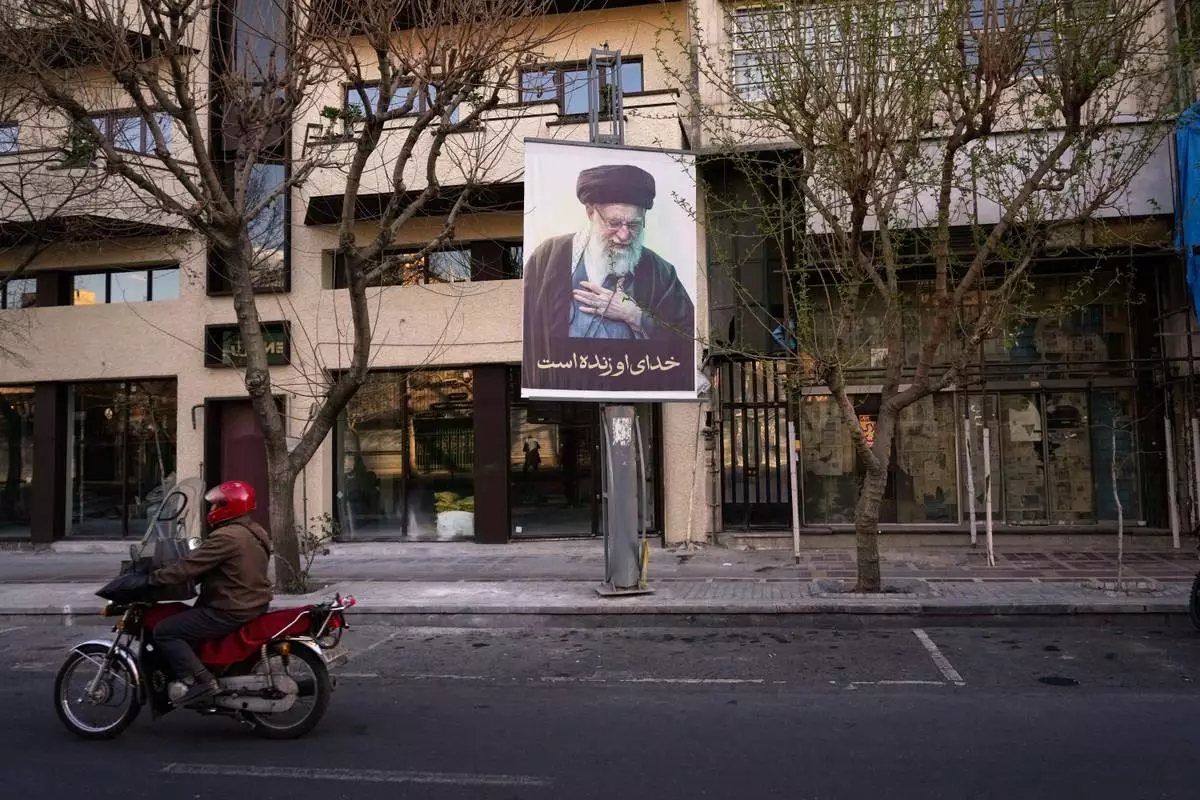
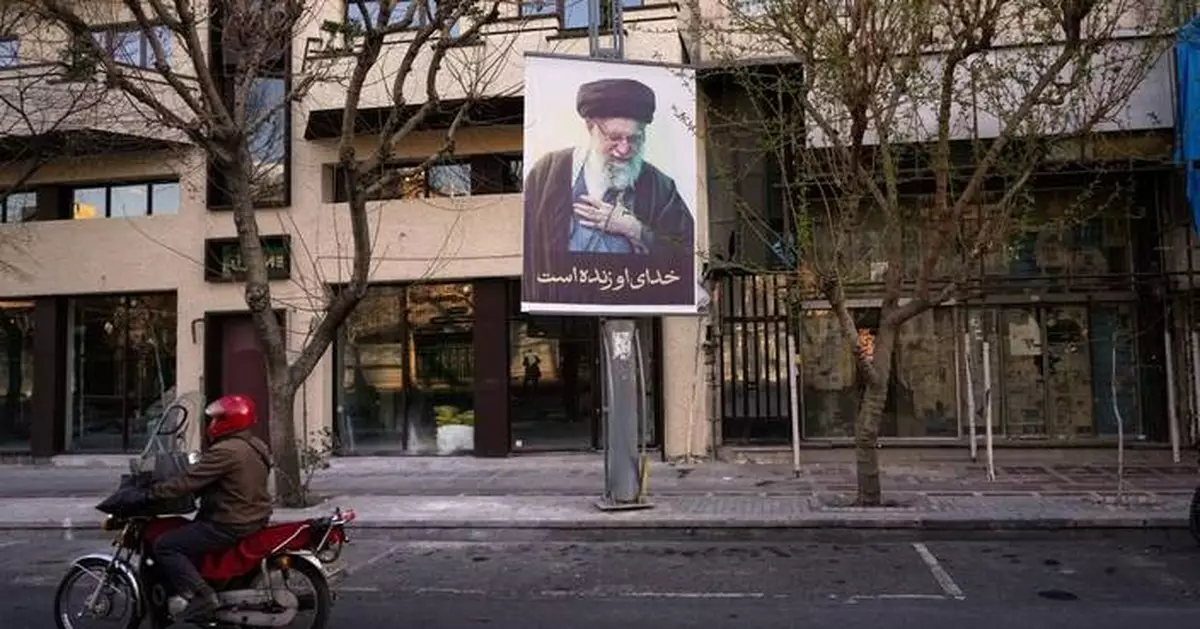
A motorcycle drives past a picture of the late Iranian Supreme Leader Ayatollah Ali Khamenei along an empty street in Tehran, Iran, Sunday, March 1, 2026, following the confirmed death of Khamenei in U.S. and Israeli strikes. (AP Photo/Vahid Salemi)
U.S.-Israeli strikes on Iran continued for a second day on Sunday after the killing of Iranian Supreme Leader Ayatollah Ali Khamenei threw the future of the Islamic Republic into uncertainty and raised the risk of regional instability.
There were explosions in Tehran on Sunday night as Israel said it was taking its attacks to the “heart” of Iran’s capital.
Iran retaliated by firing missiles and drones at Israel and at U.S. military installations around the Gulf, and also at the Saudi capital and the global business hub of Dubai. Earlier Sunday, Iran selected a 66-year-old cleric to join the three-member leadership council that will govern the country until a new supreme leader is selected.
A senior White House official says that “new potential leadership” in Iran has suggested they are open for talks with the United States. The official, speaking on condition of anonymity to discuss internal administration deliberations, said President Donald Trump says he is “eventually” willing to talk, but for now the military operation “continues unabated.”
Trump told The Atlantic in an interview on Sunday that he planned to speak with Iran’s new leadership. “They want to talk, and I have agreed to talk, so I will be talking to them,” he said, declining to comment on the timing.
Here is the latest:
Israel’s top general praised his military’s early gains in fighting with Iran, while warning the public that “many more days of combat lie ahead.”
After a day marked by warning sirens, strikes and at least nine deaths from one Iranian attack, Lt. Gen. Eyal Zamir mourned fatalities in the town of Beit Shemesh and hailed “significant achievements” that he said Israel and the U.S. had made thus far. The two countries’ strikes on Iran took out high ranking security officials and Supreme Leader Supreme Leader Ayatollah Ali Khamenei.
“Patience and resilience are required now. We are operating in close cooperation with our ally. Coordination with the U.S. military is closer than ever,” Zamir, the army’s chief of the general staff, said.
France will send two warships to the Red Sea in coming days to join a European Union naval mission there amid security concerns over the war on Iran, an EU official said Sunday after emergency talks between the bloc’s foreign ministers.
“There’s been a steep increase in additional requests for protection” from civilian vessels in the area, the official said. “There are two additional ships which will now join the operations from France.”
The official, who briefed reporters on condition of anonymity to provide details about the meeting held via video link, said that the ministers agreed that it was important to “protect our maritime economic interests.”
Traffic through the strategic maritime trade route the Strait of Hormuz is not closed but remains “a little bit arbitrary for the moment,” with some vessels getting through, the official said.
U.S. President Donald Trump has discussed a timeline for the fighting in Iran during a phone interview with a British newspaper.
“We figured it will be four weeks or so,” Trump told the Daily Mail. “It’s always been about a four-week process, so, as strong as it is -- it’s a big country -- it’ll take four weeks, or less.”
The U.S. military said three service members have been killed, the first known American casualties from the conflict. Trump called those killed “great people.”
“You know, we expect that to happen, unfortunately,” Trump told the newspaper. “Could happen continuous — it could happen again.”
Loud booms and explosions rocked Jerusalem on Sunday night as another batch of Iranian missiles attempted landfall.
Shelters were full and some residents concurred that the booms were the loudest they’d heard since the start of the war.
It was not immediately clear whether the booms were the sounds of missiles landing or of interceptions.
The diplomat who mediated indirect nuclear talks held last week in Geneva between the U.S. and Iran has called for negotiations to resume, saying that the “door to diplomacy remains open."
Oman's Foreign Minister Badr al-Busaidi said in a post on X that there had been a “genuine progress toward an unprecedented agreement” during the last round of talks.
“I still believe in the power of diplomacy to resolve this conflict,” he said. “The sooner talks are resumed the better it is for everyone.”
Oman’s Duqm Port earlier Sunday was struck by Iranian exploding drones, wounding one worker.
Britain, France and Germany — known as the E3 — said they are ready to work with the U.S. and partners to help stop Iran’s retaliatory attacks.
British Prime Minister Keir Starmer, French President Emmanuel Macron and German Chancellor Friedrich Merz said in a joint statement that they are “appalled” by Iran’s “reckless” strikes on their allies which are threatening their service members and citizens in the region.
“We will take steps to defend our interests and those of our allies in the region, potentially through enabling necessary and proportionate defensive action to destroy Iran’s capability to fire missiles and drones at their source. We have agreed to work together with the U.S. and allies in the region on this matter,” the statement said. It did not provide further details.
The Philippine Embassy in Israel confirmed the death of a Filipino national in a missile attack in Tel Aviv on Saturday.
Mary Ann V. de Vera, 32, a caregiver from Basista, Pangasinan, had been working in Israel since 2019. Her identity was confirmed through biometric records at the Abu Kabir Forensic Institute, where her husband also positively identified her remains.
Ambassador Aileen Mendiola conveyed condolences to the family and assured them of the Philippine government’s full assistance, the embassy said in a statement.
President Emmanuel Macron said the conflict has prompted France to reinforce its military posture and its defensive support for allies in the Middle East. He did not elaborate.
Noting that a drone hit a hangar Sunday at a French naval base, he said France needs to "be able to adapt our posture to the evolution of the last few hours." France has military bases in the Gulf.
Chairing an emergency defense meeting in Paris, Macron said top security officials would discuss the risks the conflict creates for France, and its economic consequences. Macron spoke with the leaders of several countries around the Mideast over the weekend.
On Monday, Macron heads to a nuclear submarine base where he is expected to update France’s nuclear weapons doctrine to take into account the evolving global security context.
White House press secretary Karoline Leavitt said in a post on X that U.S. President Donald Trump has spoken to the leaders of Israel, Bahrain and United Arab Emirates, without providing further details.
Trump has spoken to leaders throughout the region since the start of U.S.-Israeli strikes on Iran.
Israel Defense Forces spokesperson Brig. Gen. Effie Defrin told a briefing that 100 fighter jets simultaneously struck government targets in the Iranian capital on Sunday.
He said the targets included buildings belonging to Iran’s air force, its missile command and its internal security force, which violently quashed anti-government protests in January. “Our message to the Iranian regime is clear,” he said. “No one is immune.”
Defrin also said Israel has activated an additional 100,000 reservists to fortify Israel’s borders. He said there was a special focus on the Lebanese militant group Hezbollah, which so far has stayed on the sidelines of the latest war.
“We are keeping a close eye on Hezbollah,” he said.
The United Arab Emirates has closed its embassy in Iran and announced the withdrawal of its diplomatic mission after strikes from the Islamic Republic hit the country.
The announcement from the Gulf country’s Foreign Ministry comes as Iranian retaliatory attacks targeting U.S. bases in the Mideast have hit Dubai airport and other civilian buildings, forced the closure of its airspace, and disrupted daily life.
“The Foreign Ministry as confirmed that this decision reflects its firm and unwavering position against any aggression that threatens its security and sovereignty,” the statement said.
Turkish President Recep Tayyip Erdogan has issued a message of condolence over the death of Iran’s Supreme Leader Ali Khamenei in U.S.–Israeli airstrikes.
In a post on X, Erdogan emphasized Turkey’s commitment to peace and stability in the region, adding that Ankara would continue working toward a “return to diplomacy” to help end the conflict.
Cuban President Miguel Díaz-Canel said his administration extended its “deepest condolences” to Iran’s people and its government for what he called the assassination of Supreme Leader Ayatollah Ali Khamenei.
“This heinous act constitutes an unscrupulous violation of all norms of international law and human dignity,” he wrote in a post on X. “In Cuba, he will be remembered as an outstanding statesman and leader of his people who contributed to the development of friendly relations between Cuba and Iran.”
Iraqi security forces have fired tear gas at dozens of pro-Iran protesters trying to enter the heavily-fortified Green Zone in Baghdad where the U.S. Embassy is located.
Protesters in Iraq earlier marched to mourn Iran's Supreme Leader Ali Khamenei who was killed Saturday in a series of U.S. and Israeli airstrikes.
Iran-backed Iraqi militias have claimed responsibility for attacks on U.S. bases in the country in solidarity with Tehran. The U.S. Embassy in Iraq is one of the largest globally.
Blasts rocked northern Tehran and rattled windows on Sunday night, according to a resident of the Tajrish district, who spoke on condition of anonymity out of fear of retaliation.
The reports of explosions came as the Israeli Defense Forces announced that its Air Force was continuing strikes on targets in Tehran.
Mehdi Taj, the president of Iran’s soccer federation, cast doubt on the national team’s ability to play World Cup matches in the U.S. later this year.
Iran is scheduled to play two World Cup games in Inglewood, California, and one in Seattle.
Taj told an Iranian sports television show he wasn’t sure how it would be possible following Saturday’s strikes.
“What is certain is that after this attack, we cannot be expected to look forward to the World Cup with hope,” Taj told sports portal Varzesh3.
A senior White House official says that “new potential leadership” in Iran has suggested they are open for talks with the United States.
The official, speaking on condition of anonymity to discuss internal administration deliberations, said President Donald Trump says he is “eventually” willing to talk, but for now the military operation “continues unabated.”
The official did not say who the potential new Iranian leaders are or how they made their alleged willingness to talk known.
Trump told The Atlantic in an interview on Sunday that he planned to speak with Iran’s new leadership.
“They want to talk, and I have agreed to talk, so I will be talking to them,” he said, declining to comment on the timing.
U.S. President Donald Trump said on social media that nine ships in the Iranian navy had been “destroyed” and sunk, “some of them relatively large and important.”
Trump said the rest of Iran’s fleet of military vessels “will soon be floating at the bottom of the sea, also!"
The death toll in strike at an all girls school in southern Iran has risen to 165, according to the state-run IRNA news agency.
The local prosecutor of Minab in Iran’s Hormozgan province was quoted Sunday as saying 96 other people were injured in the strike.
A local official said the casualties from the Saturday strike included students, parents and school staff.
The Israeli military said it was not aware of strikes in the area. The U.S. military said it was looking into the reports.
The CIA tracked the movements of senior Iranian leaders, including Ayatollah Ali Khamenei, for months before Saturday's airstrikes, according to a person familiar with the operation who was not authorized to comment publicly and spoke on condition of anonymity.
The intelligence was shared with Israeli officials, and the timing of the strikes was adjusted in part because of that information about the Iranian leaders’ location, the person said.
The New York Times earlier reported about the CIA’s efforts ahead of the Israeli-U.S. strikes.
Sen. Chris Murphy is predicting that the air campaign against Iran will backfire and result in an even more hardline government in Tehran.
“We’re not going to get a democracy. We’re going to get an even worse leadership,” Murphy told CBS’ “Face the Nation”. “It’s no secret that our allies in the region, with the exception of the right-wing government in Israel, they begged us not to take this action.”
The Connecticut Democrat and member of the Senate Foreign Relations Committee said regime change in Iran would never succeed without troops on the ground — something that President Donald Trump has ruled out.
Barring that, Murphy said he expects the Iranian regime to hold on to power and reconstitute itself in a more hardline form.
B-2 stealth bombers struck Iran’s ballistic missile facilities with 2,000-pound bombs, the U.S. military said Sunday in a post on X.
Ballistic missiles have been one of the concerns President Donald Trump has raised in the lead up to the attacks on Iran. Trump has claimed that Iran has been building ballistic missiles that could reach the U.S. homeland.
Iran hasn’t acknowledged it is building or seeking to build intercontinental ballistic missiles.
The U.S. Defense Intelligence Agency said in an unclassified report last year that Iran could develop a militarily viable intercontinental ballistic missile by 2035 “should Tehran decide to pursue the capability.”
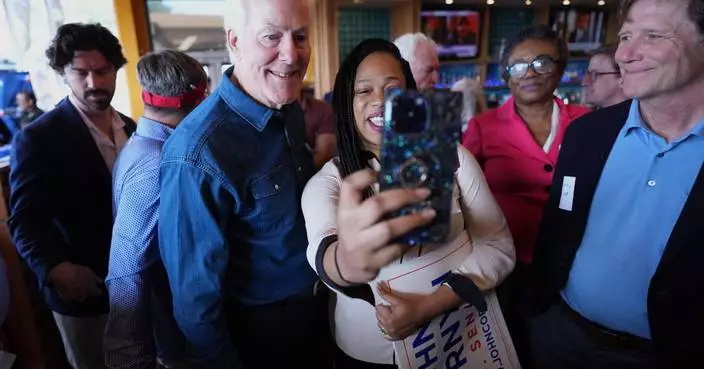
U.S. Sen. Tom Cotton, the chairman of the Senate Intelligence Committee, says he expects the massive airstrike campaign against Iran will continue for “probably a few weeks.”
The Arkansas Republican told CBS’ “Face the Nation” that President Donald Trump “has no plan for any kind of large-scale ground force in Iran.”
Cotton would not say how the U.S. and Israeli knew the location of slain Iranian Supreme Leader Ayatollah Ali Khamenei
“We have exquisite intelligence collection methods,” he said. “Israel and the United States once again proved that our nation have capabilities that no other nation on Earth has.”
Thousands of jubilant demonstrators marched through Paris on Sunday to celebrate the U.S. and Israeli strikes and express hope for regime change in Iran.
Waving Iranian, Israeli, American and French flags, the crowd chanted ″Freedom for Iran!″
Members of the large Iranian diaspora in France and their French supporters marched from Bastille Plaza, birthplace of the French Revolution, toward a statue of Joan of Arc. One group opened a bottle of Champagne, and the atmosphere was festive.
The night before, a crowd of Iranian demonstrators danced across from the Eiffel Tower.
Paris also saw a small counter-protest Sunday by left-wing groups denouncing ″American imperialism″ and warning of broader war.
Meanwhile, France is postponing an international conference meant to bolster Lebanon’s security because of the widening conflict in the Middle East.
″Conditions are not met″ to hold the conference as scheduled in Paris on March 5, French President Emmanuel Macron’s office said Sunday. It said Macron spoke Sunday with Lebanese President Joseph Aoun and they jointly decided to delay it until April.
The streets were almost empty in Iran’s capital Sunday. Merchants said shoppers were buying in bulk while supplies were arriving in Tehran at a trickle.
Ali, a 42-year-old produce vendor, said trucks of potatoes and tomatoes were arriving in fewer numbers because drivers were wary of driving into the capital while strikes were ongoing.
“People are buying as much as they can out of fear of the current mess,” said Ali, who only agreed to give his first name out of fear for his own security.
Some residents expressed fear of the strikes, but also of the future.
Reza Mehrabi, 67, said celebrations of the deaths of Iranian senior leaders seem premature. He recalled similar celebrations after the 1979 revolution when the Shah was deposed, and the Islamic Republic reign began.
“I saw some people were happy about the losses, but when I remember 1979 revolution and its aftermath, I need more consideration to understand if the nation and the country is on the right path.”
Reza Pahlavi, the exiled son of Iran’s last shah overthrown during the 1979 Islamic Revolution, claims he is taking charge of the transition to a new government.
Speaking to Fox News Channel’s “Sunday Morning Futures,” he said: “This is time now for a very strong, stable transition. I am leading this transition. I have the support of millions of Iranian people. I have the people inside the country that are joining … the military will side with us. We have a plan of action and a transition plan.”
He says that process would lead ultimately “to a democratic outcome so the Iranian people get to choose their future government and system.”
Asked how long his transitional leadership would be, he said that “to be realistic from the time that we start until the day we can have the final referendum, I anticipate a period that should be longer than a couple of years at the most. But what’s critical is the first 100 days.”
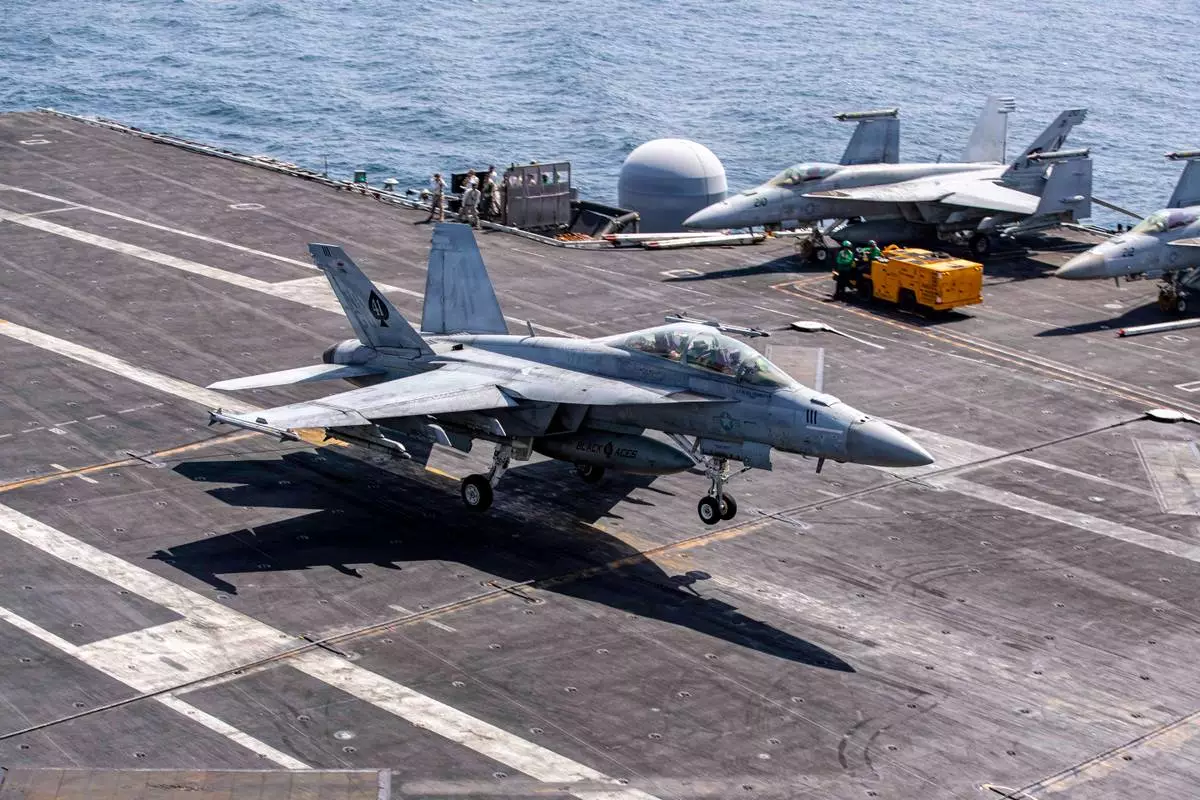
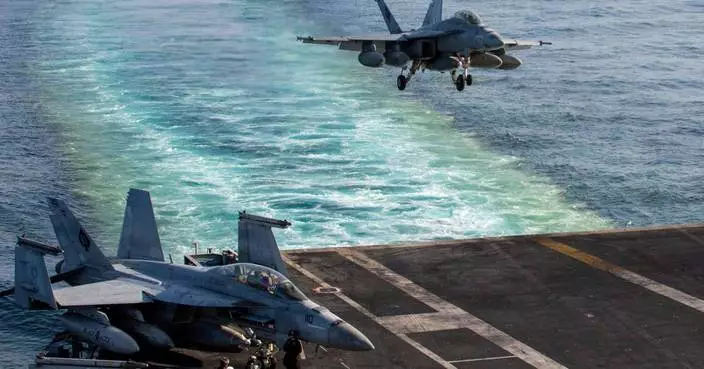
This image provided by U.S. Central Command shows a F/A-18E Super Hornet makes an arrested landing on the USS Abraham Lincoln (CVN 72) after a mission in support of Operation Epic Fury, on Saturday, Feb. 28, 2026. (U.S. Navy via AP)
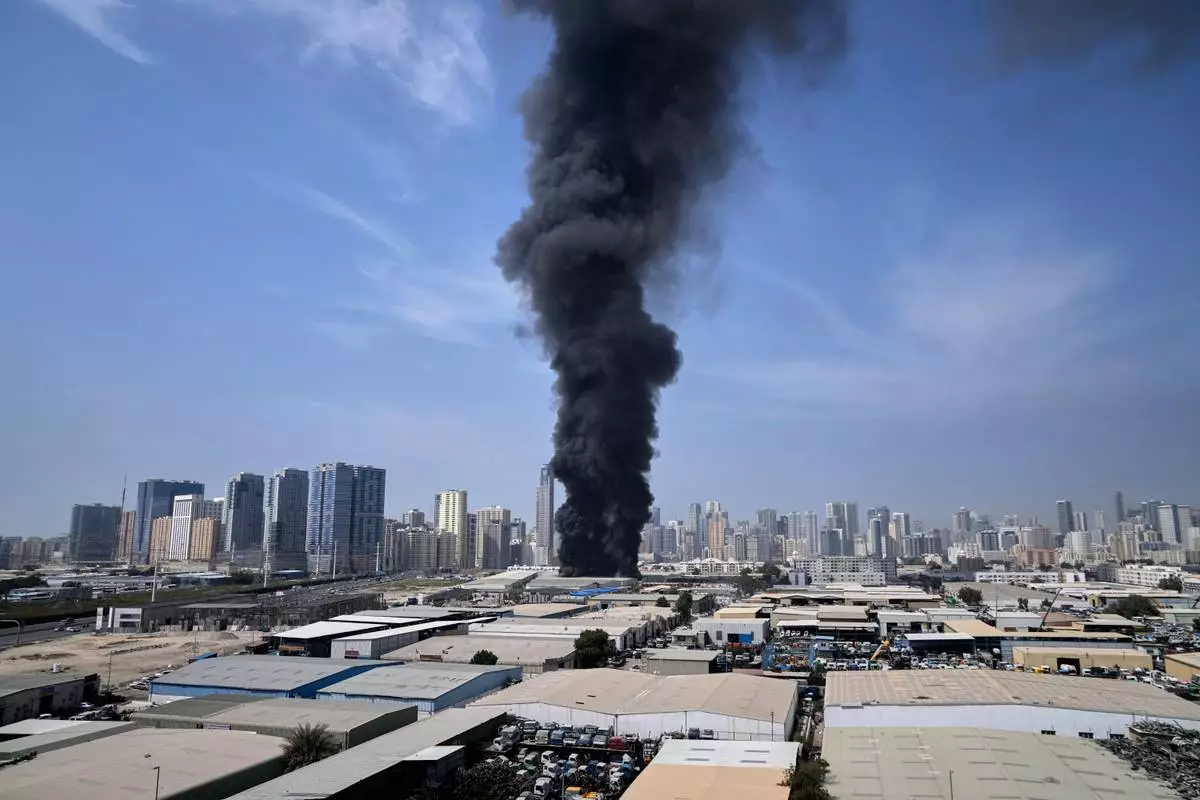
A black plume of smoke rises from a warehouse at the industrial area of Sharjah City in the United Arab Emirates following reports of Iranian strikes in Dubai, United Arab Emirates, Sunday, March 1, 2026. (AP Photo/Altaf Qadri)
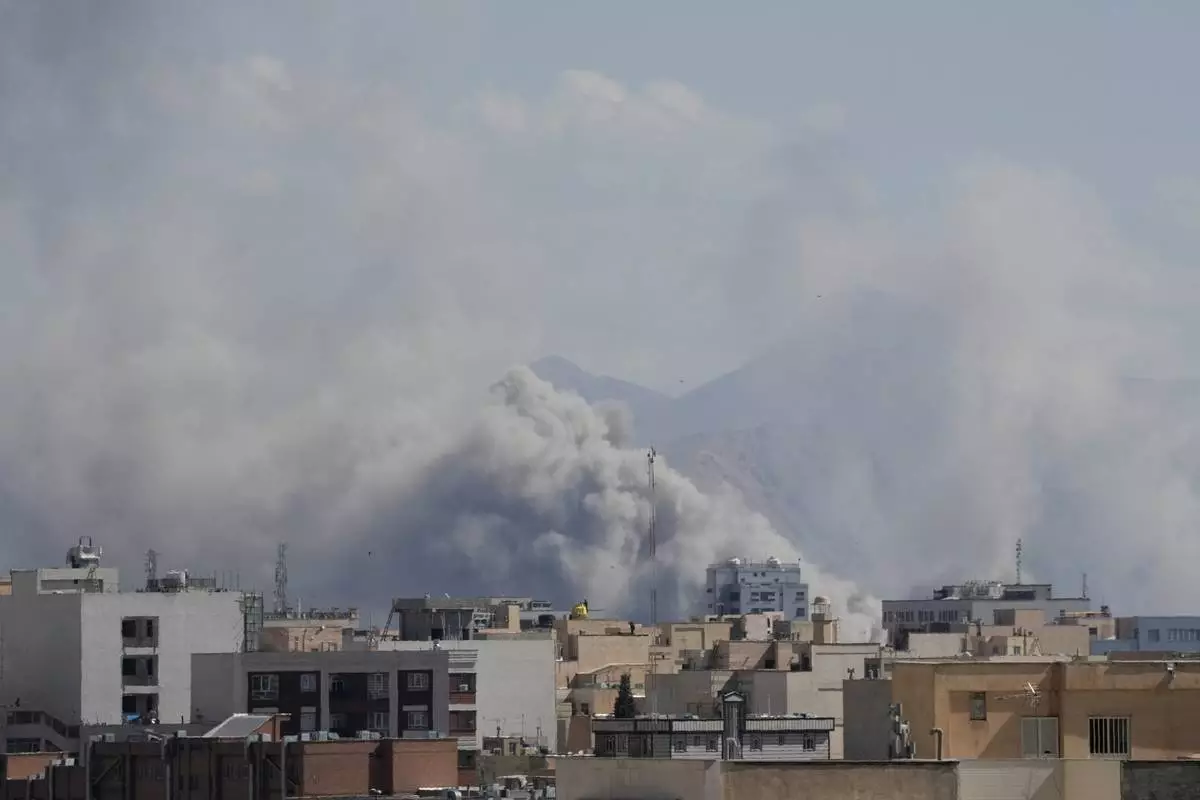
Smoke rises up after a strike in Tehran, Iran, Sunday, March 1, 2026. (AP Photo/Vahid Salemi)
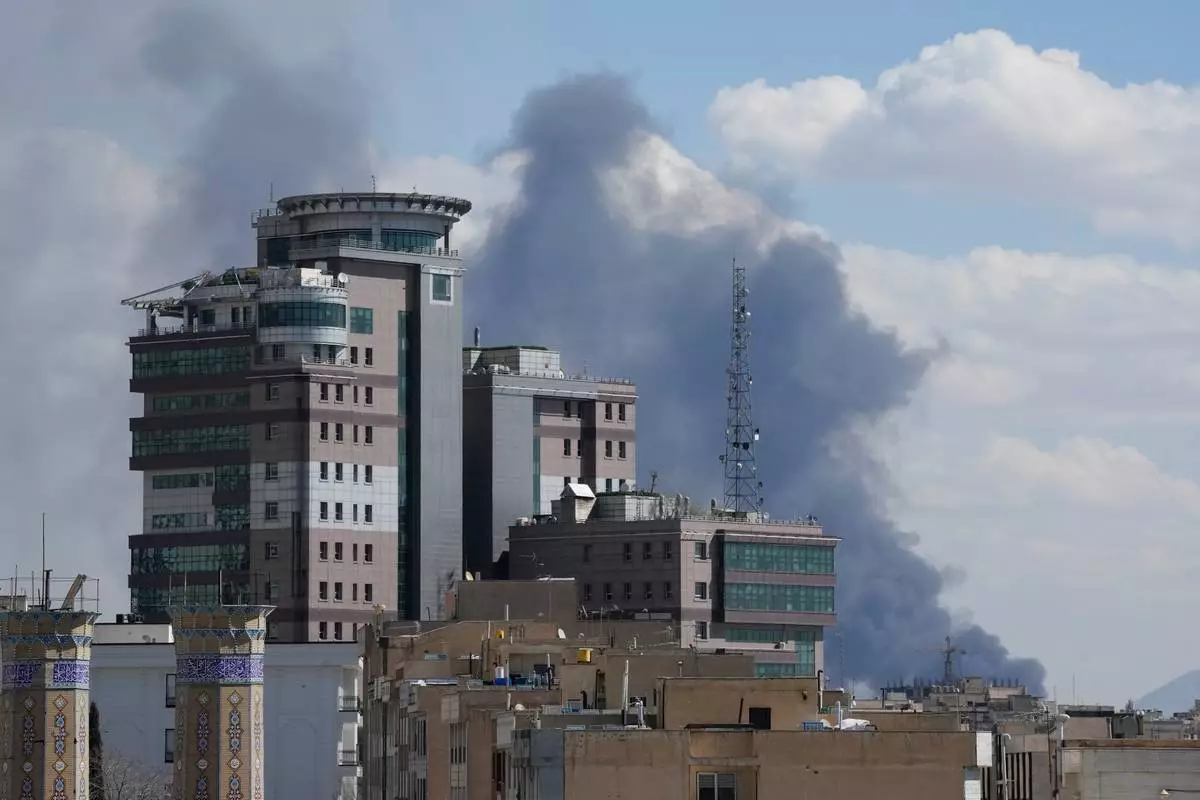
Smoke rises up after a strike in Tehran, Iran, Sunday, March 1, 2026. (AP Photo/Vahid Salemi)
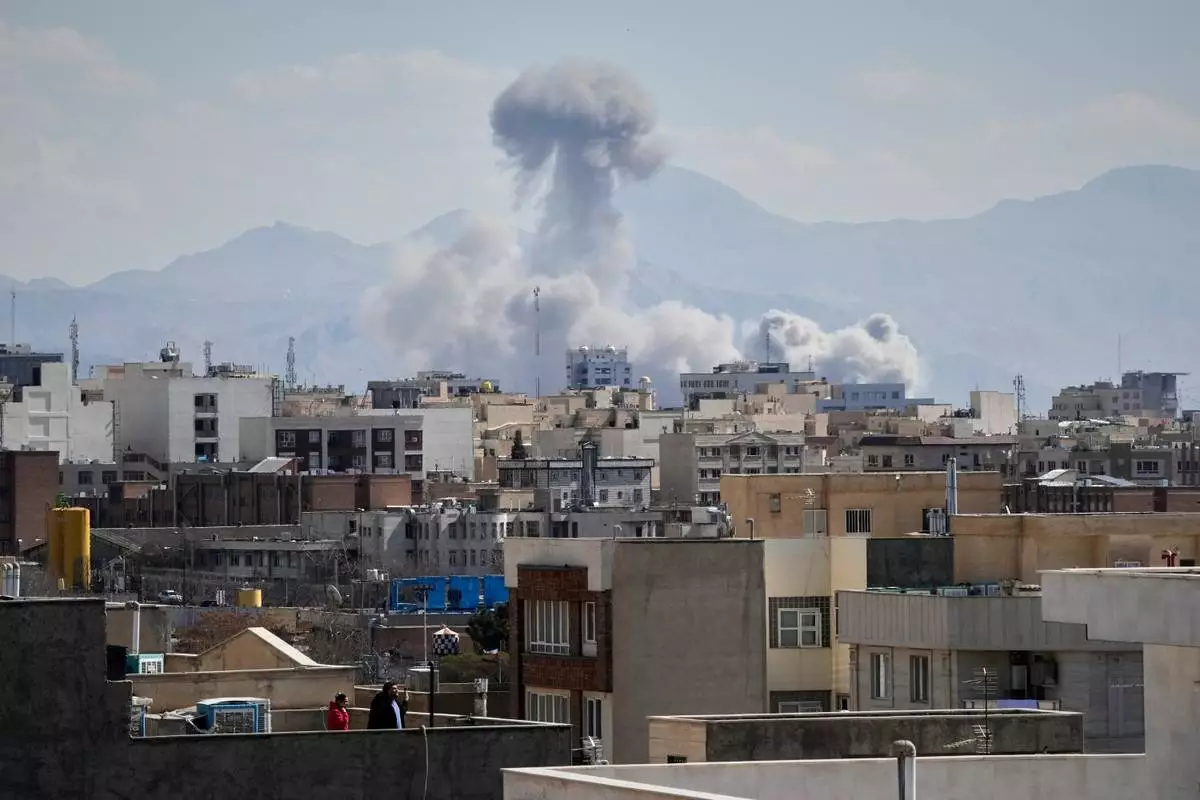
People watches from a rooftop as a plume of smoke rises after a strike in Tehran, Iran, Sunday, March 1, 2026. (AP Photo/Vahid Salemi)
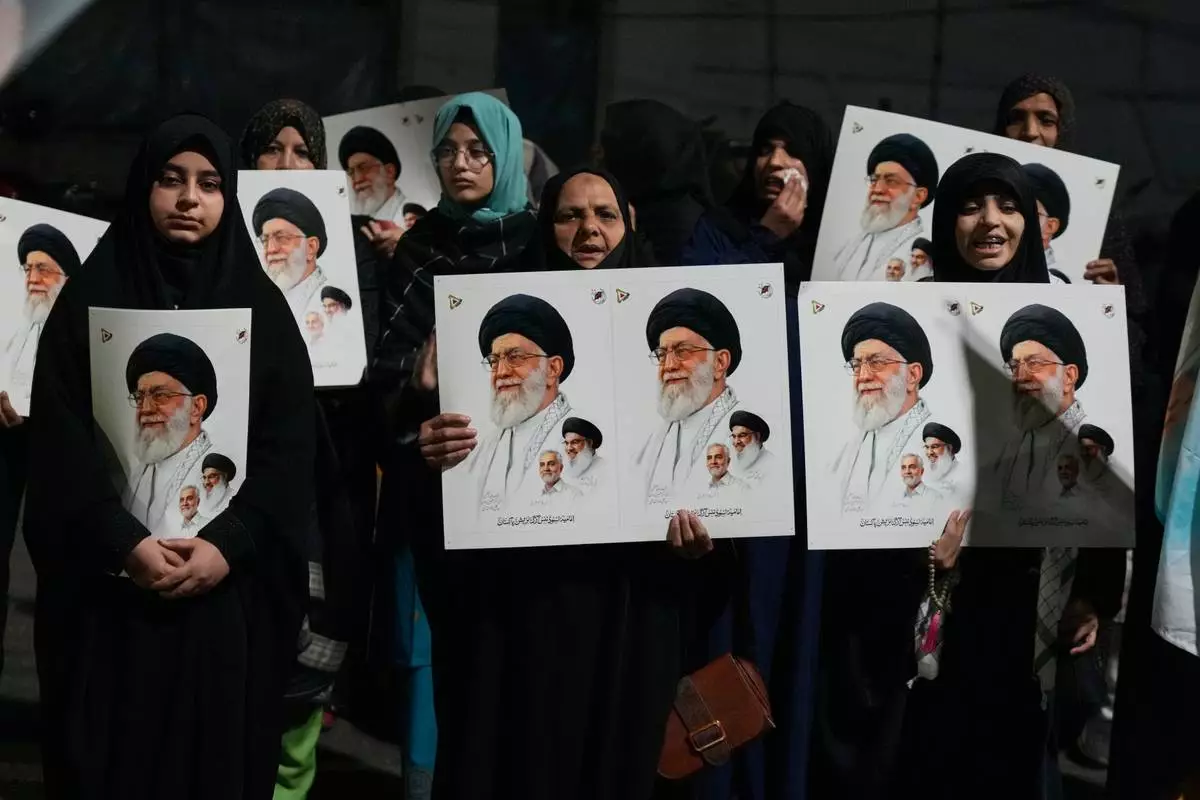
Shiite Muslims hold placards and chant slogans during a protest against the U.S. and Israel, and to show solidarity with Iran, in Lahore, Pakistan, Saturday, Feb. 28, 2026. (AP Photo/K.M. Chaudary)
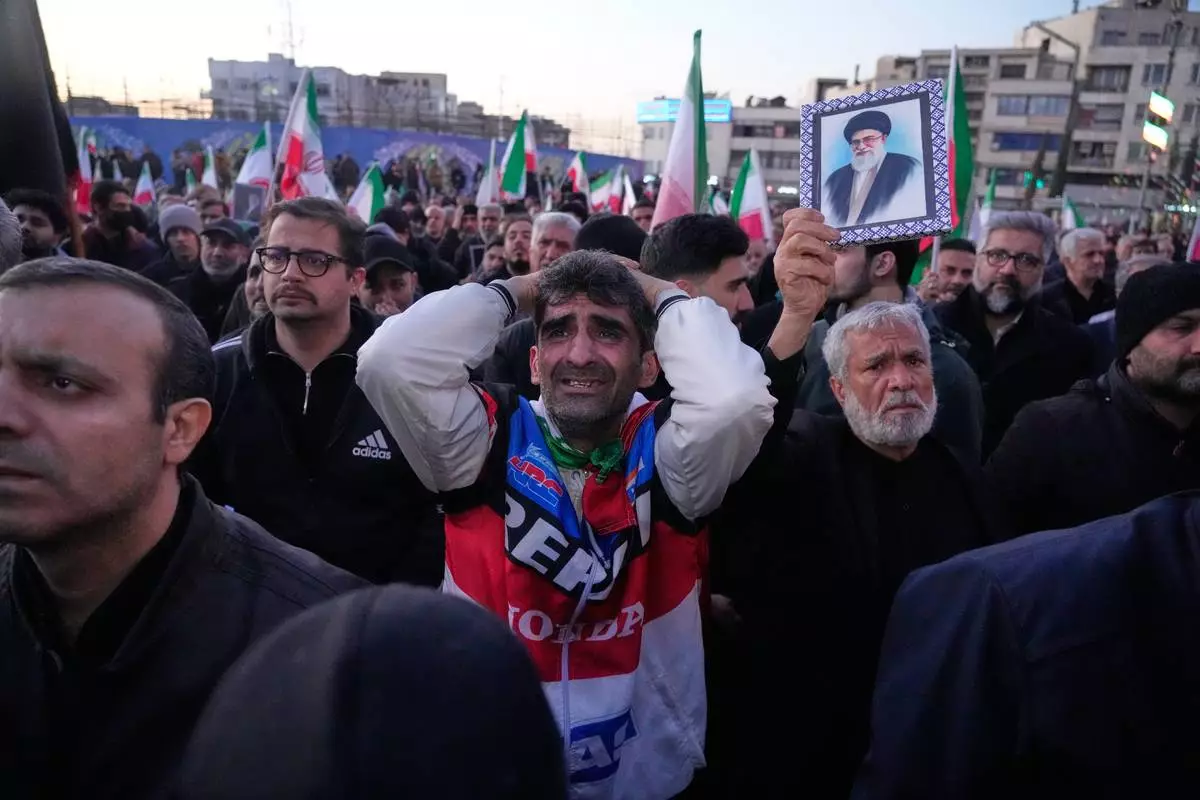
Government supporters mourn during a gathering after state TV officially announced the death of Iranian Supreme Leader Ayatollah Ali Khamenei, shown in the poster, in Tehran, Iran, Sunday, March 1, 2026. (AP Photo/Vahid Salemi)
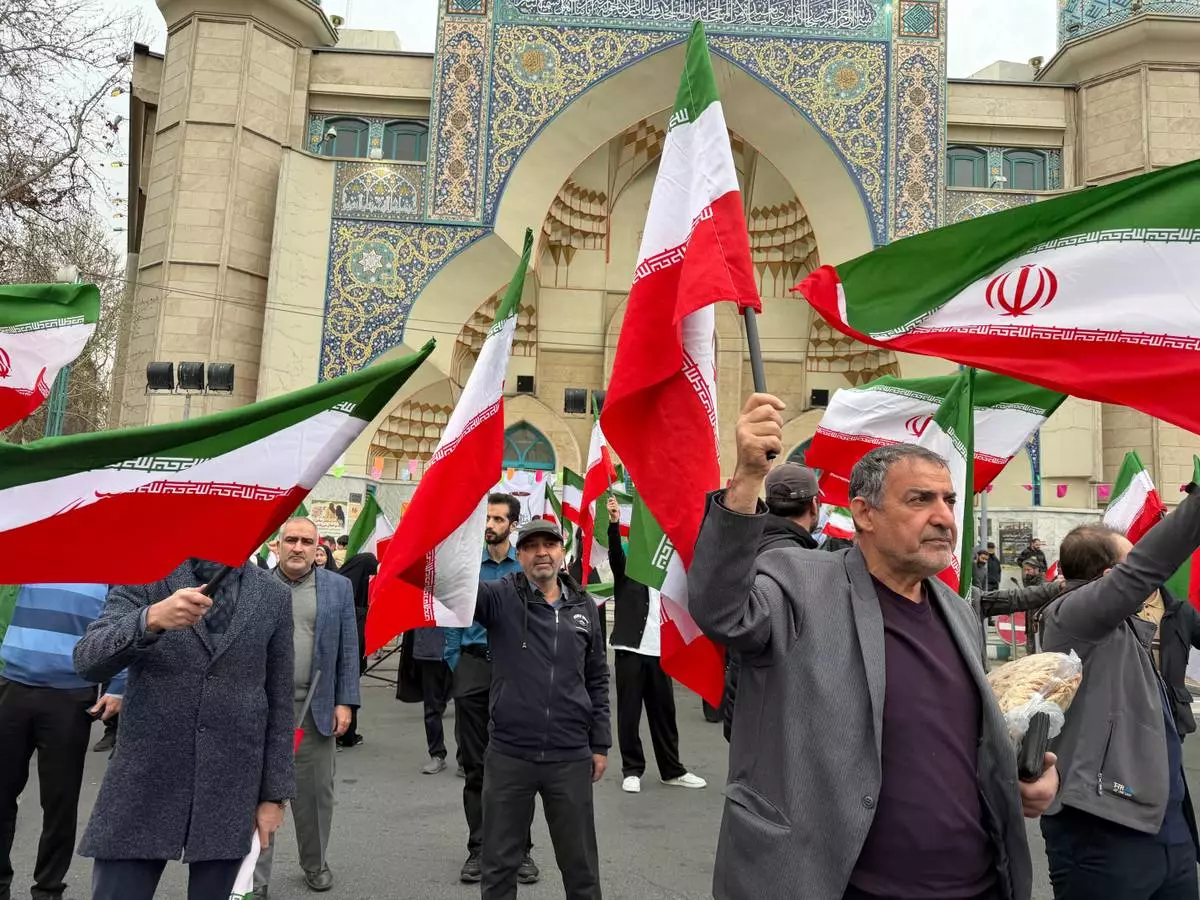
A group of men wave Iranian flags as they attend a demonstration in support of the government and against U.S. and Israeli strikes in Tehran, Iran, Saturday, Feb. 28, 2026. (AP Photo/Vahid Salemi)
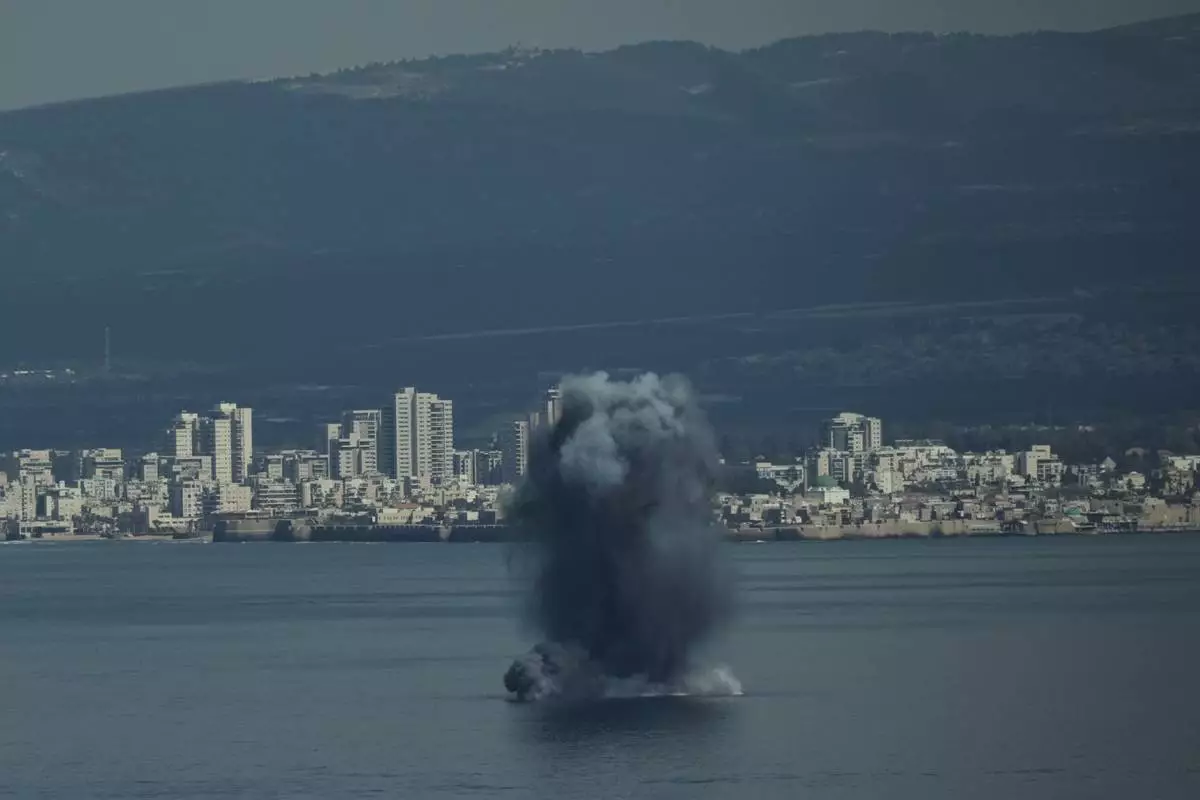
An incoming projectile explodes over the water as Israel issues a nationwide alert following its strikes on Iran, in Haifa Bay, northern Israel, Saturday, Feb. 28, 2026. (AP Photo/Leo Correa)
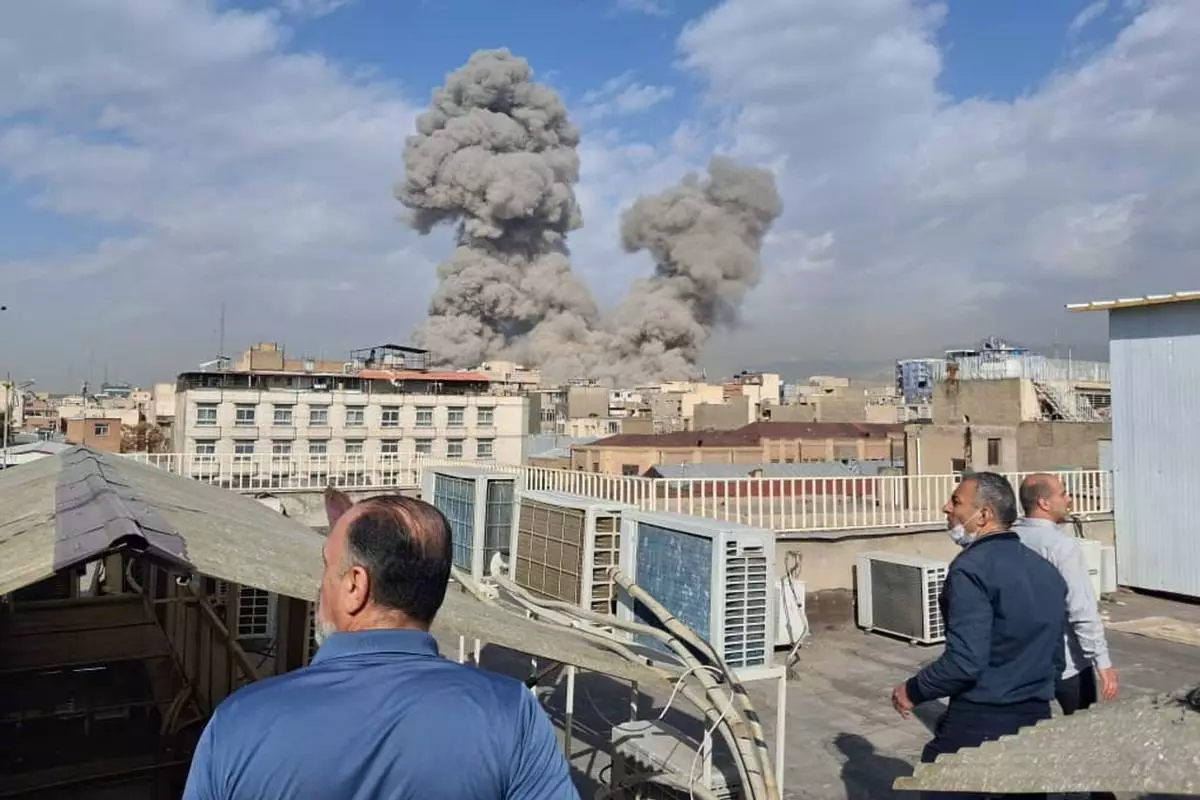
People watch as smoke rises on the skyline after an explosion in Tehran, Iran, Saturday, Feb. 28, 2026.(AP Photo)
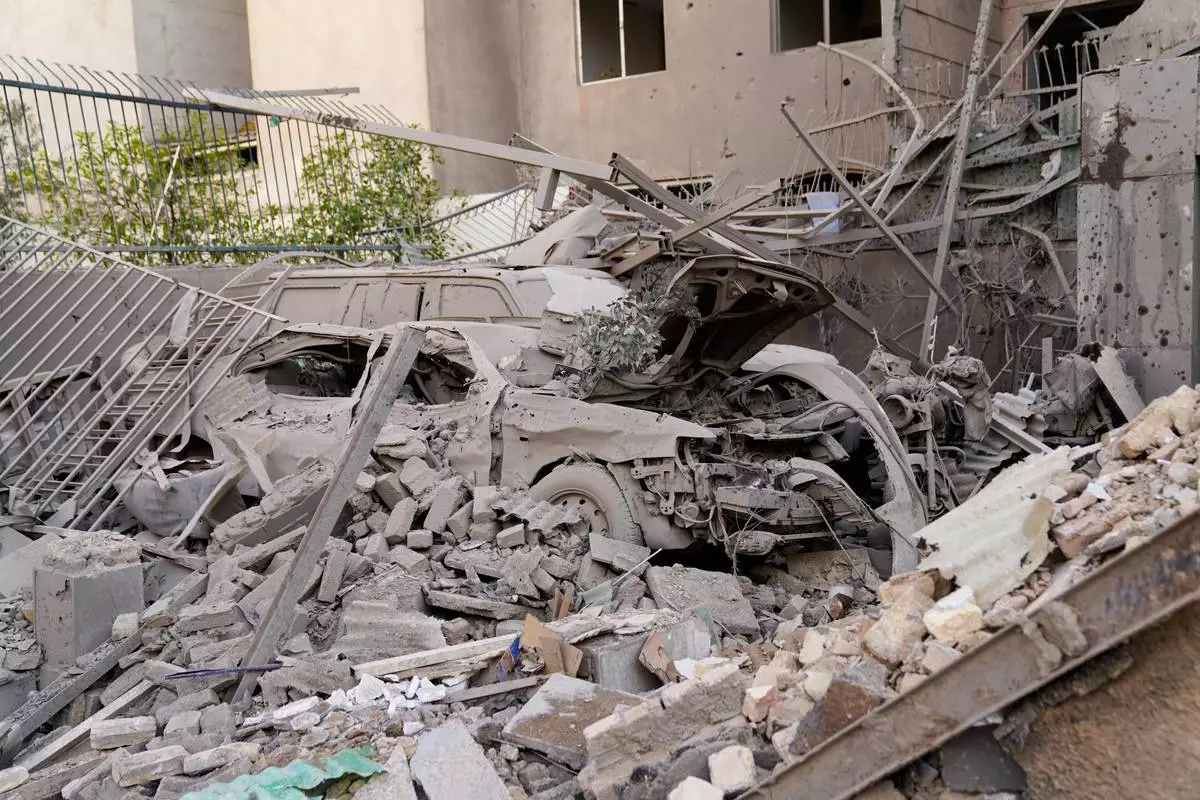
Ruins remain in the aftermath of an Israeli-U.S. strike in Tehran, Iran, Saturday, Feb. 28, 2026. (AP Photo/Amir Kholousi/ISNA)