As the war in the Middle East spirals further, U.S. President Donald Trump said on Monday that the U.S. has “the capability to go far longer ” than its projected four-to-five-week time frame for its military operations against Iran.
The U.S. and Israel have continued to pound Iran since killing its Supreme Leader Ayatollah Ali Khamenei on Saturday, while Tehran and its allies have hit back against Israel, neighboring Gulf states, and targets critical to the world’s production of oil and natural gas.
Click to Gallery
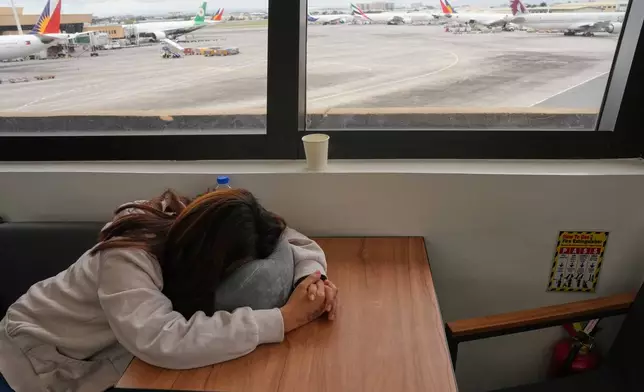
An overseas Filipino worker sleeps as she waits for updates on her cancelled flight to the Middle East at Manila's International Airport, Philippines on Monday, March 2, 2026. (AP Photo/Aaron Favila)
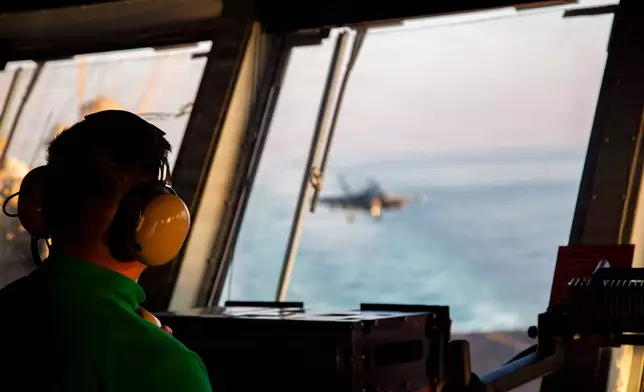
This image provided by U.S. Central Command shows a Navy sailor observing flight operations aboard the USS Abraham Lincoln (CVN 72)) in support of Operation Epic Fury, on Saturday, Feb. 28, 2026. (U.S. Navy via AP)
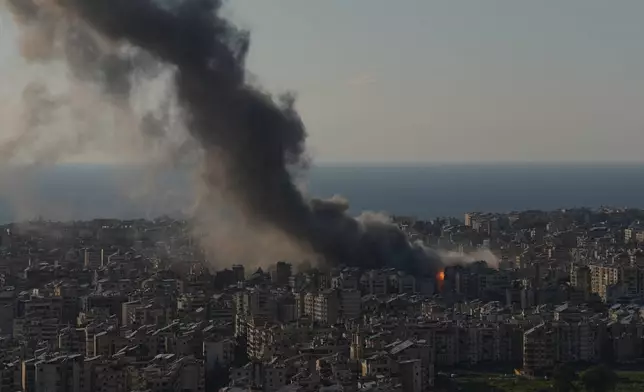
Flames and smoke rise from Israeli airstrikes on Dahiyeh, a southern suburb of Beirut, Lebanon, Monday, March 2, 2026. (AP Photo/Hassan Ammar)
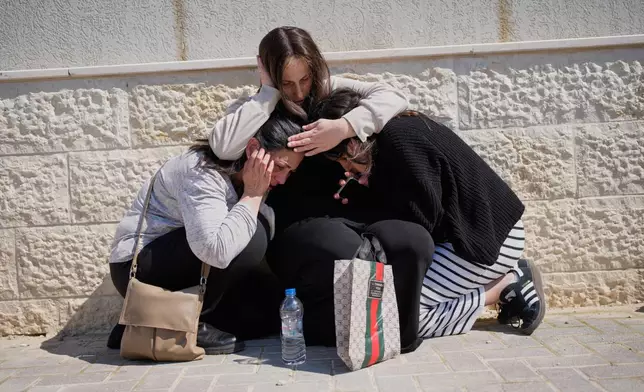
Mourners take cover while air-raid sirens warn of incoming missiles launched by Iran toward Israel during the funeral of Sarah Elimelech and her daughter Ronit who were killed in an Iranian missile attack, in Beit Shemesh, Israel, Monday, March 2, 2026. (AP Photo/Ohad Zwigenberg)
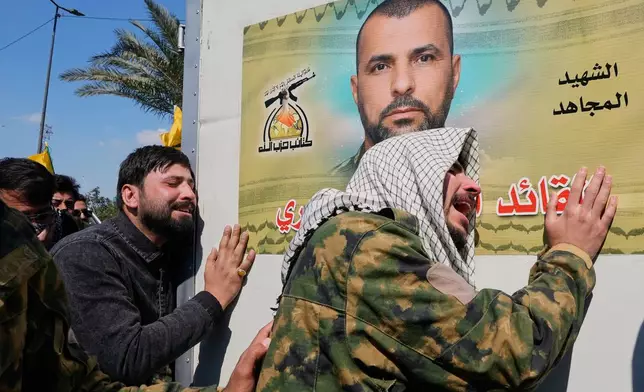
Relatives grieve during a funeral of a fighter with the Kataib Hezbollah, who was killed in a U.S. airstrike, in Baghdad, Iraq, Monday, March 2, 2026. (AP Photo/Hadi Mizban)
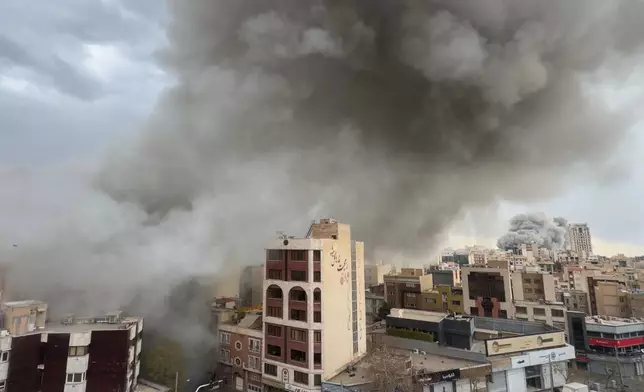
Plumes of smoke from two simultaneous strikes rise over Tehran, Iran, Monday, March 2, 2026. (AP Photo/Mohsen Ganji)
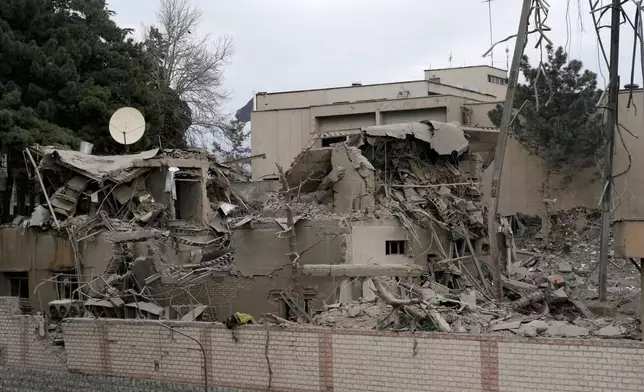
A state TV communications tower and building destroyed Sunday during a strike as part of the ongoing joint U.S.–Israeli military campaign are seen in Tehran, Iran, Tuesday, March 2, 2026. (AP Photo/Vahid Salemi)
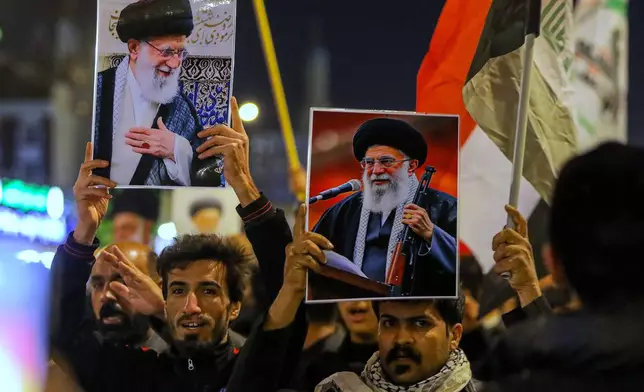
Iraqi Shiites hold pictures of Iranian Supreme Leader Ayatollah Ali Khamenei, who was killed by a U.S. airstrike in Tehran, during a symbolic funeral, in Najaf, Iraq, Sunday, March 1, 2026. (AP Photo/Anmar Khalil)
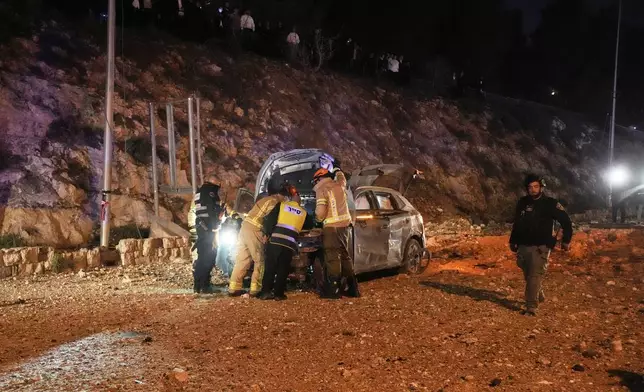
Israeli security forces inspect the scene of a direct hit on a road following an Iranian missile strike in Jerusalem, Sunday, March 1, 2026.(AP Photo/Mahmoud Illean)
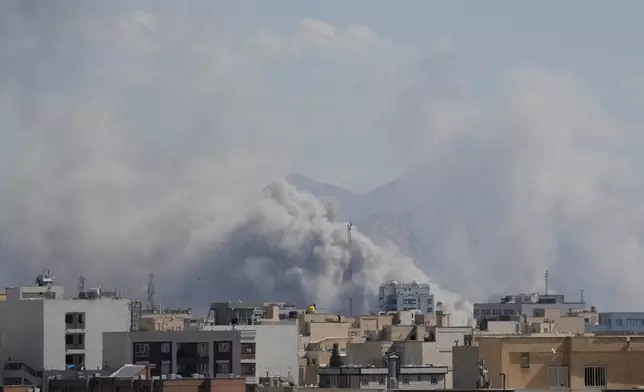
Smoke rises up after a strike in Tehran, Iran, Sunday, March 1, 2026. (AP Photo/Vahid Salemi)
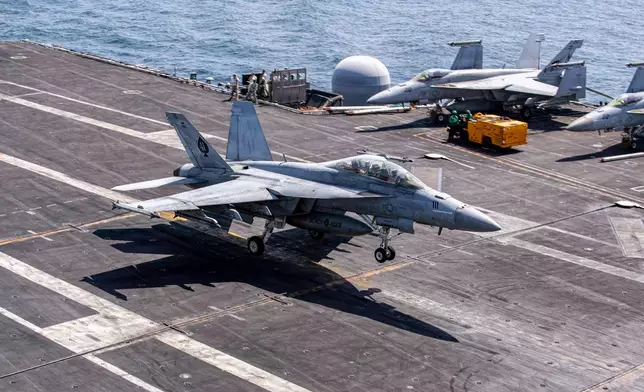
This image provided by U.S. Central Command shows a F/A-18E Super Hornet makes an arrested landing on the USS Abraham Lincoln (CVN 72) after a mission in support of Operation Epic Fury, on Saturday, Feb. 28, 2026. (U.S. Navy via AP)
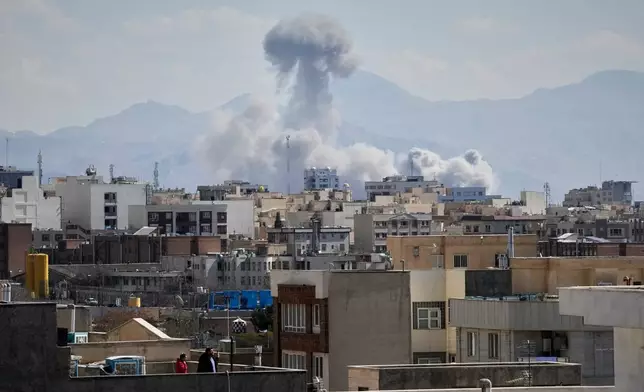
People watch from a rooftop as a plume of smoke rises after a strike in Tehran, Iran, Sunday, March 1, 2026. (AP Photo/Vahid Salemi)
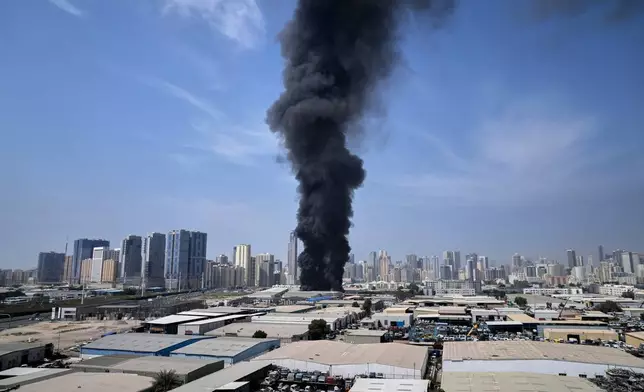
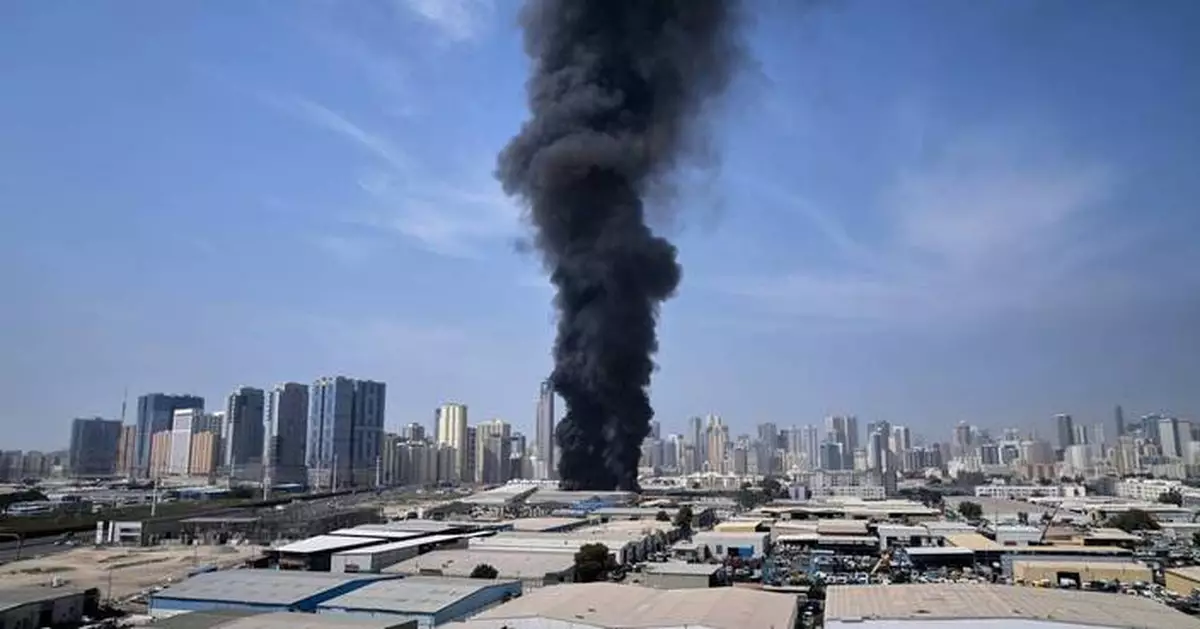
A black plume of smoke rises from a warehouse at the industrial area of Sharjah City in the United Arab Emirates following reports of Iranian strikes in Dubai, United Arab Emirates, Sunday, March 1, 2026. (AP Photo/Altaf Qadri)
The intensity of the attacks and the lack of any apparent exit plan set the stage for a prolonged conflict with far-reaching consequences. Israel and the U.S. have given conflicting answers about what exactly the war’s objectives are or what the endgame might be.
At least 555 people have been killed in Iran so far by the U.S.-Israeli campaign, the Iranian Red Crescent Society said, and more than 130 cities across the country have come under attack. In Israel, 11 people have been killed, with 31 in Lebanon, according to authorities.
The U.S. military announced Monday that two previously unaccounted for service members were confirmed dead, bringing the total American casualties during the operations against Iran up to six.
Here is the latest:
Israeli airstrikes hit the Lebanese capital Tuesday morning.
The Israeli military said it was targeting “Hezbollah command centers and weapons storage facilities in Beirut.”
Hezbollah also said it launched drones targeting an Israeli air base.
The Israeli military said it downed two drones.
Tokyo has told Japanese shipowners to have their ships stay away from the Persian Gulf to ensure the safety of their crewmembers.
Chief Cabinet Secretary Minoru Kihara told reporters Tuesday that the Transport Ministry has notified the Japanese Shipowners’ Association to do the utmost to protect crews on board the ships in the region.
Kihara said those already in the Gulf are urged to lie at anchor where it is safe to do so.
On Monday, Japan’s Foreign Minister Toshimitsu Motegi met with Iranian ambassador to Japan Peiman Seadat and conveyed Japan’s consistent stance that Iran must stop attacks on neighboring countries and other actions destabilizing the region.
Motegi also noted the importance of ensuring safety in the Strait of Hormuz, which is key to Japan’s energy security.
Israeli Prime Minister Benjamin Netanyahu is defending the decision to go to war with Iran alongside the United States.
Netanyahu, speaking on Fox News Channel’s Hannity, contended that Iran was rebuilding “new sites, new places” that would make “their ballistic missile program and their atomic bomb program immune within months.”
He did not offer evidence to support his claim.
Satellite photos analyzed by The Associated Press showed limited activity at two nuclear sites in Iran before the war, with analysts saying it was likely Tehran was trying to assess damage from American strikes in June and possibly salvage what remained there.
“We had to take the action now and we did,” Netanyahu said. “Otherwise the Iranian mass murder regime would have immunity from future action.”
Echoing a Trump administration point, he repeated that the war would not be “endless” and that it would create the conditions for the Iranian people to form a democratic government.
However, there’s been no sign of any mass uprising against Iran’s theocracy since the war started.
Netanyahu said the conflict could be a “gateway for peace” between Israel and regional powers, including Saudi Arabia.
However, Saudi Arabia alongside other Arab nations remain furious over the treatment of Palestinians during the Israel-Hamas war in Gaza.
Iran’s top diplomat early Tuesday sought to turn the tables on the United States, describing it as entering “a war of choice on behalf of Israel.”
After Trump urged Iranians to take over their government, Foreign Minister Abbas Araghchi made the same call to Americans.
“Shedding of both American and Iranian blood is thus on Israel Firsters,” Araghchi wrote on X. “American people deserve better and should take back their country.”
Sirens have sounded in Bahrain early Tuesday, the Interior Ministry said.
The ministry has called for people to head to the nearest safe place.
Al-Azhar al-Sharif, the Sunni Muslim world’s foremost seat of religious learning, has called for an immediate halt of the war in the Middle East.
The Cairo-based institution also denounced attacks on Arab countries, saying that “these aggressions are rejected ... whatever the justifications, pretexts or explanations.”
“Iran’s deliberate targeting of the energy sector introduces a new and dangerous dimension to this war,” warned the New York-based think tank The Soufan Center.
“The conflict has escalated beyond merely a regional confrontation. By striking the energy arteries of the world, Tehran is signaling its capacity to impose global economic consequences and demonstrating to Israel and the United States that it is beyond their respective capabilities to keep the war contained.”
UNESCO has voiced concerns about the Golestan Palace, a world heritage site in the Iranian capital, which was reportedly damaged due to an airstrike in its vicinity.
Monday’s strike hit Tehran’s Arag Square in the buffer zone of the palace, the U.N. agency reported.
The palace was damaged by debris and shock waves from the strike, it said.
Saudi Arabia said early Tuesday that the U.S. Embassy in Riyadh came under attack from two drones, which caused a “limited fire” and minor damage.
Further details weren’t immediately available. Saudi Arabia’s Defense Ministry made the announcement via the kingdom’s state television.
In the early hours of Tuesday, in a post on X, the U.S. Mission to Saudi Arabia asked American citizens in Jeddah, Riyadh and Dhahran to immediately shelter in place.
A diplomatic quarter resident in the neighborhood of the U.S. Embassy in Riyadh who spoke on condition of anonymity because of the security situation said there was light smoke coming from the embassy.
The attack comes after the U.S. Embassy in Kuwait was targeted Monday in an attack.
Iranian drones struck an Australian military facility in the United Arab Emirates but there were no injuries, Australia’s Defense Minister Richard Marles said.
The drones struck on the first night of the Iran war the Al Minhad Air Base, which is a logistics hub for Australia’s Middle East operations near Dubai, Marles said on Tuesday.
“We have a number of Australians who operate from a headquarters that we’ve had at Al Minhad now for many, many years,” Marles told Seven Network television.
“They are all accounted for, they are all safe. We’ve got north of 100 serving personnel actually across the Middle East in a range of countries, but most are in the UAE and that base is very important for us,” he added.
Associated Press journalists have heard multiple explosions near Al Minhad during the war, as well as many aerial interceptions.
Iran-run state TV aired the aftermath of two explosions around the Islamic Republic of Iran Broadcasting premises following US-Israeli strikes.
The head of the IRIB told Iranian media that no one was injured in the early Tuesday strikes. The state broadcast aired smoke from around what broadcasters called the “glass tower of IRIB” near the Evin area of Tehran.
IRIB offices and infrastructure have been hit before since the start of the US-Israeli strikes on Saturday.
The strikes followed an evacuation warning from the Israeli army to residents of the Evin district of Tehran, asking them to avoid the area around IRIB buildings. Shortly after, the Israeli Air Force said it struck what it described as a communication center used by the Iranian Revolutionary Guards Corps.
Israeli military struck a building housing Al-Manar channel studios in Beirut’s southern suburbs following an evacuation warning, the channel said. Israeli military said it targeted “Hezbollah command centers and weapons storage facilities in Beirut.”
Plumes of smoke were seen billowing over the skyline. No immediate details on casualties were available.
The strike followed Hezbollah missile and drone attacks on northern Israel shortly after midnight Sunday, prompting waves of Israeli airstrikes on Beirut’s southern suburbs and southern Lebanon, which killed at least 52 people and wounded 154, according to Lebanon’s Health Ministry.
In a statement early Tuesday, Hezbollah said “confrontation is a legitimate right,” describing its firing of rockets toward Israel as “a reaction to the aggression, and adding that it had repeatedly warned that Israeli attacks “could not continue without a response.”
A classified briefing at the Capitol left lawmakers with little clarity about the purpose, cost and next steps in the U.S. operation against Iran.
Republican Speaker Mike Johnson described the U.S. attack as a “defensive operation” because he said Israel was determined to act on their own against Iran, “with or without American support.”
Johnson said Trump had a “very difficult decision” to make, and determined that Iran would immediately retaliate against U.S. personnel and assets.
But Sen. Mark Warner, the top Democrat on the Intelligence Committee, said “there was no imminent threat to the United States of America by the Iranians. There was a threat to Israel.”
Rubio, Hegseth and others briefed the lawmakers, but Senate Democratic Leader Chuck Schumer said he found their answers “completely and totally insufficient.”
The Trump administration will likely seek supplemental funds from Congress to pay for the operation, they said.
The conflict has left 18 American service members seriously wounded, Capt. Tim Hawkins, a spokesperson for U.S. Central Command said Monday.
The number has grown from the five troops initially reported as seriously wounded on Sunday morning.
Six service members also have been killed in Kuwait. All six were Army soldiers and part of the same logistics unit, according to a U.S. official who was not authorized to comment publicly and spoke on condition of anonymity.
When asked about the deaths Monday, Hegseth said an Iranian weapon made it past allied air defenses “and, in that particular case, happened to hit a tactical operations center that was fortified.”
— By Konstantin Toropin
Bahrain’s U.N. Ambassador Jamal Alrowaiei told the U.N. Security Council “the Iranian aggression is resulting in significant material and psychological damages that threaten the safety and security of residents and citizens.”
Alrowaiei, the Arab representative on the 15-member council, said the ongoing Iranian attacks on civilian facilities and residential areas in Bahrain, which hosts a major U.S. naval base, have forced schools to close temporarily to protect students and children.
In the broader region, he told the council Monday that according to the U.N. children’s agency, UNICEF, 30 million children in the Middle East and North Africa are out of school or not receiving formal education — “equivalent to one in every three children being deprived of education.”
The State Department urged Monday that all U.S. citizens leave more than a dozen Middle Eastern countries due to safety risks with the ongoing escalations that have slipped the region into significant chaos.
U.S. Assistant Secretary of State for Consular Affairs Mora Namdar posted on the social media site X that Americans in countries, including Iran, Iraq, Jordan, Lebanon and Israel, should “DEPART NOW” using any available commercial transportation.
The guidance comes as some major airlines have canceled flights to and from the region as the war that began when U.S. and Israel attacked Iran on Saturday. It has since grown into a wider regional conflict, touching nearly every country nearby.
Several voters from Houston casting ballots in a Texas primary election said they’re worried about what will come next in Iran.
“I think that this could go on for years to come if they don’t have a clear exit strategy,” said Charles Padmore, a 45-year-old independent contractor. “I don’t even think they have a strategy. I think they just went in blind.”
He posits that Trump acted “by the whims of Israel.”
Nineteen-year-old college student Sophia Morales and her mother, Dina Morales, don’t feel like they’re getting a clear explanation from Trump about why he attacked Iran.
“I feel like Iran was in a war with Israel, but then all of a sudden, we’re in war too,” said Sophia Morales. She especially wants an explanation following reports that a girls school was bombed. Added her mother: “I don’t think I’ve heard of any clearer plans of what’s next after the bombing, just like what’s next in Venezuela.”
If Iran was a legitimate threat to the United States, Trump should have “gone the right way” and convinced Congress to authorize military action, said Alex Diaz, 31, a high school teacher.
“I’m just like, ‘Are you trying to kill us? Are you trying to cause a World War III?’” Diaz said.
Two Trump supporters in Texas say they’re confident the president is doing the right thing in Iran and don’t see a conflict with his campaign promises to pursue peace.
“I just expected him to do what needs to be done to protect America,” said Connie Stamps of Waco. “He wants to protect America first, and that’s what he’s doing. And he cares about the whole world. So he’s the peace president.”
Stamps said she’s thankful to have a president “who is brave enough to do what he says he’s going to do.”
Mollie Leutwyler Smith, who also lives near Waco in McLennan County, said she didn’t have war with Iran in mind when she cast her ballot for Trump, but she appreciates that he’s taking decisive action. She prefers his approach to the deal former President Barack Obama brokered with the Iranians.
“Did I vote for that in particular? I won’t say I voted for that, but, yes, I think as the president, he can make decisions,” she said.
COGAT, the Israeli military body overseeing civilian affairs in Gaza, announced one crossing into the territory would reopen on Tuesday “for the gradual entry of humanitarian aid.”
At the start of the war with Iran, Israel had said it couldn’t safely operate the Gaza crossings under fire. However, the U.N.’s humanitarian office monitoring Gaza warned Monday that a total closure would stretch stocks of food, water and fuel, as well as further inflate the price of basic goods in the devastated Palestinian territory.
In its announcement late Monday, COGAT said it would work in coordination with the American Civil Military Coordination Center and under some security restrictions to reopen the Kerem Shalom Crossing.
Diplomatic staff at the U.S. Embassy in Jordan have left the embassy compound in Amman “due to a threat.”
The U.S. diplomatic mission did not disclose additional details, but the announcement comes not long after Iran-backed Iraqi militia Kataib Hezbollah threatened to attack American military bases in Jordan.
The announcement that embassy personnel had left the compound in Amman appeared to be a prelude to a potentially larger departure of diplomatic staff from Jordan.
Jordanian police meanwhile urged residents living near the embassy to stay indoors, close windows and take other “precautionary measures.”
Secretary of State Marco Rubio speaks to reporters before his scheduled House and Senate Intelligence Committees briefing about Iran on Capitol Hill in Washington, Monday, March 2, 2026. (AP Photo)
Pressed on how long the U.S. military would remain focused on Iran, Rubio said as long as it takes.
“The hardest hits are yet to come from the U.S. military. The next phase will be even more punishing on Iran than it is right now,” he told reporters at the U.S. Capitol.
“How long will it take? I don’t know how long it will take,” he said. “We have objectives. We will do this as long as it takes to achieve those objectives.”
“We would love for there to be an Iran that’s not governed by radical Shia clerics,” he said heading into a classified briefing on Capitol Hill. “That’s not the objective.”
The initial joint U.S.-Israeli strikes on Iran killed the country’s Supreme Leader Ali Ayatollah Khamenei, along with many other top leaders.
“The objectives of this operation are to destroy their ballistic missile capability and make sure they can’t rebuild it, and make sure that they can’t hide behind that to have a nuclear program,” he said. “That’s the objective of the mission.”
Rubio, Hegseth and others are briefing the congressional leaders and the top lawmakers on the national security committees in Congress about the Iran operation.
The U.S. military on Monday announced the deaths of two more American service members during the operations against Iran, bringing the total death toll to six people.
U.S. Central Command stated in a post on X that U.S. forces “recently recovered the remains of two previously unaccounted for service members from a facility that was struck during Iran’s initial attacks in the region.”
The post did not state where two service members were killed. Their identities are being withheld until 24 hours after their families are notified, the military said.
Iran’s foreign minister posted an aerial photo showing rows of freshly dug graves for more than 160 girls who he said were killed by an airstrike on an elementary school in the country’s south.
“Their bodies were torn to shreds,” Abbas Araghchi said in a post Monday on social media, adding, “This is how ‘rescue’ promised by Mr. Trump looks in reality.”
The photo shows mourners gathered among long, orderly rows of graves stretching across an open dirt lot. White chalk rectangles mark measured burial plots as yellow excavators dig into the earth.
Iranian state media has reported that the girls’ school was hit in an airstrike on Saturday, killing at least 165 people and wounding dozens more. The Israeli military said it was not aware of strikes in the area. The U.S. military said it was looking into the reports.
U.N. political chief Rosemary DiCarlo briefed the U.N. Security Council on Monday during a session chaired by first lady Melania Trump on protecting children, education and technology in conflict.
Before making general statements about the impact of conflict on children worldwide, DiCarlo highlighted the immediate impact of the U.S.-Israel strikes and Iranian retaliation on the youngest citizens of regional countries.
“We have been reminded of this truth over the last two days. Schools in Israel, the United Arab Emirates, Qatar, Bahrain and Oman have closed and moved to remote learning owing to the ongoing military operations in the region,” she said.
DiCarlo added that the world body was aware of the reports about the deaths at a girl’s school in southern Iran, which Iran said killed dozens of children. Both U.S. and Israel have said they are looking into it.
Three young siblings killed in an Iranian missile strike in central Israel were buried Monday night at the Mount of Olives in Jerusalem.
Yaakov, 16, Avigail, 15, and Sarah Biton, 13, were among nine people killed Sunday when a missile hit a shelter in a synagogue in Beit Shemesh, the deadliest attack on Israelis since the war began. Rescuers searched the rubble late into the night.
Israel’s rescue services said 65 people were hospitalized, including two seriously wounded.
President Isaac Herzog visited one of the injured, Penina Cohen, at Hadassah Hospital on Monday. She told him she lost her husband, Yosef, and her mother-in-law, Bruria, in the strike. She and her young son were sitting beside them in the shelter when the missile hit.
“I was right beneath the hole that was torn open, and I have no explanation for how we were not more seriously hurt. We experienced a great miracle,” she said. “Today my son turns 13, and he was meant to celebrate his bar mitzvah. Instead, we are burying my husband and mother-in-law.”
Moments before U.S. first lady Melania Trump led a U.N. Security Council session Monday on protecting children in armed conflict, Amir Saeid Iravani, Iranian ambassador to the U.N., blasted the subject of the meeting, saying that it was in contrast to the reported deadly strikes on a girl’s school in Iran on Saturday.
“It is deeply shameful and hypocritical,” Iravani told reporters, “that on the very first day of its presidency of the Security Council, the United States convenes a high-level meeting on protecting children, technology, and education in armed conflict under the agenda item ‘Maintenance of international peace and security,’ while at the same time launching missile strikes against Iranian cities and bombing schools and killing children.”
He added, “For the United States, ‘protecting children’ and ‘maintaining international peace and security’ clearly mean something very different from what the UN Charter provides.”
“Two days ago, the Iranian regime had 11 ships in the Gulf of Oman, today they have ZERO,” U.S. Central Command said in a post on X.
The statement follows President Donald Trump’s Truth Social post on Sunday that U.S. forces had “destroyed and sunk 9 Iranian Naval Ships.” The president said they would be “going after the rest” and had “largely destroyed their Naval Headquarters.”
The U.N.’s humanitarian office tracking Gaza said Monday that the Israeli closure of all crossings into Gaza was stretching stocks of food, inflating the prices of basic goods and halting municipal services like solid waste collection as humanitarian workers tried to ration fuel supply. It said that reduced water production in some parts of Gaza City had left people drinking as little as two liters of water a day.
COGAT, the Israeli military body overseeing civilian affairs in Gaza, closed crossings into the territory at the start of the unfolding war and froze the entrance and exit of humanitarian workers. It said the crossings cannot not be safely operated under fire and that they would reopen as soon as the security situation allows.
A tense calm has settled over the central Jerusalem after an afternoon and evening with no sirens announcing incoming missiles from Iran. The streets are still quite empty in West Jerusalem, where most Israelis live.
NATO Secretary General Mark Rutte said in an interview that the United States’ and Israel’s war against Iran is crucial for security in Europe. He said the allies could support the effort even without direct involvement in military operations, through logistics and access.
Rutte, a former prime minister of the Netherlands, said he unreservedly approves of Trump’s decision to attack Iran and kill its supreme leader. Rutte cited the threat of a nuclear-armed Iran.
“It would be a stranglehold on Israel. It could potentially mean Israel’s defeat,” Rutte told German public broadcaster ARD in its Brussels studio on Monday.
When asked about the possibility of NATO entering the war, Rutte said absolutely no one believed that NATO would be involved. “This is Iran, this is the Gulf, this is outside NATO territory,” he said.
NATO troops deployed for 20 years to Afghanistan, and its 2011 air campaign helped topple Libya’s late leader Moammar Gadhafi.
Iranian state-run IRNA news agency said the country’s military has shot down 20 “enemy drones” since the beginning of the U.S. and Israeli attacks on Saturday.
A prominent Iran-backed Iraqi militia has threatened to attack American military bases in neighboring Jordan.
Kataib Hezbollah has claimed attack on U.S. bases in northern Iraq in solidarity with Tehran.
Iran has been targeting American military assets in the Mideast in its ongoing war with Washington and Israel.
The Iraqi government for years has tried to keep a delicate balance maintaining strong ties with both Washington and Tehran.
The military said it has completed a wave of strikes targeting branches of al-Qard al-Hasan, saying the quasi-banking system is being used to fund the militant group’s military wing.
The strikes come amid a day of successive Israeli strikes in southern Lebanon and in its capital, following Hezbollah rocket fire on Israel.
Al-Qard al-Hasan is officially a nonprofit charity institution operating outside the Lebanese financial system, and one of the tools by which Hezbollah entrenches its support among the country’s Shiite population.
Israel targeted the institution also in 2024 during its monthslong conflict with Hezbollah.
Americans’ initial reactions to Trump ordering airstrikes against Iran over the weekend appear more negative than positive, according to a new snap poll from The Washington Post that was conducted via text message on Sunday.
About half those polled opposed the strikes, while 39% were in support. Roughly 1 in 10 were unsure. Democrats and independents drove much of the disapproval, with nearly 9 in 10 Democrats and about 6 in 10 independents opposed to the military strikes.
Republicans were much more supportive, with 81% backing the military action. About 1 in 10 Republicans were opposed, and a similar share were unsure.
Respondents were about twice as likely to say the U.S. should stop the military strikes as that time, rather than continue them.
Spanish Prime Minister Pedro Sánchez called the U.S. attack an “unjustifiable” and “dangerous” military intervention.
Defense Minister Margarita Robles said “no assistance of any kind, absolutely none,” had been provided from the Rota and Morón bases in southern Spain, which are shared with the U.S. but remain under Spanish command.
“There is a deal with the U.S. over these bases, but our understanding of the deal is that operations have to comply with international legal frameworks and that there has to be international support for them,” Robles said.
The U.S. and Israel were acting “unilaterally without the support of an international resolution,” Robles said.
Flight map data from FlightRadar24 showed that several U.S. military aircraft had left the bases in southern Spain since the weekend attack, including nine tankers that departed Sunday from Morón for Germany.
Israel’s military said the hostile aircraft was intercepted and it is reviewing the incident. The army’s social media post did not blame the Lebanese militant group Hezbollah or any other party.
Iran-backed Hezbollah did not immediately issue a statement. The group had fired rockets late Sunday into northern Israel, sparking Israeli strikes throughout Lebanon that killed at least 31 people and displaced thousands.
Authorities in Abu Dhabi quickly responded to the drone attack on the Musaffah fuel terminal and got the fire under control. No injuries were reported and operations at the terminal were not affected, according to a statement by the Abu Dhabi Media Office posted on X.
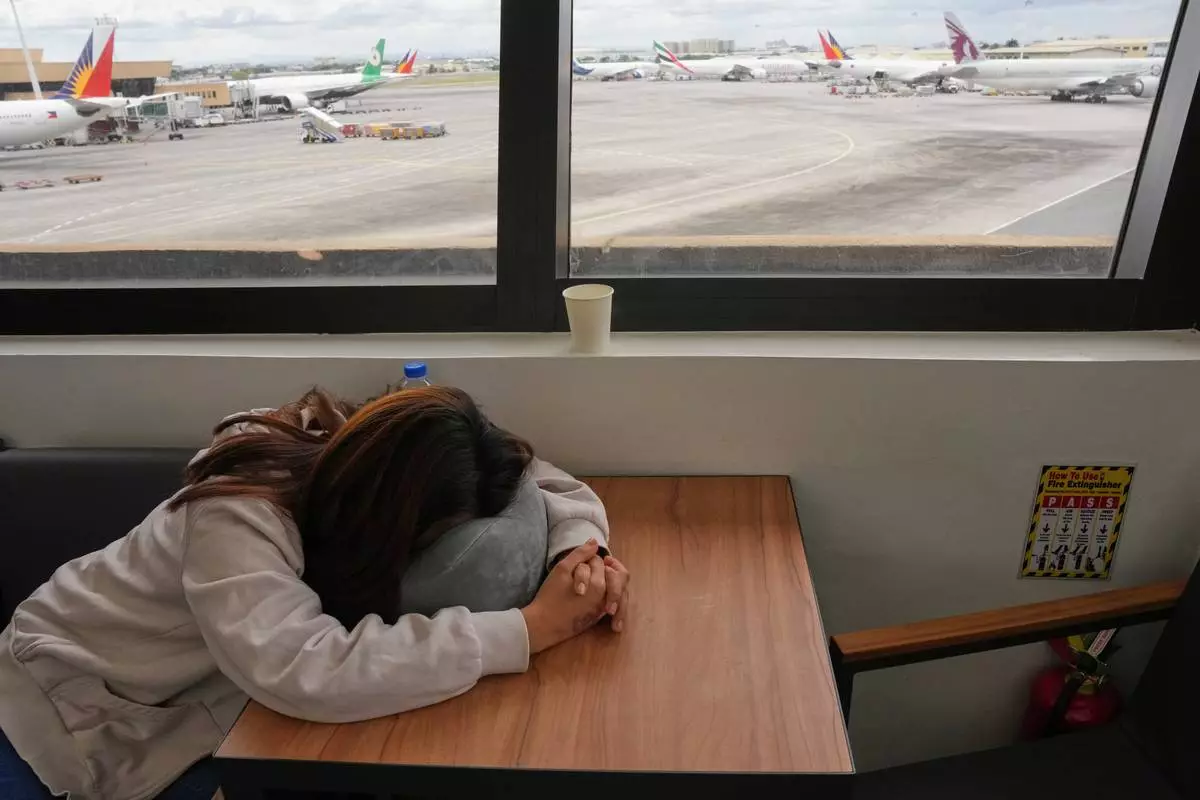
An overseas Filipino worker sleeps as she waits for updates on her cancelled flight to the Middle East at Manila's International Airport, Philippines on Monday, March 2, 2026. (AP Photo/Aaron Favila)
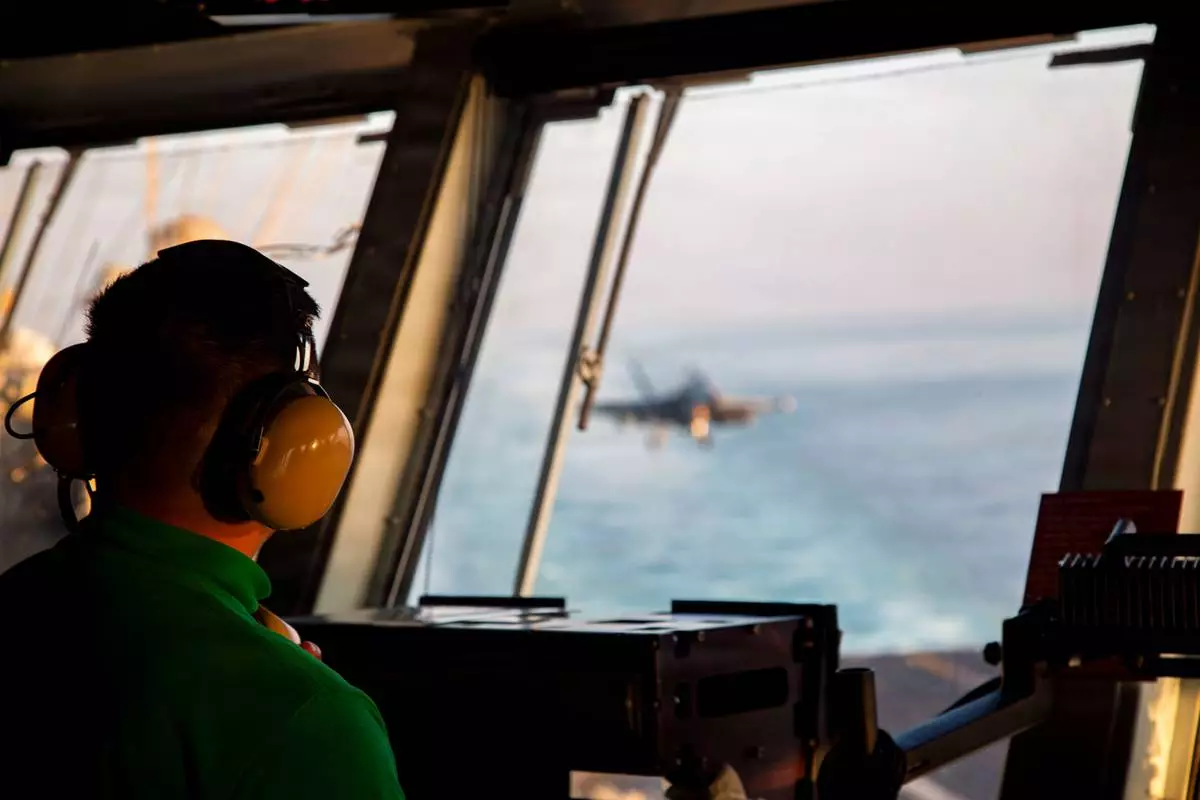
This image provided by U.S. Central Command shows a Navy sailor observing flight operations aboard the USS Abraham Lincoln (CVN 72)) in support of Operation Epic Fury, on Saturday, Feb. 28, 2026. (U.S. Navy via AP)
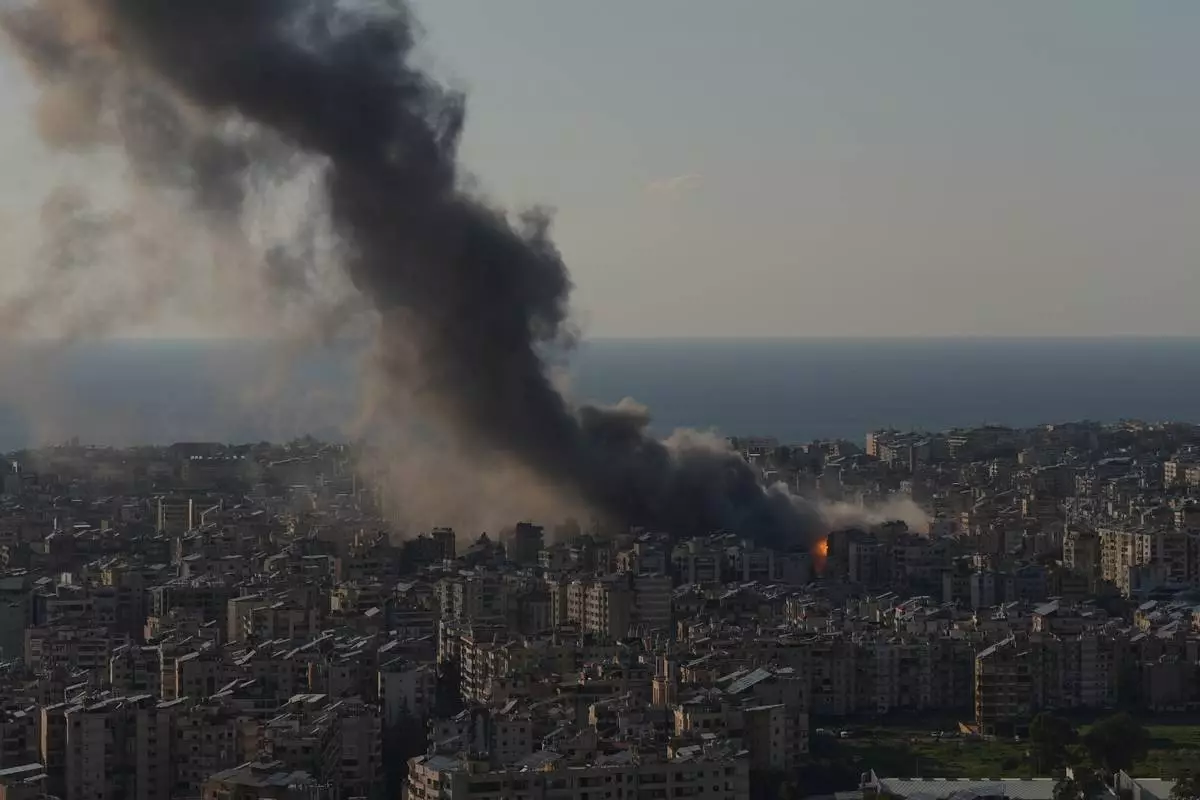
Flames and smoke rise from Israeli airstrikes on Dahiyeh, a southern suburb of Beirut, Lebanon, Monday, March 2, 2026. (AP Photo/Hassan Ammar)
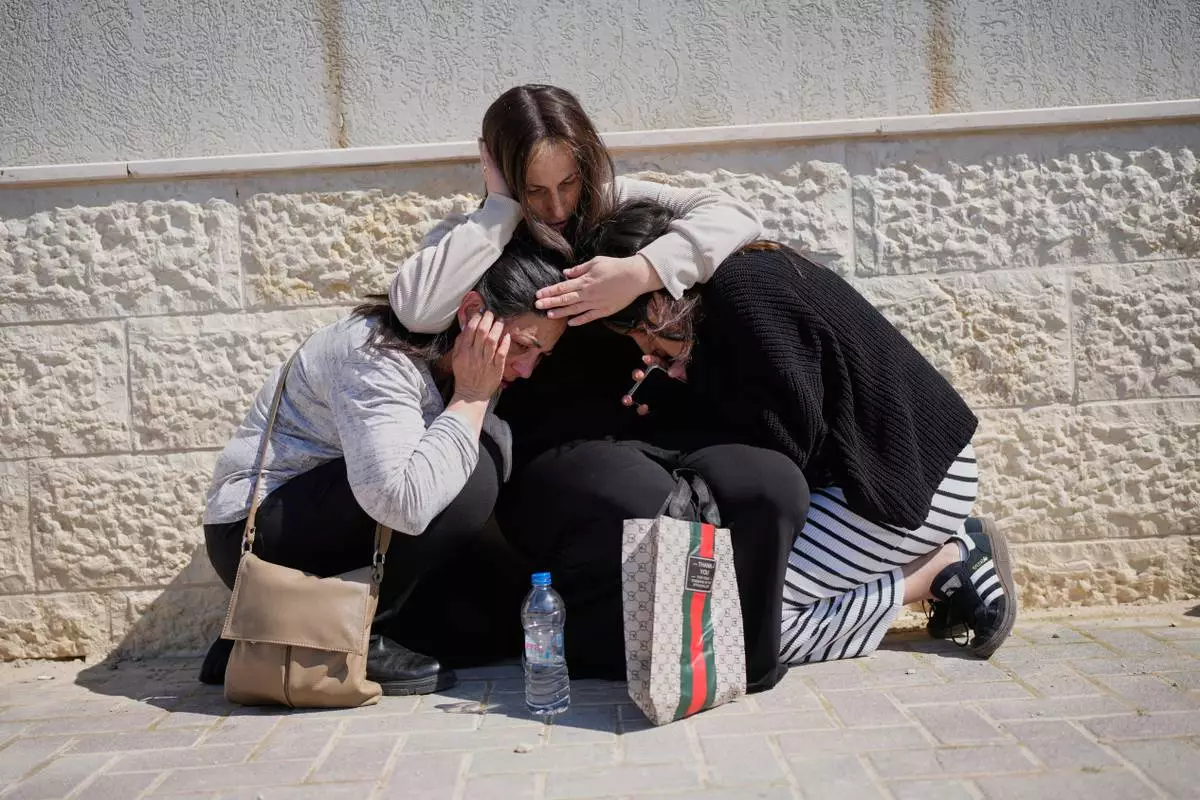
Mourners take cover while air-raid sirens warn of incoming missiles launched by Iran toward Israel during the funeral of Sarah Elimelech and her daughter Ronit who were killed in an Iranian missile attack, in Beit Shemesh, Israel, Monday, March 2, 2026. (AP Photo/Ohad Zwigenberg)
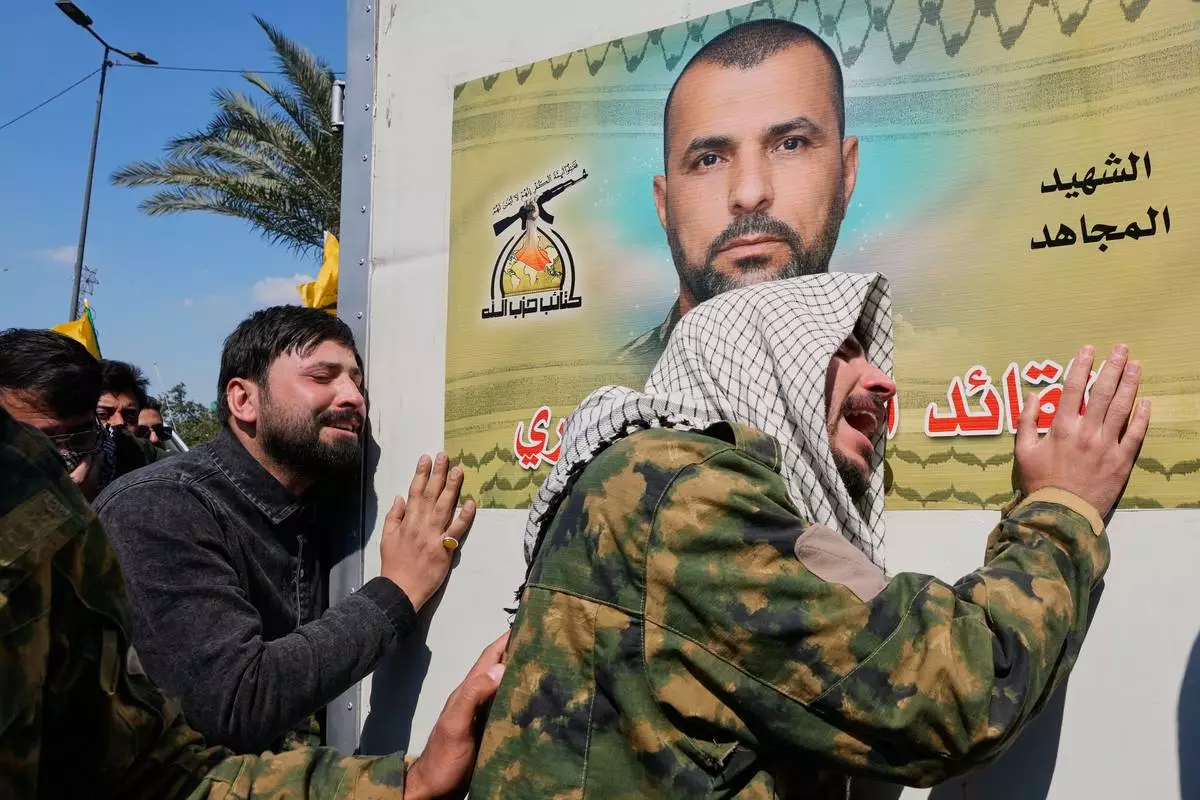
Relatives grieve during a funeral of a fighter with the Kataib Hezbollah, who was killed in a U.S. airstrike, in Baghdad, Iraq, Monday, March 2, 2026. (AP Photo/Hadi Mizban)
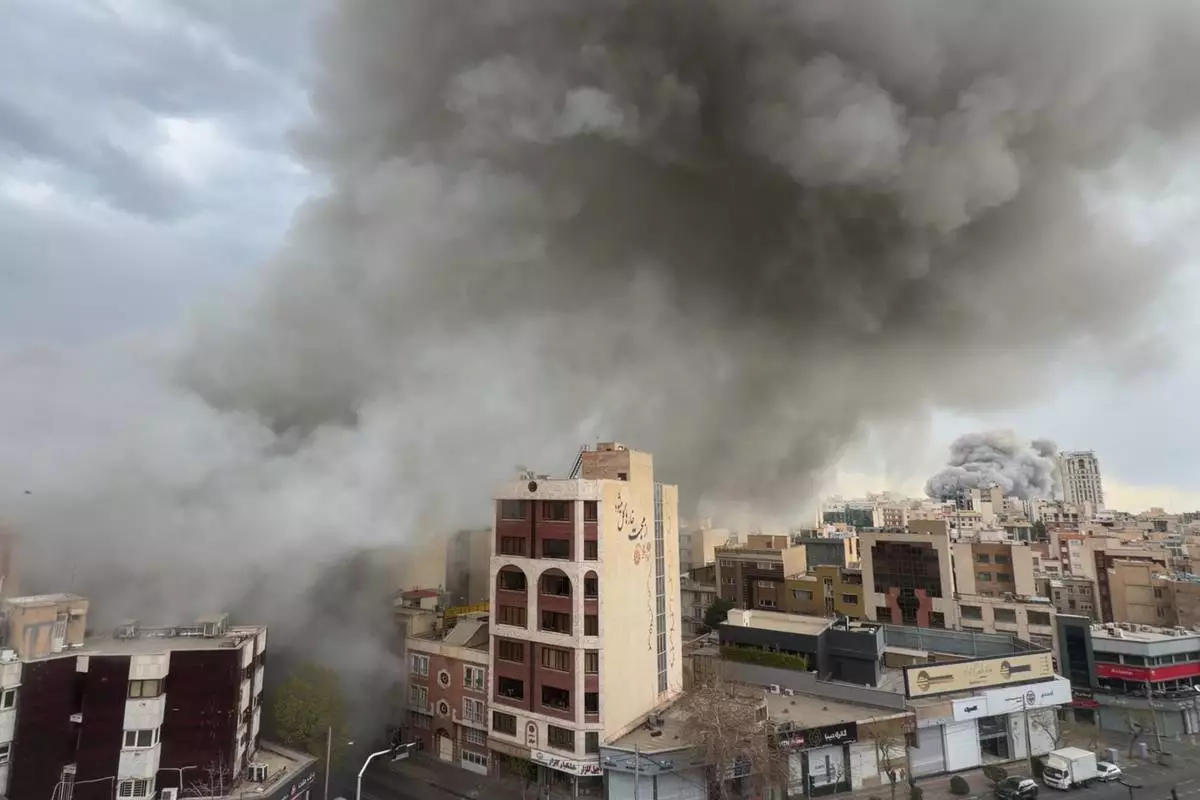
Plumes of smoke from two simultaneous strikes rise over Tehran, Iran, Monday, March 2, 2026. (AP Photo/Mohsen Ganji)
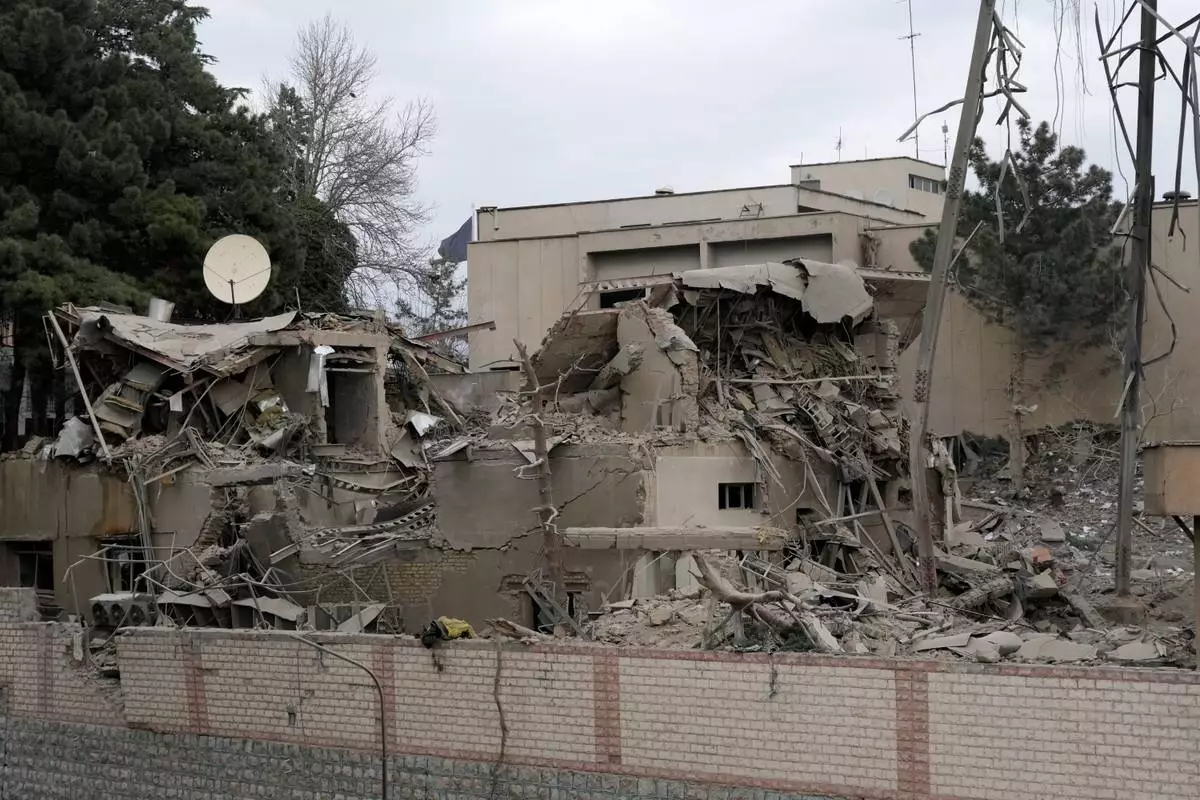
A state TV communications tower and building destroyed Sunday during a strike as part of the ongoing joint U.S.–Israeli military campaign are seen in Tehran, Iran, Tuesday, March 2, 2026. (AP Photo/Vahid Salemi)
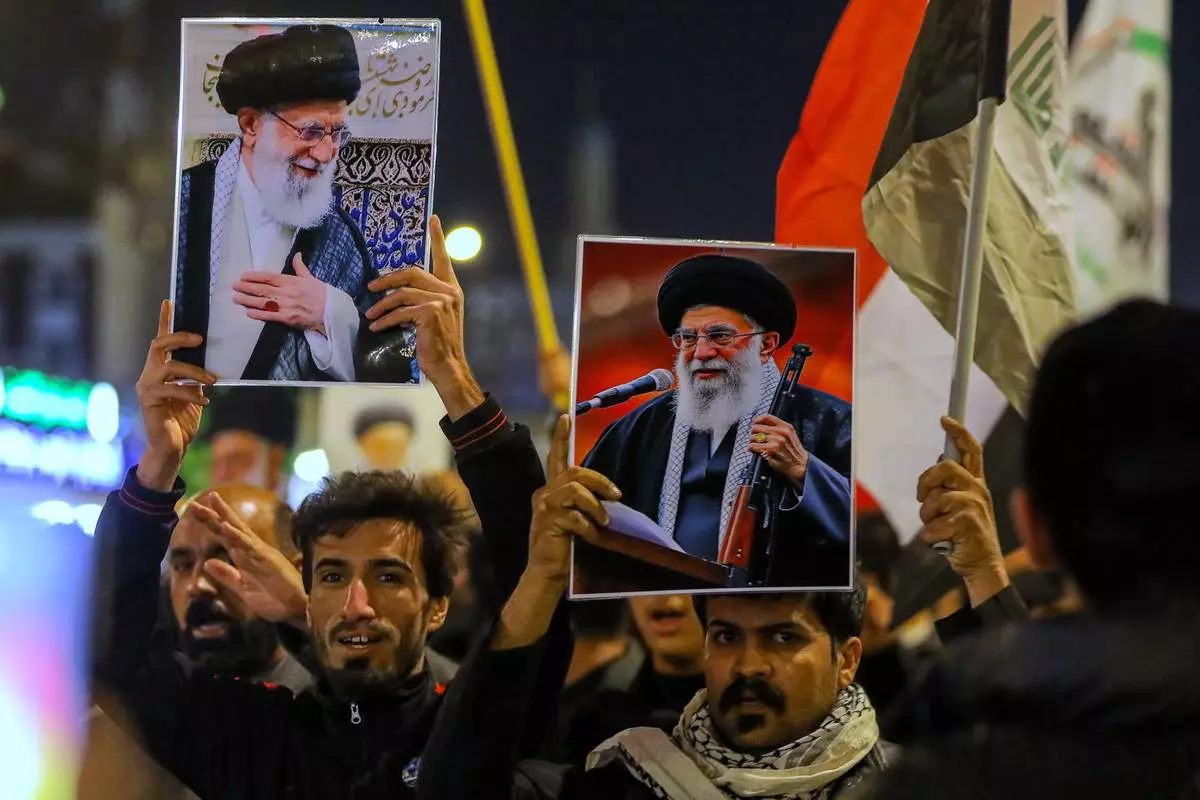
Iraqi Shiites hold pictures of Iranian Supreme Leader Ayatollah Ali Khamenei, who was killed by a U.S. airstrike in Tehran, during a symbolic funeral, in Najaf, Iraq, Sunday, March 1, 2026. (AP Photo/Anmar Khalil)
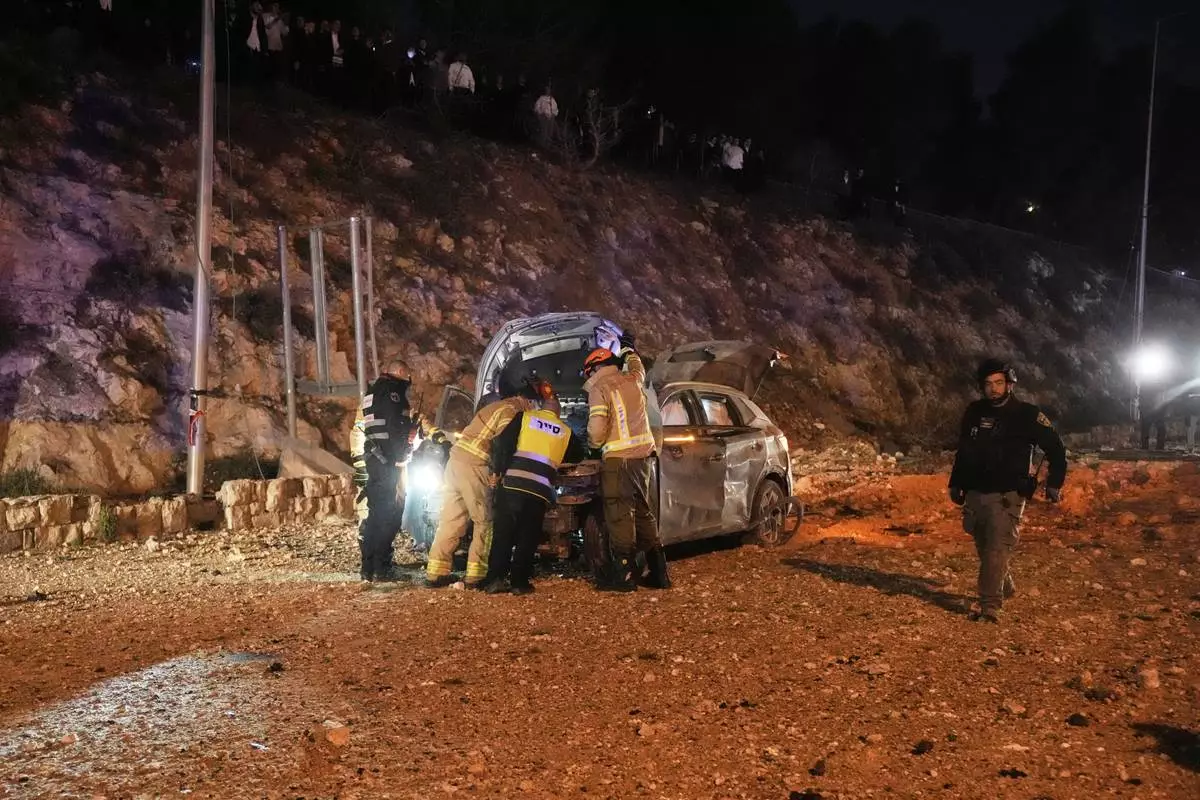
Israeli security forces inspect the scene of a direct hit on a road following an Iranian missile strike in Jerusalem, Sunday, March 1, 2026.(AP Photo/Mahmoud Illean)
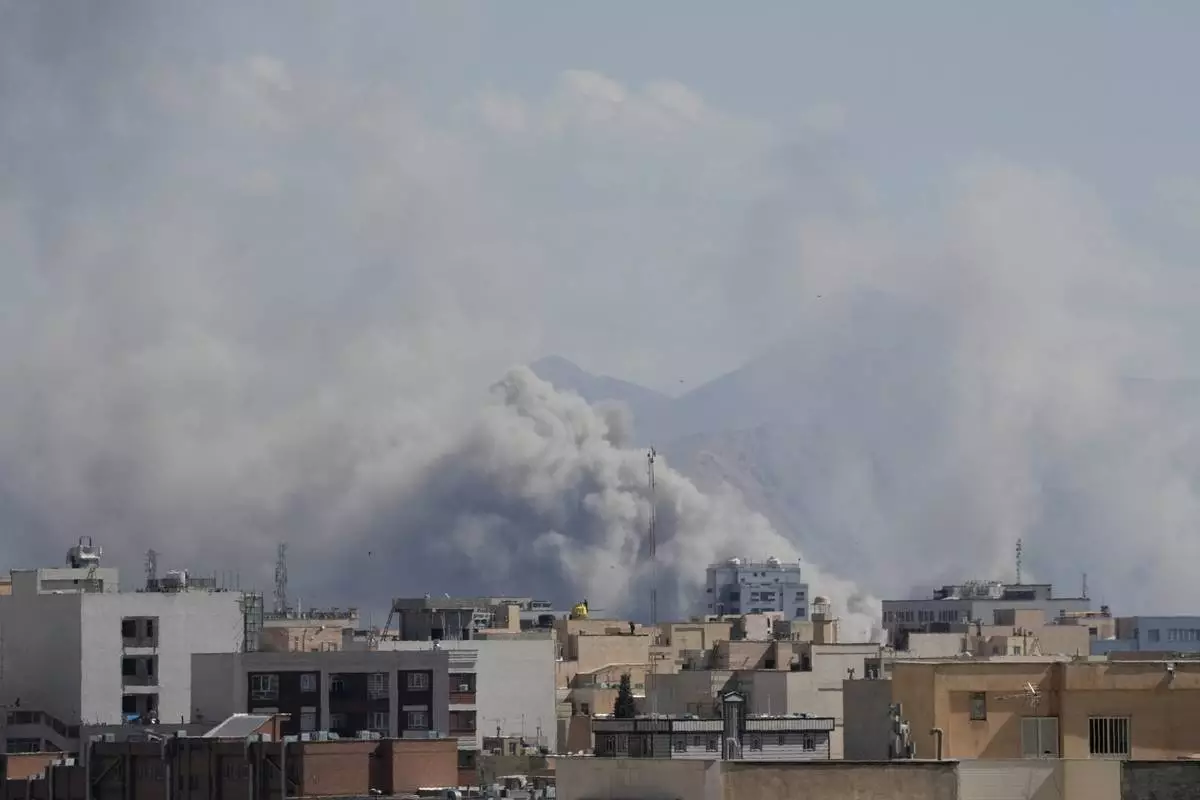
Smoke rises up after a strike in Tehran, Iran, Sunday, March 1, 2026. (AP Photo/Vahid Salemi)
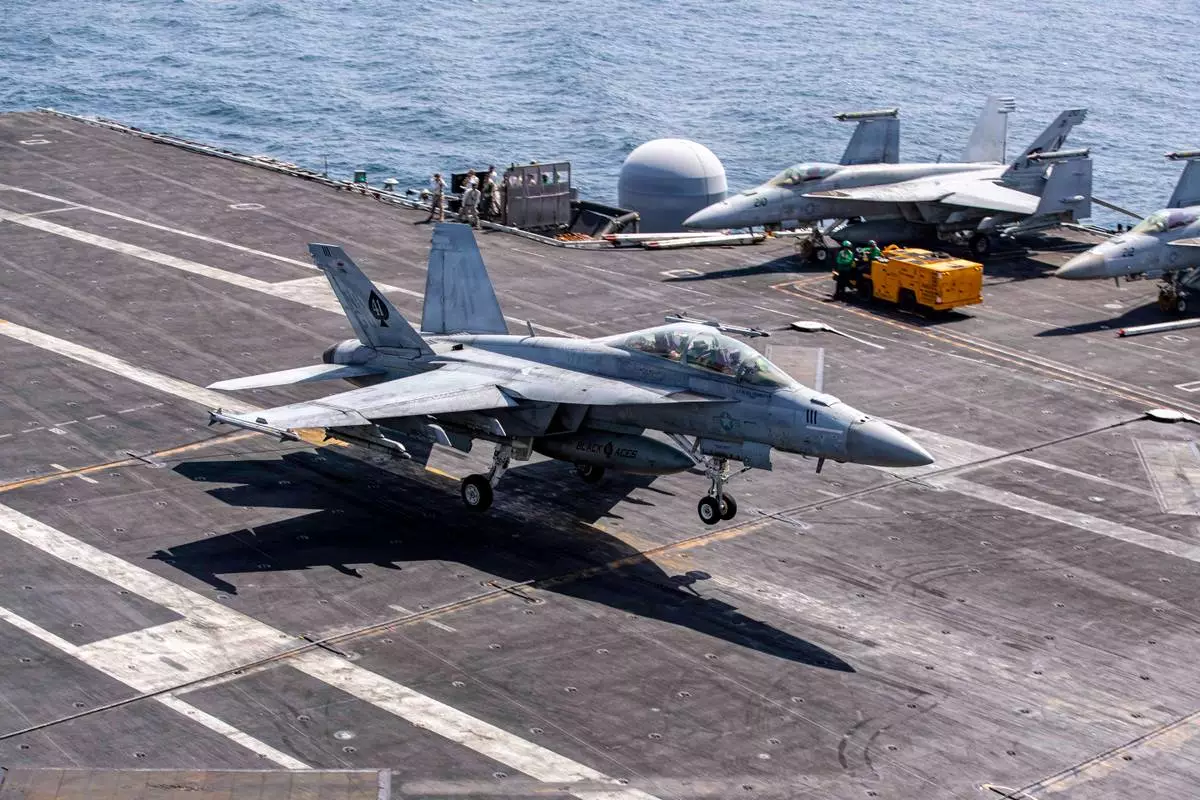
This image provided by U.S. Central Command shows a F/A-18E Super Hornet makes an arrested landing on the USS Abraham Lincoln (CVN 72) after a mission in support of Operation Epic Fury, on Saturday, Feb. 28, 2026. (U.S. Navy via AP)
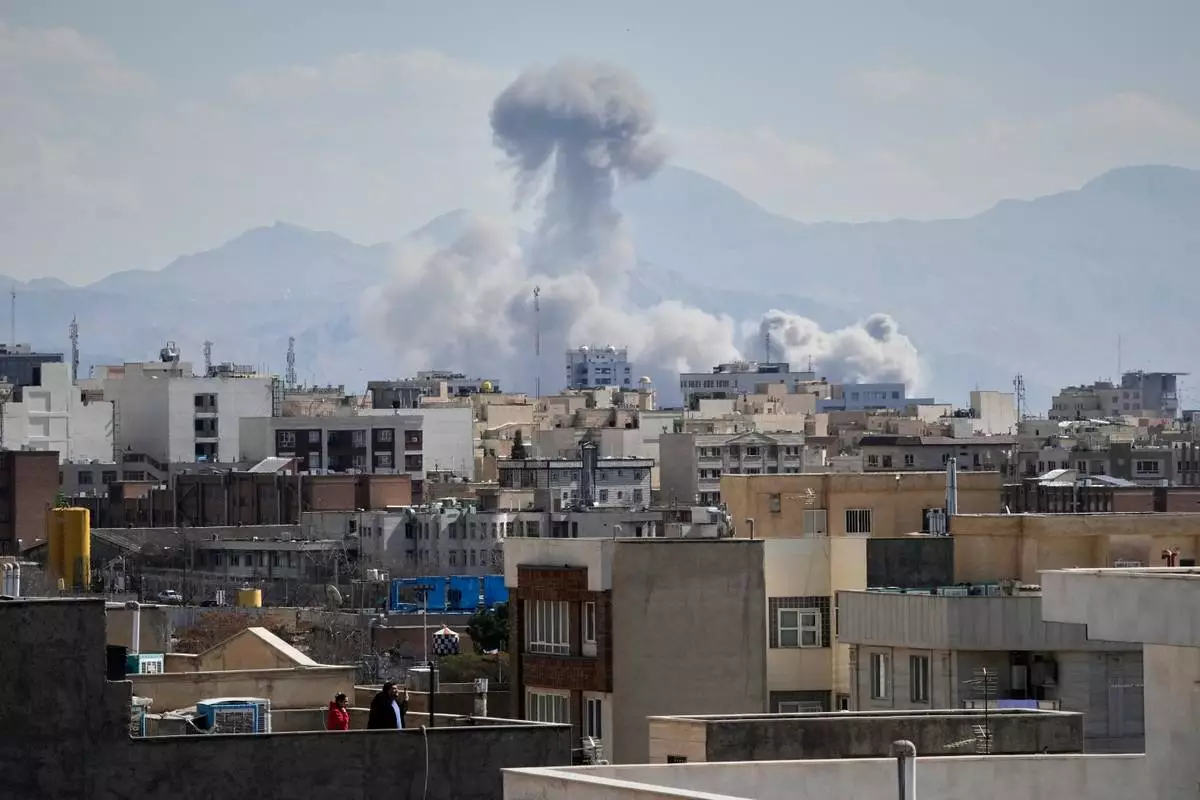
People watch from a rooftop as a plume of smoke rises after a strike in Tehran, Iran, Sunday, March 1, 2026. (AP Photo/Vahid Salemi)
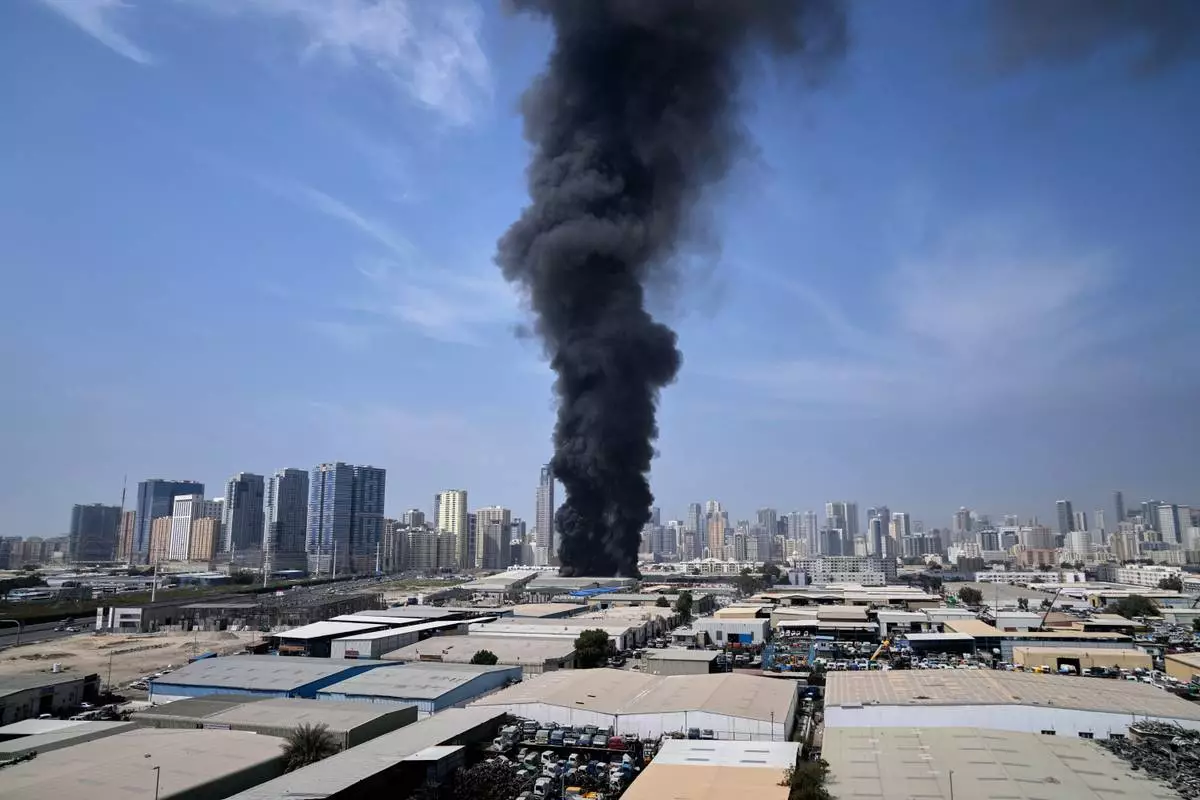
A black plume of smoke rises from a warehouse at the industrial area of Sharjah City in the United Arab Emirates following reports of Iranian strikes in Dubai, United Arab Emirates, Sunday, March 1, 2026. (AP Photo/Altaf Qadri)