U.S. President Donald Trump said Sunday that the joint U.S.-Israeli military operations against Iran could last up to four weeks, as Iranian forces unleashed multiple waves of counterattacks targeting American and Israeli assets across the Middle East.
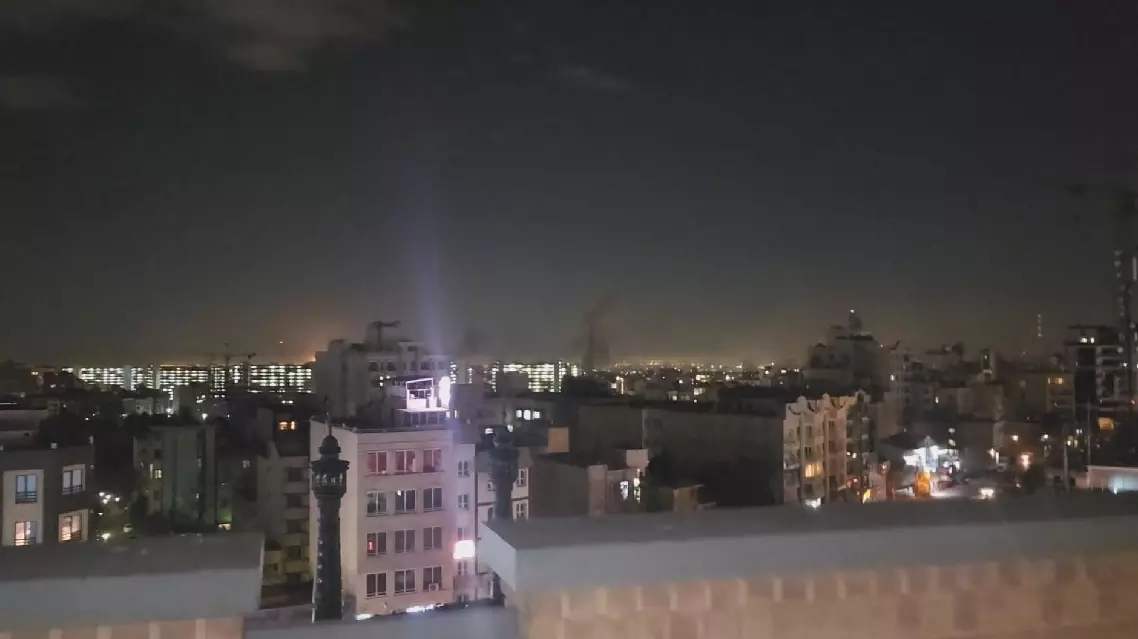
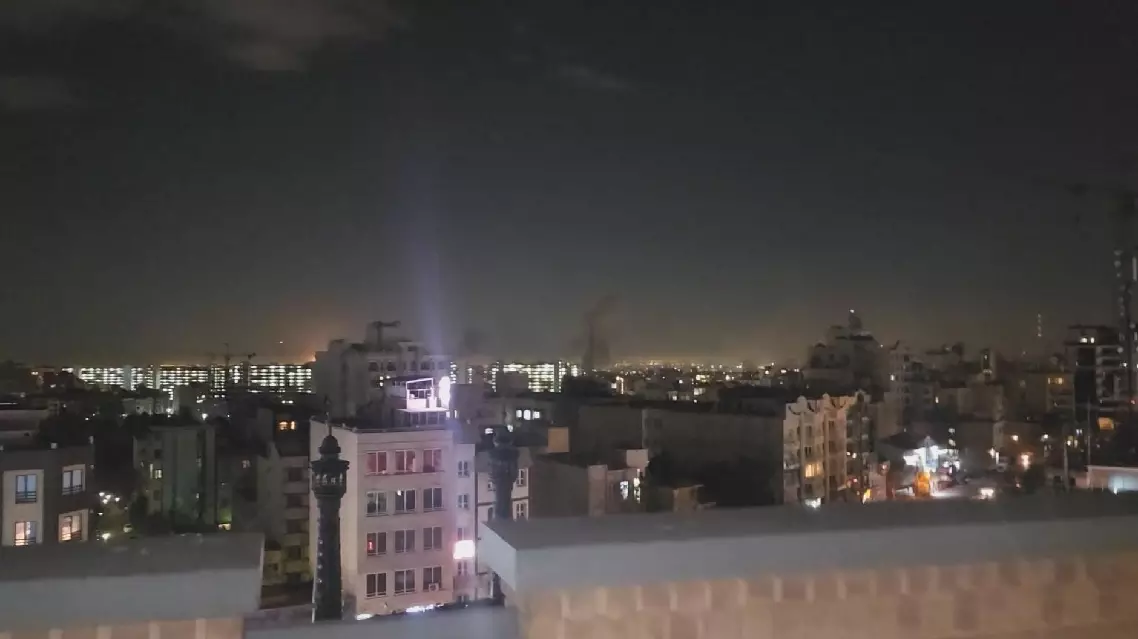
Explosions rocked parts of Iran's capital Tehran early Monday morning as the Israel Defense Forces (IDF) confirmed that its air force, acting on intelligence guidance, had launched a new round of strikes on targets in the city center.
Speaking to U.S. media on Sunday, Trump claimed that attacks on Iran could last four weeks, adding the military operation had killed 48 members of Iran's leadership.
He also alleged that Iran's "new leadership" had sought to resume negotiations and that he was willing to do so, though he provided no further details.
In a social media post on Sunday, Trump said that U.S. forces had destroyed and sunk nine Iranian naval vessels and would continue targeting the remainder, asserting that the Iranian Navy's headquarters had been "largely destroyed". Iranian officials have not responded to these allegations.
The U.S. Central Command reported on Sunday that since the commencement of the military action, U.S. forces had struck over 1,000 targets, including the headquarters of Iran's Islamic Revolutionary Guard Corps (IRGC), adding the U.S. troops had used B-2 stealth bombers armed with 2,000-pound bombs to attack hardened Iranian ballistic missile facilities.
U.S. media reports noted that the officially listed targets did not include Iran's nuclear infrastructure.
Israeli Prime Minister Benjamin Netanyahu said on Sunday that the Israeli air force was striking Tehran with "increasing intensity" and that operations would "intensify further in the coming days".
Speaking in a video statement from the roof of the Kirya military headquarters in Tel Aviv, Netanyahu said he had briefed senior military and security officials and issued instructions for the next phase of operations.
Meanwhile, the Israeli military said on Sunday it was preparing to call up 100,000 reservists to boost readiness along its borders with Syria and Lebanon, as well as in the occupied West Bank, the Gaza Strip, and southern Israel.
The IDF said it had eliminated "all senior leadership" of Iran across multiple fronts and would continue targeting Iranian infrastructure. It cited concerns over Iran's accelerated efforts to restore missile production capabilities, which it labeled an "existential threat" to Israel.
In response to the strikes, the IRGC initiated a multi-wave counterattack codenamed "Operation True Promise-4" beginning early Sunday morning.
In a series of announcements, the IRGC claimed to have attacked 27 U.S. military bases across the Middle East, causing American casualties. It also listed Israeli targets, including Tel Nof Airbase, the IDF headquarters, and a major defense industrial zone in Tel Aviv.
In terms of naval engagements, the IRGC said that it had fired four ballistic missiles at the U.S. aircraft carrier USS Abraham Lincoln, prompting the vessel to relocate to the southeastern Indian Ocean. It further claimed that a joint drone and missile strike disabled a U.S. logistics support ship providing fuel to the carrier group, removing it from combat operations. The IRGC also reported hitting several "illegally operating" U.S. and UK oil tankers in the Persian Gulf and Strait of Hormuz, causing them to catch fire.
U.S. military directly contradicted the claim regarding the Lincoln, emphasizing that the carrier had not been attacked and that Iranian missiles "did not even come close" to the vessel.
The U.S. Central Command confirmed that as of 09:30 ET (14:30 GMT) on Sunday, three U.S. service members had been killed and five seriously wounded in the ongoing operations against Iran, with several others sustaining minor injuries. It noted that major combat operations were continuing.
In Israel, air raid sirens sounded across multiple cities on Sunday. A building in the central Israeli city of Beit Shemesh was reportedly struck by an Iranian missile, killing nine people and leaving 11 others missing.
Dense explosions were reported in Tel Aviv and Jerusalem. A missile strike allegedly caused partial collapse of a building in Tel Aviv, while seven people were injured in the Jerusalem area.
Trump says Iran operation could last 4 weeks as Tehran intensifies counterattacks
Trump says Iran operation could last 4 weeks as Tehran intensifies counterattacks