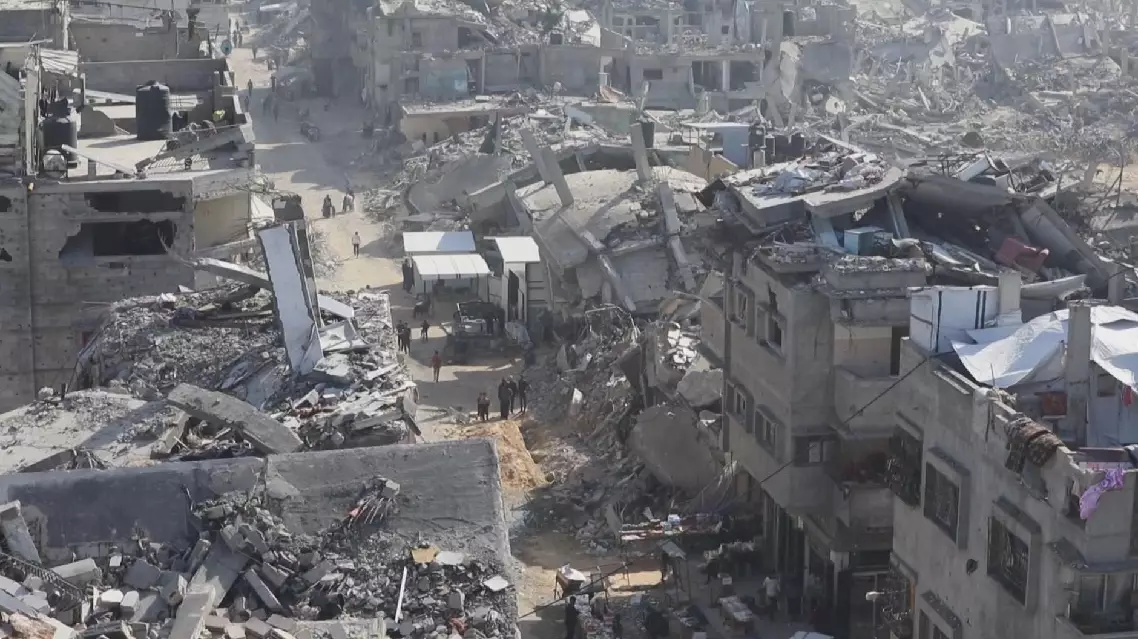
The United States and Israel's attack on Iran and Iran's retaliatory strikes have caused travel chaos as key transit hubs in Dubai, Abu Dhabi and Doha have closed, leaving hundreds of thousands of travelers in limbo.
The United States and Israel on Saturday launched coordinated airstrikes against Iran, with the latter responding with a series of attacks on Israel and U.S. targets across the Middle East.
As the crisis escalated, countries including Iran, Israel, Iraq, Jordan, Qatar, Bahrain, and the United Arab Emirates have closed their airspace.
At Adolfo Suarez Madrid-Barajas Airport in Madrid, Spain, some passengers hurried to secure new connections, while others anxiously waited to see if they would reach their destination.
"I have a flight to Shanghai and my connection is in Doha, and I don't know right now what I need to do. It's so frustrating," said Jorge Cerezo, an agricultural engineer.
Richard Silver, a former U.S. diplomat who happened to be traveling, expressed his opposition to the attacks.
"It pains me as an American to be seeing how the world is deeply affected by what I believe is ill-considered actions, particularly when diplomacy was taking its course and an opportunity for potential success. Now the loss of life, the impact on trade, the impact on travel, the impacts on individual lives, I think it's unknowable where this is going and it really, I think, is tragic," said Silver.
Spanish airlines Iberia and Air Europa, German group Lufthansa, and Air France-KLM have all cancelled or suspended multiple flights to the Middle East over the next 10 ten days, and Turkish Airlines cancelled flights to Iran, Iraq and Jordan until June, indicating that they are preparing for a long and protracted conflict.
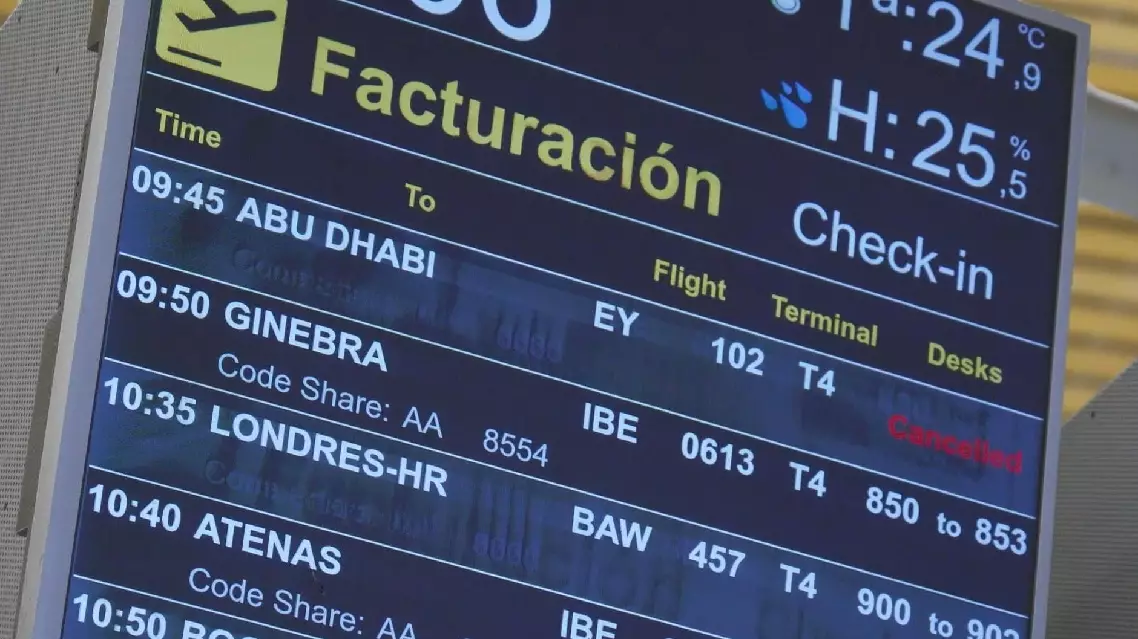
Thousands stranded as flights cancelled, airspace closed across Middle East