Skip to Content Facebook Feature Image

Snow hits northern China, activating emergency response

China

China

China

Snow hits northern China, activating emergency response

2026-03-02 18:08 Last Updated At:21:57

Many regions in northern China have been battered by snow since Sunday, with natural disaster alerts issued and emergency responses activated.

Beijing was hit by light snow during the morning rush hour on Monday, with the heaviest precipitation within an hour recorded in mountainous Yanqing, reaching 0.3 millimeters, according to the city's meteorological observatory.

The city has issued a yellow alert for icy roads as snow and sleet continue to impact safety.

In neighboring Tianjin, snow began to affect the city from Sunday night.

The meteorological department issued a yellow alert for icy roads on Monday, canceling a blue alert for blizzards at noon after issuing it in the early morning.

The central and southern parts of the city have experienced moderate to heavy snowfall, ranging from 4 to 10 millimeters.

The snow has forced the delay of 11 flights, while road traffic has not been affected.

East China's Shandong Province was also hit by snow on Sunday, with the local meteorological observatory issuing a yellow alert for icy roads at 11:00.

The Mount Tai scenic area closed all sightseeing routes from 16:00 on Sunday due to the snow.

The snow was expected to affect the province throughout the daytime on Monday, with some areas expected to see moderate and heavy snow, and even snowstorms.

Heavy snow has triggered a level-IV emergency response in Hebei Province of north China, with some areas experiencing blizzards on Sunday. The local traffic police also activated an emergency response to ensure road safety.

In north China's Shanxi, snowfall in the south of the province prompted a yellow alert for blizzards from the meteorological observatory, covering cities like Jinzhong, Linfen and Yuncheng.

Multiple expressways in the province were closed, with police officers dispatched to evacuate stranded vehicles.

Since Sunday morning, cities in north-central China's Gansu Province, including Qingyang and Dingxi, have been hit by snow. The local traffic department has dispatched more workers and machines to clear the snow from roads.

In Xinjiang Uygur Autonomous Region, the accumulated snow has reached 8 to 10 centimeters in the region's north, forcing round-the-clock snow-clearing operations on main roads.

Snow clearing has also been conducted on railway tracks in the region to ensure safe train services.
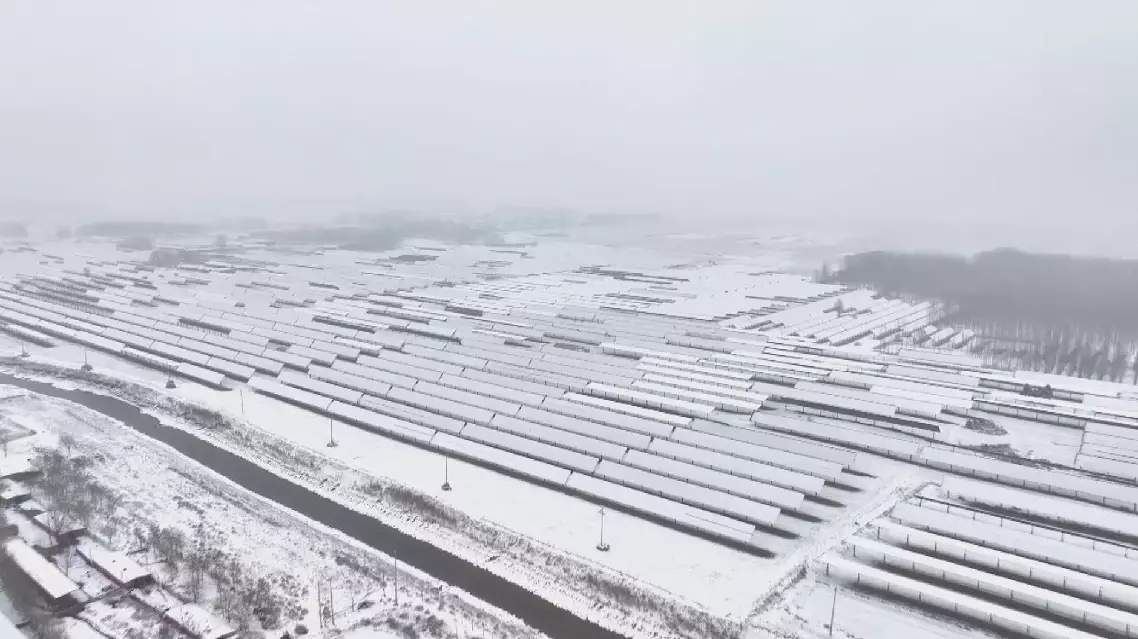
Snow hits northern China, activating emergency response


Snow hits northern China, activating emergency response

Hong Kong and Tokyo stocks closed lower on Monday, following a joint military strike by the United States and Israel on Iran over the weekend.

Hong Kong's stock market ended lower Monday with the benchmark Hang Seng Index down 2.14 percent to close at 26,059.85 points.

The Hang Seng China Enterprises Index fell 1.78 percent to end at 8,701.91 points, and the Hang Seng Tech Index fell 2.89 percent to end at 4,989.37 points.

"Hong Kong and Tokyo's markets both suffered today as investors ran for cover. The Hang Seng was down 2.1 percent. Oil stocks are again the only ones gaining ground. We've talked about that already. Airline stocks throughout Asia [were] also hit hard - Cathay Pacific Airways' shares were down 4.1 percent," said Timothy Pope, a market analyst for China Global Television Network (CGTN).

"There were also some moves unrelated to Iran. The Chinese EV maker BYD was defying poor February sales numbers to post a more than 4 percent gain. Sales for BYD fell at the steepest pace since the beginning of 2020 for the automaker last month. But perhaps today's announcement of what it called the 'upcoming epic release of disruptive technology' is planned for later this week. Maybe that helps it to defy gravity a little bit. I feel like maybe the world's got enough epic disruption to be going on with right now but... who knows?" said the market analyst.

Tokyo stocks ended lower on Monday, with the benchmark Nikkei index plunging over 2 percent at one point, following the weekend launch of a joint military strike by the United States and Israel on Iran.

The 225-issue Nikkei Stock Average ended down 793.03 points, or 1.35 percent, from Friday at 58,057.24. The broader Topix index, meanwhile, finished 40.26 points, or 1.02 percent, lower at 3,898.42.

"Over in Japan, the Nikkei 225 fell 1.3 percent. That was its biggest drop in five weeks. Oil refiners in Japan again, the few winners on today's markets, while investors generally were cashing out in favor of Japanese Government Bonds today. However, the Nikkei was probably primed for at least a small correction anyway as the index had a stellar February, adding more than 10 percent, and also closed at a record high on Friday. So investors just had a really good excuse today to book their profits. And we saw them really cashing out of tech stocks as well," said Pope.

Hong Kong, Tokyo stocks end lower on Monday

Hong Kong, Tokyo stocks end lower on Monday

Recommended Articles