Skip to Content Facebook Feature Image

Europe defends military bases and struggles to evacuate citizens as it is drawn into the war on Iran

News

Europe defends military bases and struggles to evacuate citizens as it is drawn into the war on Iran
News

News

Europe defends military bases and struggles to evacuate citizens as it is drawn into the war on Iran

2026-03-03 04:11 Last Updated At:04:21

BRUSSELS (AP) — The U.S.-Israeli war on Iran and Tehran’s retaliatory strikes across the Middle East are quickly dragging Europe in, forcing the continent into defensive action to protect military bases and evacuate citizens caught up in the conflict.

The Middle East is home to some of Europe's key trading partners, and a number of strategic trading routes. Many Europeans live in cities such as Beirut, Dubai or Jerusalem, while large communities from countries including Turkey, Egypt and the Gulf states have settled across Europe. Europeans weren’t consulted on this U.S.-Israeli operation but are now dealing with the fallout.

More Images
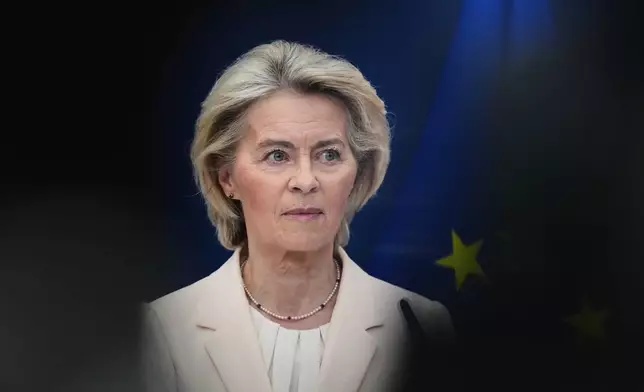
European Commission President Ursula von der Leyen speaks during a media conference at EU headquarters in Brussels, Belgium, Monday, March 2, 2026. (AP Photo/Virginia Mayo)
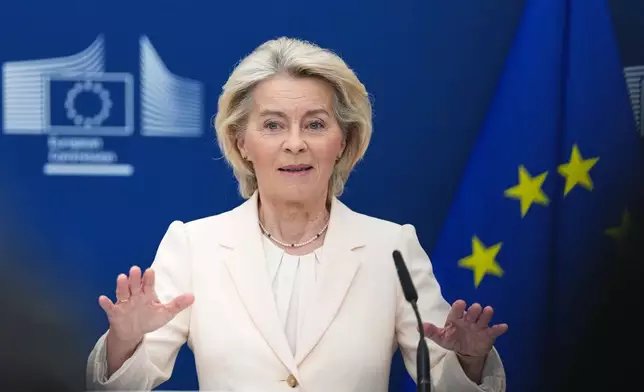
European Commission President Ursula von der Leyen speaks during a media conference at EU headquarters in Brussels, Belgium, Monday, March 2, 2026. (AP Photo/Virginia Mayo)
European Commission President Ursula von der Leyen speaks during a media conference at EU headquarters in Brussels, Belgium, Monday, March 2, 2026. (AP Photo/Virginia Mayo)

European Commission President Ursula von der Leyen speaks during a media conference at EU headquarters in Brussels, Belgium, Monday, March 2, 2026. (AP Photo/Virginia Mayo)

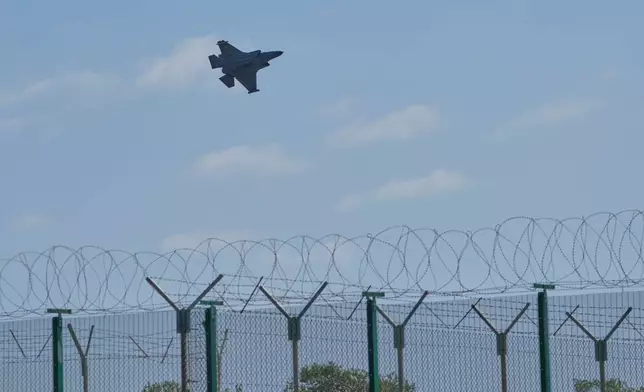
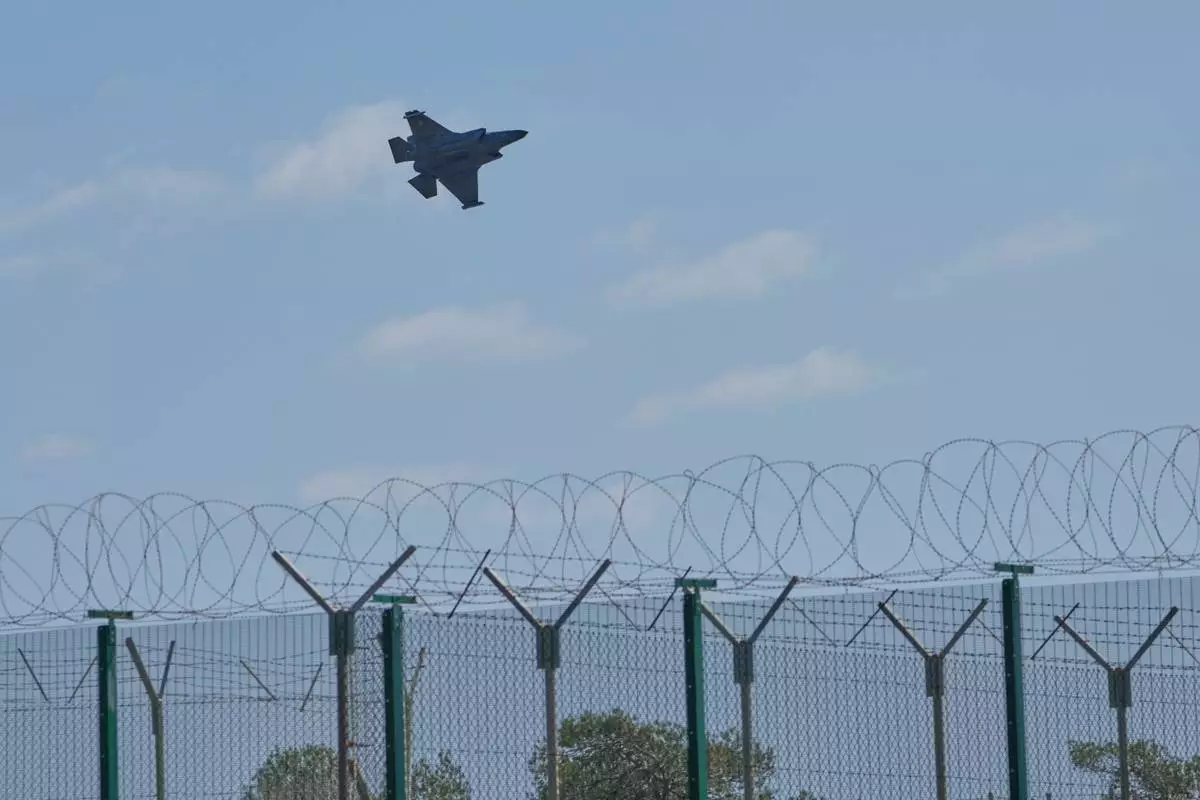
A Fighter Jet takes off from the U.K.'s RAF Akrotiri air base after it was hit by a drone strike early morning near Limassol, Cyprus, Monday, March, 2, 2026. (AP Photo/Petros Karadjias)
A Fighter Jet takes off from the U.K.'s RAF Akrotiri air base after it was hit by a drone strike early morning near Limassol, Cyprus, Monday, March, 2, 2026. (AP Photo/Petros Karadjias)

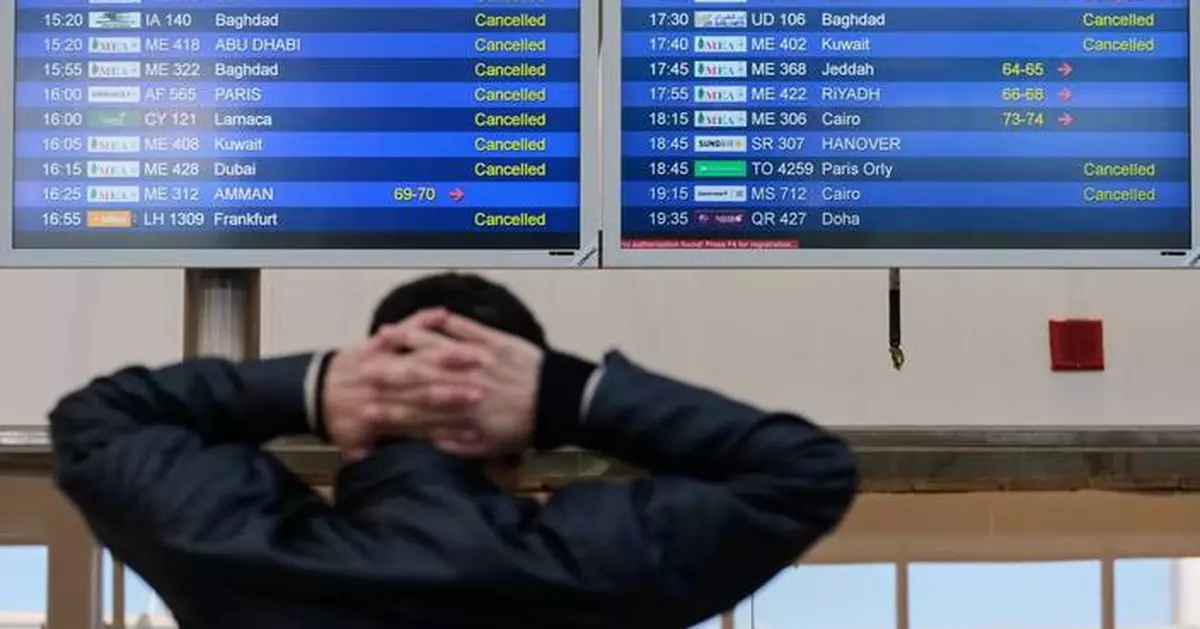
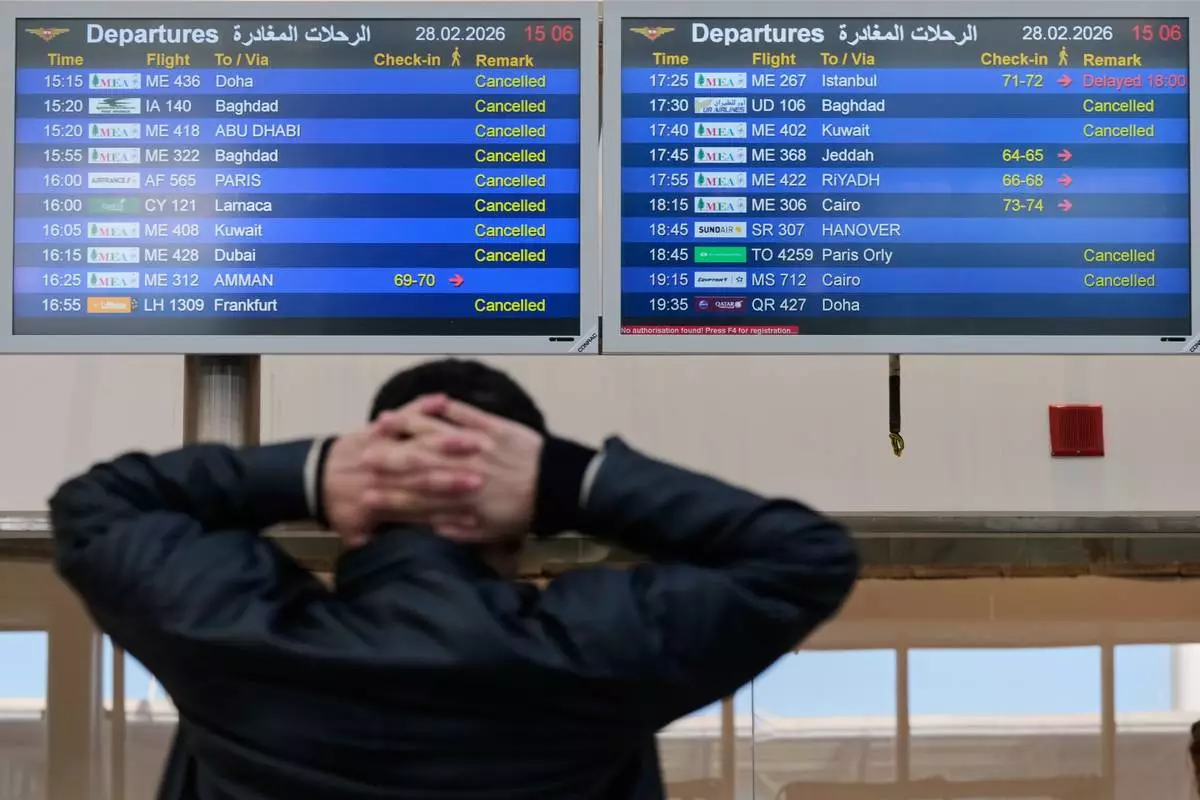
A traveler checks departure times as many flights are cancelled at Beirut Rafik Hariri International Airport in Beirut, Lebanon, Saturday, Feb. 28, 2026, as many airlines canceled flights due to the conflict involving the United States, Israel and Iran. (AP Photo/Hassan Ammar)

A traveler checks departure times as many flights are cancelled at Beirut Rafik Hariri International Airport in Beirut, Lebanon, Saturday, Feb. 28, 2026, as many airlines canceled flights due to the conflict involving the United States, Israel and Iran. (AP Photo/Hassan Ammar)

While refusing to directly join the war, Britain, France and Germany have said they would work with the United State to help stop Iran’s attacks. The U.K. will allow U.S. forces to use British bases to attack Iran’s missiles and launch sites.

But Europe itself is not immune. Cyprus, holder of the European Union’s rotating presidency, had to insist that it was not involved in the conflict after a Shahed-type drone damaged a U.K. air base on the island’s southern coast over the weekend. The Shaheds were developed by Iran but have already been used in Europe, by Russia in its war on Ukraine.

Wary of other attacks at home, some European countries are also beefing up security at train stations and airports.

Still, almost no European leader has criticized the U.S.-Israeli attacks. Many are satisfied to see the downfall of an Iranian regime that has for years arrested European citizens and challenged Europe’s economic interests.

Spain has been a rare dissenting voice. “One can be against a hateful regime,” Prime Minister Pedro Sánchez said Sunday, “and at the same time, be against a military intervention that is unjustifiable, dangerous and outside of international law.”

At the same time, helping to foster stability in the volatile Middle East region is a European priority. Fears over a sustained hike in oil prices, and the possibility of a new wave of unpredictable migration mean that the continent must remain involved.

Europe’s major short-term priority is ensuring the safety of thousands of citizens caught up in the war as it spreads.

Concerns about getting people out were raised during an emergency meeting of EU foreign ministers over the weekend. No joint evacuation effort was launched, but one could be needed imminently.

Germany says that about 30,000 German tourists are stuck on cruise ships, in hotels or at closed airports and cannot get back home because of the conflict. Most of them are in the Middle East but some are further afield, stranded because their travel connections run through Abu Dhabi, Qatar or Dubai. A military evacuation was not possible due to airspace closures.

The Czech Republic, meanwhile, has sent two planes to Egypt and Jordan to bring home Czech nationals, dozens of whom have traveled by bus from Israel. Another four planes were to be sent to Oman to pick up more of the estimated 6,700 Czechs in the region.

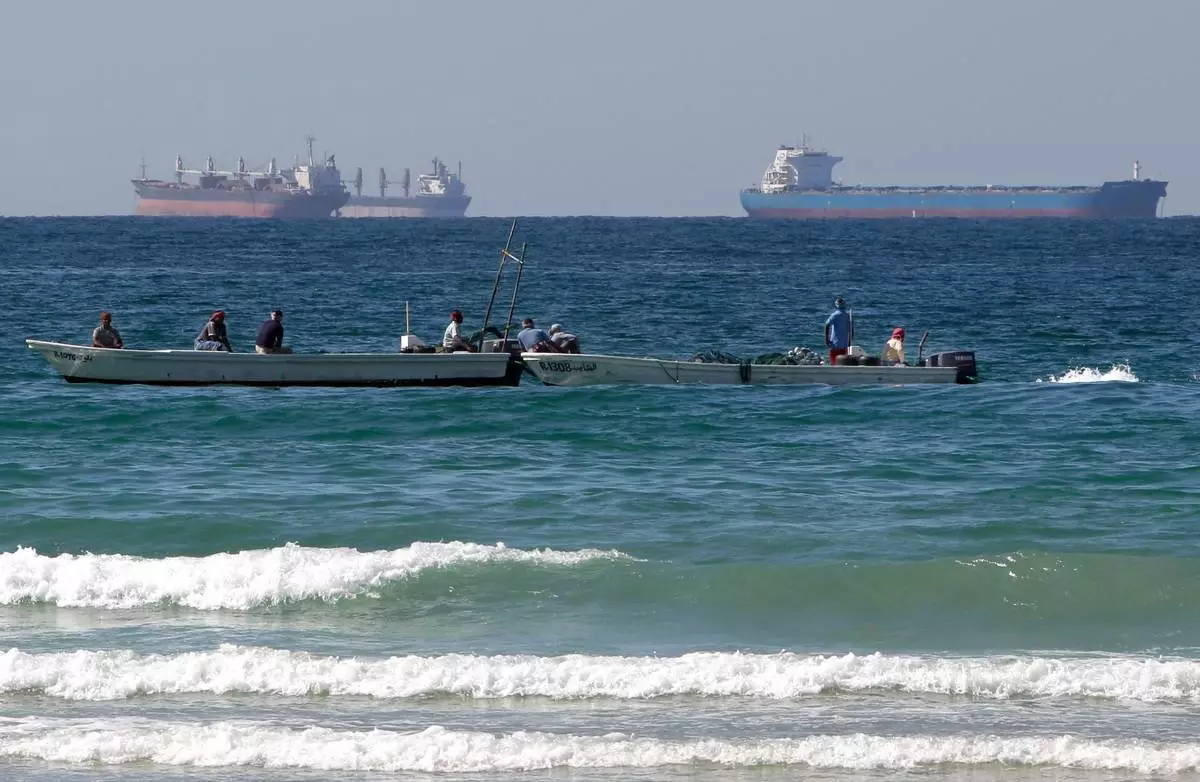
Iran has been threatening ships in the Strait of Hormuz, the narrow mouth of the Persian Gulf through which a fifth of all oil traded passes, and ships have been attacked there. Calls have mounted for the EU to help protect merchant vessels.

In response, France was sending two more warships to beef up Operation Aspides, the bloc’s naval mission in the region. But they would only deploy to the distant Red Sea and Gulf of Aden — gateways to the Suez Canal, which links the Red Sea to the Mediterranean — to join three other ships already in place.

Operation Aspides was set up two years ago, to help defend maritime traffic against possible attacks by Houthi rebels based in Yemen. But while the Houthis have expressed support for Iran, they did not immediately announce any military action on its behalf.

Discussion is underway on a review of the operation’s mandate and a possible toughening of its rules of engagement, but no changes are expected soon.

Maintaining stability in the wider Middle East is a key European concern. Iran’s acts of retaliation in several countries have been widely condemned.

EU foreign policy chief Kaja Kallas is expected to convene a meeting with Gulf Cooperation Council countries at foreign minister level later this week, as the bloc continues to try to reassure Iran’s neighbors and other vulnerable countries nearby.

“Iran’s attacks of a number of countries in the Middle East are inexcusable. The events must not lead to further escalation that could threaten the region, Europe and beyond, with unpredictable consequences,” Kallas said after chairing Sunday’s emergency talks.

The EU intends to drive diplomatic efforts to help reduce tensions, and still aims to prevent Iran from acquiring nuclear weapons despite its nuclear development deal falling apart after the Trump administration pulled the U.S. out.

NATO Secretary General Mark Rutte said in an interview that the United States’ and Israel’s war against Iran is crucial for security in Europe. He said the allies could support the effort even without direct involvement in military operations, through logistics and access.

Rutte, a former prime minister of the Netherlands, said he unreservedly approves of Trump’s decision to attack Iran and kill its supreme leader, raising the threat of a nuclear-armed Iran.

“It would be a stranglehold on Israel. It could potentially mean Israel’s defeat,” Rutte told German public broadcaster ARD in its Brussels studio on Monday.

When asked the possibility of NATO entering the war, Rutte said absolutely no one believed that NATO would be involved. “This is Iran, this is the Gulf, this is outside NATO territory,” he said.

NATO troops deployed for 20 years to Afghanistan and its 2011 air campaign helped topple Libya’s late leader Moammar Gadhafi.

Officials say the EU has no preferred candidate to take over in Tehran, and in any case it’s too early to tell who might be best to back as future leader. The foreign ministers primarily expressed “solidarity with the Iranian people.”

They offered support to “their fundamental aspirations for a future where their universal human rights and fundamental freedoms are fully respected.”

The Europeans insist that a genuine popular movement against the regime arose in recent months but that it was shut down in an unprecedented wave of violence. Thousands were killed and tens of thousands detained.

One thing is clear. The EU is unlikely to back any leadership pushed by Iran’s Revolutionary Guard. The IRGC was added the bloc’s terror list last month, making it almost impossible for the Europeans to take them seriously as an interlocutor.
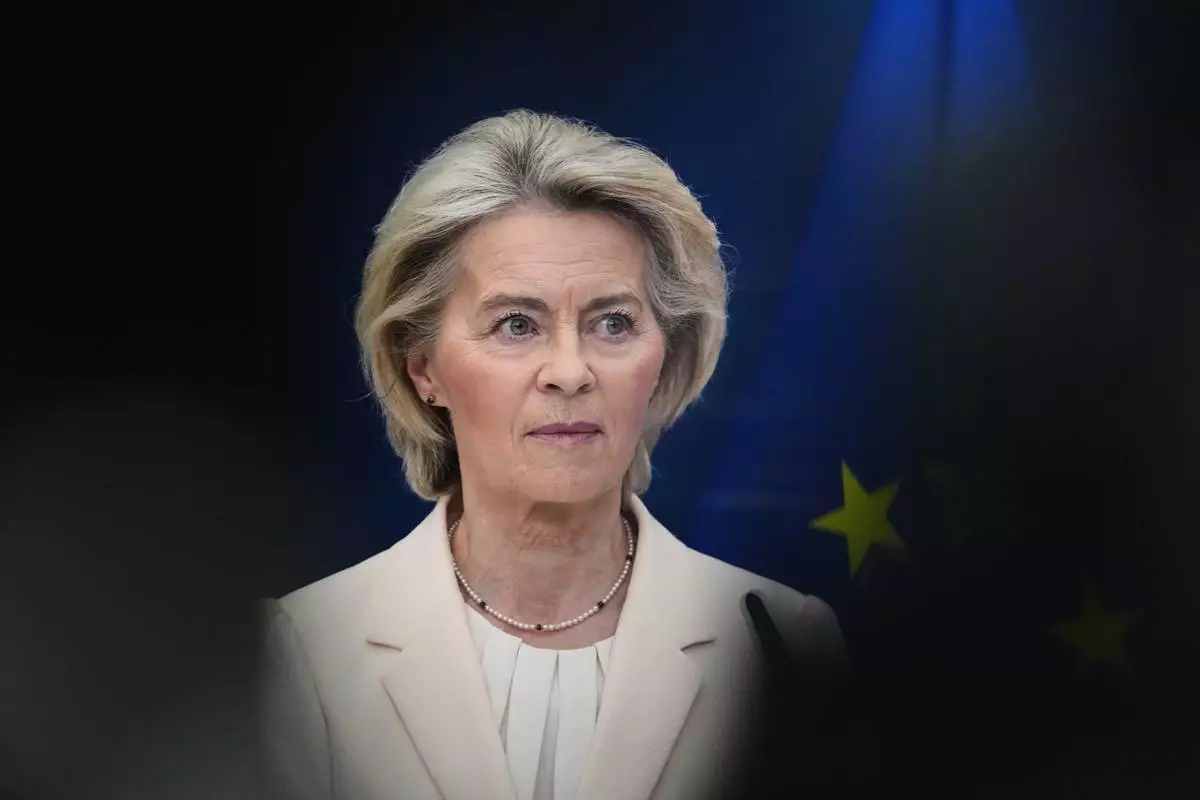
European Commission President Ursula von der Leyen speaks during a media conference at EU headquarters in Brussels, Belgium, Monday, March 2, 2026. (AP Photo/Virginia Mayo)
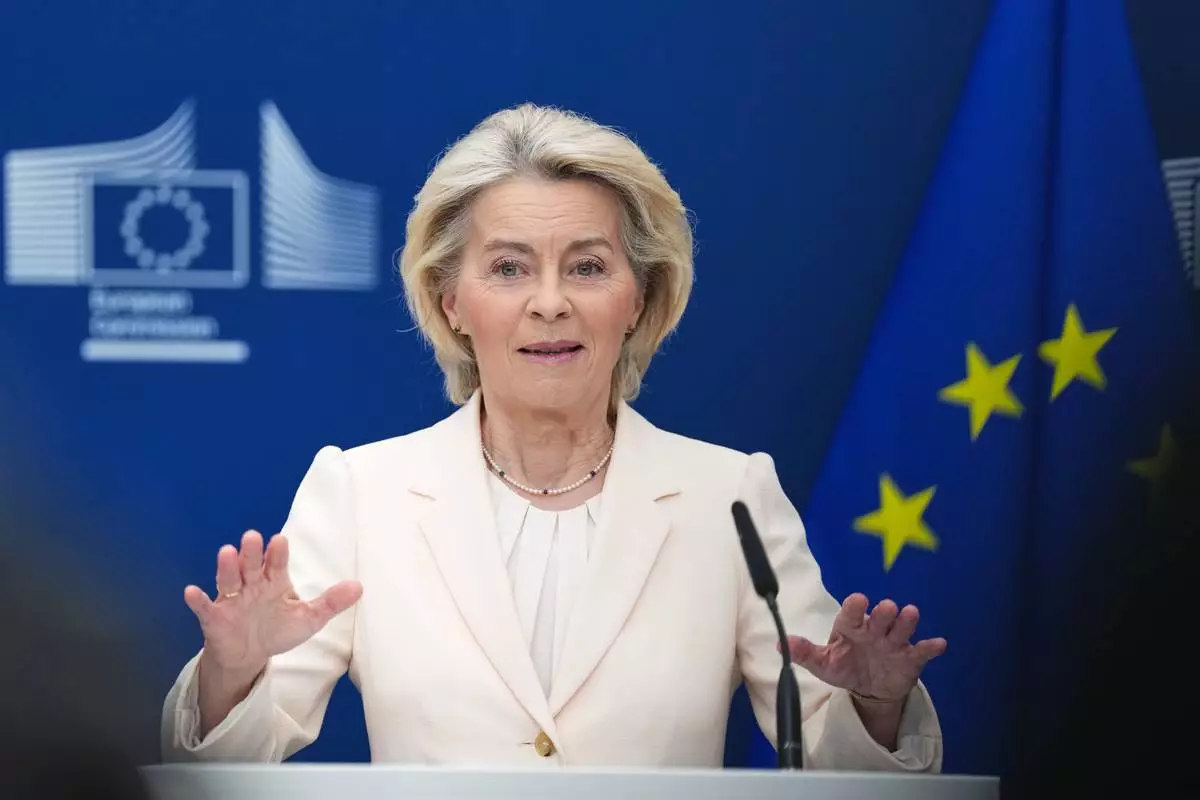
European Commission President Ursula von der Leyen speaks during a media conference at EU headquarters in Brussels, Belgium, Monday, March 2, 2026. (AP Photo/Virginia Mayo)
European Commission President Ursula von der Leyen speaks during a media conference at EU headquarters in Brussels, Belgium, Monday, March 2, 2026. (AP Photo/Virginia Mayo)

European Commission President Ursula von der Leyen speaks during a media conference at EU headquarters in Brussels, Belgium, Monday, March 2, 2026. (AP Photo/Virginia Mayo)

A Fighter Jet takes off from the U.K.'s RAF Akrotiri air base after it was hit by a drone strike early morning near Limassol, Cyprus, Monday, March, 2, 2026. (AP Photo/Petros Karadjias)
A Fighter Jet takes off from the U.K.'s RAF Akrotiri air base after it was hit by a drone strike early morning near Limassol, Cyprus, Monday, March, 2, 2026. (AP Photo/Petros Karadjias)

A traveler checks departure times as many flights are cancelled at Beirut Rafik Hariri International Airport in Beirut, Lebanon, Saturday, Feb. 28, 2026, as many airlines canceled flights due to the conflict involving the United States, Israel and Iran. (AP Photo/Hassan Ammar)


A traveler checks departure times as many flights are cancelled at Beirut Rafik Hariri International Airport in Beirut, Lebanon, Saturday, Feb. 28, 2026, as many airlines canceled flights due to the conflict involving the United States, Israel and Iran. (AP Photo/Hassan Ammar)
NEW YORK (AP) — Oil prices leaped Monday on worries that war with Iran could clog the global flow of crude and make inflation even worse. U.S. stocks, meanwhile, swung between sharp losses and small gains.

Crude prices jumped more than 6%, which will likely mean higher prices soon at gasoline pumps. That would hurt not only U.S. households, whose spending makes up the bulk of the U.S. economy, but also businesses with big fuel bills.

The S&P 500 fell as much as 1.2% at the start of trading, and cruise lines and airlines led the way lower. But U.S. stocks quickly erased those losses, in part because past military conflicts have historically not created sustained drops for the market, and the index was up by 0.3% in late trading.

The Dow Jones Industrial Average was up 32 points, or 0.1%, with roughly an hour remaining in trading, and the Nasdaq composite was 0.6% higher.

Prices for natural gas remained higher, meanwhile, which could raise heating bills for the remainder of the winter, after a major supplier of liquefied natural gas to Europe said it would stop production because of the war. Gold climbed 1.2% as investors looked for safer things to own and as U.S. officials tried to persuade the world that this war will not last forever.

“This is not Iraq,” U.S. Defense Secretary Pete Hegseth said Monday. “This is not endless.”

Typically, Treasury yields also fall in the bond market when investors are feeling nervous. But yields instead climbed, in part because higher oil prices will put upward pressure on inflation, which is already worse than nearly everyone would like. That could tie the Federal Reserve’s hands and keep it from cutting interest rates.

Lower interest rates can boost the economy and job market, but they also worsen inflation. Higher rates can do the opposite.

Past military conflicts in the Middle East have not caused long-term drops for markets. For this war to knock down U.S. stocks in a significant and sustained way, the price of oil would perhaps need to jump above $100 per barrel, according to strategists at Morgan Stanley led by Michael Wilson.

Oil prices are still well below there. A barrel of benchmark U.S. crude rose 6.3% to settle at $71.23 per barrel Monday. Brent crude, the international standard, climbed 6.7% to settle at $77.74 per barrel.

That helped the U.S. stock market pare some of its steep, opening loss. Morgan Stanley also said the S&P 500 has climbed an average of 2%, 6% and 8% in the one, six and 12 months following “geopolitical risk events” historically. That's going back to the Korean War, which began in 1950, and the 1956 Suez crisis.

At this moment, though, fear is still flowing through markets.

Stocks of airlines were some of Monday’s sharpest losers. Not only do higher oil prices threaten their already big fuel bills, the fighting in the Middle East also closed airports and left travelers stranded.

United Airlines fell 3.1%, and American Airlines lost 4.2%.

Norwegian Cruise Line Holdings dropped even more, 11.6%. It needs customers to have plenty of cash to spend after paying for their gasoline bills and other essentials.

The cruise operator also reported weaker revenue for its latest quarter than analysts expected, though its profit was better. Its forecast for profit this upcoming fiscal year was also lower than analysts expected.

Stocks in the housing industry struggled as higher Treasury yields could translate into more expensive mortgage rates. Homebuilder D.R. Horton lost 3%, and paint company Sherwin-Williams fell 1.6%.

Helping the U.S. stock market to reverse its early losses were oil companies, which benefited from the rising price of crude. Exxon Mobil climbed 1.1%, and Marathon Petroleum rose 5.2%.

Companies that make equipment for the military also strengthened. Northrop Grumman climbed 4.9%, and RTX rallied 4.8%.

Palantir Technologies, whose software helps global defense agencies, jumped 5.8% for one of the biggest gains in the S&P 500.

Big Tech stocks also helped support the market. Nvidia rose 3% and was the strongest single force pushing the S&P 500 higher.

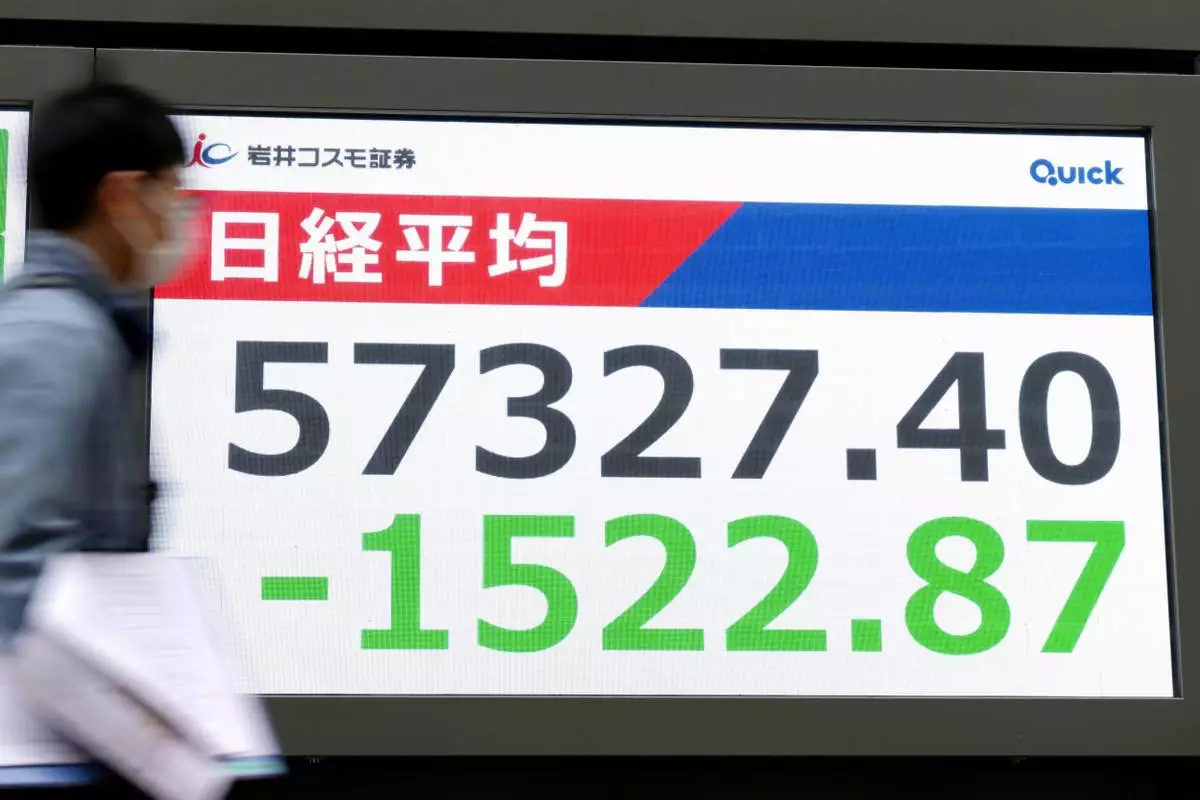
In stock markets abroad, indexes fell across much of Europe and Asia. Germany’s DAX lost 2.6%, France’s CAC 40 fell 2.2% and Hong Kong’s Hang Seng dropped 2.1% for some of the world’s larger losses.

Stocks in Shanghai were an outlier and rose 0.5%.

In the bond market, the yield on the 10-year Treasury rose to 4.04% from 3.97% late Friday. A report showing growth for U.S. manufacturing was better than economists expected last month also helped to lift yields.

AP Business Writers Matt Ott and Elaine Kurtenbach contributed.

James Denaro, center, and others work on the floor at the New York Stock Exchange in New York, Monday, March 2, 2026. (AP Photo/Seth Wenig)

James Denaro, center, and others work on the floor at the New York Stock Exchange in New York, Monday, March 2, 2026. (AP Photo/Seth Wenig)

Trader John Bishop works on the floor of the New York Stock Exchange, Friday, Feb. 20, 2026. (AP Photo/Richard Drew)

Trader John Bishop works on the floor of the New York Stock Exchange, Friday, Feb. 20, 2026. (AP Photo/Richard Drew)

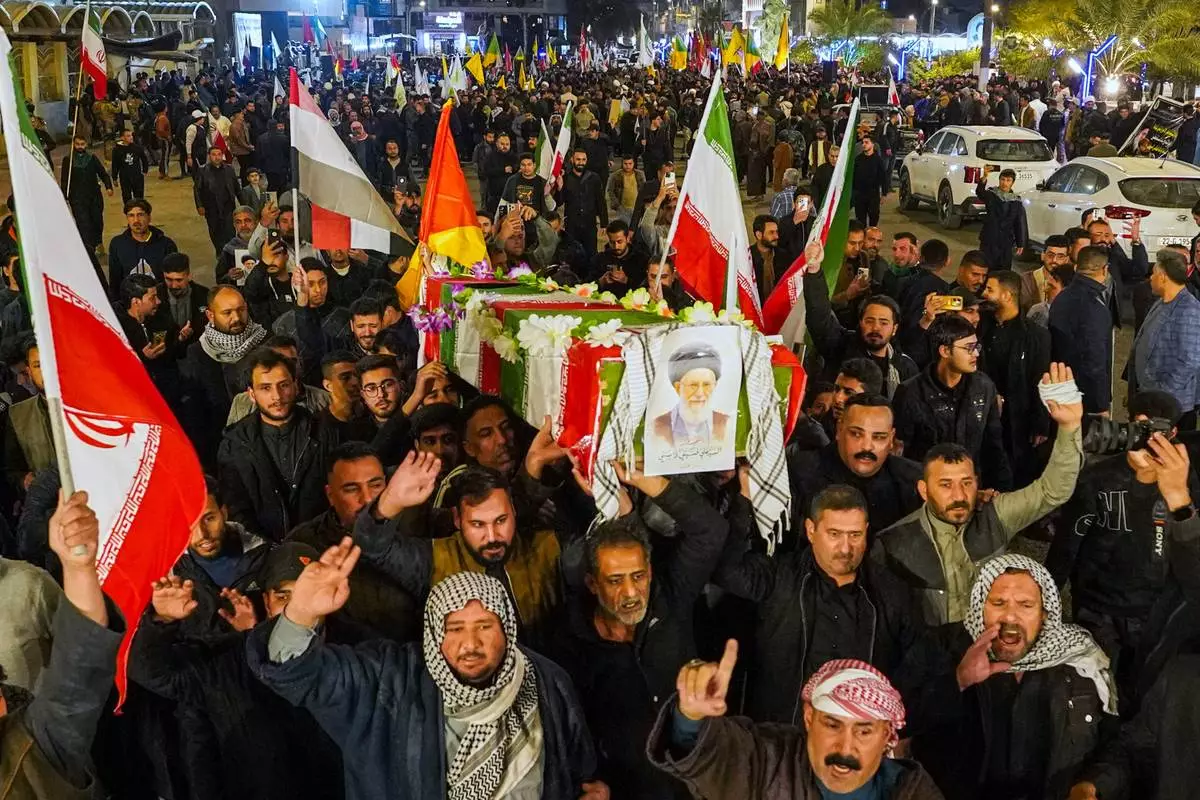
Iraqi Shiite carry a mock coffin of Iranian supreme Leader Ayatollah Ali Khamenei, who was killed by a U.S. airstrike in Tehran, during a symbolic funeral, in Najaf, Iraq, Sunday, March 1, 2026. (AP Photo/Anmar Khalil)

Iraqi Shiite carry a mock coffin of Iranian supreme Leader Ayatollah Ali Khamenei, who was killed by a U.S. airstrike in Tehran, during a symbolic funeral, in Najaf, Iraq, Sunday, March 1, 2026. (AP Photo/Anmar Khalil)

People walk in front of an electronic stock board showing Japan's Nikkei index at a securities firm Monday, March 1, 2026, in Tokyo.(Yohei Fukai/Kyodo News via AP)

People walk in front of an electronic stock board showing Japan's Nikkei index at a securities firm Monday, March 1, 2026, in Tokyo.(Yohei Fukai/Kyodo News via AP)

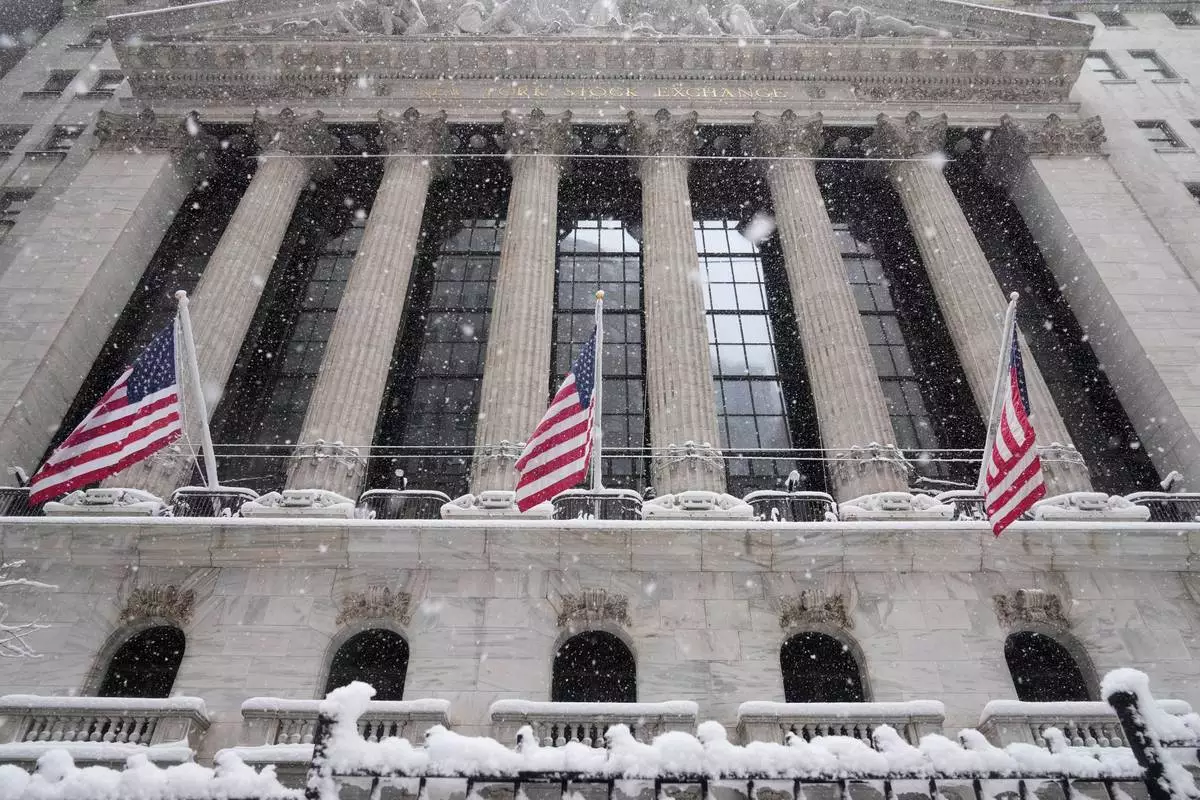
A pedestrian walks outside the New York Stock Exchange during a snow storm, Monday, Feb. 23, 2026, in New York. (AP Photo/Seth Wenig)

A pedestrian walks outside the New York Stock Exchange during a snow storm, Monday, Feb. 23, 2026, in New York. (AP Photo/Seth Wenig)

FILE - Fishermen work in front of oil tankers south of the Strait of Hormuz Jan. 19, 2012, offshore the town of Ras Al Khaimah in United Arab Emirates. (AP Photo/Kamran Jebreili, File)

FILE - Fishermen work in front of oil tankers south of the Strait of Hormuz Jan. 19, 2012, offshore the town of Ras Al Khaimah in United Arab Emirates. (AP Photo/Kamran Jebreili, File)

Snow falls outside the New York Stock Exchange, Monday, Feb. 23, 2026, in New York. (AP Photo/Seth Wenig)

Snow falls outside the New York Stock Exchange, Monday, Feb. 23, 2026, in New York. (AP Photo/Seth Wenig)

Recommended Articles