Land Registry releases statistics for February
The Land Registry today (March 3) released its statistics for February 2026.
Land registration
-------------------
* The number of sale and purchase agreements for all building units received for registration in February was 7 924 (+3.8 per cent compared with January 2026 and +84.0 per cent compared with February 2025)
* The 12-month moving average for February was 7 251 (4.3 per cent above the 12-month moving average for January 2026 and 25.0 per cent above that for February 2025)
* The total consideration for sale and purchase agreements of building units in February was $62.1 billion (+8.6 per cent compared with January 2026 and +119.7 per cent compared with February 2025)
* Among the sale and purchase agreements, 6 669 were for residential units (+17.6 per cent compared with January 2026 and +108.4 per cent compared with February 2025)
* The total consideration for sale and purchase agreements in respect of residential units was $57.6 billion (+17.0 per cent compared with January 2026 and +150.3 per cent compared with February 2025)
Statistics on sales of residential units do not include sale and purchase agreements relating to sales of units under the Home Ownership Scheme, the Private Sector Participation Scheme, the Tenants Purchase Scheme, etc, unless the premium of the unit concerned has been paid after the sale restriction period.
Figures on sale and purchase agreements received for the past 12 months, the year-on-year rate of change and breakdown figures on residential sales have also been released.
As deeds may not be lodged with the Land Registry until up to 30 days after the transaction, these statistics generally relate to land transactions in the previous month.
Land search
--------------
* The number of searches of land registers made by the public in February was 315 629 (-26.0 per cent compared with January 2026 and -6.6 per cent compared with February 2025)
The statistics cover searches made at the counter, through the self-service terminals and via the Integrated Registration Information System Online Services.
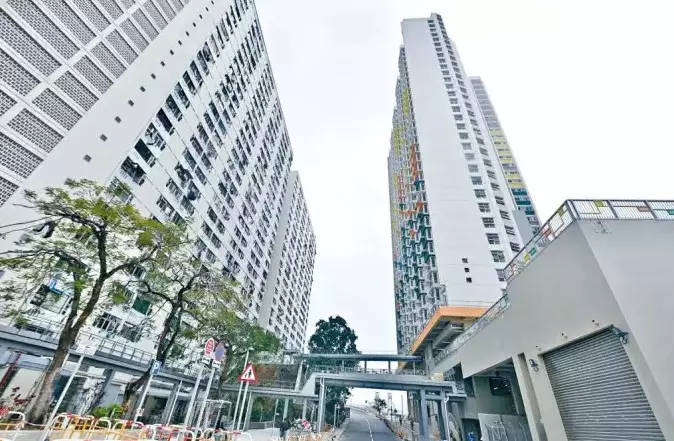
Photo source: reference image
Hong Kong-Shenzhen Joint Working Group on Environmental Protection holds meeting in Hong Kong
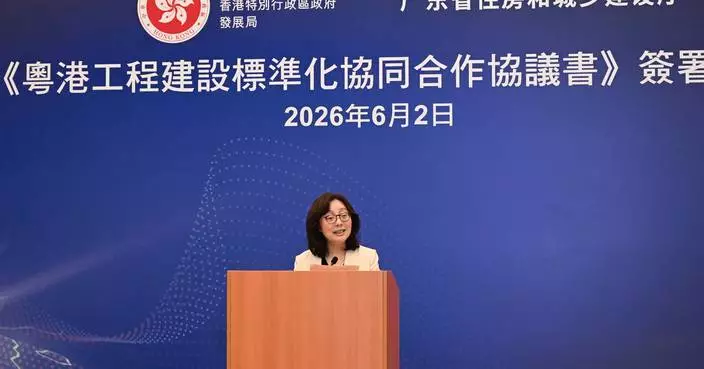
The Secretary for Environment and Ecology, Mr Tse Chin-wan, and Vice Mayor of the Shenzhen Municipal People's Government Ms Zhang Hua, leading the officials of the Hong Kong Special Administrative Region (HKSAR) Government and the delegation of the Shenzhen Municipal Government respectively, held the Hong Kong-Shenzhen Joint Working Group on Environmental Protection meeting in Hong Kong today (June 2).
The meeting reviewed and endorsed the Working Group's 2025 Work Report and noted the implementation progress of the Agreement on Further Deepening Hong Kong-Shenzhen Co-operation in Ecological and Environmental Protection (the Co-operation Agreement). Both sides also exchanged views in depth on the preparation of the five-year plan for ecological and environmental protection in Shenzhen and Hong Kong, regional environmental quality assurance during the Asia-Pacific Economic Co-operation (APEC) meetings, the joint development of the Shenzhen–Hong Kong ecological corridor, and cross-boundary biodiversity conservation. The two sides reported on their work progress and shared experiences on the above aspects.
The HKSAR Government is actively aligning with the National 15th Five-Year Plan and will complete the formulation of Hong Kong’s first five-year plan within this year. The HKSAR Government will continue to fully support the country in achieving its "dual carbon" goals, accelerate green transformation, and strive to reduce carbon emissions by half from the 2005 level by 2035, with a view to achieving carbon neutrality before 2050. At the meeting, the HKSAR Government reported progress in green transport, environmental quality and ecological conservation, including the promotion of a Shenzhen-Hong Kong cross-boundary electric cargo vehicle pilot scheme, preparations for nominating Port Shelter in Sai Kung for inclusion in the national "Beautiful Bays" list, and the deepening of co-operation on the Shenzhen Wutong Mountain–Hong Kong Robin's Nest ecological corridor. The Environment and Ecology Bureau (EEB) and the Environmental Protection Department (EPD) will organise a seminar on the Ecological and Environmental Code of the People's Republic of China in late June, inviting Mainland experts to attend. Representatives from relevant Shenzhen departments are also invited to attend the seminar as well as the Eco Expo to be held in Hong Kong in October during the meeting.
To ensure good environmental quality during the APEC Finance Ministers' Meeting to be held in Hong Kong in October this year and the APEC Economic Leaders' Meeting to be held in Shenzhen in November, Hong Kong and Shenzhen will continue to strengthen regional joint prevention and control efforts, including air quality assurance, water quality monitoring and emergency response capability.
Both sides are also actively advancing the development of the Shenzhen Wutong Mountain–Hong Kong Robin's Nest ecological corridor. In 2025, the two sides jointly completed a biodiversity survey of the ecological corridor area, strengthened ecological data sharing and connectivity, and will further enhance conservation effectiveness in the future to promote ecological integration between Shenzhen and Hong Kong.
Mr Tse thanked the various departments of the Shenzhen Municipal Government for their full support. He expressed the hope that both sides would continue to work hard under the framework of the Joint Working Group, anchor on the ten major co-operation tasks set out in the Co-operation Agreement signed in 2024, and ensure all tasks are advanced with high quality and full coverage, so as to jointly build a Beautiful China and work towards carbon neutrality.
The Permanent Secretary for Environment and Ecology (Environment), Mr Eddie Cheung; the Director of Environmental Protection, Dr Samuel Chui; and representatives from the EEB, the EPD and the Agriculture, Fisheries and Conservation Department also attended the meeting.
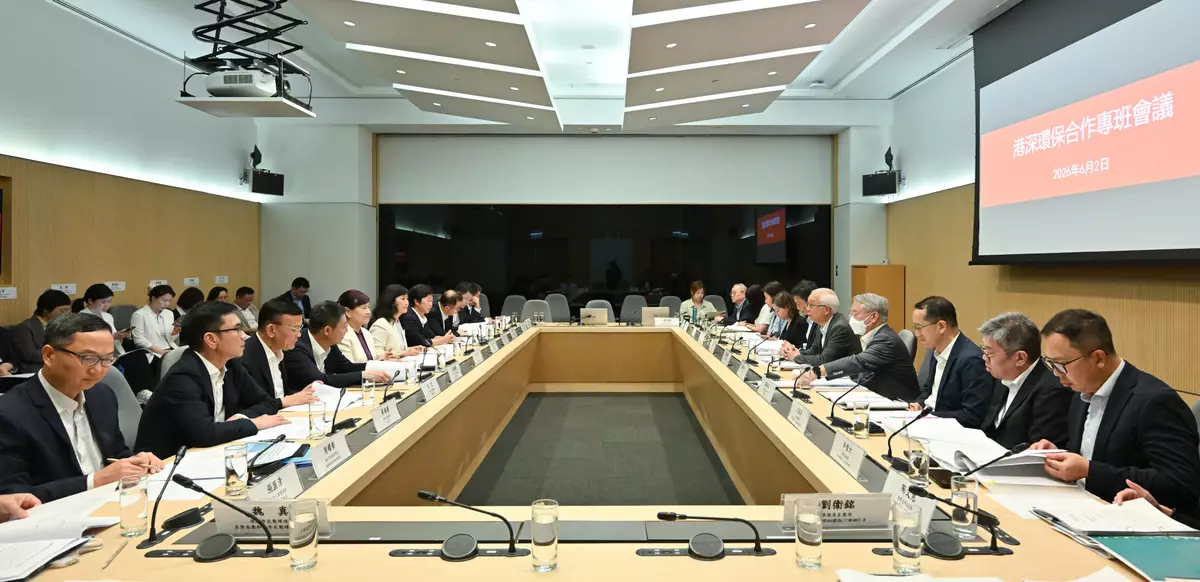
Hong Kong-Shenzhen Joint Working Group on Environmental Protection holds meeting in Hong Kong Source: HKSAR Government Press Releases
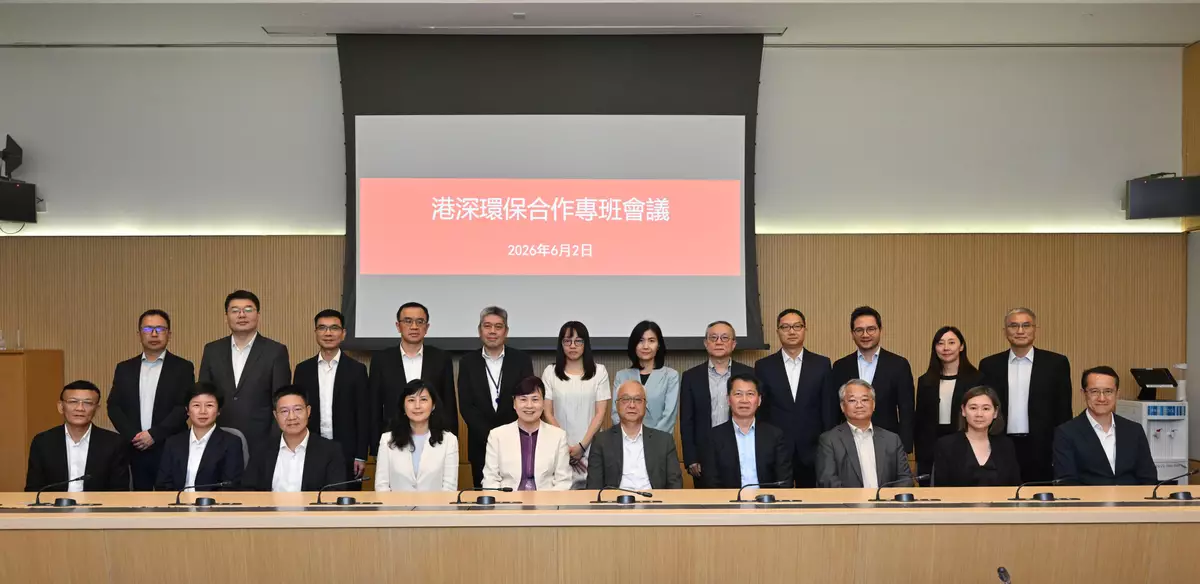
Hong Kong-Shenzhen Joint Working Group on Environmental Protection holds meeting in Hong Kong Source: HKSAR Government Press Releases