HKMA and AMCM sign revised MOU to further strengthen co-operation
The following is issued on behalf of the Hong Kong Monetary Authority:
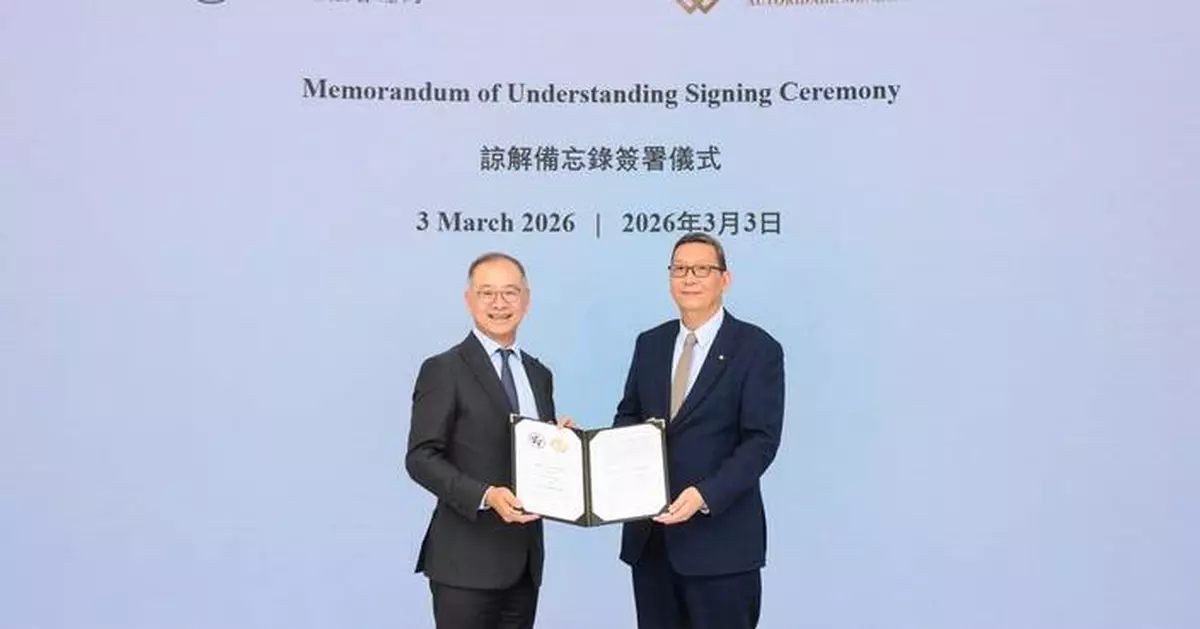
The representatives of the Hong Kong Monetary Authority (HKMA) and the Monetary Authority of Macao (AMCM) held a meeting today (March 3) to foster closer financial co-operation between the two authorities in several key areas. During the meeting, they signed a revised Memorandum of Understanding (MOU).
The HKMA and the AMCM have maintained close co-operation in banking supervision for many years. Building on the existing framework, the revised MOU expands the scope of collaboration to cover additional areas including financial infrastructure linkage, information exchange on currency and data statistics, and industry training and engagement.
The Chief Executive of the HKMA, Mr Eddie Yue,said, "As core cities in the development of the Guangdong-Hong Kong-Macao Greater Bay Area, Hong Kong and Macao share a common goal to maintain financial stability and support financial development. Our joint efforts not only enhance mutual synergy but also enable both cities to make greater contributions to the country's economic and financial development. The revised MOU expands our co-operation to broader areas such as financial infrastructure and information exchange, laying a more solid foundation for deepening financial collaboration between Hong Kong and Macao."
The Chairman of the AMCM, Mr Simon Vong, said, "The financial co-operation between Macao and Hong Kong is built on solid foundations. In recent years, both sides have been continued to explore new areas for collaboration, including the bond market and financial infrastructures. The newly amended MOU will serve to deepen and broaden the comprehensive co-operation between the two authorities, enabling both parties to uphold the sustained and steady development of our financial markets, while also providing strong support for the national strategic goal of developing the Guangdong-Hong Kong-Macao Greater Bay Area into an international financial hub."
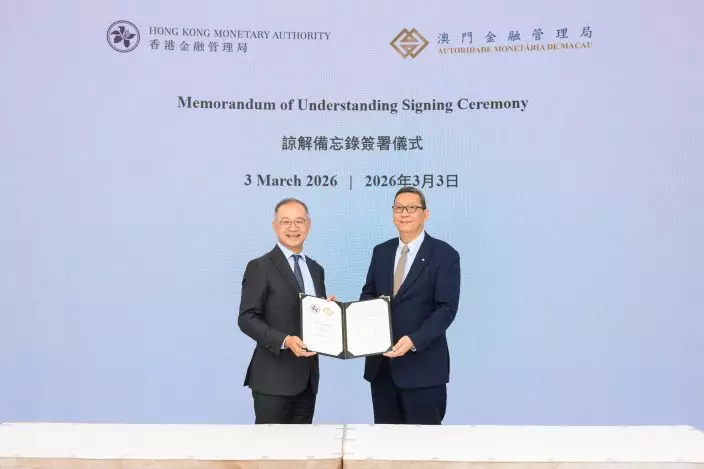
Photo shows the Chief Executive of the HKMA, Mr Eddie Yue (left), and the Chairman of the AMCM, Mr Simon Vong (right), signing a revised Memorandum of Understanding during the meeting. Source: HKSAR Government Press Releases
Hong Kong Customs detects drug trafficking case involving incoming passenger at airport
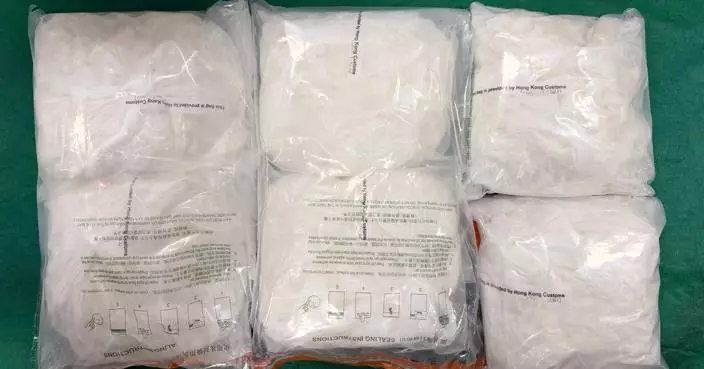
Hong Kong Customs yesterday (May 9) detected a drug trafficking case involving passenger at Hong Kong International Airport and seized about 2.25 kilograms of suspected heroin, four tablets of suspected Viagra and 26 sticks of duty-not-paid cigarette, with a total estimated market value of about $1.4 million. A man was arrested.
A 61-year-old male passenger arrived in Hong Kong from Kuala Lumpur, Malaysia yesterday. During customs clearance, Customs officers found a total of about 2.25 kg of suspected heroin in his check-in suitcase, and four tablets of suspected Viagra and 26 sticks of duty-not-paid cigarette in his carry-on backpack. The man was subsequently arrested.
The arrested person has been charged with one count of trafficking in a dangerous drug, one count of possession of Part 1 poison, one count of possession of dutiable goods and one count of failing to declare to a member of the Customs and Excise Service the possession of dutiable goods. The case will bebrought up at the West Kowloon Magistrates' Courts tomorrow (May 11).
Customs will continue to step up enforcement against drug trafficking activities through intelligence analysis. The department also reminds members of the public to stay alert and not participate in drug trafficking activities for monetary return. They must not accept hiring or delegation from another party to carry controlled items into and out of Hong Kong. They are also reminded not to carry unknown items for other people.
Customs will continue to apply a risk assessment approach and focus on selecting passengers from high-risk regions for clearance to combat transnational drug trafficking activities.
Under the Dangerous Drugs Ordinance, trafficking in a dangerous drug is a serious offence. The maximum penalty upon conviction is a fine of $5 million and life imprisonment.
Under the Pharmacy and Poisons Ordinance, any person who possesses any poison included in Part 1 of the Poisons List other than in accordance with provisions commits an offence. The maximum penalty upon conviction is a fine of $100,000 and imprisonment for two years.
Under the Dutiable Commodities Ordinance, any person who imports, possesses, sells or buys dutiable commodities without a valid licence commits an offence. The maximum penalty upon conviction is a fine of $1 million and imprisonment for two years.
Members of the public may report any suspected drug trafficking activities to Customs' 24-hour hotline 182 8080 or its dedicated crime-reporting email account (crimereport@customs.gov.hk) or online form (eform.cefs.gov.hk/form/ced002).
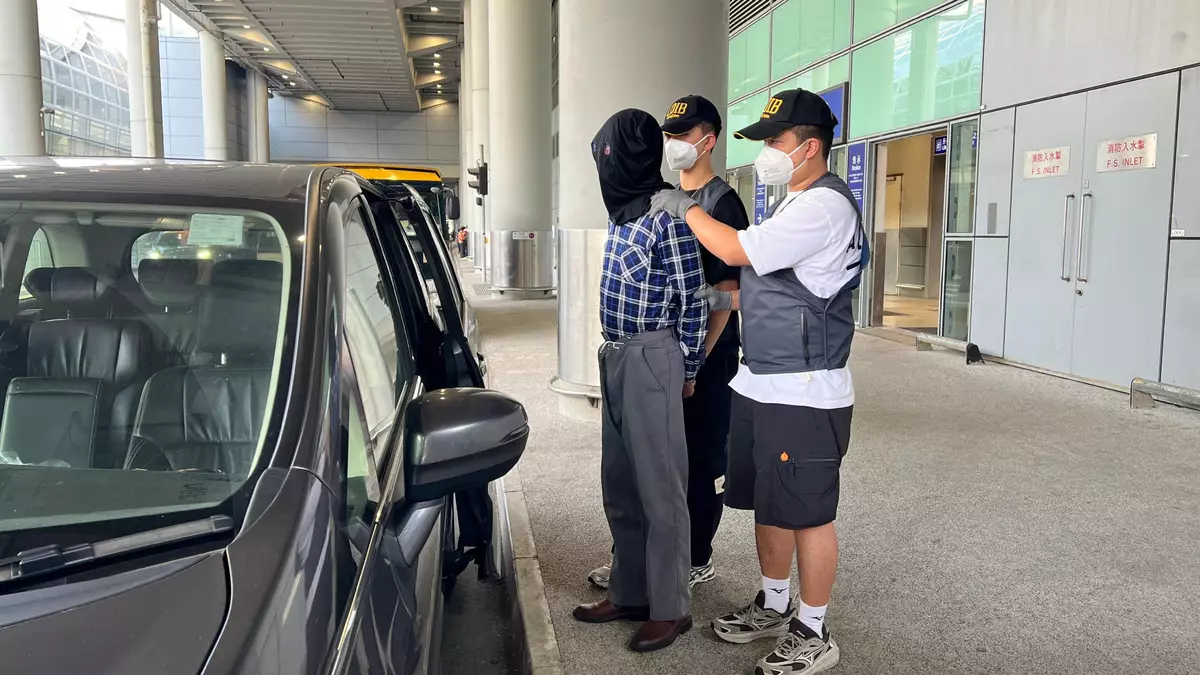
Hong Kong Customs detects drug trafficking case involving incoming passenger at airport Source: HKSAR Government Press Releases
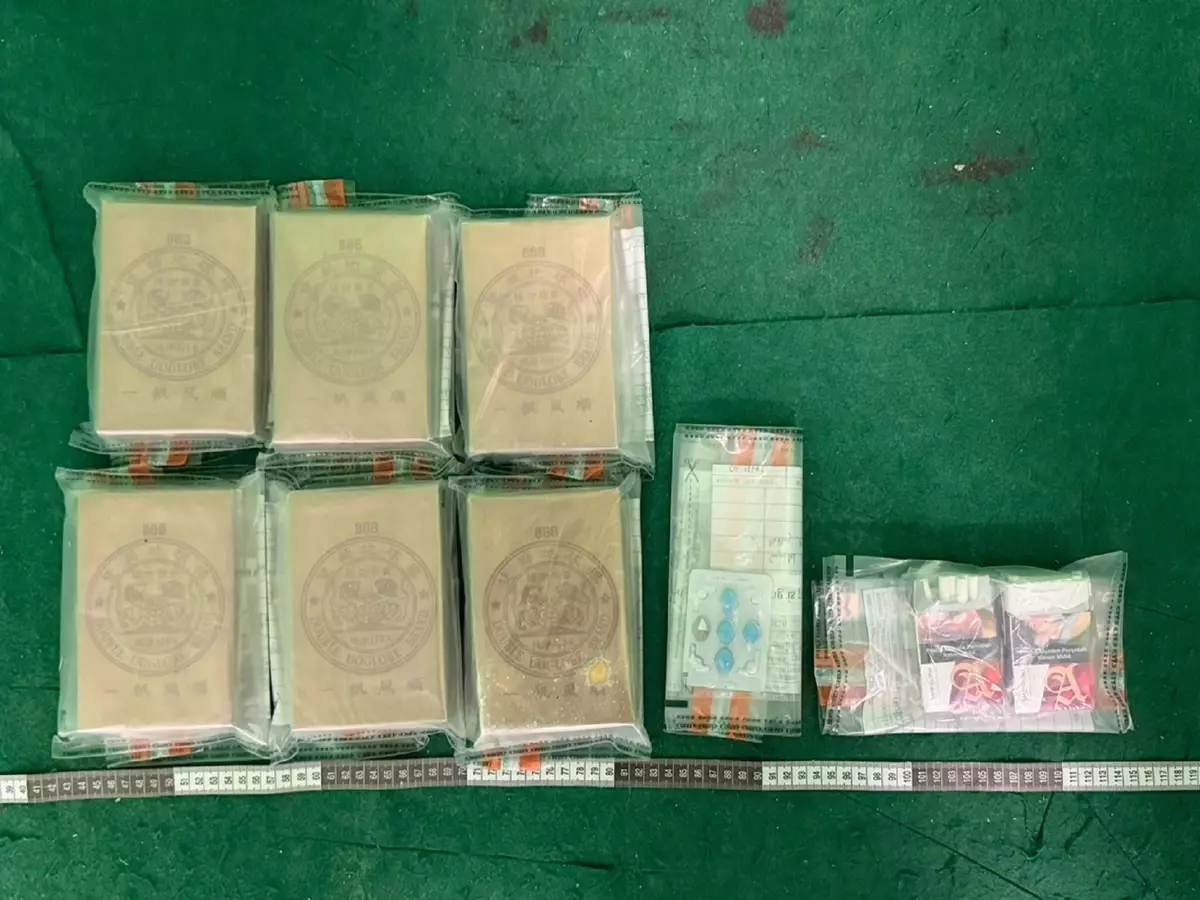
Hong Kong Customs detects drug trafficking case involving incoming passenger at airport Source: HKSAR Government Press Releases