|
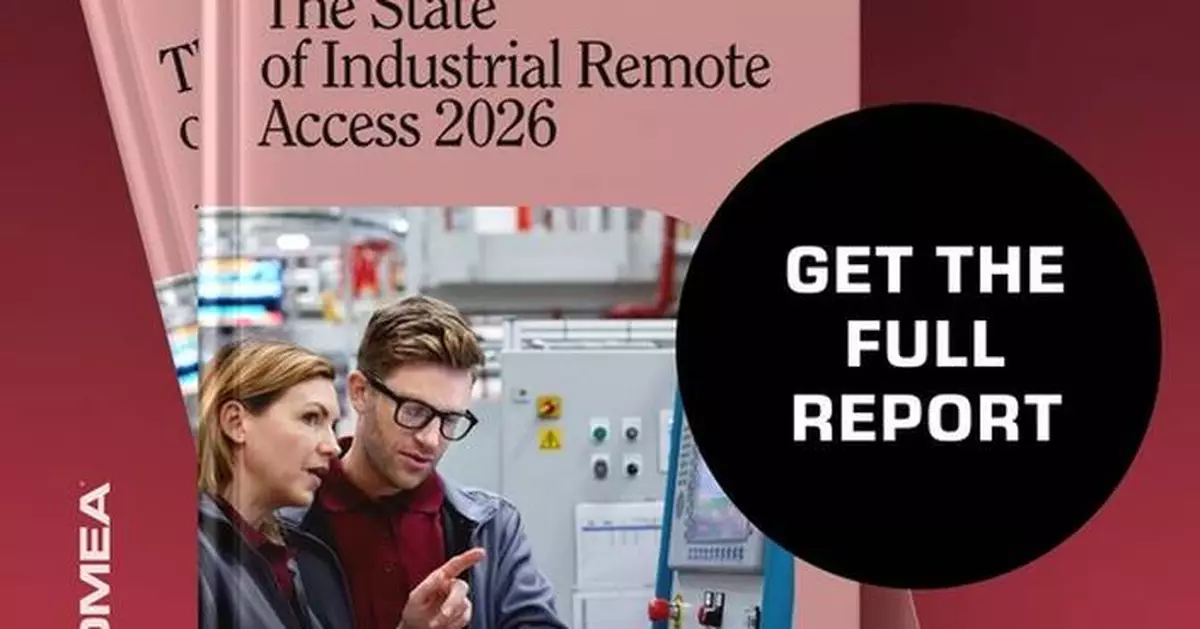
"The State of Industrial Remote Access 2026" reveals rising vendor risk, visibility gaps, and accelerating shift toward unified OT access platforms
COPENHAGEN, Denmark, March 3, 2026 /PRNewswire/ -- Industrial organizations worldwide are entering 2026 with growing confidence in their remote access security posture — but new research commissioned by Secomea shows that confidence often exceeds operational reality.
According to The State of Industrial Remote Access 2026 industry report[1], based on a global survey of 400 senior leaders across manufacturing and critical infrastructure, most organizations rate their session visibility and regulatory readiness as "good." However, deeper analysis reveals significant structural gaps in vendor oversight, credential hygiene, and auditability.
The report identifies a widening "confidence-to-evidence gap" in industrial cybersecurity: while compliance confidence rises quickly at moderate levels of visibility, full vendor session auditability remains uncommon.
Key Findings
Vendor access is the primary risk multiplier
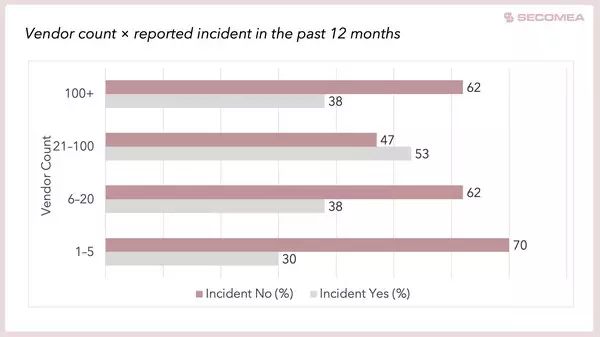
As vendor ecosystems expand, incident likelihood rises sharply. Organizations managing 21–100 external vendors report the highest exposure levels. Risk concentrates where vendor session visibility is partial and credential reviews are infrequent.
Vendor-related risk, the report concludes, is not primarily driven by vendor behavior — but by how organizations structure and govern vendor access.
Partial vendor visibility is the global norm
Only 43% of organizations report full audit trails of vendor sessions. The majority operate with partial visibility, creating compliance and forensic blind spots.
Absence of vendor visibility correlates with universal incident exposure.
Zero trust adoption delivers measurable impact
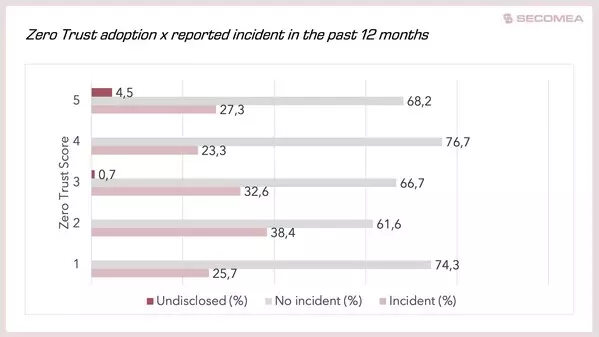
Zero Trust depth shows a clear stepwise relationship with:
- Higher session visibility
- Improved vendor auditability
- Faster enablement speeds
- Reduced incident volatility
Organizations implementing all five core Zero Trust principles reach visibility levels not achieved through tooling alone.
Governance and IT/OT alignment predict outcomes
Nearly 70% of organizations now operate under shared IT/OT governance models — the structure most consistently associated with balanced security, operational speed, and auditability.
Where alignment weakens, vendor-related incident exposure nearly triples.
Tool fragmentation erodes control
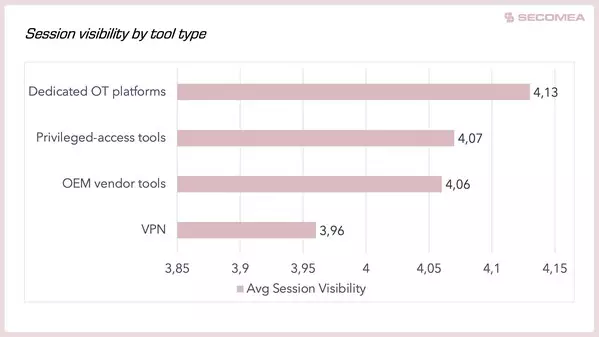
Most organizations rely on multiple parallel access tools — VPNs, OEM utilities, PAM solutions, and emerging OT-dedicated platforms.
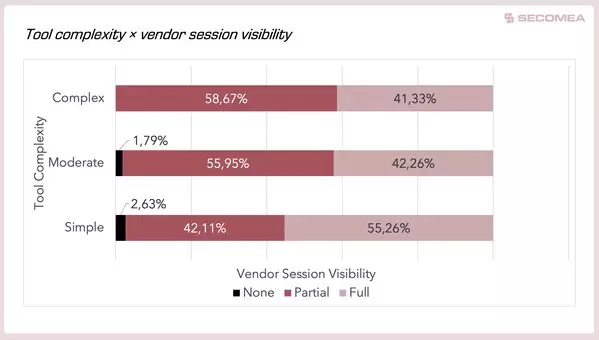
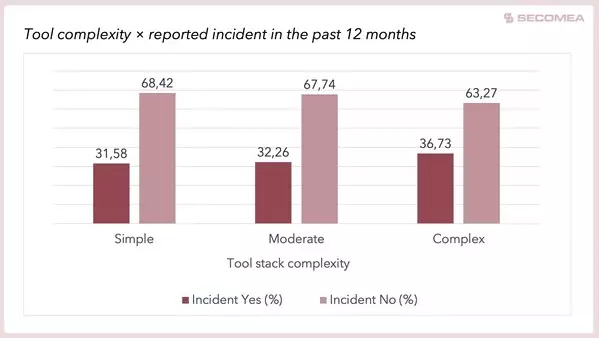
Session visibility declines measurably as tool stack complexity increases. Organizations using three or more remote access tools report lower visibility and higher friction than those operating consolidated environments.
Consolidation momentum is accelerating
The data shows a clear market shift toward identity-centric, unified OT remote access platforms.
Compared to non-users, organizations using OT-dedicated platforms report:
- Higher average session visibility
- Stronger full audit trail rates
- Lower incident exposure
- Faster vendor enablement
- Stronger IT/OT alignment
The report concludes that consolidation is not about replacing every legacy tool, but about governing access through a single operational control layer.
A structural shift, not a tactical upgrade
Remote access has evolved from a convenience tool to a strategic control surface for industrial operations.
As regulatory pressure intensifies and vendor ecosystems expand, the industry is converging toward:
- Federated vendor control models
- Shared IT/OT governance
- Identity-based access enforcement
- Time-bound, session-based permissions
- Unified auditability
The report describes this transition as a move from fragmented, reactive access to standardized, secure, policy-driven remote operations.
About the report
The State of Industrial Remote Access 2026 is based on a global survey of 400 OT, IT, compliance, and executive leaders across manufacturing and critical infrastructure sectors. The study examines architectural patterns, governance models, vendor access practices, Zero Trust adoption, regulatory alignment, and operational performance indicators.
About Secomea
Secomea is a Secure Remote Access (SRA) solution purpose-built for industrial networks and OT equipment. Over 8,000 customers worldwide rely on Secomea to manage secure remote access to their machines, prevent downtime, and strengthen cybersecurity across their global operations. For more than 15 years, Secomea has supported manufacturers and machine builders with a simple, scalable solution that bridges IT/OT requirements and provides the visibility, compliance, and control required to defend the factory floor.
1. https://secomea.com/guides/the-state-of-industrial-remote-access/.
"The State of Industrial Remote Access 2026" reveals rising vendor risk, visibility gaps, and accelerating shift toward unified OT access platforms
Click to Gallery
Industrial organizations overestimate remote access security, new global report finds
Industrial organizations overestimate remote access security, new global report finds
Industrial organizations overestimate remote access security, new global report finds
Industrial organizations overestimate remote access security, new global report finds
Industrial organizations overestimate remote access security, new global report finds
Industrial organizations overestimate remote access security, new global report finds
COPENHAGEN, Denmark, March 3, 2026 /PRNewswire/ -- Industrial organizations worldwide are entering 2026 with growing confidence in their remote access security posture — but new research commissioned by Secomea shows that confidence often exceeds operational reality.
According to The State of Industrial Remote Access 2026 industry report[1], based on a global survey of 400 senior leaders across manufacturing and critical infrastructure, most organizations rate their session visibility and regulatory readiness as "good." However, deeper analysis reveals significant structural gaps in vendor oversight, credential hygiene, and auditability.
The report identifies a widening "confidence-to-evidence gap" in industrial cybersecurity: while compliance confidence rises quickly at moderate levels of visibility, full vendor session auditability remains uncommon.
Key Findings
Vendor access is the primary risk multiplier
As vendor ecosystems expand, incident likelihood rises sharply. Organizations managing 21–100 external vendors report the highest exposure levels. Risk concentrates where vendor session visibility is partial and credential reviews are infrequent.
Vendor-related risk, the report concludes, is not primarily driven by vendor behavior — but by how organizations structure and govern vendor access.
Partial vendor visibility is the global norm
Only 43% of organizations report full audit trails of vendor sessions. The majority operate with partial visibility, creating compliance and forensic blind spots.
Absence of vendor visibility correlates with universal incident exposure.
Zero trust adoption delivers measurable impact
Zero Trust depth shows a clear stepwise relationship with:
- Higher session visibility
- Improved vendor auditability
- Faster enablement speeds
- Reduced incident volatility
Organizations implementing all five core Zero Trust principles reach visibility levels not achieved through tooling alone.
Governance and IT/OT alignment predict outcomes
Nearly 70% of organizations now operate under shared IT/OT governance models — the structure most consistently associated with balanced security, operational speed, and auditability.
Where alignment weakens, vendor-related incident exposure nearly triples.
Tool fragmentation erodes control
Most organizations rely on multiple parallel access tools — VPNs, OEM utilities, PAM solutions, and emerging OT-dedicated platforms.
Session visibility declines measurably as tool stack complexity increases. Organizations using three or more remote access tools report lower visibility and higher friction than those operating consolidated environments.
Consolidation momentum is accelerating
The data shows a clear market shift toward identity-centric, unified OT remote access platforms.
Compared to non-users, organizations using OT-dedicated platforms report:
- Higher average session visibility
- Stronger full audit trail rates
- Lower incident exposure
- Faster vendor enablement
- Stronger IT/OT alignment
The report concludes that consolidation is not about replacing every legacy tool, but about governing access through a single operational control layer.
A structural shift, not a tactical upgrade
Remote access has evolved from a convenience tool to a strategic control surface for industrial operations.
As regulatory pressure intensifies and vendor ecosystems expand, the industry is converging toward:
- Federated vendor control models
- Shared IT/OT governance
- Identity-based access enforcement
- Time-bound, session-based permissions
- Unified auditability
The report describes this transition as a move from fragmented, reactive access to standardized, secure, policy-driven remote operations.
About the report
The State of Industrial Remote Access 2026 is based on a global survey of 400 OT, IT, compliance, and executive leaders across manufacturing and critical infrastructure sectors. The study examines architectural patterns, governance models, vendor access practices, Zero Trust adoption, regulatory alignment, and operational performance indicators.
About Secomea
Secomea is a Secure Remote Access (SRA) solution purpose-built for industrial networks and OT equipment. Over 8,000 customers worldwide rely on Secomea to manage secure remote access to their machines, prevent downtime, and strengthen cybersecurity across their global operations. For more than 15 years, Secomea has supported manufacturers and machine builders with a simple, scalable solution that bridges IT/OT requirements and provides the visibility, compliance, and control required to defend the factory floor.
1. https://secomea.com/guides/the-state-of-industrial-remote-access/.
** This press release is distributed by PR Newswire through automated distribution system, for which the client assumes full responsibility. **
Industrial organizations overestimate remote access security, new global report finds
Industrial organizations overestimate remote access security, new global report finds
Industrial organizations overestimate remote access security, new global report finds
Industrial organizations overestimate remote access security, new global report finds
Industrial organizations overestimate remote access security, new global report finds
Industrial organizations overestimate remote access security, new global report finds
NEWARK, N.J., March 4, 2026 /PRNewswire/ -- As digital learning and personal audio devices become central to childhood, experts warn of rising risks of preventable hearing damage. Marking World Hearing Day, iClever, the No.1 selling kids' headphone brand in the U.S. online market, today announced a strategic collaboration with Kellsie Busho, Au.D., CCC-A, who serves as a compensated Chief Hearing Safety Advisor to iClever.
With the World Health Organization (WHO) estimating that over one billion young people are at risk of hearing loss due to unsafe listening habits, the partnership aims to bridge the gap between advanced audio technology and clinical expertise by providing science-based guidance and safe listening solutions for families nationwide.
Expertise Meets Parenting Reality
Dr. Kellsie Busho, Director of Clinical Programs for Audiology, brings both clinical expertise and personal experience. " As an audiologist and a mother, I understand the long-term impact of noise and the challenges of managing screen time and volume," said Dr. Busho. "I partnered with iClever because they prioritize the physiological needs of growing ears. Their commitment to the 85dB safety limit and ergonomic design gives parents the peace of mind they deserve."
Empowering Parents Through Education
Through this partnership, iClever and Dr. Busho will launch a series of educational initiatives for modern families, addressing common concerns such as managing volume creep in noisy environments and recognizing early signs of listening fatigue in children.
Leading with SafeSound Technology
At the core of iClever's industry leadership is its proprietary SafeSound system, which regulates sound output across the full frequency spectrum within 74–85 dBA in compliance with EU EN50332 standards and WHO guidelines. The system also incorporates targeted protection in the critical 3–6 kHz range and integrates Active Noise Cancelling (ANC) technology to help reduce the need for higher volumes in noisy environments.
"Our mission has always been to protect the joy of sound for the next generation," said Sam, SVP of iClever. "By bringing Dr. Busho's clinical expertise into our product development and community outreach, we are reinforcing our position as the gold standard in hearing safety."
Commitment to Community
iClever has also donated over 14,900 headphones to more than 2,400 schools across the U.S., supporting safer and more focused learning environments.
For more information on children's hearing safety from hearing experts, please visit: https://iclever.com/pages/hearing-experts.
** This press release is distributed by PR Newswire through automated distribution system, for which the client assumes full responsibility. **

iClever Joins Forces with Renowned Audiologist Kellsie Busho to Champion Children's Hearing Health on World Hearing Day 2026