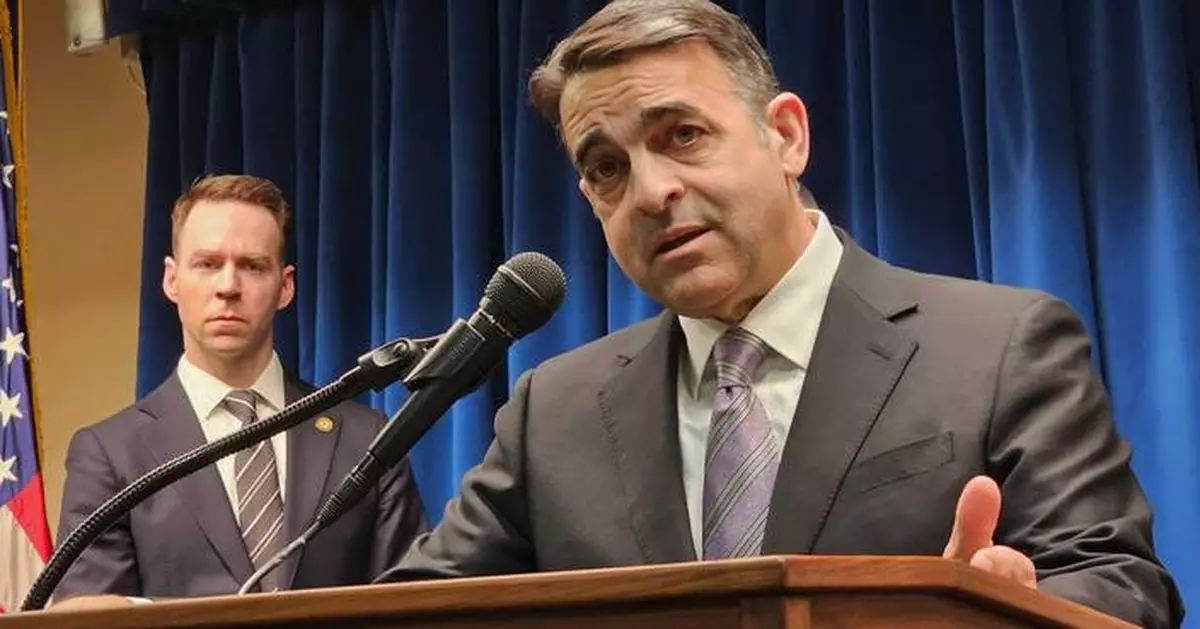
ST. PAUL, Minn. (AP) — A federal judge clashed Tuesday with Minnesota’s top federal prosecutor during an unusual contempt hearing that highlighted growing confrontations between increasingly frustrated judges and Department of Justice officials.
U.S. District Judge Jeffrey Bryan called Tuesday’s hearing to decide whether U.S. Attorney for the District of Minnesota Daniel N. Rosen and others should be held in contempt for not heeding orders to return the personal property of 28 of immigrants who had been detained and then ordered freed. The property ranges from cash to identity documents to clothing.
Bryan, who had said in calling for the hearing that there had been “numerous unlawful violations of court orders,” started Tuesday by saying it would be a “historic low point” for the U.S. attorney’s office if he held anyone in contempt.
“Your honor has made a remark smearing myself,” Rosen shot back. The judge later called for a break in the hearing to allow for a reset, acknowledging the two had “been a little testy and frosty with each other.”
There has been a surge in recent weeks of judges issuing critical and sometimes scathing statements and rulings over fallout from the administration’s attempts at mass immigrant deportations, with the Department of Justice sometimes appearing unable to keep up with the flood of cases from the crackdown.
Among other cases across the country, a district judge in Minnesota took the rare step last month of finding an administration lawyer in contempt for failing to return identification documents to an immigrant, and a judge in West Virginia chastised U.S. and state officials for jailing noncitizens indefinitely, saying it violates their constitutional right to due process.
“Continued detention without individualized custody determinations, after this court’s repeated holdings that such detention violates the Fifth Amendment, will result in legal consequences,” U.S. District Judge Joseph Goodwin said in his order.
But the chief federal judge for Minnesota has repeatedly grabbed national attention with his warnings. Last week, Chief Judge Patrick Schiltz said Rosen and U.S. Immigration and Customs Enforcement officials must comply with court orders or risk criminal contempt charges.
“The Court is not aware of another occasion in the history of the United States in which a federal court has had to threaten contempt — again and again and again — to force the United States government to comply with court orders,” wrote Schiltz, who was appointed to the bench by President George W. Bush and is seen as a conservative.
The administration has blamed judges for the crisis, accusing them of failing to follow the law and rushing cases.
Sullivan contributed from Minneapolis.
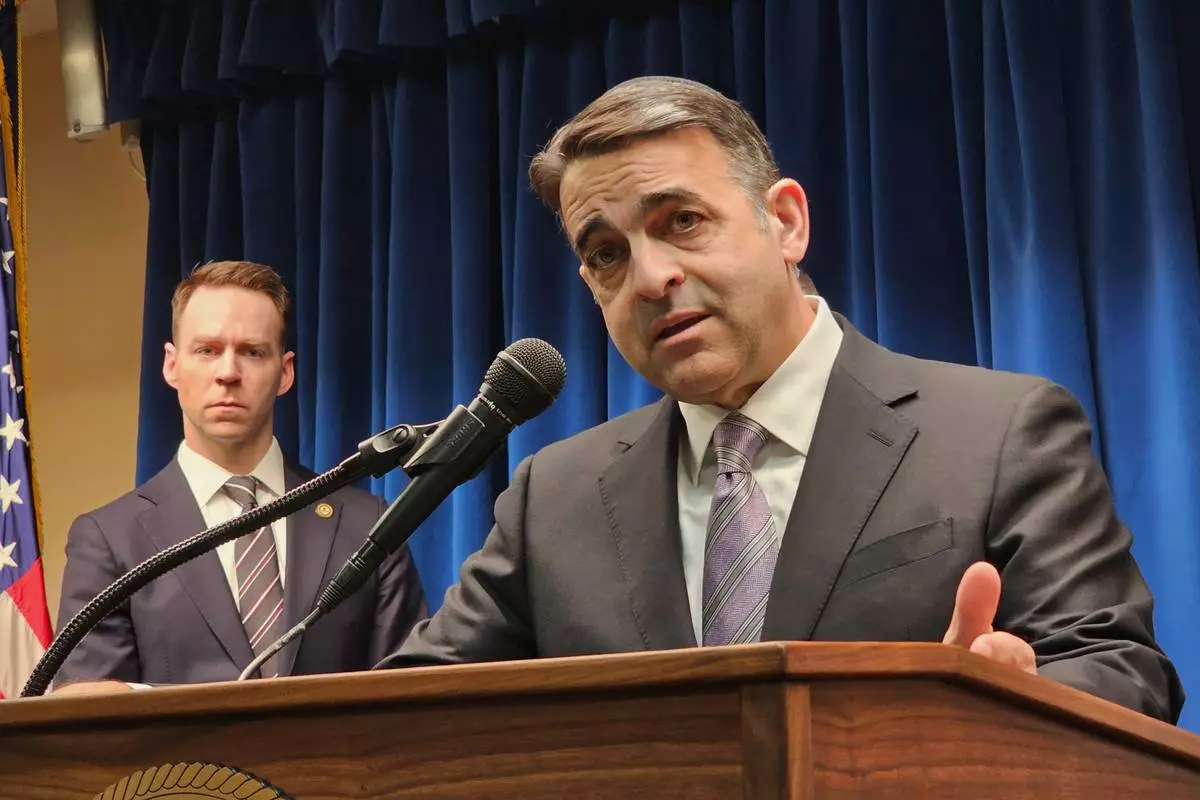
The U.S. attorney for Minnesota, Daniel Rosen, speaks with reporters during a news conference at the federal courthouse in Minneapolis, Wednesday, Feb. 25, 2026. (AP Photo/Steve Karnowski)
U.S. President Donald Trump said “someone from within” Iran’s government might be best suited to take power once the U.S.-Israeli war on the country ends.
His remarks came four days into a war that has killed hundreds, nearly all of them in Iran, as well as many of the country’s top leaders, including Supreme Leader Ayatollah Ali Khamenei.
Although Tehran has kept up its retaliatory missile and drone strikes against Israel and across the Gulf — disrupting travel and driving up oil prices — the pace of Iranian attacks appears to be slowing. However the conflict has also spread to Lebanon, where Iran-backed Hezbollah fired missiles at Israel, prompting Israeli strikes in Beirut and additional troop deployments to southern Lebanon.
The spiraling nature of the war has raised questions about when and how it would end, and the Trump administration has given various objectives.
Here is the latest:
Trump said on social media he ordered the United States’ development finance arm to provide political risk insurance for tankers carrying oil and other goods through the Persian Gulf “at a very reasonable price.”
Political risk insurance is a type of coverage intended to protect firms against financial losses caused by unstable political conditions, government actions, or violence.
He said that, if necessary, the U.S. Navy would escort oil tankers through the Strait of Hormuz. About a fifth of the world’s oil passes through the strait. The disruption to that traffic caused by the war has pushed oil prices higher.
The Navy has at least eight destroyers and three smaller littoral combat ships in the region. These ships have previously been used to escort merchant shipping in the region and in the Red Sea.
Israel’s military says it destroyed what it calls Iran’s secret nuclear headquarters, and claims Iran moved work into hidden bunkers, known as Minzadehei.
On Tuesday, an Israeli military spokesman said the site supported research tied to a key component for nuclear weapons. Israel does not say Iran enriched uranium there.
There was no immediate public comment from the U.S. or Iran about the site Israel named.
Israel says Iran tried to rebuild and hide parts of its program after last year’s strikes. The United States said as recently as last week that those strikes destroyed Iran’s nuclear program.
U.S. officials also accuse Iran of trying to restart parts of the program but do not say Iran was restarting enrichment.
Turkish Foreign Minister Hakan Fidan on Tuesday accused Iran of attacking Gulf neighbors that had worked to prevent war, calling it a strategy of “If I go, I will take the region with me.”
He called Iran’s strikes on countries mediating between Tehran and Washington an “incredibly flawed strategy” and warned the conflict could widen if Gulf states retaliate.
In an interview with state broadcaster TRT, Fidan said Gulf states, including Qatar, had pushed for diplomacy until the last hour before the U.S.-Israeli war began Saturday.
“I believe that if the Iranians had better understood the pressure President Trump was facing and given him something in advance, the pressure from Israel might not have been so effective,” he said.
Associated Press journalists heard explosions and saw smoke rising but no casualties were reported after a new wave of drone and missile attacks was intercepted over Irbil, the capital of northern Iraq’s semi-autonomous Kurdish region.
Multiple drones targeted areas around the U.S. consulate building Tuesday but did not hit it directly.
Debris from the intercepted drones caused fires and property damage.
Iran-linked Iraqi militias have claimed multiple attacks on the Kurdish region, which hosts bases with U.S. troops, since the U.S. and Israel launched the war on Iran.
French President Emmanuel Macron on Tuesday said he ordered the aircraft carrier Charles de Gaulle to move from the Baltic Sea to the Mediterranean. He said it will be escorted by its air wing and frigates.
In a pre-recorded speech on French TV, Macron added that Rafale fighter jets, air-defense systems, and airborne radar systems have been deployed over the past few hours in the Middle East.
Daoud Alizadeh, the acting commander of the Lebanon Corps in Iran’s Islamic Revolutionary Guard Corps’ elite Quds Force, was killed on Tuesday in an airstrike in Tehran, the Israeli military said in a statement.
The Quds Force works with Iran’s allied militant groups in the region, including Hezbollah. The army said the Lebanon Corps “supports Hezbollah force-building and functions as the connection between senior IRGC personnel and Hezbollah leadership.” It said Alizadeh replaced the Lebanon Corps’ previous commander, Hassan Mahdavi, killed in an earlier Israeli strike.
The United Arab Emirates’ Capital Markets Authority said Tuesday that the country’s stock markets will reopen Wednesday following a two-day halt.
Authorities in Dubai and Abu Dhabi say that the Dubai Financial Market, Nasdaq Dubai, and Abu Dhabi Securities Exchange were suspended due to Iran’s strikes on the Gulf nation.
Iranian state media has reported that at least 165 people were killed and dozens of others were wounded Saturday by what Iran says was an airstrike on a girls school in the country’s south.
The Israeli military said it was not aware of strikes in the area, and the U.S. military said it was looking into the strikes.
Ravina Shamdasani, spokesperson for the Office of the United Nations High Commissioner for Human Rights, said Tuesday that the “devastating” airstrike may amount to war crimes if it is found to have targeted civilians or been carried out indiscriminately in violation of international law.
“Children, little girls, in the middle of the school day, at the beginning of the school day, being killed in this manner, backpacks with blood stains on them,” said Shamdasani.
The U.N. human rights chief called for an investigation into the airstrike.
Seven children have been killed by Israeli strikes in Lebanon over the past two days, Lebanon’s health ministry said Tuesday.
In total, 40 people have been killed in Lebanon — including a Palestinian militant leader and a Hezbollah intelligence official — and 246 wounded in the new escalation between Israel and the Iran-backed militant group Hezbollah.
On Monday, Hezbollah launched missiles toward Israel for the first time in more than a year, and Israel responded by bombarding southern Lebanon and the southern suburbs of Beirut with strikes. No casualties have been reported from the Hezbollah attacks in Israel.
Israeli firefighters hosed down charred vehicles after Iranian missiles struck and, in some places, ignited fires on city streets Tuesday.
Missile and drone strikes — as well as the debris from projectiles intercepted by Israel’s Iron Dome — have crashed down in central Israel. They’ve hit residential buildings and street-level property, sending shockwaves booming, damaging shopfronts and reducing some structures to rubble.
Iranian missiles set off air raid sirens and sent Israelis into shelters across the country, although the pace of attacks appeared to be slowing on Tuesday. Israel says it has intercepted most of the incoming strikes, but some missiles have landed, killing 11 people.
No deaths or injuries have been reported so far Tuesday.
As governments race to evacuate citizens from the Middle East, Israel is preparing to fly home its citizens who are stranded abroad.
Transportation Minister Miri Regev said Ben-Gurion Airport will reopen for limited incoming flights around the clock starting early Thursday.
Israel’s airspace has been closed since Saturday, when the joint U.S.-Israeli war on Iran began, although some land crossings remain open. Regev said thousands have returned that way.
Under the plan, one passenger flight per hour will be allowed in the first 24 hours, totaling about 5,000 people, with more later depending on security.
It is unclear whether only Israelis will be permitted on the flights, and no commercial departures leaving Israel have been approved.
Neel Kashkari, president of the Federal Reserve Bank of Minneapolis, said Tuesday that before the Iran war he had supported at least one interest rate cut this year as inflation slowly cooled. But now with the conflict pushing up oil and gas prices, he isn’t so sure.
“With the geopolitical events that we talked about, I just need to see,” he said at the Bloomberg Invest conference in New York City, referring to the U.S. and Israeli attacks on Iran. “We need to get a lot more data in.” Kashkari is one of 12 voting members of the Fed’s rate-setting committee.
Kashkari’s comment is a sign of how the war threatens to push up inflation and therefore interest rates. The Fed raises its short-term rate — or keeps it unchanged — to cool the economy and combat inflation. A cut in the Fed’s rate, over time, can lower mortgages, auto loan rates, and other consumer borrowing costs.
Financial markets have forecast two rate cuts this year, according to futures prices, and Trump has loudly demanded many more reductions. But the odds of those two cuts occurring this year have fallen since the Iran war began.
The State Department said Tuesday it is “actively securing” military and charter aircraft to fly Americans stranded in the Middle East to safety following the onset of U.S.-Israel military operations against Iran that have disrupted commercial air travel.
“The State Department is actively securing military aircraft and charter flights for American citizens who wish to leave the Middle East,” said Dylan Johnson, the assistant secretary of state for public affairs.
In a post on X, Johnson said the department has been in contact with nearly 3,000 Americans seeking to leave the region or seeking information about how to leave.
In Israel specifically, a second official said nearly 500 Americans had been in touch with the department about leaving and that it had assisted more than 130 in departing so far. Another 100 Americans are expected to leave Israel on Tuesday, the official said.
In a control room surrounded by large screens with maps of the country, medical emergency responders debriefed Tuesday on the latest strike.
The Magen David Adom headquarters in central Israel is the command center for dispatching medical teams to sites after they’ve been struck.
Their systems provide early warning when missiles are launched and they can sometimes identify locations where missiles have struck before calls come in.
Nadav Matzner, deputy spokesperson for Magen David Adom, says missiles coming from Iran to Israel take about 10-12 minutes whereas missiles from Lebanon to the center of Israel take a minute and a half.
He said so far during this war, missiles from Hezbollah in Lebanon have only struck the north.
A correspondent and cameraman with CNN’s Turkish-language affiliate were reporting Tuesday outside Israel’s military headquarters in Tel Aviv when police detained them on live television. Israeli police said they were held “on suspicion of documenting a security facility” and later released.
Israeli officials vowed to crack down on reporters who allegedly “expose sensitive locations” while Iran strikes the country.
Israel’s military censor requires media to submit certain security-related information for review and in 2025 expanded its authority to mandate prior approval before publishing the locations of missile strikes.
In a statement after the arrests, National Security Minister Itamar Ben-Gvir and Communications Minister Shlomo Karhi pledged to “intensify the fight against foreign media broadcasting in violation of censorship directives.”
“We will not allow broadcasts that assist the enemy,” Ben-Gvir said, warning that journalists would face a “determined and forceful police response.”
Press freedom groups, including the Committee to Protect Journalists, criticized Israel’s military censor during last year’s 12-day war with Iran, accusing it of suppressing an unfiltered view of the war.
Burhanettin Duran, the head of Turkey’s Communications Directorate, called Tuesday’s detentions “an attempt to conceal the truth.”
The president revived his complaints about the U.K.’s deal to hand sovereignty of the Chagos Islands to Mauritius, despite his administration previously supporting the move. The remote Indian Ocean archipelago is home to a strategically important American naval and bomber base.
“The U.K. has been very, very uncooperative with that stupid island that they have,” he said.
He also criticized the British for their windmills and immigration policies and said they need to open up drilling in the North Sea.
The president acknowledged that oil and gas prices were going to rise as the U.S. remains engaged in the ongoing Middle East conflict — yet argued that prices would drop once the war ends.
“We have a little high oil prices for a little while, but as soon as this ends, those prices are going to drop, I believe, lower than even before,” Trump told reporters in the Oval Office.
The average price for a gallon of gasoline jumped 11 cents overnight Tuesday to about $3.11 in the United States, according to the American Automobile Association.
Ahead of a briefing by Trump administration officials to Congress, senior House Democrats are questioning what the costs of the Iran strikes will be and what impact they will have on the U.S. stockpile of munitions.
“The American people are entitled to clear answers including why this conflict began, what objectives justify continued military engagement, and what guardrails are in place to prevent a broader or protracted regional war,” said the five Democrats, who hold top positions on committees overseeing national security, in a letter to the Trump administration.
Lawmakers will receive a briefing later Tuesday as Trump tries to win over support for his campaign.
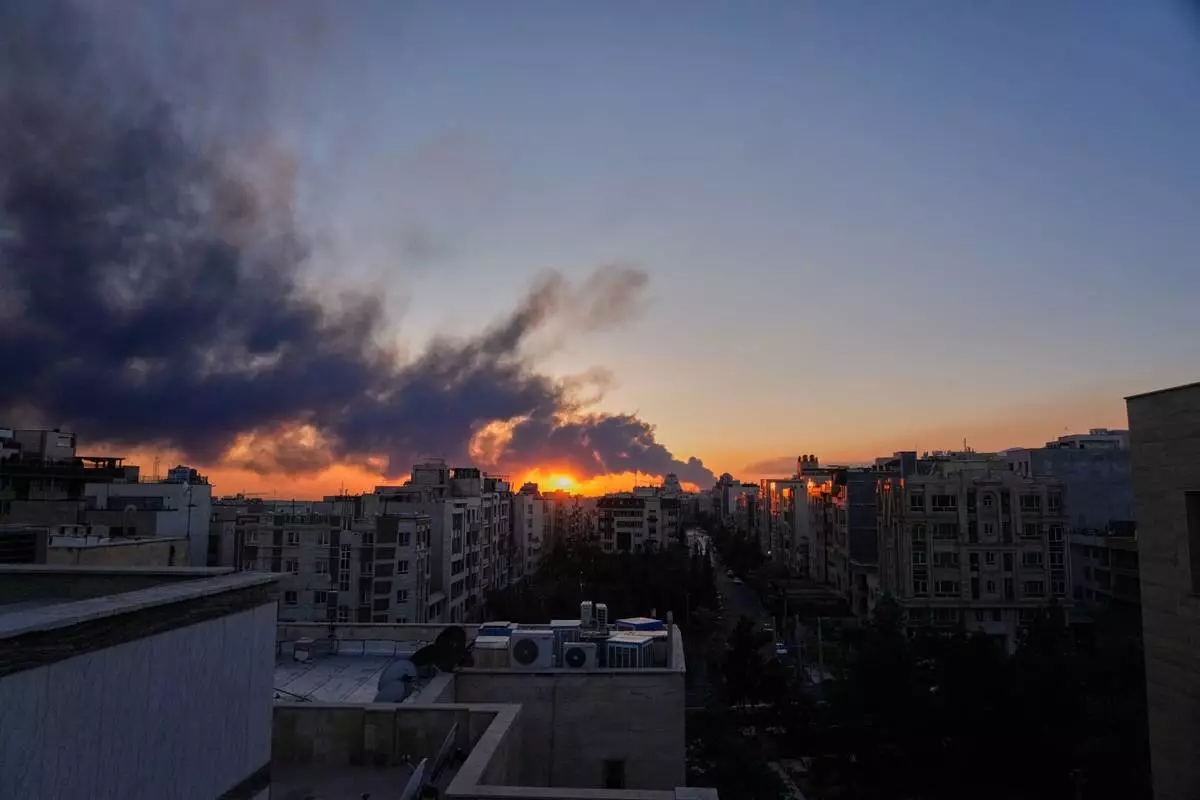
The sun sets behind a plume of smoke rising after a U.S.–Israeli military strike in Tehran, Iran, Tuesday, March 3, 2026. (AP Photo/Vahid Salemi)
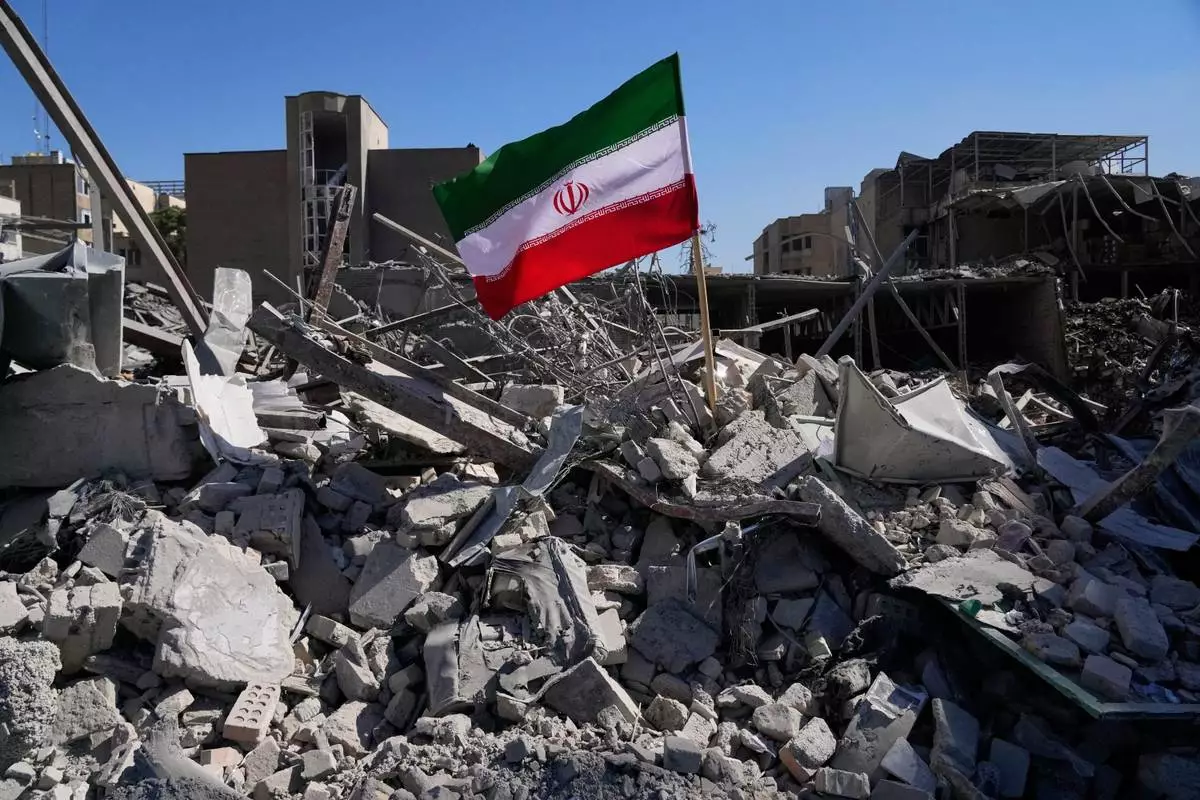
An Iranian flag is placed among the ruins of a police station struck Monday during the U.S.–Israeli military campaign in Tehran, Iran, Tuesday, March 3, 2026. (AP Photo/Vahid Salemi)
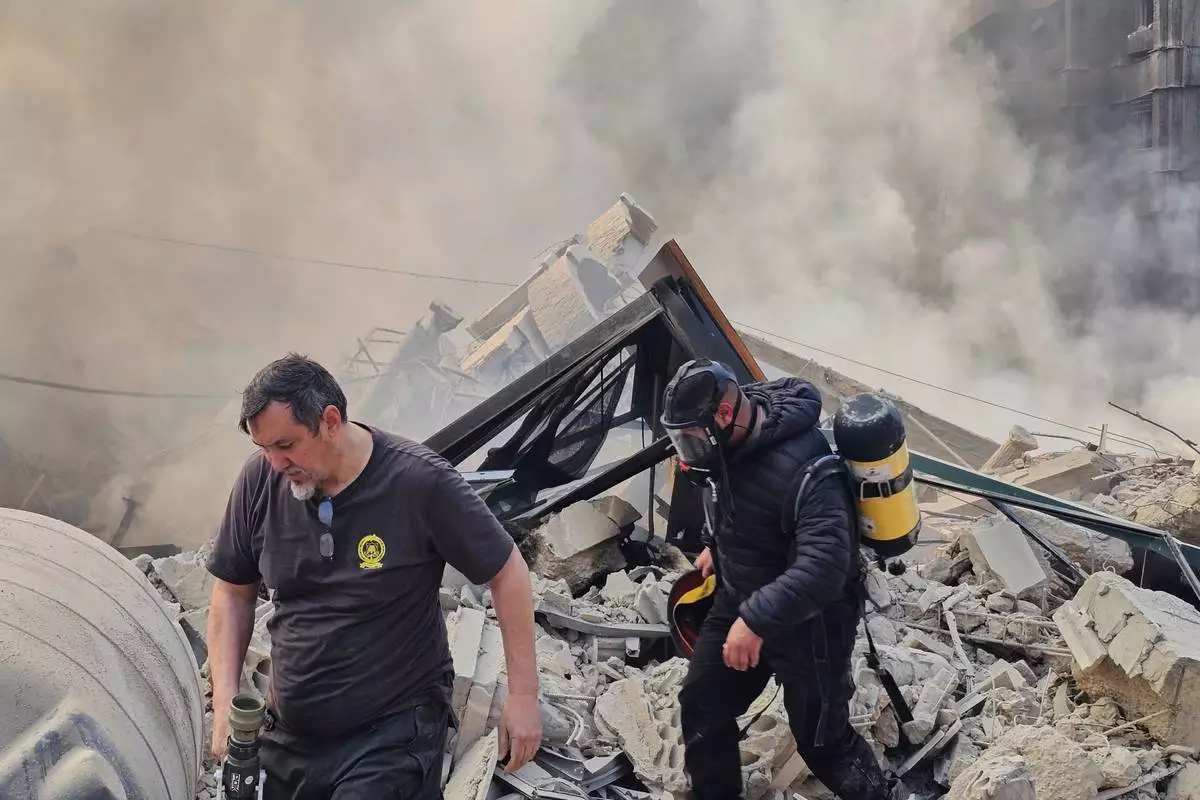
Firefighters inspect the rubble as smoke rises from a building hit by an Israeli airstrike in Dahiyeh, a southern suburb of Beirut, Lebanon, Tuesday, March 3, 2026. (AP Photo/Hassan Ammar)
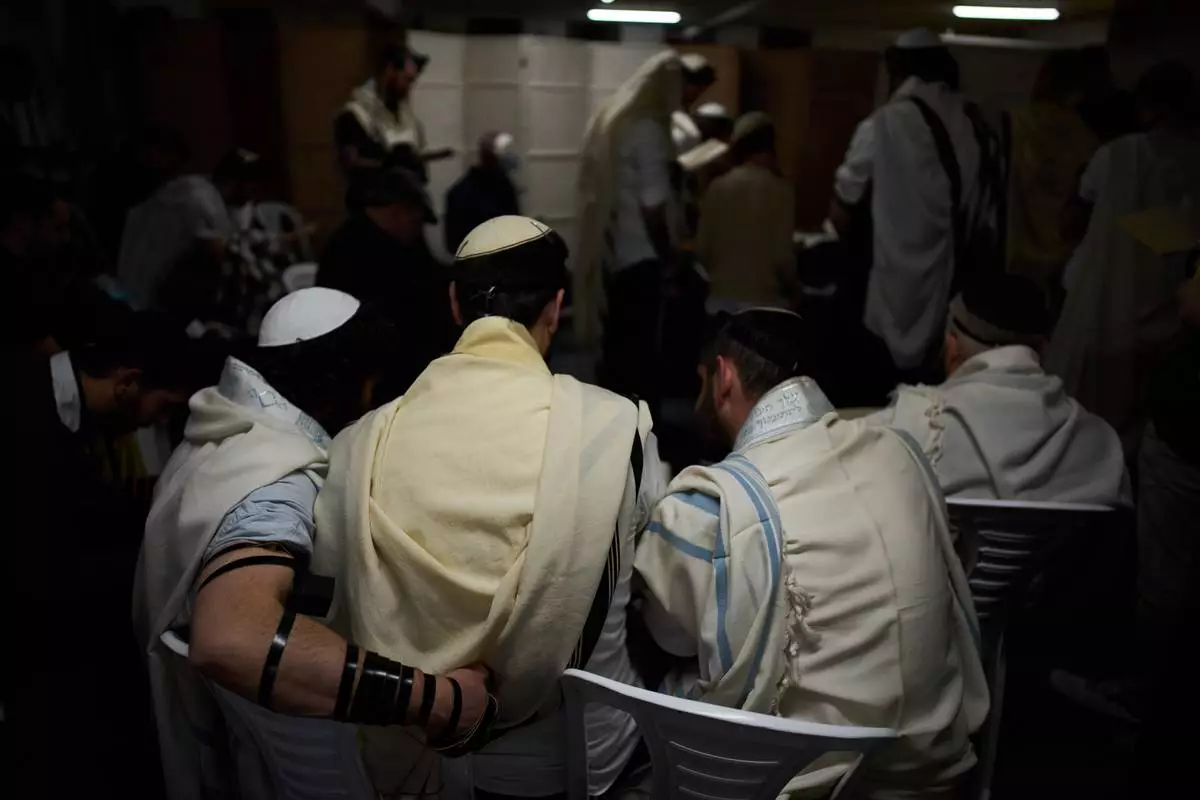
Jewish men covered in prayer shawls pray in an underground parking garage as a precaution against possible Iranian missile attacks, in Tel Aviv, Israel, Tuesday, March 3, 2026. (AP Photo/Oded Balilty)
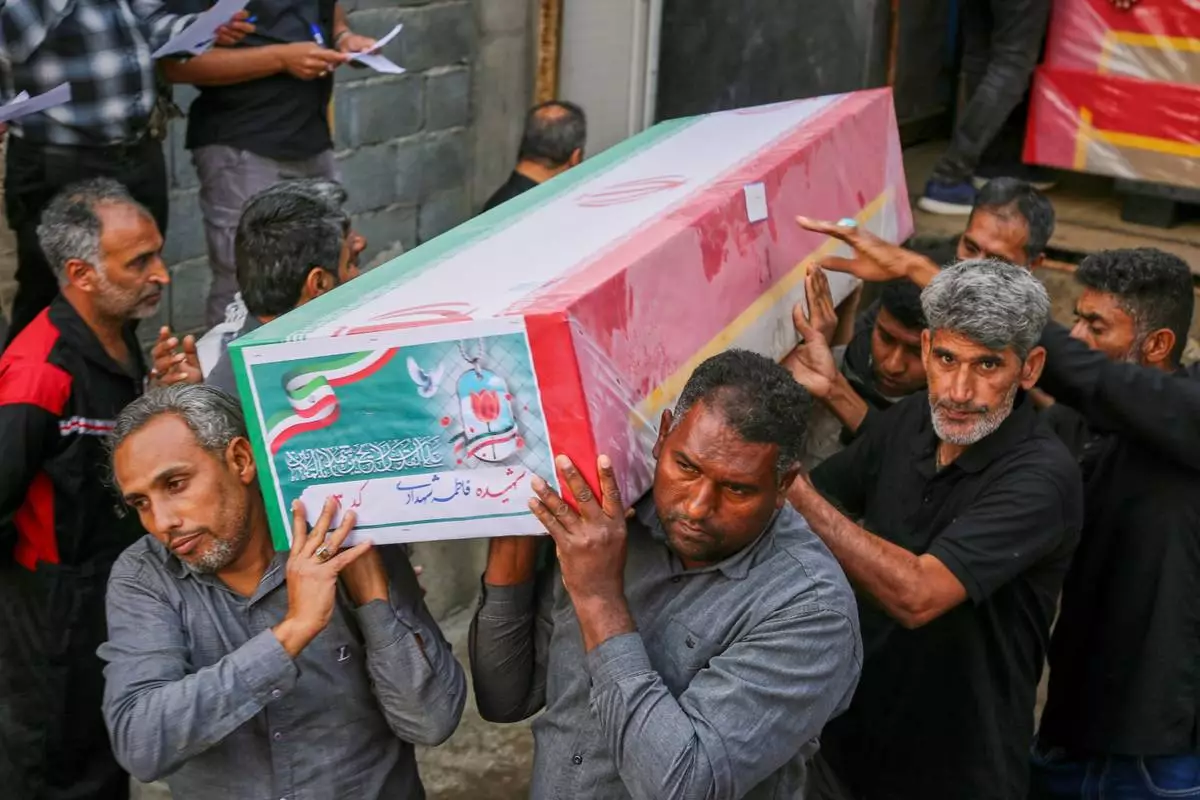
A coffin is carried during the funeral of mostly children killed in what Iranian officials said was an Israeli-U.S. strike Feb. 28 at a girls' elementary school in Minab, Iran, Tuesday, March 3, 2026. (Abbas Zakeri/Mehr News Agency via AP)
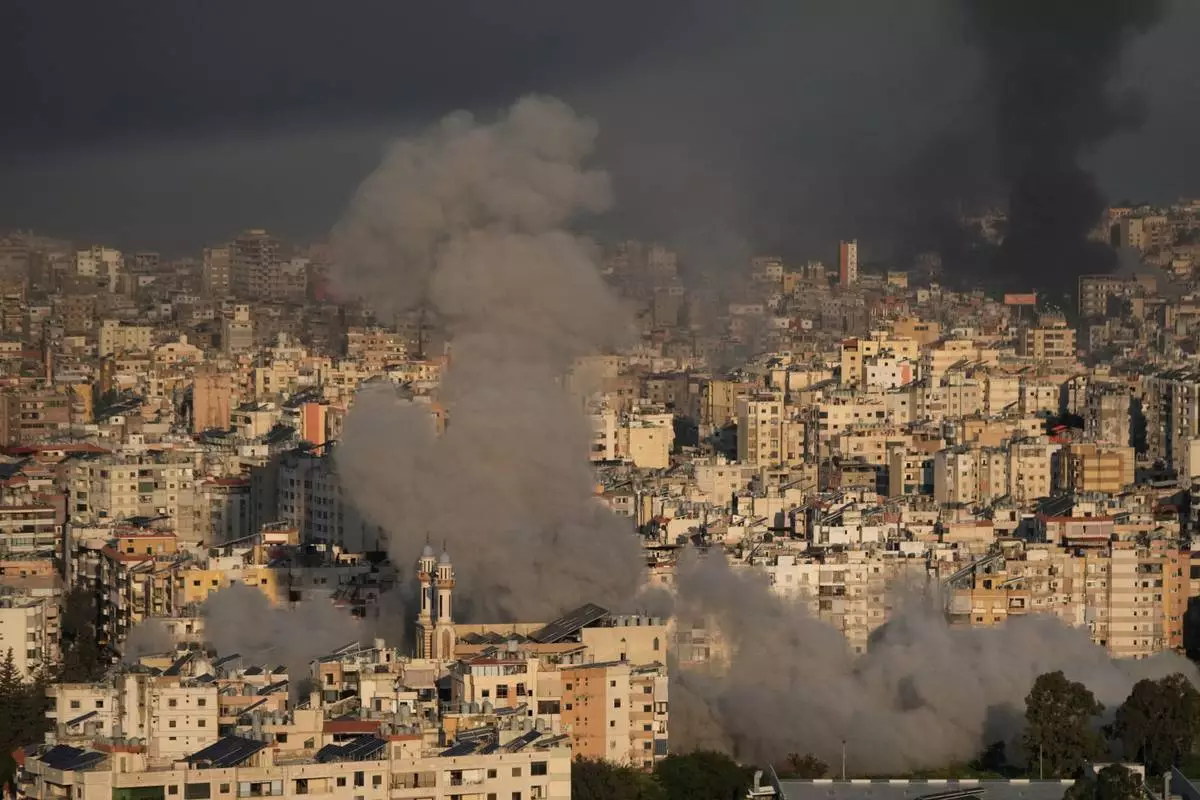
Smoke rises from Israeli airstrikes in Dahiyeh, a southern suburb of Beirut, Lebanon, Tuesday, March 3, 2026. (AP Photo/Hussein Malla)
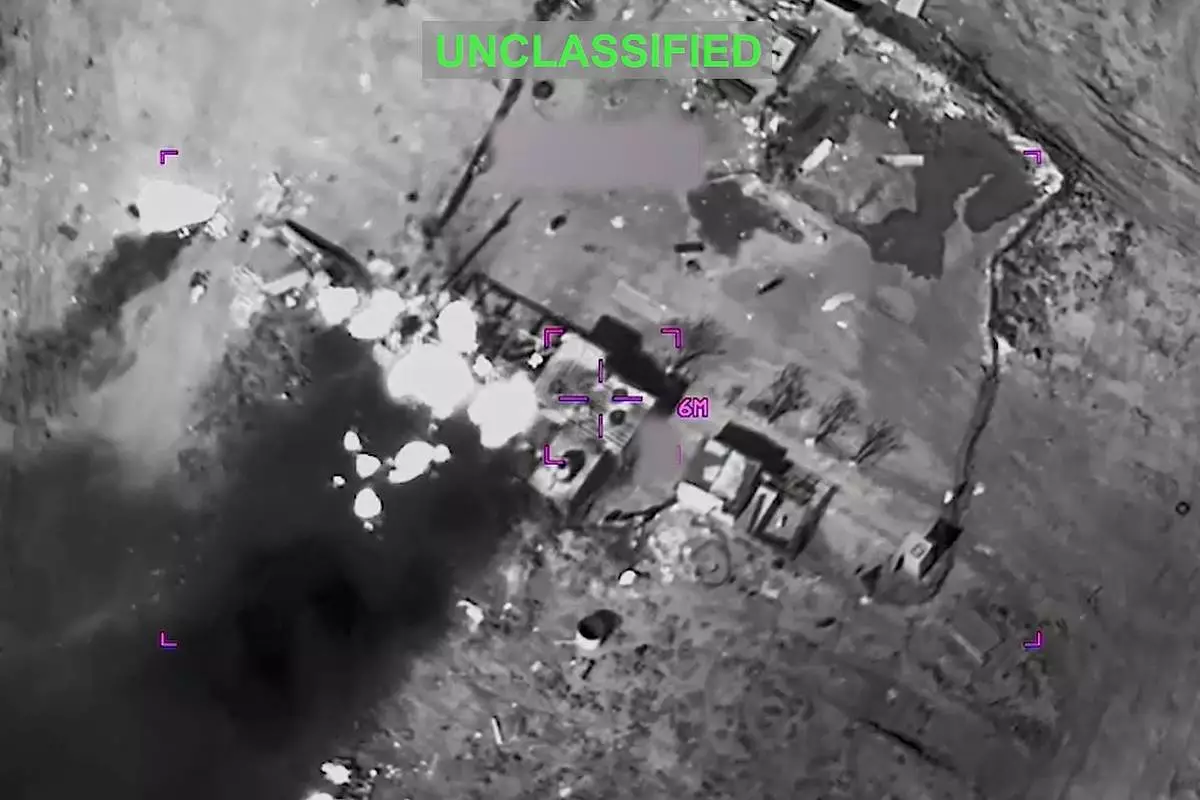
This partially redacted image from video provided by U.S. Central Command shows a complex of structures in Iran being struck by missiles fired by U.S. forces on Sunday, March 1, 2026. (U.S. Central Command via AP)
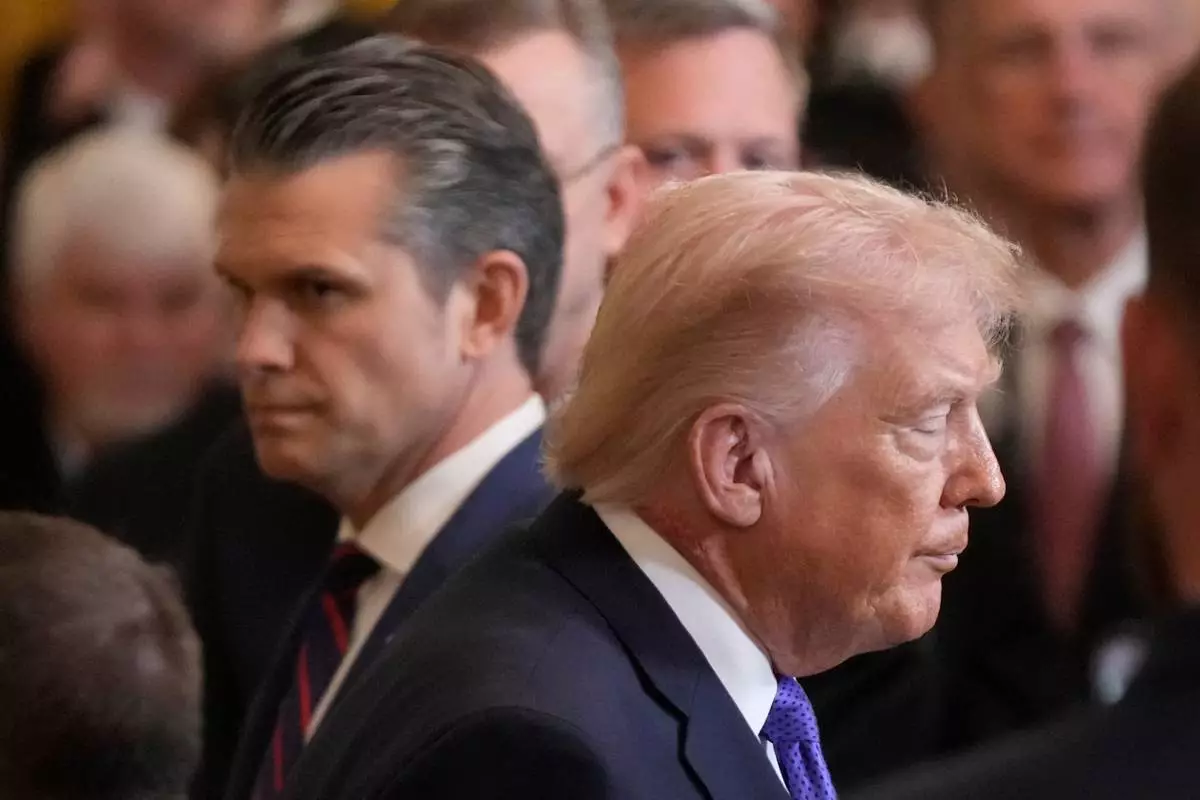
President Donald Trump walks past Defense Secretary Pete Hegseth as he exist the East Room of the White House following the Medal of Honor ceremony, Monday, March 2, 2026, in Washington. (AP Photo/Mark Schiefelbein)
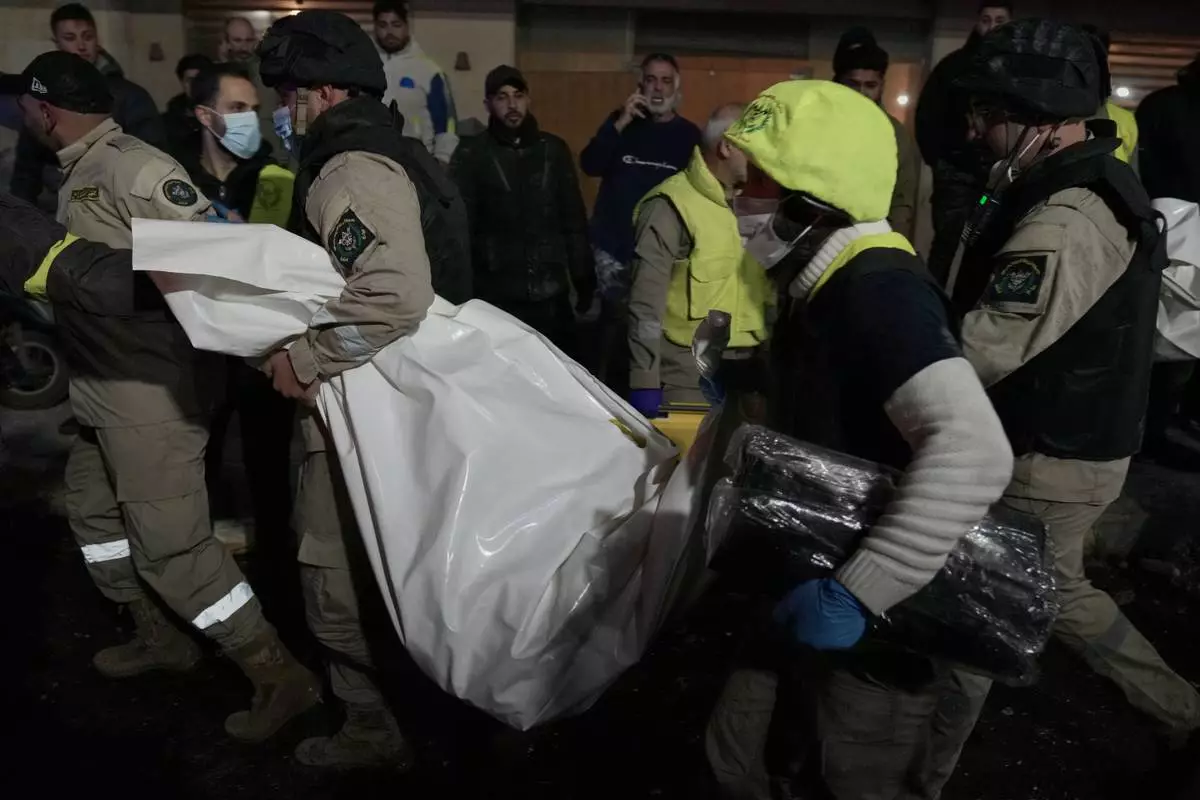
Rescue workers carry a dead body in a plastic bag from a building that was hit by Israeli strike, in Jnah neighborhood, south of Beirut, Lebanon, Monday, March 2, 2026. (AP Photo/Hussein Malla)
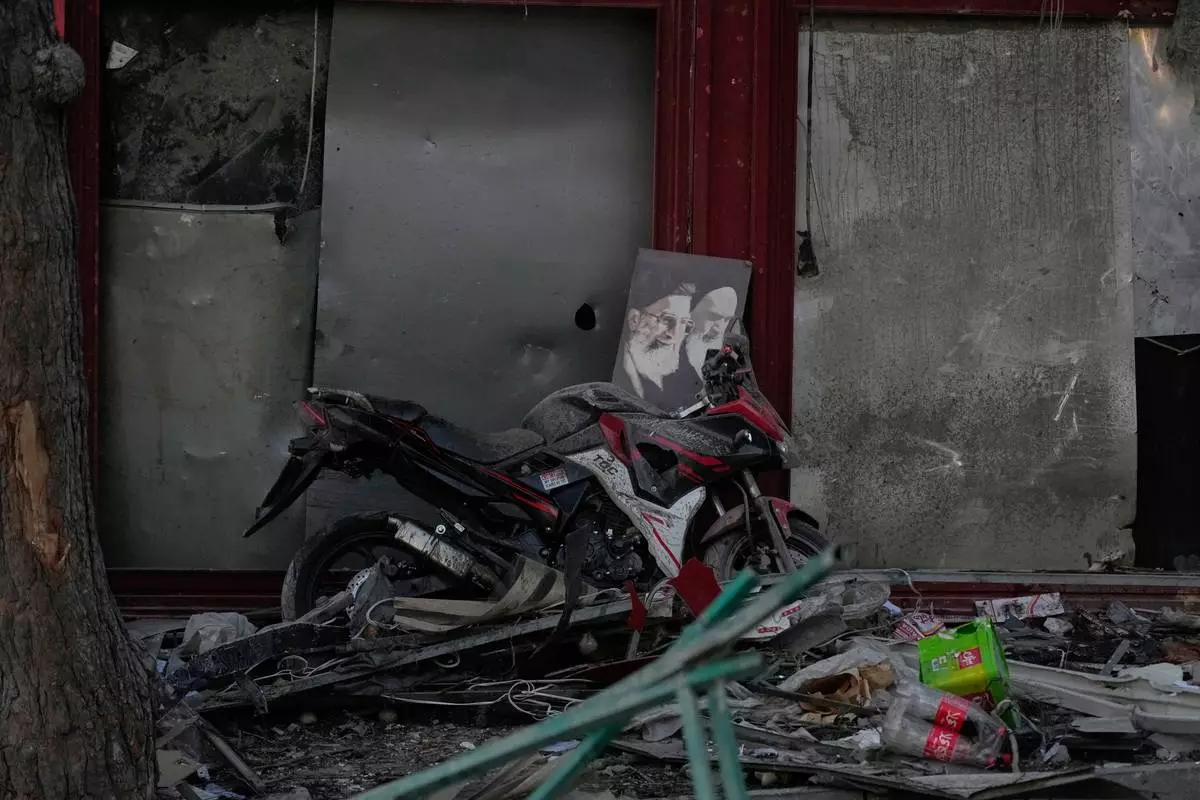
A poster of the late Supreme Leader Ayatollah Ali Khamenei, who was killed during the ongoing joint U.S.-Israeli military campaign, and the late Iranian Revolutionary founder Ayatollah Khomeini, right, lays on a motorcycle amid debris left by a strike in Tehran, Iran, Monday, March 2, 2026. (AP Photo/Vahid Salemi)
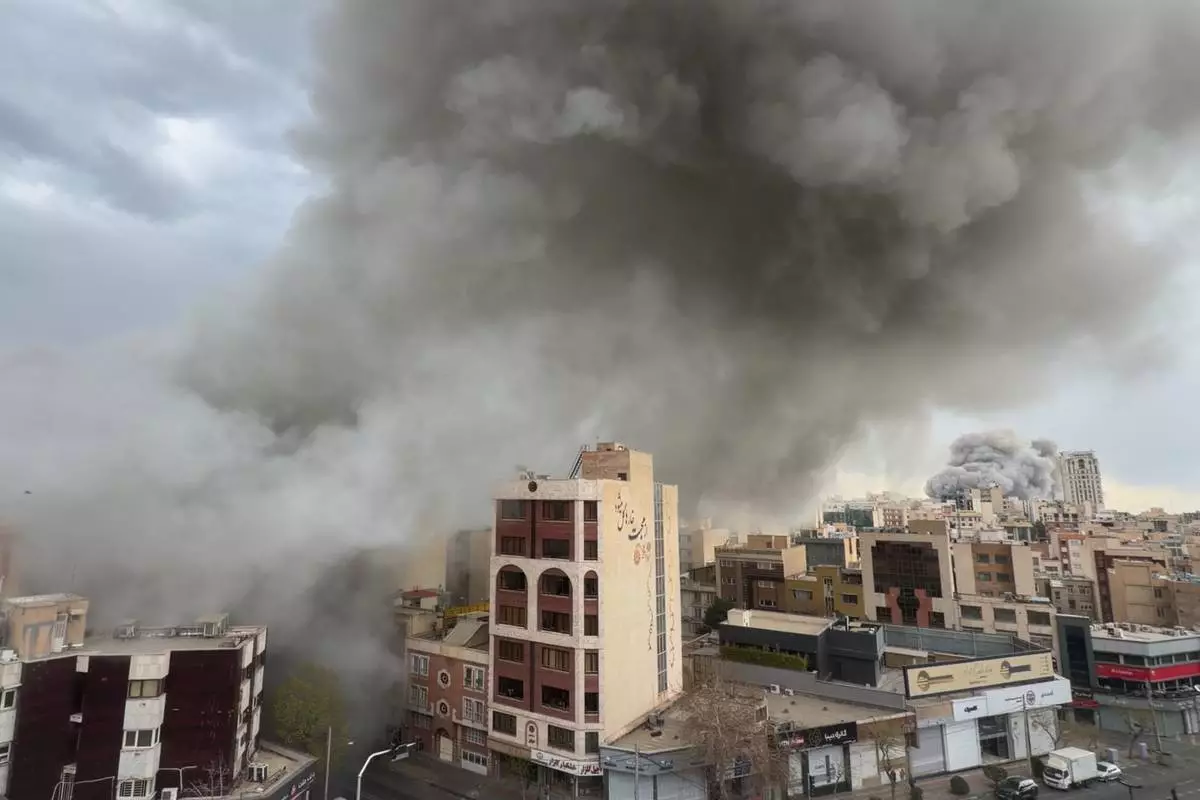
Plumes of smoke from two simultaneous strikes rise over Tehran, Iran, Monday, March 2, 2026. (AP Photo/Mohsen Ganji)