ROME (AP) — An independent researcher claimed on Wednesday that a marble bust of Christ in a Roman church is by Michelangelo, the latest purported attribution to the Renaissance genius who is one of the most imitated artists in the world.
The unverified claims by Valentina Salerno has unsettled Renaissance scholars, especially since a recent sketch of a foot that was attributed to Michelangelo, but disputed by some as a copy, recently fetched $27.2 million at a Christie’s auction.
Click to Gallery
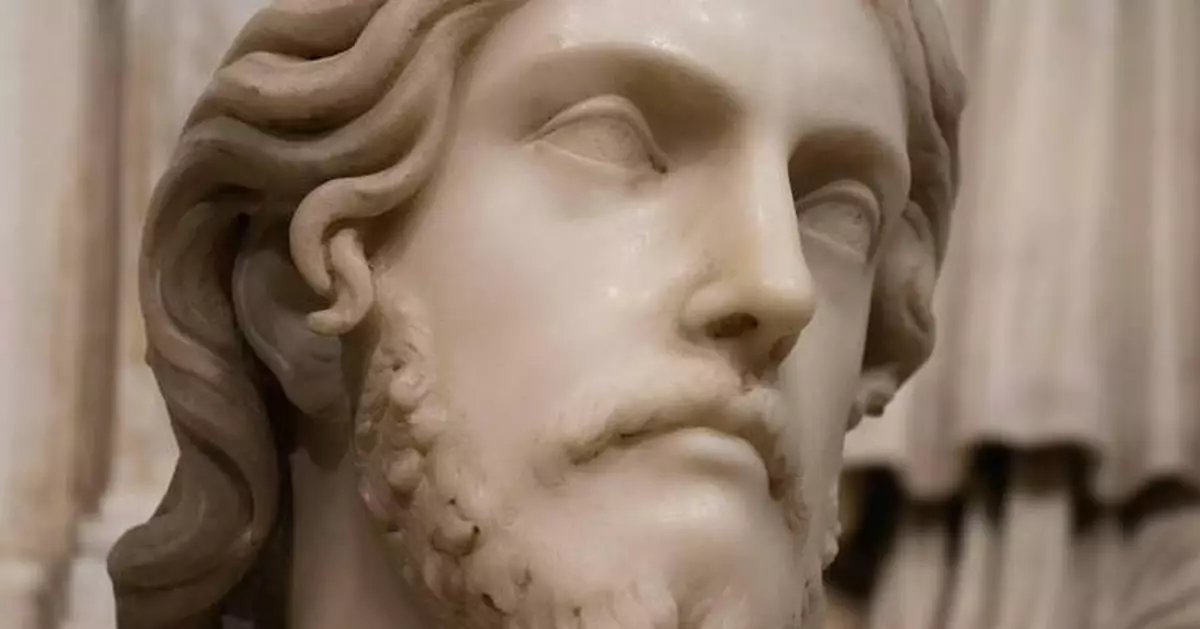
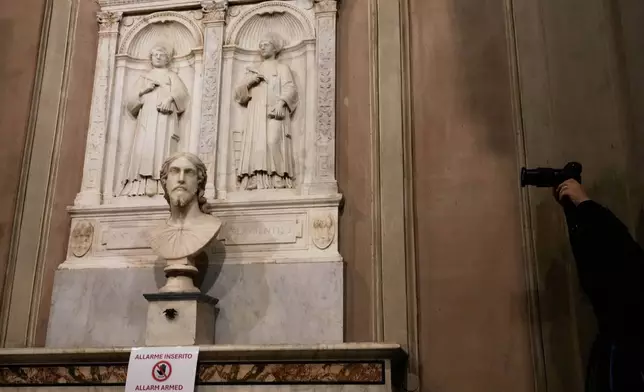
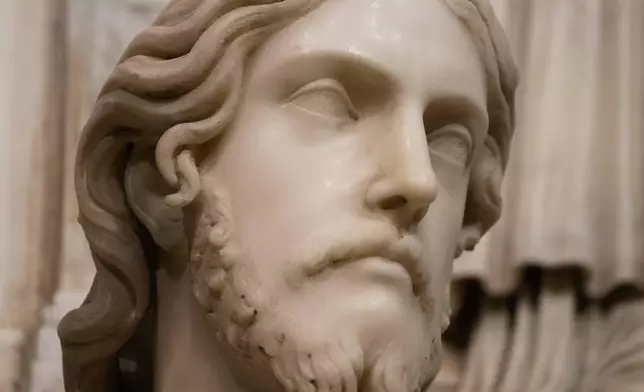
The sculpted bust inside the Basilica of Saint Agnes Outside the Walls, in Rome, Wednesday, March 4, 2026, which, in light of new studies by Italian researcher Valentina Salerno, may be reattributed to Michelangelo Buonarroti. (AP Photo/Gregorio Borgia)
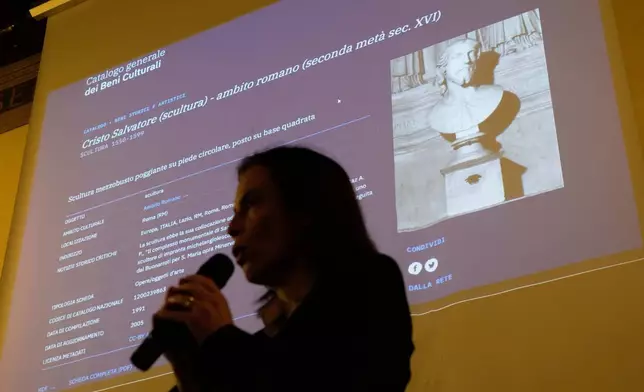
Italian researcher Valentina Salerno speaks to journalists in Rome, Wednesday, March 4, 2026, as the sculpted bust held inside the Basilica of Saint Agnes Outside the Walls in light of new studies, may be reattributed to Michelangelo Buonarroti. (AP Photo/Gregorio Borgia)
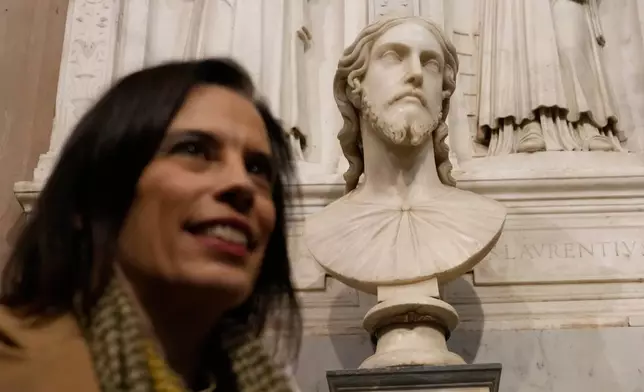
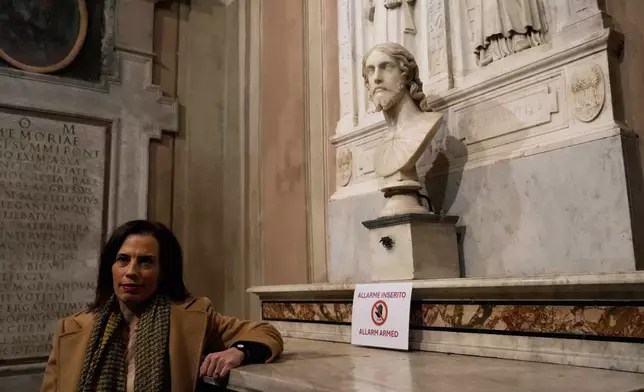
Italian researcher Valentina Salerno poses for photographers near the sculpted bust held inside the Basilica of Saint Agnes Outside the Walls, in Rome, Italy, Wednesday, March 4, 2026, which, in light of new studies, may be reattributed to Michelangelo Buonarroti. (AP Photo/Gregorio Borgia)
Italian researcher Valentina Salerno poses for photographers near the sculpted bust held inside the Basilica of Saint Agnes Outside the Walls, in Rome, Italy, Wednesday, March 4, 2026, which, in light of new studies, may be reattributed to Michelangelo Buonarroti. (AP Photo/Gregorio Borgia)
The sculpted bust inside the Basilica of Saint Agnes Outside the Walls, in Rome, Wednesday, March 4, 2026, which, in light of new studies by Italian researcher Valentina Salerno, may be reattributed to Michelangelo Buonarroti. (AP Photo/Gregorio Borgia)
Given the stakes — and Salerno’s suggestion that several other works can now be attributed to Michelangelo based on her documentary research — many leading experts have declined to comment.
Salerno has published her theory on the commercial website academia.edu, a non-peer reviewed social networking site academics use, and announced the first “rediscovery” at a news conference Wednesday.
The claims have drawn perhaps more attention than they normally would, given the Vatican seemed at least initially interested in them. Friday marks the 550th anniversary of Michelangelo’s birth and there are a number of exhibits, conferences and commemorations that are reviving attention about his genius and legacy.
The Culture Ministry was invited to participate in Salerno's news conference and didn’t, said the abbot of the order that runs the church, the Rev. Franco Bergamin. The Carabinieri’s art squad refused to weigh in on the authenticity of the statue, but said it was being protected. A laminated sign now graces the sculpture: “Alarm armed” it reads.
“We hope that this asset, which belongs to our cultural heritage regardless of whether it can be attributed to Michelangelo Buonarroti or not, is part of the national heritage that we are responsible for defending,” said Lt. Col. Paolo Salvatori.
Michelangelo Buonarroti, who lived from 1475-1564, created some of the most spectacular works of the Renaissance: the imposing statue of David in Florence and the delicate Pieta in St. Peter's Basilica, the Sistine Chapel ceiling and “The Last Judgment” fresco behind the chapel's altar. Salerno now says she has located another — a bust of Christ in the Basilica of Sant’Agnese Fuori le Mura, listed by Italy’s Culture Ministry as anonymous from the Roman school of the 16th century.
She is not the first to claim it. In 1996, Michelangelo expert William Wallace wrote an article in ArtNews about the well-documented history of wrongly attributing works to Michelangelo. It quoted the 19th century French author Stendhal as writing that at the Sant'Agnese church, “we noticed a head of the savior which I should swear is by Michelangelo.”
“Stendhal’s vow notwithstanding, the head has never been taken seriously, and nowadays would not even appear in a catalog raisonné under 'rejected attributions,'" Wallace wrote.
Salerno suggests that several documents in the first few hundred years after Michelangelo's death correctly attribute the work to the artist but that in 1984 a scholar debunked it, erroneously in her view, and it has remained wrongly attributed ever since.
“I have provided and will continue to provide — I hope, because the research continues — a whole series of documentary evidence on this," she said. “There will be experts in the field who will conduct their own investigations. To date, we can say that, according to the documents, the object is attributed to Michelangelo.”
She suggested that the bust was modeled on Michelangelo’s intimate friend, Tomaso De’ Cavalieriis, and was part of the great artistic inheritance Michelangelo left to his friends and students when he died. Salerno said she came to the conclusion tracing wills, inventories and notarized documents held in church and state archives and the archives of Roman confraternities to which Michelangelo and his students belonged.
Salerno, an actress and fiction author, has no college degree or expertise in art history. She has said she fell into the research “by chance” when she set out to write a novel about Michelangelo 10 years ago.
According to her research published on academia.edu, Salerno uncovered evidence of a secret “pact of indissolubility” among some of Michelangelo’s students and their heirs to keep Michelangelo’s works after he died. The pact included the previously unknown existence of a chamber, whose locks could only be opened with three keys, held by three different students, she said.
Salerno’s research caught the eye of Cardinal Mauro Gambetti, who runs St. Peter’s Basilica. He named Salerno and her mentor to a scientific committee formed in 2025 to discuss a possible Vatican exhibition to commemorate the anniversary of Michelangelo’s birth.
Nothing has yet come of the committee’s work. Its members have downplayed the significance of Salerno’s work or refused to discuss it.
Some expressed surprise at her inclusion in a committee made up of some of the leading Renaissance and Michelangelo scholars in the world, including Barbara Jatta, director of the Vatican Museums, Hugo Chapman, curator of Italian and French drawings, from 1400-1800, at the British Museum, and Wallace, professor of art history at Washington University in St. Louis.
Jatta distanced herself from the Vatican committee when contacted by The Associated Press, saying she was named to it but that it was Gambetti's project.
The British Museum declined to make Chapman available for comment. Gambetti’s office did not respond to a request. Other committee members declined to comment.
Wallace told the AP that Salerno’s methodology was sound and noted that there is a strong tradition in Europe of noncredentialed researchers doing solid work. He said he agreed with her thesis that Michelangelo didn’t destroy his works in a fire, a commonly held belief at the time that has been debunked for years by scholars. Rather, he concurred with Salerno that Michelangelo entrusted what remained of his works in his final years to his students to finish his projects.
But he disputes Salerno’s conclusion that a huge treasure of Michelangelo’s was secreted away — and is therefore ripe for new discovery — saying Michelangelo simply wasn’t producing that much in the final years of his life. Michelangelo was overseeing six architectural projects in Rome at the time. What drawings he made were sketches to resolve technical problems on the worksite, and likely don’t survive because they were merely “working drawings,” he said.
Wallace concurred that the existence of a secret chamber that can only be opened with three keys is new. But he said proper academic scholarship would call for Salerno to transcribe the documents and allow for a peer-review process to take place, something Salerno has said she will do.
Italy is no stranger to claims of new discoveries about old artists, with fakes, frauds and new “discoveries” of Modiglianis and other artists a regular occurrence in art history circles.
“I think I counted up 45 attributions to Michelangelo since 2000, and not one of which you can remember or mention, but every single one arrived with the headline, ‘The greatest discovery of the time,’ (or) ‘It will change everything we think about Michelangelo,’” Wallace said. “And then five years later, we can’t even remember what it was.”
Associated Press religion coverage receives support through the AP’s collaboration with The Conversation US, with funding from Lilly Endowment Inc. The AP is solely responsible for this content.
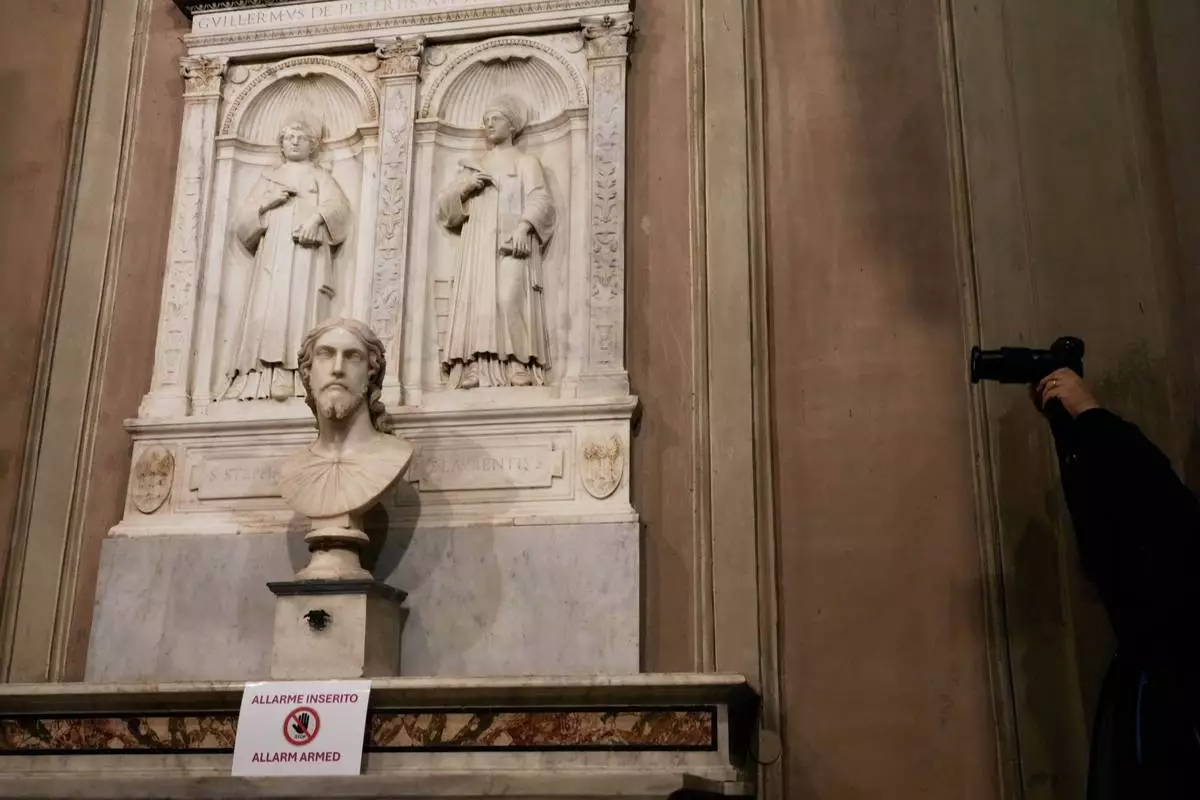
The sculpted bust inside the Basilica of Saint Agnes Outside the Walls, in Rome, Wednesday, March 4, 2026, which, in light of new studies by Italian researcher Valentina Salerno, may be reattributed to Michelangelo Buonarroti. (AP Photo/Gregorio Borgia)
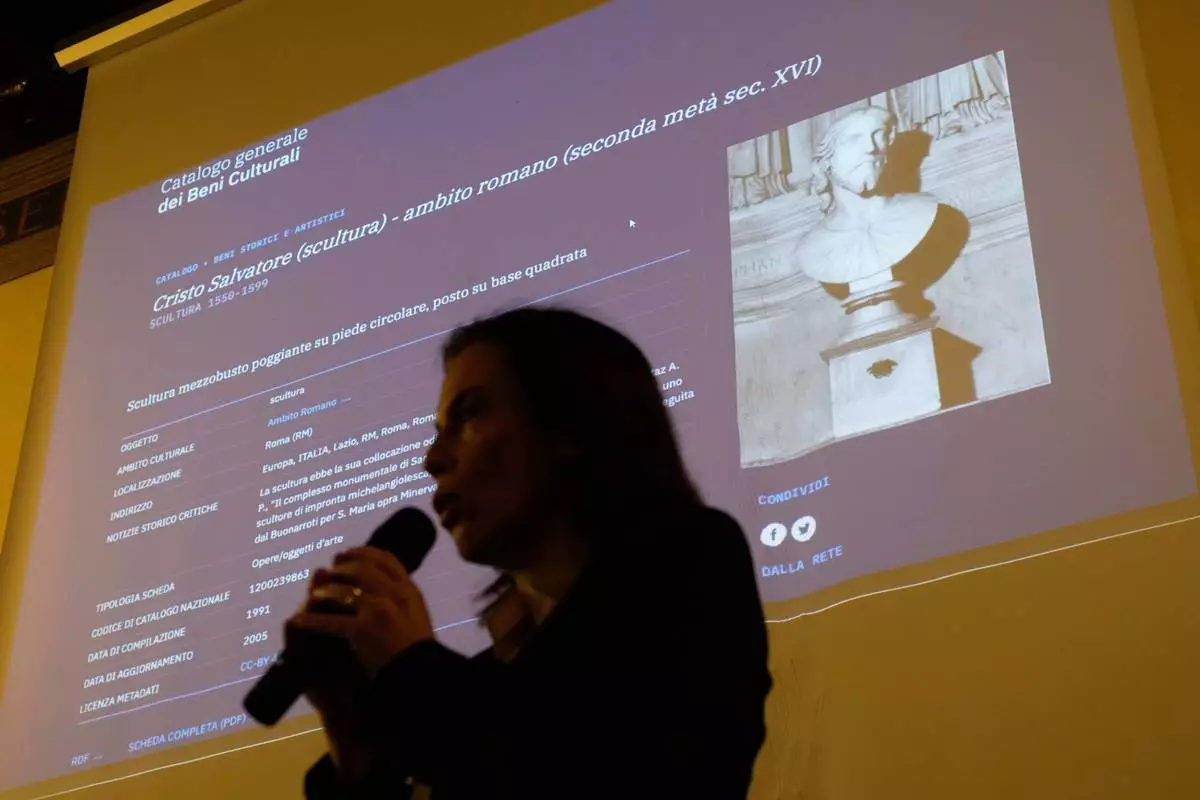
Italian researcher Valentina Salerno speaks to journalists in Rome, Wednesday, March 4, 2026, as the sculpted bust held inside the Basilica of Saint Agnes Outside the Walls in light of new studies, may be reattributed to Michelangelo Buonarroti. (AP Photo/Gregorio Borgia)
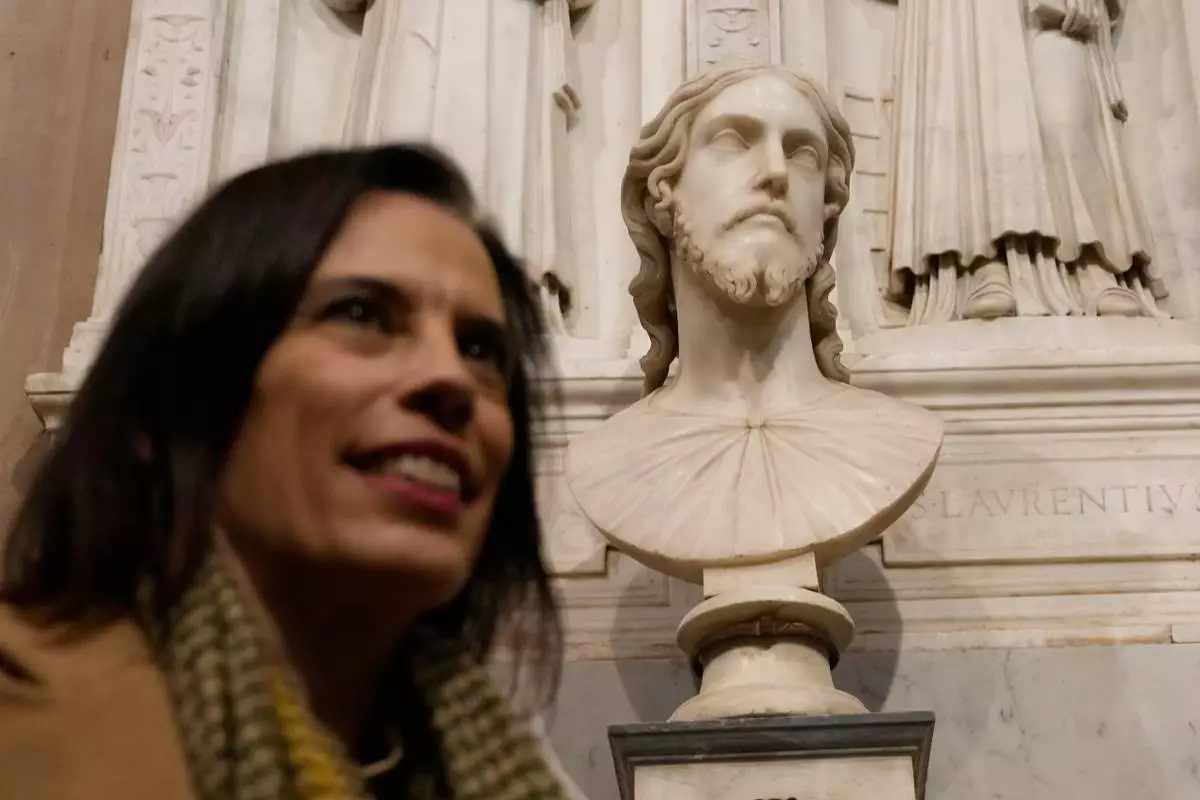
Italian researcher Valentina Salerno poses for photographers near the sculpted bust held inside the Basilica of Saint Agnes Outside the Walls, in Rome, Italy, Wednesday, March 4, 2026, which, in light of new studies, may be reattributed to Michelangelo Buonarroti. (AP Photo/Gregorio Borgia)
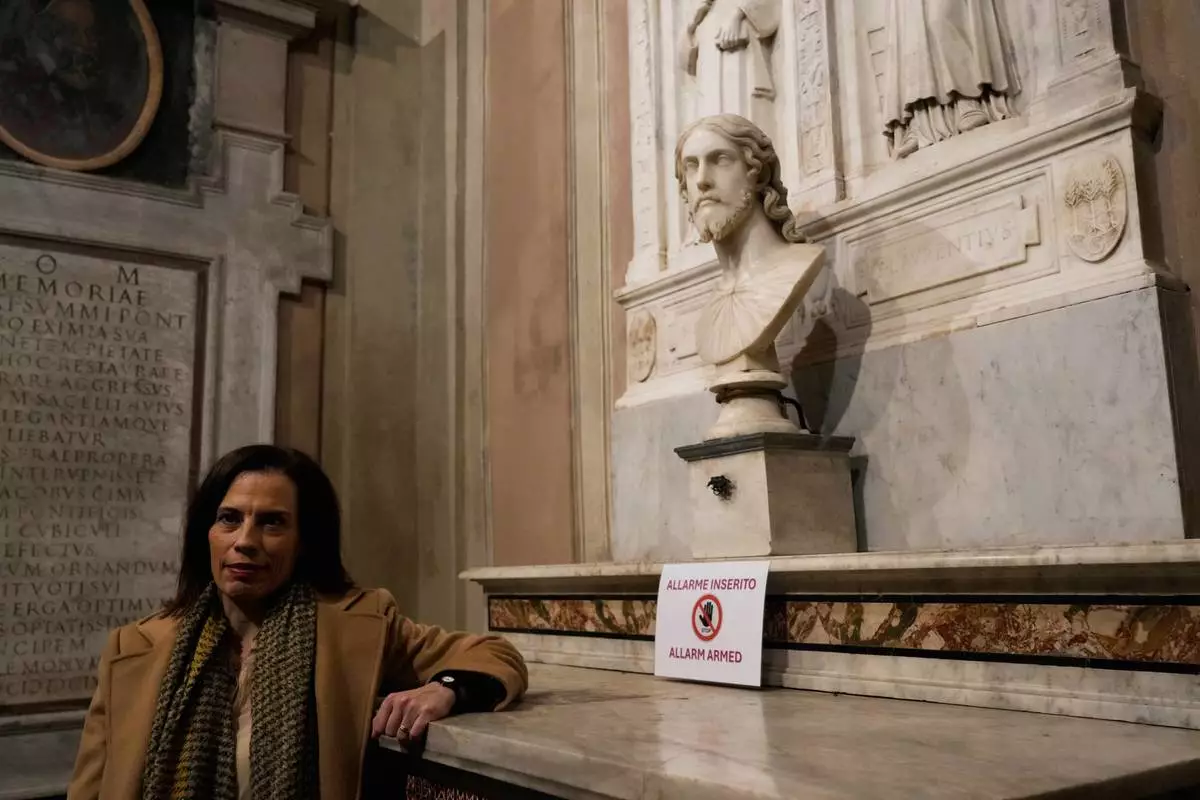
Italian researcher Valentina Salerno poses for photographers near the sculpted bust held inside the Basilica of Saint Agnes Outside the Walls, in Rome, Italy, Wednesday, March 4, 2026, which, in light of new studies, may be reattributed to Michelangelo Buonarroti. (AP Photo/Gregorio Borgia)
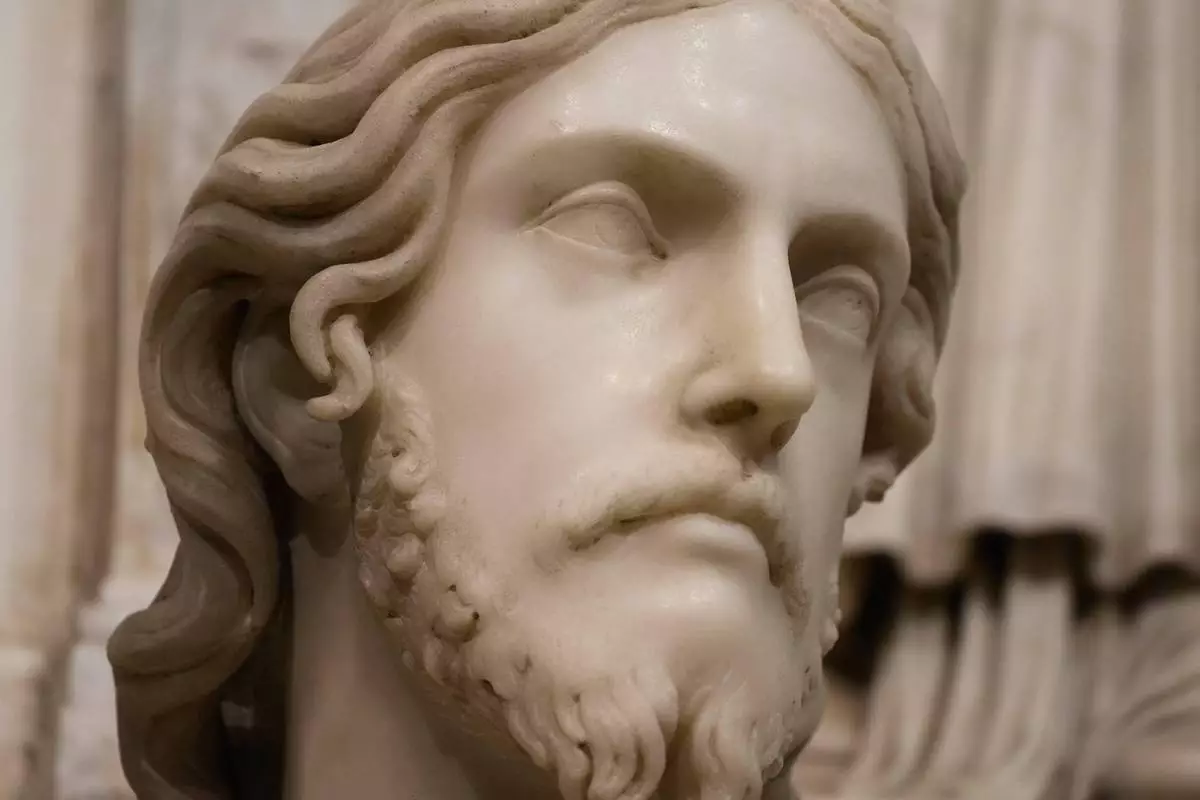
The sculpted bust inside the Basilica of Saint Agnes Outside the Walls, in Rome, Wednesday, March 4, 2026, which, in light of new studies by Italian researcher Valentina Salerno, may be reattributed to Michelangelo Buonarroti. (AP Photo/Gregorio Borgia)
TENERIFE, Canary Islands (AP) — The first passengers to be evacuated from the hantavirus-hit cruise ship that is off Spain's Canary Islands arrived Sunday afternoon in Madrid, where they are being taken to a military hospital.
Spanish nationals were the first to leave the MV Hondius, which remains anchored off Tenerife, the largest island in the Spanish archipelago off West Africa's coast. The ship arrived early the same morning.
Planes carrying French and Canadian nationals left Tenerife after the Spanish plane. A Dutch plane was due to depart with Germans, Belgians and Greeks, while an American plane was expected to reach Tenerife around 5:30 p.m. local time (1630 GMT), according to FlightRadar 24, which shows live aircraft flight tracking details.
Maria van Kerkhove, the World Health Organization's top epidemiologist, said that a number of other flights were expected to arrive Sunday, including ones to repatriate passengers to Turkey, the United Kingdom and Ireland.
None of the more than 140 people on the Hondius has shown symptoms of the virus, officials from Spain's health ministry, WHO and cruise company Oceanwide Expeditions said.
WHO Director-General Tedros Adhanom Ghebreyesus sought to reassure the public, repeating on Sunday that the risk for the general public from the outbreak is low.
Even so, those disembarking and personnel working at the port of Granadilla in Tenerife wore protective gear during the evacuation process, including face masks, hazmat suits and respirators. Video obtained by The Associated Press showed passengers on the tarmac donning similar suits and being sprayed down with disinfectant.
A WHO spokesperson didn't immediately respond to a question from the AP about why such security protocols were being taken, despite officials' repeated reassurances about the low general risk from the virus.
Passengers and some crew members from more than 20 nationalities on board will be evacuated throughout Sunday into Monday.
After reaching Madrid, those evacuated on the first plane will be under quarantine, Spanish health authorities say. Only the 14 Spanish nationals on board will quarantine in the country.
Authorities have said that the passengers and crew members disembarking will be checked for symptoms, have no contact with the local population and will only be taken off the ship once evacuation flights are ready to fly them to their destinations. Tedros and Spain’s health and interior ministers are supervising the operation in Tenerife.
Pope Leo XIV on Sunday thanked the Canary Islands for allowing the arrival of the Hondius.
Hantavirus usually spreads when people inhale contaminated residue of rodent droppings and isn’t easily transmitted between people. But the Andes virus detected in the cruise ship outbreak may be able to spread between people in rare cases. Symptoms usually show between one and eight weeks after exposure.
Three people have died since the outbreak, and five passengers who left the ship are infected with hantavirus, which can cause life-threatening illness.
Passengers and crew members disembarking are leaving behind their luggage, and are allowed to take only a small bag with essential items, a cellphone, a charger, and documentation.
Some crew, as well as the body of a passenger who died on board, will remain on the ship, which will sail on to Rotterdam, Netherlands, where it will undergo disinfection, Spanish authorities said.
The expected sailing time to Rotterdam is around five days, the cruise company said.
The United Kingdom will send planes to evacuate its citizens. Americans on board will be quarantined at a medical center in Nebraska.
Twenty-nine people will be on board the Dutch charter flight, including Dutch nationals and people of other nationalities, the Dutch Foreign Ministry said.
The five French passengers being repatriated Sunday will be hospitalized for 72 hours for monitoring, after which they will quarantine at home for 45 days, France's Foreign Ministry said.
U.K. passengers and crew will be hospitalized for observation once they are flown home, British authorities say.
Australia is sending a plane, expected to arrive on Monday, to evacuate its nationals and those from nearby countries such as New Zealand and unspecified Asian countries, Spanish Health Minister Mónica García said. Its plane will be the last to leave Tenerife, she said.
Norway has sent an ambulance plane to Tenerife with personnel trained to transport patients with high-risk infections, its Directorate for Civil Protection told public broadcaster NRK.
The ambulance plane is owned by the European Union, but operated by Norway.
British Army medics have parachuted onto the remote South Atlantic territory of Tristan da Cunha, where one of the 221 residents has a suspected case of hantavirus.
The patient was a passenger on the MV Hondius and disembarked last month.
The U.K. defense ministry says a team of six paratroopers and two medical clinicians jumped Saturday from a Royal Air Force transport plane, which also dropped oxygen and medical equipment.
Tristan da Cunha is Britain’s most remote inhabited overseas territory, about 1,500 miles (2,400 kilometers) from the nearest inhabited island, St. Helena. The group of volcanic islands has no airstrip and is usually accessible only by boat on a six-day voyage from Cape Town, South Africa.
Meanwhile, a Spanish woman in the southeastern province of Alicante suspected of being infected tested negative for hantavirus, Spanish health authorities said Saturday.
The woman was a passenger on the same flight as the Dutch woman who died in Johannesburg after traveling on the cruise ship.
Suman Naishadham reported from Madrid. Angela Charlton in Paris, Jill Lawless in London, and Kirsten Grieshaber in Berlin, contributed to this report.
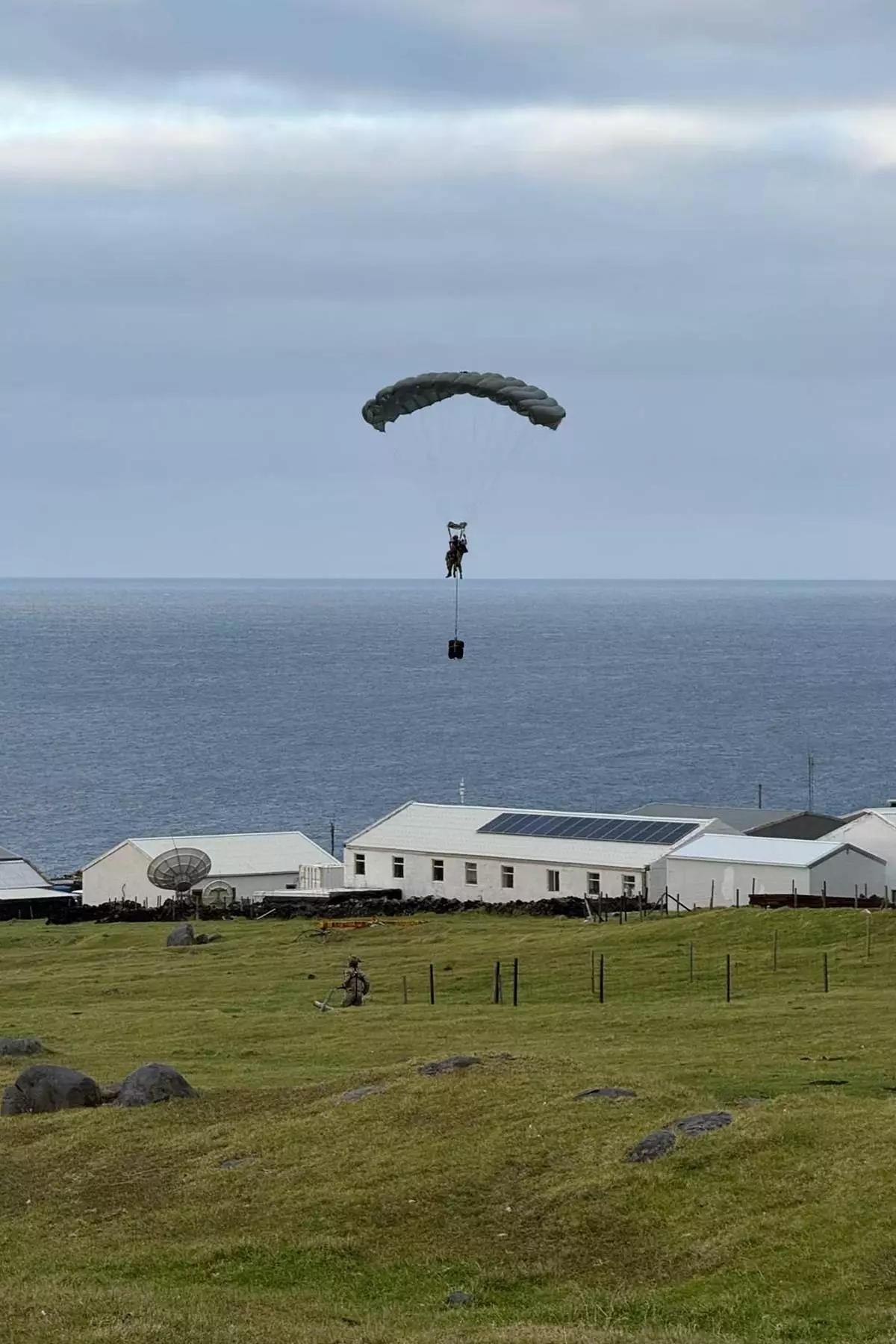
British Army medics parachute onto the south Atlantic territory of Tristan da Cunha, where one of the 221 residents has a suspected case of hanatavirus, Saturday, May 9, 2026. (British Ministry of Defence via AP)
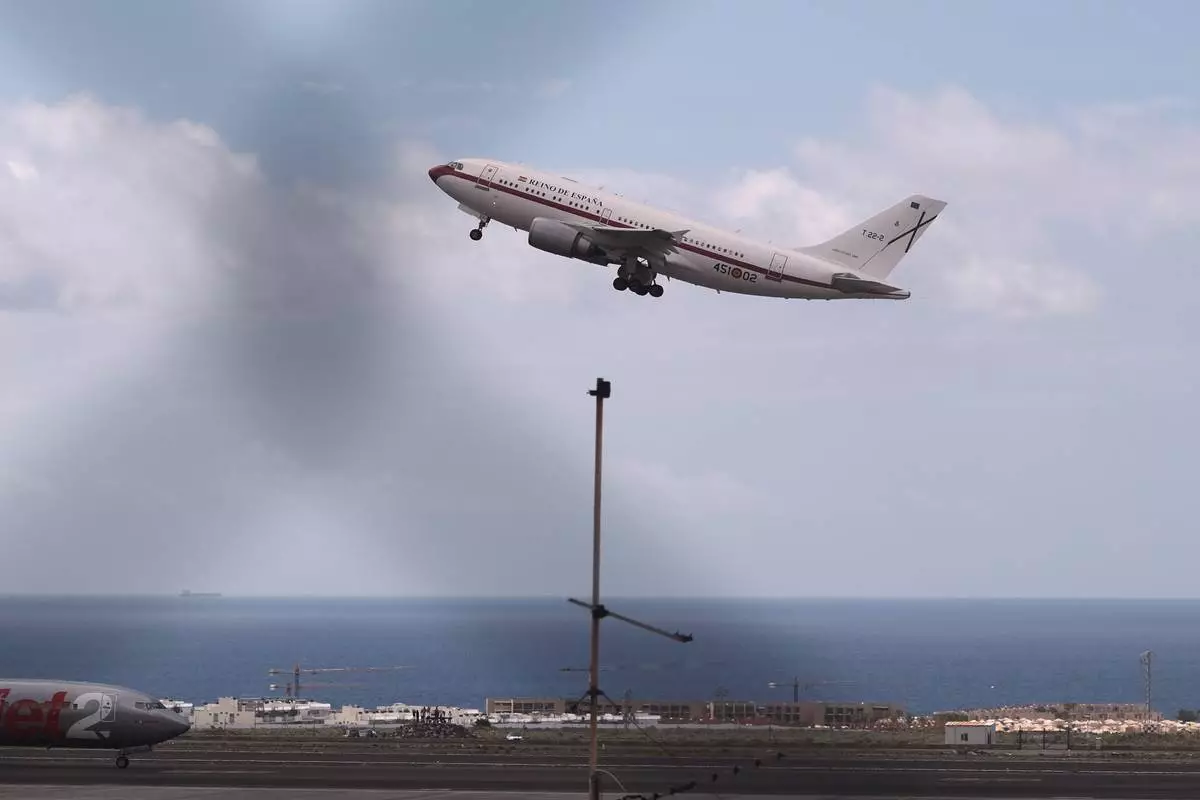
A Spanish government plane takes off with passengers from the hantavirus-stricken cruise ship MV Hondius at the airport in Tenerife, Canary Islands, Spain, Sunday, May 10, 2026. (AP Photo/Arturo Rodriguez)
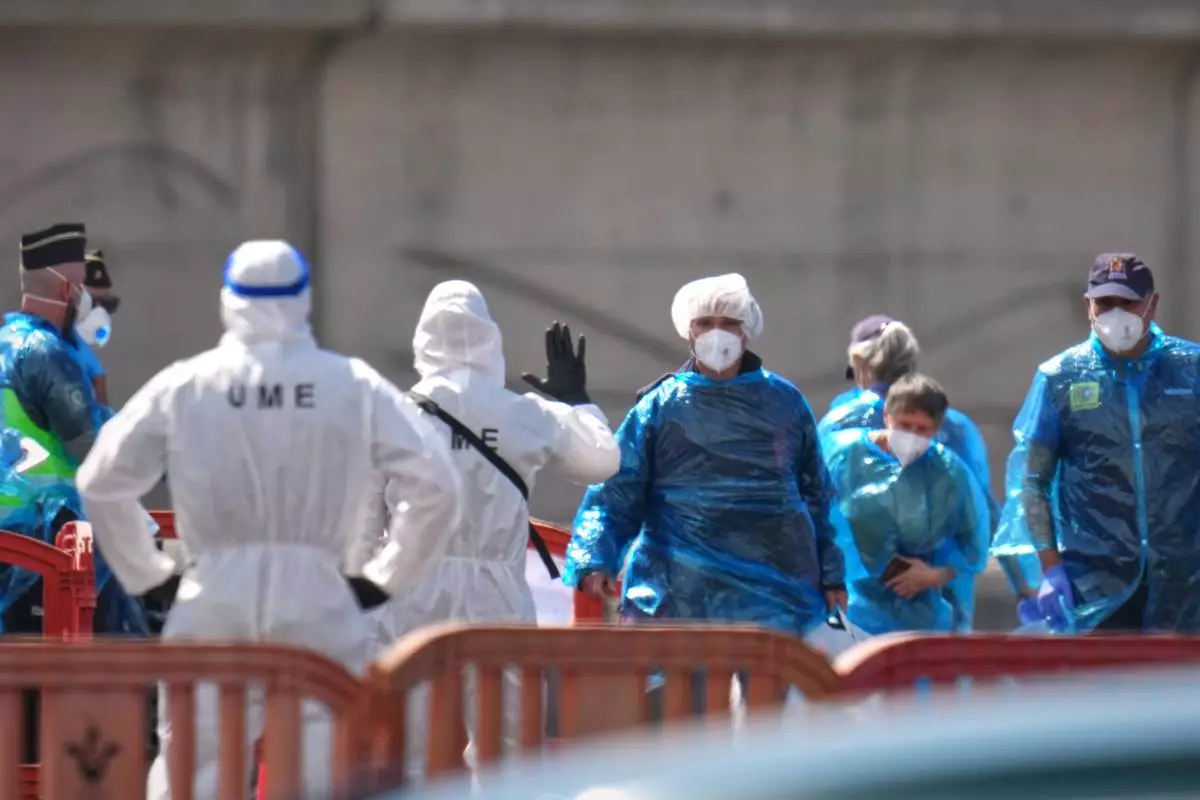
Passengers are disembarked from the hantavirus-stricken cruise ship MV Hondius at the port of Granadilla in Tenerife, Canary Islands, Spain, Sunday, May 10, 2026. (AP Photo/Manu Fernandez)
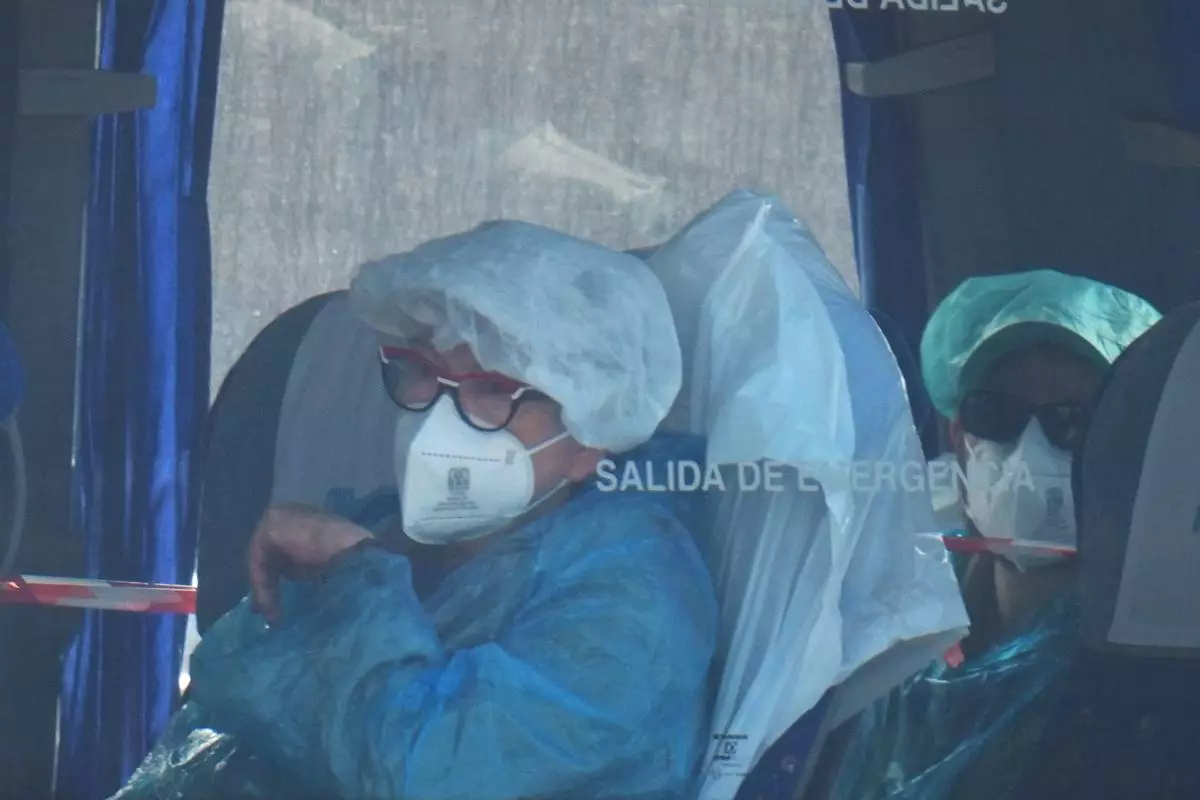
Passengers sit inside a bus after being disembarked from the hantavirus-stricken cruise ship MV Hondius at the port of Granadilla in Tenerife, Canary Islands, Spain, Sunday, May 10, 2026. (AP Photo/Manu Fernandez)
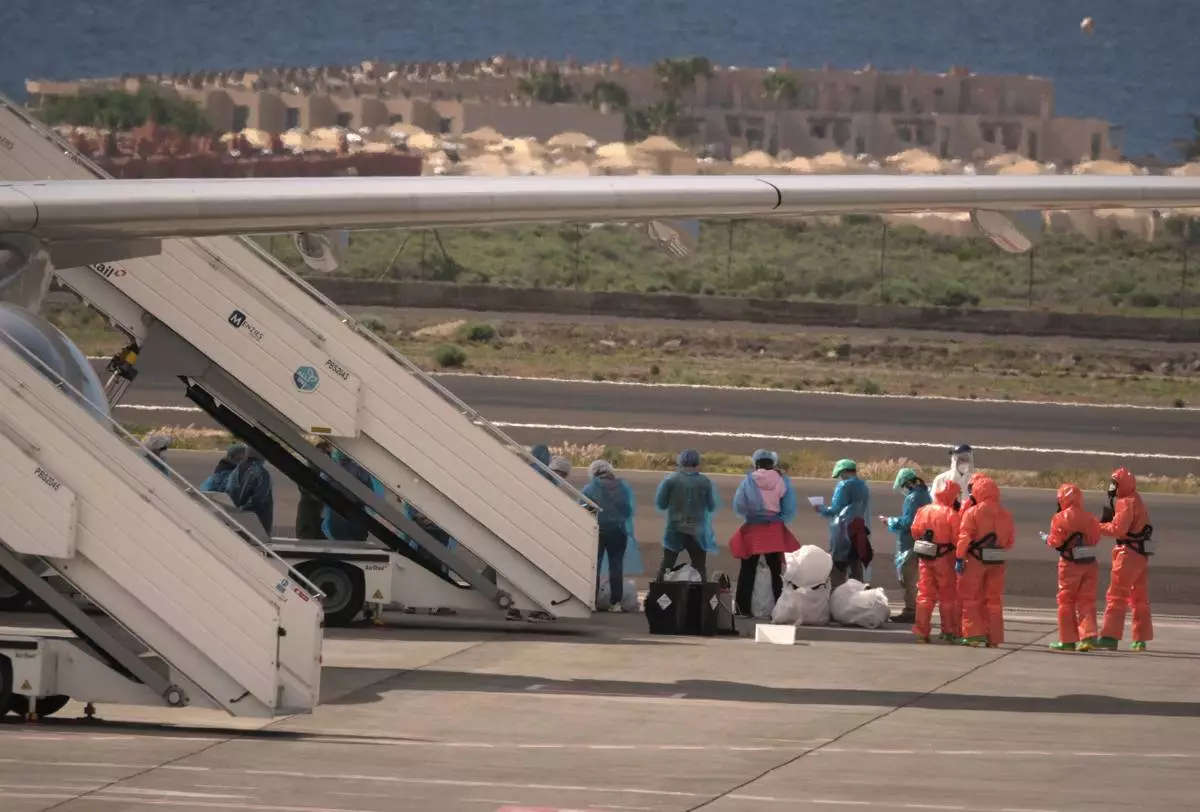
Passengers stand next to a Spanish government plane after disembarking from the hantavirus-stricken cruise ship MV Hondius at the airport in Tenerife, Canary Islands, Spain, Sunday, May 10, 2026. (AP Photo/Arturo Rodriguez)
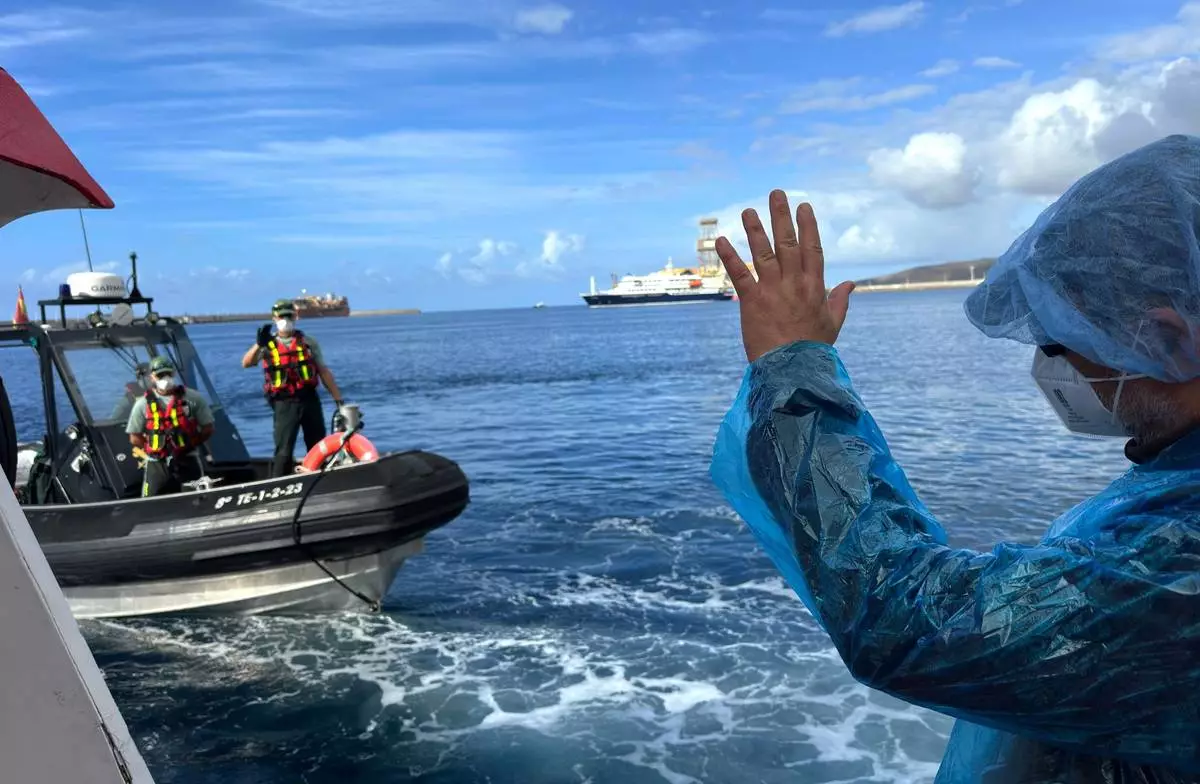
A passenger waves to the Guardia Civil officers as they are disembarked from the hantavirus-stricken cruise ship MV Hondius at the port of Granadilla in Tenerife, Canary Islands, Spain, Sunday, May 10, 2026. (AP Photo)
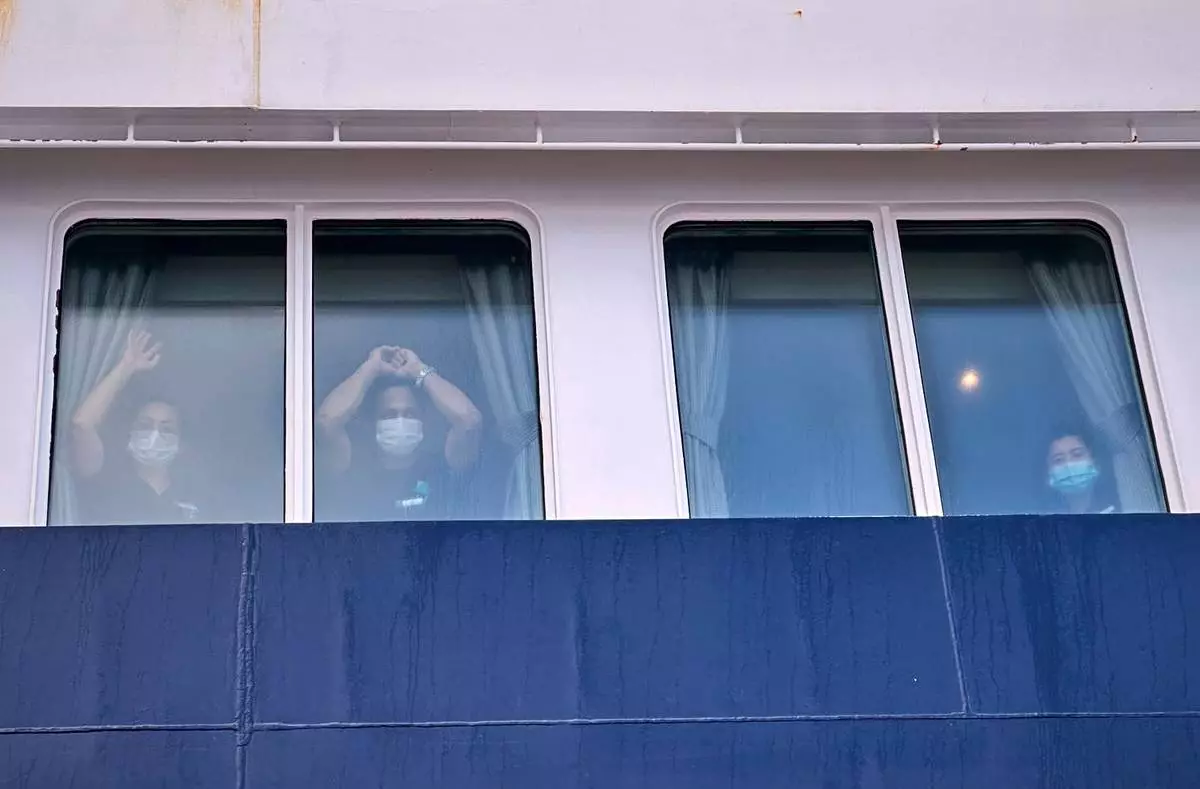
Passengers watch as others are disembarked from the hantavirus-stricken cruise ship MV Hondius at the port of Granadilla in Tenerife, Canary Islands, Spain, Sunday, May 10, 2026. (AP Photo)
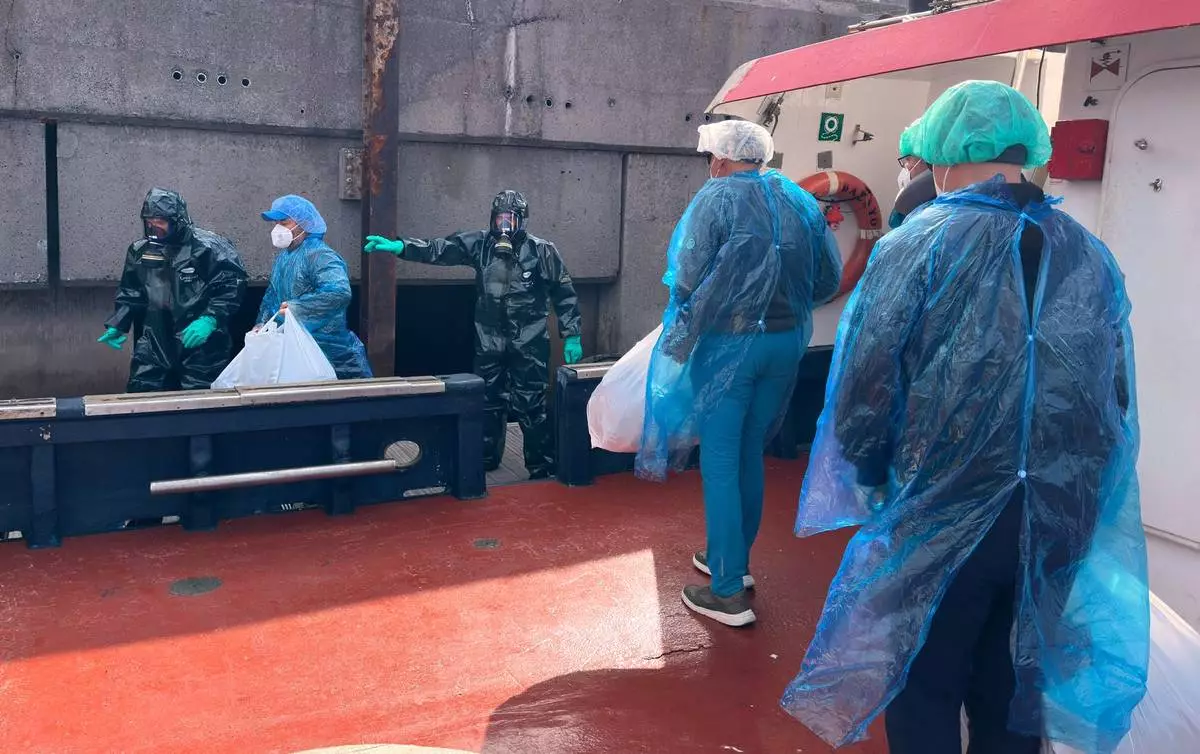
Passengers are disembarked from the hantavirus-stricken cruise ship MV Hondius at the port of Granadilla in Tenerife, Canary Islands, Spain, Sunday, May 10, 2026. (AP Photo)
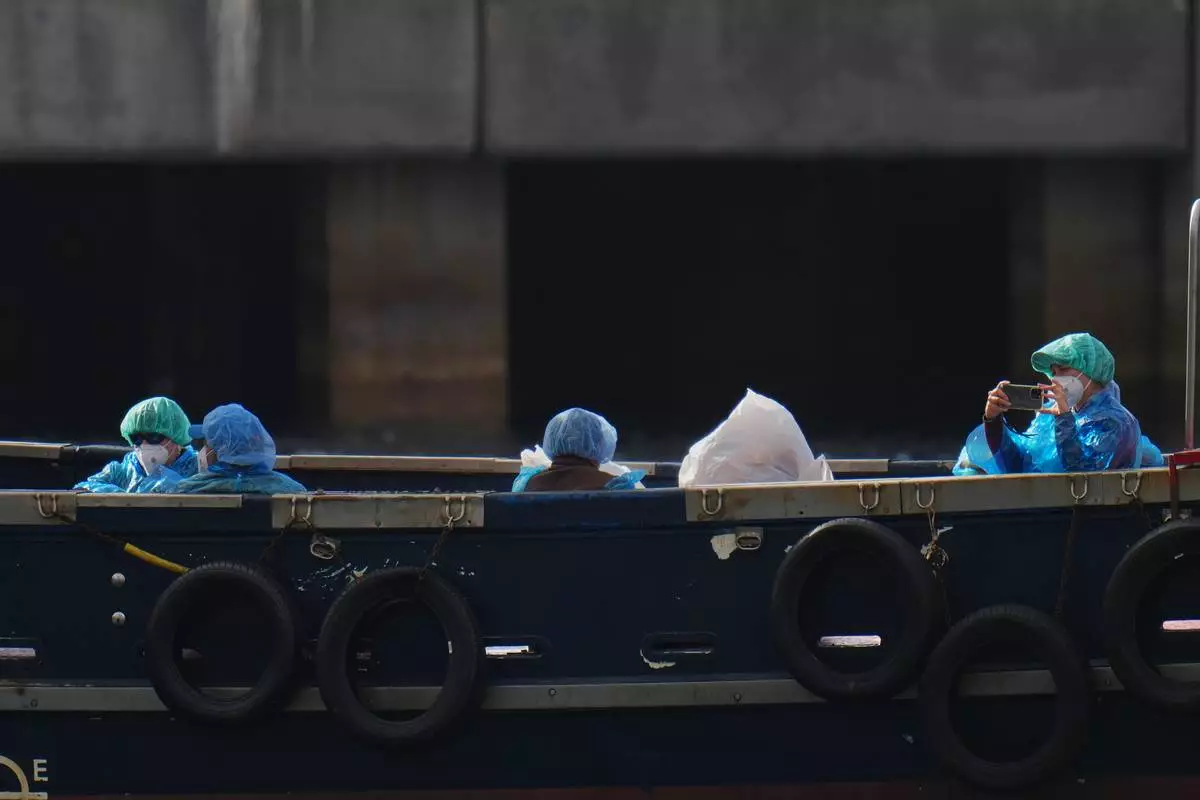
Passengers are disembarked from the hantavirus-stricken cruise ship MV Hondius at the port of Granadilla in Tenerife, Canary Islands, Spain, Sunday, May 10, 2026. (AP Photo/Manu Fernandez)
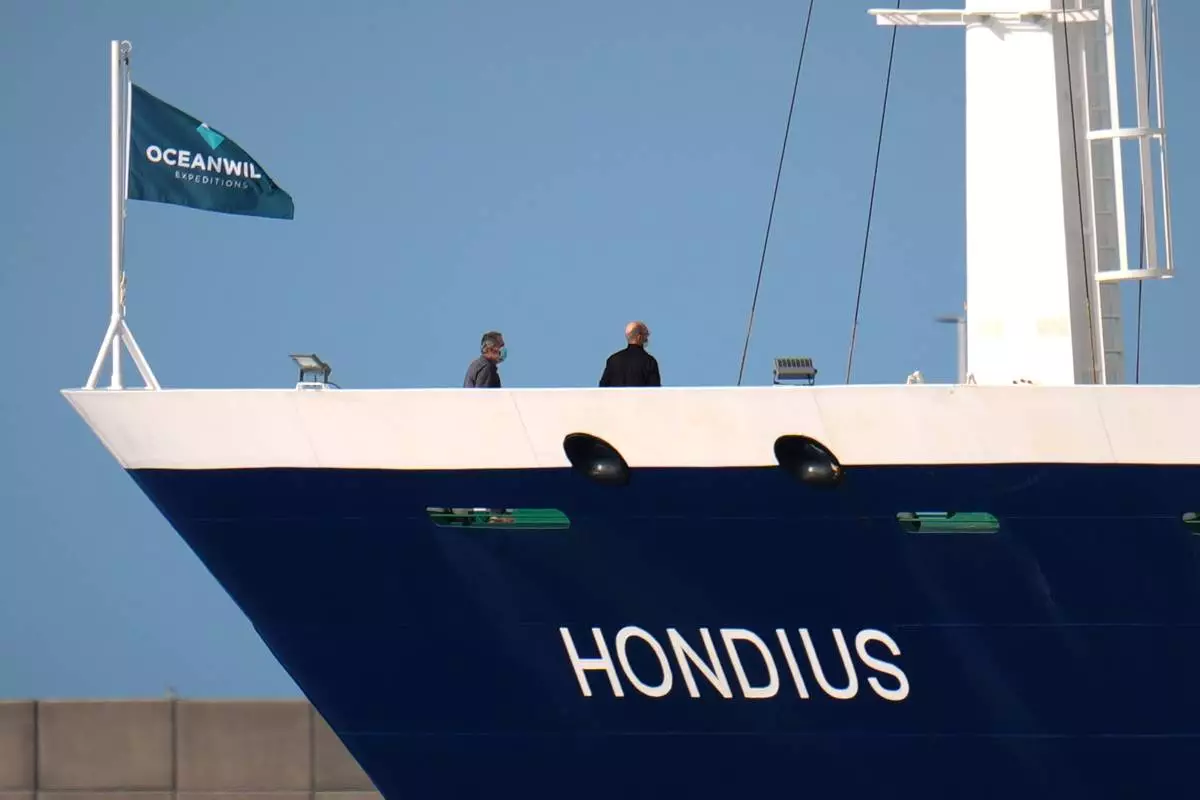
Passengers stand on the deck of the hantavirus-stricken cruise ship MV Hondius after its arrival at the port of Granadilla in Tenerife, Canary Islands, Spain, Sunday, May 10, 2026. (AP Photo/Manu Fernandez)
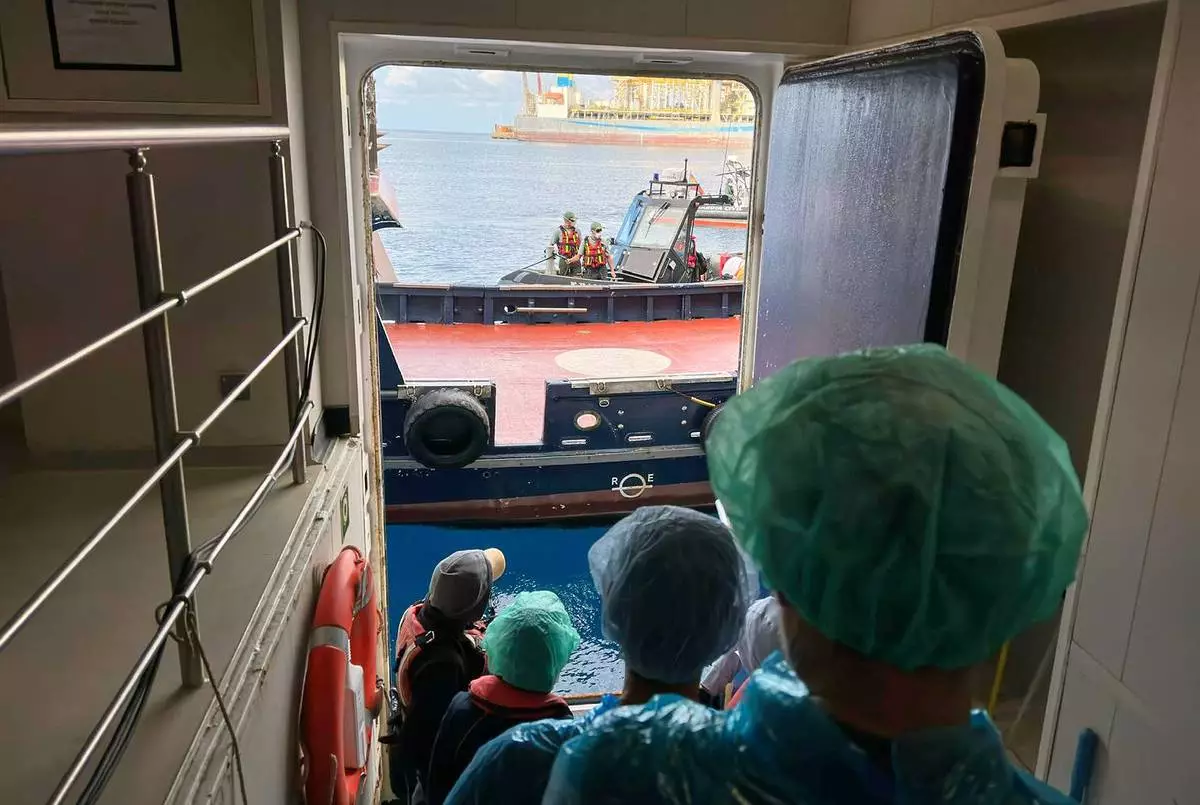
Passengers are being disembarked from the hantavirus-stricken cruise ship MV Hondius at the port of Granadilla in Tenerife, Canary Islands, Spain, Sunday, May 10, 2026. (AP Photo)
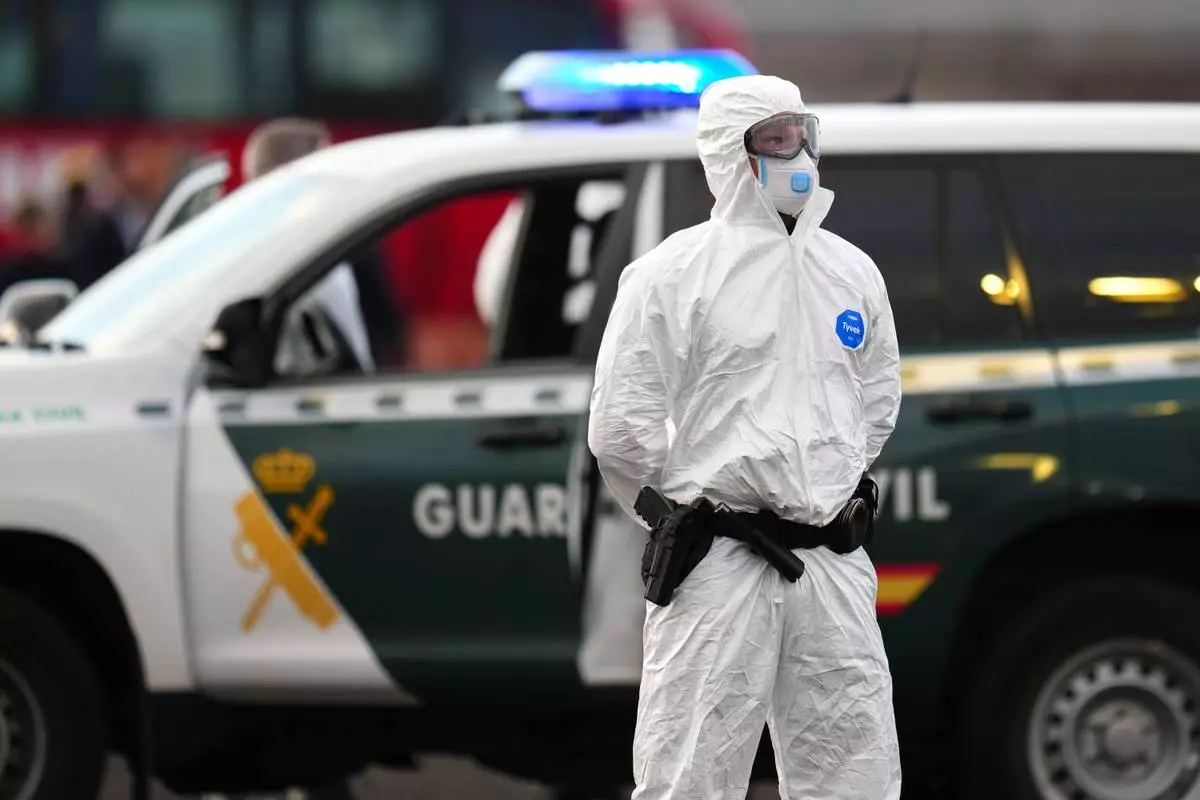
A Civil Guard border police stands guard following the arrival of hantavirus-stricken cruise ship MV Hondius at the port of Granadilla in Tenerife, Canary Islands, Spain, Sunday, May 10, 2026. (AP Photo)
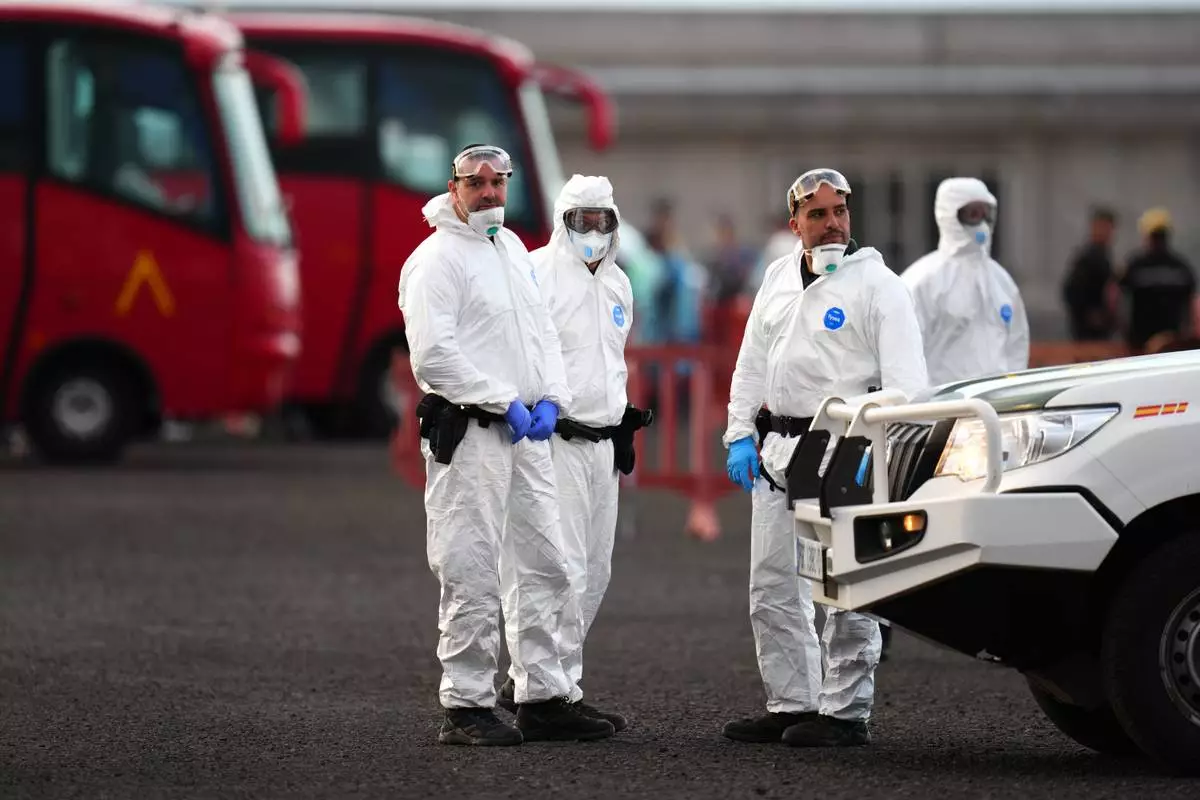
Civil Guard border police officers following the arrival of hantavirus-stricken cruise ship MV Hondius at the port of Granadilla in Tenerife, Canary Islands, Spain, Sunday, May 10, 2026. (AP Photo)
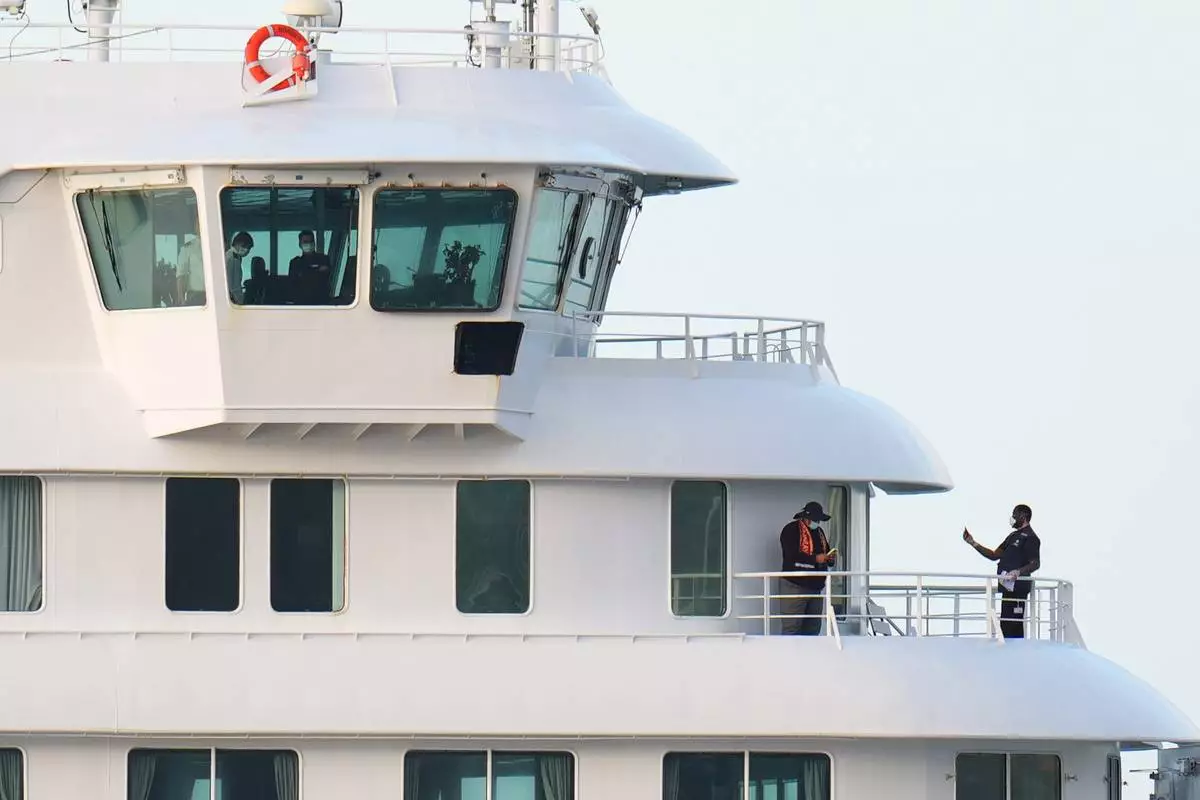
Passengers and crew at the hantavirus-stricken cruise ship MV Hondius after arriving at the port of Granadilla in Tenerife, Canary Islands, Spain, Sunday, May 10, 2026. (AP Photo/Manu Fernandez)
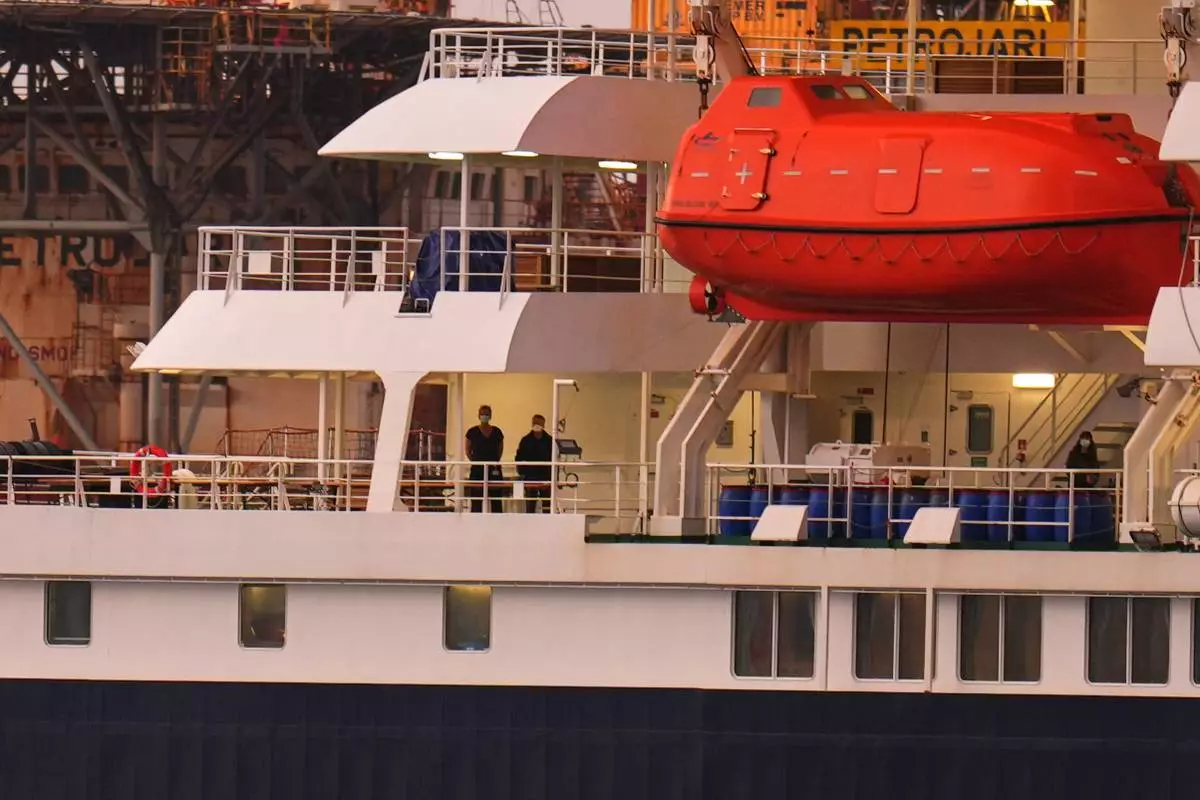
Passengers at the hantavirus-stricken cruise ship MV Hondius after arriving at the port of Granadilla in Tenerife, Canary Islands, Spain, Sunday, May 10, 2026. (AP Photo/Manu Fernandez)
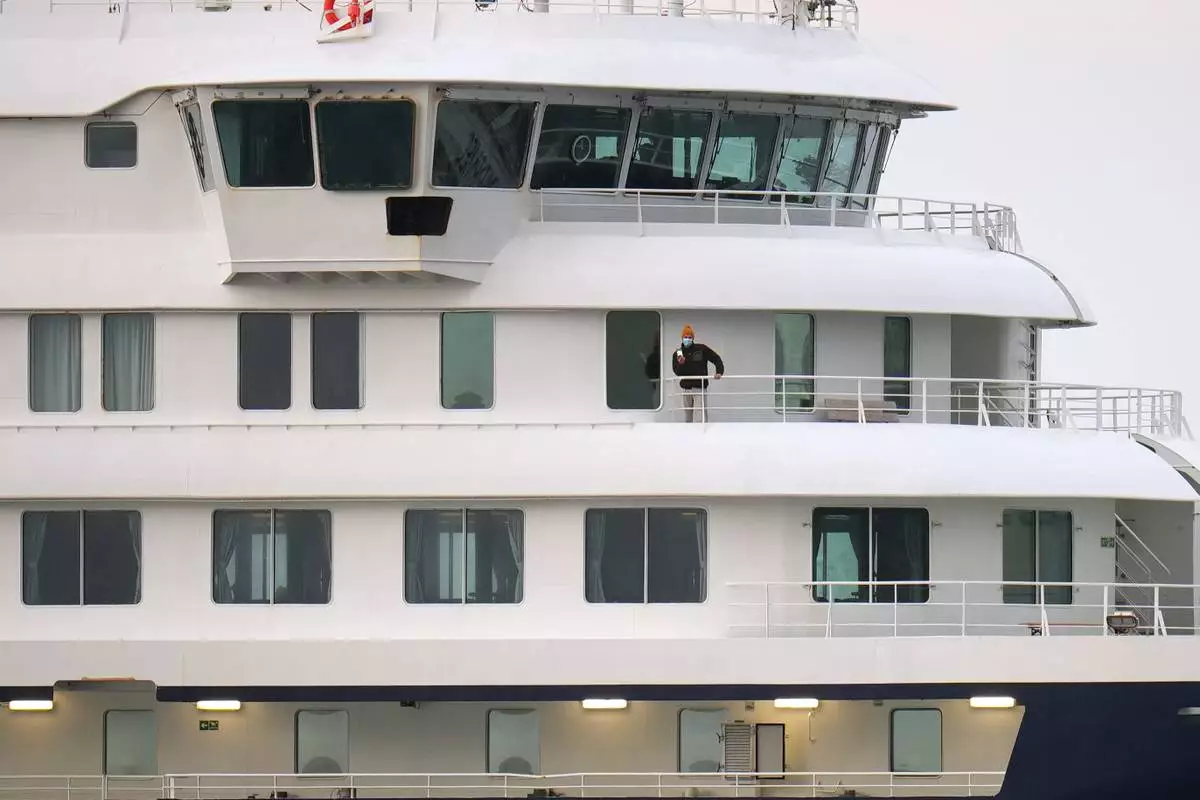
A passenger stands at the hantavirus-stricken cruise ship MV Hondius after its arrival at the port of Granadilla in Tenerife, Canary Islands, Spain, Sunday, May 10, 2026. (AP Photo/Manu Fernandez)
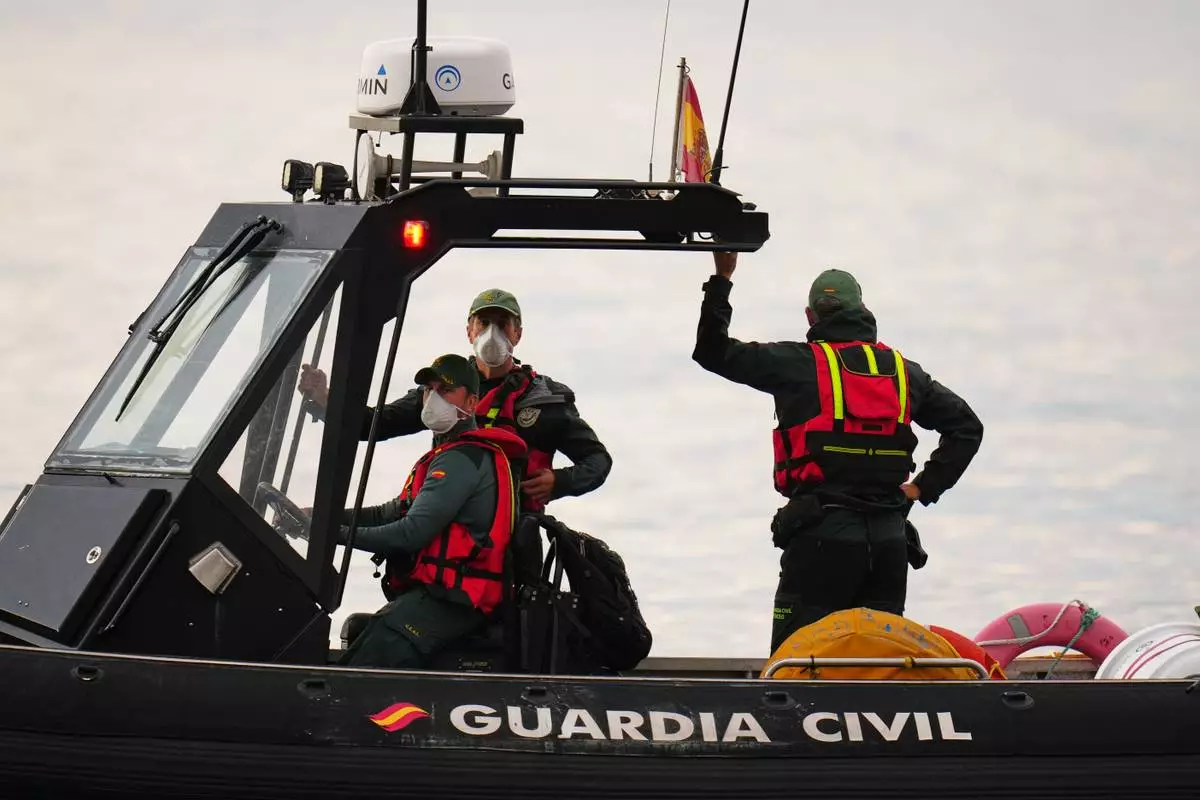
Civil Guard officers patrol next to the hantavirus-stricken cruise ship MV Hondius after its arrival at the port of Granadilla in Tenerife, Canary Islands, Spain, Sunday, May 10, 2026. (AP Photo/Manu Fernandez)
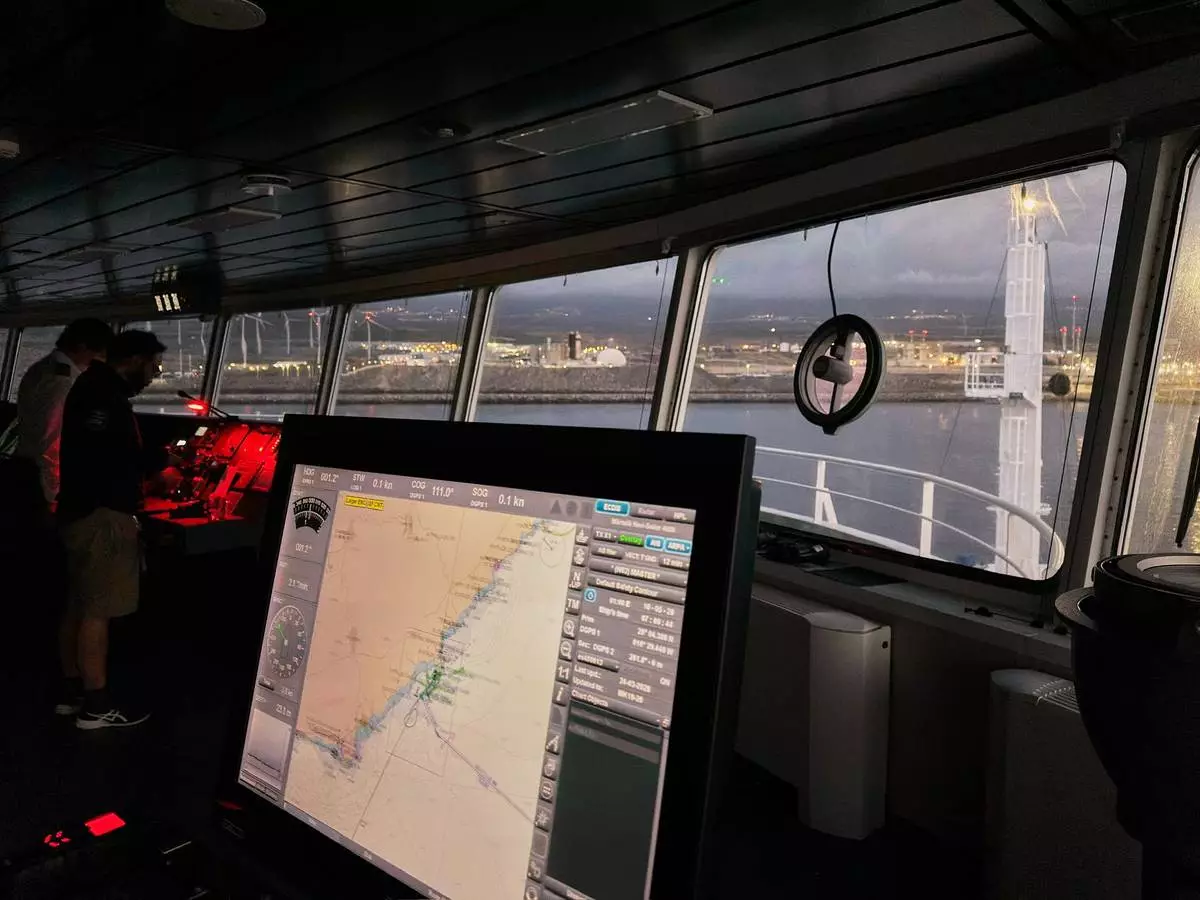
View from the bridge of the hantavirus-stricken cruise ship MV Hondius after its arrival at the port of Granadilla in Tenerife, Canary Islands, Spain, Sunday, May 10, 2026. (AP Photo)
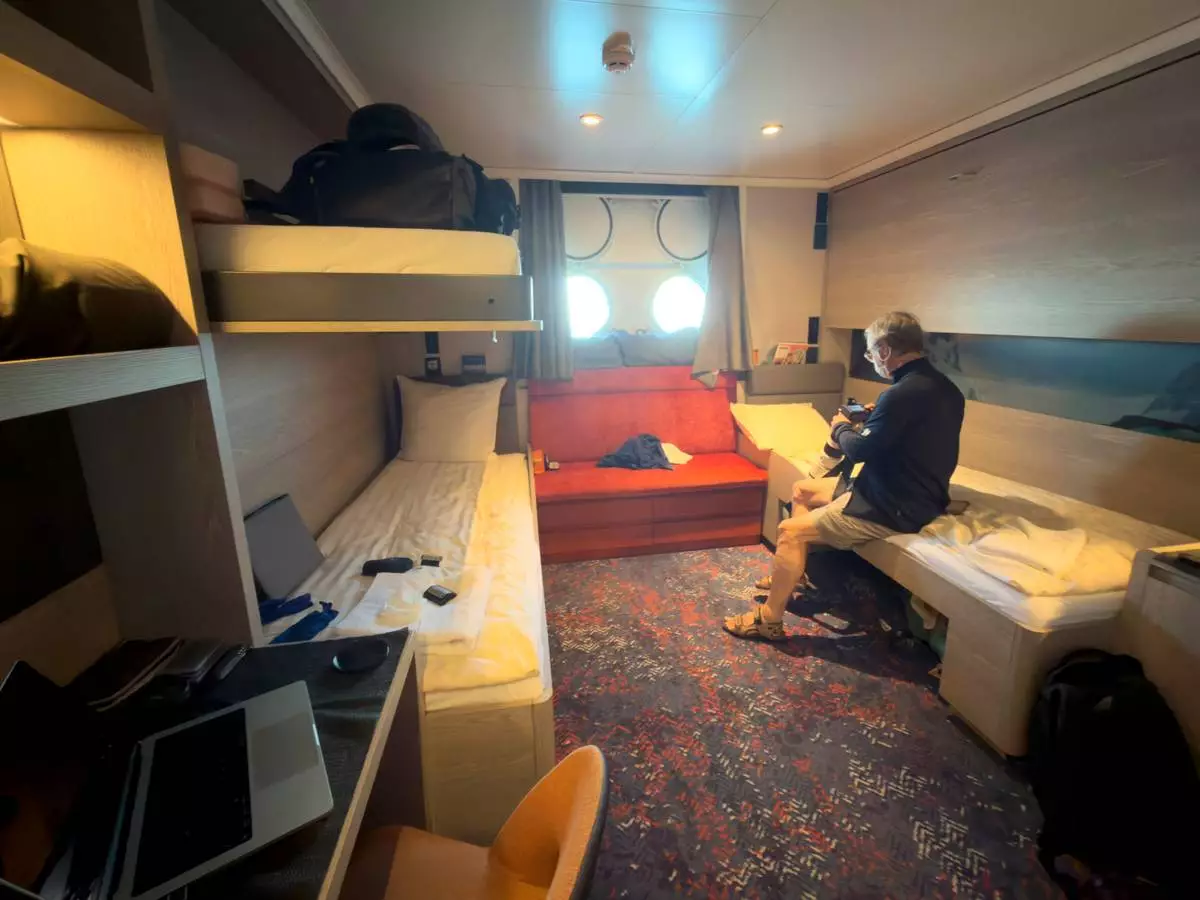
A passenger checks his camera inside his cabin on the hantavirus-stricken cruise ship, MV Hondius, during the voyage to Spain's port of Tenerife, May 6, 2026. (AP Photo)
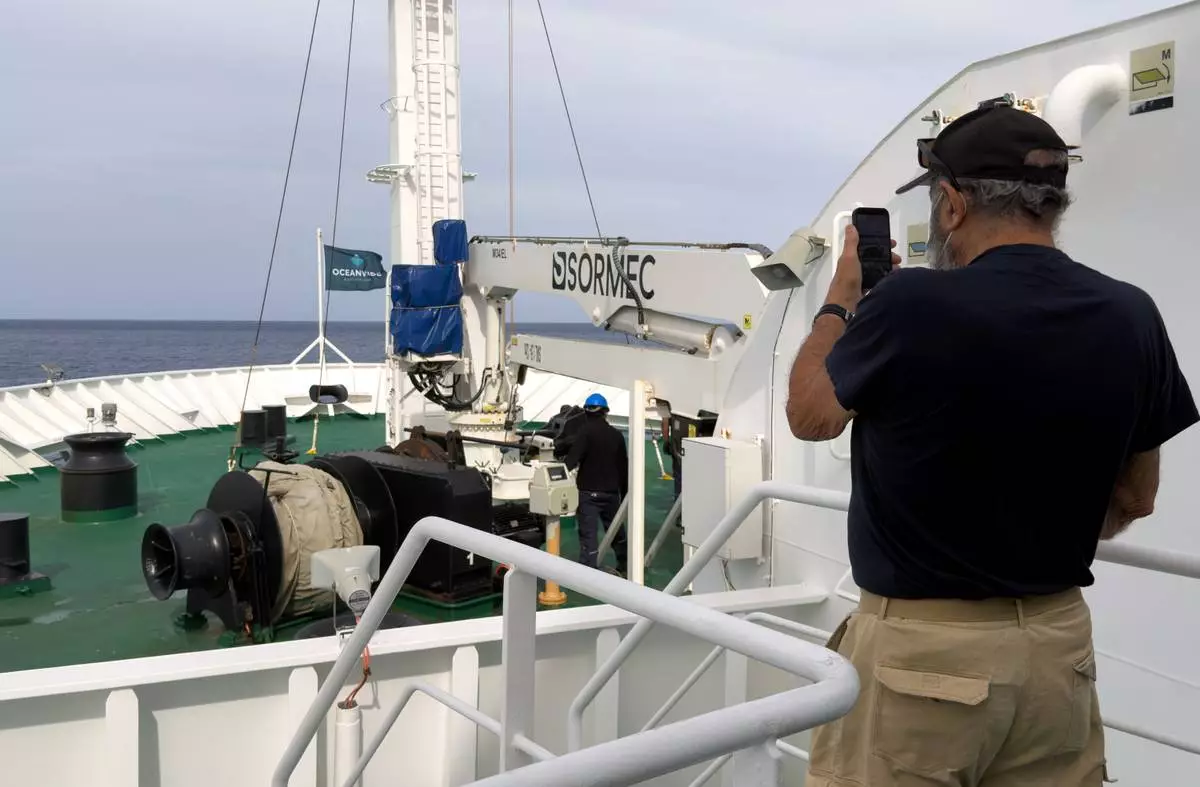
A passenger on the the hantavirus-stricken cruise ship, MV Hondius, takes a photo of the ship's weighing anchor in Praia, during the voyage to Spain's port of Tenerife, May 6, 2026. (AP Photo)
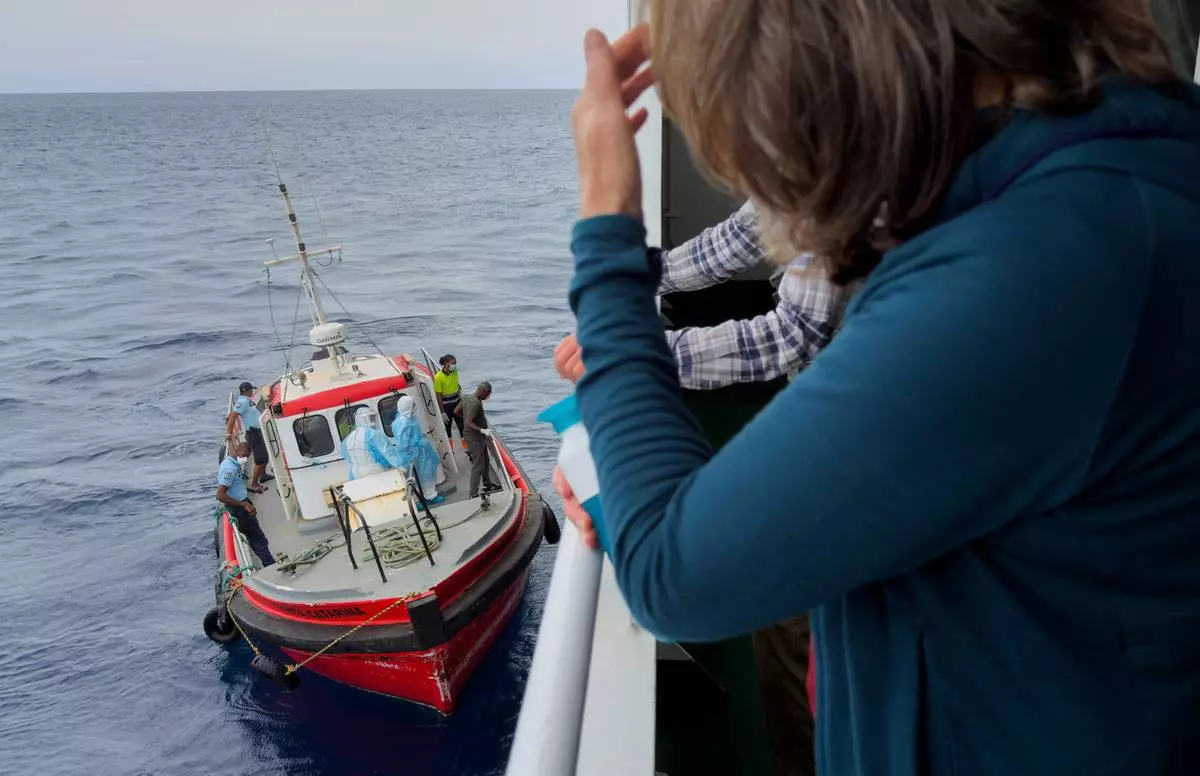
Passengers on the the hantavirus-stricken cruise ship, MV Hondius, watch epidemiologists board the boat in Praia, during their voyage to Spain's port of Tenerife, May 6, 2026. (AP Photo)
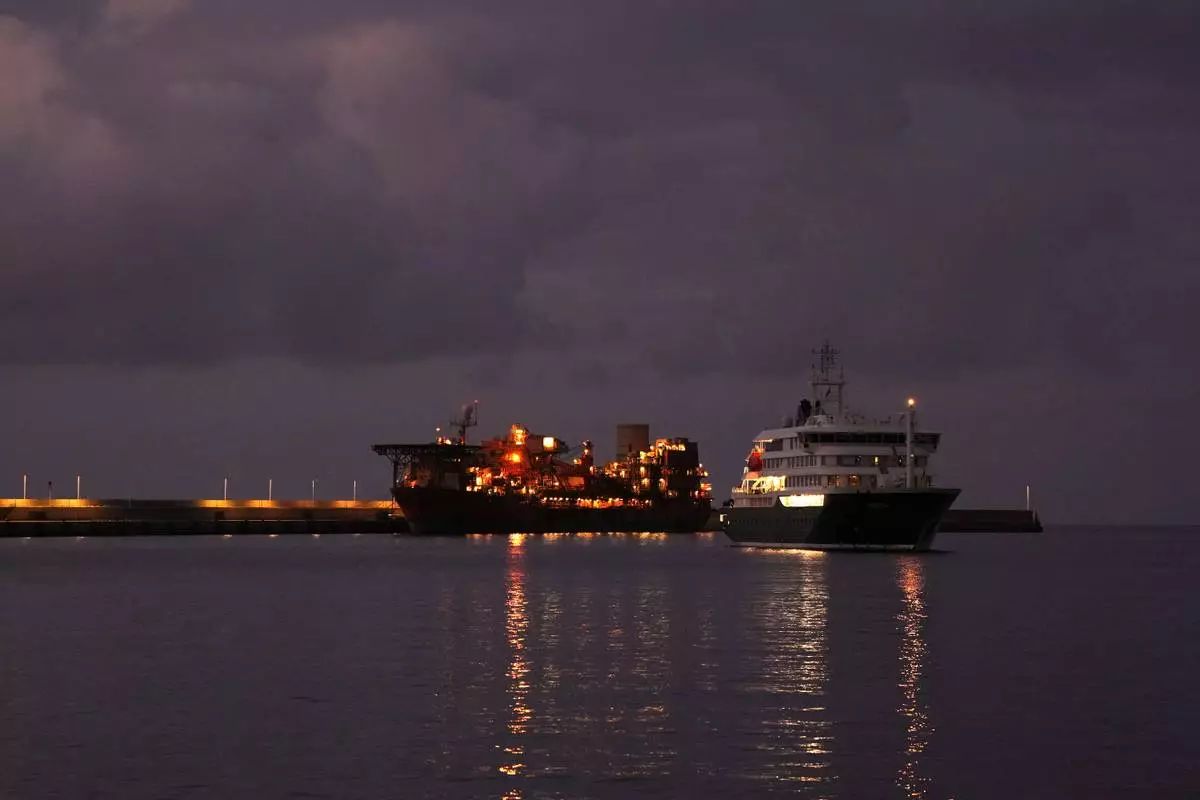
The hantavirus-stricken cruise ship MV Hondius is seen at anchor after arriving at the port of Granadilla in Tenerife, Canary Islands, Spain, Sunday, May 10, 2026. (AP Photo/Manu Fernandez)
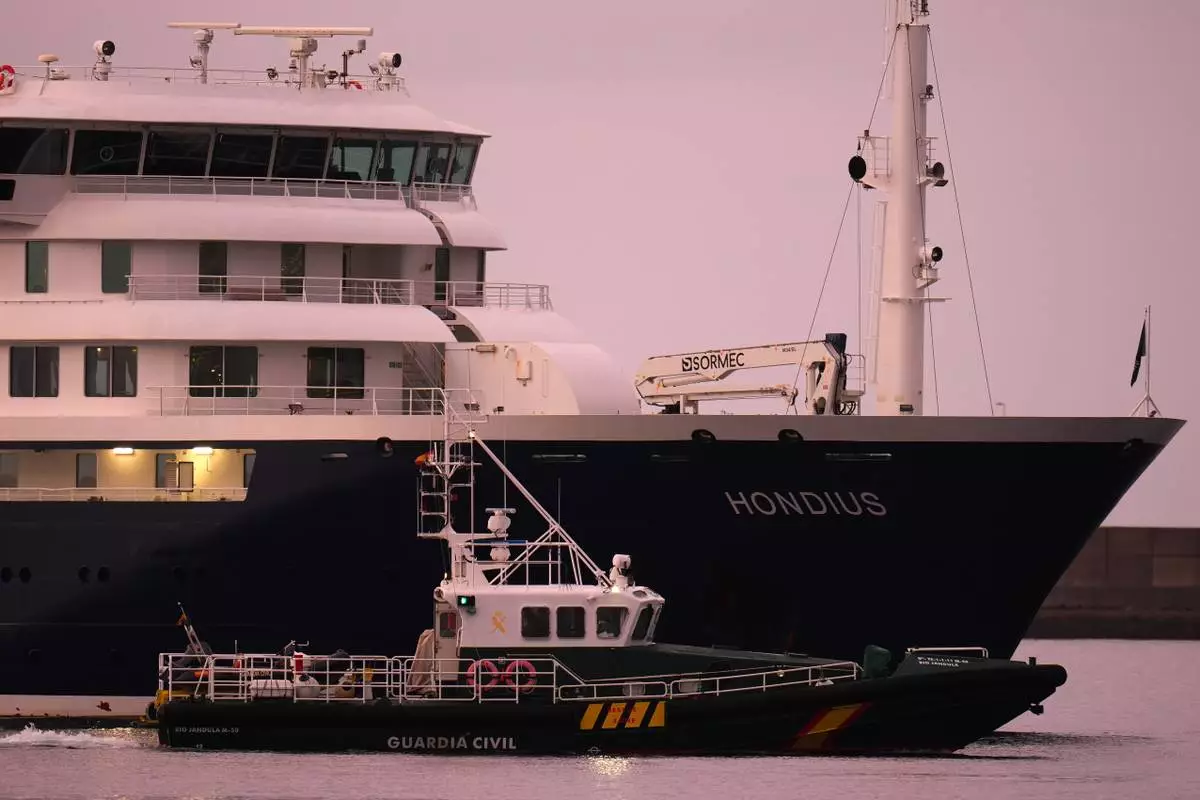
The hantavirus-stricken cruise ship MV Hondius is seen at anchor after arriving at the port of Granadilla in Tenerife, Canary Islands, Spain, Sunday, May 10, 2026. (AP Photo/Manu Fernandez)
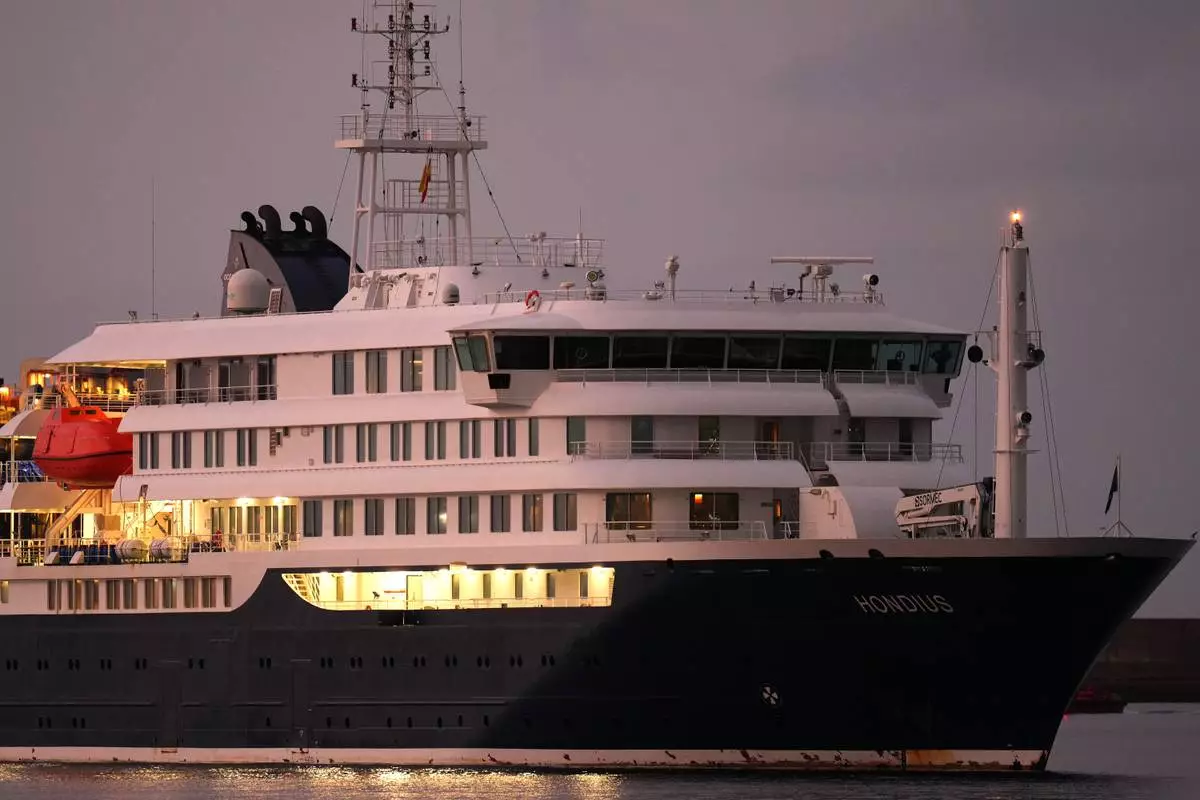
The hantavirus-stricken cruise ship MV Hondius is seen at anchor after arriving at the port of Granadilla in Tenerife, Canary Islands, Spain, Sunday, May 10, 2026. (AP Photo/Manu Fernandez)
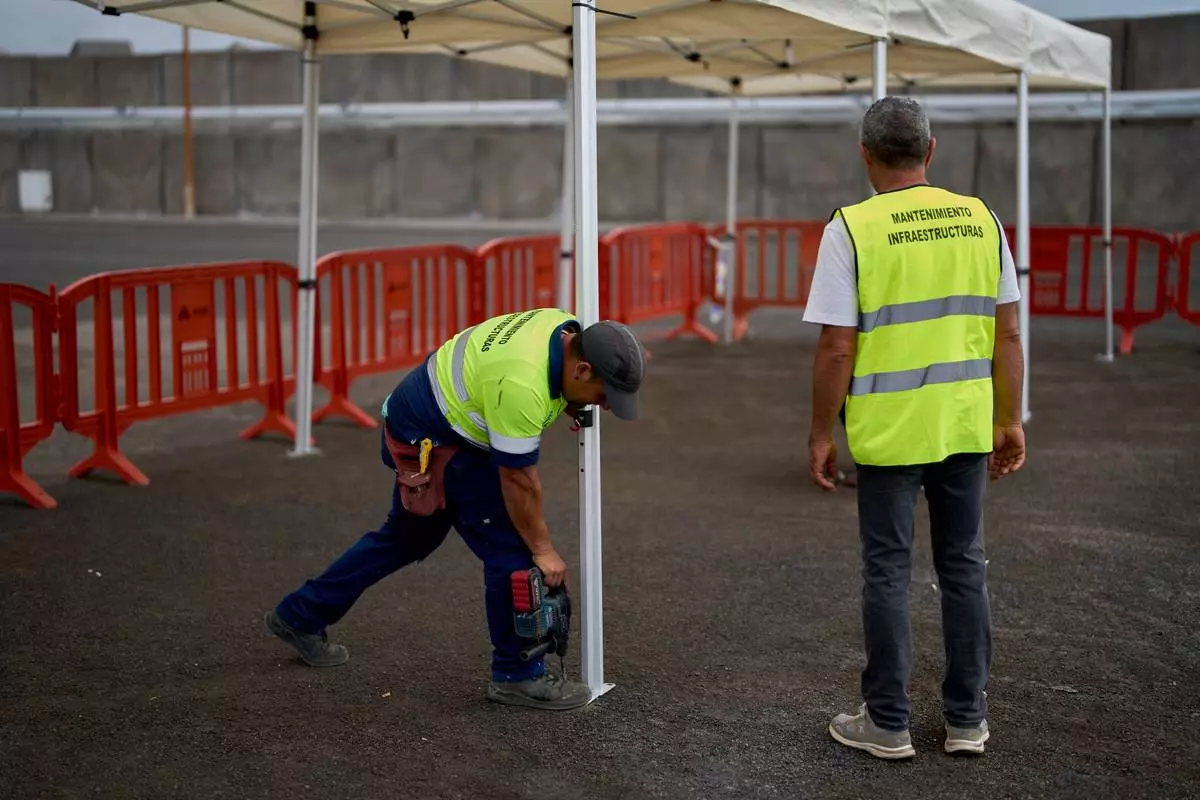
Workers set up temporary shelters in the area where passengers from the MV Hondius cruise ship are expected to arrive at the port of Granadilla in Tenerife, Canary Islands, Spain, Saturday, May 9, 2026. (AP Photo/Manu Fernandez)
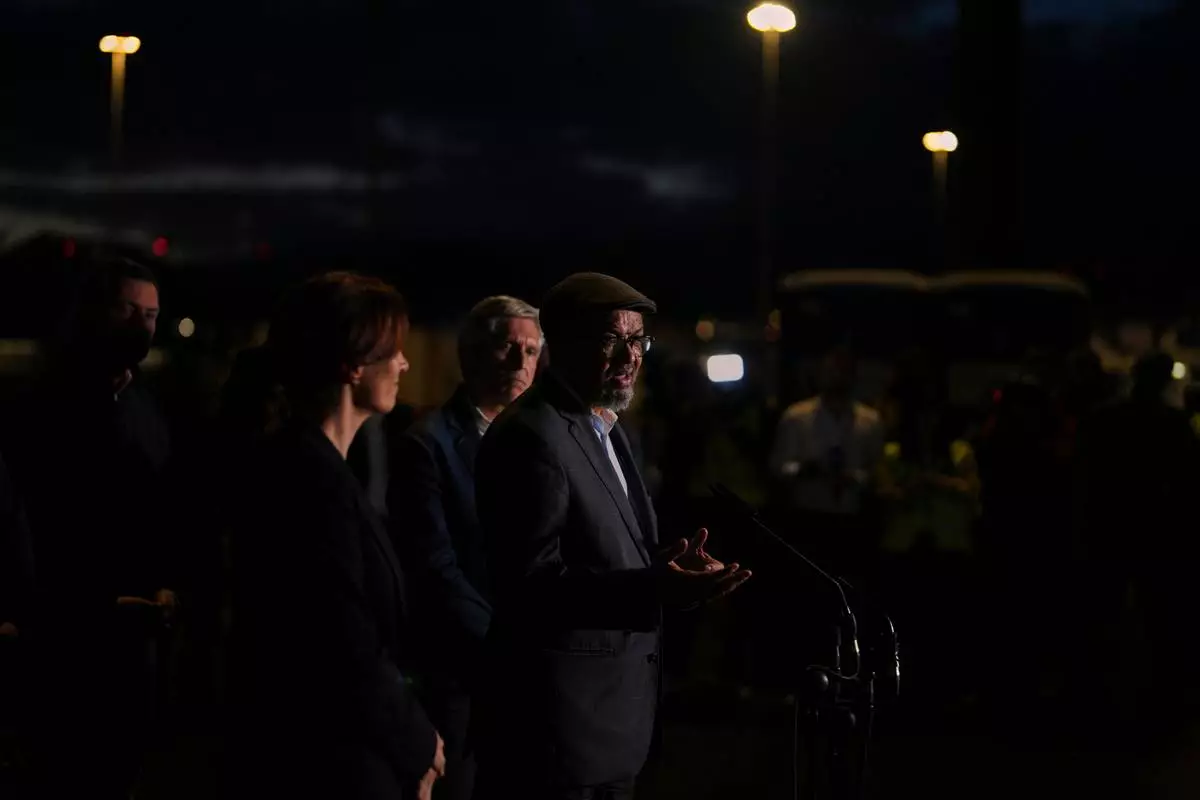
Tedros Adhanom Ghebreyesus, Director-General of the World Health Organization, speaks to the media near the area where passengers from the MV Hondius are expected to arrive at the port of Port of Granadilla in Tenerife, Saturday, May 9, 2026. (AP Photo/Manu Fernandez)
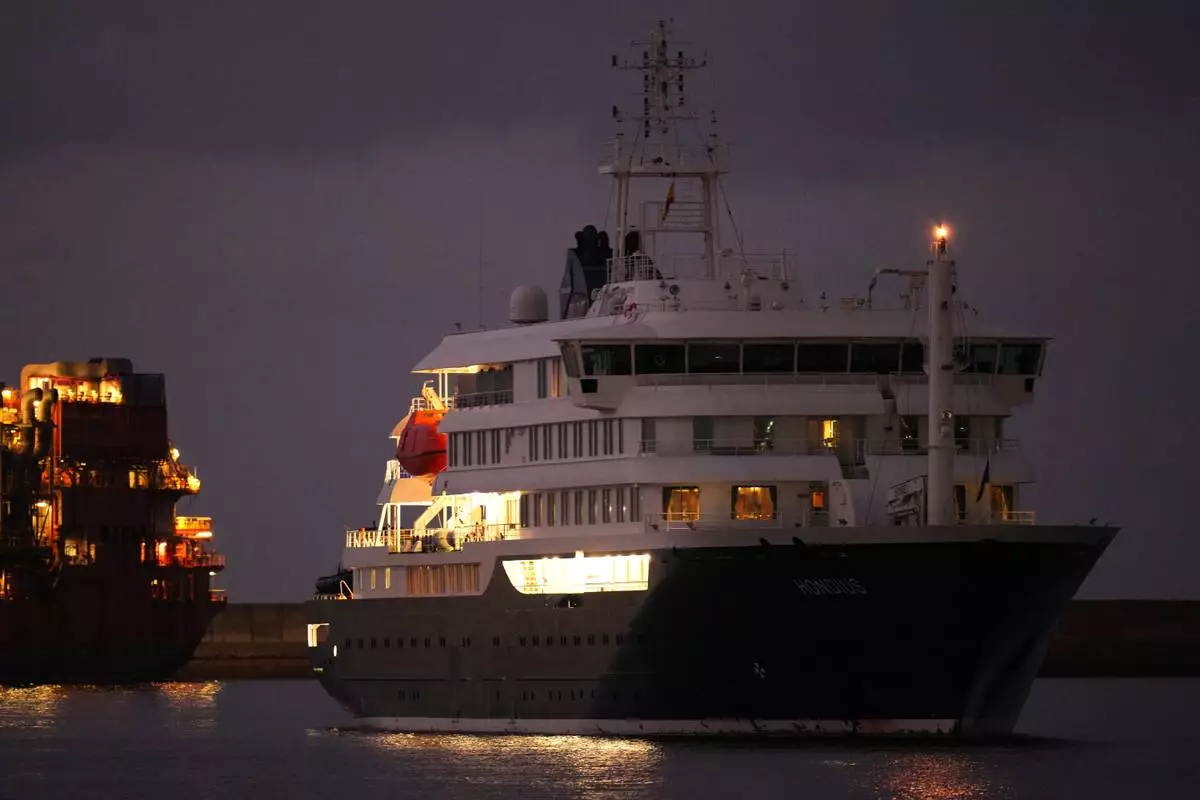
The hantavirus-stricken cruise ship MV Hondius is seen at anchor after arriving at the port of Granadilla in Tenerife, Canary Islands, Spain, Sunday, May 10, 2026. (AP Photo/Manu Fernandez)