DUBAI, United Arab Emirates (AP) — Iran launched new wave of attacks Thursday morning at Israeli and American bases following a threat to destroy military and economic infrastructure across the region, which came after the U.S. and Israel intensified their bombardment of Iran and a U.S. Navy submarine sank an Iranian warship in the Indian Ocean.
Israel announced multiple incoming missile attacks and air sirens sounded in Tel Aviv and Jerusalem. Iranian state television said additional strikes also targeted U.S. bases. The Israeli military said it launched targeted strikes in Lebanon at Iranian-backed Hezbollah militant group in Beirut’s southern suburbs.
Click to Gallery
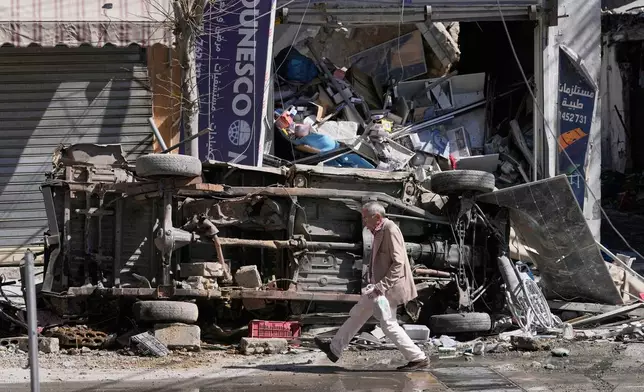
A man passes by a destroyed car and shop on a commercial street that was hit by Israeli airstrikes in Nabatiyeh town, south Lebanon, Thursday, March 5, 2026. (AP Photo/Mohammed Zaatari)
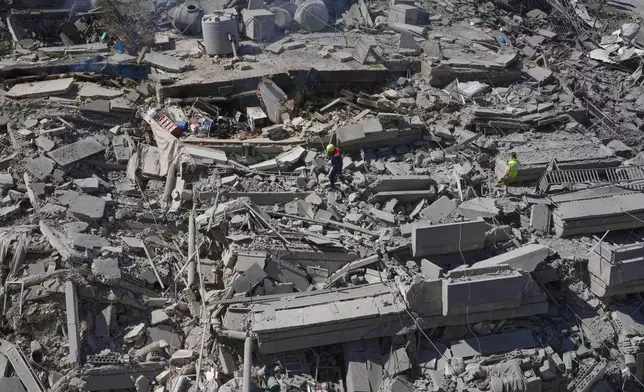
Rescue workers check a destroyed building that was hit by an Israeli airstrike in Nabatiyeh town, south Lebanon, Thursday, March 5, 2026. (AP Photo/Mohammed Zaatari)
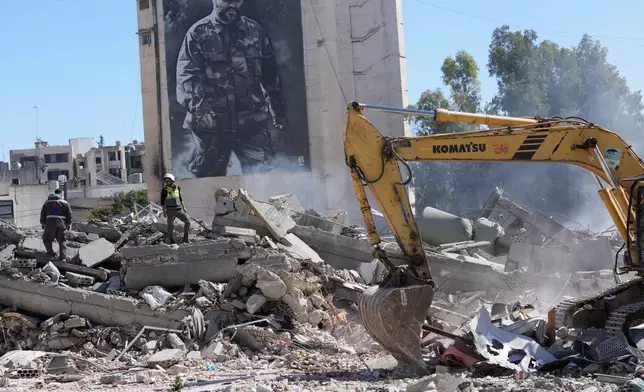
A giant poster shows the late Hezbollah military commander Imad Mughniyeh, while workers check a destroyed building that was hit by an Israeli airstrike in Nabatiyeh town, south Lebanon, Thursday, March 5, 2026. (AP Photo/Mohammed Zaatari)
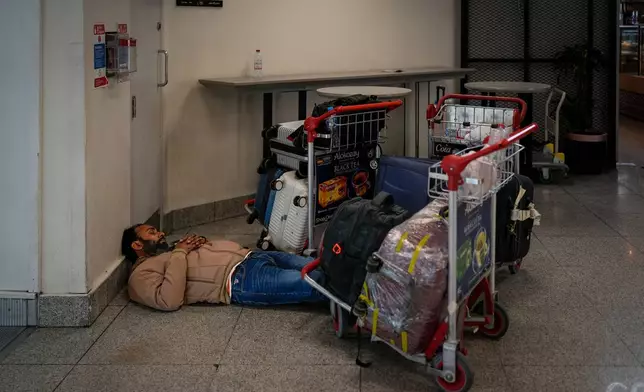
A stranded passenger sleeps on the floor outside Dubai International Airport terminal as the airport resumes limited operations in Dubai, United Arab Emirates, Thursday, March 5, 2026. (AP Photo/Altaf Qadri)
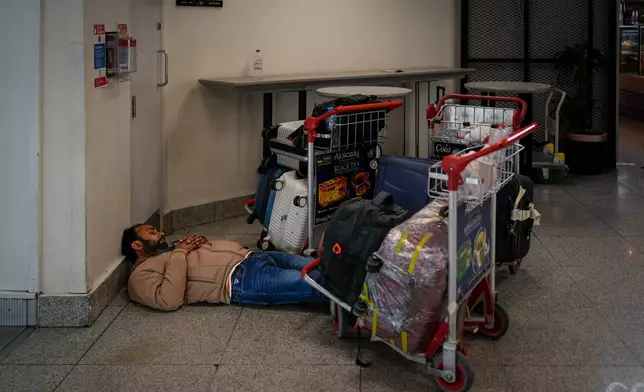
A stranded passenger sleeps on the floor outside Dubai International Airport terminal as the airport resumes limited operations in Dubai, United Arab Emirates, Thursday, March 5, 2026. (AP Photo/Altaf Qadri)
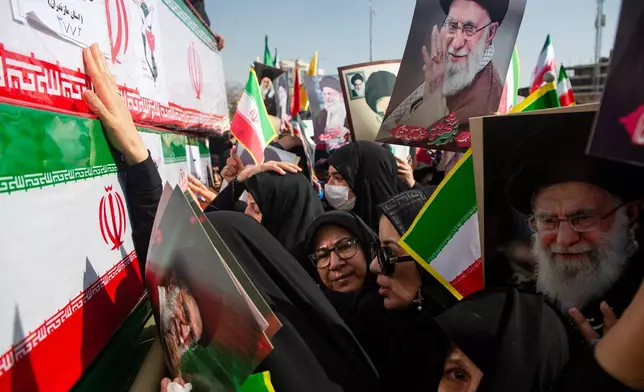
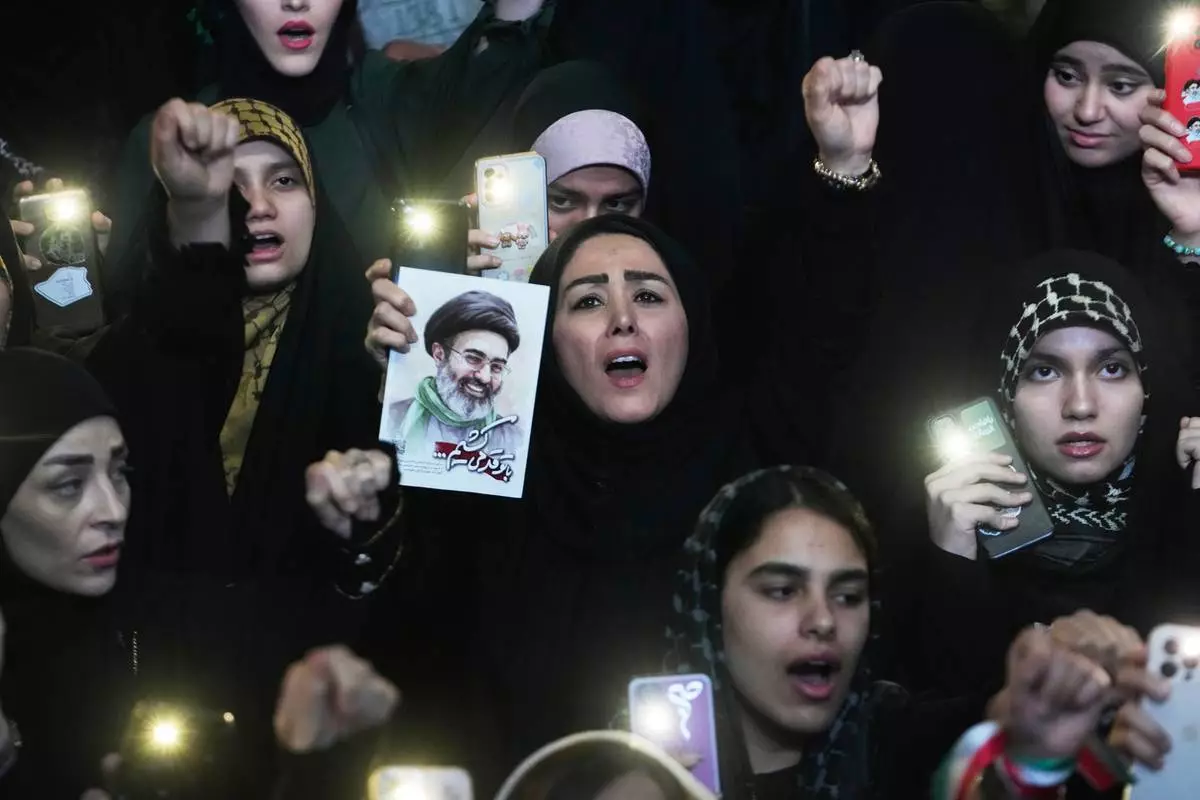
Some holding pictures of the late Iranian Supreme Leader Ayatollah Ali Khamenei, mourners reach out to coffins during a funeral for people killed during the ongoing U.S.–Israeli military campaign in Isfahan, Iran, Thursday, March 5, 2026. (Payman Shahsanaei/ISNA via AP)
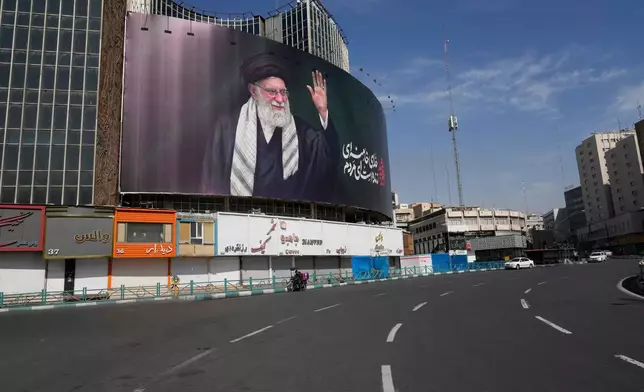
A billboard showing a portrait of the late Iranian Supreme Leader Ayatollah Ali Khamenei, who was killed in U.S.-Israeli strikes, looms over an empty square in Tehran, Iran, Thursday, March 5, 2026. (AP Photo/Vahid Salemi)
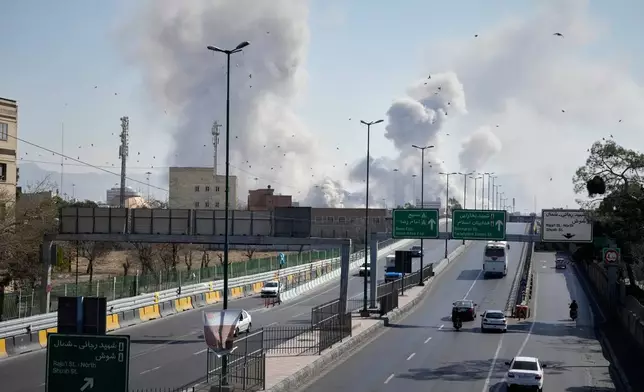
Plumes of smoke rise as strikes hit the city during the U.S.–Israeli military campaign in Tehran, Iran, Thursday, March 5, 2026. (AP Photo/Vahid Salemi)
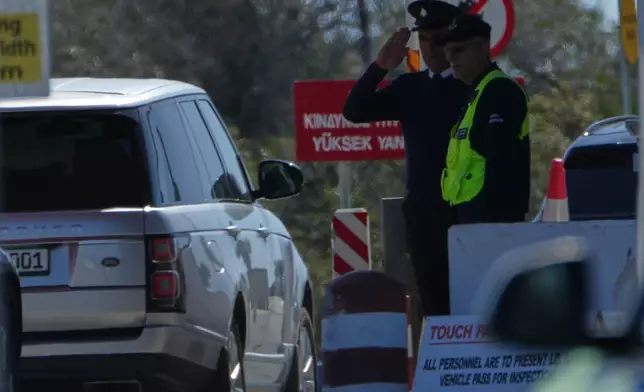
A police officer salutes as vehicles transport British Defence Secretary John Healey enter at the U.K.'s RAF Akrotiri air base near Limassol, Cyprus, Thursday, March 5, 2026. (AP Photo/Petros Karadjias)
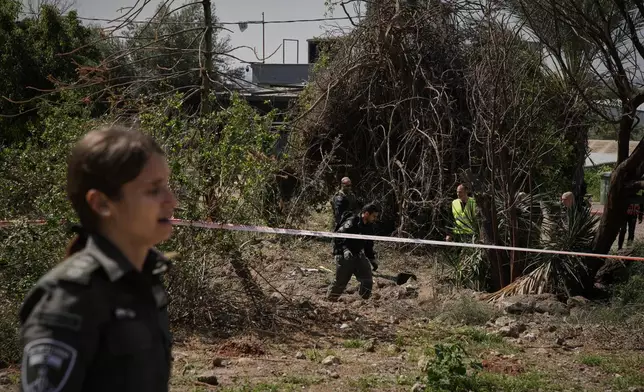
Israeli security forces inspect the site struck by an Iranian missile in central Israel, Thursday, March 5, 2026. (AP Photo/Leo Correa)
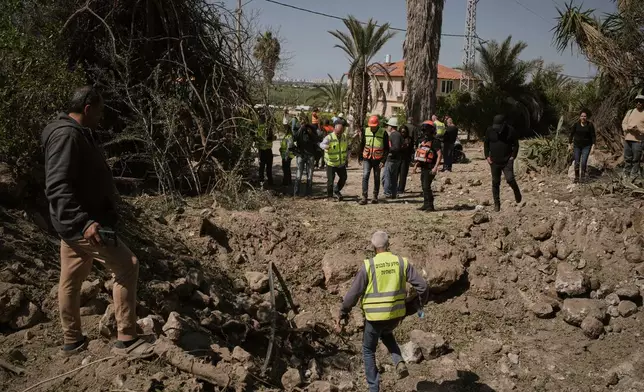
Residents and Israeli security forces inspect the site struck by an Iranian missile in central Israel, Thursday, March 5, 2026. (AP Photo/Leo Correa)
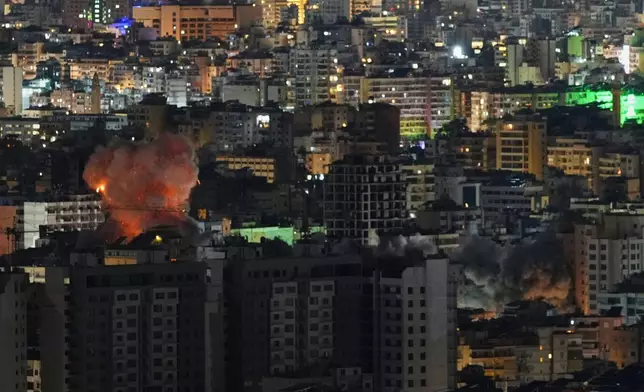
Smoke and flames rise from the site of Israeli airstrikes in Dahiyeh, Beirut's southern suburbs, Lebanon, Thursday, March 5, 2026. (AP Photo/Hassan Ammar)
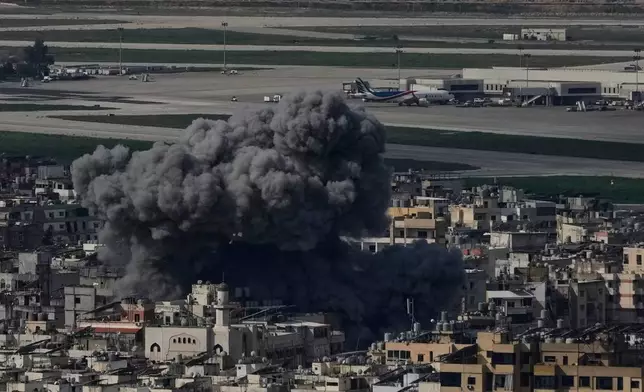
Smoke rises following an Israeli airstrike in Dahiyeh, Beirut's southern suburb, near Rafik Hariri International Airport, Lebanon, Wednesday, March 4, 2026. (AP Photo/Bilal Hussein)
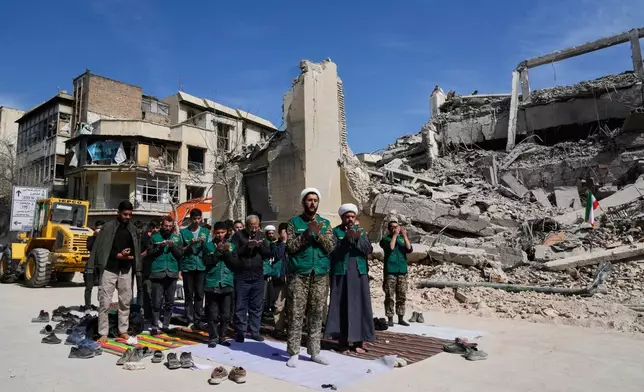
A cleric leads a group of volunteers in prayer next to a police facility struck during the U.S.–Israeli military campaign in Tehran, Iran, Wednesday, March 4, 2026. (AP Photo/Vahid Salemi)
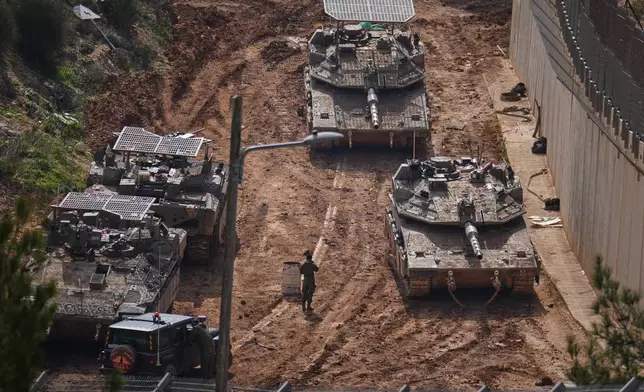
Israeli tanks maneuver near the Israel-Lebanon border, in northern Israel, Wednesday, March 4, 2026. (AP Photo/Ariel Schalit)
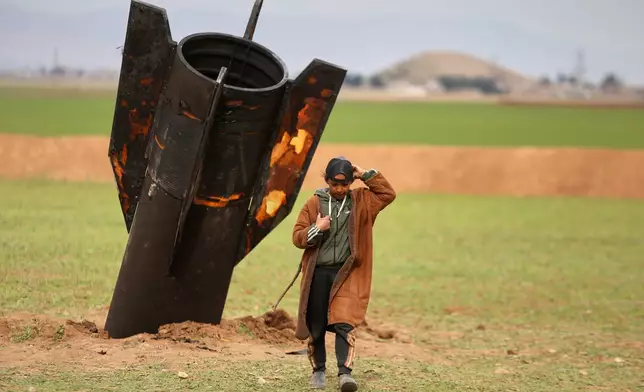
A shepherd boy walks away from an unexploded Iranian projectile that landed in an open field in the outskirts of Qamishli, eastern Syria, Wednesday, March 4, 2026.(AP Photo/Baderkhan Ahmad)
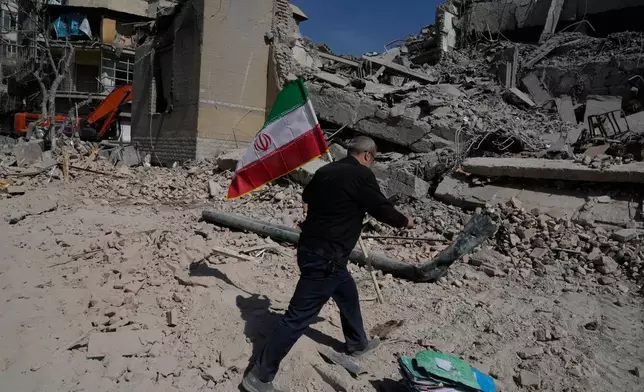
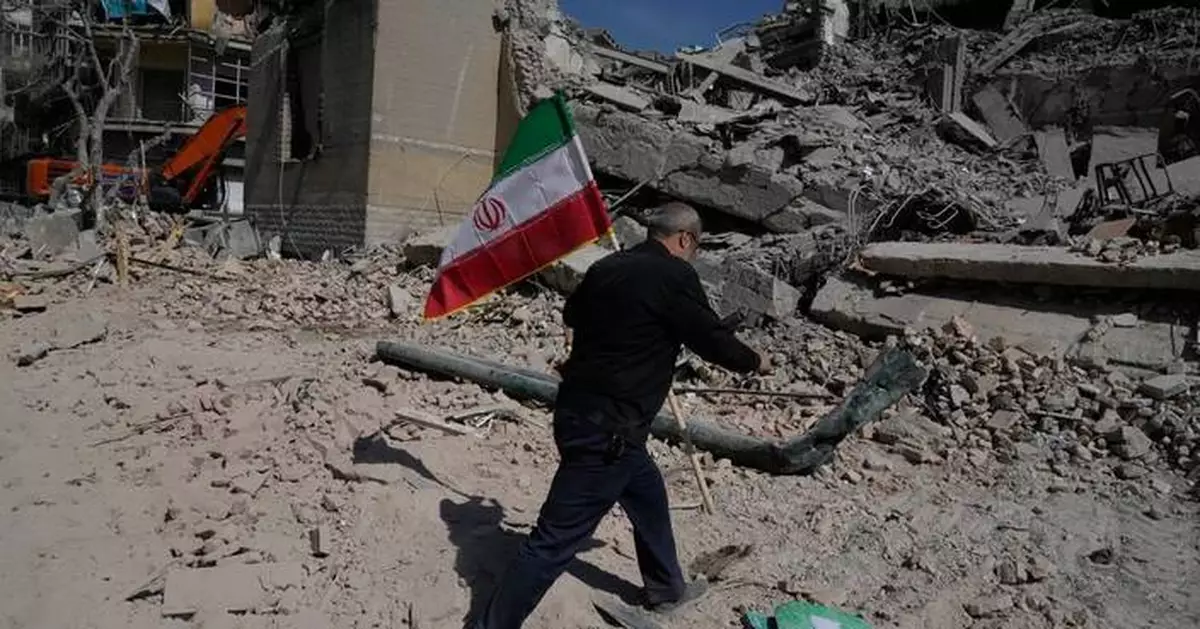
A man carries an Iranian flag to place on the rubble of a police facility struck during the U.S.–Israeli military campaign in Tehran, Iran, Wednesday, March 4, 2026. (AP Photo/Vahid Salemi)
The U.S. and Israel launched the war Saturday, targeting Iran’s leadership, missile arsenal and nuclear program while suggesting that toppling the government is a goal. But the exact aims and timelines have repeatedly shifted, signaling an open-ended conflict.
The tempo of American and Israeli strikes on Iran was so intense Wednesday that state television announced the mourning ceremony for Iranian Supreme Leader Ayatollah Ali Khamenei, who was killed at the start of the conflict, would be postponed. Millions attended the funeral of his predecessor, Ayatollah Ruhollah Khomeini, in 1989.
President Donald Trump praised the U.S. military for “doing very well on the war front, to put it mildly.” Fellow Republicans in the U.S. Senate stood with Trump on Iran as they voted down a resolution seeking to halt the war.
Iran fired on Bahrain, Kuwait and Israel as the conflict spiraled. Turkey said NATO defenses intercepted a ballistic missile launched from Iran before it entered Turkey’s airspace.
The war has killed more than 1,000 people in Iran, more than 70 in Lebanon and around a dozen in Israel, according to officials in those countries. It has disrupted the supply of the world’s oil and gas, snarled international shipping and stranded hundreds of thousands of travelers in the Middle East.
Countries around the region braced for potential dangers Thursday, a day after Iran’s paramilitary Revolutionary Guard threatened “the complete destruction of the region’s military and economic infrastructure.”
Qatar’s Interior Ministry said authorities were evacuating residents near the U.S. Embassy in Doha as a temporary precaution, without providing further details.
Fighter jets could be heard overhead in the United Arab Emirates city of Dubai and Saudi Arabia said it destroyed a drone in its province bordering Jordan.
A new attack off the coast of Kuwait appeared to expand the area where commercial shipping was in danger.
An explosion rocked the area early Thursday, according to the United Kingdom Maritime Trade Operations Center run by the British military. It said a tanker apparently came under attack, but the agency did not offer a cause. Iran in the past has attacked ships by attaching limpet mines to them.
Prior attacks since fighting began Saturday have happened in the Gulf of Oman and the Strait of Hormuz, which connects it to the Persian Gulf and through which about a fifth of the world’s oil is shipped.
Brent crude prices are up 15% since the start of the conflict as Iranian attacks have disrupted traffic through the strait, with the current price the highest since July 2024.
U.S. Defense Secretary Pete Hegseth said a torpedo from an American submarine sank an Iranian warship Tuesday night in the Indian Ocean.
Sri Lankan authorities said 32 crew members were rescued, while its navy recovered 87 bodies.
Israel said it hit buildings associated with Iran’s internal security command as well as the Basij, an all-volunteer force of the paramilitary Revolutionary Guard whose bloody crackdown on protesters in January left thousands dead.
Iranian Foreign Minister Abbas Araghchi has said his country's forces have decentralized leadership, with units acting largely on their own, which could blunt the effect of attacks on top command and control hubs.
During his Pentagon briefing, Hegseth did not give a definitive timeline for U.S. operations, which Trump has said could last for a month or longer.
“You can say four weeks, but it could be six. It could be eight. It could be three,” Hegseth said. “Ultimately, we set the pace and the tempo. The enemy is off balance, and we’re going to keep them off balance.”
U.S. and Israeli military officials say launches from Iran have declined as their attacks have taken out ballistic missiles, launchers and drones. Israel's Homefront Command announced it was easing restrictions that closed workplaces nationwide. It said workplaces could reopen Thursday if there is a shelter nearby. Schools would remain closed.
Still, explosions sounded early Thursday in Israel, which said its defensive systems were moving to intercept at least three waves of Iranian missiles.
At least 1,045 people have been killed in Iran, the country's Foundation of Martyrs and Veterans Affairs said Wednesday. Eleven people have died in Israel. Six U.S. troops have been killed, including a major whose identity was released Wednesday.
Another eight people were killed in Lebanon, including two in a building struck by the Israeli military in the Beddawi refugee camp in the coastal city of Tripoli on Thursday and three on a coastal highway, authorities said. The Israeli military did not immediately say who it targeted in the strikes.
In two near-simultaneous Israeli drone strikes in Beirut's southern suburbs late Wednesday, two vehicles were hit, killing three people and wounding six, the health ministry said. The Israeli military said it targeted a Hezbollah member, adding that further details would follow.
Israeli Defense Minister Israel Katz said the offensive against Iran was originally planned for mid-2026, but “the need arose to bring everything forward to February.”
He listed events inside Iran, Trump's positions and the possibility of “creating a combined operation” as reasons.
The protests in Iran put unprecedented pressure on its leadership. Trump threatened military action in response to the crackdown before shifting his attention to Iran's disputed nuclear program.
White House press secretary Karoline Leavitt said Wednesday that the U.S. launched its operation partly out of concern Iran might strike U.S. personnel and assets in the region first. A phone call between Trump and Israeli Prime Minister Benjamin Netanyahu before the airstrikes began also was “important with respect to the timeline,” she said.
Iran’s leaders are scrambling to replace Khamenei, who ruled the country for 37 years. It is only the second time since the 1979 Islamic Revolution that a new supreme leader is being chosen.
Potential candidates range from hard-liners committed to confrontation with the West to reformists who seek diplomatic engagement. Mojtaba Khamenei, Khamenei’s son, has long been considered among them, though he has never held a government position.
In a sign that Iran’s leadership will only seek to consolidate its power, the head of the judiciary warned that “those who cooperate with the enemy in any way will be considered an enemy.”
Israel's defense minister, Katz, said on X that Iran's next supreme leader “will be a target for elimination” if he continues to threaten Israel, the U.S. and others.
Rising reported from Bangkok, Becatoros from Athens, Greece, and Magdy from Cairo. Associated Press writers Sally Abou AlJoud in Beirut, Lebanon, Melanie Lidman in Tel Aviv, Israel, Julia Frankel in Jerusalem and Giovanna Dell'Orto in Miami contributed to this report.
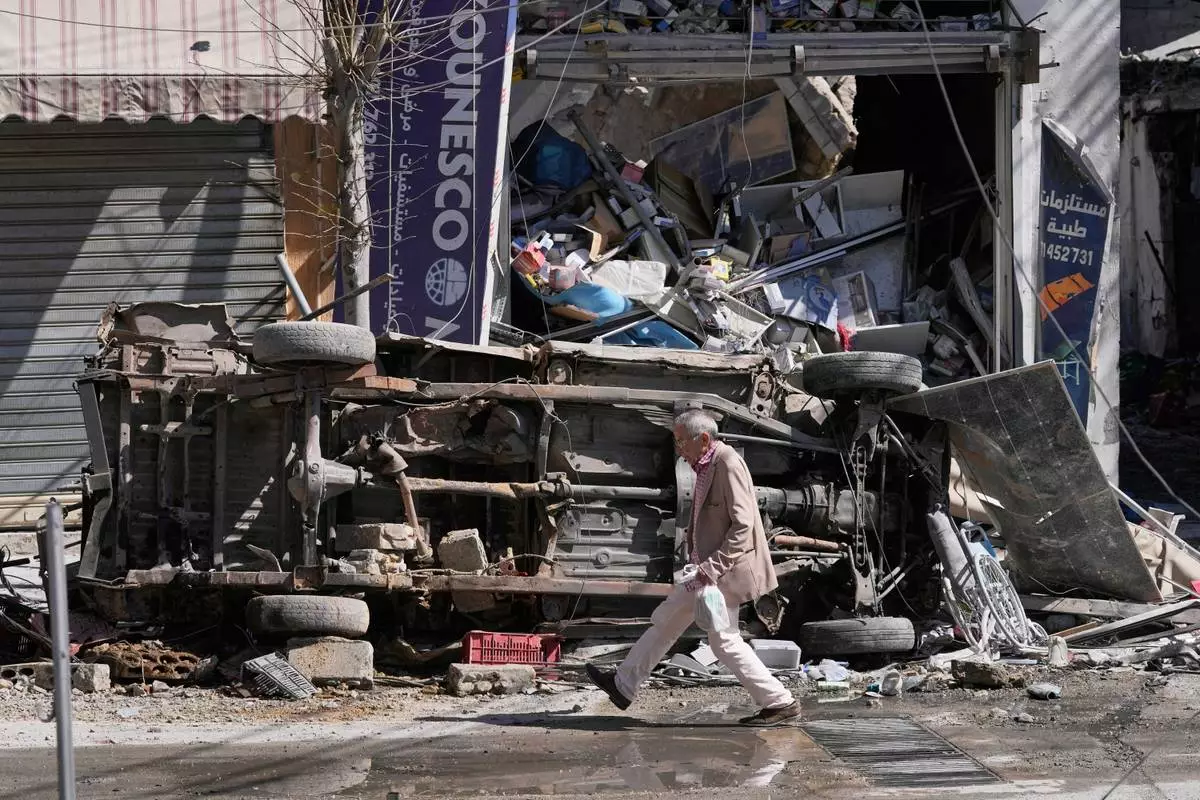
A man passes by a destroyed car and shop on a commercial street that was hit by Israeli airstrikes in Nabatiyeh town, south Lebanon, Thursday, March 5, 2026. (AP Photo/Mohammed Zaatari)
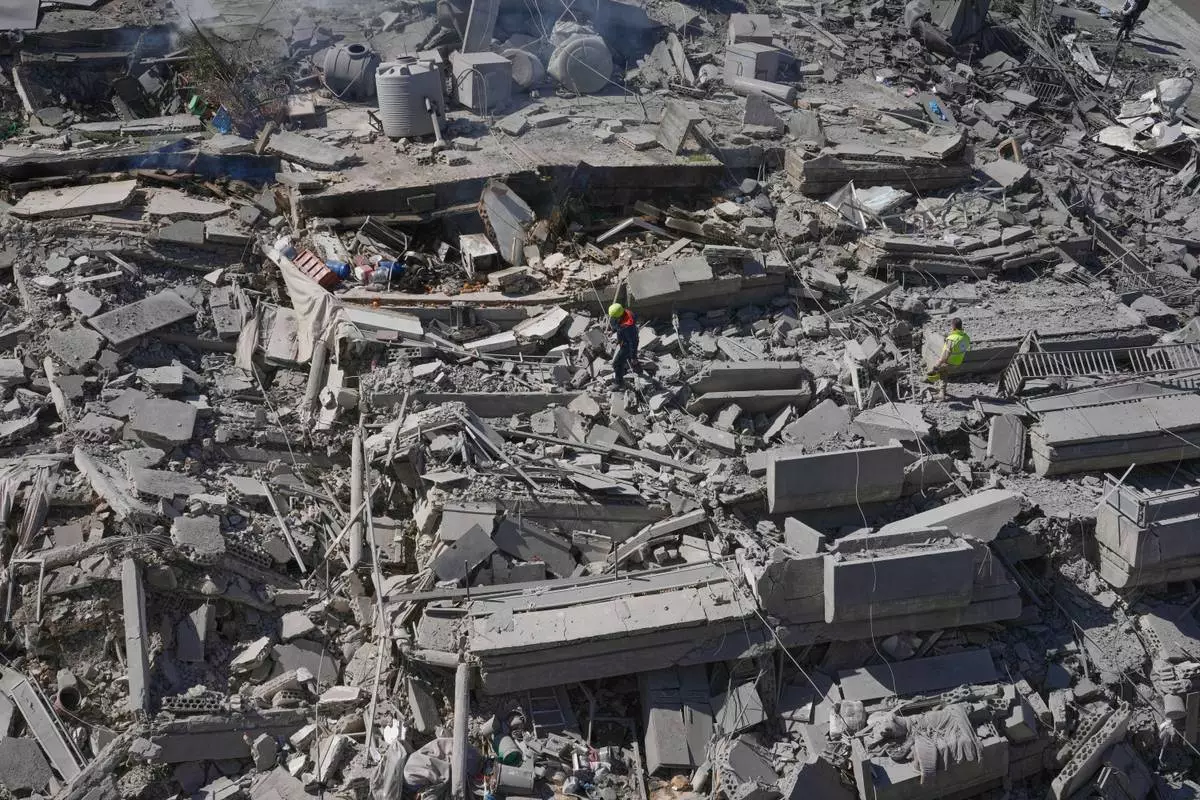
Rescue workers check a destroyed building that was hit by an Israeli airstrike in Nabatiyeh town, south Lebanon, Thursday, March 5, 2026. (AP Photo/Mohammed Zaatari)
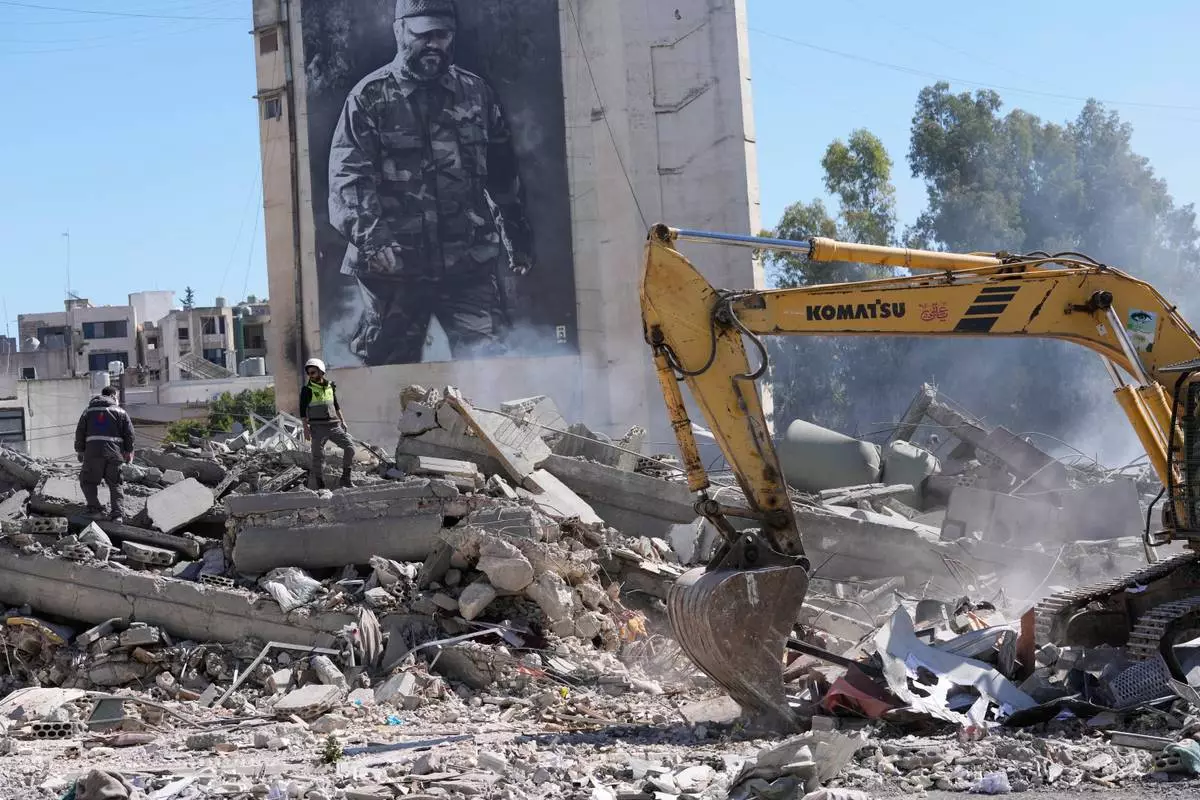
A giant poster shows the late Hezbollah military commander Imad Mughniyeh, while workers check a destroyed building that was hit by an Israeli airstrike in Nabatiyeh town, south Lebanon, Thursday, March 5, 2026. (AP Photo/Mohammed Zaatari)
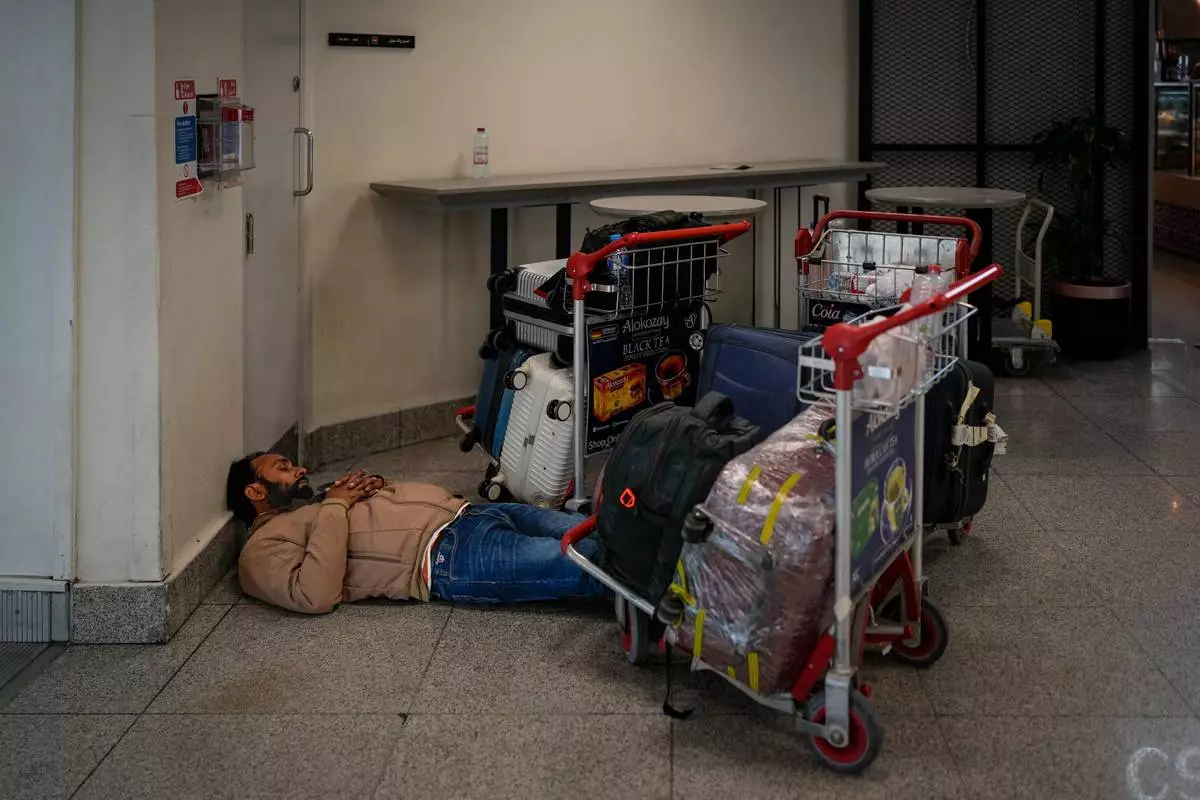
A stranded passenger sleeps on the floor outside Dubai International Airport terminal as the airport resumes limited operations in Dubai, United Arab Emirates, Thursday, March 5, 2026. (AP Photo/Altaf Qadri)
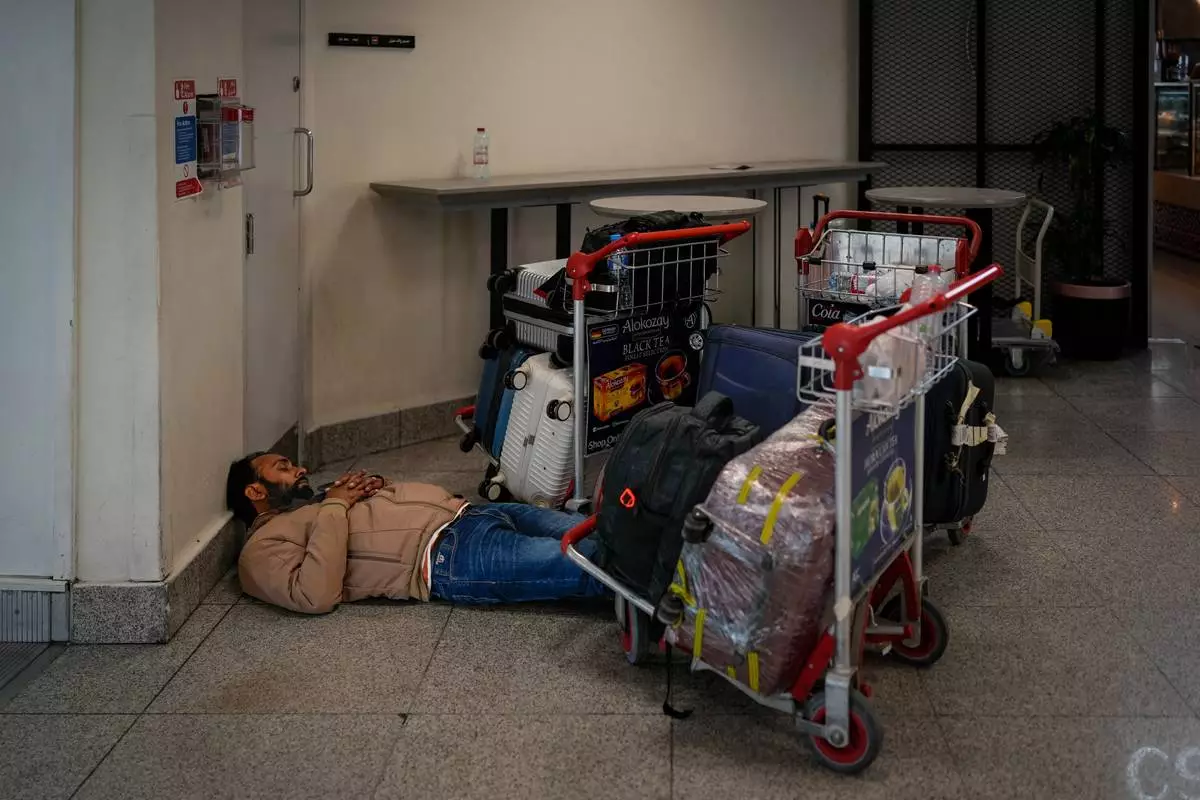
A stranded passenger sleeps on the floor outside Dubai International Airport terminal as the airport resumes limited operations in Dubai, United Arab Emirates, Thursday, March 5, 2026. (AP Photo/Altaf Qadri)
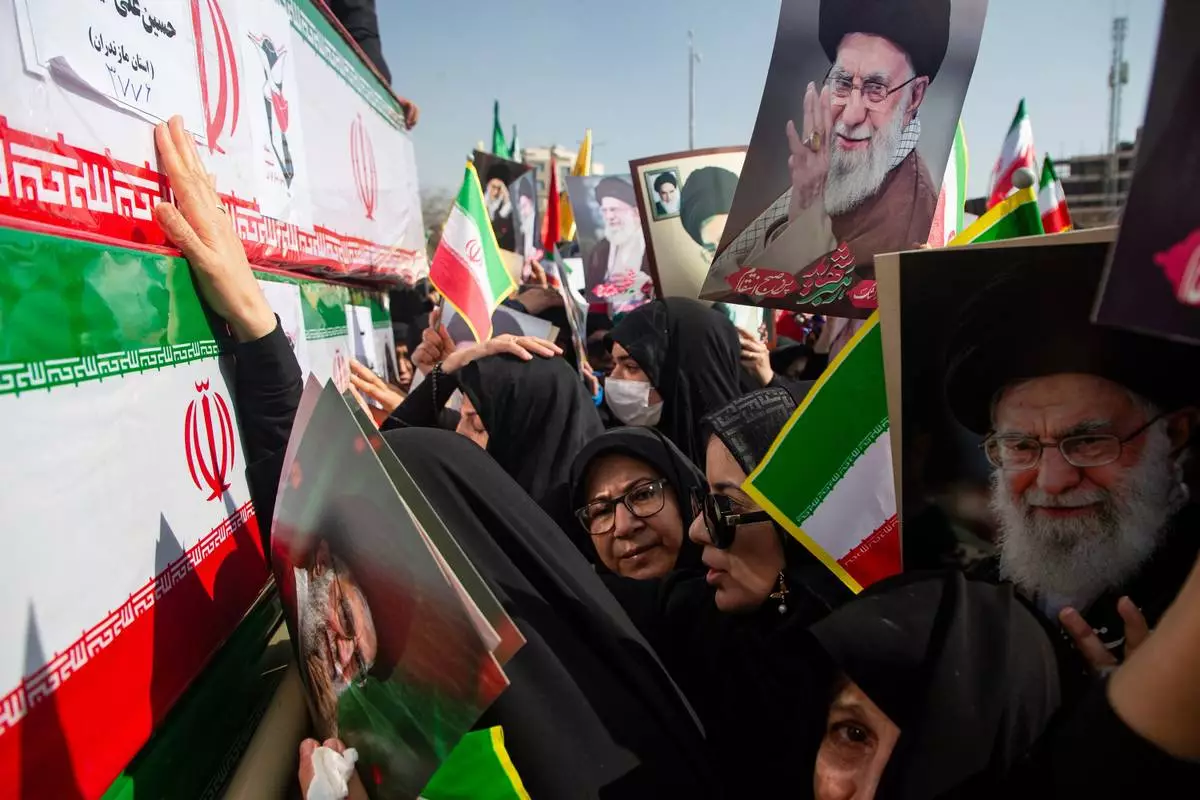
Some holding pictures of the late Iranian Supreme Leader Ayatollah Ali Khamenei, mourners reach out to coffins during a funeral for people killed during the ongoing U.S.–Israeli military campaign in Isfahan, Iran, Thursday, March 5, 2026. (Payman Shahsanaei/ISNA via AP)
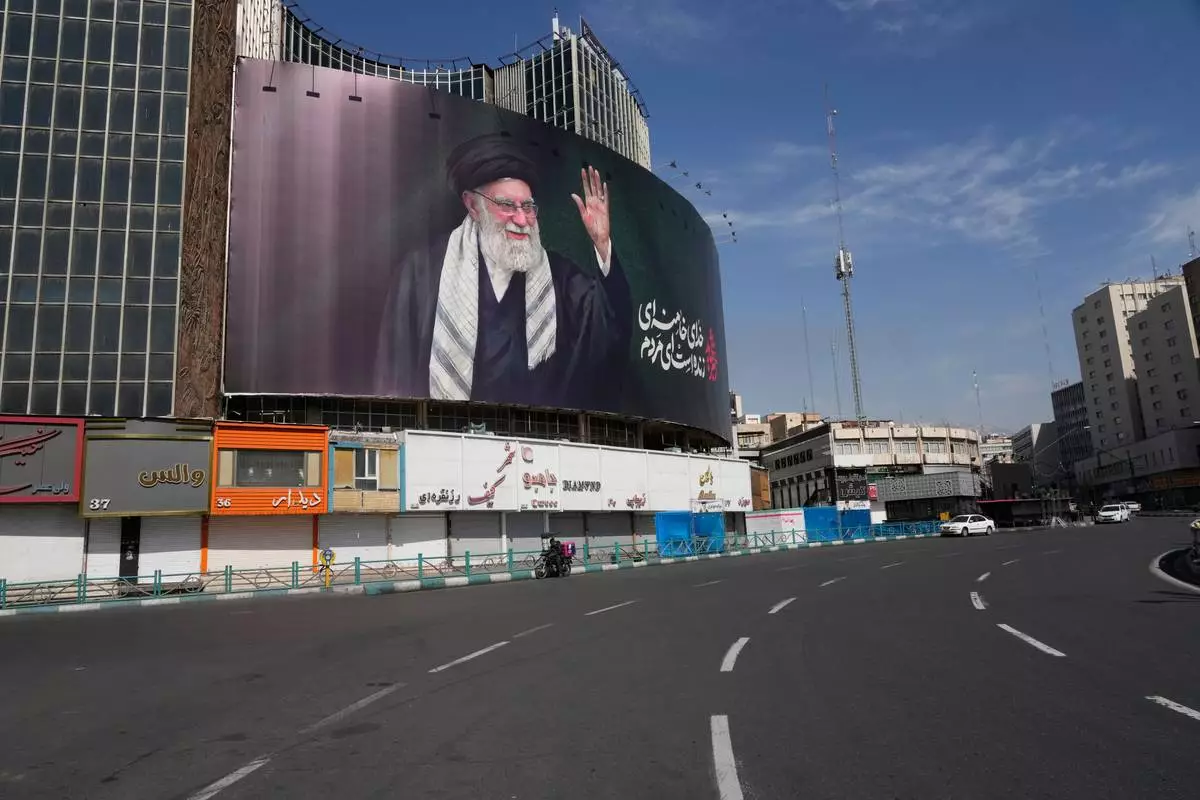
A billboard showing a portrait of the late Iranian Supreme Leader Ayatollah Ali Khamenei, who was killed in U.S.-Israeli strikes, looms over an empty square in Tehran, Iran, Thursday, March 5, 2026. (AP Photo/Vahid Salemi)
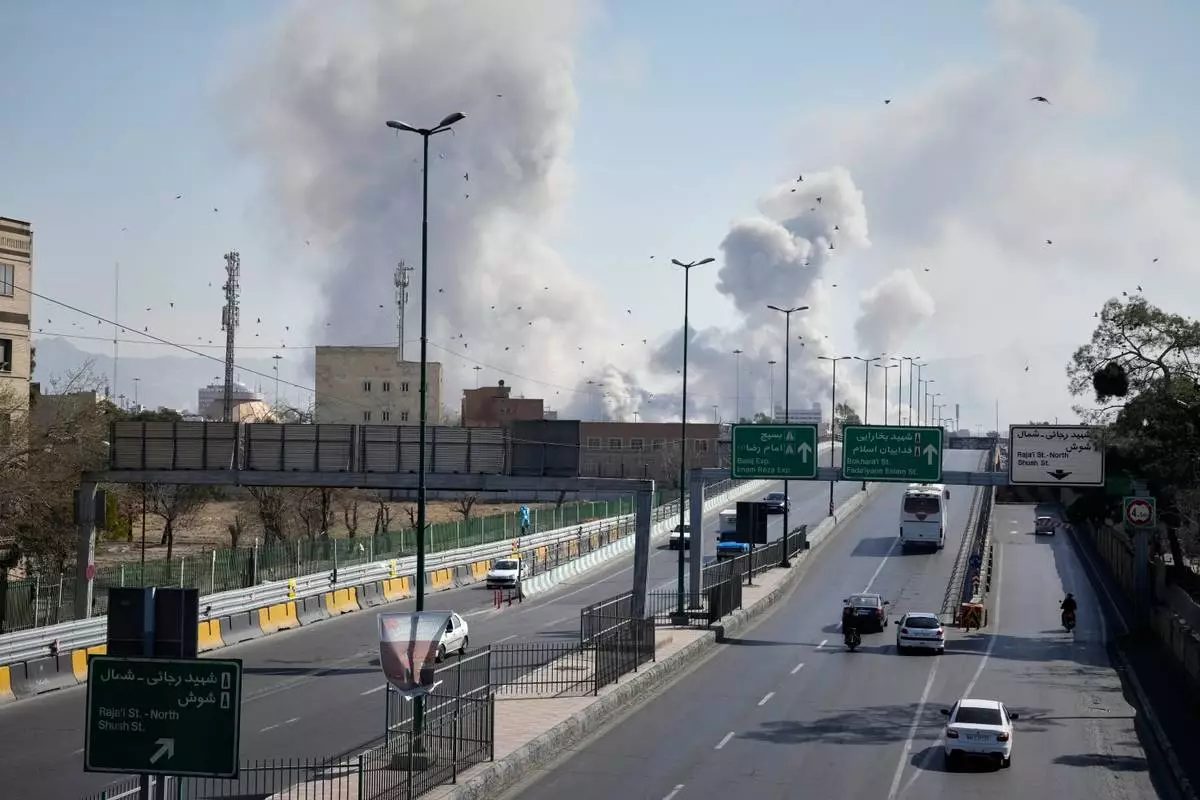
Plumes of smoke rise as strikes hit the city during the U.S.–Israeli military campaign in Tehran, Iran, Thursday, March 5, 2026. (AP Photo/Vahid Salemi)
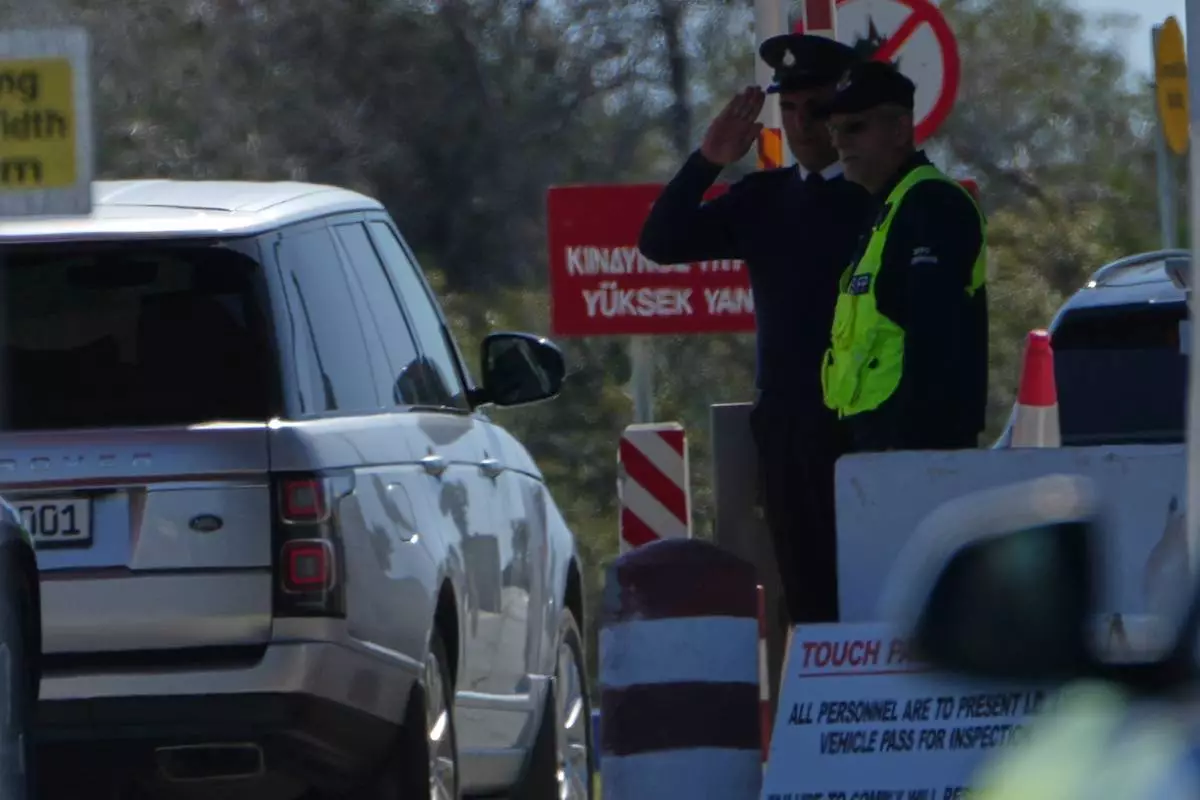
A police officer salutes as vehicles transport British Defence Secretary John Healey enter at the U.K.'s RAF Akrotiri air base near Limassol, Cyprus, Thursday, March 5, 2026. (AP Photo/Petros Karadjias)
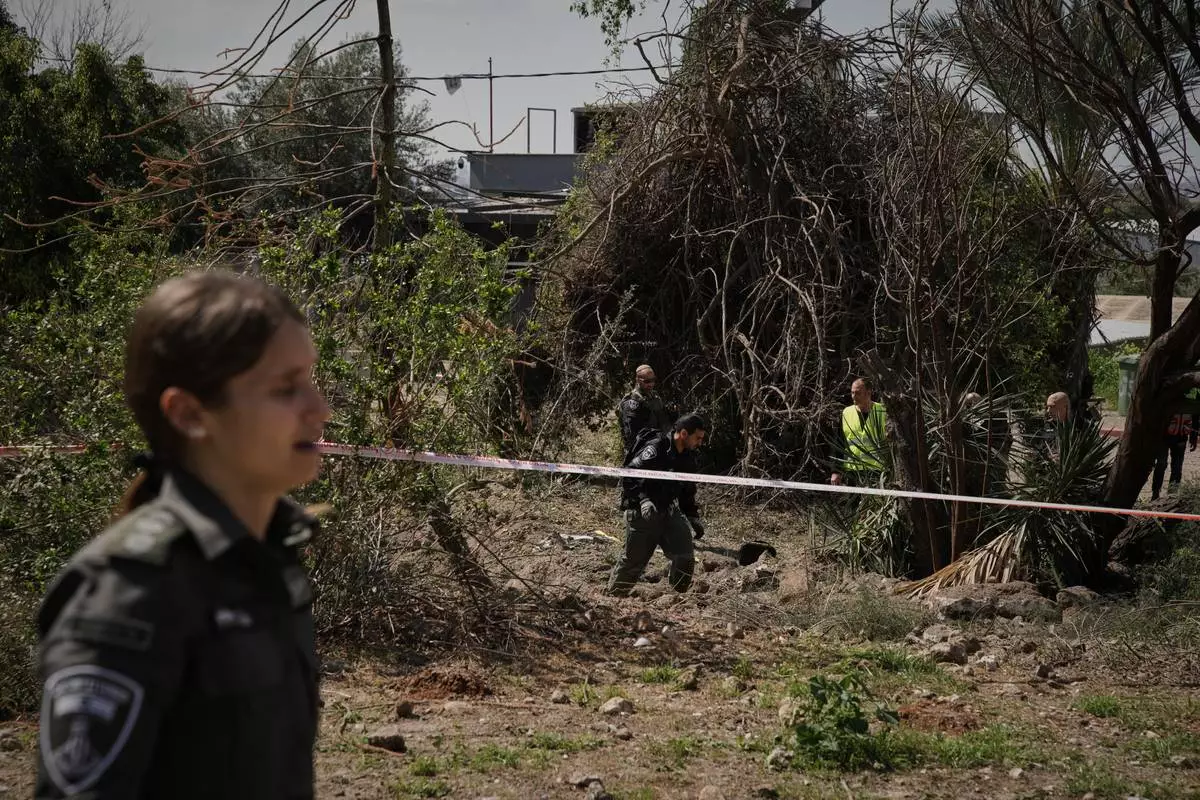
Israeli security forces inspect the site struck by an Iranian missile in central Israel, Thursday, March 5, 2026. (AP Photo/Leo Correa)
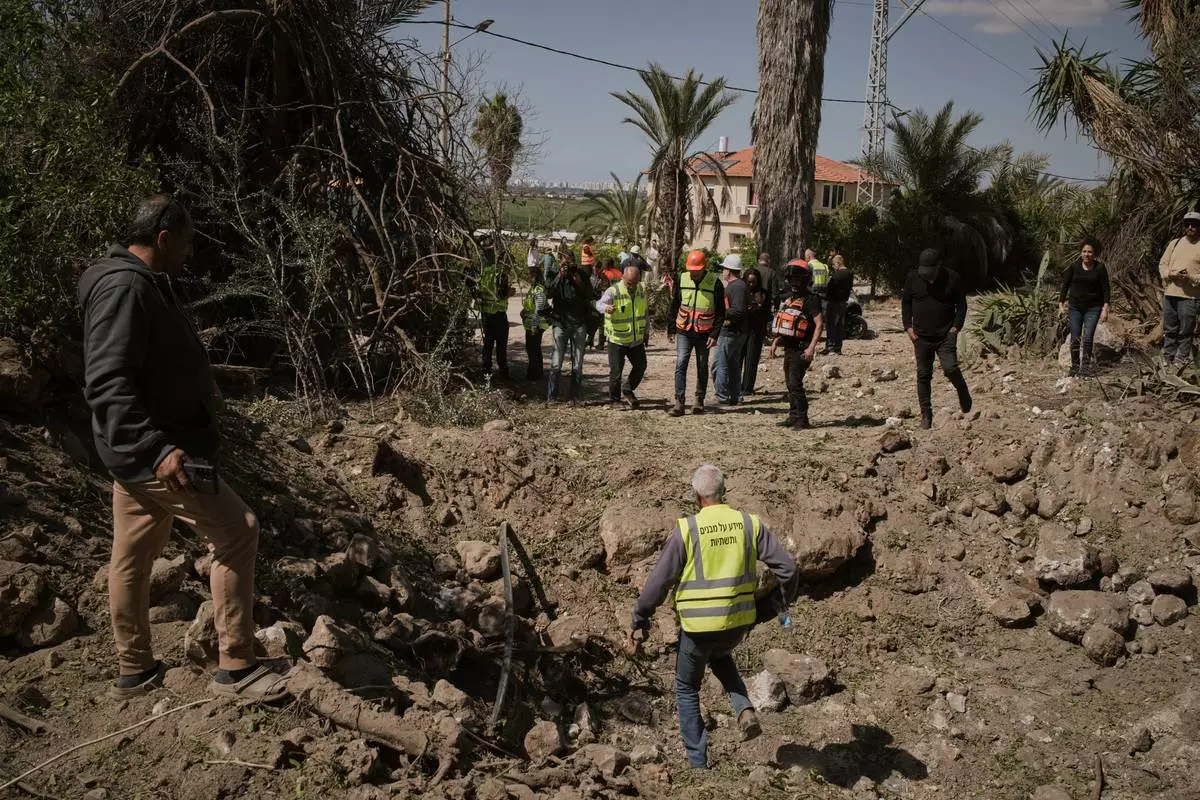
Residents and Israeli security forces inspect the site struck by an Iranian missile in central Israel, Thursday, March 5, 2026. (AP Photo/Leo Correa)
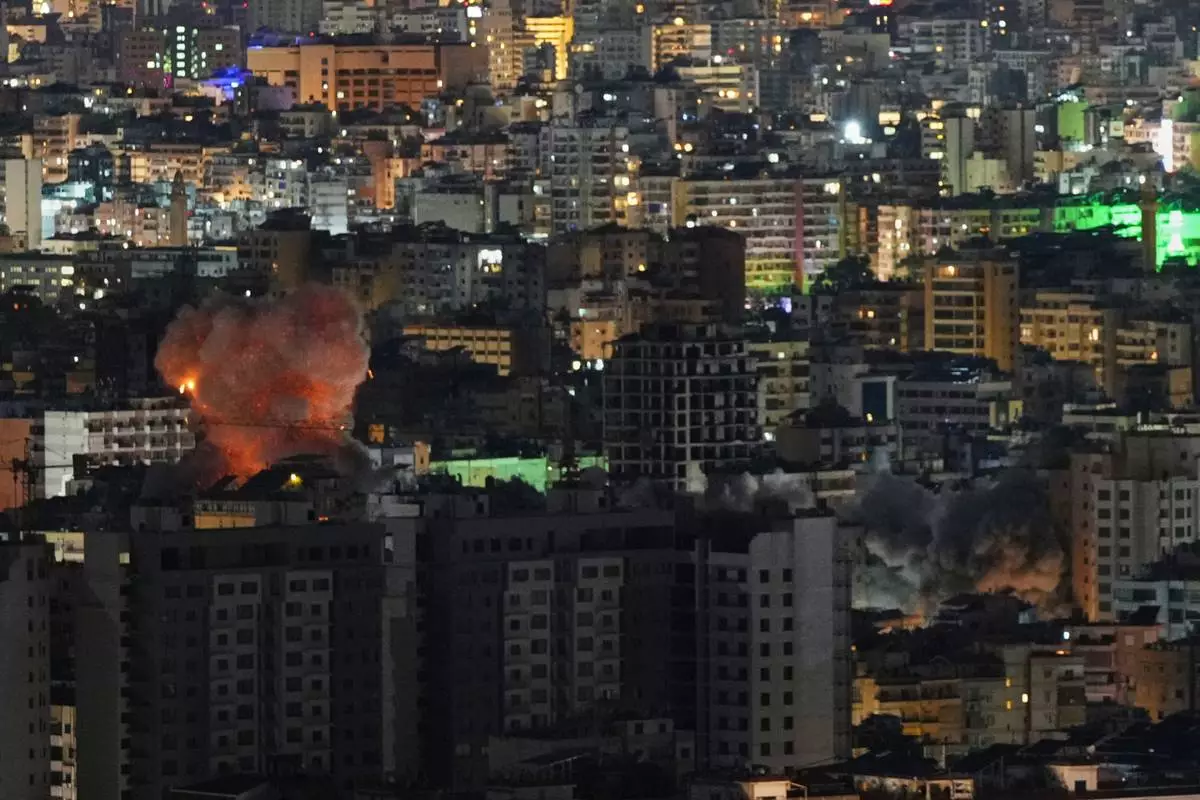
Smoke and flames rise from the site of Israeli airstrikes in Dahiyeh, Beirut's southern suburbs, Lebanon, Thursday, March 5, 2026. (AP Photo/Hassan Ammar)
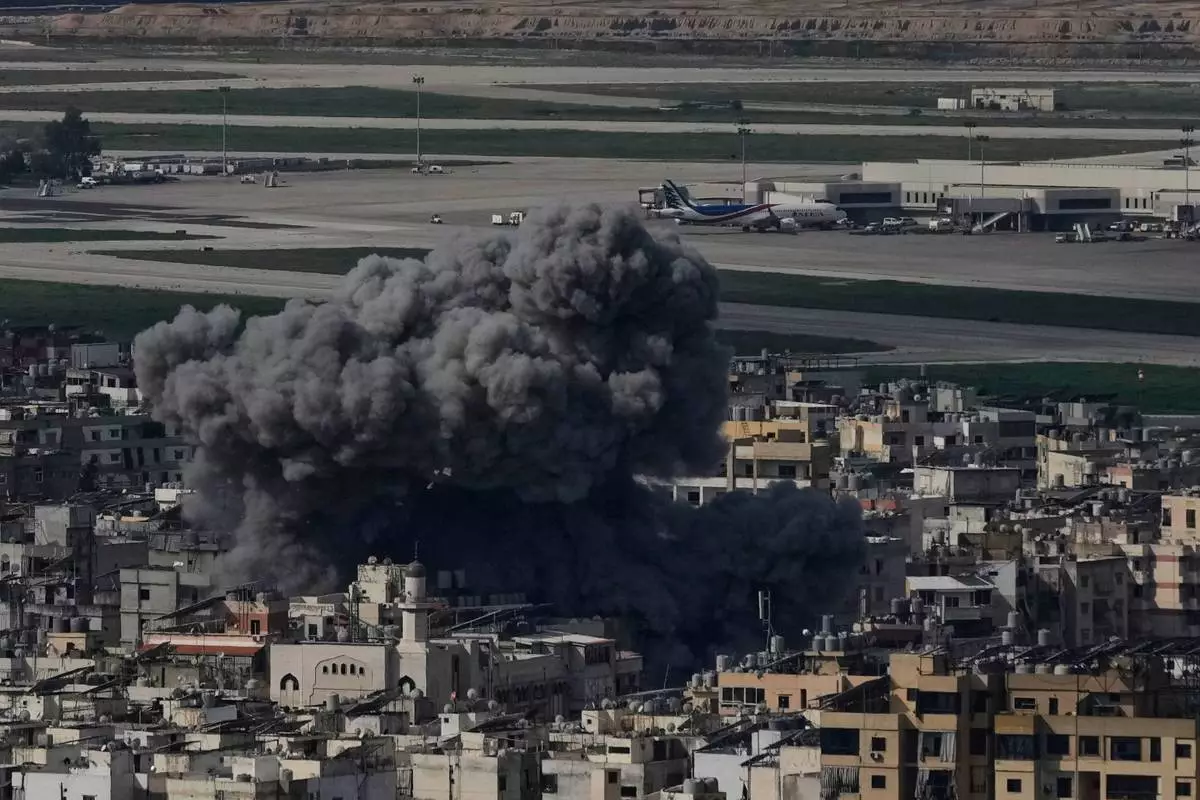
Smoke rises following an Israeli airstrike in Dahiyeh, Beirut's southern suburb, near Rafik Hariri International Airport, Lebanon, Wednesday, March 4, 2026. (AP Photo/Bilal Hussein)
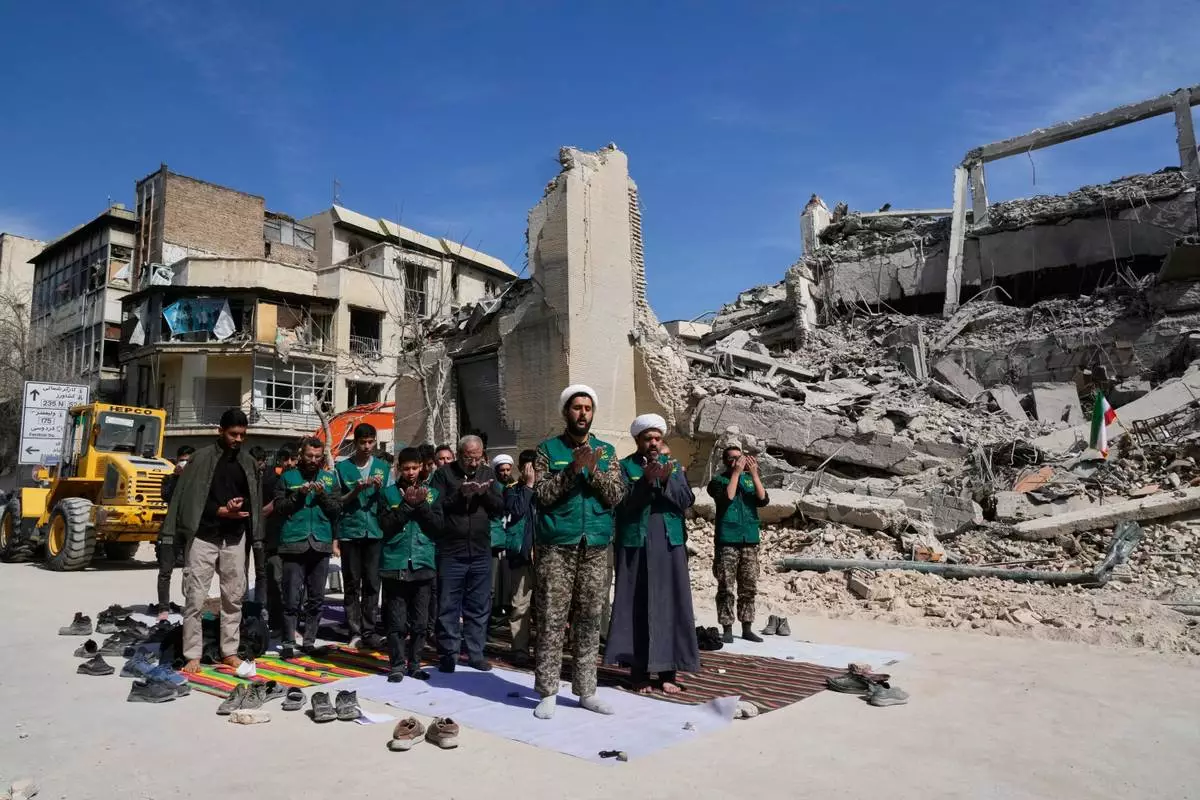
A cleric leads a group of volunteers in prayer next to a police facility struck during the U.S.–Israeli military campaign in Tehran, Iran, Wednesday, March 4, 2026. (AP Photo/Vahid Salemi)
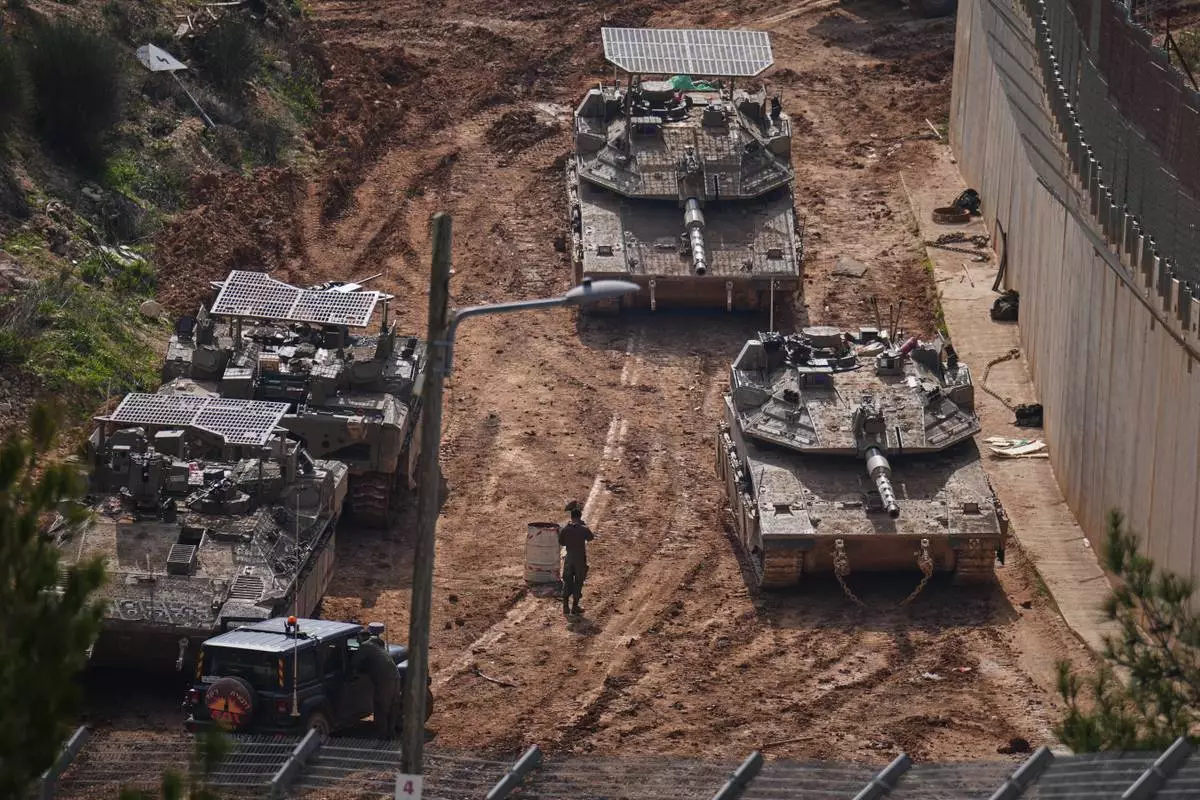
Israeli tanks maneuver near the Israel-Lebanon border, in northern Israel, Wednesday, March 4, 2026. (AP Photo/Ariel Schalit)
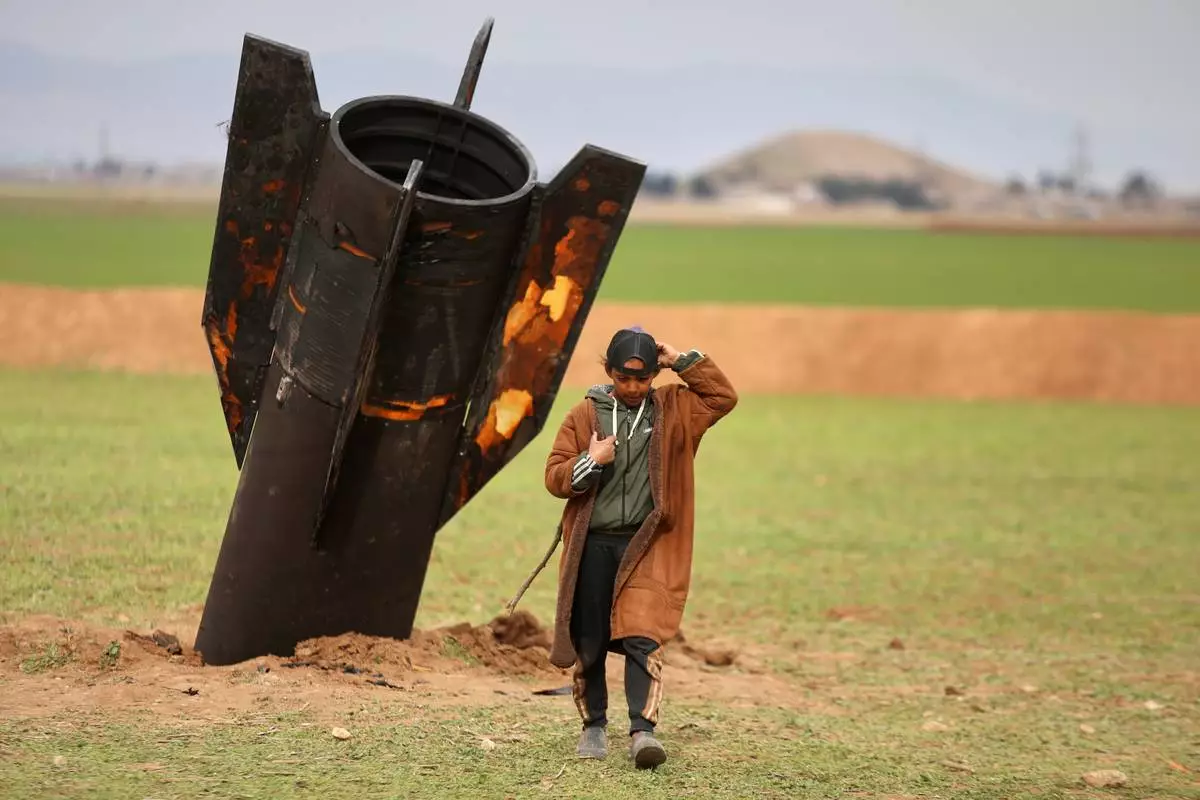
A shepherd boy walks away from an unexploded Iranian projectile that landed in an open field in the outskirts of Qamishli, eastern Syria, Wednesday, March 4, 2026.(AP Photo/Baderkhan Ahmad)
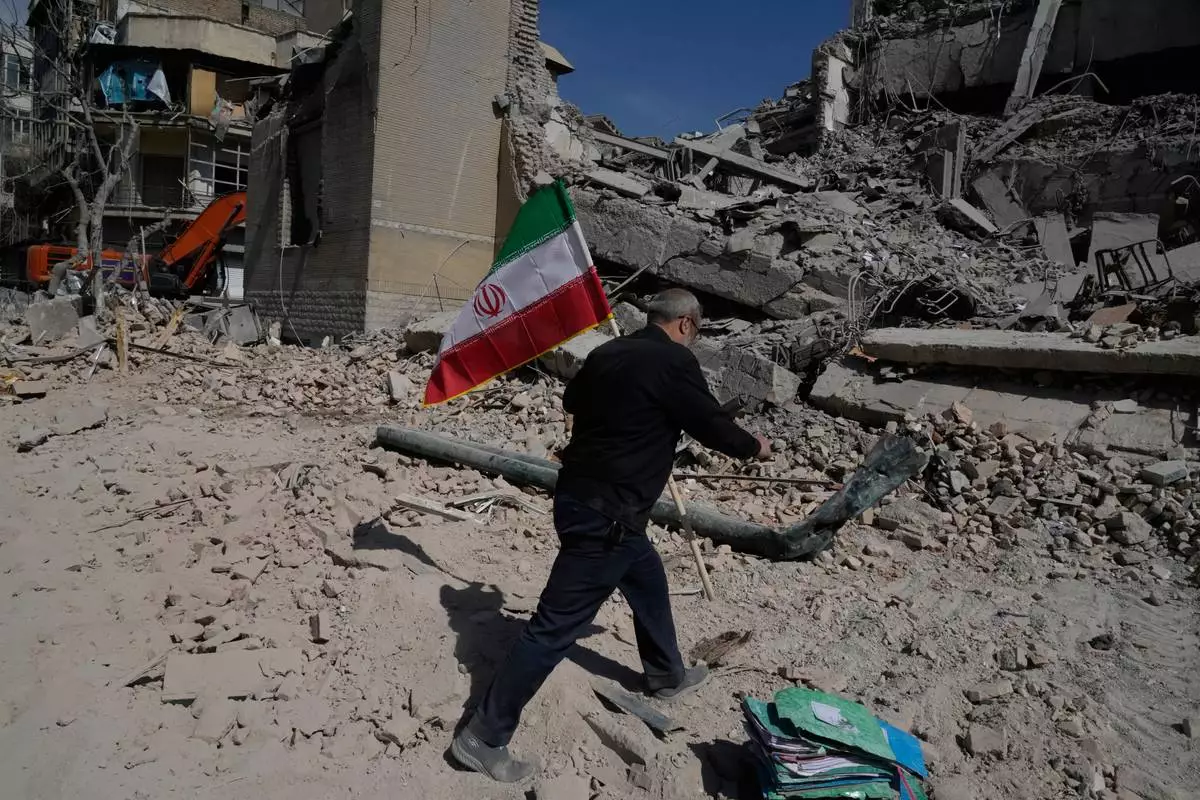
A man carries an Iranian flag to place on the rubble of a police facility struck during the U.S.–Israeli military campaign in Tehran, Iran, Wednesday, March 4, 2026. (AP Photo/Vahid Salemi)