Antoine Dupont deserves to be hailed far and wide in Andy Farrell's opinion.
As for his own scrumhalf? The Ireland coach couldn't be happier with Jamison Gibson-Park, to whom he gave his first test in 2020 and is giving his 50th test for the Irish on Friday night when Wales visits in the Six Nations.
“I think Dupont is a generational player,” Farrell said. "It's certainly right to speak of him in terms like: Is he the best player that has ever been?
“But the way that we want to play the game, Jamison suits us down to the ground.”
Gibson-Park has mirrored Ireland's progress in the ongoing championship.
On opening night in Paris, he was eclipsed by Dupont, smashed behind a beaten pack, missed four tackles, and finished on the wing as Ireland lost to France 36-14.
Back home against Italy, Gibson-Park was dropped to the bench for only the second time since the 2023 Rugby World Cup. But when he was injected at 10-10 with 30 minutes to go, he and Jack Crowley gave a noticeable lift in assurance and energy. Ireland prevailed 20-13.
In the last round at Twickenham, two days after his 34th birthday, Gibson-Park was the player of the match with a heads-up try, the spark behind a dominant pack that beat up England 42-21. In a classy touch, his first comments were to congratulate Maro Itoje for his 100th England test.
“I know everyone talks about Dupont but we're pretty lucky to have Jamison in our squad,” Farrell said. "And it's his fight, his determination. He's hard as nails, like. You wouldn't like to compete against him.
"Somebody asked the question the other day: ‘If someone broke into your house, who would you want protecting your house?’ And I thought straight away: Jamison.
“He’d probably bite their ankles off first and then do whatever he wanted. He's that type of competitor. He's the full box of tricks.”
Gibson-Park came through the New Zealand system: New Zealand Schoolboys, Taranaki NPC, New Zealand Maori, Blues and Hurricanes in Super Rugby. Low in the New Zealand pecking order, he moved to Ireland in 2016, became Ireland-qualified in 2019, and a dual citizen in 2023.
While supplanting Conor Murray, he's been at the heart of Ireland's greatest triumphs under Farrell: Series win over the All Blacks in New Zealand, Six Nations Grand Slam in 2023 and title in 2024, drawn series in South Africa, and 17 consecutive victories. Farrell made him the British and Irish Lions starting scrumhalf in Australia last year.
“What you see in him all those years ago is exactly what you see now,” Farrell said.
"He plays quick because he's unbelievably fit, but because of that speed and that fitness he's able to play nice and calm within his head and see things that others don't. That's the definition of fitness, really. The game becomes easy for you when everyone else is struggling and he seems to be a step apart as far as that's concerned.
“On top of that, the more you play international rugby the more your confidence grows to show everyone that you're able to be not just a top international player, but I would think that he's trying to prove to himself and to his teammates that he's right up there with the best in the world. I think that's how he's playing now.”
AP rugby: https://apnews.com/hub/rugby
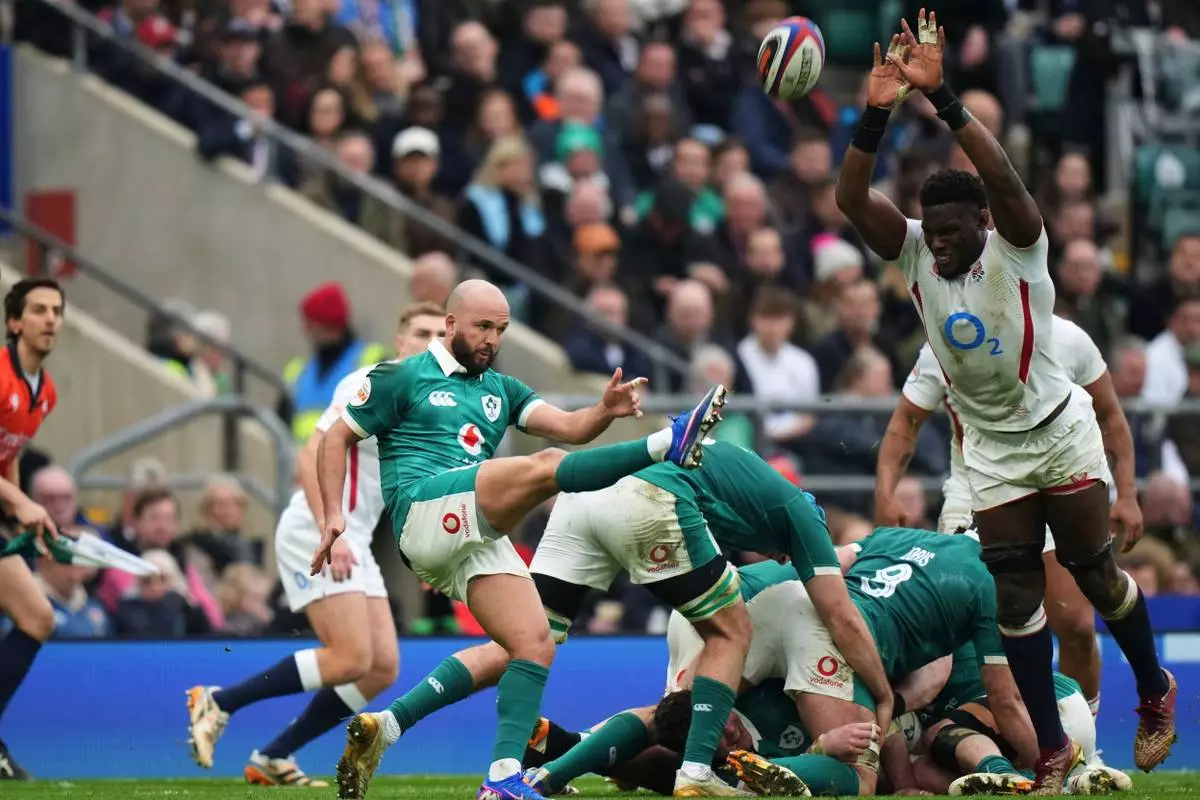
Ireland's Jamison Gibson-Park, left, kicks the ball as England's captain Maro Itoje tries to block during the Six Nations rugby union match between England and Ireland in London, England, Saturday, Feb. 21, 2026. (AP Photo/Alastair Grant)
NEW YORK (AP) — U.S. stocks are slipping Thursday as oil prices rise further because of the war with Iran, but the moves are less severe than earlier in the week.
The S&P 500 dipped 0.2%, coming off a frenetic start to the week that saw financial markets worldwide swerve sharply, sometimes hour by hour. The Dow Jones Industrial Average was down 256 points, or 0.5%, as of 9:35 a.m. Eastern time, and the Nasdaq composite was 0.2% lower.
Markets again seem to be following the cue of oil prices. Worries are high that a long-term spike could exhaust households’ ability to spend, as well as grind down the global economy and push interest rates higher.
A barrel of Brent crude, the international standard, rose 3.3% to $84.05. That’s up from close to $70 late last week. A barrel of benchmark U.S. crude climbed 4.3% to $77.90.
Oil prices rose after Iran launched a new wave of attacks against Israel, American bases and countries around the region, and the war is continuing to escalate since the United States and Israel began attacks on Saturday. The escalation worsens worries about how long disruptions could last for the production and transport of oil and natural gas in the region. Those disruptions, and the possibility of even more, are what’s driving the price of energy higher.
Prices at U.S. gasoline pumps have already jumped because of it. The average price for a gallon is $3.25, up 9% from $2.98 a week ago, according to auto club AAA.
To be sure, the U.S. stock market has a history of bouncing back relatively quickly following conflicts in the Middle East and elsewhere. That has many professional investors suggesting patience and riding through the market’s swings.
“While further escalation remains a risk, we think the more likely outcome is an increase in market risk aversion that likely lasts only a short time until investors can see a winding down of hostilities,” according to Scott Wren, senior global market strategist at Wells Fargo Investment Institute.
But if oil prices spike to, say, $100 per barrel and stay there a while, it could be too much for the global economy to stomach. Uncertainty about that has caused this week’s sharp swings, and much will depend on what happens with the Strait of Hormuz, a narrow waterway off Iran’s coast where roughly a fifth of the world’s oil typically sails past.
Thursday’s losses for Wall Street would have been worse if not for Broadcom. The chip company’s stock rose 2.7% after it reported stronger profit and revenue for the latest quarter than analysts expected. It’s one of Wall Street’s most influential stocks because it’s one of the biggest by total value, and CEO Hock Tan said it benefited from a 74% jump in revenue for AI chips.
In the bond market, Treasury yields jumped as rising oil prices put more upward pressure on inflation, which could keep the Federal Reserve from cutting interest rates.
The yield on the 10-year Treasury rose to 4.14% from 4.09% late Wednesday and from only 3.97% just before the war with Iran started.
The Fed could keep interest rates high to keep a lid on inflation. But high interest rates would also keep it more expensive for U.S. households and companies to borrow money, grinding down on the economy.
The central bank had indicated it planned to resume its cuts to interest rates later this year, in hopes of giving a boost to the job market and economy. Because of the war and higher oil prices, traders have pushed their forecasts further into the summer for when the Fed could begin cutting rates again.
In stock markets abroad, indexes rebounded in Asia following historic losses a day before. South Korea’s Kospi jumped 9.6% to recover much of its 12.1% plunge from Wednesday, which was its worst loss ever.
But indexes fell in Europe as oil prices began to accelerate. France’s CAC 40 fell 0.9%, and Germany’s DAX lost 1%.
AP Writers Kim Tong-hyung and Elaine Kurtenbach contributed.
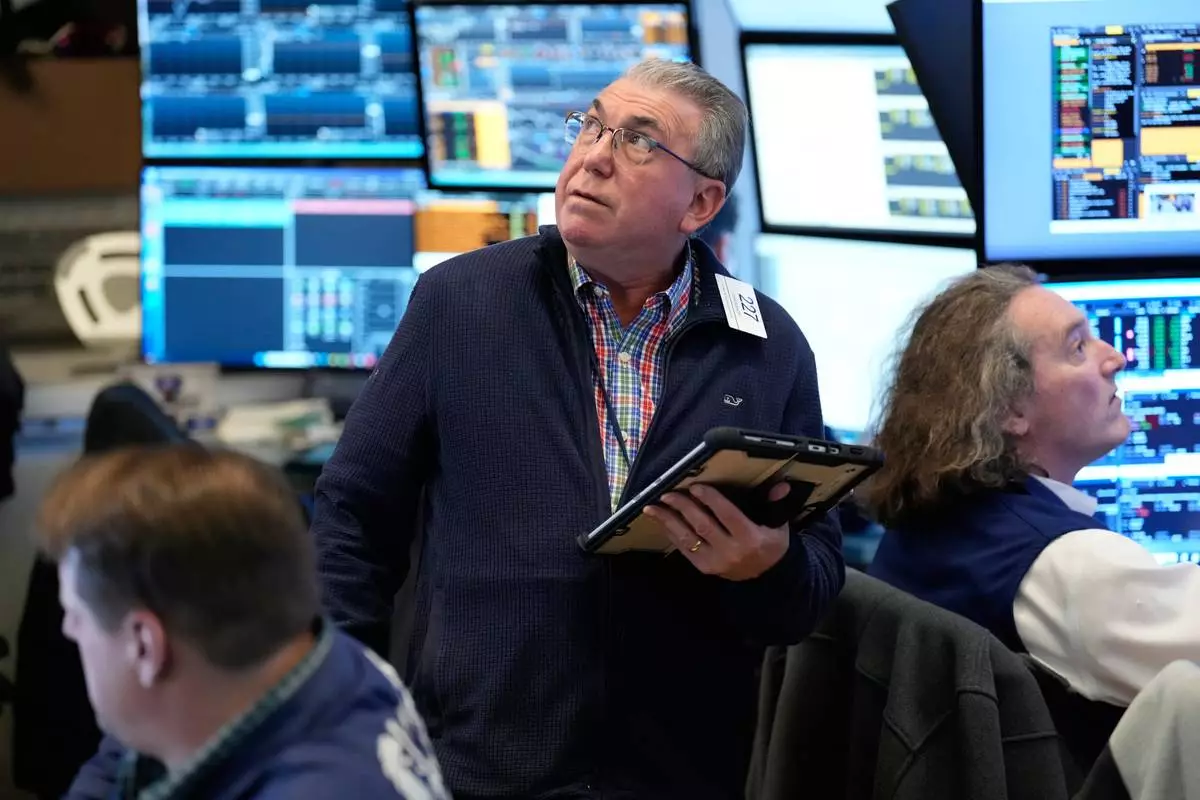
John Bishop works on the floor at the New York Stock Exchange in New York, Wednesday, March 4, 2026. (AP Photo/Seth Wenig)
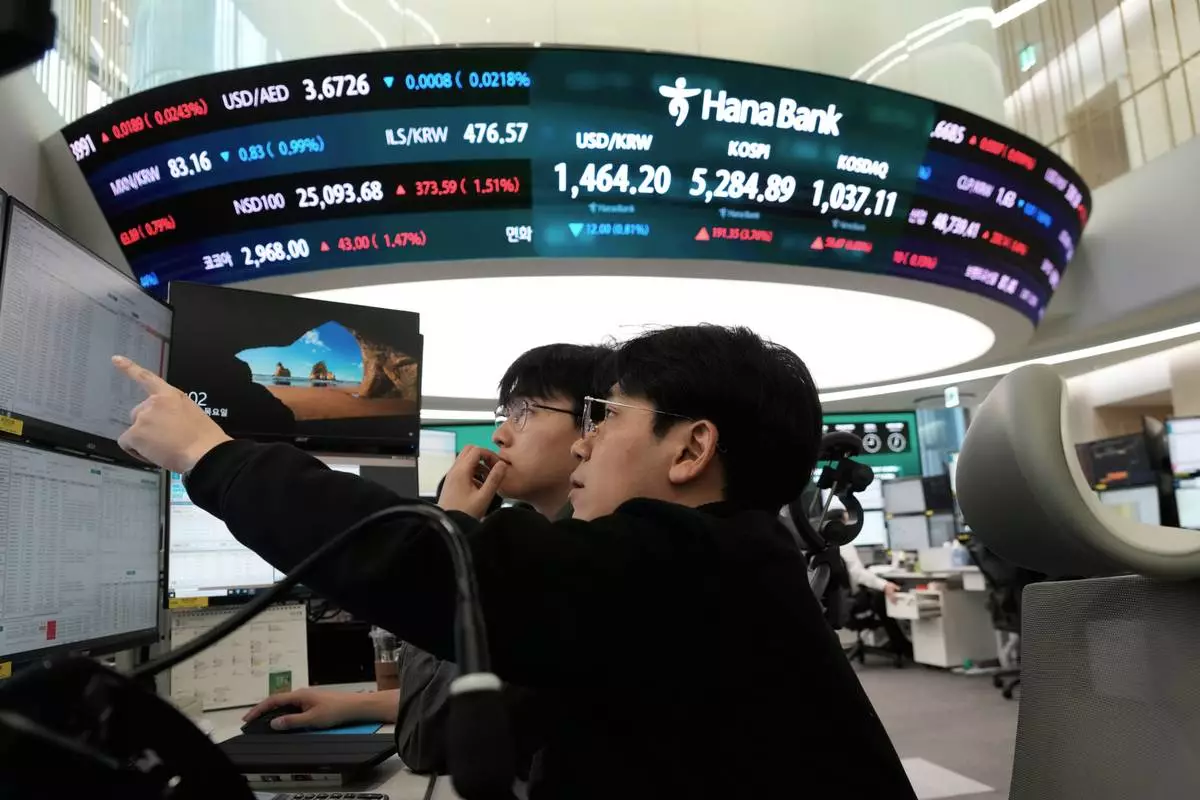
Currency traders watch monitors near a screen showing the Korea Composite Stock Price Index (KOSPI), top center, and the foreign exchange rate between U.S. dollar and South Korean won, top center left, at the foreign exchange dealing room of the Hana Bank headquarters, in Seoul, South Korea, Thursday, March 5, 2026. (AP Photo/Ahn Young-joon)
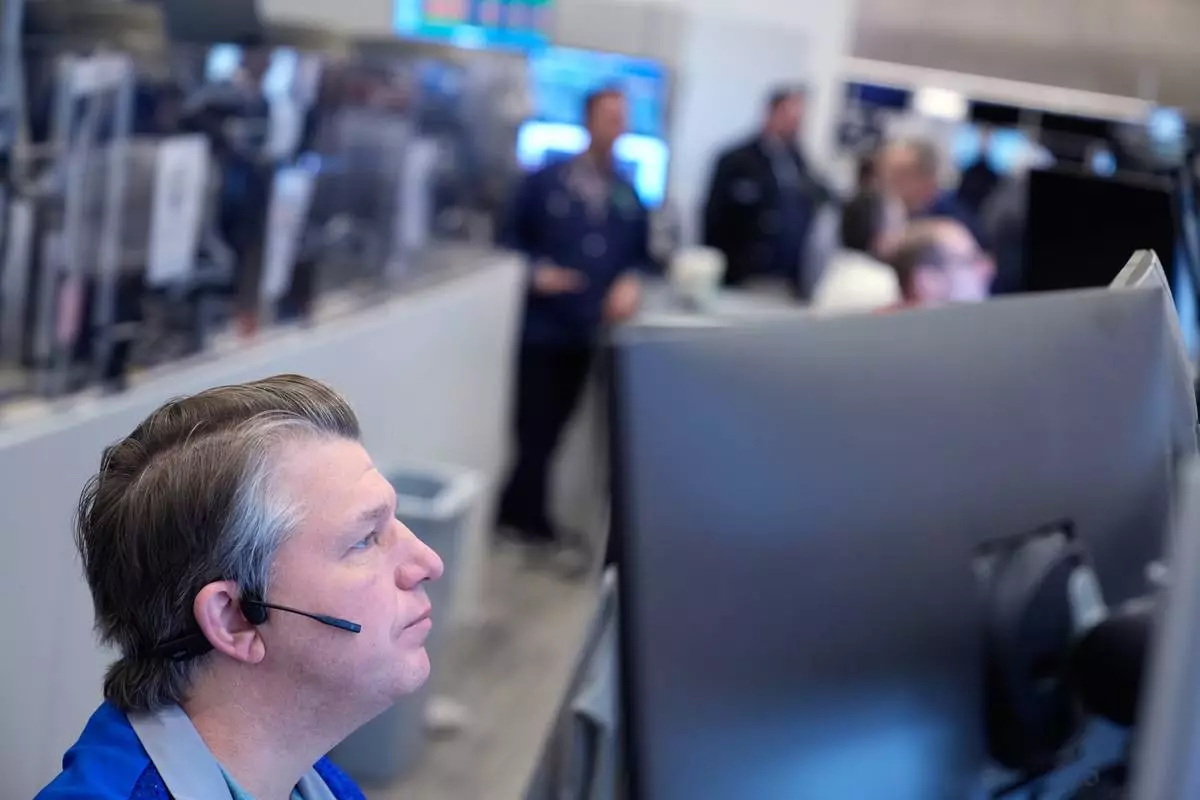
Ed Nangle works on the floor at the New York Stock Exchange in New York, Wednesday, March 4, 2026. (AP Photo/Seth Wenig)

Financial information is displayed on the floor at the New York Stock Exchange in New York, Wednesday, March 4, 2026. (AP Photo/Seth Wenig)