Next up for Wrexham is world champion Chelsea.
While a place in the quarterfinals of the FA Cup is at stake when the teams face off at the Racecourse Ground on Saturday, for Wrexham it will be a timely gauge of just how “Premier League-ready” it is.
Speaking to industry experts last week, Wrexham CEO Michael Williamson said the Welsh club — owned by actors Ryan Reynolds and Rob Mac — would be ready for the top flight of English soccer when the time comes. Even as soon as next season, just three years after it was playing non-league.
“What we’ve proven is that with our culture we’re pretty damn good at being ready,” Williamson told the FT Business of Football Summit.
Even with celebrity owners, huge financial backing and a global reach through the fly-on-the-wall documentary series “Welcome to Wrexham,” it cannot be overstated just how remarkable the club's rise has been.
Back-to-back-to-back promotions have taken it from playing non-league games in a crumbling stadium to the second-tier Championship and in contention for the playoffs to the Premier League.
The prospect of playing the likes of Chelsea every week is not just the hope for Wrexham's owners but the mission.
“They said that from day one and everyone laughed at them,” Williamson said. “We know what we have to do. It’ll be really difficult but we can do it because we’ve proven that we can, not just survive when we get promoted, but that we can actually thrive.”
Wrexham's meteoric rise has meant it has constantly played catchup to try to keep pace with its on-field success. More than 60 players have been signed since the takeover was completed in 2021, with 16 joining last summer to build a squad capable of competing in a division with former Premier League champion Leicester and a host of clubs with very recent top flight experience.
Even still, the spending is nothing like that of England's top flight. Nathan Broadhead became Wrexham's record signing in August for a reported $10 million. Before him, Sam Smith cost a reported $2.7 million.
Compare that to Chelsea, which has spent close to $2 billion under American owners Todd Boehly and Clearlake Capital since buying the club in 2022. That money helped Chelsea win the Club World Cup last year — but it has not come close to winning the Premier League and it could miss out on qualification to the Champions League this season.
Wrexham's spending is likely to have to increase significantly again to bridge the widening gap between the Premier League and the Championship, with promoted teams increasingly struggling to make the step up.
Last season, all three promoted teams — Leicester, Ipswich, Southampton — were relegated. The year before, Sheffield United, Burnley and Luton all failed to survive in their first season in the top flight.
“We’d have to look at a squad change and we’re definitely planning that,” Williamson said in the event of Wrexham securing a fourth straight promotion.
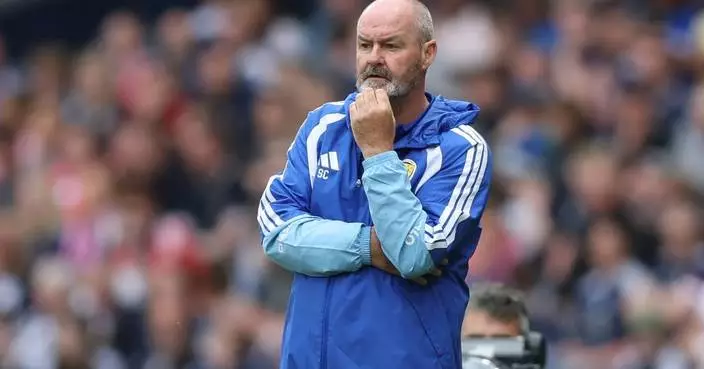
While player changes have been frequent, manager Phil Parkinson has been a constant and was recently told by Mac — formerly known as McElhenney — that he has a job for life.
His immediate focus is on an FA Cup upset against Chelsea.
“You’ve got to go into every game believing and if not you may as well not turn up,” Parkinson said Thursday. “We’ve got to go in with belief but also an understanding of the underdog mentality and what boxes we’ve got to tick to make this evening as difficult as possible for Chelsea.”
Wrexham pulled off one of the most famous cup shocks when, as a fourth-tier team, it beat then-league champion Arsenal in 1992.
This season it has already knocked out Premier League club Nottingham Forest in the third round.
“All through the divisions we’ve had cup ties, like when we played Coventry and Sheffield United, and we’ve spoken to the players about having that test against better quality players, tactically and their physical power, of the next level,” Parkinson said. “This is the next stage for us against a team of Chelsea’s quality."
James Robson is at https://x.com/jamesalanrobson
AP soccer: https://apnews.com/hub/soccer

FILE - Wrexham's goalkeeper Arthur Okonkwo, left, celebrates with teammates after a penalty shootout at the end of the English FA Cup third round soccer match between Wrexham and Nottingham Forest in Wrexham, Wales, Friday, Jan. 9, 2026. (AP Photo/Jon Super, File)
BOGOTÁ, Colombia (AP) — Colombians milled into voting stations on Sunday in the first round of the South American nation’s presidential election, choosing between candidates with radically diverging visions for the future of peace in a country haunted by decades of armed conflict.
The vote, seen as a referendum on outgoing President Gustavo Petro’s policies, comes 10 years after Colombia signed an historic peace pact with guerrillas of the Revolutionary Armed Forces of Colombia, or FARC.
That agreement offered hope to break the nation out of a vicious cycle of fighting between rebel groups and the government but violence has roared back since then, coming to a head in the lead-up to the presidential vote. Criminal groups have increasingly launched drone strikes, armed attacks have plagued the race and last June, 39-year-old politician and presidential hopeful Miguel Uribe Turbay was fatally shot at a political rally.
In a country where the fight for peace has long been a part of the political ethos, the question of how to address the conflict is once again dividing the country.
The vote is slated to send a message to Latin America at a time voters are increasingly ditching leaders that pitched progressive policies, like providing opportunities to youths and rooting out corruption, to solve security ails, turning instead to heavy-handed security crackdowns like El Salvador's. It also comes as the Trump administration is placing renewed pressure on the region.
“Today's election isn't just important for us, it's important for all of Latin America,” said Juan Acevedo, a 62-year-old sociologist walking out of a voting station in Colombia's capital on Sunday morning. “Whoever wins here will suggest to the region if progressive policies will continue or if things are going to return to the right.”
There are 11 candidates running for president, but the election has basically turned into a three-horse race.
Senator and peace-builder Ivan Cepeda — a Petro ally — has led the polls and promises to carry on with Petro's “total peace” initiative to negotiate with the country’s remaining rebel groups and sign peace agreements with them in an effort to resolve the persistent crisis.
While the peace plan has largely failed as criminals have taken advantage of ceasefires with the government, Cepeda and Petro have maintained strong support among many because of progressive policies pushed forward under Petro, such as boosting the minimum wage.
Running against Cepeda are Abelardo de la Espriella and Paloma Valencia, who have vowed to come down on armed groups with a heavier hand.
De la Espriella — a bombastic lawyer known as “The Tiger” — has particularly gained traction among voters in recent weeks for pitching himself as an outsider keen on emulating the heavy-handed tactics used in El Salvador’s war on gangs, which sharply reduced gang violence but fueled accusations of human rights abuses.
Valencia is considered the political protege of Colombia's former president and strongman Álvaro Uribe, who governed from 2002 to 2010 with strong support from the United States and whose government beat back FARC rebels in an offensive that took a massive civilian toll.
Both de la Espriella and Valencia have touted their affinity for U.S. President Donald Trump even as he has taken a more aggressive stance toward Latin America than any U.S. president in decades and has pressured nations like Colombia, Ecuador and Mexico to more forcefully crack down on criminal groups.
If no candidate wins at least 50% of the vote — something extremely rare in Colombia — the two top vote-getters will face a runoff in June.
Maria Eugenia, a 57-year-old seamstress who was stitching a pair of jeans on Friday in downtown Bogotá, Colombia's capital, said she welcomed an all-out offensive on an expanding slate of criminal groups, regardless of the human cost.
While she approved of Petro’s pushes to improve the country's medical infrastructure, she said she was voting for de la Espriella because violence in rural areas of the country has gotten out of hand. She said negotiating peace pacts was simply “rewarding” armed groups.
“Of course, whenever you come down with a heavy hand, there’s always going to be debate,” she said. “But some people are going to have to fall to clean up what needs to be cleaned.”
Others, like Acevedo, the sociologist strolling out of a polling station on Sunday with packs of other voters, said a security crackdown like the one promoted by de la Espriella would only be returning to past military campaigns that he said only reinforced Colombia's cycle of violence.
He said he planned to vote for Cepeda, adding that while the government hasn't done a perfect job — failing to pass ambitious reforms and follow through on promises to reduce violence — it was better to continue pushing forward with their political coalition's efforts to take a different approach in addressing the country's violence.
He added that his main critique of Petro's administration was the power grabs made by criminal groups as they negotiated with the government. He said he hoped that if Cepeda won, he would strike a better balance between negotiating peace and maintaining control over those groups.
“We're a country that has lived through 60 years of conflict,” Acevedo said. “The danger here is that we return to the times where everyone is saying that the only way to solve our problems is with bullets and more war.”
Follow AP’s coverage of Latin America and the Caribbean at https://apnews.com/hub/latin-america
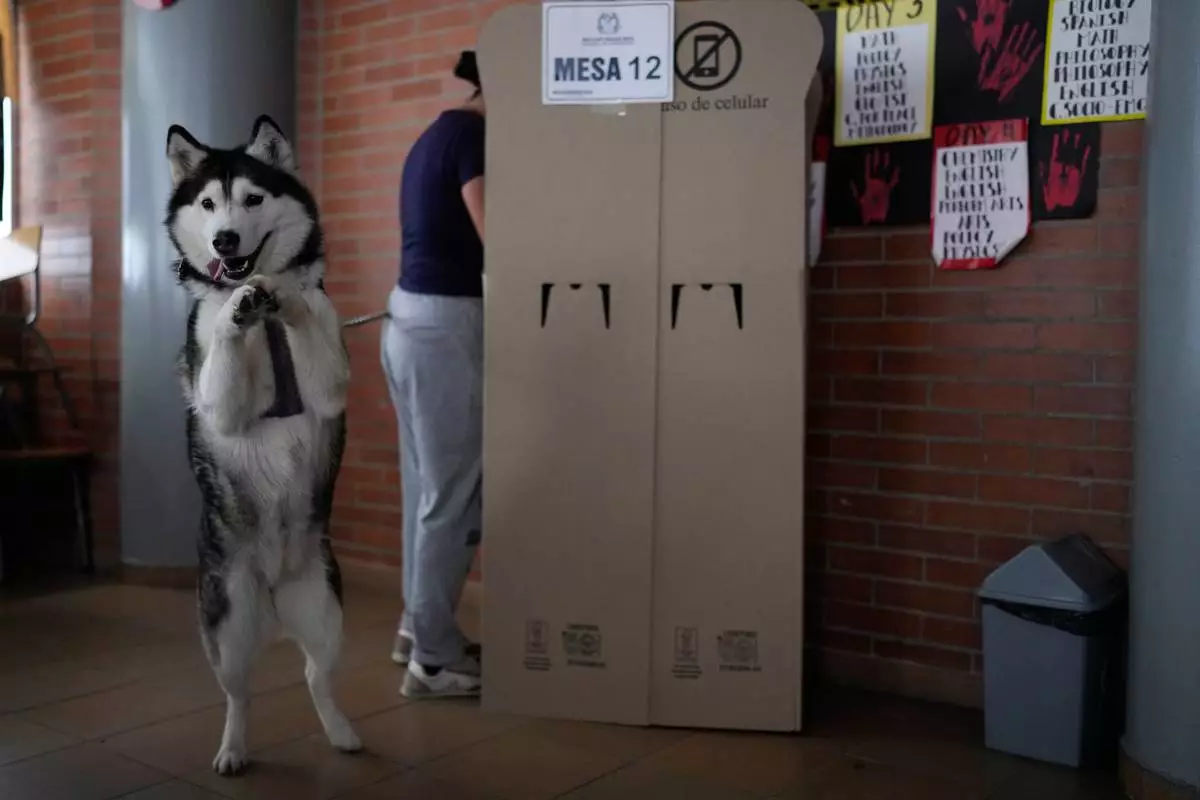
A voter marks a ballot during the presidential election in Bogota, Colombia, Sunday, May 31, 2026. (AP Photo/Matias Delacroix)
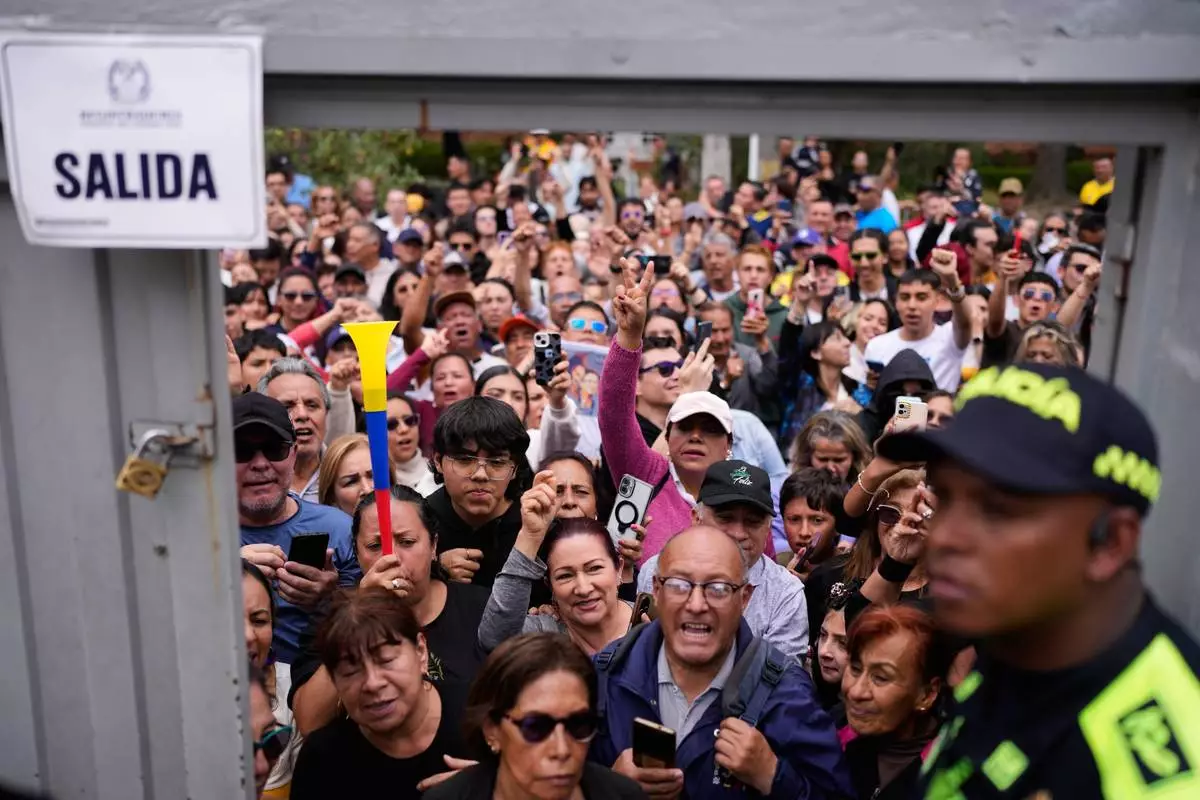
Supporters of presidential candidate Ivan Cepeda of the ruling Historic Pact coalition gather outside the polling station where he voted during the presidential election in Bogota, Colombia, Sunday, May 31, 2026. (AP Photo/Matias Delacroix)

Presidential candidate Ivan Cepeda of the ruling Historic Pact coalition gestures to supporters after voting during the presidential election in Bogota, Colombia, Sunday, May 31, 2026. (AP Photo/Matias Delacroix)
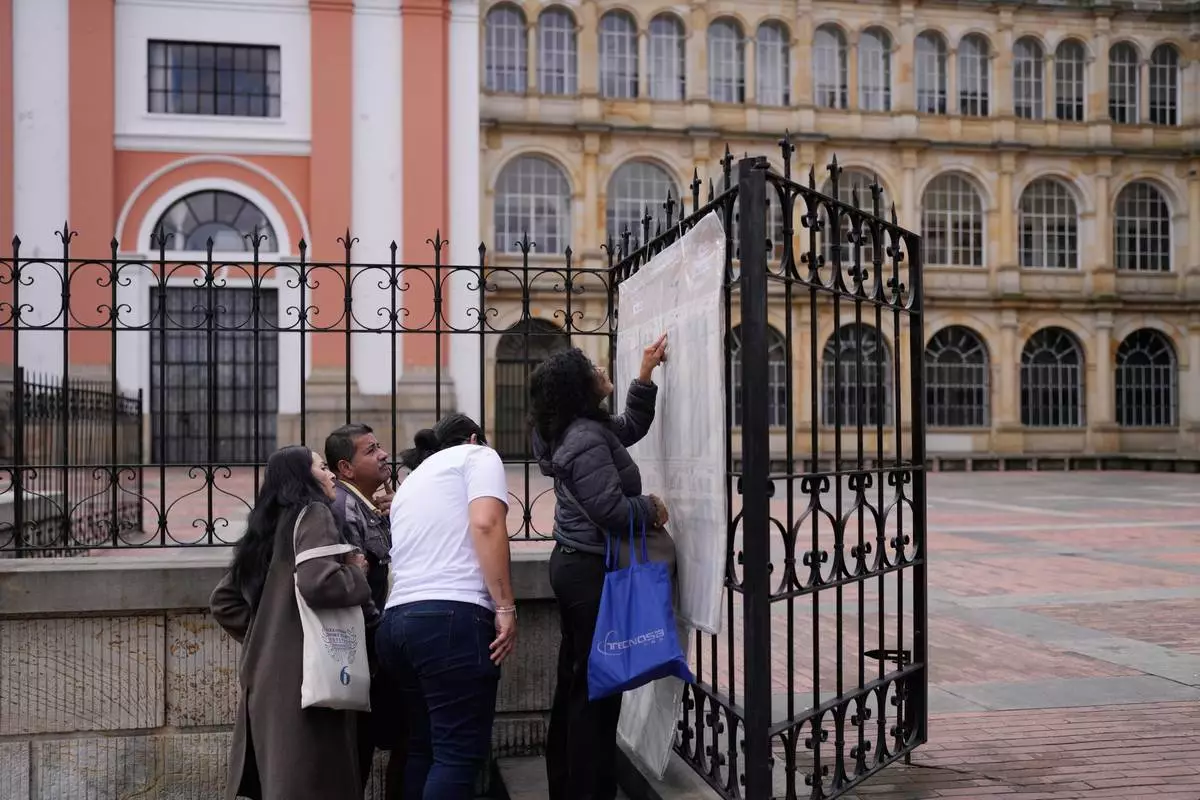
Voters check polling information during the presidential election in Bogota, Colombia, Sunday, May 31, 2026. (AP Photo/Matias Delacroix)

President Gustavo Petro shows a ballot during the presidential election in Bogota, Colombia, Sunday, May 31, 2026. (AP Photo/Matias Delacroix)
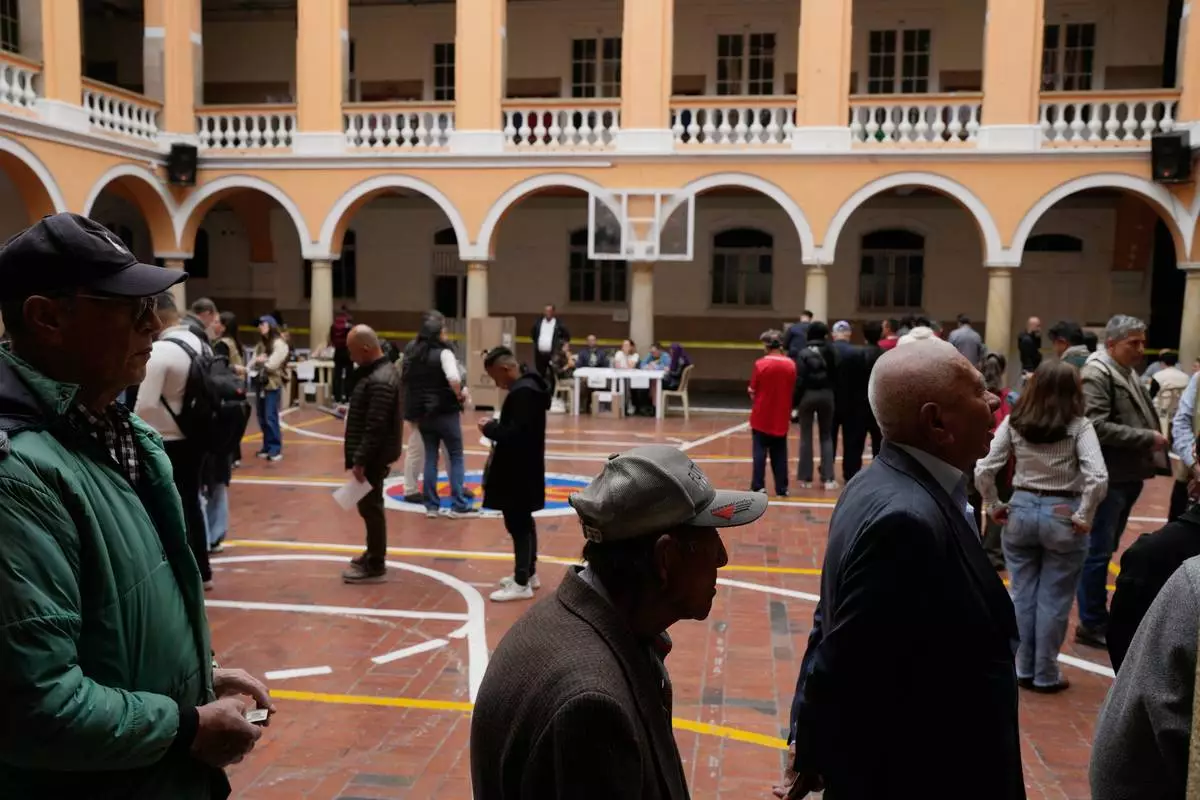
Voters line up at a polling station during the presidential election in Bogota, Colombia, Sunday, May 31, 2026. (AP Photo/Matias Delacroix)
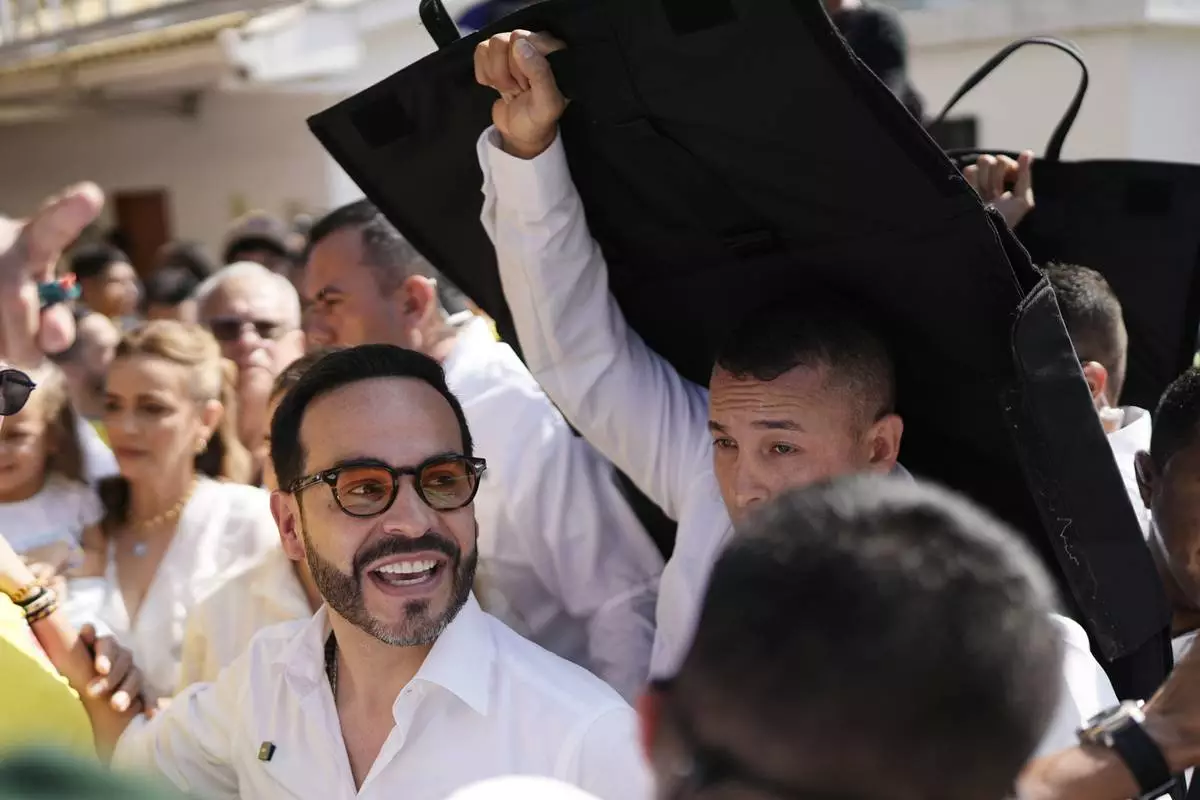
Presidential candidate Abelardo de la Espriella of the Defenders of the Motherland movement depart a polling station after voting during the presidential election in Barranquilla, Colombia, Sunday, May 31, 2026. (AP Photo/Ivan Valencia)
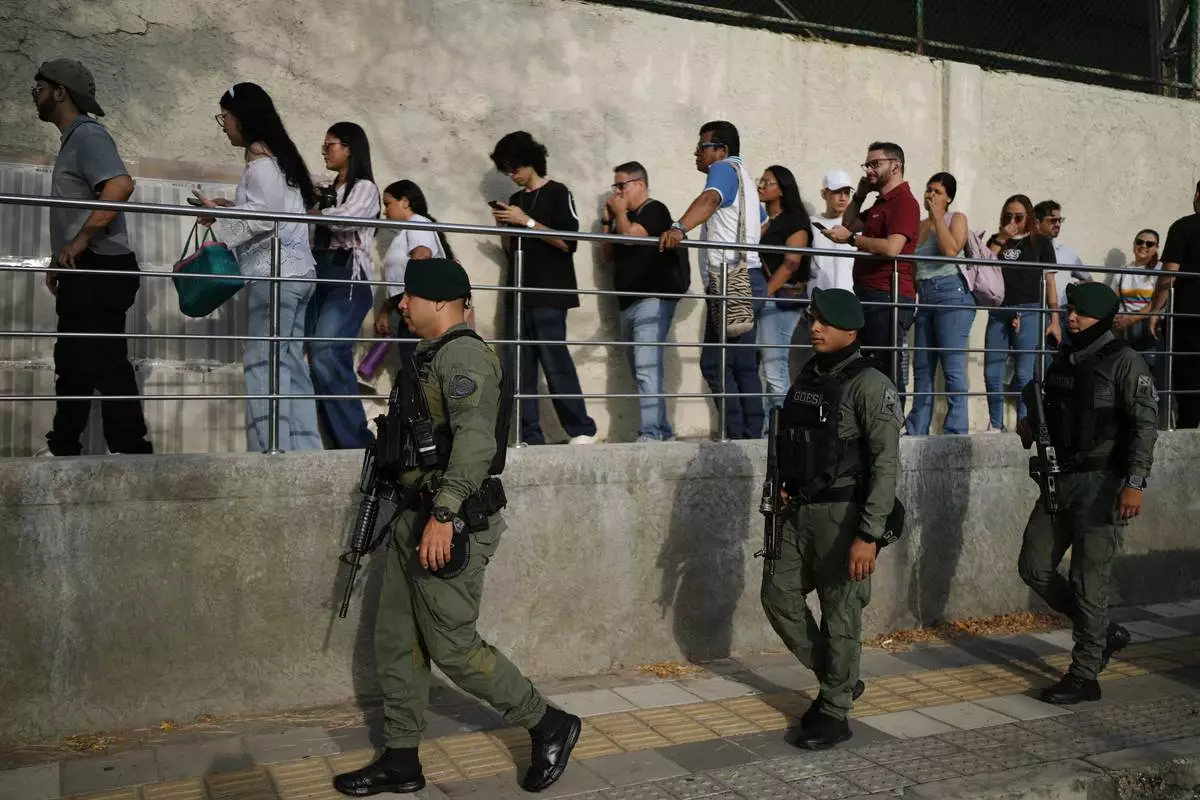
Soldiers patrol as voters arrive at a polling station during the presidential election in Barranquilla, Colombia, Sunday, May 31, 2026. (AP Photo/Ivan Valencia)
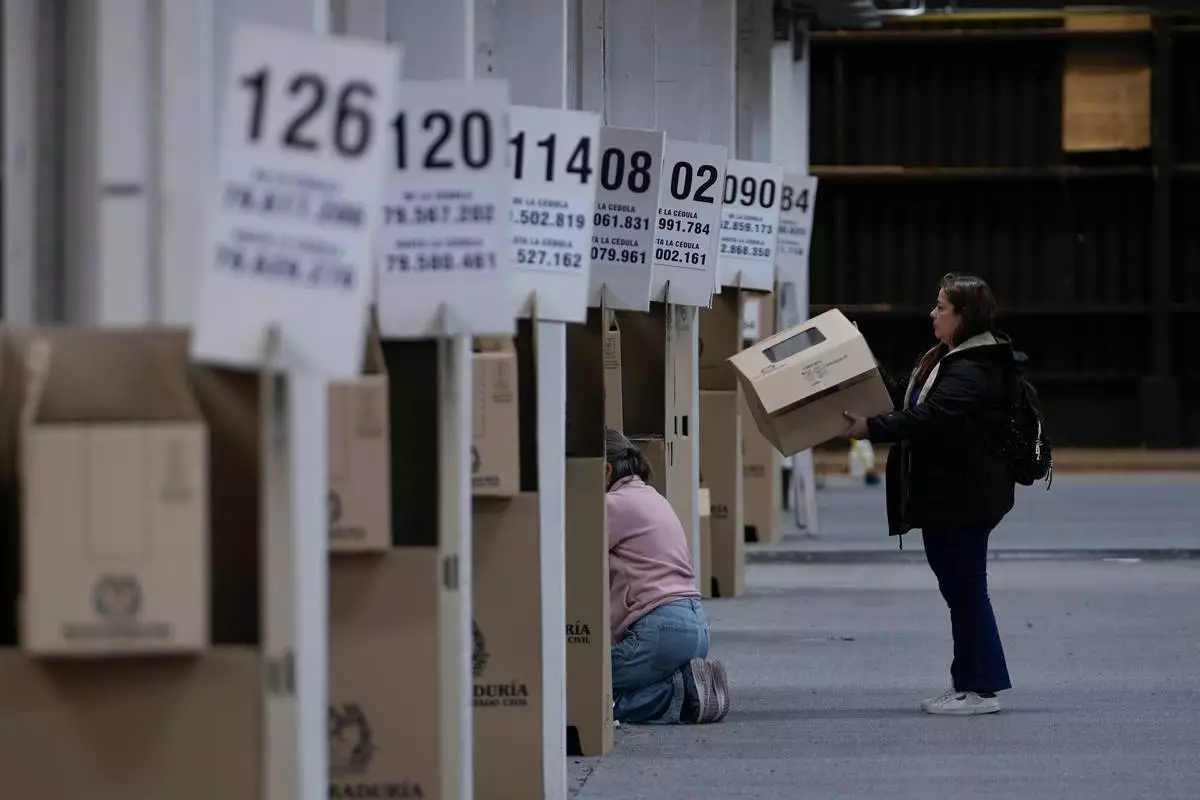
Electoral workers set up a voting center in preparation for Sunday's presidential election in Bogota, Colombia, Friday, May 29, 2026. (AP Photo/Matias Delacroix)
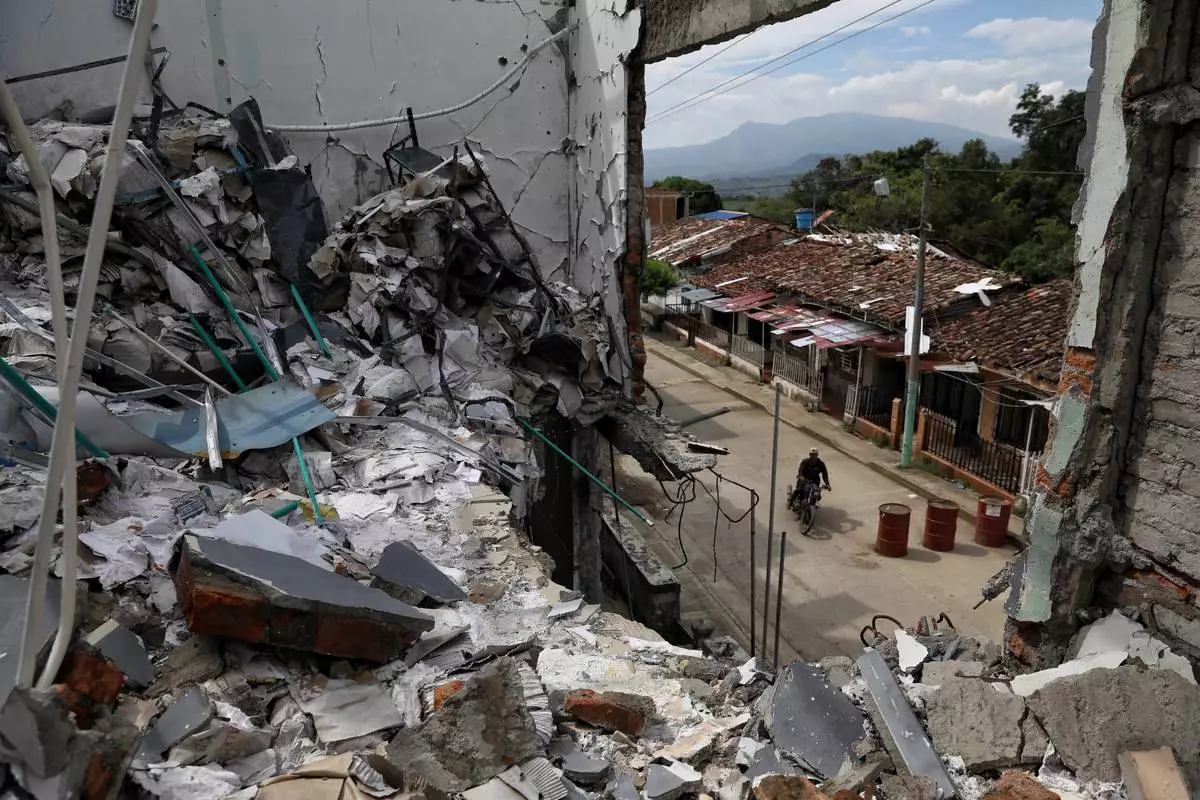
A man rides his motorcycle past the ruins of homes destroyed five months earlier in an attack by dissidents of the former Revolutionary Armed Forces of Colombia, or FARC, in Buenos Aires, Cauca, Colombia, Wednesday, May 20, 2026.(AP Photo/Santiago Saldarriaga)

Presidential candidate Sen. Paloma Valencia of the Democratic Center party waves supporters during a campaign rally in Bogota, Colombia, Sunday, May 24, 2026. (AP Photo/Ivan Valencia)

Presidential candidate Abelardo de la Espriella of the Defenders of the Motherland movement and his running mate Jose Manuel Restrepo, left, raise their fit from behind a bullet proof booth during a campaign rally in Barranquilla, Colombia, Saturday, May 23, 2026. (AP Photo/Fernando Vergara)
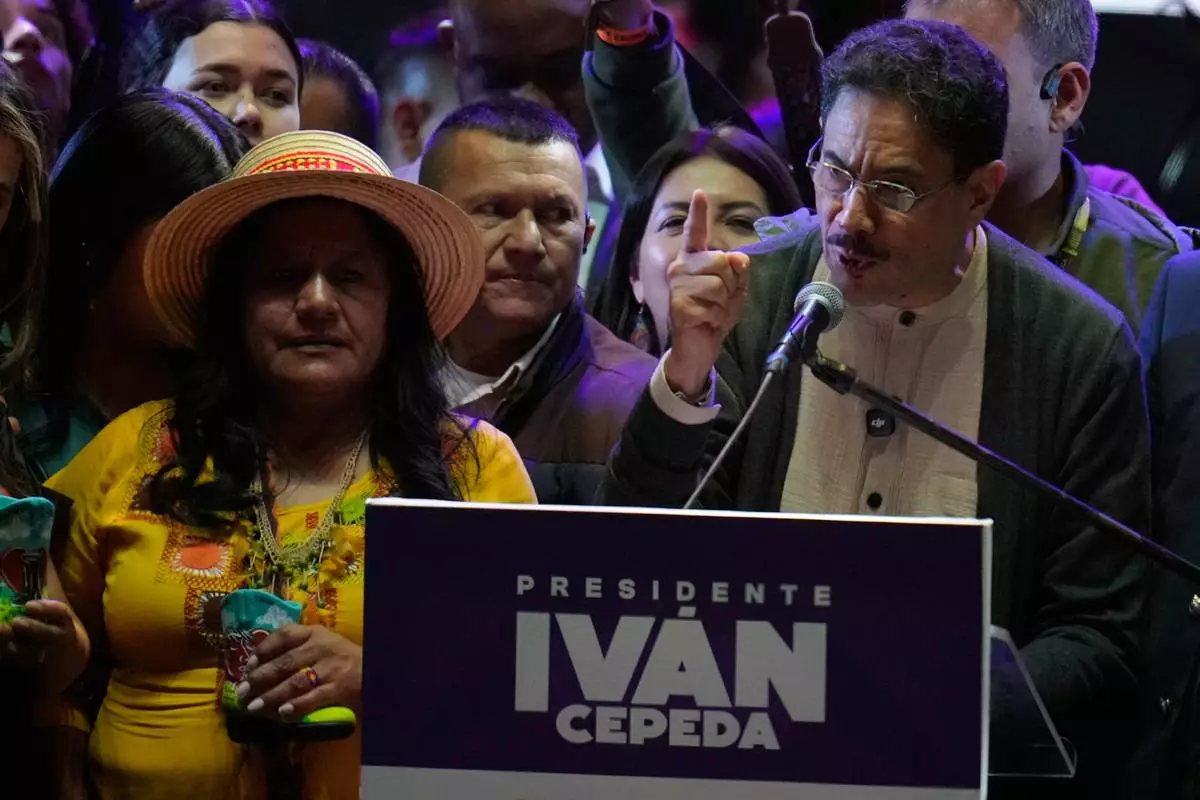
Sen. Ivan Cepeda, presidential candidate of the ruling Historic Pact coalition, speaks to supporters during a campaign rally in Bogota, Colombia, Friday, May 22, 2026. (AP Photo/Fernando Vergara)