WASHINGTON (AP) — Some two dozen states challenged President Donald Trump’s new global tariffs on Thursday, filing a lawsuit over import taxes he imposed after a stinging loss at the Supreme Court.
The Democratic attorneys general and governors in the lawsuit argue that Trump is overstepping his power with planned 15% tariffs on much of the world.
Trump has said the tariffs are essential to reduce America's longstanding trade deficits. He imposed duties under Section 122 of the Trade Act of 1974 after the Supreme Court struck down tariffs he imposed last year under an emergency powers law.
Section 122, which has never been invoked, allows the president to impose tariffs of up to 15%. They are limited to five months unless extended by Congress.
The lawsuit is led by attorneys general from Oregon, Arizona, California and New York.
“The focus right now should be on paying people back, not doubling down on illegal tariffs,” said Oregon Attorney General Dan Rayfield. The suit comes a day after a judge ruled t hat companies who paid tariffs under Trump's old framework should get refunds.
The White House said Trump is acting within his power. “The President is using his authority granted by Congress to address fundamental international payments problems and to deal with our country’s large and serious balance-of-payments deficits," said spokesman Kush Desai. "The Administration will vigorously defend the President’s action in court.”
The new suit argues that Trump can't pivot to Section 122 because it was intended to be used only in specific, limited circumstances — not for sweeping import taxes. It also contends the tariffs will drive up costs for states, businesses and consumers.
Arizona Attorney General Kris Mayes pointed to a New York Federal Reserve Bank study that found Americans largely bear the cost of the tariffs, which has been estimated at $1,200 a year per household. “That is money out of the pockets of American families trying to buy groceries, pay rent and keep their small businesses afloat,” Mayes said.
Many of the plaintiff states also successfully sued over Trump’s tariffs imposed under a different law: the International Emergency Economic Powers Act (IEEPA).
Four days after the Supreme Court struck down his sweeping IEEPA tariffs Feb. 20, Trump invoked Section 122 to slap 10% tariffs on foreign goods. Treasury Secretary Scott Bessant told CNBC on Wednesday that the administration would raise the levies to the 15% limit this week.
The Democratic states and other critics say the president can’t use Section 122 as a replacement for the defunct tariffs to combat the trade deficit.
The Section 122 provision is aimed at what it calls “fundamental international payments problems.’’ At issue is whether that wording covers trade deficits, the gap between what the U.S. sells other countries and what it buys from them.
Section 122 arose from the financial crises that emerged in the 1960s and 1970s when the U.S. dollar was tied to gold. Other countries were dumping dollars in exchange for gold at a set rate, risking a collapse of the U.S. currency and chaos in financial markets. But the dollar is no longer linked to gold, so critics say Section 122 is obsolete.
Awkwardly for Trump, his own Justice Department argued in a court filing last year that the president needed to invoke the emergency powers act because Section 122 did “not have any obvious application’’ in fighting trade deficits, which it called “conceptually distinct’’ from balance-of-payment issues.
Still, some legal analysts say the Trump administration has a stronger case this time.
“The legal reality is that courts will likely provide President Trump substantially more deference regarding Section 122 than they did to his previous tariffs under IEEPA,’’ Peter Harrell, visiting scholar at Georgetown University’s Institute of International Economic Law, wrote in a commentary Wednesday.
The specialized Court of International Trade in New York, which will hear the states' lawsuit, wrote last year in its own decision striking down the emergency-powers tariffs that Trump didn't need them because Section 122 was available to combat trade deficits.
Trump does have other legal authorities he can use to impose tariffs, and some have already survived court tests. Duties that Trump imposed on Chinese imports during his first term under Section 301 of the same 1974 trade act are still in place.
Also joining the lawsuit are the attorneys general of Colorado, Connecticut, Delaware, Illinois, Maine, Maryland, Massachusetts, Michigan, Minnesota, Nevada, New Jersey, New Mexico, North Carolina, Rhode Island, Vermont, Virginia, Washington, Wisconsin, and the governors of Kentucky and Pennsylvania.

Subarus sit parked at a dealership on the Bedford Auto Mile in Bedford, Ohio, Friday, Feb. 20, 2026. (AP Photo/Sue Ogrocki)
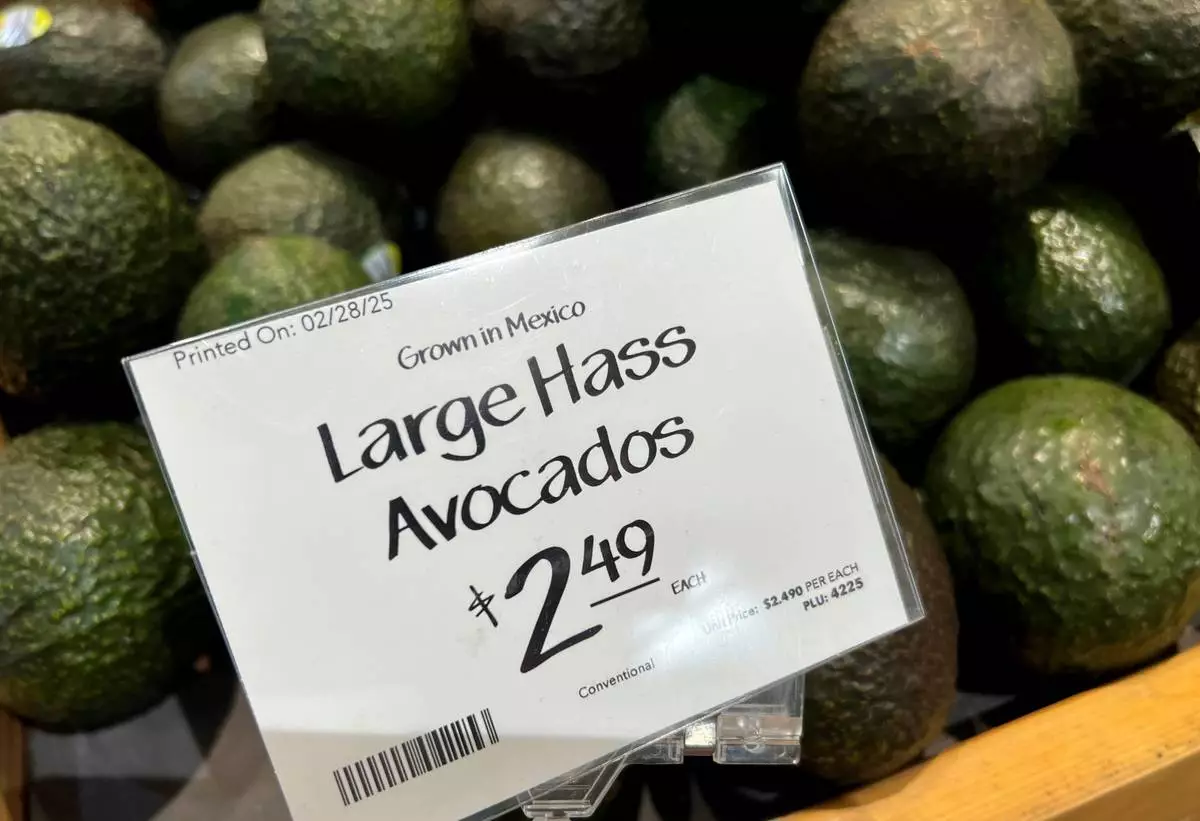
FILE - Avocados imported from Mexico are for sale in a supermarket in Miami as the United States imposed 25% tariffs on goods from Canada and Mexico, starting a trade war with its closest neighbors and allies Wednesday, Mar. 5, 2025. (AP Photo/Lynne Sladky, file)
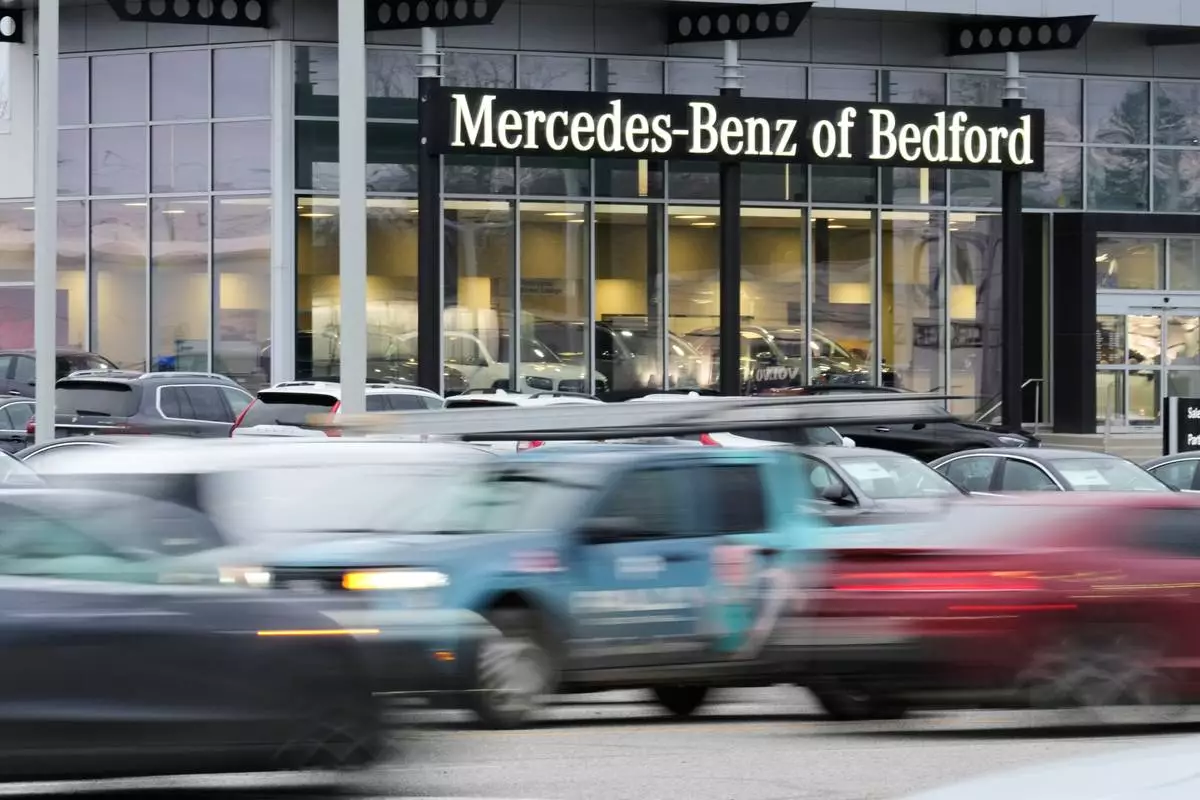
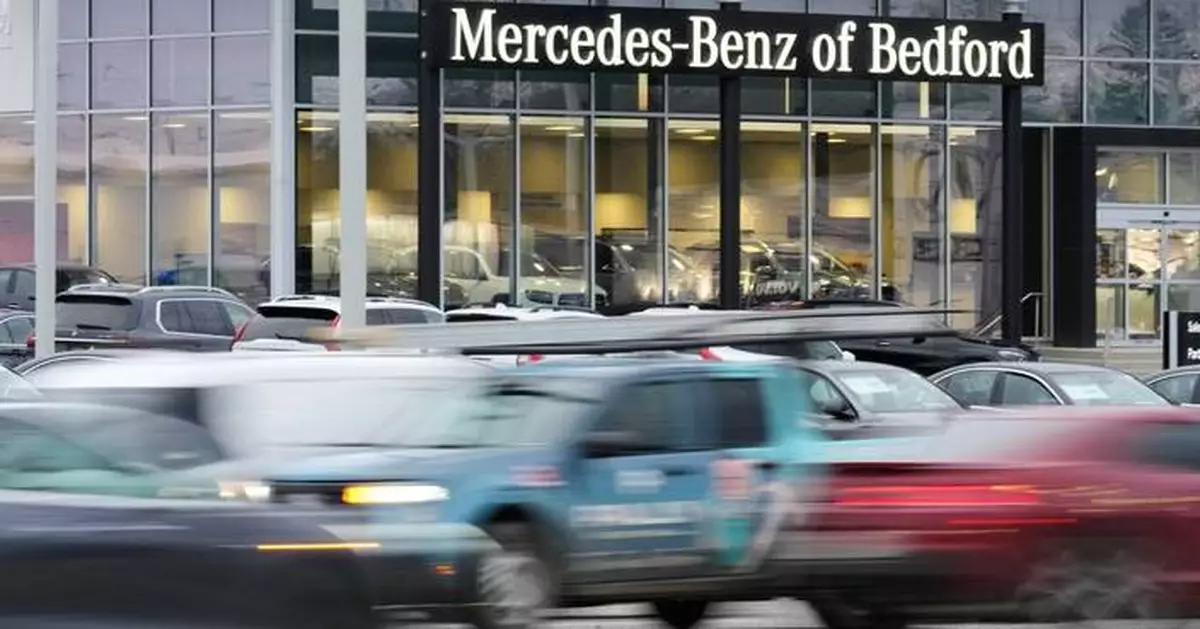
Cars drive by a Mercedes-Benz dealership on the Bedford Automile in Bedford, Ohio, Friday, Feb. 20, 2026. (AP Photo/Sue Ogrocki)
WASHINGTON (AP) — Republicans invoked the war in Iran and the prospect of retaliatory terrorist attacks as they made another unsuccessful effort Thursday to pass a bill funding the Department of Homeland Security.
Democrats are insisting on changes to immigration enforcement operations as part of the measure and blocked it from getting the 60 votes necessary to advance in the Senate. While the House will also take up the bill on Thursday, the vote will be more about putting lawmakers on the record about where they stand. In the end, a bipartisan compromise will have to be reached to end a DHS shutdown that began Feb. 14.
The funding bill first passed the House back in January, but it has gone nowhere in the Senate as Democrats seek new restraints on immigration enforcement tactics following the killing of ICU nurse Alex Pretti by Border Patrol officers in Minneapolis.
Republicans have called on Democrats to reconsider their vote in the wake of the conflict in Iran.
Sen. John Barrasso, the No. 2 Republican in the Senate, said Democrats would bear responsibility for the next cyberattack that is missed or the next “lone wolf terrorist” who attacks in the U.S.
“Blood will be on their hands,” Barrasso said on the Senate floor. “Because we don't have a functioning Department of Homeland Security that is funded with people on the ground in every position receiving their paychecks.”
It did not appear the GOP's strategy had changed the position of Democratic lawmakers, though. They said they are prepared to fund most of the agencies at the department, just not Immigration and Customs Enforcement or Customs and Border Protection.
“It's the same lousy, rotten bill that does not put any guardrails or constraints on ICE or CBP after federal agents shot American citizens in the street,” said Rep. Jim McGovern, D-Mass.
Following the longest federal shutdown in the country’s history last year, Congress has completed work on 11 of this year’s 12 appropriations bills. Only the bill for Homeland Security remains outstanding.
Republicans said the timing couldn't be worse for a Homeland Security shutdown. While a large majority of the department's employees are considered essential and continue to work, many will not receive a full paycheck this week.
“Like Democrats’ first shutdown a few months ago, this shutdown is causing a lot of financial stress, uncertainty, and pain for hardworking Americans,” Senate Majority Leader John Thune said. “It’s also making it harder for those working to keep America safe.”
Republicans said the prospect of an increase in unscheduled absences by the Transportation Security Administration's agents and screeners could lead to longer wait times at the nation's airports. Meanwhile, the Cybersecurity and Infrastructure Security Agency has canceled various assessments to determine vulnerabilities to critical infrastructure. And training for first responders conducted through the Federal Emergency Management Agency has been canceled.
Democrats are seeking several changes at the department include prohibiting ICE enforcement operations at sensitive locations like schools and churches, allowing independent investigations into alleged wrongdoing, requiring warrants to be signed by judges before federal agents can forcibly enter private homes or other nonpublic spaces without consent, and requiring agents to wear identification and remove their masks.
Republicans note that the bill does include a bipartisan provision directing more resources for de-escalation training and $20 million to outfit immigration enforcement agents with body-worn cameras.
The White House and congressional Democrats don't appear to have made significant progress in recent weeks in resolving their differences after trading several offers.
“Look, we're still far apart, but we're negotiating and exchanging paper back and forth,” said Senate Democratic Leader Chuck Schumer of New York.
Alabama Sen. Katie Britt, the Republican chairwoman of a panel that oversees homeland security funding, said she’s been talking to Democrats about a possible pathway forward but prospects are unclear.
She and other Republicans are citing last weekend's mass shooting in Austin, Texas, as an example of the dangerous threat environment that's facing Americans following the attack on Iran.
“I think that it is incredibly irresponsible to not fund the agency that is supposed to keep us safe here at home,” Britt said.
Rep. Rosa DeLauro of Connecticut, the ranking Democrat on the House Appropriations Committee, said Republican leaders were using President Donald Trump's “aimless, costly and illegal war with Iran to force through more funding for ICE and Customs and Border Protection without any of the substantial changes that the vast majority of Americans believe those agencies need.”
“It is a cynical effort, and it is one that will fail,” DeLauro said.
Associated Press writer Mary Clare Jalonick contributed to this report.
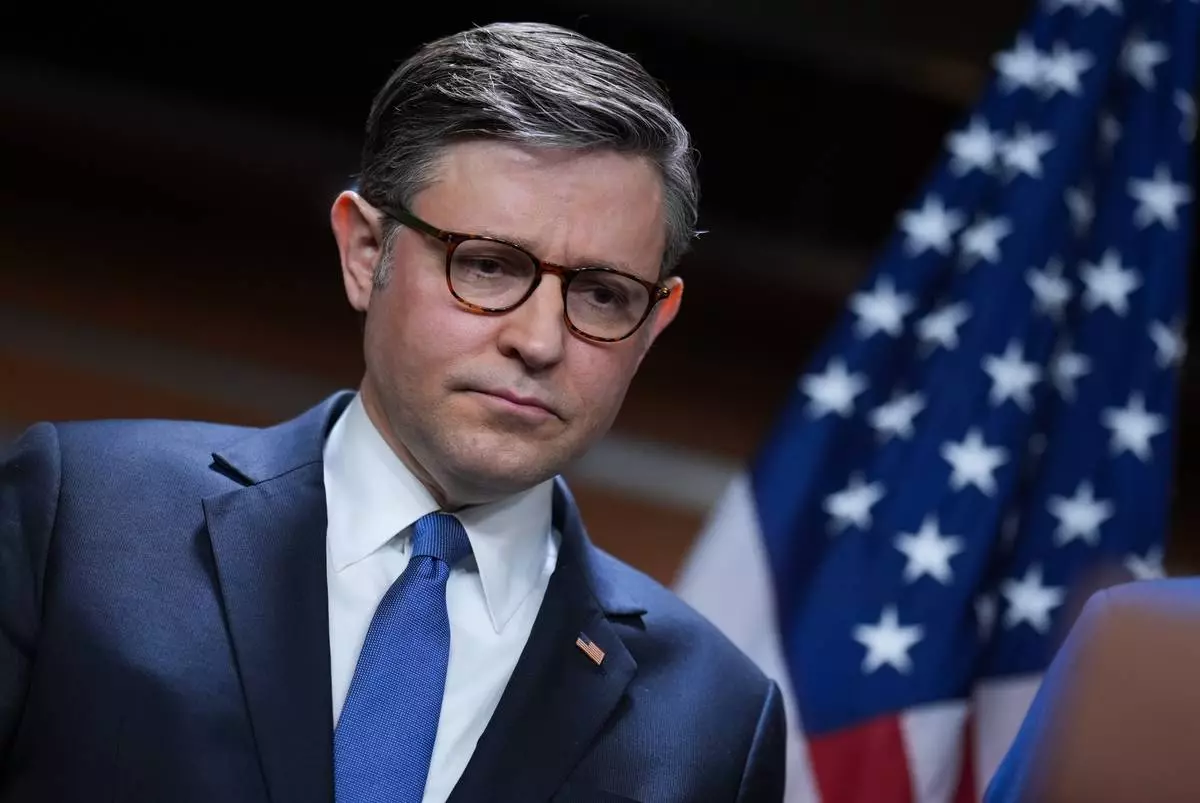
Speaker of the House Mike Johnson, R-La., pauses before taking questions at a news conference at the Capitol in Washington, Wednesday, March 4, 2026. (AP Photo/J. Scott Applewhite)
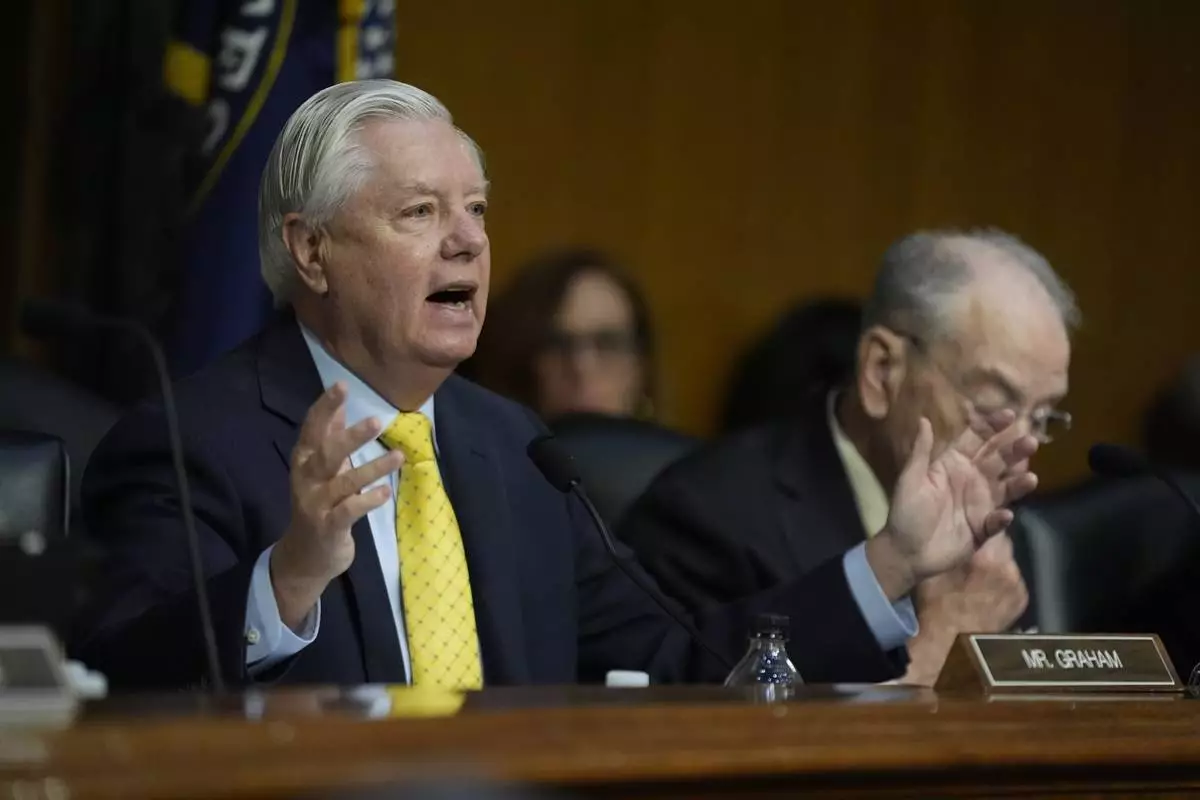
Sen. Lindsey Graham, R-S.C. speaks as Department of Homeland Security Secretary Kristi Noem, testifies during a Senate Judiciary Committee oversight hearing on Capitol Hill in Washington, Tuesday, March 3, 2026. (AP Photo/Manuel Balce Ceneta)