MINNEAPOLIS (AP) — Daniel Hernandez's grocery store in south Minneapolis has served Latino families for over 5 years, but he says it's on the verge of closing due to lasting economic damage from the nation’s largest immigration enforcement crackdown.
Many of Hernandez’s customers have continued to stay home or drastically reduce their spending, and 10 of the 12 Latino small businesses that rent space from him remain shuttered, he said in an interview Friday. Even though President Donald Trump's administration scaled back the crackdown earlier, and the president fired Kristi Noem as homeland security secretary on Thursday, many are still feeling the ripple effects.
Hernandez, an immigrant from Mexico, said only one business, an Ecuadorian ice cream shop, has been able to reopen since December, when the immigration crackdown began.
“I don’t know if my business will survive, being honest,” Hernandez said. “The amount of damage is so big that I am afraid.”
Noem was pushed out amid mounting criticism over her leadership, including her handling of the crackdown and the aftermath of the shooting deaths of two Minneapolis residents by federal officers, Renee Good and Alex Pretti.
It’s not clear how many Immigration and Customs Enforcement and other federal officers are left in Minnesota after peaking around 3,000 at the height of the surge. Noem put the number at 650 in her congressional testimony this week.
But U.S. Sen. Amy Klobuchar told Minnesota Public Radio that White House border czar Tom Homan called her to say that total was incorrect, and they’ve cut back to their original number of a little over 100 ICE officers, plus some additional agents working on fraud investigations.
ICE and Homeland Security officials did not immediately respond to emails seeking details Friday.
Like Hernandez's Colonial Market, many businesses owned by immigrants or that cater to them are still struggling from sharp drops in sales.
“Instead of spending $150, now they spend $30, $40,” Hernandez said.
Other customers stopped coming in altogether — either because they were afraid of being detained, regardless of their legal status, or because money is tight from being unable to work.
Minneapolis Mayor Jacob Frey said last month that small businesses have collectively lost tens of millions of dollars in revenue. He estimated the federal immigration operation cost the city’s economy $203 million in January alone and led 76,000 people to experience food insecurity.
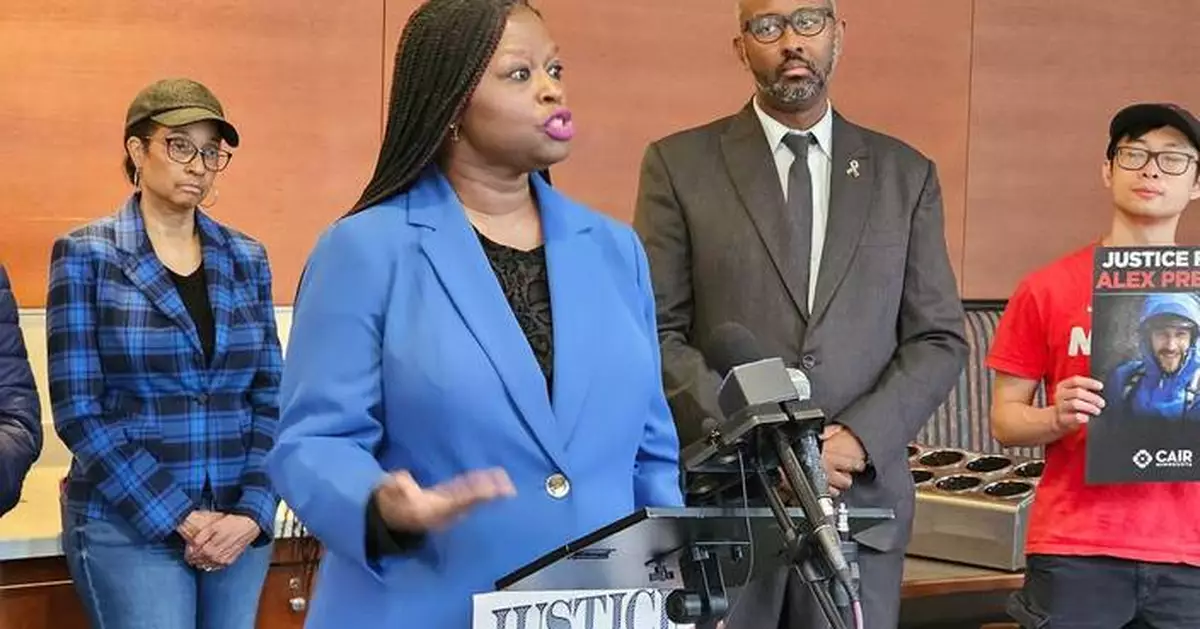
“We warn our community that the fight is not over,” said Jaylani Hussein, a Somali American who is executive director of the Minnesota chapter of the Council on American-Islamic Relations, at a news conference Friday. “It is a good day to say good riddance to Kristi Noem. But it’s not a good day to walk away from the fight.”
The sense among many activists is that the intense community organizing against the surge played a decisive role in the administration backing down. And they say it sparked the formation of strong neighborhood networks that will live on and continue to push for social justice.
Minneapolis resident Patty O’Keefe, who was detained in January for following a federal officer’s vehicle, said she’s happy to see Noem go but it will take more to bring about real change.
"It’s a sign that we’re winning, that the Trump administration feels like they have to make a change to save face because they’re losing public support and losing the narrative,” she said. “And I think it’s a testament to the hard work of Minnesotans who fought back against this war of political retribution and xenophobia that has been and continues to be waged against us.”
Brandon Sigüenza, who was detained with O’Keefe, said the mood isn’t celebratory because the crackdown is ongoing.
“I don’t think Minneapolitans are necessarily dancing in the streets. Because there’s still no justice for Renee Good, there’s still no justice for Alex Pretti,” Sigüenza said.
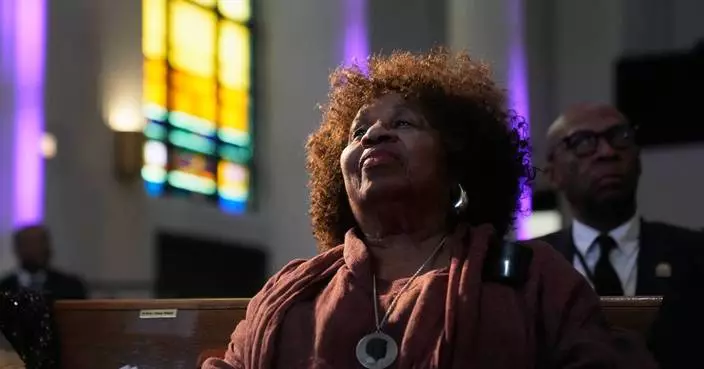
Minneapolis psychologist Lucy Olson helped organize a covert grassroots network that swelled to 2,000 volunteers assisting around 500 immigrant families with legal matters, shelter, food and rent assistance. She said that after the crackdown, the mutual aid systems that formed will continue to respond to community needs.
“For those of us who had the honor of participating as volunteers, I think we will never be the same,” Olson said. “I think there’s been cross-cultural friendships, the opportunity to build out neighborhood networks that have changed the face of our city."
Nekima Levy Armstrong, a local civil rights activist and lawyer, said at the news conference with Hussein that Noem should have been fired after the deaths of Good and Pretti.
Levy Armstrong, an ordained nondenominational Christian reverend, is also one of 39 people indicted for their alleged roles in a protest in January at a St. Paul church where a pastor, David Easterwood, is a top local ICE official. She said that she'd been praying for a day like Thursday when Noem was fired.
“So while we celebrate the fact that this woman has been removed from her high perch — where she thought she was untouchable, she thought she could literally allow these agents to get away with murder — we recognize that this system is very broken,” Levy Armstrong said.
Brenda Lewis, superintendent of Fridley Public Schools in suburban Minneapolis, said Noem’s firing “doesn’t really matter” because the safety of children in her school district is still impacted.
Fridley, which has students from many Somali and Ecuadorian families, has been the site of heightened ICE activity over the past two months. Federal vehicles were found in neighborhoods near the schools and at the homes of school board members.
Of the around 2,700 students in the district, more than 112 have unenrolled, Lewis said. Another 400 are in virtual learning. The district has also lost $130,000 in revenue because of lower participation in meal programs.
“It’s not a Democrat or a Republican issue,” Lewis said. “It’s about children’s safety, and we need to really come together and ensure that this absolute removal of safety for school children by a federal agency can never ever happen again in the state or the country.”
While the state's top Republican leaders had generally supported Noem's leadership of the surge, they've been mostly silent on her downfall. A message seeking comment from U.S. House Majority Whip Tom Emmer — the state's most powerful Republican — was not immediately returned Friday.
But GOP state Sen. Jim Abeler, a moderate from suburban Anoka, noted that he wrote Noem in January expressing “grave concerns” about actions by some of her officers in Minnesota.
"With her departure, I hope that what happened in Minnesota won’t happen anywhere else,” Abeler said in a statement.
__
Brook reported from New Orleans, while Raza reported from Sioux Falls, S.D.
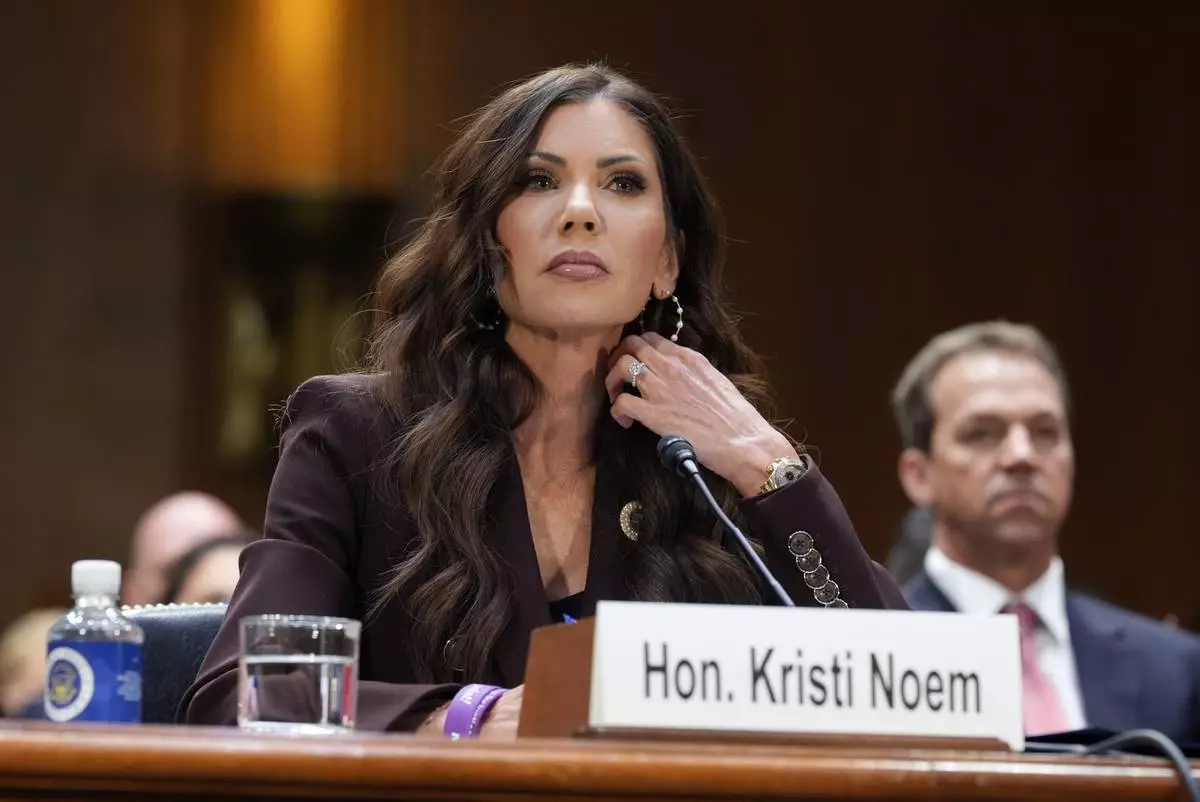
Homeland Security Secretary Kristi Noem, center, with her husband Bryon Noem, right, seated behind her, appears for an oversight hearing before the Senate Judiciary Committee, at the Capitol in Washington, Tuesday, March 3, 2026. (AP Photo/J. Scott Applewhite)
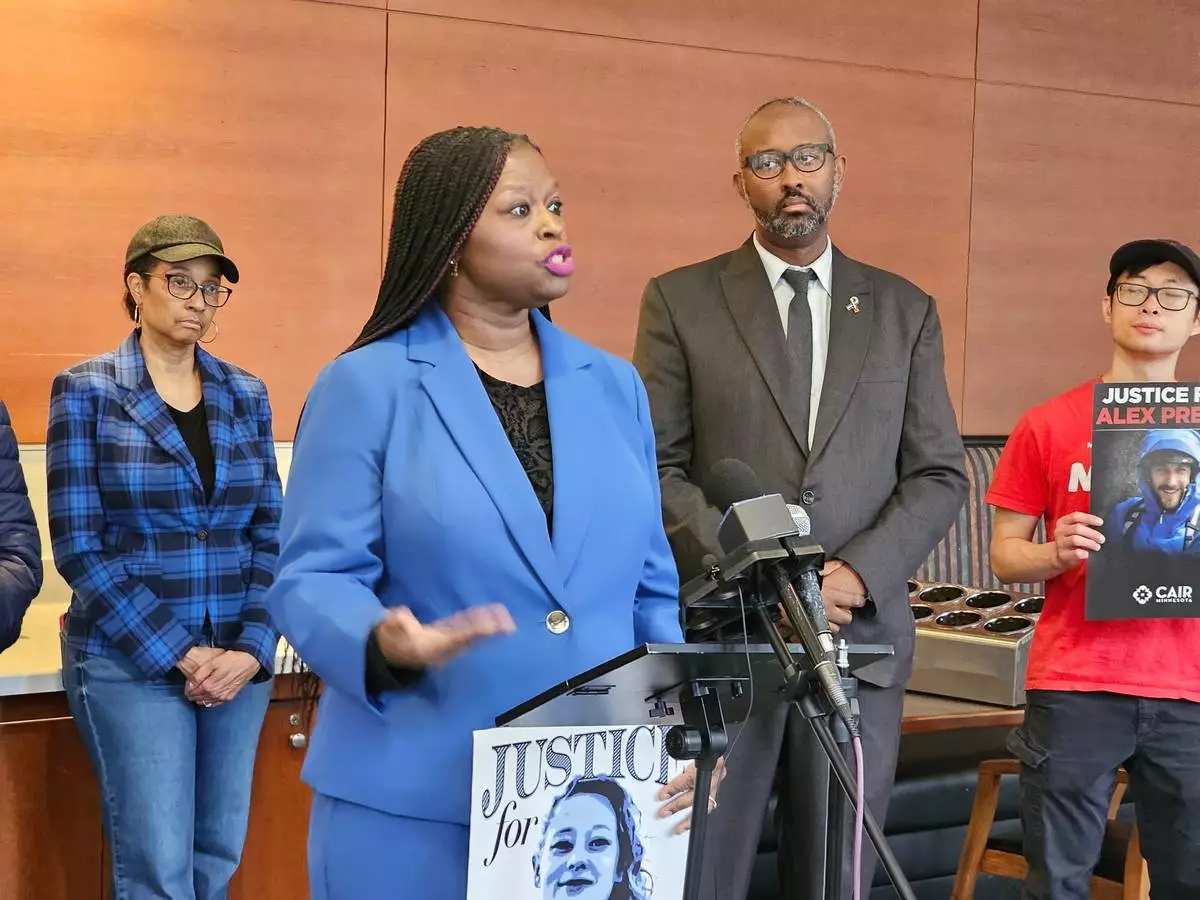
Minnesota civil rights activist Nekima Levy Armstrong, center left, and Jaylani Hussein, executive director of the Minnesota chapter of the Council on Islamic-American Relations, speak at a news conference in Minneapolis on Friday, March 6, 2026, on the ouster of Kristi Noem as secretary of the Department of Homeland Security. (AP Photo/Steve Karnowski)