DUBAI, United Arab Emirates (AP) — Intense Iranian fire targeted the Gulf Arab states early Saturday as Israel and the United States kept up their airstrikes targeting the Islamic Republic.
There was no foreseeable end to the fighting. U.S. President Donald Trump's administration approved a new $151 million arms sale to Israel after Trump said he would not negotiate with Iran without its “unconditional surrender” and U.S. officials warned of a forthcoming bombing campaign they said would be the most intense yet in the weeklong conflict.
Click to Gallery
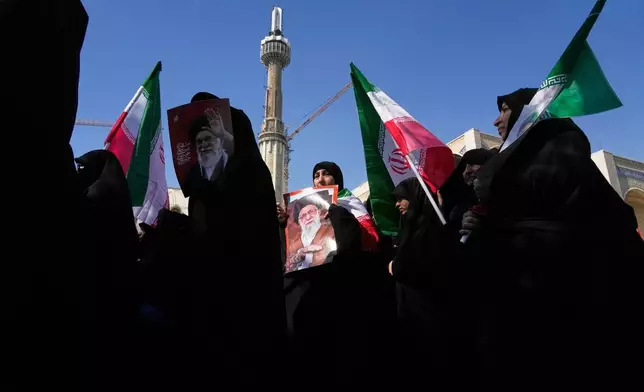
Women hold Iranian flags and pictures of the late Iranian Supreme Leader Ali Khamenei as government supporters march against the ongoing U.S.-Israeli military campaign after Friday prayers at the Imam Khomeini Grand mosque in Tehran, Iran, Friday, March 6, 2026. (AP Photo/Vahid Salemi)
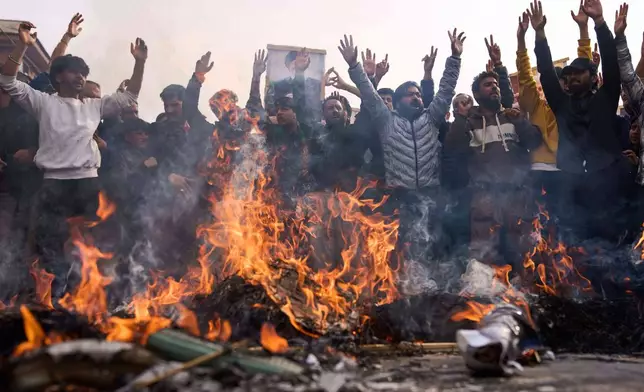
Shiite Muslims shout slogans as they burn effigies of President Donald Trump and Israeli Prime Minister Benjamin Netanyahu during a protest against the killing of Iran's Supreme Leader Ayatollah Ali Khamenei, in Budgam, northeast of Srinagar, Indian controlled Kashmir, Friday, March 6, 2026. (AP Photo/Dar Yasin)
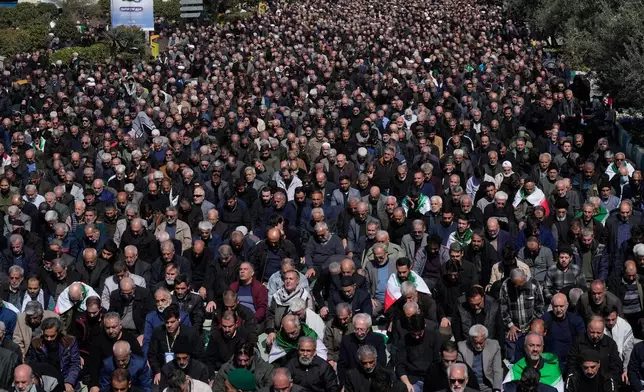
Iranians attend Friday prayers in the courtyard of the Imam Khomeini Grand mosque in Tehran, Iran, Friday, March 6, 2026. (AP Photo/Vahid Salemi)
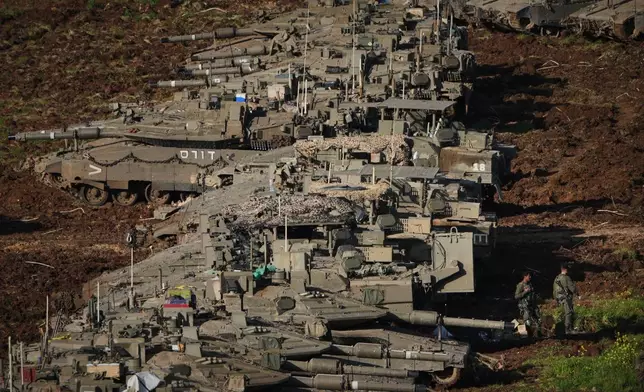
Israeli soldiers work on tanks at a staging area in northern Israel near the border with Lebanon, Friday, March 6, 2026. (AP Photo/Ariel Schalit)
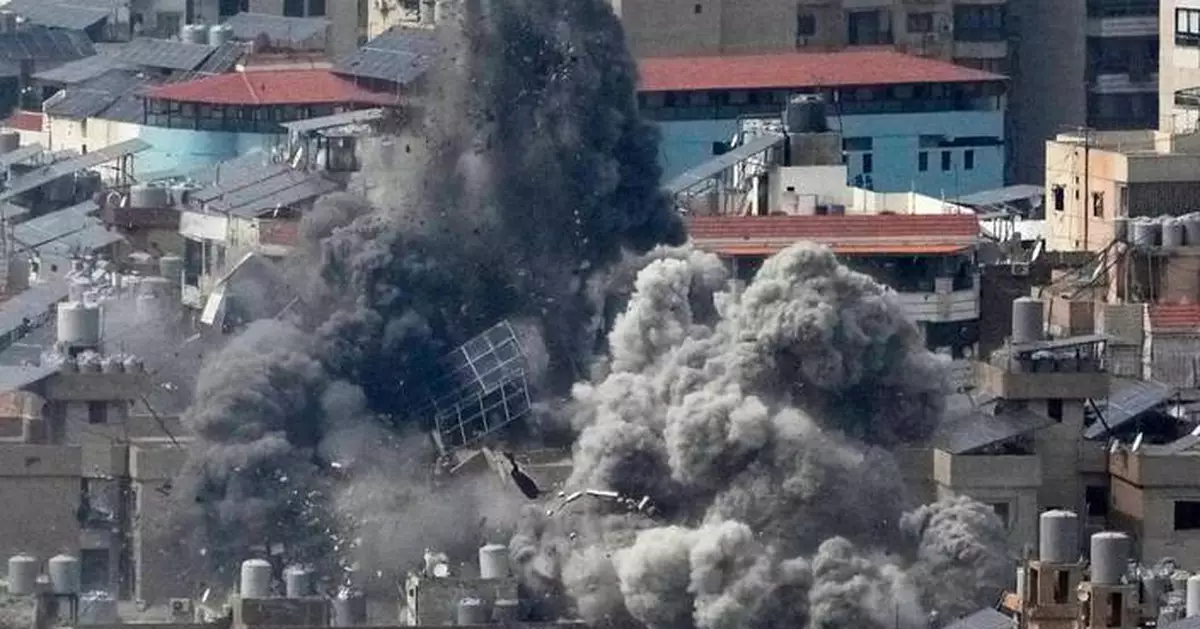
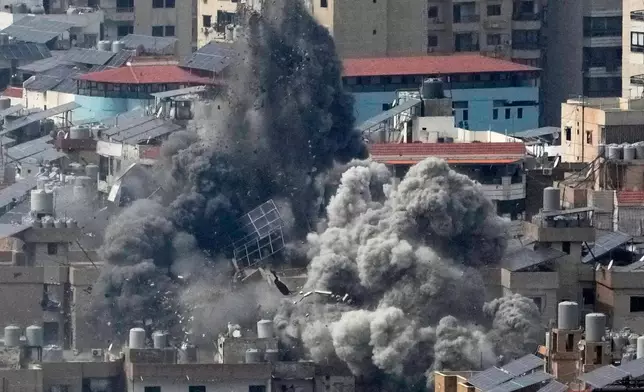
Smoke rises following an Israeli airstrike in Dahiyeh, Beirut's southern suburbs, in Beirut, Lebanon, Friday, March 6, 2026. (AP Photo/Hussein Malla)
Iran's U.N. ambassador said the country would “take all necessary measures” to defend itself.
Associated Press video showed explosions flashing and smoke rising over western Tehran as Israel said it had begun a broad wave of strikes. Also early Saturday, loud booms sounded in Jerusalem and incoming missiles from Iran had people heading to bomb shelters across Israel.
There were no immediate reports of casualties by Israel’s emergency services.
In a sign of the widening nature of the conflict, sirens sounded early Saturday in Bahrain as Iranian attacks targeted the island kingdom. And Saudi Arabia said it destroyed drones headed toward its vast Shaybah oil field and shot down a ballistic missile launched toward Prince Sultan Air Base, which hosts U.S. forces.
The U.S. and Israel have battered Iran with strikes, targeting its military capabilities, leadership and nuclear program. The stated goals and timelines for the war have repeatedly shifted, as the U.S. has at times suggested it seeks to topple Iran’s government or elevate new leadership from within.
Qatar’s energy minister, Saad al-Kaabi, warned in an interview with the Financial Times that the war could “bring down the economies of the world,” predicting a widespread shutdown of Gulf energy exports that could send oil to $150 a barrel.
The price for a barrel of benchmark U.S. crude rose above $90 on Friday for the first time in more than two years.
Russia has provided Iran with information that could help Tehran strike American warships, aircraft and other assets in the region, according to two officials familiar with U.S. intelligence on the matter.
The people, who were not authorized to comment publicly and spoke on the condition of anonymity, cautioned that the U.S. intelligence has not uncovered that Russia is directing Iran on what to do with the information.
Still, it’s the first indication that Moscow has sought to get involved in the war.
In a social media post Friday, Trump said “There will be no deal with Iran except UNCONDITIONAL SURRENDER!" After a surrender, “and the selection of a GREAT & ACCEPTABLE Leader(s),” he wrote, the U.S. and its allies will help rebuild Iran, making it “economically bigger, better, and stronger than ever before.”
Those comments were likely to raise further questions about the endgame of the war. The fighting has killed at least 1,230 people in Iran, more than 200 in Lebanon and around a dozen in Israel, according to officials in those countries. Six U.S. troops have been killed.
Iranian President Masoud Pezeshkian wrote on social media that “some countries” had begun mediation efforts, without elaborating.
Iranian state television reported Friday that a leadership council had started discussing how to convene the country’s Assembly of Experts, which will select the new supreme leader.
U.S. Treasury Secretary Scott Bessent said in a television interview on Friday that the “biggest bombing campaign” of the war was still to come.
Israel has said that over the past week it has heavily bombed an extensive underground bunker that Iranian leaders had planned to use during the hostilities.
New information surfaced suggesting that a deadly Feb. 28 explosion at a school in the Iranian city of Minab, some 1,100 kilometers (680 miles) southeast of Tehran, was likely caused by U.S. airstrikes. The information included satellite images, expert analysis, a U.S. official and public information released by U.S. and Israeli military forces.
Iranian state media has said more than 165 people were killed in the blast, most of them of children.
Iran has blamed Israel and the U.S. for the explosion. Neither country has accepted responsibility, though Defense Secretary Pete Hegseth has said the U.S. is investigating.
The Iranian-backed militant group Hezbollah said its fighters clashed with an Israeli force that landed late Friday in the mountains of eastern Lebanon. The Lebanese Health Ministry said at least three people were killed.
Israel did not acknowledge the fighting, and its military did not immediately respond to requests for comment.
Israel has carried out waves of airstrikes on the southern suburbs of Beirut, where Hezbollah has a large presence but which is also home to hundreds of thousands of civilians.
Lebanon's Health Ministry said at least 217 people have been killed by Israeli strikes since Monday and 798 wounded.
Roads in the Lebanese capital were choked with evacuating traffic as smoke rose over the city’s southern districts. Two hospitals evacuated patients and staff.
“What can we do? We prayed here under the tree. During the night, we slept in the car because there is no place to stay,” Jihan Shehadeh, one of the tens of thousands of displaced, said.
Metz reported from Ramallah, West Bank, Rising from Bangkok and Abou AlJoud from Beirut. Associated Press journalists around the world contributed.
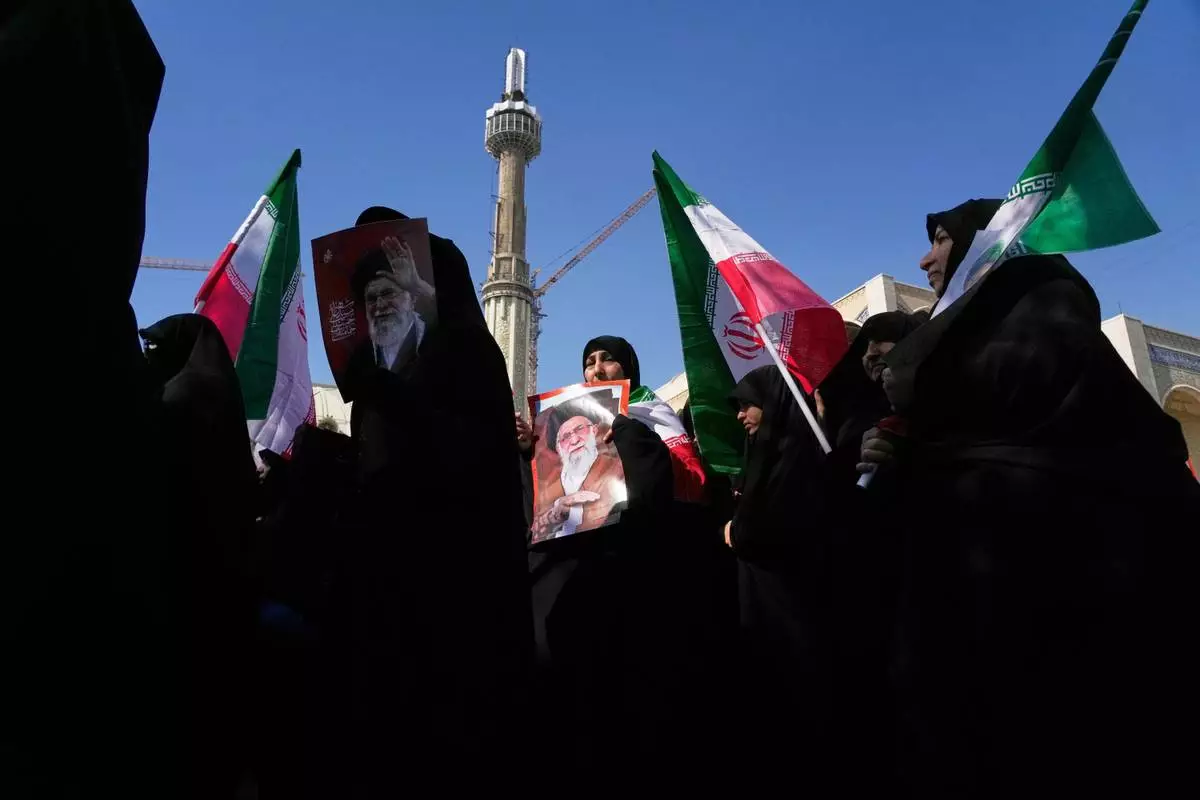
Women hold Iranian flags and pictures of the late Iranian Supreme Leader Ali Khamenei as government supporters march against the ongoing U.S.-Israeli military campaign after Friday prayers at the Imam Khomeini Grand mosque in Tehran, Iran, Friday, March 6, 2026. (AP Photo/Vahid Salemi)
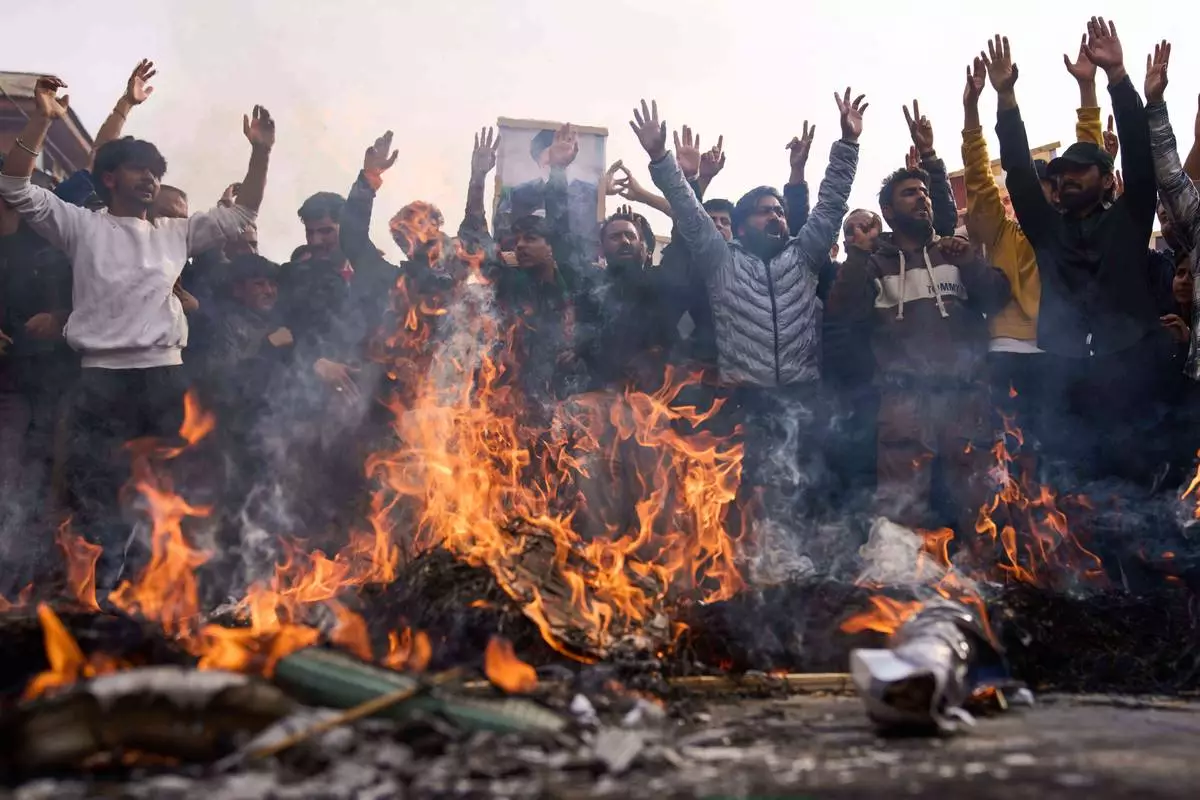
Shiite Muslims shout slogans as they burn effigies of President Donald Trump and Israeli Prime Minister Benjamin Netanyahu during a protest against the killing of Iran's Supreme Leader Ayatollah Ali Khamenei, in Budgam, northeast of Srinagar, Indian controlled Kashmir, Friday, March 6, 2026. (AP Photo/Dar Yasin)
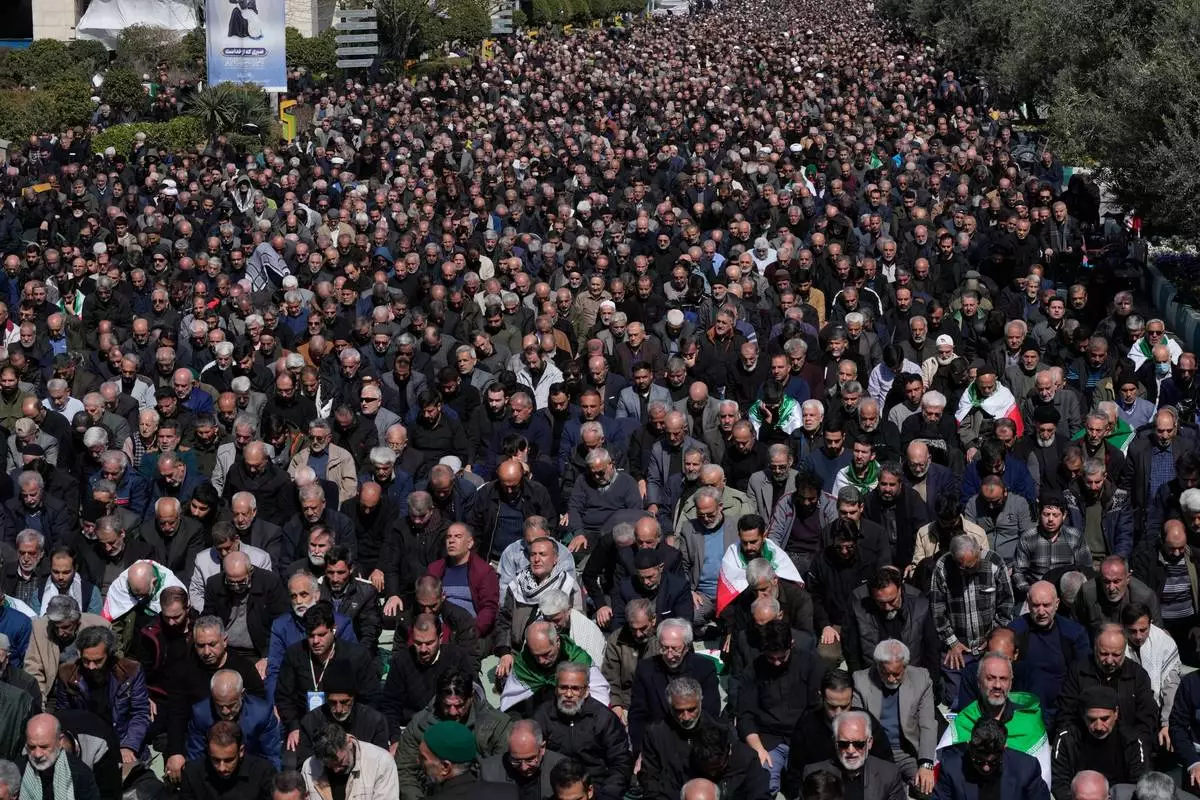
Iranians attend Friday prayers in the courtyard of the Imam Khomeini Grand mosque in Tehran, Iran, Friday, March 6, 2026. (AP Photo/Vahid Salemi)
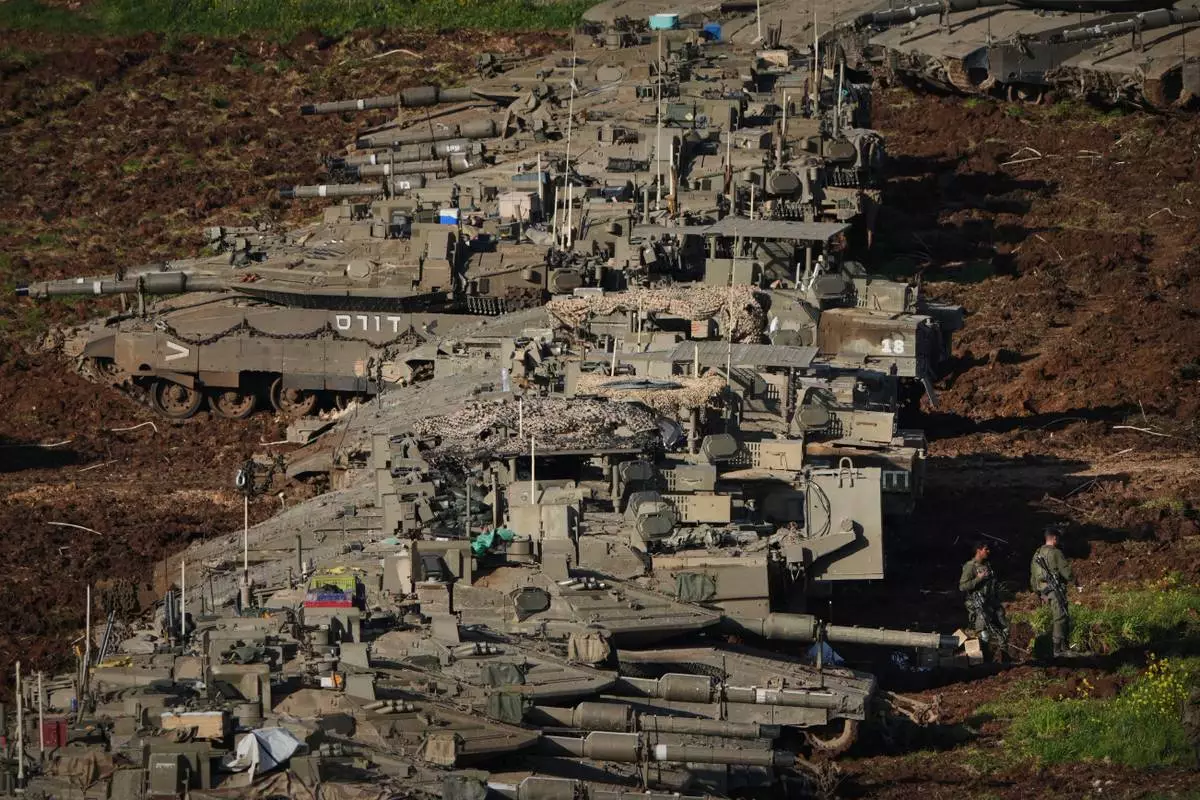
Israeli soldiers work on tanks at a staging area in northern Israel near the border with Lebanon, Friday, March 6, 2026. (AP Photo/Ariel Schalit)
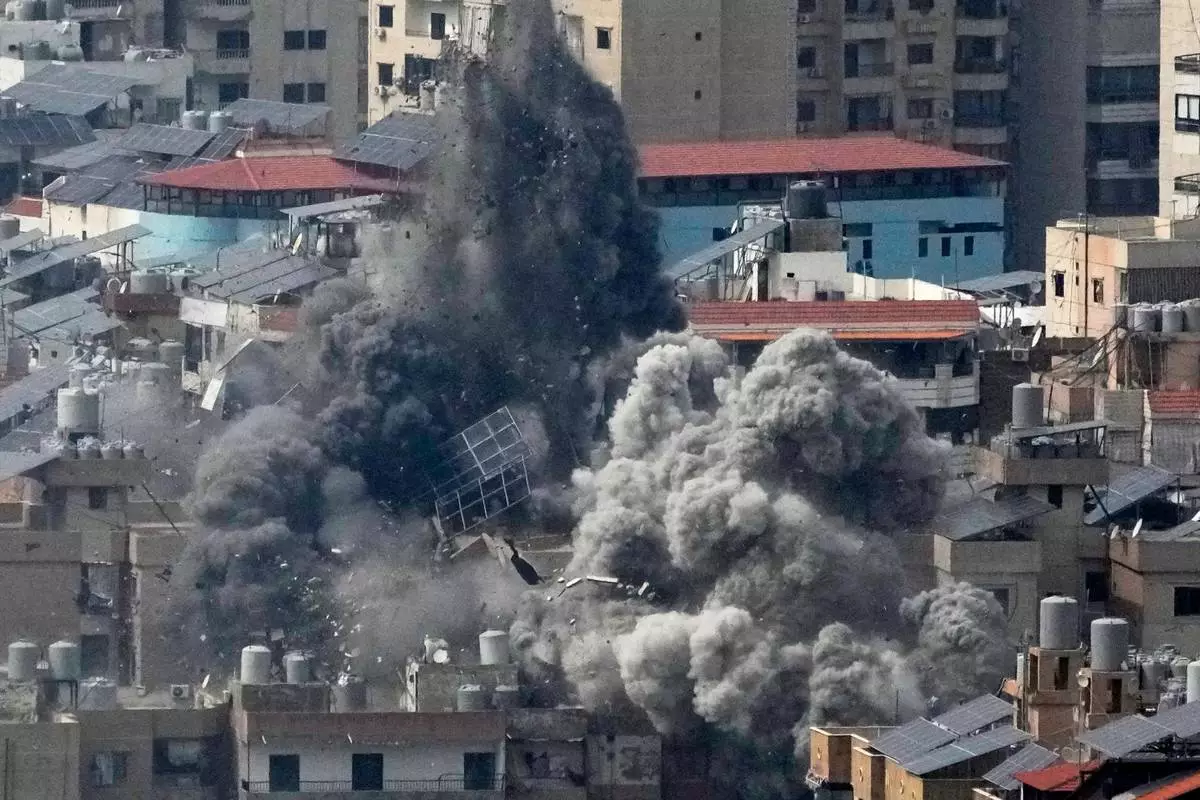
Smoke rises following an Israeli airstrike in Dahiyeh, Beirut's southern suburbs, in Beirut, Lebanon, Friday, March 6, 2026. (AP Photo/Hussein Malla)
WASHINGTON (AP) — Newly released videos showing the fatal shooting of a U.S. citizen by a federal immigration agent in Texas last year call into question assertions by the Department of Homeland Security that a driver intentionally rammed an agent with his car immediately before he was killed.
The videos, including from officer body cameras, offer the first visual account of the shooting of Ruben Ray Martinez, 23, during a beach trip last year. Hours of footage and other law enforcement records were released Friday following a public records request from The Associated Press and other news outlets.
Martinez’s death was the earliest of at least six fatal shootings by federal agents since President Donald Trump launched a nationwide immigration crackdown in his second term, and is among several cases in which video has called into question the administration’s initial narratives.
The Texas Rangers closed their investigation into the March 15, 2025, shooting after a grand jury declined last week to file any criminal charges against Homeland Security Investigations Supervisory Special Agent Jack Stevens, who fired the fatal shots, according to records released by the Texas Department of Public Safety.
In a written statement included in the files, Stevens said he fired to protect his fellow agents, police officers and the public from what he feared was a potential terrorist attack intended to cause mass casualties. A DHS spokesperson said last month the HSI agent fired defensive shots after the driver “intentionally ran over” his fellow agent, “resulting in him being on the hood of the vehicle.”
The newly released body camera videos, taken from behind Martinez’s car, do not clearly show the vehicle striking an agent.
Another video shows Joshua Orta, who was riding in the car with Martinez, telling investigators that his friend had not intended to harm federal officers but had “panicked” because he feared getting arrested for driving while intoxicated.
“He didn’t know what to do. Like he definitely didn’t want to go to jail,” Orta said. “But as far as like running over an officer ... he wouldn’t do that.”
Spokespersons for DHS did not respond to requests for comment about the videos.
While local media reported at the time the shooting involved a police officer, DHS did not publicly disclose its agents were involved until after the AP and other media outlets reported it last month.
Martinez was just days past his 23rd birthday when he and Orta drove from their hometown of San Antonio down to South Padre Island, a popular spring break party destination. They drank with friends and smoked marijuana before heading back out on the town, Orta told investigators.
Martinez was driving his blue Ford sedan when, shortly after midnight, they came upon the scene where South Padre police officers were directing traffic around a two-car collision at a busy intersection. Also at the scene were three HSI agents from a maritime border security task force redirected to conduct immigration enforcement, according to documents.
In body camera footage captured by two of the island's police officers, Martinez’s car can be seen slowly approaching the intersection, appearing to go straight as vehicles were being instructed to turn left. Martinez's car slows to a crawl — nearly a full stop — for pedestrians in the crosswalk. Once the pedestrians are out of the way, the car slowly pulls into the intersection before stopping again as the HSI agents approach, shouting instructions for the driver to stop.
One of the HSI agents, identified in documents as Special Agent Hector Sosa, moves in front of the car. Stevens is on the driver’s side and reaches toward the door.
“Get him out, get him out,” one of the officers can be heard shouting.
Martinez's car begins slowly moving forward and turning to the left, where other vehicles were traveling. Stevens, on the driver’s side of the car, is keeping pace and appears to be leaning in toward the open driver’s side window. As officers yell for Martinez to stop, Stevens pulls his weapon and rapidly fires three shots through the window before quickly backing away.
“Shots fired, shots fired,” one of the police officers wearing a camera yells into his radio.
The entire incident transpires in about 15 seconds.
The blue Ford quickly comes to a full stop and Martinez is pulled from the vehicle and handcuffed by multiple officers. Orta is also pulled from the passenger seat and handcuffed.
Martinez remains in cuffs and on the ground, unmoving, for about a minute before paramedics already on the scene of the earlier traffic accident begin to provide medical aid.
An autopsy report shows all three shots fired by Stevens hit Martinez, with bullets traveling through his left arm before entering his torso and piercing his heart, lungs, liver and other organs. The autopsy report also showed that Martinez's blood alcohol level was 0.12%, well above the legal limit to drive in Texas of 0.08%.
In a three-page written statement provided to the Texas Rangers almost two months after the shooting, Stevens said he fired his weapon as Martinez “accelerated forward, striking Special Agent Sosa who wound up on the hood of the vehicle." He also said he narrowly avoided being run over, being struck by the driver's side and “causing the mirror to break off of the vehicle.” A photo from the scene showed the mirror damaged, but still on the car.
As he fired, the agent said that “still fresh on his mind” were recent domestic and international events, including a man who had driven a pickup truck into a crowd of New Year’s revelers in New Orleans weeks earlier.
“The driver’s eyes were open widely, fist clenched to the steering wheel, and he was looking past the officers on scene as he failed to comply with the loud and repeated verbal commands of multiple law enforcement officers,” Stevens wrote. “This is a behavior I have observed in my training and experience as a pre attack indicator and sign of noncompliance as the suspect is looking in the path of their intended movement and is not indicative of compliance. This path of movement, if left unmitigated, would, using the vehicle as a weapon, have resulted in numerous casualties."
As reported by AP last month, an internal U.S. Immigration and Customs Enforcement investigation said the agent struck by the car was treated for an unspecified knee injury at a nearby hospital and released. The newly released videos show the agent after the shooting arresting Orta and walking without any visible injury or limp.
Orta said Martinez had been drinking earlier that night — several shots and a beer — and smoked marijuana when he approached the traffic checkpoint where a vehicle accident had occurred earlier.
One officer spotted an open alcoholic beverage near Martinez but directed the car to keep moving and turn to the left. Instead, Martinez continued straight, toward the accident and more officers.
“That’s when he panicked and turned the wheel, and he didn’t floor the gas but we kind of went a little bit and I guess they thought he was like trying to run the cop over or something," Orta said.
Orta said that their car came to a “full stop” at first. Then Martinez turned to the left with the car “barely moving.”
“I saw the officer kind of get on the hood. Like he didn’t hit him, but like he kind of like, you know what I mean, caught his feet,” Orta said. “It was just slowly moving and they started shooting.”
Orta died Feb. 21 in a car accident in San Antonio.
Lawyers representing Martinez's mother, Rachel Reyes, said in a statement the newly released videos and other evidence showed his car was barely moving when Stevens fired at point-blank range.
“This batch of evidence shows no justification for Ruben’s killing," lawyers Charles M. Stam and Alex Stamm said. “Still, our pursuit of full transparency will continue until we have all the facts. We, and the public, have yet to see all of the evidence held by the government.”
Boone reported from Boise, Idaho, and Brook from New Orleans. Associated Press reporters Jesse Bedayn in Denver, Jaun Lozano in Houston and John Hanna it Topeka, Kansas, contributed.
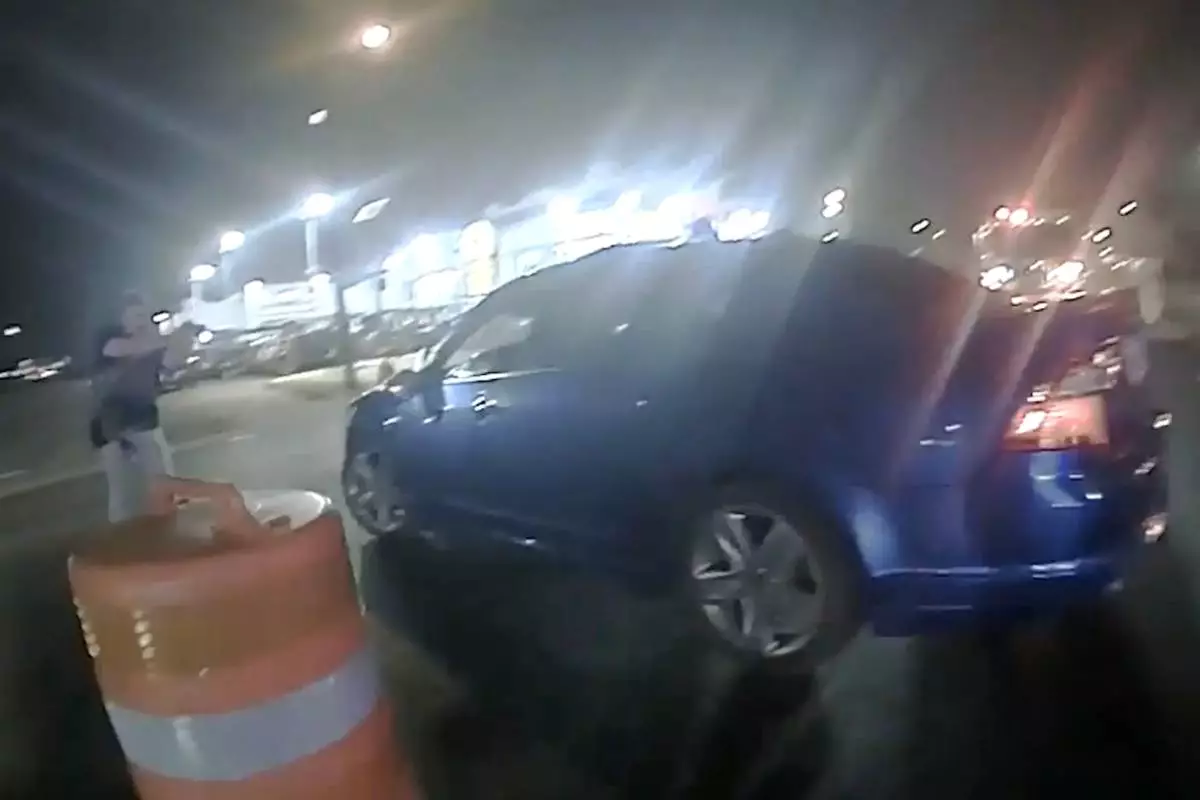
In this image from video provided by the Texas Department of Public Safety, Homeland Security Investigations Special Agent Jack Stevens points his weapon at Ruben Ray Martinez in his vehicle at a roadblock in South Padre Island, Texas, on March 15, 2025. (Officer Miguel Leal/Texas Department of Public Safety via AP)
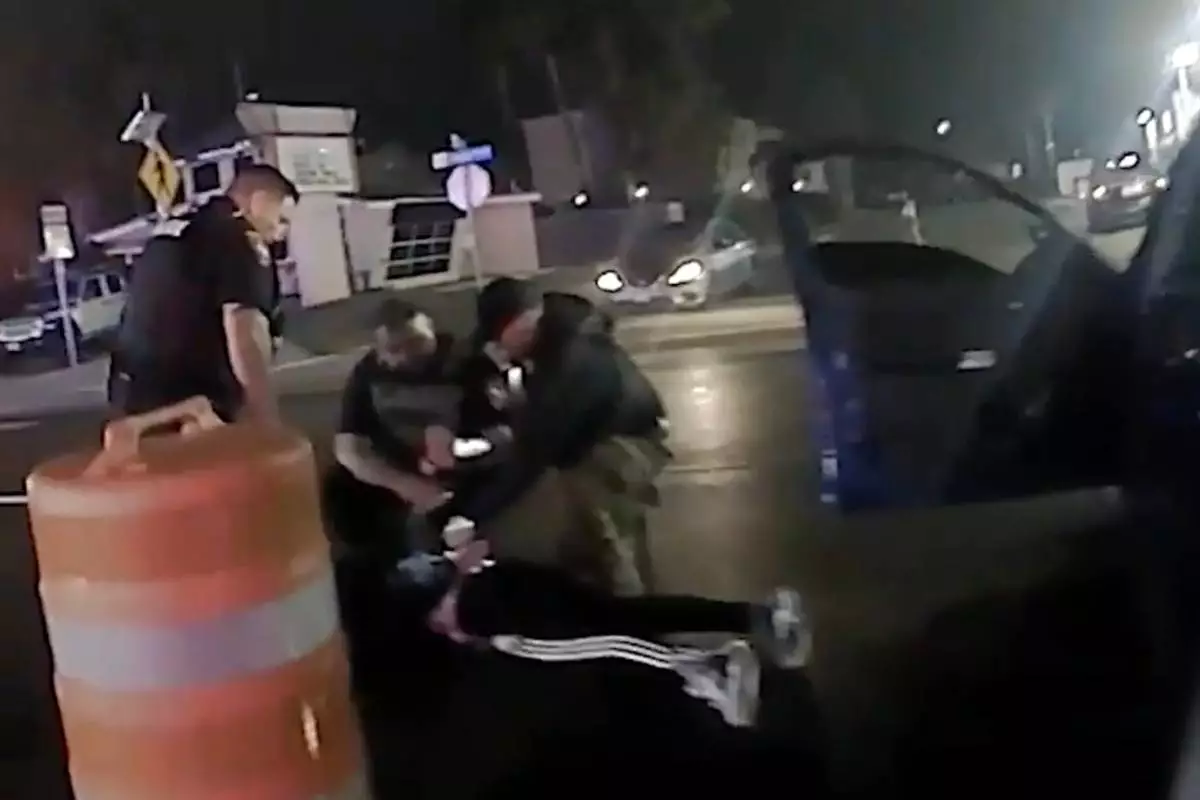
In this image from video provided by the Texas Department of Public Safety, law enforcement officials surround Ruben Ray Martinez after he was shot by Homeland Security Investigations Special Agent Jack Stevens and pulled from his vehicle at a roadblock in South Padre Island, Texas, on Saturday, March 15, 2025. (Officer Miguel Leal/Texas Department of Public Safety via AP)
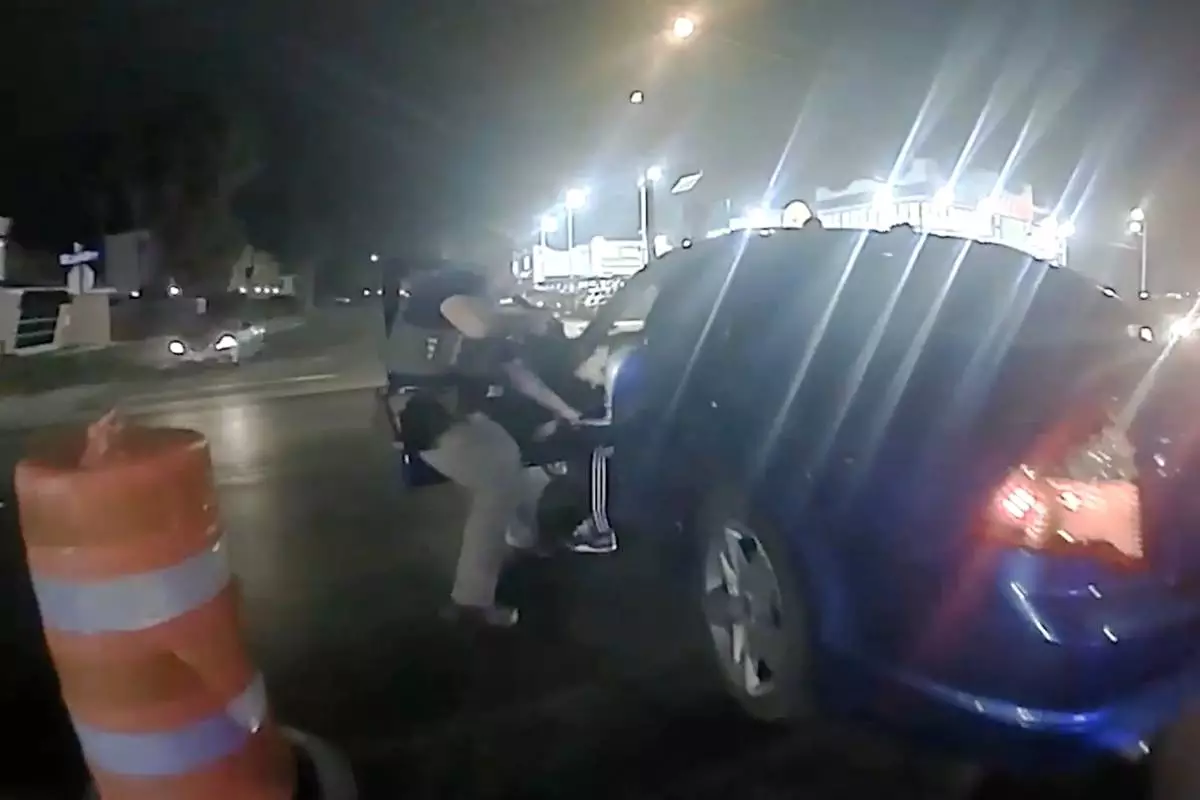
In this image from video provided by the Texas Department of Public Safety, Homeland Security Investigations Special Agent Jack Stevens pulls Ruben Ray Martinez from his vehicle after shooting Martinez at a roadblock in South Padre Island, Texas, on March 15, 2025. (Officer Miguel Leal/Texas Department of Public Safety via AP)