Air raid sirens were activated twice in Tel Aviv, central Israel and Jerusalem early Saturday morning, with the Israeli military reporting that Iran had launched two waves of missiles toward Israel within half an hour.
Footage captured by a China Media Group (CMG) reporter shows missile interception trails in the sky over Jerusalem as sirens sound continuously.
The missile launches marked the latest escalation in the ongoing U.S.-Israeli military campaign against Iran, now in its eighth day.
As of Friday, the death toll from the U.S. and Israeli airstrikes on Iran has reached 1,332, according to the Iranian Red Crescent Society.
The U.S.-Israeli attacks have damaged 3,643 civilian sites across Iran, including 3,090 homes and 528 commercial and service facilities.
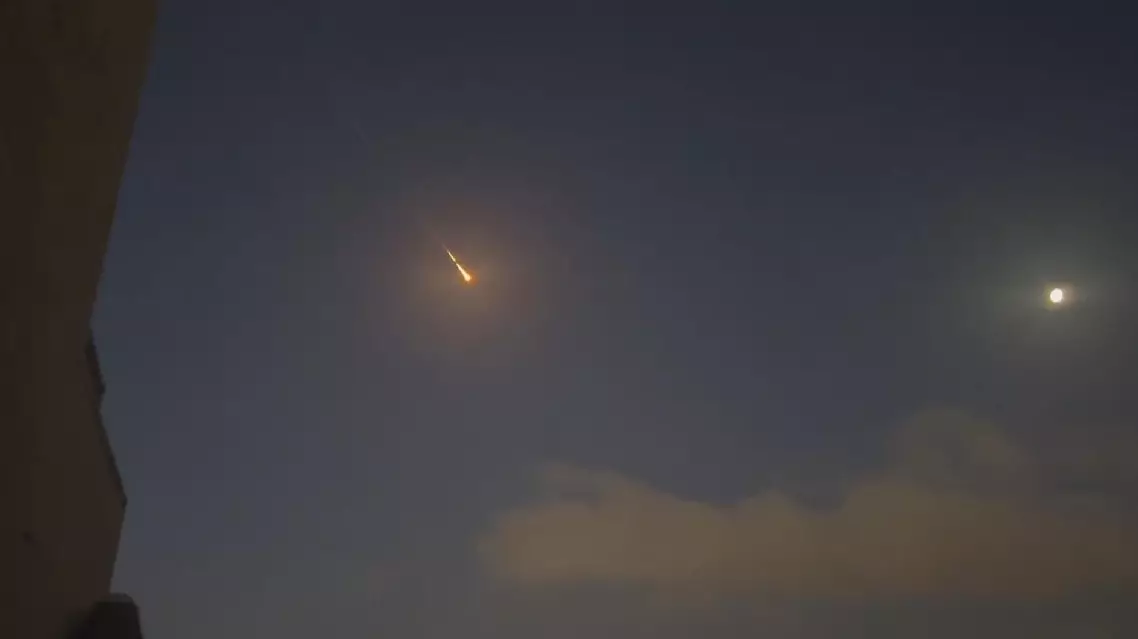
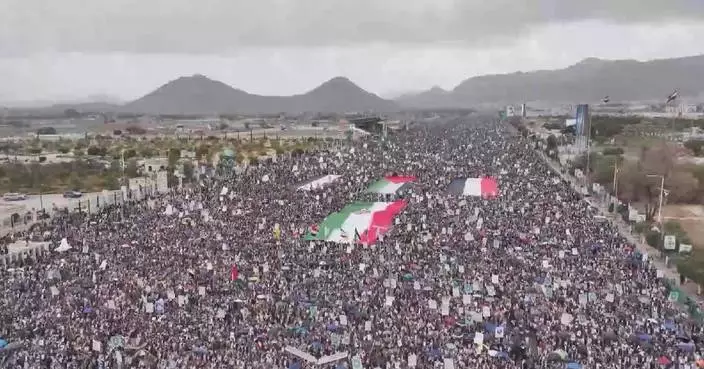
Sirens sound across central Israel, Jerusalem
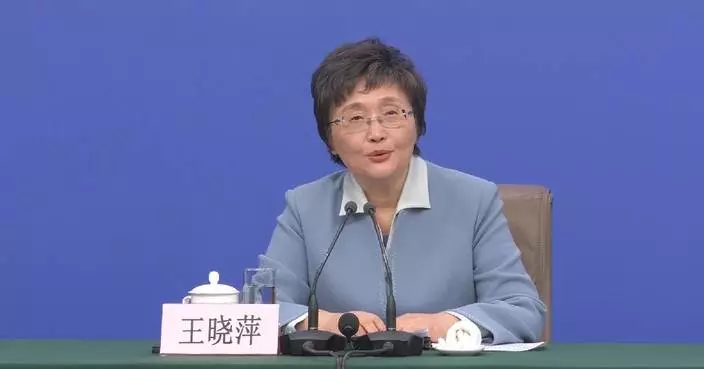
Institutional opening-up, a key topic at this year's two sessions and in the 15th Five-Year Plan, is fundamentally about establishing long-term effectiveness through systematic, nationwide efforts rather than fragmented, short-term actions, said a deputy to the 14th National People's Congress (NPC) on Friday in Beijing.
The "two sessions", a major event in China's political calendar, refer to the annual meetings of China's top legislature, the National People's Congress (NPC), and the top political advisory body, the National Committee of the Chinese People's Political Consultative Conference (CPPCC).
Peng Shou, also an academician of Chinese Academy of Engineering, explained that by developing comprehensive pilot frameworks in free trade zones like Shanghai and the Hainan Free Trade Port, China is transforming fragmented policies into cohesive systems, such as addressing processing VAT to boost high-tech industries; and exploring the expansion of models like negative lists and digital infrastructure to create a more transparent and predictable environment for global partners.
"I believe that a system is about long-term effectiveness, it's not a short-term move, and not fragmented. It's not about handling isolated cases, but about involving everyone, the whole society," said Peng.
China has built a series of comprehensive testing grounds for institutional openness.
With 22 free trade zones covering the entire country, a full-scale pilot framework has been established. Especially in free trade zones like Shanghai and the Hainan Free Trade Port, China has launched over 110 innovative, integrated pilot measures.
"Turning previous fragmented small policies into a systematic framework is key. For example, the issue of processing and value-added tax is well addressed. By incorporating processing technologies and adding value, it drives the development of high-tech industries," said Peng.
Such models could also be promoted in other regions.
Peng also said that the Hainan Free Trade Port's special customs operations can be used as a great example.
"We may apply this negative list model to some cities or development zones. Additionally, we can focus on digital infrastructure, using AI and digital technology as a foundation in cities like Beijing and Shanghai," he said.
At its core, institutional opening-up is not just about aligning with global standards; it's about creating a more open, transparent, and predictable environment that attracts global partners, according to Peng.
By embracing this new model, China is not only enhancing its position in the global market but also reshaping its own economic future, he added.
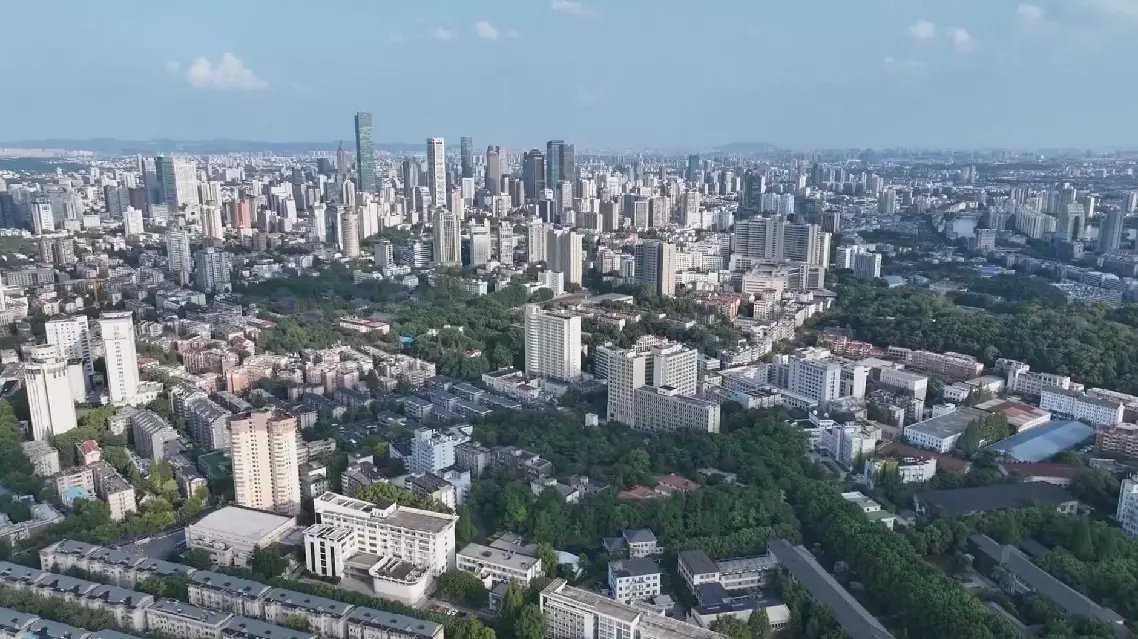
NPC deputy emphasizes long-term, systematic impact of institutional opening-up strategies