More than 8,000 people took to Tokyo's streets on Saturday to protest the Japanese government's push to restart aging nuclear plants.
The protesters urged the Japanese government and Tokyo Electric Power Company (TEPCO) to face up the lingering problems left by the Fukushima nuclear accident.
Hit by a 9.0-magnitude earthquake and an ensuing tsunami on March 11, 2011, the Fukushima nuclear plant suffered core meltdowns that released radiation, resulting in a level-7 nuclear accident, the highest on the International Nuclear and Radiological Event Scale.
"It's been 15 years since the Fukushima accident, and there's still no clear plan for how to resolve these issues. Despite this uncertainty, the government keeps moving forward with nuclear restarts. I find this extremely dangerous and frightening," said one protester.
"I don't think the government or TEPCO have any real intention to solve these problems. Actually, there's no long-term plan at all. Yet they talk about restarting and even building new nuclear plants. It's utterly absurd," said another participant.
The 2011 disaster forced tens of thousands to evacuate their homes. Many, like 70-year-old Ryoichi Takemoto from Okuma, Fukushima, remain displaced.
"Now my wife and I live together in Chiba. We only return to our hometown once or twice a year. Where we used to live, there were dozens of families, and now only one remains. It's basically impossible to go back. This is the current situation. In addition, medical facilities, healthcare services, hospitals, and nursing care are all far from reaching the level needed to live there again. Under these circumstances, it is extremely difficult to truly make the decision to return and live there," said Takemoto.
According to the latest figures from Japan's Reconstruction Agency, about 26,000 people are still living as evacuees as of February. Reconstruction efforts continue in the hardest-hit areas of Fukushima, Iwate, and Miyagi prefectures.
TEPCO reactivated a reactor at the Kashiwazaki-Kariwa nuclear power plant in Niigata Prefecture in February, after a glitch with an alarm in late January forced the suspension of its first restart since the 2011 Fukushima disaster.
Rally participants expressed concern that the Japanese government and TEPCO, having failed to properly address the Fukushima accident, now seek to bring nuclear risks to Niigata Prefecture.
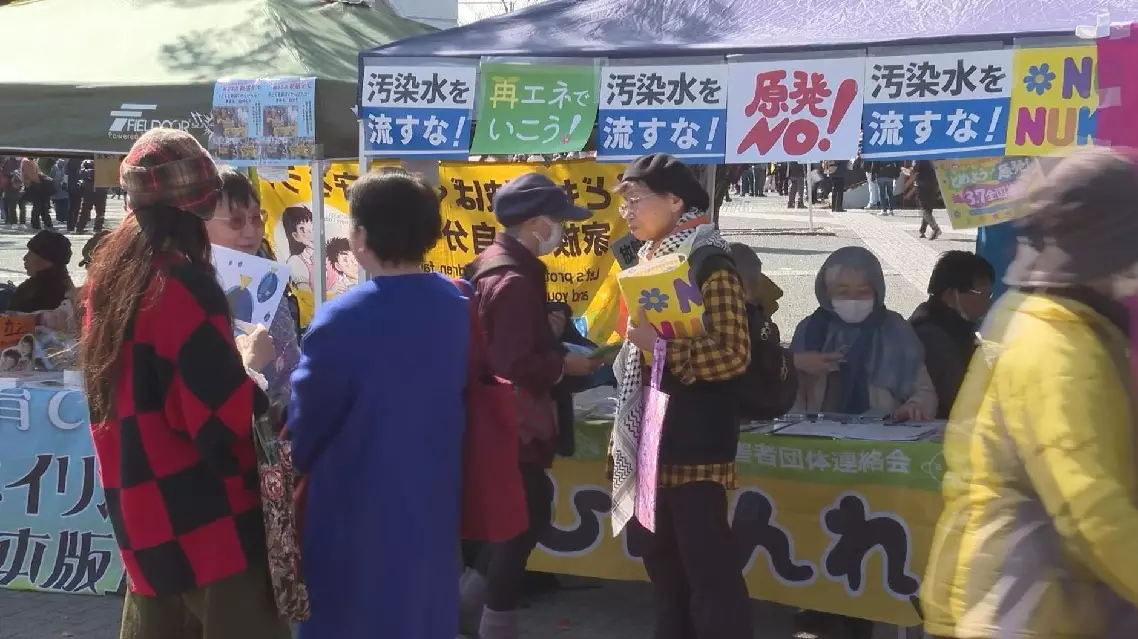
Thousands rally in Tokyo against Japan's push to restart aging nuclear plants
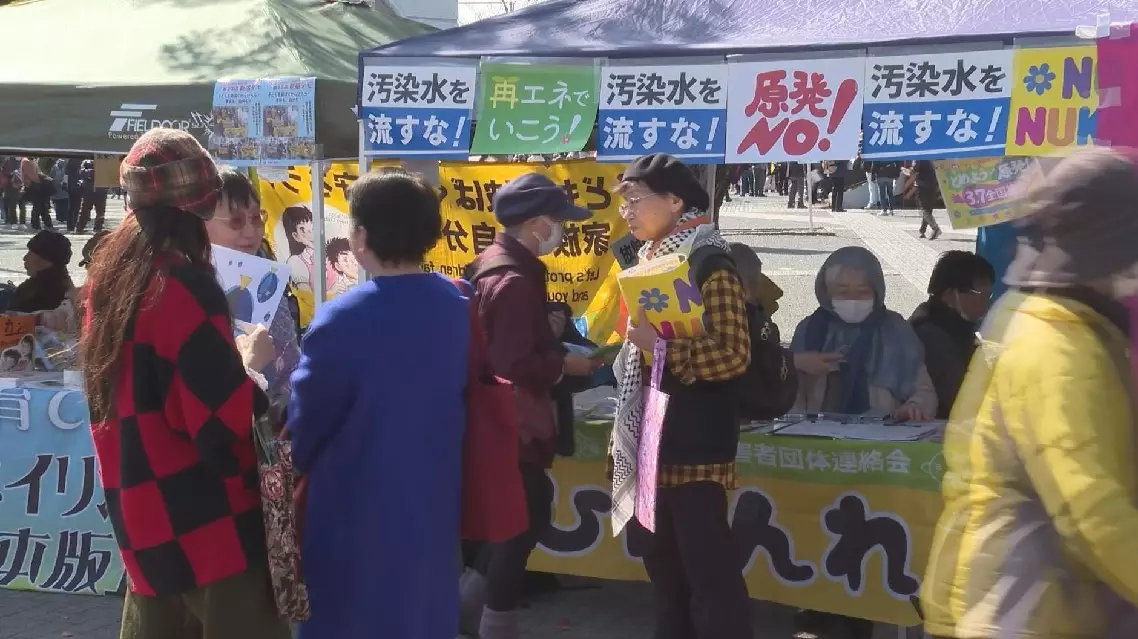
Thousands rally in Tokyo against Japan's push to restart aging nuclear plants
Floods triggered by rounds of torrential rain in the aftermath of Typhoon Maysak have left 39 people dead and nine reported missing in south China's Guangxi Zhuang Autonomous Region, local authorities said on Thursday.
The death toll includes casualties resulting from a severe breach of a reservoir dam in the regional capital city of Nanning, according to a flood control and disaster relief press conference held at noon on Thursday.
However, officials noted that the death and missing tolls may overlap, as technical identification of some victims is still ongoing.
Following further verification, it was determined that the breach in Liulan Reservoir in Nanning has resulted in 26 deaths, including five unidentified individuals, and seven reported missing cases, said Ding Wei, vice mayor of Nanning.
Nanning had evacuated and resettled a total of 64,500 residents to safer places by Thursday morning. Meanwhile, the city has delivered 100,000 essential items to affected residents, including clothing, drinking water, food, medicine and power banks.
Following the dam breaches at Liulan Reservoir and Yunbiao Reservoir, local authorities invited water experts to the site to provide guidance on emergency rescue and disaster relief.
The experts mainly focused on assessing the dam breaches, and studying relevant measures to lower water level.
"Starting from Wednesday, we have repaired roads leading to the Liulan Reservoir. As of this morning, access to the dam crest is restored. Starting today, we will start dredging work," said Zhai Jianjia, deputy director of Nanning's water resources bureau.
Communication base stations in disaster-hit Hengzhou and Binyang County, both under the jurisdiction of Nanning, are now operating at 87.7 percent of regular capacity. Power has been restored to 63,000 households in these two areas, while traffic flow has resumed across several highway sections and major roads.
"Over 4,200 personnel and more than 1,300 vehicles have been mobilized to clean up silt, garbage and debris, and to conduct post-disaster epidemic prevention work. Over 300 specialists have been dispatched to severely affected areas such as Yunbiao Town and Xiaoyi Town in Hengzhou City, and Gantang Town in Binyang County to conduct environmental monitoring and disinfection," said Ding.
For the transportation of emergency supplies, Nanning relies on expressways and national and provincial highways to transport supplies to distribution points at the boundaries of flooded road sections, and then uses inflatable boats, drones, and other means to transfer them to resettlement sites for the affected people, ensuring their basic needs are met.
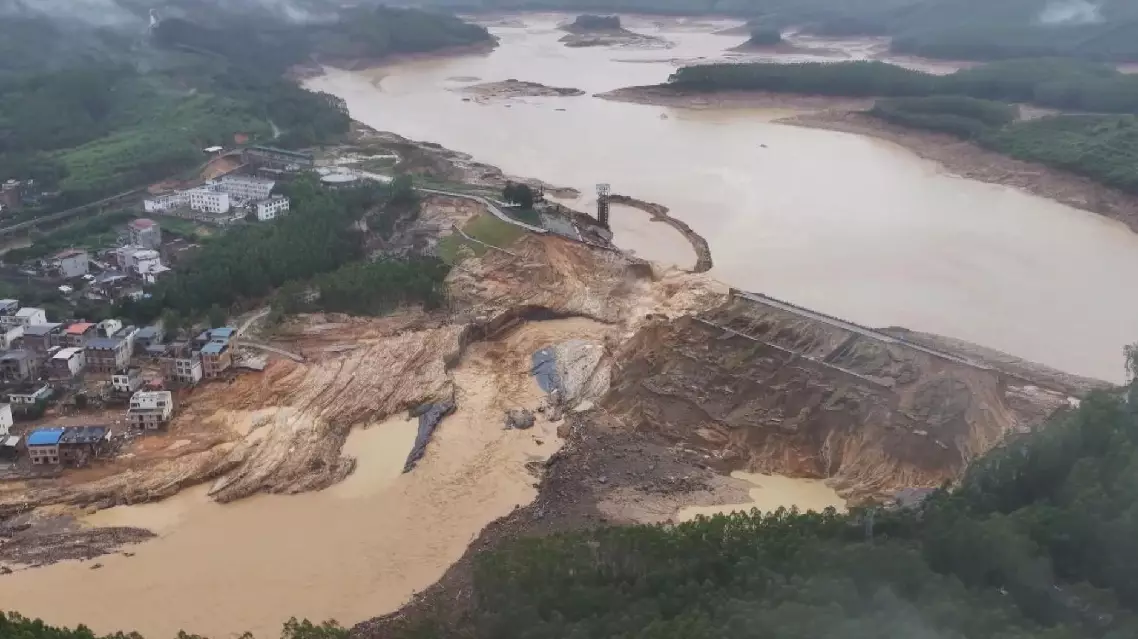
Floods in south China's Guangxi leave 39 dead, 9 reportedly missing: authorities