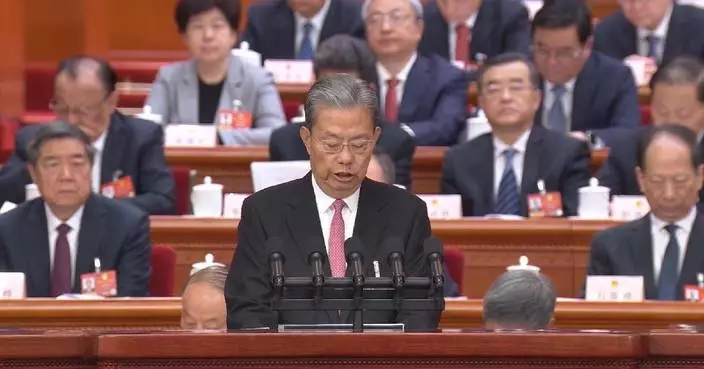
Taiwan's representatives emphasized the need to enhance cross-Strait integration during a group meeting at the fourth session of the 14th National People's Congress (NPC) in Beijing on Sunday.
The "two sessions" are the annual meetings of China's supreme organ of state power, the NPC, and its top political advisory body, the National Committee of the Chinese People's Political Consultative Conference (CPPCC). Both bodies serve five-year terms and hold a plenary session each year.
The fourth session of the 14th NPC and the fourth session of the 14th National Committee of the CPPCC kicked off in Beijing on March 5 and March 4, respectively.
Despite Taiwan's Democratic Progressive Party authorities' attempts to stir up tension and create confrontation, cross-Strait exchanges and cooperation have navigated those obstacles and made significant progress, said the representatives.
"In the past year, personnel exchanges across the Strait exceeded 5 million, reaching a new high in nearly six years. The facts demonstrate that people on both sides of the Strait are one family, and no one can sever the bonds that unite family members," said Yan Ke, an NPC deputy from Taiwan.
"I believe that the national identity of the Taiwanese compatriots is rooted in the shared history and culture of both sides of the Taiwan Strait, deeply connected by kinship and blood ties. This is something that no amount of political manipulation can break," said Zhou Qi, another NPC deputy from Taiwan.
The representatives also highlighted the cultural identity Taiwanese youths share with the mainland, encouraging them to pursue their life goals on the mainland.
"Despite the long-term influence of misguided historical education and 'de-Sinicization' attempts in Taiwan, many Taiwanese youth still long to visit their ancestral homeland on the mainland. This represents a return to kinship and an awakening of cultural identit," said Zeng Liqun, an NPC deputy from Taiwan.
"As long as you have talent, capability and an understanding of your strengths, you will achieve your lifelong dreams during the 15th Five-Year Plan period (2026-2030)," said Chen Yunying, another NPC deputy from Taiwan.
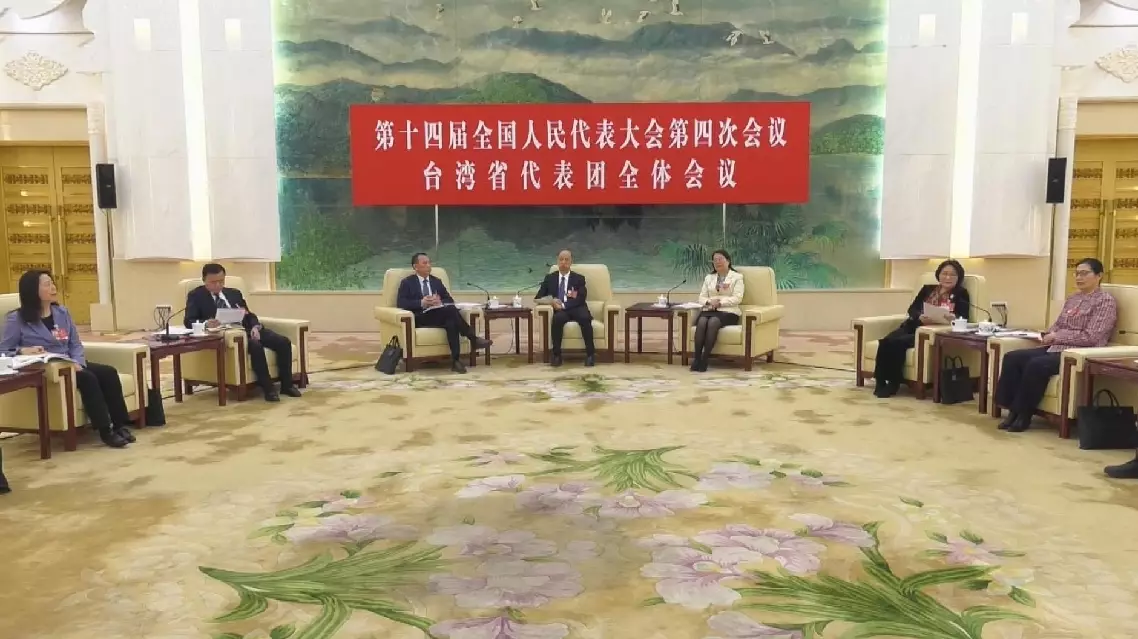
NPC deputies from Taiwan advocate for strengthening cross-Strait integration
Senior executives of multinational corporations have acknowledged China's latest efforts in facilitating foreign investment, emphasizing that the comprehensive approach proposed at China's government work report for 2026 further advance the country's opening up while providing more support for foreign enterprises.
At the opening meeting of the fourth session of the 14th National People's Congress (NPC) on Thursday, Chinese Premier Li Qiang delivered a government work report that unveiled China's key achievements in 2025, the country's major new achievements over the 14th Five-Year Plan period (2021-2025), the main targets for development this year, and the major development targets for the next five years (2026-2030).
Tu Changming, senior director of Yihai Kerry Golden Dragon Fish, a leading Singapore-based agricultural and food products processing enterprise, said that these targets will help companies like Yihai Kerry to supply Chinese consumers with healthier food choices.
"The government work report proposed to build a strong domestic market and achieve the goal of keeping domestic residents' income in line with economic growth. This means that the grain, oil and food consumption market will continue to grow, and consumer demand will upgrade from eating enough to eating well and healthily. This is highly consistent with our group's overall strategic layout and the development of health products," said Tu.
Another foreign enterprise that has spoken highly of the work report is Sanofi, a French pharmaceutical company that is heavily investing into AI-powered research and development, as well as digital health solutions.
Shi Wang, president of Sanofi Greater China, envisioned a bright prospect for the company's cooperation with its Chinese counterparts in the field of sci-tech research and innovation.
"China's investment in research and development has grown at a very rapid pace, with considerable overall scale. More than 90 percent of the key products in our global research and development pipeline have achieved simultaneous global development, and some products had the privilege of being launched globally for the first time. We want to participate in this force of biomedical innovation in China, not only to serve Chinese patients, but also, on a larger scale, to form strong alliances and utilize these innovative and groundbreaking biomedical products to serve patients worldwide," he said.
Business leaders also said that China's efforts to expand its opening-up have greatly facilitated foreign companies in observing and establishing themselves in this market.
"On the first working day of the new year, Jing'an District (Shanghai) invited our company to the district government office to discuss the key tasks for 2026, and to learn more about the company's potential needs and difficulties in operation in the new year. Many of our questions were answered or even resolved on the spot. You can see the importance of the business environment, which is one of the favorable reasons why we are willing to further develop in China," Shi said.
"As one of the largest wholly foreign-owned property insurance companies in China, AXA Tianping has undergone a transformation from a joint venture to a wholly foreign-owned enterprise. The report specifically mentioned steadily expanding institutional openness, providing a fair competitive environment and a broader stage for cooperation for foreign-invested enterprises, and injecting strong momentum into industry innovation," said Kevin Chor, CEO of AXA Tianping Property and Casualty Insurance Company.
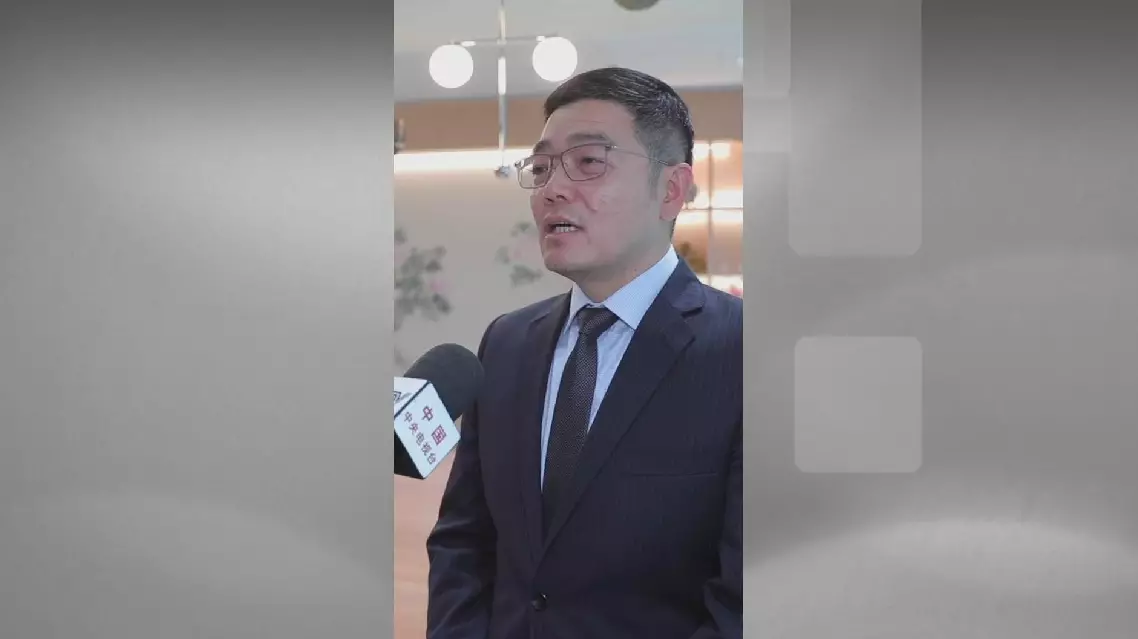
Multinational corporations acknowledge China's efforts to facilitate foreign investment