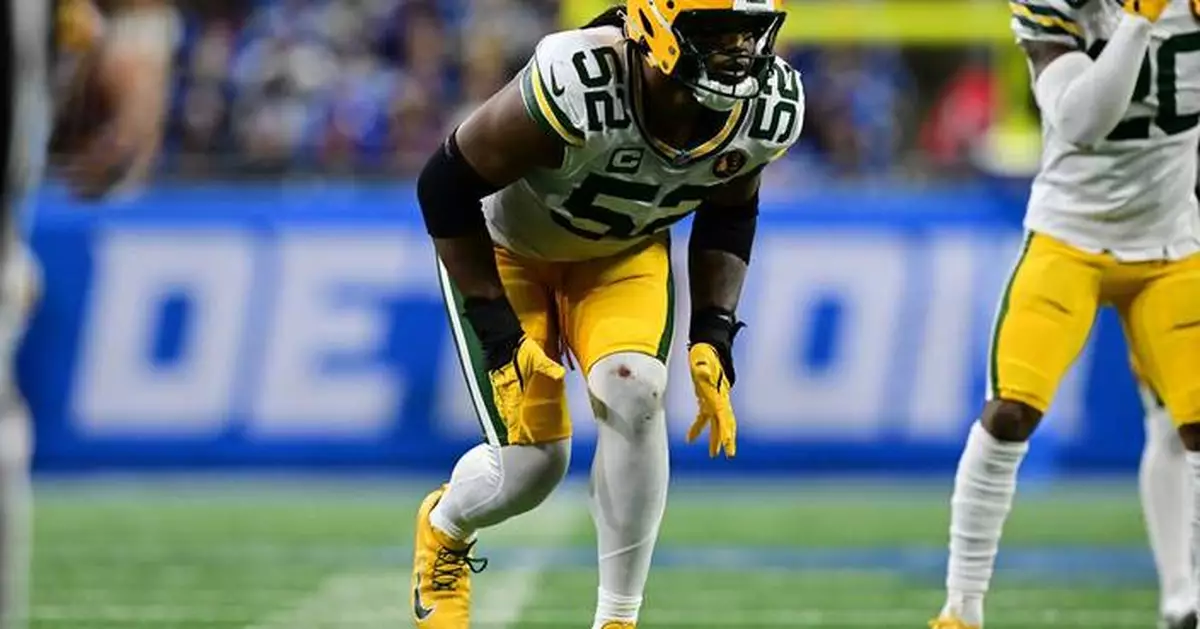
The Dallas Cowboys are acquiring edge rusher Rashan Gary from the Green Bay Packers in a trade just as NFL free agency opens, a person with knowledge of the deal told The Associated Press on Monday.
Dallas will send a 2027 late-round pick to the Packers, the person said.
The person spoke on condition of anonymity because the deal was still being finalized.
The Cowboys and Packers reached the deal just as free agents were being allowed to talk to teams and reach agreements on contracts that can’t be signed until the league year begins Wednesday.
The Miami Dolphins announced they are releasing Tua Tagovailoa, adding another big name at quarterback to a list of free agents that will include Kyler Murray, who is being let go by Arizona.
The Dophins made another move by agreeing to trade safety Minkah Fitzpatrick to the New York Jets for a seventh-round pick, according to a person familiar with the negotiations.
The Cowboys and Green Bay have agreed on a trade involving an edge rusher for the second year in a row.
A week before the season started last year, the Cowboys traded young star Micah Parsons, who immediately signed a $188 million, four-year contract with $136 million guaranteed. It was the richest contract for a non-QB in league history. The Cowboys also got defensive tackle Kenny Clark from Green Bay in the Parsons trade.
Gary was the No. 12 overall pick in 2019, two years before Parsons went to the Cowboys in the same draft spot. Gary had 7 1/2 sacks last season, but none in the final 10 games of an up-and-down year when the Packers were hoping the addition of Parsons would be a boost for Gary.
Parsons missed the final three games and a wild-card loss to the Chicago Bears after tearing the ACL in his left knee.
The 28-year-old Gary spent his first seven seasons with the Packers and had at least 7 1/2 sacks in four of the past five years. Gary, T.J. Watt and Myles Garrett are the only NFL players with at least 40 sacks, 100 quarterback hits, five forced fumbles and five fumble recoveries since 2020.
This trade caps an eventful few days for Gary. He had posted a farewell to Green Bay on Instagram in Friday — an indication the Packers were about to move on from him — but he deleted the post later that day.
The New York Giants are re-signing veteran tight end Chris Manhertz, keeping him and running back Devin Singletary among the offensive holdovers under new coach John Harbaugh.
The team last week also re-signed receiver/returner Gunner Olszewski, and 25-year-old Wan’Dale Robinson may depart in free agency after becoming just the third player since the 1970 AFL-NFL merger 5-foot-8 or shorter to eclipse 1,000 yards receiving in a season.
The Vikings kept one of their unrestricted free agents off the market by agreeing to terms on a new contract with 10th-year veteran linebacker Eric Wilson, a three-year deal valued at $22.5 million with $12.5 million guaranteed, according to the NFL Network.
Wilson, who returned to his original team last season, had career highs in tackles for loss (17), sacks (6 1/2), quarterback hits (10) and forced fumbles (four).
AP NFL: https://apnews.com/hub/NFL
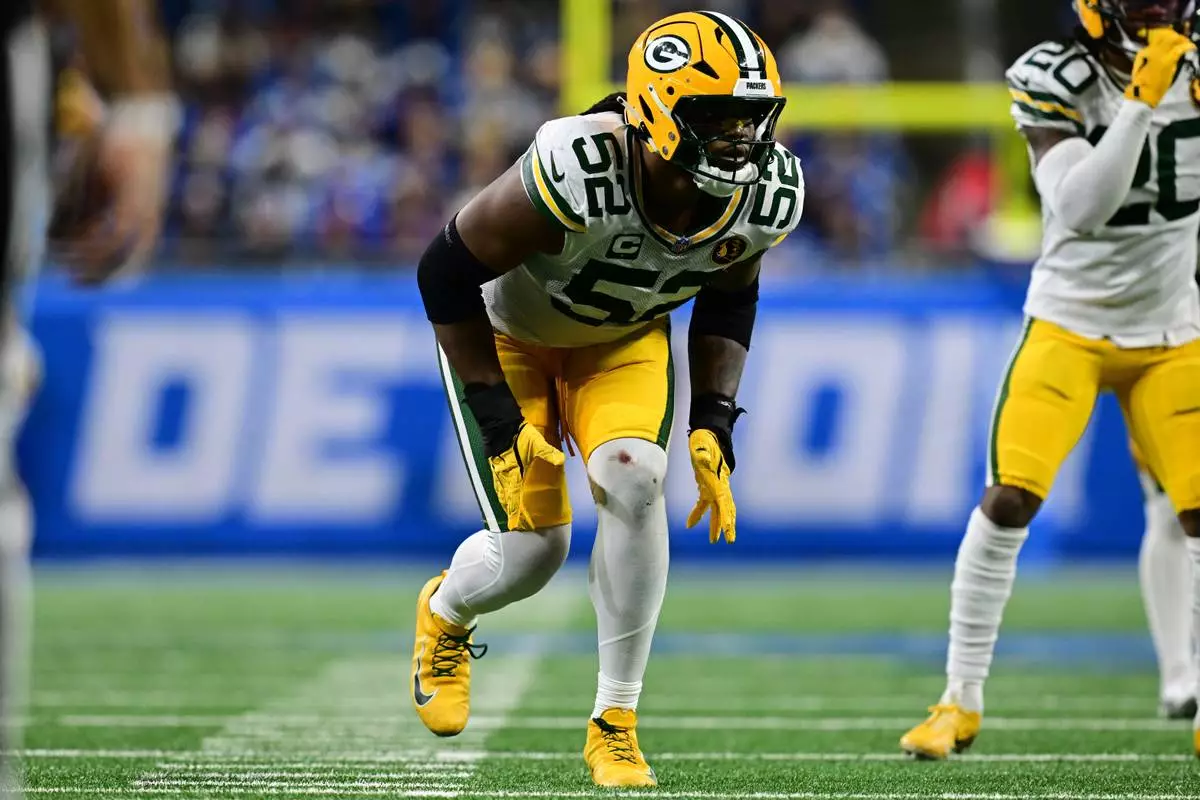
FILE - Green Bay Packers defensive end Rashan Gary lines up during the second half of an NFL football game against the Detroit Lions in Detroit, Nov. 27, 2025. (AP Photo/David Dermer, file)
DUBAI, United Arab Emirates (AP) — Iran named the hard-line Ayatollah Mojtaba Khamenei to succeed his late father as supreme leader on Monday, signaling no letup in the war launched by the United States and Israel. Oil prices surged as Iran attacked regional energy infrastructure and the U.S. and Israel bombed targets across Iran.
The secretive 56-year-old cleric — - only the third supreme leader in the history of the Islamic Republic — has close ties to the paramilitary Revolutionary Guard, which has been firing missiles and drones at Israel and Gulf Arab states since Ayatollah Ali Khamenei, who had ruled since 1989, was killed during the war’s opening salvo.
The appointment marked a new sign of defiance by Iran’s embattled leadership after more than a week of heavy U.S. and Israeli bombardment, suggesting Tehran is not close to giving up on what it considers a fight for the Islamic theocracy's survival.
World markets plummeted and Brent crude oil, the international standard, surged to nearly $120 a barrel Monday, about 65% higher than when the war started, before retreating. The Dow Jones Industrial Average sank more than 600 points, or over 1.3%, shortly after opening — marking a drop of more than 6-1/2% from its all-time high close in mid-February.
In Brussels, the Group of Seven major industrialized powers decided against tapping into strategic oil reserves for now to ease the impact on oil prices.
French Finance Minister Roland Lescure said after chairing a meeting of G7 counterparts: “We’re not there yet,” before adding that they were ready to take steps to stabilize markets like strategic stockpiling.”
Iran’s attacks in the Strait of Hormuz have all but stopped tankers from using the key shipping lane through which a fifth of the world’s oil is carried. Fire broke out at an oil facility that Iran attacked in the United Arab Emirates. Bahrain’s only oil refinery was apparently also hit and Saudi Arabia said it had intercepted several drones attacking its Shaybah oil field.
“There is not an oil shortage,” U.S. President Donald Trump wrote on Truth Social overnight. “Prices will drop again soon,” he added, suggesting shipments from Venezuela to the U.S. could help offset the price spike.
U.S. Secretary of State Marco Rubio said the United States is “well on our way” to achieving its objective, which he said was to eliminate Iran’s ballistic missile stockpile, and its ability to produce and launch them. The administration has offered shifting rationales and timelines since the start of the conflict.
Elsewhere in the region, sirens blared multiple times across Israel on Monday amid unrelenting Iranian drones and missiles. A man was killed in central Israel in a missile strike, the first such death in Israel in a week, and a woman was wounded.
Israel said it was carrying out “a wide-scale wave of strikes” on the Iranian city of Isfahan, as well as the capital, Tehran and in southern Iran.
Turkey meanwhile said NATO defenses had intercepted a ballistic missile that entered the country’s airspace for the second time since the war started.
The younger Khamenei, who has not been seen in public since the war started, was long considered a potential successor — even before the killing of his 86-year-old father. His wife, Zahra Haddad Adel, was killed in the same strike.
An Iranian state TV report suggested the younger Khamenei may have been wounded in that strike, though a state TV analyst later appeared to amend the report, saying he had been wounded in the 1980s Iran-Iraq war in which he served.
Political figures within Iran have criticized handing over the supreme leader’s title based on heredity, comparing it to the monarchy overthrown in the 1979 Islamic Revolution. But the Assembly of Experts, a clerical body that chooses Iran's top leader, apparently voted for continuity.
Khamenei, who is seen as even more hard-line than his late father, will now be in charge of Iran's armed forces and any decision about Tehran's nuclear program.
President Masoud Pezeshkian, a relative moderate in Iran’s Shiite theocracy, welcomed the choice in a post on X.
The supreme leader, chosen by a clerical body, has the final say on all major policies, including war, peace and the country’s disputed nuclear program.
Though Iran's key nuclear sites are in tatters after the U.S. bombed them during the 12-day Israel-Iran war in June, it still has highly enriched uranium that's a technical step away from weapons-grade levels. Khamenei could choose to do what his father never did — build a nuclear bomb.
Israel has already described him as a potential target, while Trump has called him “unacceptable” and dismissed him as a “lightweight.”
Top Iranian security official Ali Larijani, speaking to Iranian state television, praised the Assembly of Experts for “courageously” convening even as airstrikes pounded Tehran. He said the younger Khamenei had been trained by his father and “can handle this situation.”
Saudi Arabia lashed out at Iran following the drone attack on its massive Shaybah oil field, saying Tehran would be the “biggest loser” if it continues to attack Arab states.
In the United Arab Emirates, home to futuristic city of Dubai, authorities said two people were wounded by shrapnel from the interception of Iranian missiles over the capital, Abu Dhabi. By mid-afternoon, the Emirati Defense Ministry said 15 ballistic missiles and 18 drones were fired on the country on Monday.
A total of 253 missiles and 1,440 drones have been launched at the UAE since the war began. Four foreign nationals have been killed in the UAE and 117 wounded, authorities said.
Iran also attacked Kuwait, Qatar and Bahrain, where it hit a residential area, wounding 32 people, including several children, according to authorities. Another attack appeared to have started a fire at Bahrain's only oil refinery, sending thick plumes of smoke into the air.
Bahrain has also accused Iran of damaging one of its desalination plants, though its electricity and water authority said supplies remained online. Desalination plants supply water to millions of residents in the region, raising new fears of catastrophic risks in parched desert nations.
In Iraq, air defenses downed a drone as it attacked a U.S. military compound inside the Baghdad International Airport, a security official told The Associated Press, speaking on condition of anonymity because they were not authorized to speak to the press. No injuries or damage were reported. It was not immediately clear who was behind the attack, but Iran-backed militias have previously targeted the base.
Elsewhere, the U.S. military said a service member died of injuries from an Iranian attack on troops in Saudi Arabia on March 1. Seven U.S. soldiers have now been killed.
The U.S. State Department early Monday ordered nonessential personnel and families of all staff to leave Saudi Arabia following the escalation in attacks.
Several other U.S. diplomatic missions have ordered all but key staff to leave, including Bahrain, Iraq, Jordan, Kuwait, Lebanon, Qatar, the UAE and the consulates in Karachi, Pakistan, and Adana, Turkey.
Smoke billowed over Beirut after Israel carried out airstrikes on its southern suburbs Monday.
Ahead of the strikes, the Israeli army said it would operate against targets associated with the Hezbollah-linked financial institution al-Qard Al-Hasan — which Israel said finances the militant group — and repeated its warning to residents of Beirut’s southern suburbs to flee.
The war has killed at least 1,230 people in Iran, at least 397 in Lebanon and 11 in Israel, according to officials. Another person died in Israel of an asthma attack on her way to a shelter. Israel reported its first soldier deaths on Sunday, saying two were killed in southern Lebanon, where it is fighting Hezbollah.
UNICEF, the children's agency, reported that at least 83 children have been killed and 254 wounded in Lebanon since March 2.
“As military strikes continue across the country, children are being killed and injured at a horrifying rate, families are fleeing their homes in fear, and thousands of children are now sleeping in cold and overcrowded shelters,” it said.
Rising reported from Bangkok and Magdy from Cairo. Associated Press journalists Sam Metz in Ramallah, West Bank; Natalie Melzer in Nahariya, Israel; Melanie Lidman in Tel Aviv, Israel; Sally Abou AlJoud in Beirut; Aamer Madhani in Doral, Florida; Lorne Cook in Brussels, Matt Lee in Washington, Qassem Abdul-Zahra in Baghdad and Edith M. Lederer at the United Nations contributed reporting.
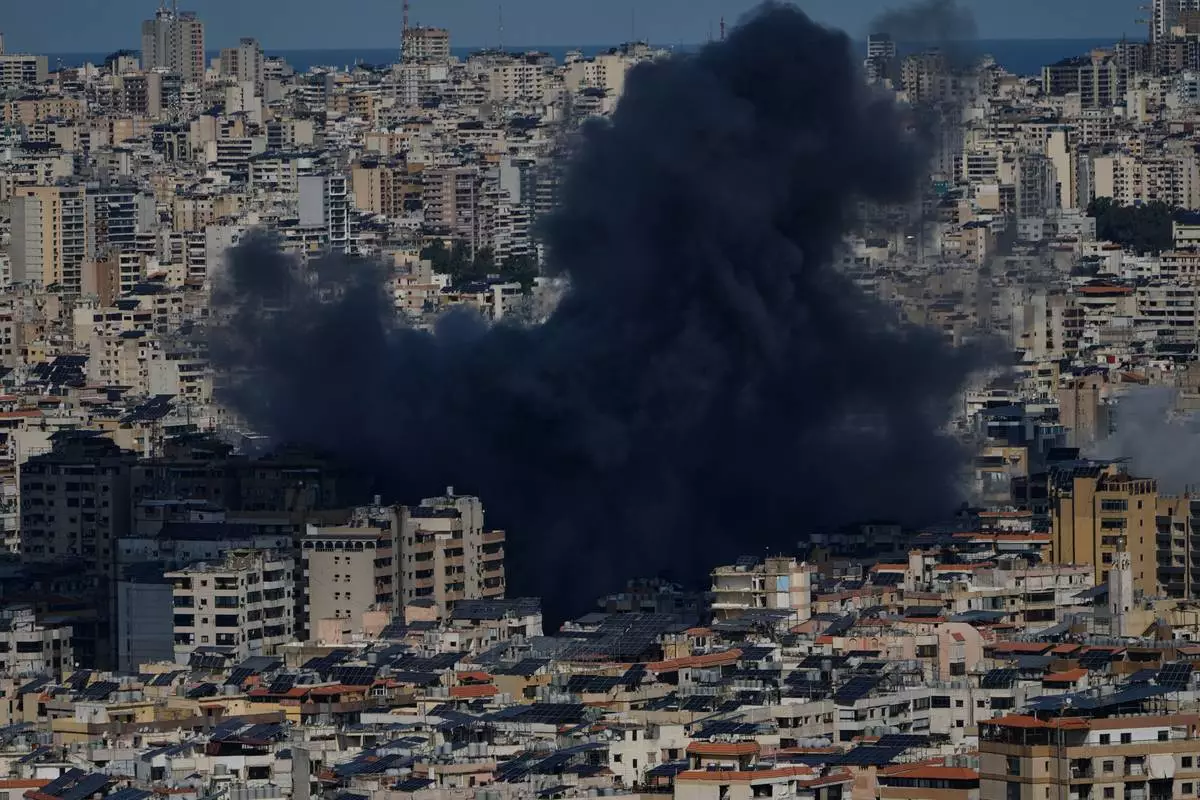
Smoke rises following an Israeli airstrike in Dahiyeh, Beirut's southern suburbs, Lebanon, Monday, March 9, 2026. (AP Photo/Bilal Hussein)
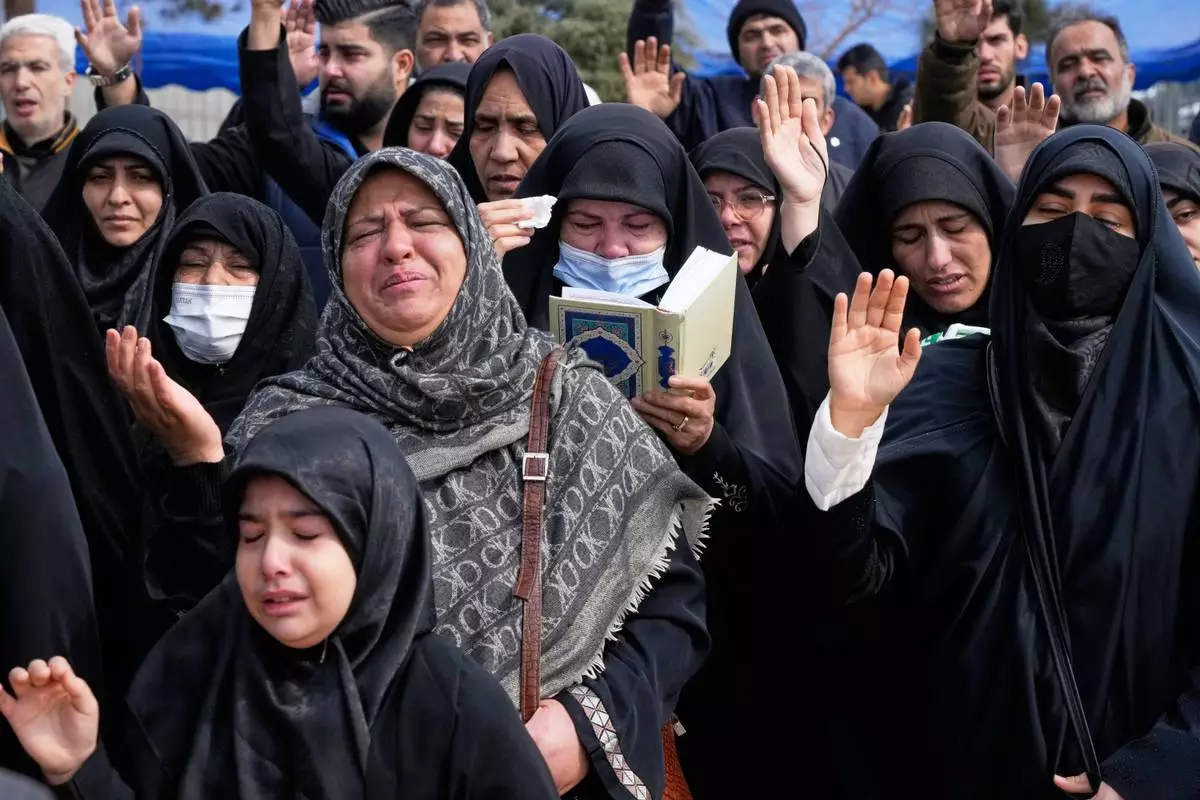
Mourners pray during the funeral of Mehdi Hosseini, a man killed in a U.S.-Israeli strike, at Behesht-e Zahra cemetery in Tehran, Iran, Monday, March 9, 2026. (AP Photo/Vahid Salemi)
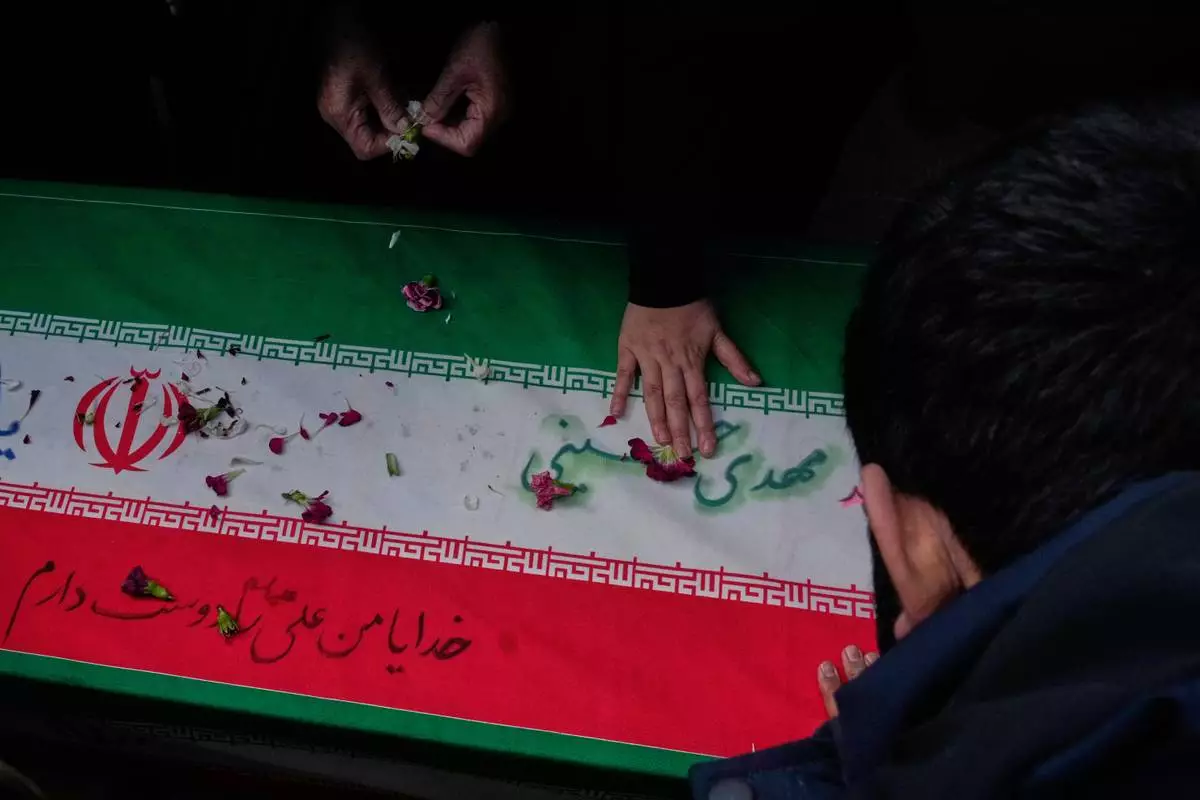
Relatives mourn over the flag draped coffin of Mehdi Hosseini who was killed in a U.S.-Israeli strike during his burial ceremony at Behesht-e Zahra cemetery in Tehran, Iran, Monday, March 9, 2026. (AP Photo/Vahid Salemi)
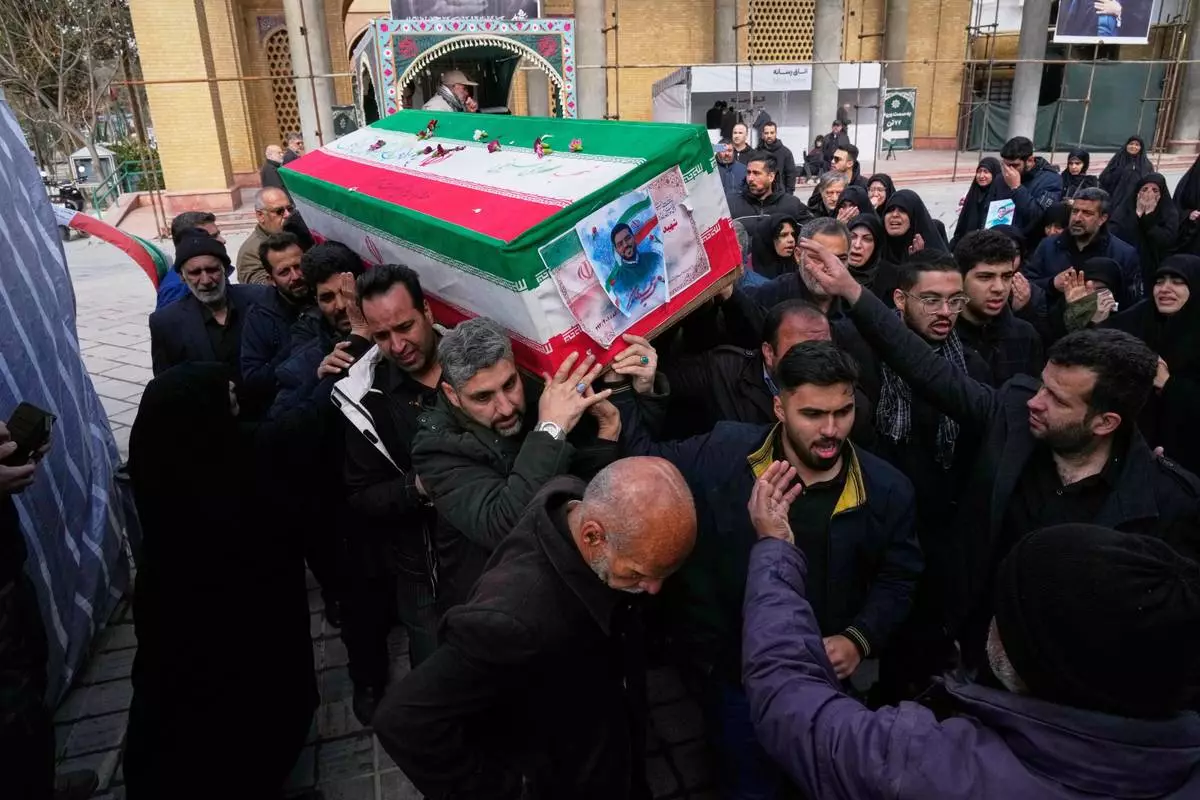
The coffin of Mehdi Hosseini, a man killed in a U.S.-Israeli strike, is carried for burial at Behesht-e Zahra cemetery in Tehran, Iran, Monday, March 9, 2026. (AP Photo/Vahid Salemi)
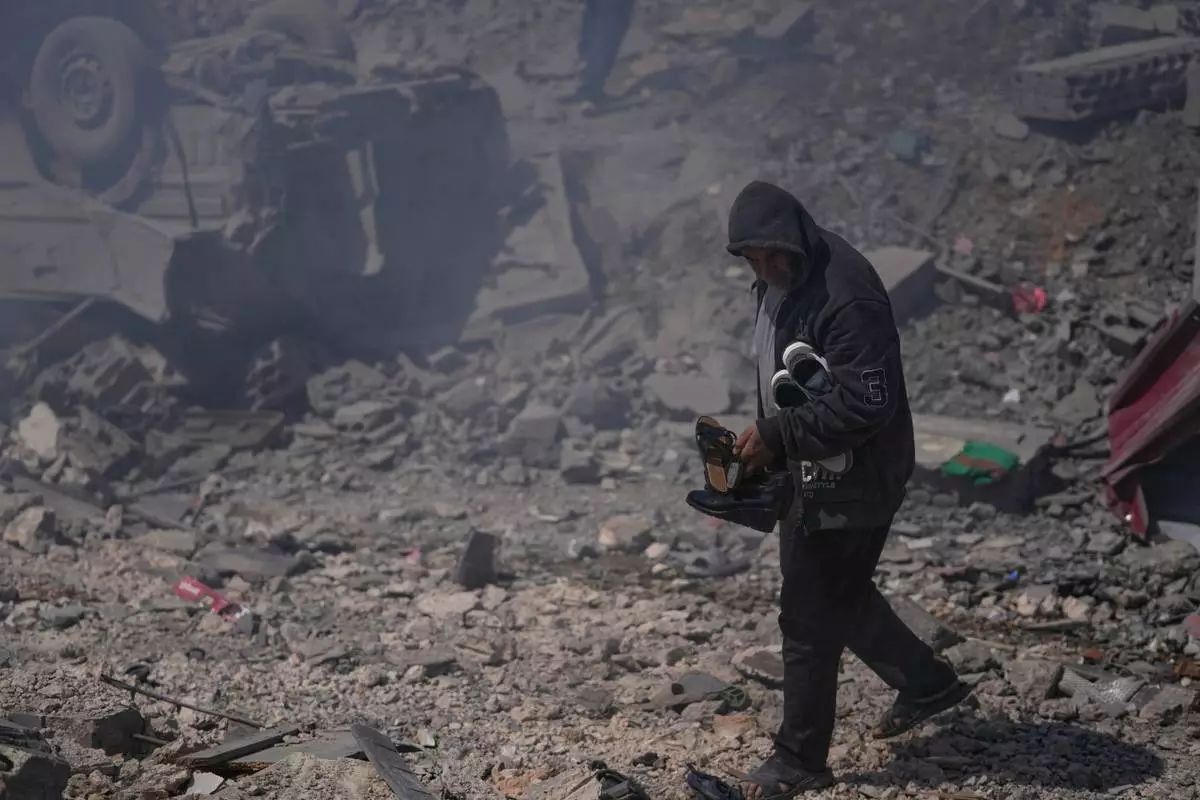
A man carries shoes from his destroyed house that was hit by Israeli airstrikes hit several houses in Sir al-Gharbiyeh village south Lebanon, Sunday, March, 8, 2026. (AP Photo/Mohammed Zaatari)
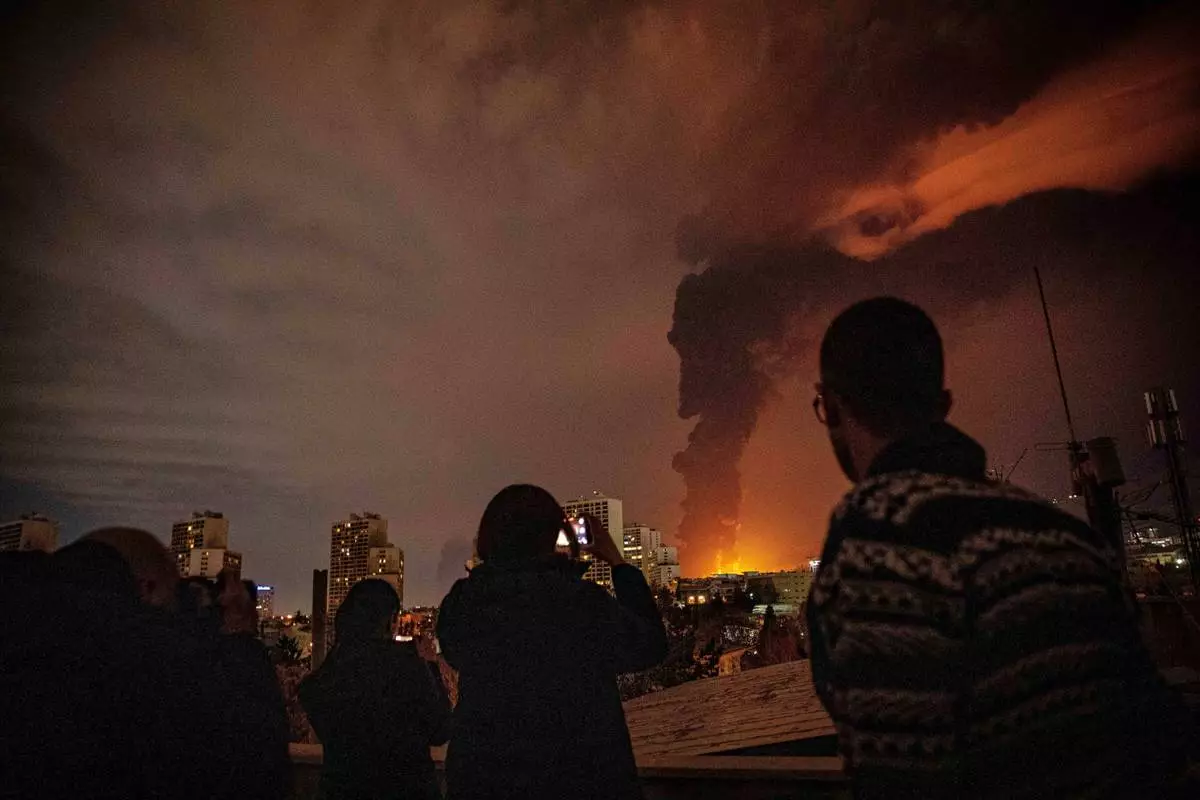
Residents look on and take pictures as flames and smoke rise from an oil storage facility struck as attacks hit the city during the U.S.–Israeli military campaign in Tehran, Iran, Saturday, March 7, 2026. (Alireza Sotakbar/ISNA via AP)
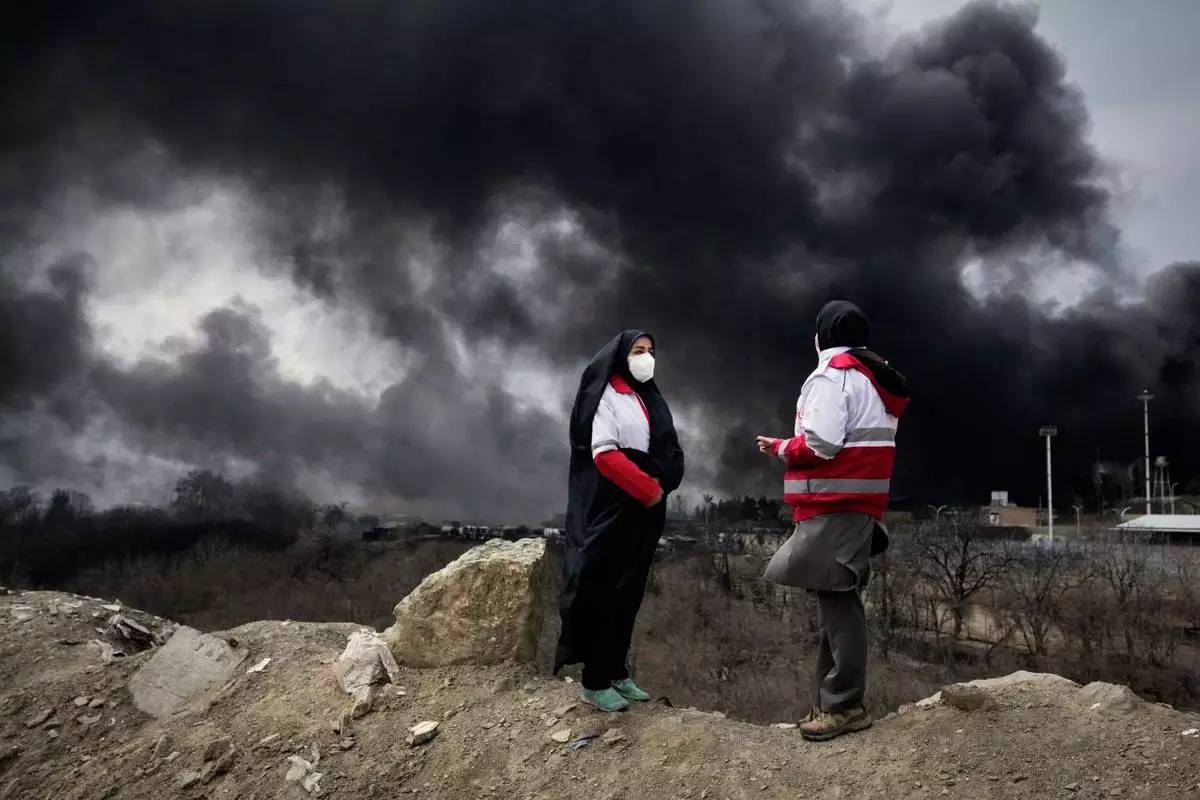
Two women from the Iranian Red Crescent Society stand as a thick plume of smoke from a U.S.-Israeli strike on an oil storage facility late Saturday rises in the sky in Tehran, Iran, Sunday, March 8, 2026. (AP Photo/Vahid Salemi)
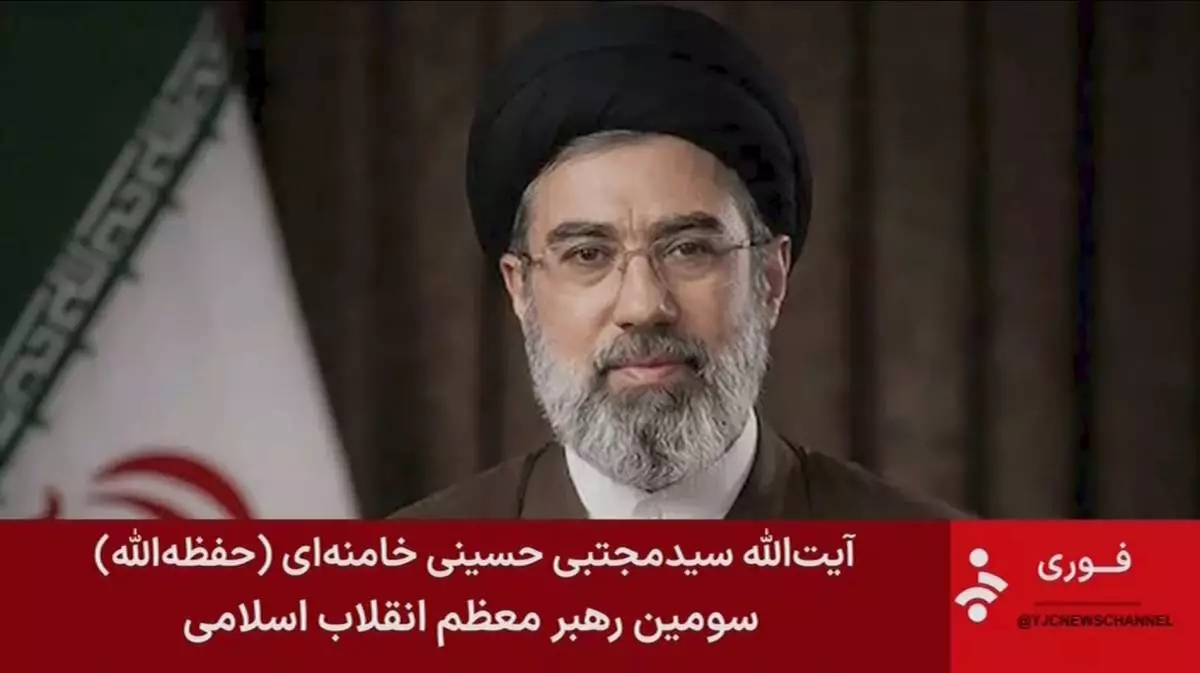
This image taken from video provided by Iran state TV shows Mojtaba Khamenei, a son of Iran's slain supreme leader, who has been named as the Islamic Republic's next ruler, authorities announced Monday, March 9, 2026. (Iran state TV via AP)