FRANKFURT, Germany (AP) — The Iran war has put at risk some of the world's most critical oil and gas infrastructure — the pipelines, refineries, and shipping terminals that keep energy flowing from the countries around the Persian Gulf to the global economy.
Strikes by Iranian drones have disrupted operations, while risk of Iranian strikes has effectively closed the Strait of Hormuz, the conduit for some 20% of the world's oil and liquefied natural gas. Oil fields in countries including Iraq have cut back output as storage fills up. Qatar, a major supplier of liquefied natural gas, has shut down its exports as well.
Click to Gallery
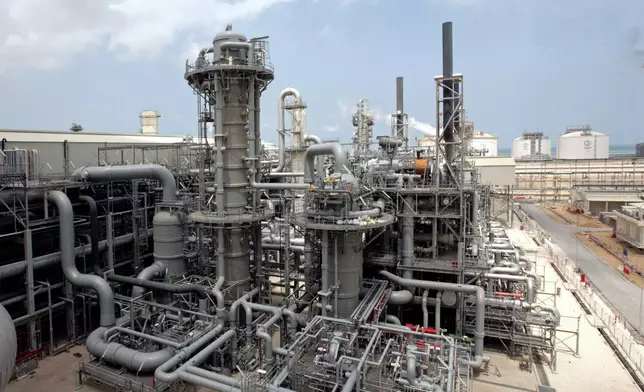
FILE - This April 4, 2009, file photo, shows a gas production facility at Ras Laffan, Qatar. (AP Photos/Maneesh Bakshi, File)
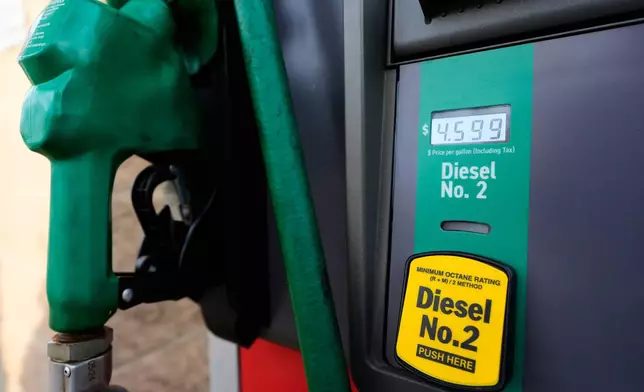
FILE - The current diesel fuel price is shown on a pump at a filling station in Richardson, Texas, March 6, 2026. (AP Photo/Tony Gutierrez, file)
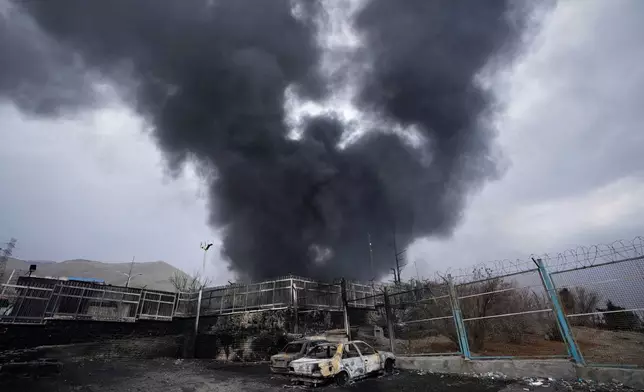
FILE - A thick plume of smoke rises from an oil storage facility hit by a U.S.-Israeli strike in Tehran, Iran, March 8, 2026. (AP Photo/Vahid Salemi, file)
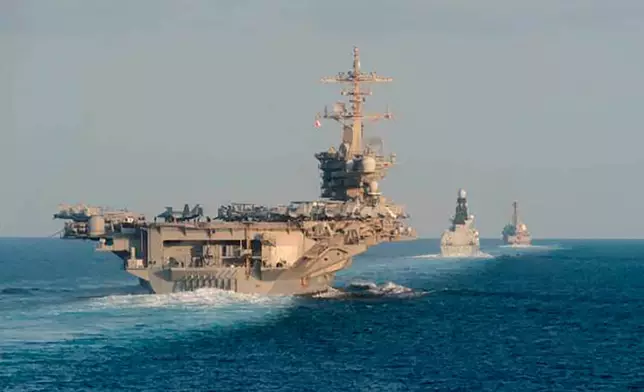
FILE - In this Nov. 19, 2019, photo made available by U.S. Navy, the aircraft carrier USS Abraham Lincoln, left, the air-defense destroyer HMS Defender and the guided-missile destroyer USS Farragut transit the Strait of Hormuz with the guided-missile cruiser USS Leyte Gulf. (Mass Communication Specialist 3rd Class Zachary Pearson/U.S. Navy via AP, File)
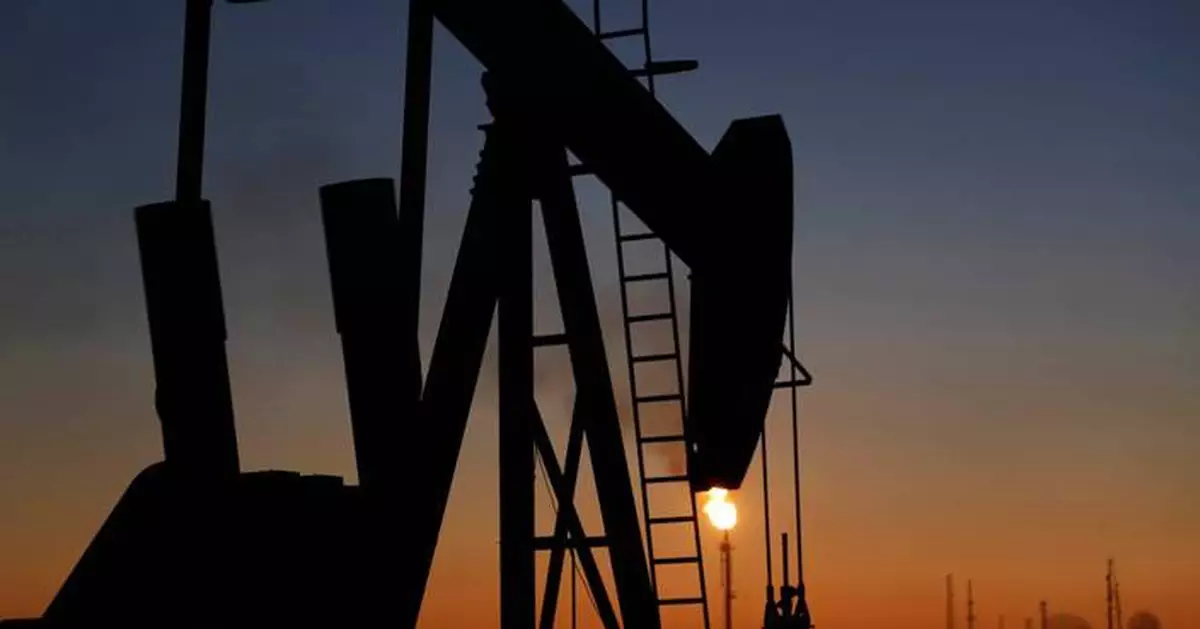
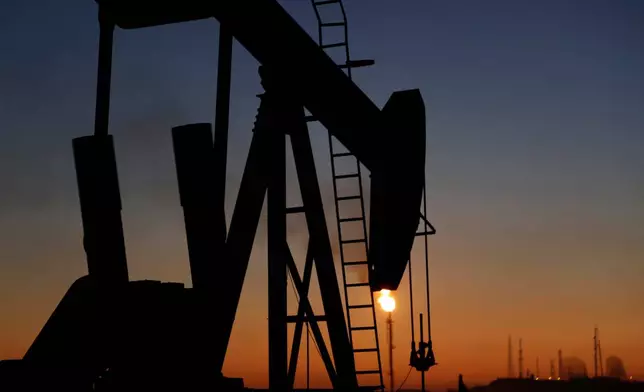
FILE - In this Jan. 18, 2016 file photo, an oil pump works at sunset, in the desert oil fields of Sakhir, Bahrain. (AP Photo/Hasan Jamali, File)
“A lot of very critical energy infrastructure has been either forced to shut down because of direct damage from drones and missiles,” said Torbjorn Soltvedt, principal Middle East analyst at risk intelligence company Verisk Maplecroft, "or because production is effectively being shut in as a result of shipping grinding to a halt. We’re already starting to see some of the global ramifications of that.”
All that has sent prices soaring, raising the cost of everything that needs fuel: flying, running factories, transporting goods, and farming. International benchmark Brent crude has risen from $72.97 the day before the war started to almost $103 on Monday.
Here is the key infrastructure that's at risk and why it's important.
The terminal was shut down by state-owned QatarEnergy following a drone strike, dealing a shock to global gas markets since Qatar produces 20% of the world's liquefied natural gas (LNG). The company is citing force majeure — in other words, that it's unable to supply its contracted customers due to circumstances beyond its control.
Ras Laffan, the largest LNG export facility in the world according to the company's website, draws gas from the world's largest single gas field and chills it until it is liquid for loading on tankers that take it to customers, primarily in Asia. Gas purchasers in Europe will also feel the pinch as competition gets fiercer for available cargoes.
Located on the Persian Gulf northeast of Dammam, this is Saudi Aramco's largest refinery and a port capable of accommodating large tankers. It was temporarily shut down after a drone impact caused a fire.
Saudi Aramco operates this pipeline from the Aqaiq oil processing center near the Persian Gulf to the Yanbu port on the Red Sea, avoiding the Hormuz chokepoint.
A key terminal for very large oil tankers on the Gulf of Oman, it is important because it enables Abu Dhabi to export a significant share of its oil without sending it through the Strait of Hormuz. It has been reported as disrupted by the fighting by Rystad Energy data and analytical firm. The port company did not immediately respond to an email seeking comment about its status.
“Iran's targeting of oil storage in Fujairah isn't a coincidence; it's attacking one of the potential reroutings of oil that's been trapped in the Persian Gulf,” analyst Soltvedt said.
A tanker terminal that has handled almost all of Iran's roughly 1.6 million barrels per day of prewar crude exports, most of it going to China. Iran reportedly accelerated shipments in the days before the war started. Its operational status is unclear.
Israel's Energy Ministry directed operator Chevron to shut down the field, located 130 kilometers (80 miles) off the shores of Haifa, due to the security situation. It's the largest natural gas reservoir in the Mediterranean and is a key supplier to Egypt. A shutdown during Israel's 12-day war with Iran in June led Egypt to curtail gas supplies to industries including fertilizer producers.
Iraq has suspended output of 1.5 million barrels per day at key fields at Rumaila and West Qurna due to dwindling storage. The Rumaila field is a so-called supergiant, meaning it holds more than a billion barrels in reserves.
Rystad Energy reports Iraq and other Gulf countries are running out of space to put the oil, meaning other fields may shut down. That could bring interruption since once shut down, oil and gas wells may need weeks or months to resume.
Even if the Strait of Hormuz reopens in a few days, “it’s going to take time to restart production in some of these fields. It’s not a switch that can be turned on and off,” said Soltvedt. “It’s the same for Qatar in terms of their LNG facility. It will probably take weeks to get some of the facilities up and running again.”
This artificial island located 50 kilometers (30 miles) from shore in the Persian Gulf exports oil worth 80% of Iraqi's annual GDP from the country's oil fields.
The Sitra Island refinery is the backbone of Bahrain’s oil sector, processing supply from Bahraini fields and delivered from Saudi Arabia via pipeline. A missile strike halted operations and disrupted jet fuel, diesel and other supplies.
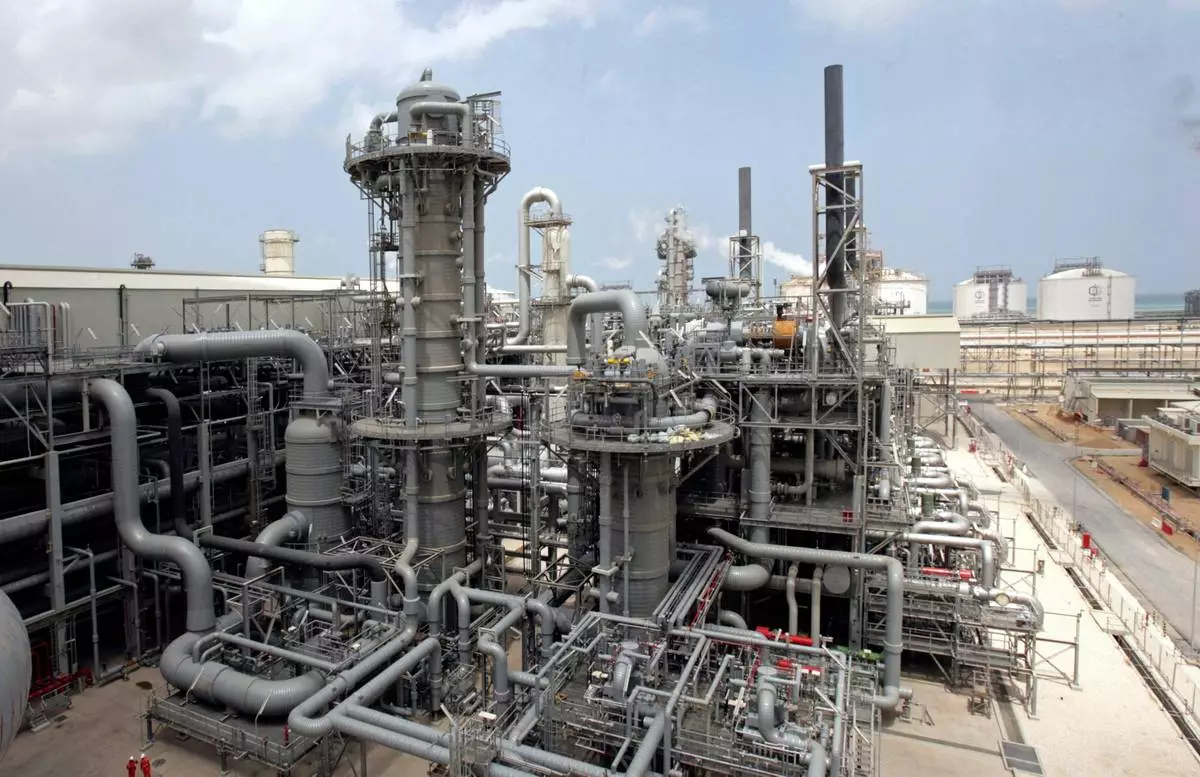
FILE - This April 4, 2009, file photo, shows a gas production facility at Ras Laffan, Qatar. (AP Photos/Maneesh Bakshi, File)
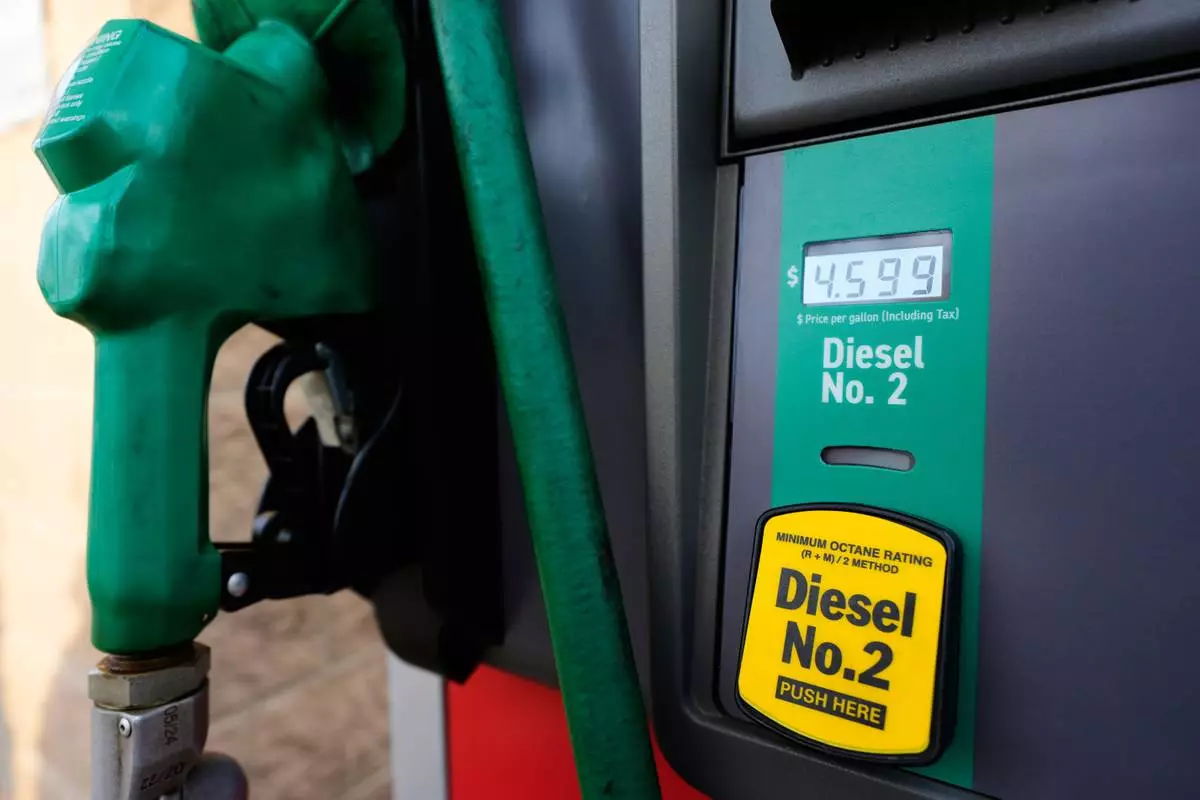
FILE - The current diesel fuel price is shown on a pump at a filling station in Richardson, Texas, March 6, 2026. (AP Photo/Tony Gutierrez, file)
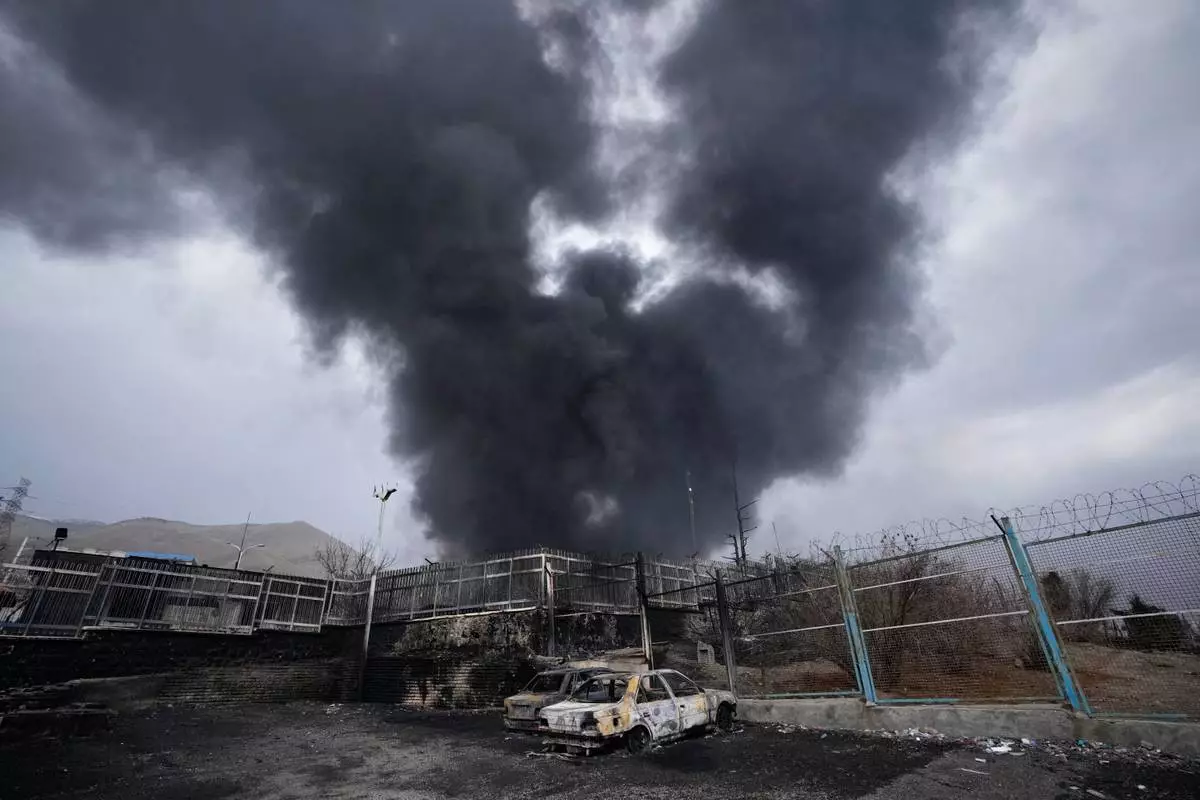
FILE - A thick plume of smoke rises from an oil storage facility hit by a U.S.-Israeli strike in Tehran, Iran, March 8, 2026. (AP Photo/Vahid Salemi, file)
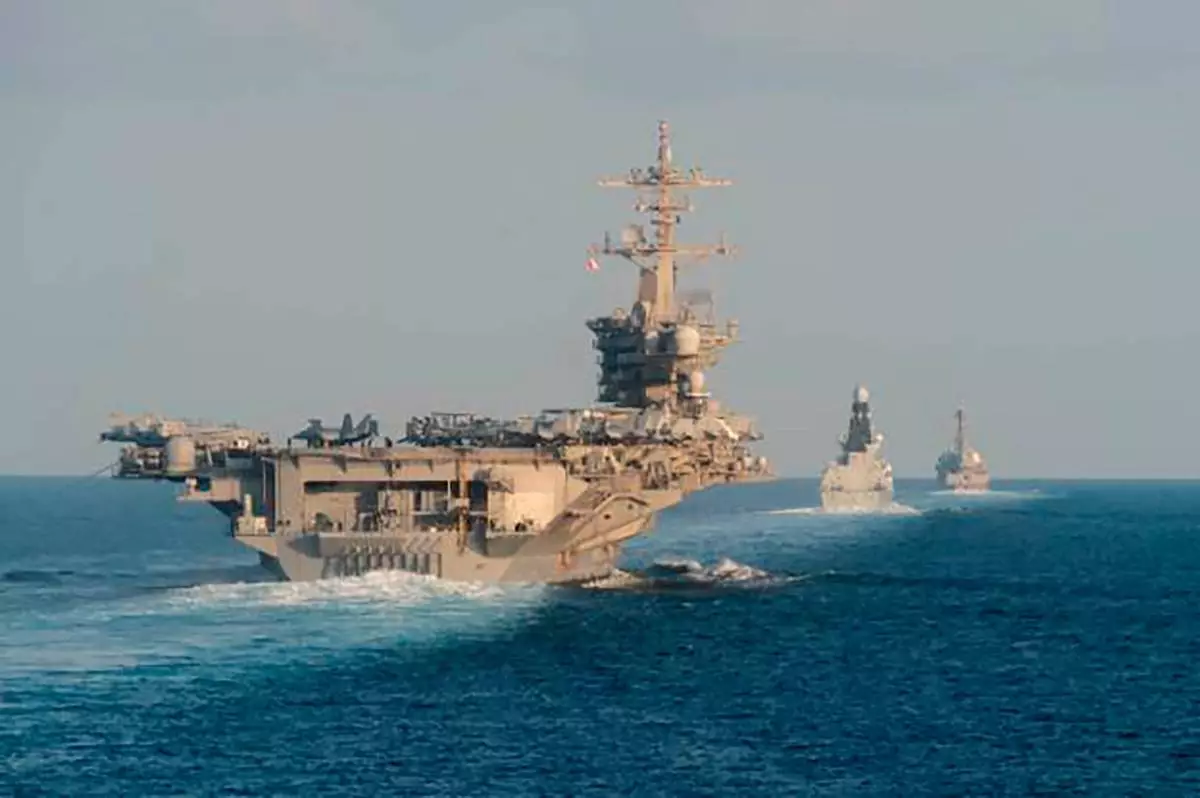
FILE - In this Nov. 19, 2019, photo made available by U.S. Navy, the aircraft carrier USS Abraham Lincoln, left, the air-defense destroyer HMS Defender and the guided-missile destroyer USS Farragut transit the Strait of Hormuz with the guided-missile cruiser USS Leyte Gulf. (Mass Communication Specialist 3rd Class Zachary Pearson/U.S. Navy via AP, File)
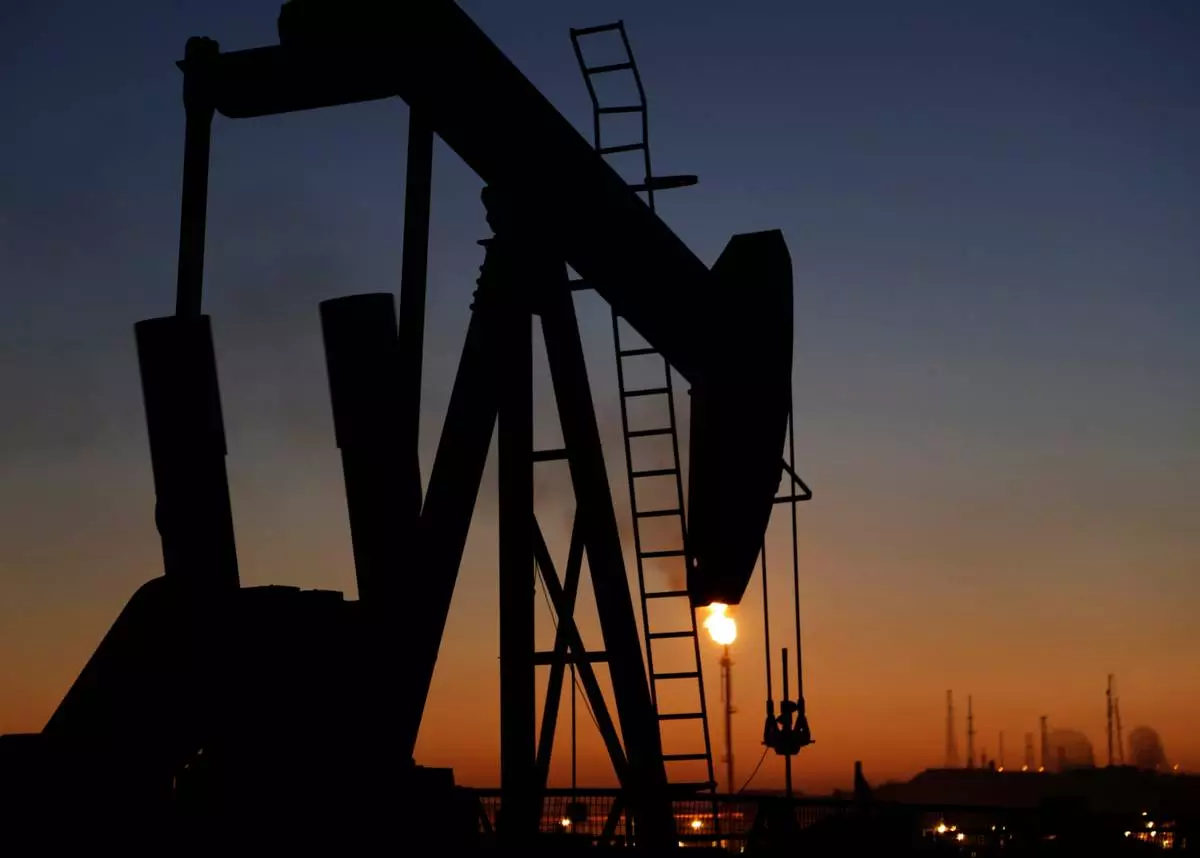
FILE - In this Jan. 18, 2016 file photo, an oil pump works at sunset, in the desert oil fields of Sakhir, Bahrain. (AP Photo/Hasan Jamali, File)
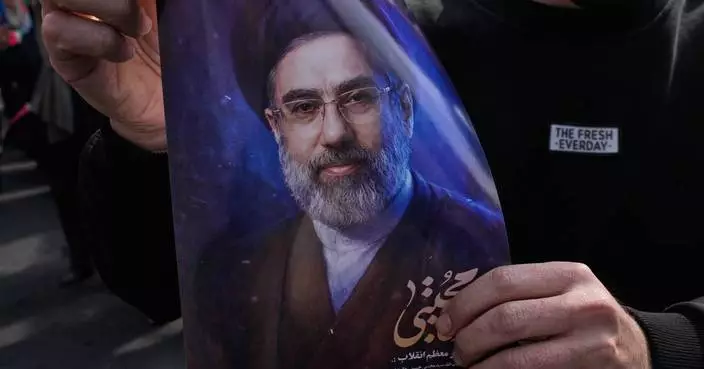
DUBAI, United Arab Emirates (AP) — Oil prices surged and stock markets slid Monday after hard-line Ayatollah Mojtaba Khamenei was chosen to succeed his late father as Iran's supreme leader. His appointment, and new strikes on regional oil infrastructure, signaled that Iran was digging in 10 days into the war launched by the United States and Israel.
The war has choked off major supplies of oil and gas to world markets, led foreigners to flee from business hubs and prompted millions to seek shelter as bombs hit sites like military bases, government buildings, oil and water installations, hotels and at least one school.
Khamenei, a secretive 56-year-old cleric, is only the third supreme leader in the history of the Islamic Republic. He has close ties to the paramilitary Revolutionary Guard, which has been firing missiles and drones at Israel and Gulf Arab states since his father, Ayatollah Ali Khamenei, who had ruled since 1989, was killed during the war’s opening salvo.
The appointment suggests Tehran is not close to giving up on what it considers a fight for the Islamic theocracy's survival.
Thousands poured into a central square in Tehran and other locations in a show of allegiance to the new supreme leader, waving flags and shouting phrases like “Death to America” and “Death to Israel.”
“America and Israel: you’ve failed and you will drown in the swamp you are stuck in,” said Abbas Ali Saeedipoor, one of the demonstrators.
Iranian authorities have long encouraged public shows of support for the Islamic Republic while violently cracking down on dissent. Thousands of people were killed and tens of thousands detained during mass protests against the elder Khamenei earlier this year.
Brent crude oil, the international standard, surged to nearly $120 a barrel Monday, about 65% higher than when the war started, before retreating below $100. The Dow Jones Industrial Average sank more than 600 points, or over 1.3%, shortly after opening — marking a drop of more than 6-1/2% from its all-time high close last month, though it later pared its losses.
Iran’s attacks in the Strait of Hormuz have all but stopped tankers from using the shipping lane through which a fifth of the world’s oil is carried, and Iranian drones and missiles have targeted oil and gas infrastructure in major producers.
“There is not an oil shortage,” U.S. President Donald Trump wrote on Truth Social overnight. “Prices will drop again soon,” he added, suggesting shipments from Venezuela to the U.S. could help offset the price spike.
Secretary of State Marco Rubio said the United States is “well on our way” to achieving its objective, which he said was to eliminate Iran’s ballistic missile stockpile, and its ability to produce and launch them. The administration has offered shifting rationales and timelines since the start of the conflict.
Elsewhere in the region, sirens blared multiple times across Israel on Monday amid unrelenting Iranian drones and missiles. A man was killed in central Israel in a missile strike, the first such death in Israel in a week, and a woman was wounded.
Israel said it was carrying out “a wide-scale wave of strikes” on the Iranian city of Isfahan, as well as the capital, Tehran and in southern Iran.
Turkey meanwhile said NATO defenses had intercepted a ballistic missile that entered the country’s airspace for the second time since the war started.
The younger Khamenei, who has not been seen in public since the war started, was long considered a potential successor — even before the killing of his 86-year-old father. The younger Khamenei's wife, Zahra Haddad Adel, was killed in the same strike.
An Iranian state TV report suggested the younger Khamenei may have been wounded in that strike, though a state TV analyst later appeared to amend the report, saying he had been wounded in the 1980s Iran-Iraq war in which he served.
The younger Khamenei is seen as even less compromising than his late father, and as supreme leader has final say on all major policies, including war, peace and Tehran’s disputed nuclear program.
Though Iran’s key nuclear sites are in tatters after the U.S. bombed them during the 12-day Israel-Iran war in June, it still has highly enriched uranium that’s a technical step away from weapons-grade levels. Khamenei could choose to do what his father never did — build a nuclear bomb.
President Masoud Pezeshkian, a relative moderate in Iran’s Shiite theocracy, welcomed the choice in a post on X. Top Iranian security official Ali Larijani, speaking to Iranian state television, said Mojtaba Khamenei had been trained by his father and “can handle this situation.”
Israel has already described Khamenei as a potential target, while Trump has called him “unacceptable” and dismissed him as a “lightweight.”
Saudi Arabia lashed out at Iran following the drone attack on its massive Shaybah oil field, saying Tehran would be the “biggest loser” if it continues to attack Arab states.
In the UAE, home to the futuristic city of Dubai, authorities said two people were wounded by shrapnel from the interception of Iranian missiles over the capital, Abu Dhabi. By mid-afternoon, the Emirati Defense Ministry said 15 ballistic missiles and 18 drones were fired on the country on Monday.
Iran also attacked Kuwait, Qatar and Bahrain, where it hit a residential area, wounding 32 people, including several children, according to authorities. Another attack appeared to have started a fire at Bahrain's only oil refinery, sending thick plumes of smoke into the air.
The U.S. State Department early Monday ordered nonessential personnel and families of all staff to leave Saudi Arabia following the escalation in attacks. Several other U.S. diplomatic missions have ordered all but key staff to leave.
The war has killed at least 1,230 people in Iran, at least 397 in Lebanon and 11 in Israel, according to officials. Another person died in Israel of an asthma attack on her way to a shelter. Israel reported its first soldier deaths on Sunday, saying two were killed in southern Lebanon, where it is fighting Hezbollah. A total of seven U.S. service members have been killed.
UNICEF, the children's agency, reported that at least 83 children have been killed and 254 wounded in Lebanon since March 2.
“As military strikes continue across the country, children are being killed and injured at a horrifying rate, families are fleeing their homes in fear, and thousands of children are now sleeping in cold and overcrowded shelters,” it said.
Magdy reported from Cairo and Keaten from Geneva. Associated Press journalists David Rising in Bangkok; Sam Metz in Ramallah, West Bank; Natalie Melzer in Nahariya, Israel; Melanie Lidman in Tel Aviv, Israel; Sally Abou AlJoud in Beirut; Aamer Madhani in Doral, Florida; Lorne Cook in Brussels, Matthew Lee in Washington, and Edith M. Lederer at the United Nations contributed reporting.
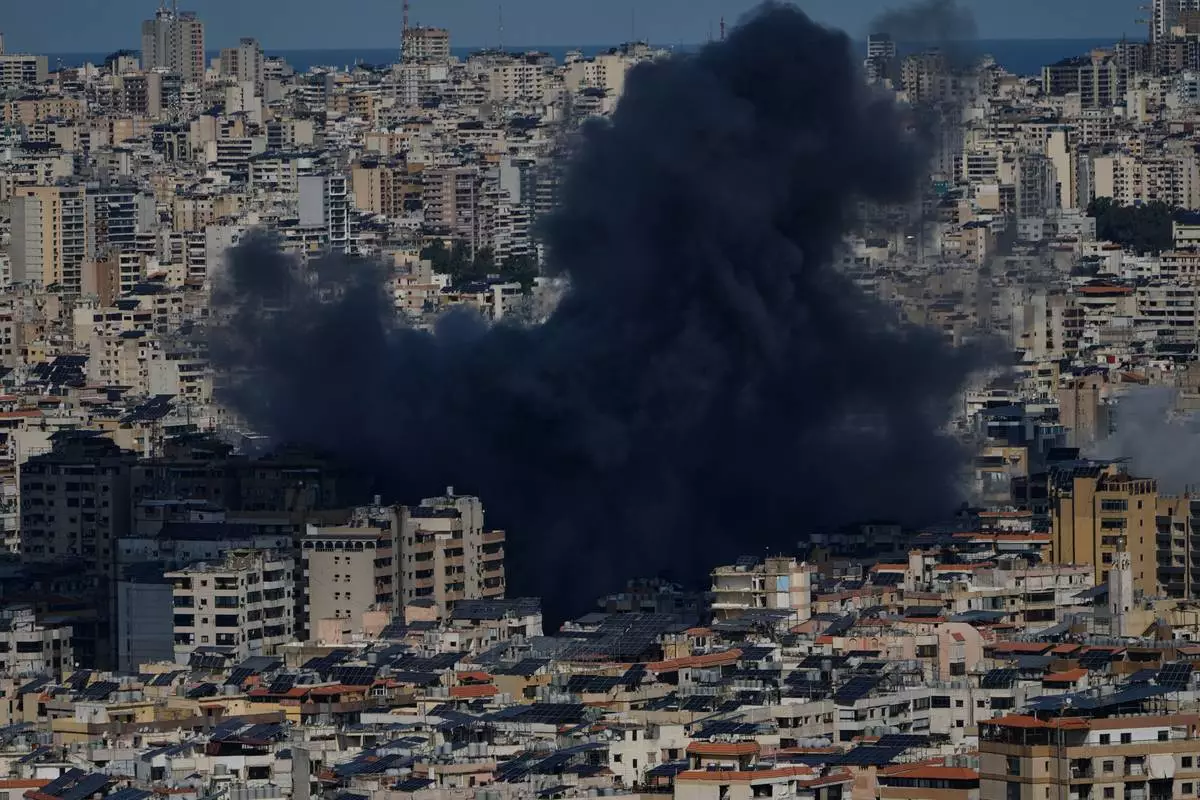
Smoke rises following an Israeli airstrike in Dahiyeh, Beirut's southern suburbs, Lebanon, Monday, March 9, 2026. (AP Photo/Bilal Hussein)
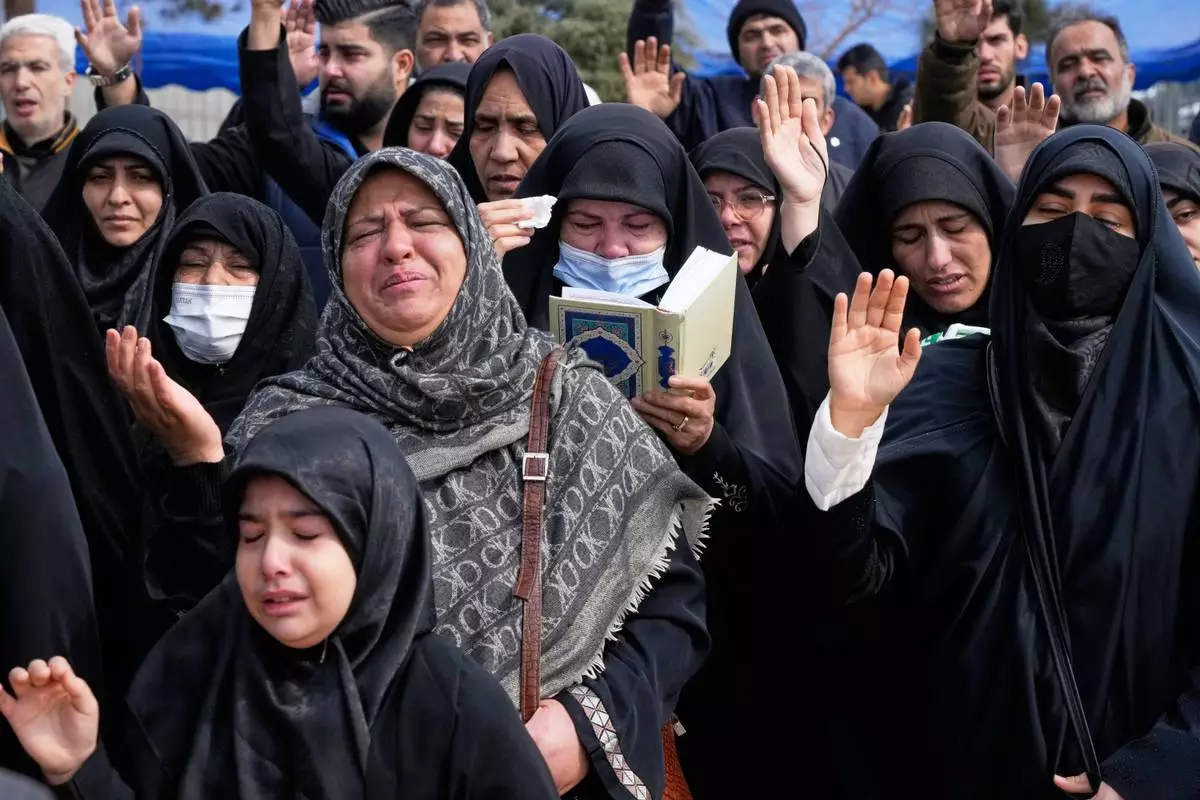
Mourners pray during the funeral of Mehdi Hosseini, a man killed in a U.S.-Israeli strike, at Behesht-e Zahra cemetery in Tehran, Iran, Monday, March 9, 2026. (AP Photo/Vahid Salemi)
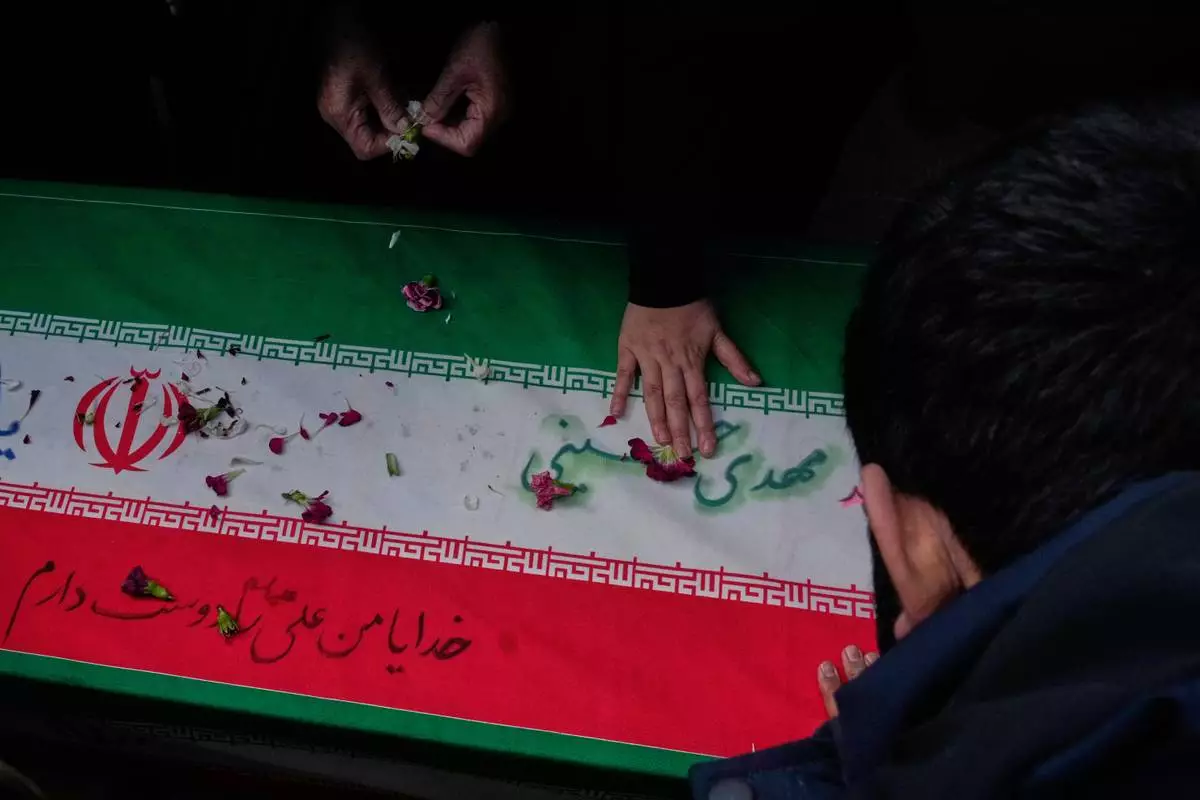
Relatives mourn over the flag draped coffin of Mehdi Hosseini who was killed in a U.S.-Israeli strike during his burial ceremony at Behesht-e Zahra cemetery in Tehran, Iran, Monday, March 9, 2026. (AP Photo/Vahid Salemi)
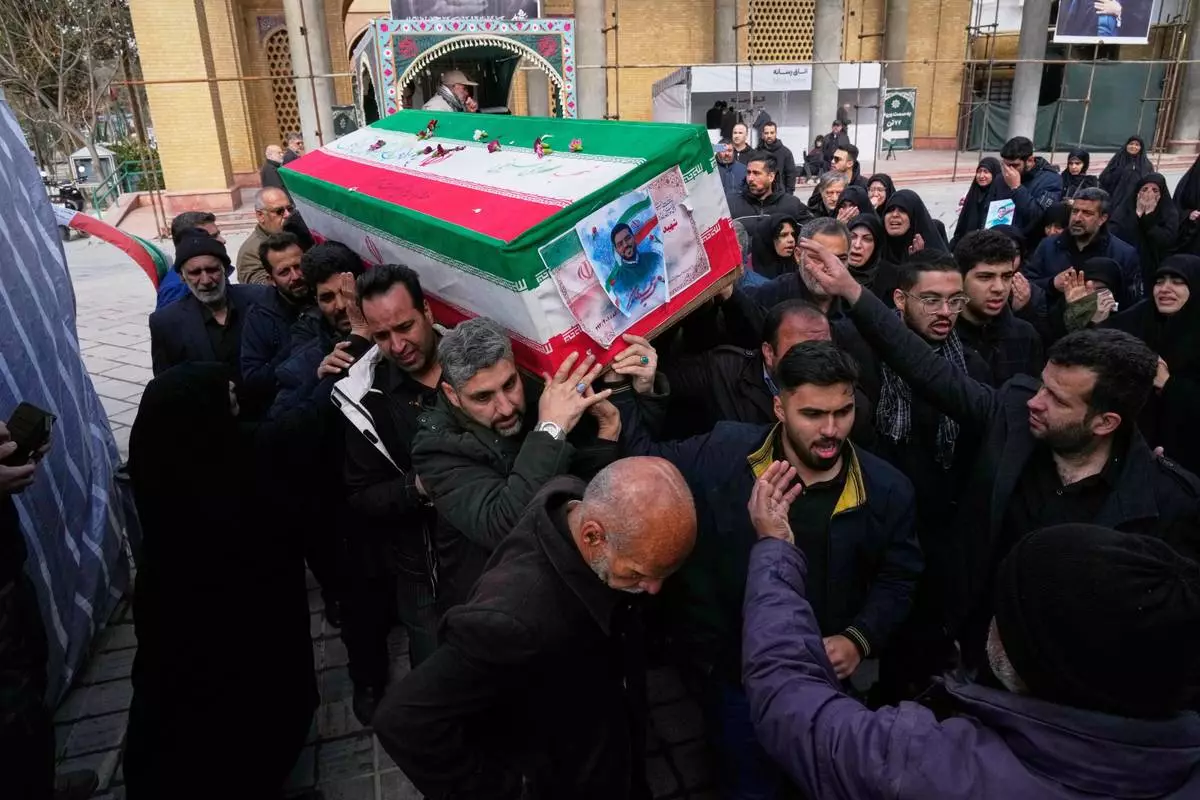
The coffin of Mehdi Hosseini, a man killed in a U.S.-Israeli strike, is carried for burial at Behesht-e Zahra cemetery in Tehran, Iran, Monday, March 9, 2026. (AP Photo/Vahid Salemi)
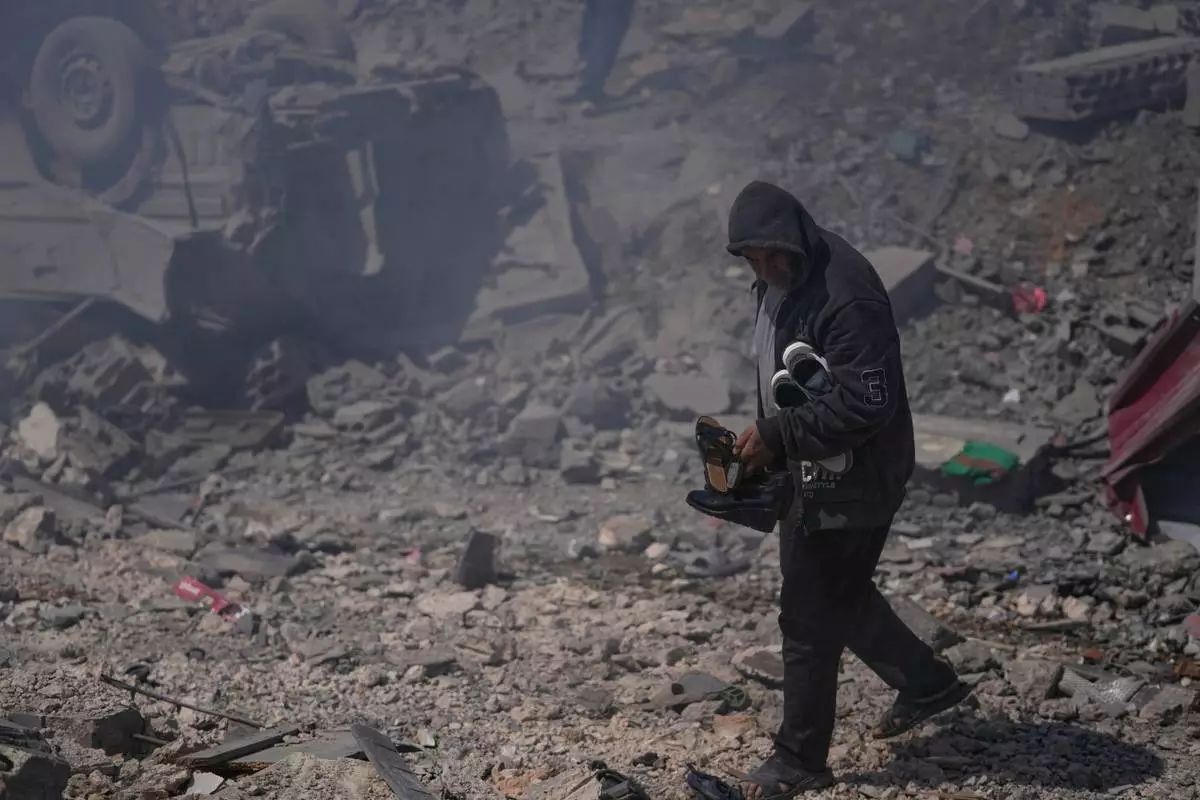
A man carries shoes from his destroyed house that was hit by Israeli airstrikes hit several houses in Sir al-Gharbiyeh village south Lebanon, Sunday, March, 8, 2026. (AP Photo/Mohammed Zaatari)
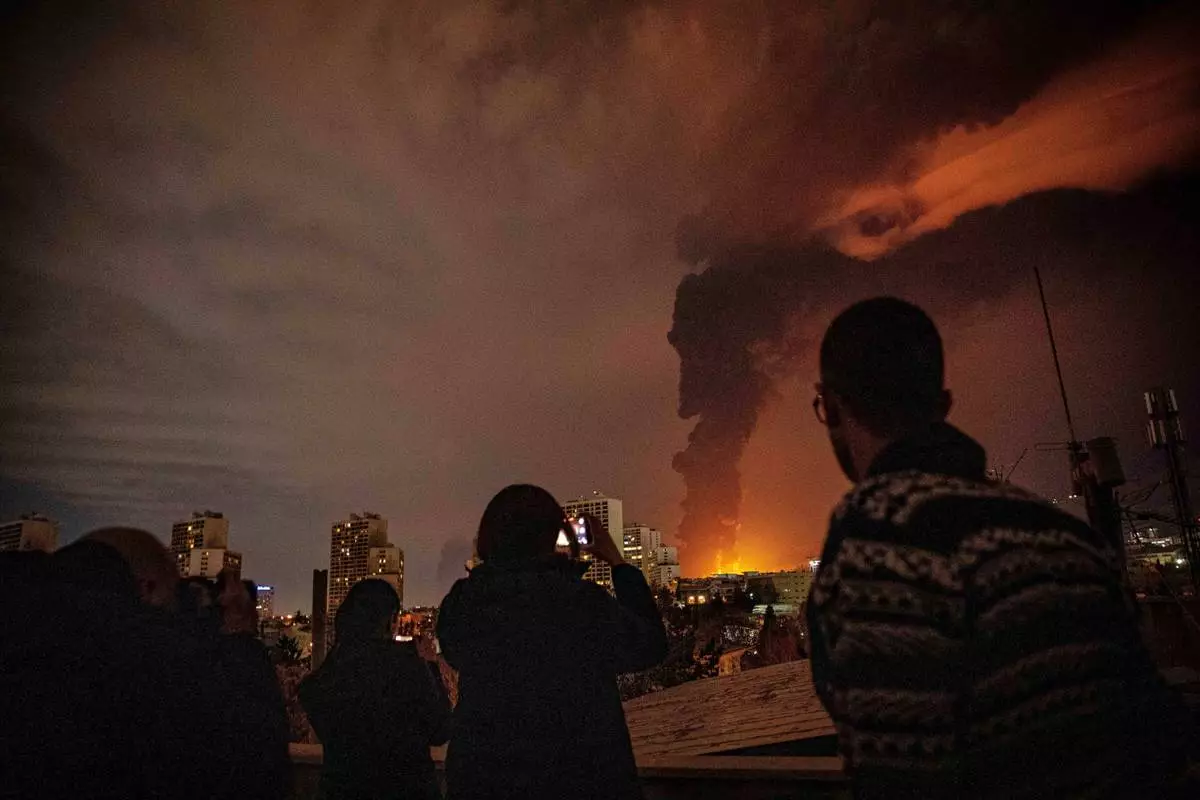
Residents look on and take pictures as flames and smoke rise from an oil storage facility struck as attacks hit the city during the U.S.–Israeli military campaign in Tehran, Iran, Saturday, March 7, 2026. (Alireza Sotakbar/ISNA via AP)
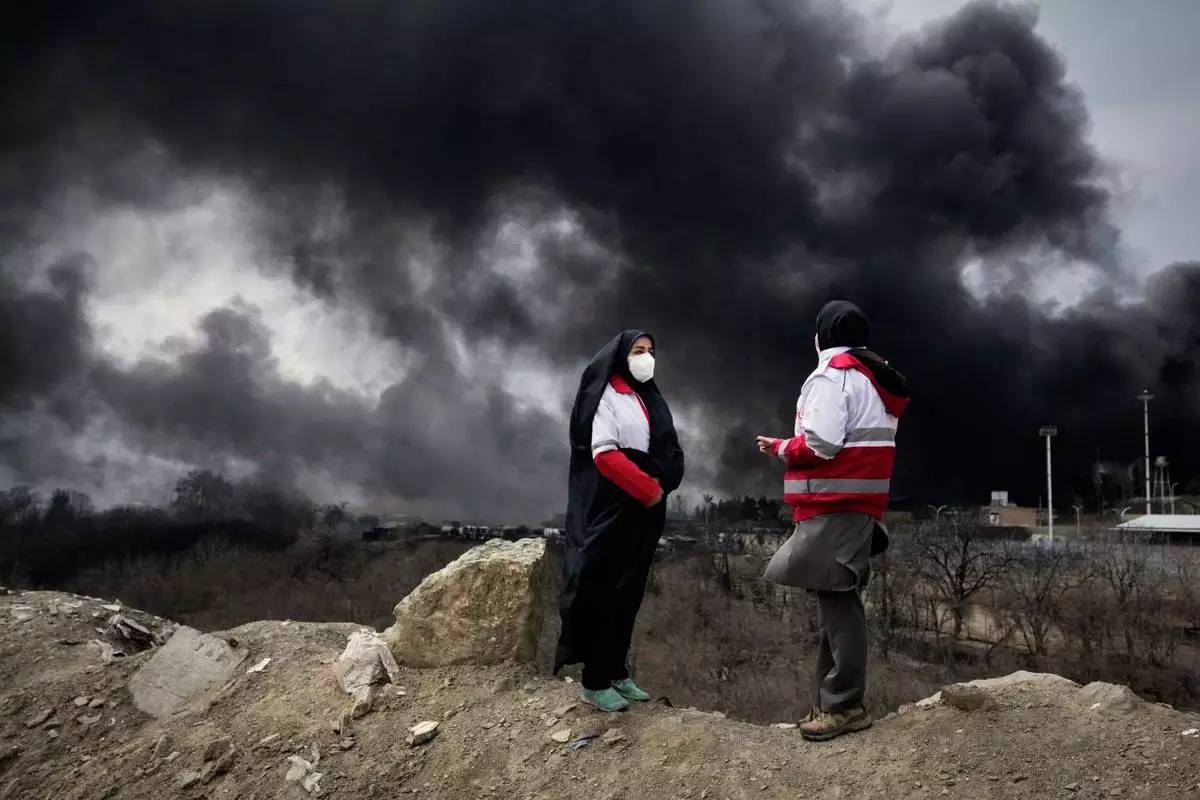
Two women from the Iranian Red Crescent Society stand as a thick plume of smoke from a U.S.-Israeli strike on an oil storage facility late Saturday rises in the sky in Tehran, Iran, Sunday, March 8, 2026. (AP Photo/Vahid Salemi)
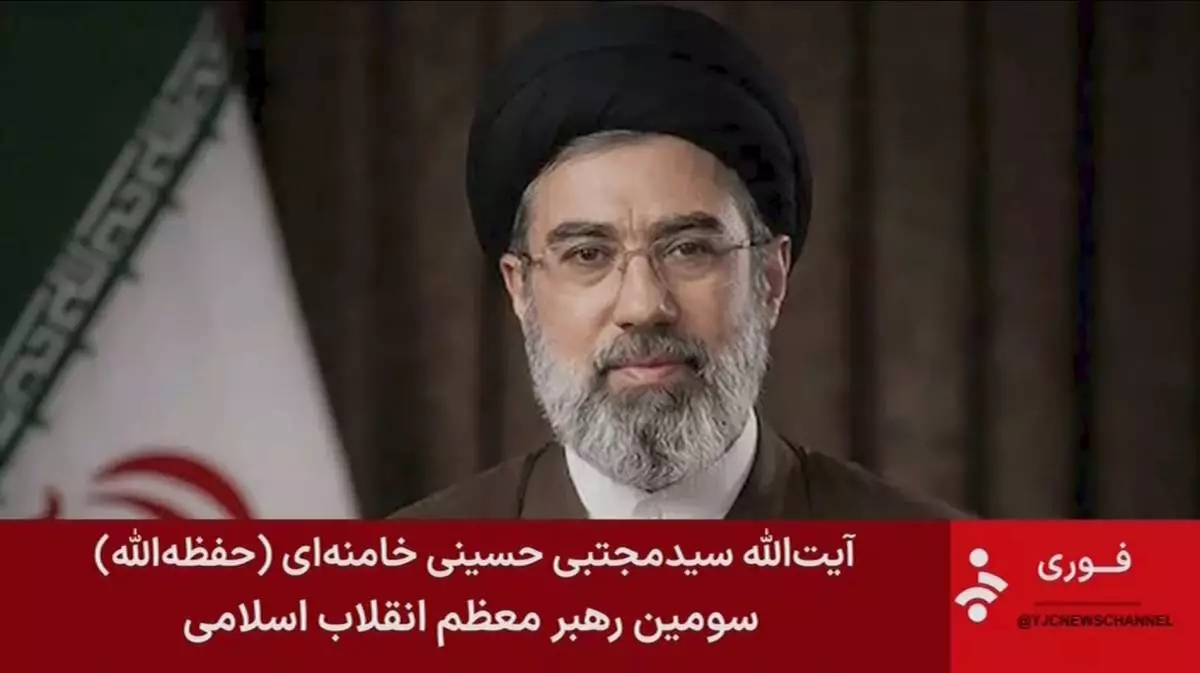
This image taken from video provided by Iran state TV shows Mojtaba Khamenei, a son of Iran's slain supreme leader, who has been named as the Islamic Republic's next ruler, authorities announced Monday, March 9, 2026. (Iran state TV via AP)