ROME, Ga. (AP) — Democrat Shawn Harris and Republican Clay Fuller advanced to a runoff for Marjorie Taylor Greene’s former U.S. House seat in Georgia after no candidate won a majority in Tuesday’s special election.
President Donald Trump in February endorsed Fuller, a district attorney who prosecutes crimes in four counties, to succeed Greene in Georgia’s 14th Congressional District. Greene, once among Trump's most ardent supporters, resigned in January after a falling out with the president.
Trump's endorsement didn't boost Fuller to a majority of the vote in a 14-candidate field that included nine Republicans, three Democrats, a Libertarian and an independent. But Fuller said he was confident he could bring Republicans together to beat Harris on April 7.
“I think the Republican Party is going to unite around us because they know that the Democrat is too dangerous,” he said Tuesday night. “We can't have a Democrat representing Georgia 14. That would be a tragedy for our community, a tragedy for Georgia 14 and a tragedy for the MAGA movement.”
Trump congratulated Fuller for “getting such a high percentage of the vote” with so many other Republicans in the race.
“Clay will be a GREAT Congressman — HE WILL NEVER LET YOU DOWN!” the president wrote on social media.
Harris, a cattle farmer and retired brigadier general, will face an uphill battle to win a majority in the heavily Republican district. Nevertheless, he was leading in the hours after the polls closed and Democrats are likely to boast of his success as they have focused on strong performances in special elections.
Harris has contrasted himself with Greene’s bomb-throwing style, saying practical-minded Republicans should vote for him because he will work for constituents “not for somebody else who's already in D.C.”
“The way I’m going to go to Congress is that it’s going to be a coalition of Democrats, independents and Republicans,” Harris said Tuesday night.
The winner will serve out the remaining months of Greene’s term. A Republican win in the northwest Georgia district would bolster the party’s slim majority in the House, where Republicans currently control 218 seats to Democrats’ 214.
Fuller was a White House fellow in the first Trump administration and is a lieutenant colonel in the Georgia Air National Guard. He finished fourth in the 2020 Republican primary that Greene won. He credited Trump's nod for propelling him to the runoff.
“They want to know who President Trump was endorsing in this race,” Fuller said. “And that's why they came out in droves to support him, because they want an America First fighter on Capitol Hill fighting for his policies that are going to make a difference for our community.”
Harris said he’s not worried about further Trump intervention.
“If Donald Trump wants to come and do what he wants to do, that’s his business," he said.
This round of voting is only the first step in an elections marathon in the Georgia district. Republicans and Democrats seeking a full two-year term are set for a May 19 party primary, and possibly a June 16 party runoff, before advancing to the general election in November.
Last week, 10 Republicans and Harris qualified to run in November for a full two-year term. That includes Fuller, as well as Colton Moore, a former state senator and favorite of far-right activists who was poised to finish third on Tuesday, short of the runoff.
Those who backed Democrats said they were repelled by Trump and eager to reduce his power.
“There just needs to be checks and balances and I don't think we have many of those right now," said Matthew Wisniewski, a Dallas resident who voted for Harris.
Greene was one of the most well-known members of Congress until she left in January. She remained loyal to Trump after he lost to Democrat Joe Biden, promoting Trump’s falsehoods about a stolen election. When Trump ran again in 2024, she toured the country with him and spoke at his rallies while wearing a red “Make America Great Again” hat.
But Greene began clashing with Trump last year after he and other Republicans pushed back against her running for U.S. Senate or governor. Greene criticized Trump’s foreign policy and his reluctance to release documents involving the Jeffrey Epstein case. The president eventually had enough, saying he would support a primary challenge against her. Greene announced a week later that she would resign.
This story has been updated to remove quotes from Presley Stover. An earlier version of this story stated that Presley Stover voted for Clay Fuller. She voted for Brian Stover, according to Stover’s campaign.
Associated Press journalist Emilie Megnien contributed to this report.

Democrat Shawn Harris, center, speaks during an Atlanta Press Club forum for candidates in Georgia's 14th Congressional District, Sunday, Feb. 15, 2026, at Georgia Public Broadcasting, in Atlanta. (J. Glenn Photography/Press Club via AP)

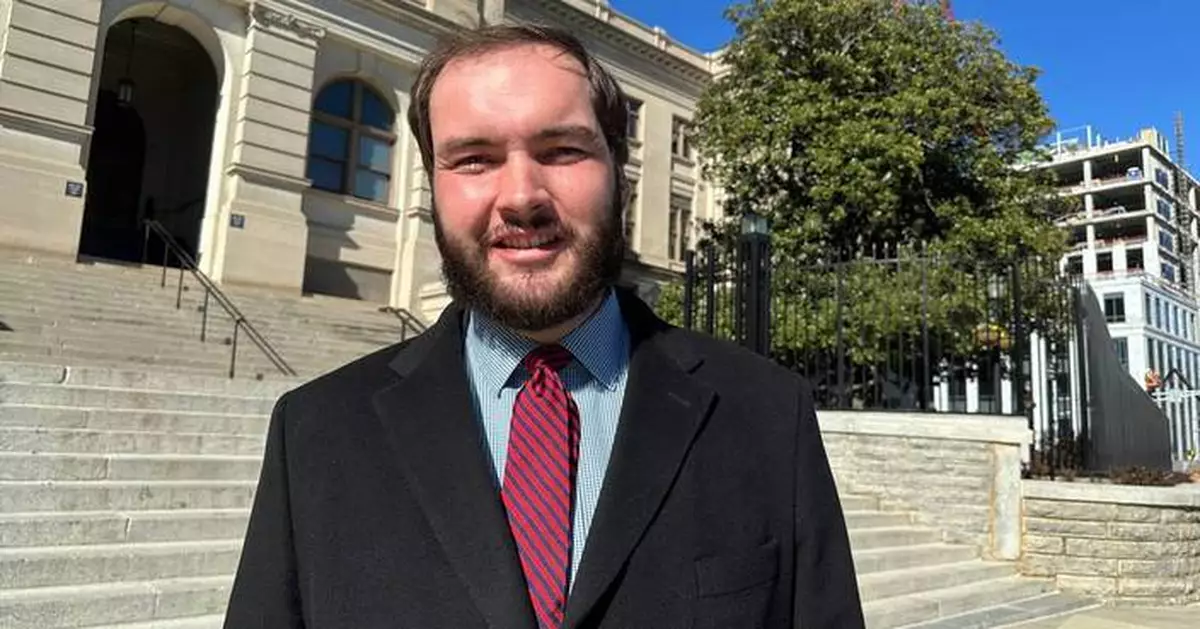
FILE - Republican Colton Moore, who resigned from the state Senate to run for Congress, poses for a photo outside the Georgia Capitol, Tuesday, Jan. 13, 2026, in Atlanta. (AP Photo/Jeff Amy, File)