Skip to Content Facebook Feature Image

UN peacekeepers defy South Sudan military's order to leave opposition-held town

News

UN peacekeepers defy South Sudan military's order to leave opposition-held town
News

News

UN peacekeepers defy South Sudan military's order to leave opposition-held town

2026-03-10 17:38 Last Updated At:17:50

JUBA, South Sudan (AP) — The United Nations Mission in South Sudan said Monday that it would not comply with a government order to shut down its base in Akobo, an opposition stronghold near the Ethiopian border where tens of thousands of refugees have fled.

On Friday, the South Sudanese army ordered U.N. peacekeepers as well as NGOs and civilians to vacate the town ahead of a planned assault.

But the mission refused to leave and said it would provide “a protective presence for civilians” in the town, adding that the safety and security of its personnel “must be fully respected at all times.”

The U.N. Mission said it was engaging “intensively with national, state and local stakeholders” regarding this order. “Any military operations in and around Akobo gravely endanger the safety and security of civilians,” said mission chief Anita Kiki Gbeho.

The South Sudanese government has been fighting opposition forces since a 2018 peace deal broke down about a year ago.

A dramatic escalation took place in December 2025, when opposition forces seized several government outposts in northern Jonglei. A government counter-offensive repelled their forces a month later and displaced over 280,000 people. Tens of thousands have sought refuge in Akobo, where a small contingent of U.N. peacekeepers is stationed.

Fearing the looming government assault on Akobo, humanitarian workers were evacuated over the weekend, and a mass exodus of the population has also begun.

Local officials contacted by the The Associated Press said fleeing civilians faced danger and widespread shortages of essential supplies. Dual Diew, the Akobo County health director, who has fled to Ethiopia, said there were 84 wounded patients at the hospital. “We have most of them with us here now,” he said, adding that they lack medicine and basic nursing equipment.

Christophe Garnier, the leader of Doctors Without Borders in South Sudan said the organization had to evacuate its staff from Akobo on Saturday and learned of the subsequent looting of its hospital and the ransacking of its office.

“People in Akobo must now either flee without protection or remain at risk of being killed, while losing access to healthcare and other essential services,” he said.

The three Western governments that have played a major role in the peace process — the U.S, U.K., and Norway — sent a letter to President Kiir on Monday urging that the army's evacuation order be revoked and warning of “further deaths, displacement and suffering for the South Sudanese people” if the offensive on Akobo is implemented.
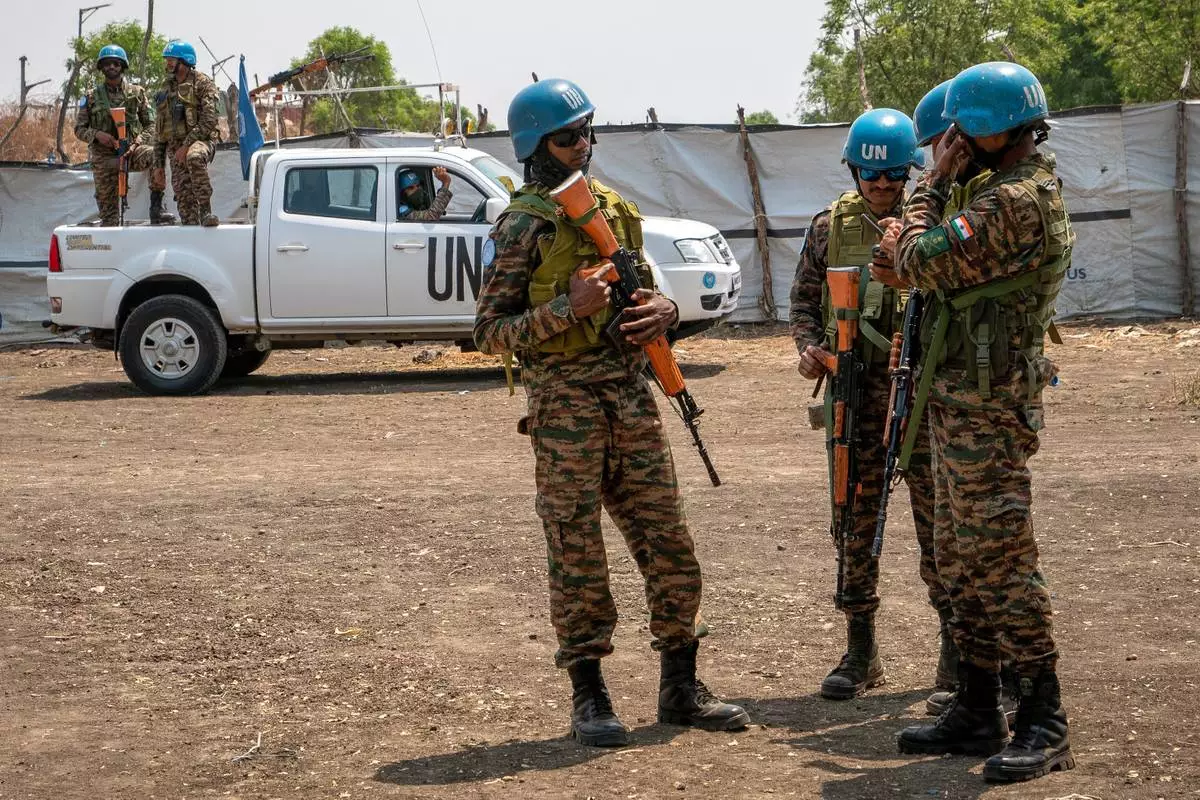
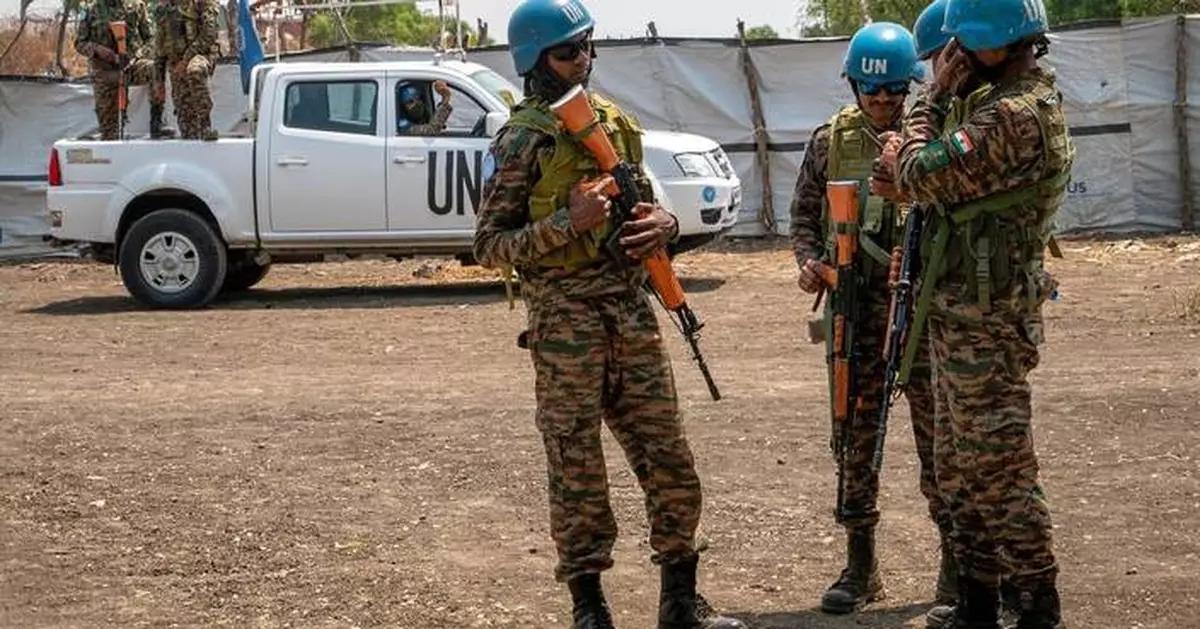
United Nations peacekeepers stand near an airstrip in Akobo, South Sudan, Saturday, Feb. 21, 2026. (AP Photo/Florence Miettaux)

United Nations peacekeepers stand near an airstrip in Akobo, South Sudan, Saturday, Feb. 21, 2026. (AP Photo/Florence Miettaux)

Iran fired drones and missiles at Israel and Gulf states Tuesday as Israeli Prime Minister Benjamin Netanyahu vowed his country will keep striking the Islamic Republic, saying the aim of the campaign was the popular overthrow of its government.

“Our aim is to bring the Iranian people to cast off the yoke of tyranny, ultimately it depends on them,” Netanyahu said during a meeting with Israel’s hospital and health system leaders. “But there is no doubt that with the actions taken so far, we are breaking their bones."

U.S. President Donald Trump sent contradictory signals about how long the war could last, fueling uncertainty that is causing markets to swing.

Iranian Parliament Speaker Mohammad Bagher Qalibaf dismissed any suggestion Tehran sought a ceasefire in the war and would keep fighting.

Trump late Monday told Republican lawmakers that the war was likely to be a “short excursion,” but hours later threatened in a social media post that the U.S. would dramatically increase attacks if Iran tried to close the Strait of Hormuz.

Here is the latest:

The group of industrial nations on Monday held off releasing oil stocks to bring down prices but are picking up the issue again with more discussions between their energy ministers on Tuesday, according to France.

France, which currently holds the G7’s rotating presidency, wants “to advance on that question, with one objective, which is to bring down prices,” government spokeswoman Maud Bregeon told broadcaster France Televisions.

“France is working on that for a very simple reason: If you put volume back into the market, you can have an impact on the lowering of prices,” Bregeon said.

French Finance Minister Roland Lescure said the G7 ministers will meet Tuesday afternoon by video call.

“It’s a process, we are working on it,” Lescure said. “All options are on the table.”

German Foreign Minister Johann Wadephul says there is no need now to send his country’s warships or other military hardware to Cyprus or the eastern Mediterranean.

An Iranian Shahed drone struck a British air base on Cyprus’ southern coast last week.

Wadephul lauded Greece, France and Italy for dispatching warships to the region as a “pragmatic step,” adding that Germany would augment a European force presence if needed.

Following talks with his Cypriot counterpart, Constantinos Kombos, Wadephul said he doesn’t have intelligence indicating “a real current threat” to Cyprus or another European country from the Iran war.

But he added “you can never predict what will happen the next day” with groups like Hezbollah.

The Saudi oil giant Aramco says it will reach capacity of its East-West pipeline “in a couple of days” to get its product out to the global market.

Amin Nasser, Aramco’s CEO and president, said the East-West pipeline has a daily capacity of 7 million barrels.

“We should be reaching capacity, in a couple of days. It’s all been going on the repositioning of tankers from the East to West,” Nasser said. “You know, this crisis happened all of a sudden, and tankers need to reposition to the West coast for loading.”

He added: “The situation at the Strait of Hormuz is blocking sizable volumes of oil from the whole region.”

The East-West pipeline sends oil to the Red Sea for transport. Saudi Aramco operates the pipeline from the Aqaiq oil processing center near the Persian Gulf to the Yanbu port on the Red Sea, avoiding the chokepoint of the Strait of Hormuz.

Amin Nasser, the president and CEO of Aramco, said the firm remained “focused on safety and meeting our commitments.”

“That situation continues to evolve, and the safety of our people and our operations remain our highest priorities,” Nasser said.

He did not immediately elaborate on any effects from the war on the company’s output.

Nasser hinted at global oil markets being squeezed the longer the Iran war goes on and shipments from the Mideast being affected.

“Given the current geopolitical situation, we may see inventories eroding and being drawn down faster as shipments are being curtailed from the region,” he said. “This is at a time when current global spare capacity remains extremely low.”

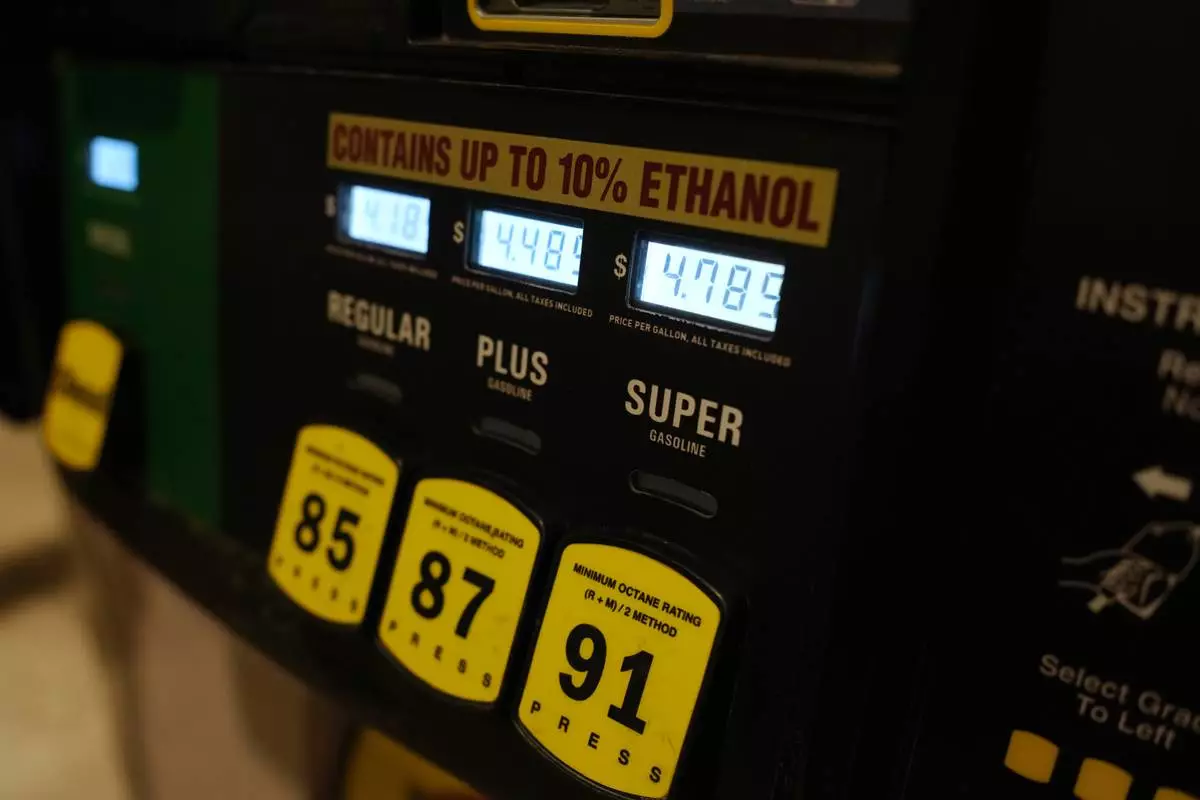
That likely could push the price per barrel globally even higher, translating to higher costs for gasoline and jet fuel.

Prime Minister Benjamin Netanyahu vowed Tuesday that Israel will continue striking Iran.

“Our aim is to bring the Iranian people to cast off the yoke of tyranny, ultimately it depends on them,” Netanyahu said during a meeting with Israel’s hospital and health system leaders.

“But there is no doubt that with the actions taken so far, we are breaking their bones,” he said.

Thailand’s Prime Minister Anutin Charnvirakul told government agencies and state companies to begin having staff not in public facing roles to work from home.

The government said Tuesday that Thailand was also suspending overseas training and study trips.

The announcement comes as countries in Southeast Asia move to counter disruptions to oil and gas supplies from the war in the Middle East.

The Vietnamese government ordered similar measures, but also urged people to limit private use of their vehicles.

Fuel prices have climbed and long lines have formed outside filling stations as drivers and motorcycle riders rush to ensure they can fill their tanks.

Iran’s parliament speaker on Tuesday dismissed any suggestion Tehran sought a ceasefire in the war.

“We are definitely not looking for a ceasefire; we believe that the aggressor should be punched in the mouth so that he learns a lesson so that he will never think of attacking our beloved Iran again,” Mohammad Bagher Qalibaf wrote on X.

“The Zionist regime sees its shameful existence in the continuation of the cycle of ‘war-negotiation-ceasefire and then war again’ to consolidate its dominance. We will break this cycle,” he wrote.

The Israeli military said Tuesday it killed three Palestinians in Gaza late Monday.

The Palestinians approached Israeli troops near the temporary line that Israel withdrew to at the start of the October 2025 ceasefire. The Yellow Line marks the Israel-controlled area in eastern Gaza.

Since the start of the ceasefire, at least 80 Palestinians have been killed near the Yellow Line after the Israeli military accused them of approaching and endangering soldiers.

Israel’s military said it detected an Iranian missile launch targeting the country Tuesday morning.

Sirens were heard in Jerusalem and explosions could be heard in Tel Aviv as Israel’s military worked to intercept the fire.

India’s oil ministry has set up a committee to review supplies of commercial cooking gas as the hospitality sector experiences a shortage of liquefied petroleum gas cylinders.

India relies heavily on oil and gas shipped through the Strait of Hormuz. Iran has attacked several ships in the strait and threatened any ships that try to pass through, effectively closing it.

Industry groups in India say restaurants in some major cities including Mumbai and Bengaluru are struggling to secure cooking gas cylinders. They warn some eateries could shut within days if supplies are not restored.

Indian authorities have prioritized LPG supplies for household use, tightening availability for commercial users such as hotels and restaurants.

Azerbaijan has sent humanitarian aid to Iran, Azerbaijani officials said Monday.

The aid includes 10 tons of flour, six tons of rice, more than two tons of sugar, over four tons of water, about 600 kilograms of tea and about two tons of medicines and medical supplies, according to officials.

The move comes after tensions spiked between Baku and Tehran last week when Azerbaijan accused Iran of firing drones at its Nakhchivan exclave, an allegation Tehran denies.

Azerbaijan also has increased military and economic ties with Israel.

Iran’s judiciary is warning its local media about what and how it reports as the war with Israel and the United States goes on.

That was a comment made by judiciary spokesman Asghar Jahangir as reported by the state-run IRNA news agency.

It said Jahangir said local outlets “that did not comply with security issues and had taken videos and photos of certain places solely for the purpose of informing were given the necessary warnings.”

“If this happens again, the necessary legal measures will be taken,” he said, without elaborating.

Iran has shut off the internet during the war and may be restricting reporting to hide what has been struck so far.

Turkey’s Defense Ministry said Tuesday the Patriot missile defense system is being deployed in Malatya province, which hosts a NATO radar base.

The move follows NATO defenses intercepting a second ballistic missile fired from Iran that entered Turkish airspace Monday.

The Israeli military on Tuesday reiterated the call for all residents of southern Lebanon to evacuate their homes as it planned to “operate forcefully” in the southern area against Hezbollah.

Israel issued similar warnings during its war with Hezbollah in 2003-2024, displacing hundreds of thousands of people.

The Iraqi military has condemned an attack early Tuesday on a camp for an umbrella of Iranian-backed groups in northern Iraq.

The airstrike on 40th Brigade of the Popular Mobilization Forces in the city of Kirkuk killed five and wounded four, according to two officials who spoke on condition of anonymity because they were not authorized to brief reporters.

The military described the strikes as “a blatant targeting of Iraq.”

Iraq for years has had to walk a tightrope between the U.S. and Iranian-allied Shiite groups, including some that are part of the government.

The Israeli military said Tuesday it had completed a series of strikes targeting Hezbollah’s financial arm, al-Qard Al-Hasan.

Israel says Hezbollah uses al-Qard al-Hasan to finance its military activities.

Israel targeted several of the group’s branches in southern and eastern Lebanon last week.

Saudi Arabia’s oil giant Aramco reported 2025 profits of $104 billion, down from the year before as the Iran war has seen its fields and facilities targeted.

Aramco released its annual results Tuesday. It planned to brief investors later in the day as the war that began Feb. 28 has seen Iranian drones and missiles target its facilities.

Aramco, formally known as the Saudi Arabian Oil Co., reported profits of $110 billion in 2024.

Aramco said its 2025 revenues were $445 billion, down from $480 billion in 2024.

The United Arab Emirates will lower the volume of missile alerts sent to mobile phones in the overnight hours.

The UAE’s National Emergency Crisis and Disasters Management Authority made the announcement late Monday night, saying that the loud blaring alarm would sound on phones from 9 a.m. until 10:30 p.m.

A standard text message chime would sound from 10:30 p.m. until 9 a.m., it said.

The blaring klaxon had sounded in the middle of the night since the war began Feb. 28. The change in the alerts signals how Gulf Arab states are trying to adjust to the idea of the war grinding onward as there’s no immediate sign of an end to the conflict.

Egypt hiked fuel prices by up to 17% on Tuesday as the war in the Middle East sent prices of oil soaring.

According to the Petroleum Ministry the cost of a liter of diesel, which is heavily relied on for public transport, increased by more than 17%. The price of the 92-octane gasoline rose by 15% and 95-octane gasoline increased by 14%.

The war has hit Egypt hard. The most populous Arab country, Egypt depends heavily on imported fuel. The Egyptian pound fell to a record low, trading at over 52 to the US dollar on Monday.

To mitigate impact of the war, the government announced a series of measures, including reducing official overseas trips and tightening fuel consumption across sectors.

The paramilitary Revolutionary Guard said on Tuesday that the end of the war will be determined by Iran.

Spokesperson Ali Mohammad Naini said in a statement published in various Iranian state media and apparently in response to Trump’s remarks Monday that “Iran will determine when the war ends.”

The U.S. president pledged aggressive action against Iran if it continues to block the shipment of oil in the Strait of Hormuz.

“If Iran does anything that stops the flow of Oil within the Strait of Hormuz, they will be hit by the United States of America TWENTY TIMES HARDER than they have been hit thus far,” Trump posted on social media. “Additionally, we will take out easily destroyable targets that will make it virtually impossible for Iran to ever be built back, as a Nation, again — Death, Fire, and Fury will reign upon them — But I hope, and pray, that it does not happen!”

The president said his threat was a “gift” to China, among other nations, because it relies on oil from the Middle East.

Flames rise from an oil storage facility south of the capital Tehran as strikes hit the city during the U.S.–Israel military campaign, Iran, Saturday, March 7, 2026. (AP Photo/Vahid Salemi)

Flames rise from an oil storage facility south of the capital Tehran as strikes hit the city during the U.S.–Israel military campaign, Iran, Saturday, March 7, 2026. (AP Photo/Vahid Salemi)

Iraqis hold a portrait of the new successor to Supreme Leader, Ayatollah Mojtaba Khamenei at a bridge leading to the fortified Green Zone where the U.S. embassy is located in Baghdad, Iraq, Monday, March 9, 2026. (AP Photo/Hadi Mizban)

Iraqis hold a portrait of the new successor to Supreme Leader, Ayatollah Mojtaba Khamenei at a bridge leading to the fortified Green Zone where the U.S. embassy is located in Baghdad, Iraq, Monday, March 9, 2026. (AP Photo/Hadi Mizban)

A coffin is carried during the funeral of mostly children killed in a strike Feb. 28 at a girls' elementary school in Minab, Iran, Tuesday, March 3, 2026. (Abbas Zakeri/Mehr News Agency via AP)

A coffin is carried during the funeral of mostly children killed in a strike Feb. 28 at a girls' elementary school in Minab, Iran, Tuesday, March 3, 2026. (Abbas Zakeri/Mehr News Agency via AP)

This image taken from video provided by Iran state TV shows Mojtaba Khamenei, a son of Iran's slain supreme leader, who has been named as the Islamic Republic's next ruler, authorities announced Monday, March 9, 2026. (Iran state TV via AP)

This image taken from video provided by Iran state TV shows Mojtaba Khamenei, a son of Iran's slain supreme leader, who has been named as the Islamic Republic's next ruler, authorities announced Monday, March 9, 2026. (Iran state TV via AP)

Recommended Articles