MCLEAN, Va.--(BUSINESS WIRE)--Mar 10, 2026--
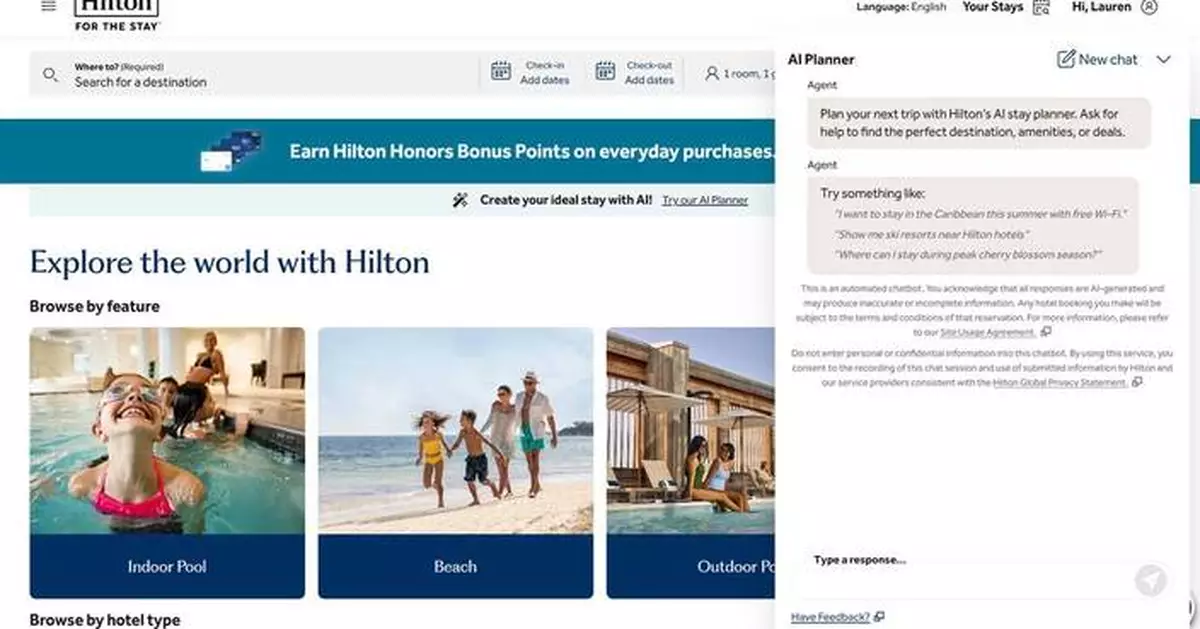
Hilton today announced its new Hilton AI Planner, a generative AI–powered digital concierge that helps travelers explore the company’s global portfolio of hotels and plan memorable stays with Hilton. The introduction of the Hilton AI Planner, now in beta testing at hilton.com, addresses the growing use of AI tools for travel planning and underscores Hilton’s long-standing commitment to innovation and investment in technologies that enhance the guest experience.
This press release features multimedia. View the full release here: https://www.businesswire.com/news/home/20260310249000/en/
The Hilton AI Planner uses conversational intelligence to help travelers navigate every stage of the shopping journey – whether identifying the right destination, comparing properties or exploring amenities. With real‑time responses and curated recommendations, the tool delivers a streamlined experience that goes beyond traditional search filters. The tool will initially launch to a small pool of site traffic on Hilton.com and eventually expand to more users as the Hilton AI Planner evolves.
“For decades, Hilton has been at the forefront of hospitality innovation – from the award-winning Hilton Honors app to the most widely available Digital Key and the industry-first Confirmed Connecting Room,” said Michael Leidinger, senior vice president & chief information officer at Hilton. “The launch of the Hilton AI Planner marks another step forward in our journey to reimagine the travel experience for Hilton guests. This is just the beginning and a preview of where we’re going, as we continue to focus on providing thoughtful, purposeful innovation that empowers travelers.”
The debut of the Hilton AI Planner comes at a time when travelers increasingly expect solutions that deliver speed, simplicity and personalization. The Hilton AI Planner reflects the brand’s dedication not only to staying ahead of these trends, but to shaping what next‑generation travel planning can look like.
The Hilton AI Planner builds on Hilton’s long track record of technology leadership. Innovations such as Digital Key, Connected Room and Confirmed Connecting Room have helped redefine the modern guest experience and set new standards across the industry.
With the introduction of the Hilton AI Planner, Hilton continues to evolve its digital ecosystem through a test‑and‑learn approach that embraces the power of generative AI while prioritizing guest usability and value. As guests begin using Hilton AI Planner, Hilton will learn from real behaviors, direct feedback and emerging needs. Those insights will fuel continuous improvements, expanding what the tool can anticipate, streamline and personalize over time to enhance the Hilton booking experience.
About Hilton
Hilton (NYSE: HLT) is a leading global hospitality company with a portfolio of 26 world-class brands comprising more than 9,100 properties and over 1.3 million rooms, in 143 countries and territories. Dedicated to fulfilling its founding vision to fill the earth with the light and warmth of hospitality, Hilton has welcomed over 4 billion guests in its more than 100-year history. Named as the No. 1 World’s Best Workplace by Great Place to Work and Fortune, Hilton aims to create the best culture for its 500,000 team members around the world. Hilton has introduced industry-leading technology enhancements to improve the guest experience, including Digital Key Share, automated complimentary room upgrades and the ability to book confirmed connecting rooms. Through the award-winning guest loyalty program Hilton Honors, the more than 243 million Hilton Honors members who book directly with Hilton can earn Points for hotel stays and experiences money can't buy. With the free Hilton Honors app, guests can book their stay, select their room, check in, unlock their door with a Digital Key and check out, all from their smartphone. Visit stories.hilton.com for more information, and connect with Hilton on Facebook, X, LinkedIn, Instagram and YouTube.

Hilton Introduces the Hilton AI Planner, Advancing the Future of Curated Travel Discovery

Hilton Introduces the Hilton AI Planner, Advancing the Future of Curated Travel Discovery
NEW YORK (AP) — The U.S. stock market is holding relatively steady, for now, following sharp swings up and down since the war with Iran began and sent oil prices spurting. The S&P 500 was flat in early trading Tuesday, a day after careening from a sharp early loss to a solid gain. The Dow Jones Industrial Average slipped 34 points, and the Nasdaq composite edged up 0.2%. Trading was also relatively calm in the oil market, which has been the center of action because of worries about the potential for long-term disruptions to the energy industry in the Middle East.
THIS IS A BREAKING NEWS UPDATE. AP’s earlier story follows below.
Trading steadied early Tuesday and crude prices eased after wild swings this week with investors trying to figure out how long the war with Iran will continue.
Futures for the Dow Jones Industrial Average rose 0.2% before the opening bell, while S&P 500 futures inched up 0.1%. Futures for the Nasdaq were up 0.2%.
On Monday, markets swung from big losses to finish the day with gains, while oil prices neared $120 per barrel before falling back to about $90. Oil prices inched down further early Tuesday.
Helping to assuage investors’ fears, U.S. President Donald Trump told CBS News on Monday that he thinks “the war is very complete, pretty much.” However, Trump also made other somewhat contradictory comments that seemed to threaten intensified action against Iran if it makes any “attempt to stop the globe’s oil supply.”
Iran launched new attacks on Tuesday at Israel and Gulf Arab countries, keeping pressure on the Middle East in a war started by Israel and the United States 10 days ago that has sent oil prices surging.
Benchmark U.S. crude fell $5.44 to $89.33 a barrel. Brent crude, the international standard, dipped $6.97 to $91.99 a barrel. Oil prices are still up about 34% since the war began.
The average U.S. price for a gallon of gas continued to climb, rising to $3.54, according to auto club AAA on Tuesday. That average was just under $3 a gallon in the days before the conflict began, and $3.11 last week.
There is a great deal of uncertainty about just how high oil prices will go and how long they will stay there because of disruptions to Middle East energy facilities.
If oil prices stay very high for very long, household budgets already stretched by high inflation could break under the pressure. Companies would see their own bills jump for fuel and to stock items on their store shelves or in their data warehouses.
Concerns have focused on the Strait of Hormuz, a narrow waterway off Iran’s coast that a fifth of the world’s oil sails through on a typical day. Iran has threatened to set fire to ships sailing the strait.
Global shares rebounded Tuesday from their sharp declines a day before.
France's CAC 40 added 2.1% in early trading, while Germany's DAX surged 2.5%. Britain's FTSE 100 gained 1.7%.
In Asia, Tokyo's benchmark Nikkei 225 added 2.9% to finish at 54,248.39 after the government released revised economic data that showed Japan's economy grew slightly faster than initially estimated in the final quarter of last year, boosted by solid business investments.
Japan's economy expanded at an annual pace of 1.3%. The initial estimate was a much weaker 0.2%.
“Today is the rebound, obviously positive comments from President Trump overnight, we’re starting to see the light at the end of the tunnel for the war," said Neil Newman, a managing director and head of strategy at Astris Advisory Japan.
"So volatility is going to remain with us but things are certainly looking a lot brighter today,” he said.
Australia's S&P/ASX 200 gained 1.1% to 8,692.60. South Korea's Kospi jumped 5.4% to 5,532.59.
Hong Kong's Hang Seng added 2.2% to 25,959.90, while the Shanghai Composite index rose 0.7% to 4,123.14.
South Korea’s Kospi, where extremely volatile trading set off two circuit breakers in the past week, including Monday, rose more than 5% Tuesday.
In currency trading, the U.S. dollar rose to 157.78 Japanese yen from 157.67 yen. The euro was trading at $1.1646, up from $1.1636.
AP Videographer Ayaka McGill in Tokyo contributed.
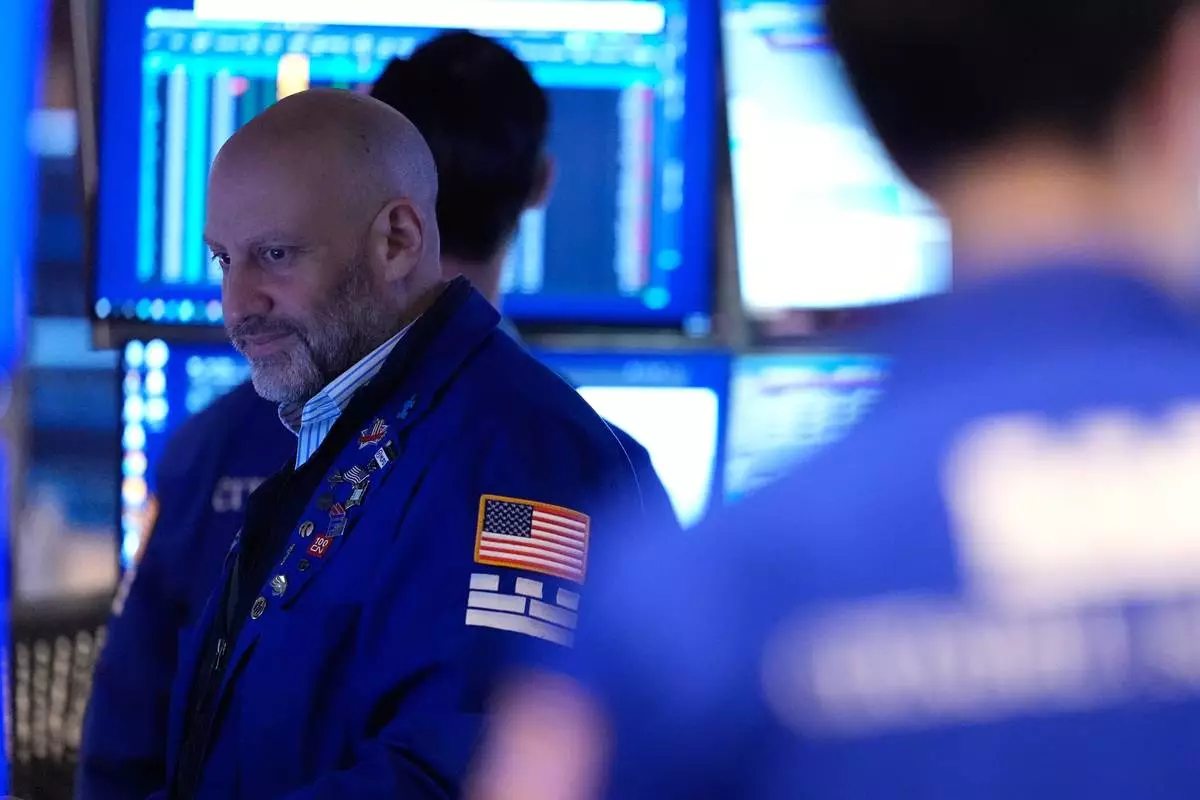
Meric Greenbaum works on the floor at the New York Stock Exchange in New York, Friday, March 6, 2026. (AP Photo/Seth Wenig)
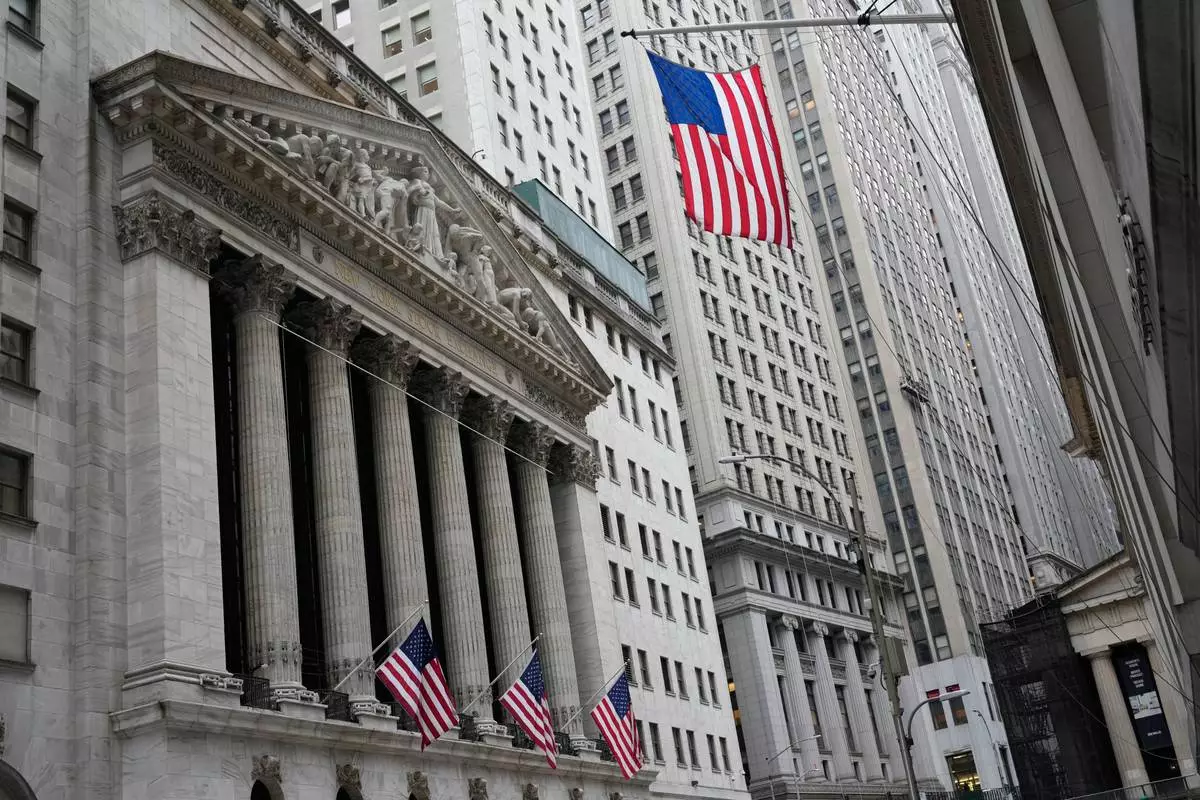
The New York Stock Exchange is seen in New York, Friday, March 6, 2026. (AP Photo/Seth Wenig)
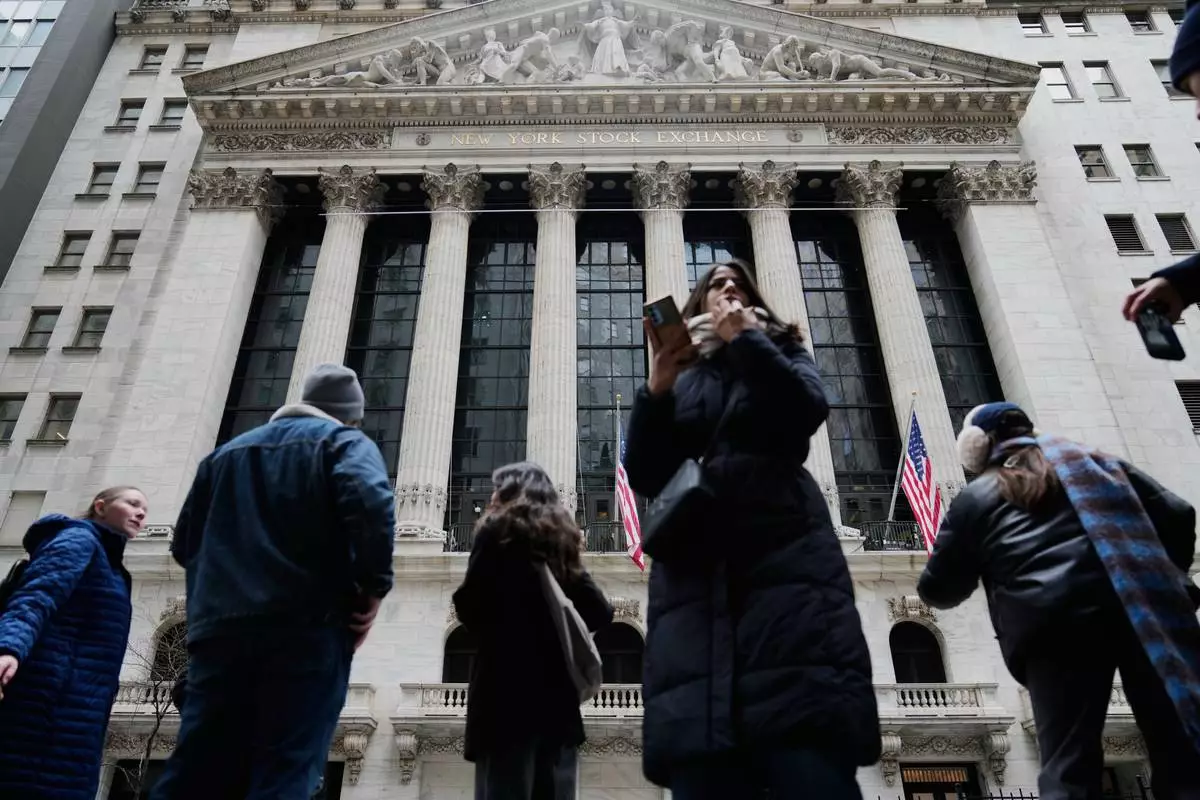
Pedestrians mill about outside the New York Stock Exchange in New York, Friday, March 6, 2026. (AP Photo/Seth Wenig)

Currency traders watch monitors near a screen showing the Korea Composite Stock Price Index (KOSPI), right, and the foreign exchange rate between U.S. dollar and South Korean won at the foreign exchange dealing room of the Hana Bank headquarters in Seoul, South Korea, Tuesday, March 10, 2026. (AP Photo/Ahn Young-joon)

Currency traders work at the foreign exchange dealing room of the Hana Bank headquarters in Seoul, South Korea, Tuesday, March 10, 2026. (AP Photo/Ahn Young-joon)

U.S. President Donald Trump is seen on a screen as traders work at the foreign exchange dealing room of the Hana Bank headquarters in Seoul, South Korea, Tuesday, March 10, 2026. (AP Photo/Ahn Young-joon)

Currency trader react near a screen showing the Korea Composite Stock Price Index (KOSPI), rear left, at the foreign exchange dealing room of the Hana Bank headquarters in Seoul, South Korea, Tuesday, March 10, 2026. (AP Photo/Ahn Young-joon)

A currency trader passes by a screen showing the Korea Composite Stock Price Index (KOSPI), rear center, and the foreign exchange rate between U.S. dollar and South Korean won, rear left, at the foreign exchange dealing room of the Hana Bank headquarters in Seoul, South Korea, Tuesday, March 10, 2026. (AP Photo/Ahn Young-joon)