PHILADELPHIA--(BUSINESS WIRE)--Mar 10, 2026--
Lyric, a leader in AI-powered payment accuracy for health plans, today announced that Ravi Umarji has been named President. Umarji, who has served as Lyric’s Chief Financial Officer and Chief Strategy Officer since 2024, will oversee the Company’s enterprise-wide priorities and execution of Lyric’s customer-centric strategy. The appointment reflects Lyric's accelerating momentum and Umarji’s continuous focus on growth.
This press release features multimedia. View the full release here: https://www.businesswire.com/news/home/20260310515840/en/
“On behalf of our clients, we are building Lyric into one of the most innovative, impactful, and important companies in health tech. We are focused on harnessing our Lyric42 platform to activate our data-centric strategy to provide greater client value, speed, and transparency,” said Halsey Wise, Chief Executive Officer of Lyric. “Ravi's expanded role directly supports how we're building Lyric, with our Lyric42 platform at the center, and a leadership structure built to drive rapid growth and execute at the speed our clients need.”
“I'm honored to take on the role as President,” said Umarji. “Lyric is uniquely positioned to transform healthcare. I’ve been fortunate to be part of the Company’s evolution over the past few years. We’re just at the beginning, and I couldn’t be more excited to partner with Lyric’s outstanding team to continue innovating on behalf of our clients.”
Umarji has helped to shape Lyric’s growth strategy as the Company has expanded its product portfolio, including the next-generation Lyric42 platform. As President and Chief Financial Officer, he will continue driving these initiatives while creating value for America’s leading health plans.
About Lyric
Lyric is a payment integrity technology company trusted by leading health plans at the start of the claims payment workflow. Its platform is grounded in 35+ years of clinical and payment accuracy expertise and supports real-time integrations covering 190 million lives. Lyric helps reduce healthcare spending waste and support fast, accurate payments with a transparent rationale and human oversight.

Ravi Umarji, President, Lyric
NEW YORK (AP) — U.S. stocks are drifting lower Tuesday as Wall Street waits for the next signal on when the war with Iran may end and oil prices could stop spiking.
The S&P 500 slipped 0.4% in morning trading, a day after its latest wild swing, this time careening from a sharp early loss to a solid gain by the end of trading. The Dow Jones Industrial Average was down 250 points, or 0.5%, as of 10 a.m. Eastern time, and the Nasdaq composite was 0.1% lower.
Moves were also modest in the oil market, which has been the center of action for financial markets because of worries about the potential for long-term disruptions to the energy industry in the Middle East.
The price for a barrel of Brent crude, the international standard, was sitting at $91.47. That’s down 7.6% from its settlement price the day before, but much of that decline happened before the end of the stock market's trading day on Monday. A barrel of benchmark U.S. crude was also sitting close to where it was during the last moments of Monday’s trading for U.S. stocks, at $87.49.
Oil prices plunged Monday from a high of nearly $120 per barrel, its most expensive level since 2022, after President Donald Trump told CBS News he thinks “the war is very complete, pretty much.” That raised hopes that the war may end sooner than later, which could allow oil to flow freely again from the Middle East to customers around the world.
But Trump’s comments later Monday, after the U.S. stock market finished trading, were not as clear. And a spokesperson for Iran’s paramilitary Revolutionary Guard said that “Iran will determine when the war ends.” Iran launched new attacks Tuesday at Israel and Gulf Arab countries, keeping pressure on the Middle East in a war started by Israel and the United States.
That has Wall Street waiting for the next clue about how long the war may last.
One point where Trump remained clear was his desire to keep the Strait of Hormuz open. The war has caused blockages in the a narrow waterway off Iran’s coast, where a fifth of the world’s oil sails on a typical day. That's been a central reason for oil prices' extreme swings recently, which have dominated other financial markets and raised worries about the global economy.
“If Iran does anything that stops the flow of Oil within the Strait of Hormuz, they will be hit by the United States of America TWENTY TIMES HARDER than they have been hit thus far,” Trump said in a posting on his social media network late Monday.
“The outlook for oil right now is about as binary as it gets,” according to Hakan Kaya, senior portfolio manager at Neuberger Berman.
“Either the Strait of Hormuz reopens and you see a massive unwind of the risk premium, or it stays shut and we are looking at the largest supply disruption in modern history. There is no middle ground, and that is why putting a number on it is almost irresponsible.”
The U.S. stock market has a history of bouncing back relatively quickly from past military conflicts, as long as oil prices don’t stay too high for too long. Uncertainty about whether that may happen again has led to stunning swings up and down in markets worldwide, often hour-to-hour.
If oil prices do stay high for long, household budgets already stretched by high inflation could break under the pressure. Companies would see their own bills jump for fuel and to stock items on their store shelves or in their data warehouses.
Stock markets in Asia and Europe jumped in their first chance to react to Trump’s comments from late Monday and the subsequent easing of oil prices. Indexes leaped 5.3% in South Korea, 2.2% in Hong Kong and 1.5% in France.
Tokyo’s Nikkei 225 rose 2.9% after the government released revised economic data that showed Japan’s economy grew faster than initially estimated in the final quarter of last year, boosted by solid business investments.
In the bond market, the yield on the 10-year Treasury held at 4.12%, where it was late Monday.
AP Business Writers Yuri Kageyama and Matt Ott and AP Videographer Ayaka McGill contributed.
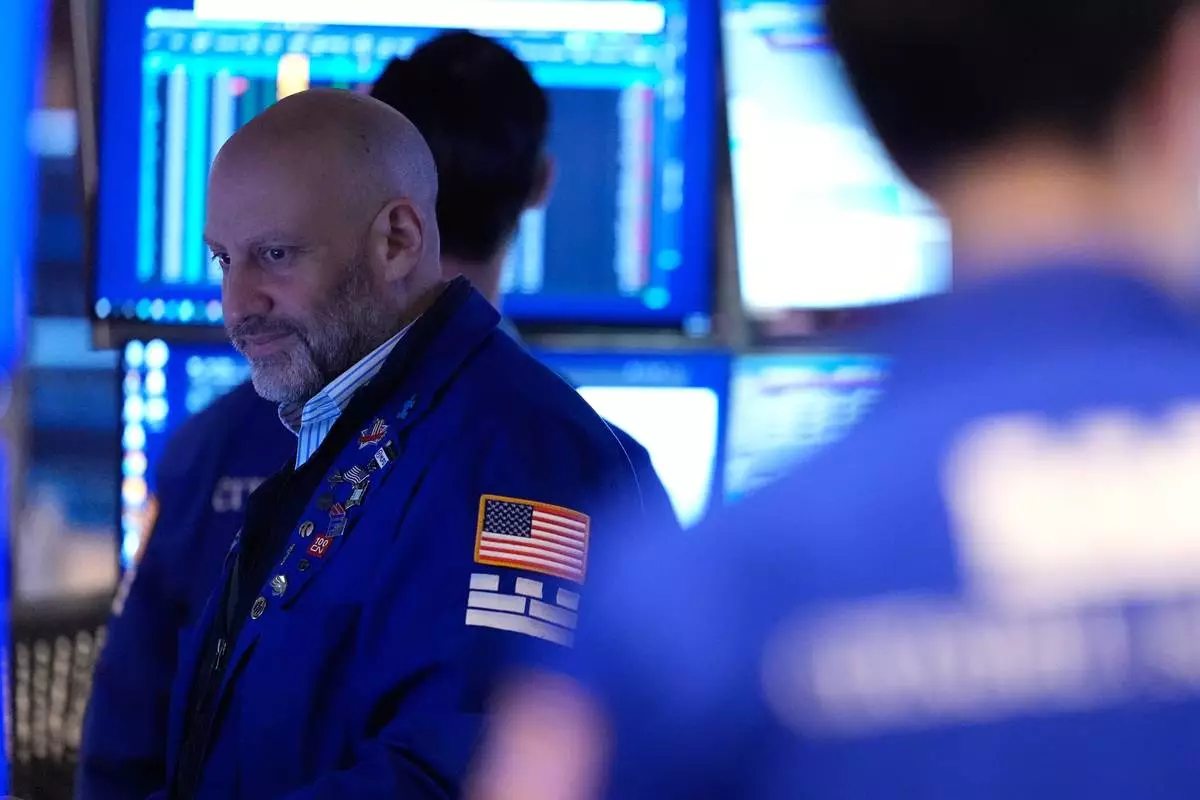
Meric Greenbaum works on the floor at the New York Stock Exchange in New York, Friday, March 6, 2026. (AP Photo/Seth Wenig)
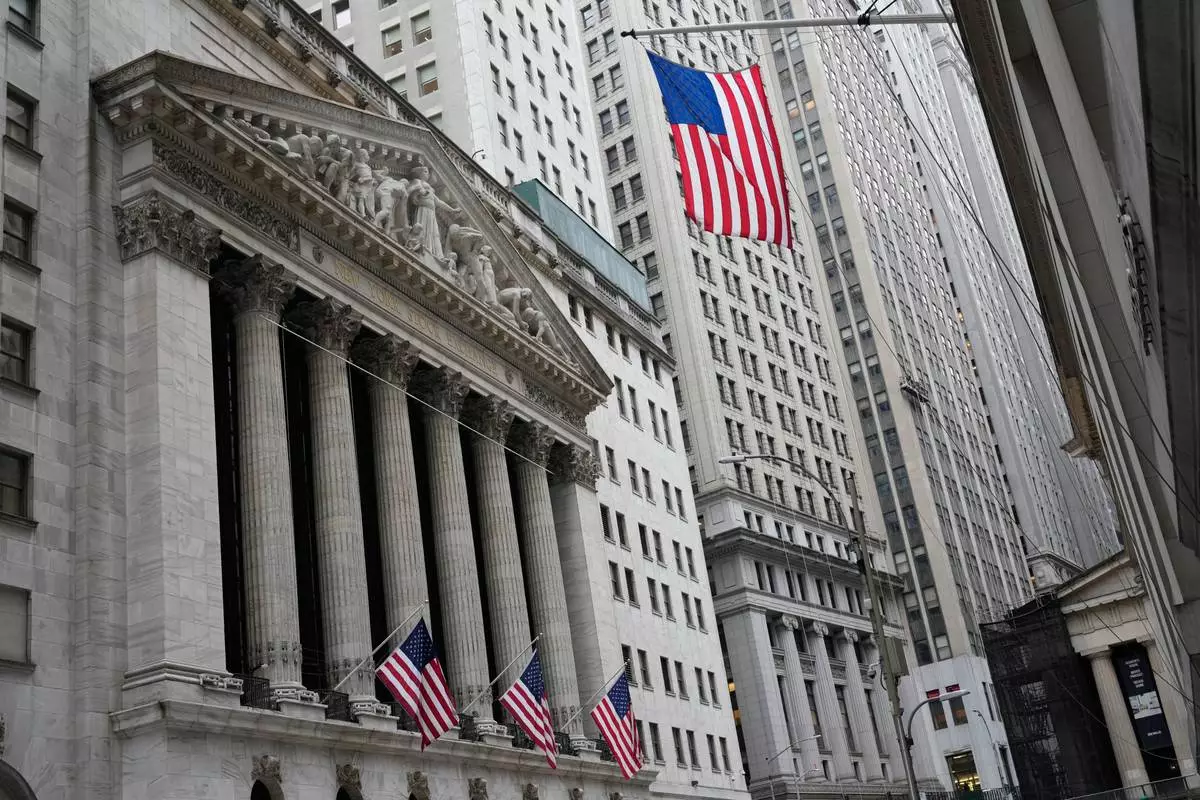
The New York Stock Exchange is seen in New York, Friday, March 6, 2026. (AP Photo/Seth Wenig)
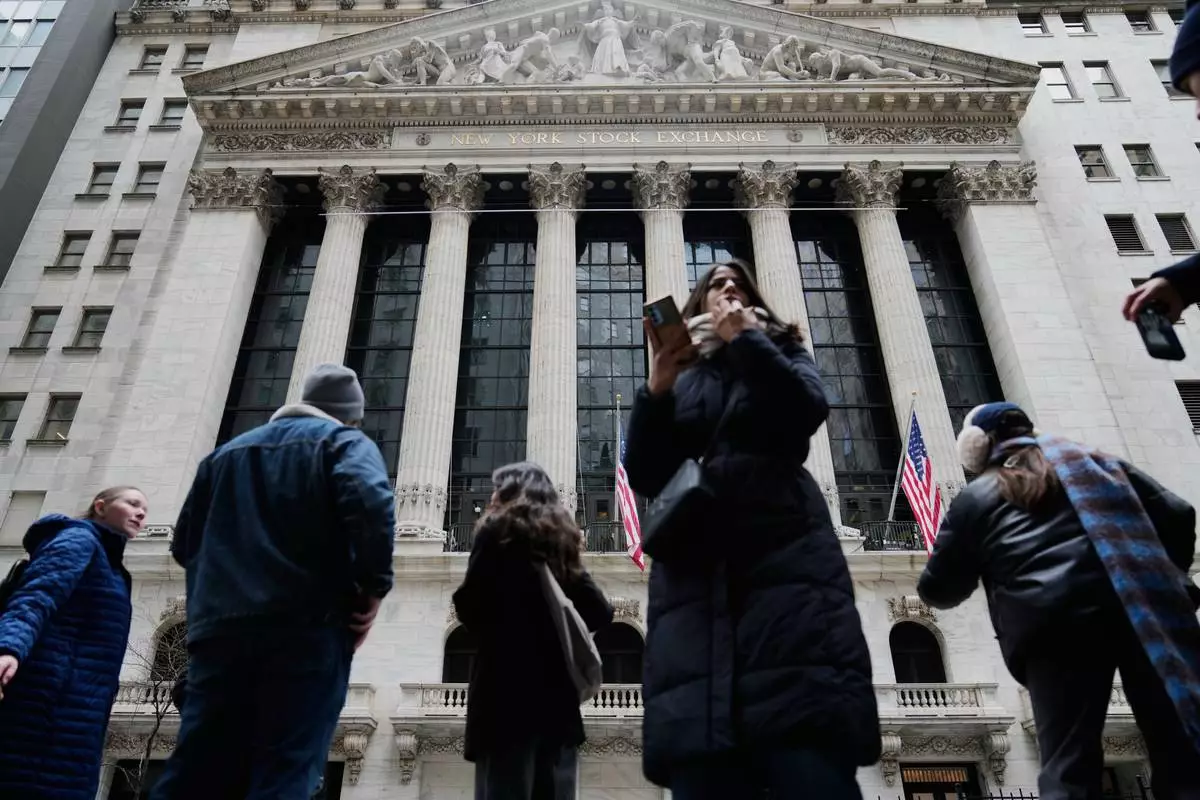
Pedestrians mill about outside the New York Stock Exchange in New York, Friday, March 6, 2026. (AP Photo/Seth Wenig)

Currency traders watch monitors near a screen showing the Korea Composite Stock Price Index (KOSPI), right, and the foreign exchange rate between U.S. dollar and South Korean won at the foreign exchange dealing room of the Hana Bank headquarters in Seoul, South Korea, Tuesday, March 10, 2026. (AP Photo/Ahn Young-joon)

Currency traders work at the foreign exchange dealing room of the Hana Bank headquarters in Seoul, South Korea, Tuesday, March 10, 2026. (AP Photo/Ahn Young-joon)

U.S. President Donald Trump is seen on a screen as traders work at the foreign exchange dealing room of the Hana Bank headquarters in Seoul, South Korea, Tuesday, March 10, 2026. (AP Photo/Ahn Young-joon)

Currency trader react near a screen showing the Korea Composite Stock Price Index (KOSPI), rear left, at the foreign exchange dealing room of the Hana Bank headquarters in Seoul, South Korea, Tuesday, March 10, 2026. (AP Photo/Ahn Young-joon)

A currency trader passes by a screen showing the Korea Composite Stock Price Index (KOSPI), rear center, and the foreign exchange rate between U.S. dollar and South Korean won, rear left, at the foreign exchange dealing room of the Hana Bank headquarters in Seoul, South Korea, Tuesday, March 10, 2026. (AP Photo/Ahn Young-joon)