Skip to Content Facebook Feature Image

Judge urges states to settle Live Nation claims after US strikes deal but states say no chance

News

Judge urges states to settle Live Nation claims after US strikes deal but states say no chance
News

News

Judge urges states to settle Live Nation claims after US strikes deal but states say no chance

2026-03-11 06:17 Last Updated At:06:40

NEW YORK (AP) — A New York federal judge on Tuesday urged over two dozen states to settle their antitrust claims against Ticketmaster and its parent company this week after the U.S. Justice Department reached a deal and dropped out of an ongoing trial.

But Dan Wall, a lawyer for Ticketmaster’s parent, Live Nation Entertainment, told Judge Arun Subramanian at a hearing in Manhattan that the chance all states would settle their claims by Friday was “about zero.”

He said he based his assessment on the nature of discussions between the ticketing and entertainment giants and the states over the past week. The states don't all want the same kinds of relief, he said.

“There are too many parties,” Wall said. “We want to stick the landing here. Get it down. And we won't stick the landing by Friday.”

At another point, Wall said: “There is zero chance we get this done by Friday.”

Subramanian quipped: “Not with that attitude.”

Still, the judge persuaded lawyers for both sides to negotiate in Manhattan federal court this week to see if they make progress before he decides whether to grant a mistrial request by the states and schedule a fresh start for a trial or to resume a trial next Monday that started with the presentation of evidence last week.

“Right now you should be focused on can we make a deal,” the judge told them, saying he would find them conference rooms throughout the courthouse to do their work. He even offered his robing room for office space. “I want to see if we can get a deal done here.”

Michael Rapino, president and CEO of Live Nation, attended the courthouse talks Tuesday.

On Monday, the Justice Department revealed that it had settled its antitrust lawsuit against Ticketmaster, describing the terms of the deal as a victory for consumers that would end an illegal monopoly over live events in the U.S.

At the trial, lawyers for the federal government and 39 states and the District of Columbia said Live Nation and Ticketmaster were squelching competition and driving up prices for fans through threats, retaliation and other tactics to “suffocate the competition” by controlling virtually every aspect of the industry, from concert promotion to ticketing. The companies insisted that artists, sports teams and venues set prices and decide how tickets are sold.

The Justice Department announcement was immediately met with strong criticism from multiple states. North Carolina Attorney General Jeff Jackson called it “a terrible deal.”

U.S. Sen. Amy Klobuchar, a Minnesota Democrat and member of the Senate Judiciary Subcommittee on Privacy, Technology and the Law, said Monday that the new deal was like previous agreements with the Justice Department that ultimately failed to curtail monopoly activity by Live Nation.

Klobuchar praised states for opposing the deal and said it was “troubling” that the deal was announced a month after the head of the Justice Department’s antitrust division was ousted.

According to a court document, Live Nation agreed to let up to 50% of all tickets sold at amphitheaters it owns, operates or controls to be sold through any ticketing marketplace.

It also said it would cap its service fees at those amphitheaters at 15% and divest ownership or control of 13 amphitheaters, including venues in Milwaukee, Cincinnati, Syracuse, New York, and Austin, Texas. It said Live Nation will create a $280 million settlement fund to settle claims or pay civil penalties to states.

None of that money will be paid out if no states settle, though. A Justice Department official said Monday that at least 10 states had agreed to join the United States in settling the case.

That leaves over two dozen states that have not agreed to the deal, lawyers for the states say.

FILE - The seal of the Dept of Justice is shown on the podium, Aug. 1, 2023, at an office of the Department of Justice in Washington. (AP Photo/J. Scott Applewhite, File)
FILE - The seal of the Dept of Justice is shown on the podium, Aug. 1, 2023, at an office of the Department of Justice in Washington. (AP Photo/J. Scott Applewhite, File)

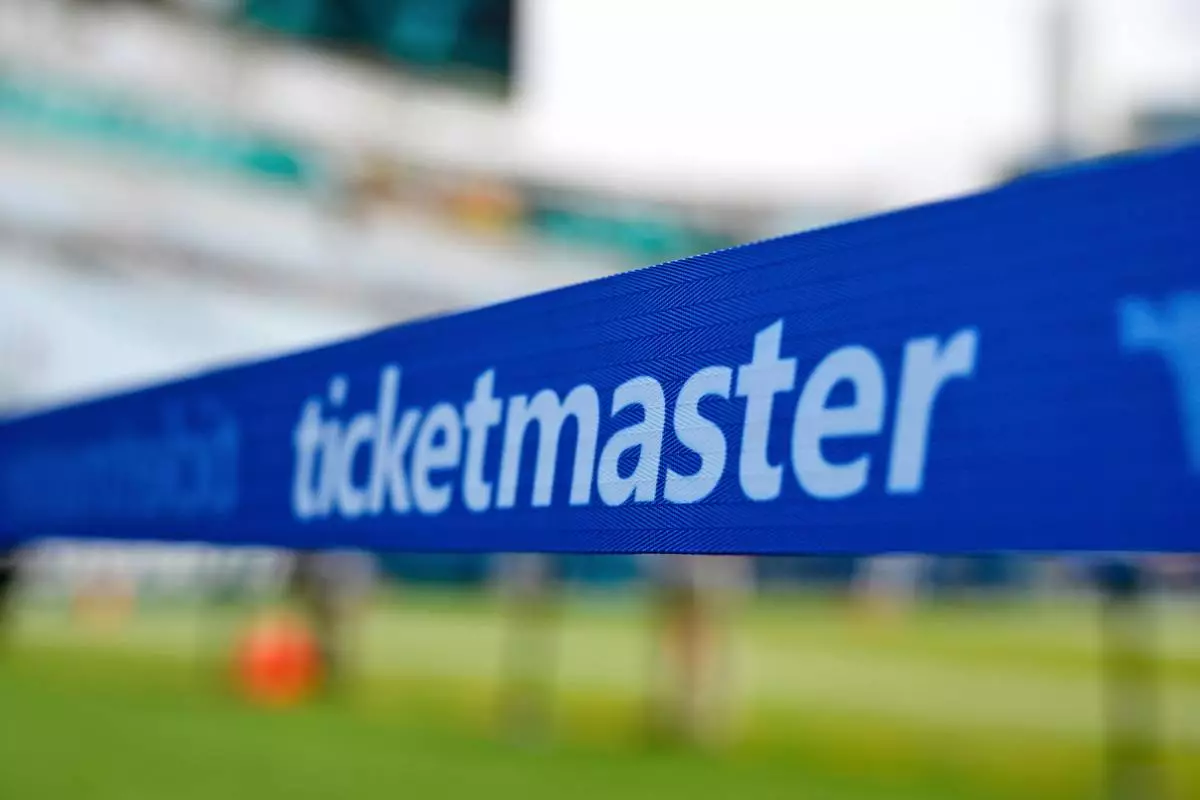
FILE - The Ticketmaster logo is seen along the sideline of the field before an NFL football game, Sept. 15, 2024, in Jacksonville, Fla. (AP Photo/Phelan M. Ebenhack, File)
FILE - The Ticketmaster logo is seen along the sideline of the field before an NFL football game, Sept. 15, 2024, in Jacksonville, Fla. (AP Photo/Phelan M. Ebenhack, File)

WASHINGTON (AP) — The presidential committee asked to find solutions for spiraling costs in college sports recommended creating a task force to look at pooling media rights, limiting coaches salaries, and rewriting eligibility and transfer-portal rules, along with at least a dozen other ideas.

A draft document of the committee's proposals, obtained by Yahoo Sports, wants Congress to quickly pass legislation that would create the task force, which would receive the antitrust exemption and the right to override individual state laws that the NCAA and other collegiate sports leaders are seeking.

The committee is the product of a White House summit called by President Donald Trump in March; Trump warned the “whole educational system” was in peril if the issues dogging sports cannot be resolved.

The document unveils a laundry list of items, all of which have been discussed in the revenue-sharing era, as schools struggle to pay players and maintain full athletic programs.

Among the more divisive ideas is pooling the media rights of the conferences — a move the Southeastern and Big Ten Conferences oppose but that a group led by Texas Tech regent Cody Campbell has argued could add some $7 billion in value.

“Important to note that there are currently long-term contracts in place that expire over the next 5-7 years (e.g., ACC expires in 2036), so change will likely be an evolution to a new model,” the paper said in outlining one of the issues that would make that change so difficult.

The paper also called on the task force to create rules for “elimination of salary-cap circumvention,” — in what appears to be a reference to schools' practice of inking third-party NIL deals, often through associated multimedia rights companies, that help schools blow past the current $20.5 million limit they're allowed to pay out directly.

That issue could soon be resolved through an aribtration case brought by Nebraska football players whose NIL deals were rejected by the College Sports Commission, which was placed in charge of analyzing third-party contracts.

The draft paper calls on Congress to implement legislation before its summer break, which traditionally starts in August. Congress has been stalled for more than a year on legislation that would codify elements of the House settlement that put revenue-sharing into place.

Among the biggest hang-ups are the call for the antitrust exemption for the NCAA, which, under this proposal, would instead belong to a task force and then a permanent governing body that would take its place.

AP college football: https://apnews.com/hub/ap-top-25-college-football-poll and https://apnews.com/hub/college-football

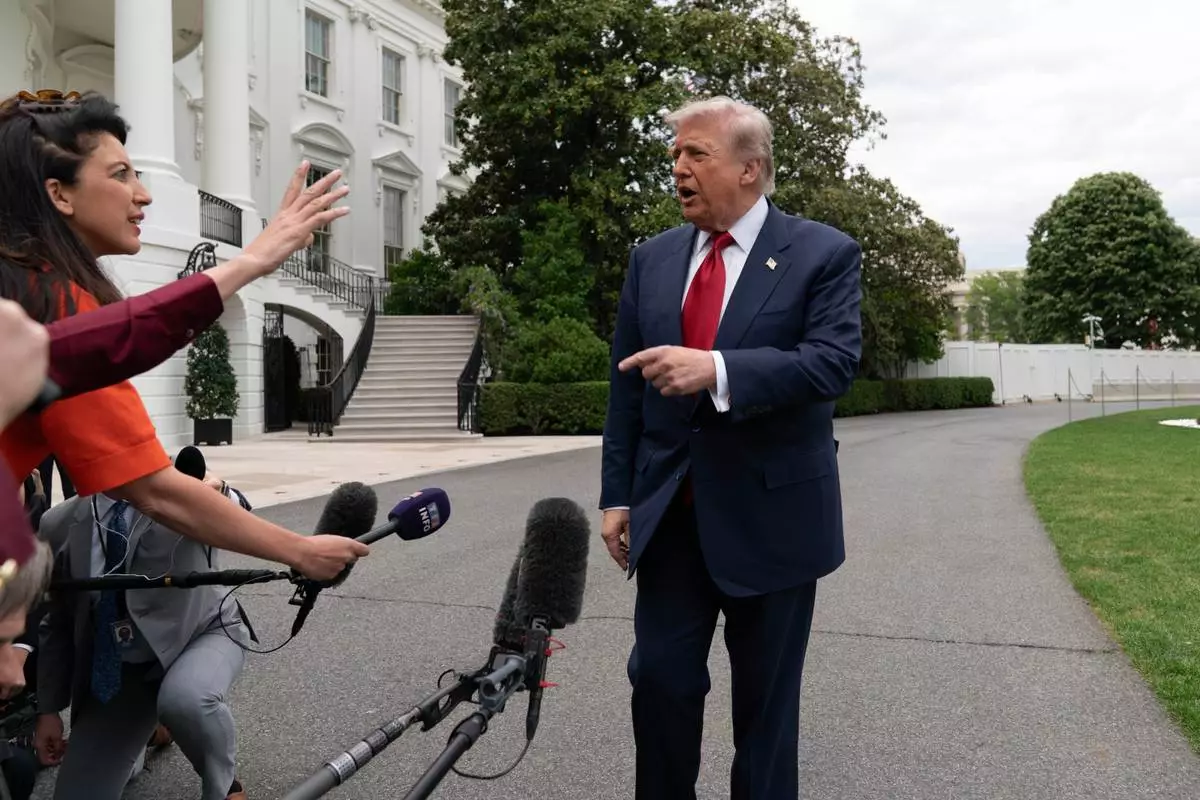
President Donald Trump speaks to reporters as he walks to board Marine One on the South Lawn of the White House, Friday, May 8, 2026, in Washington. (AP Photo/Jose Luis Magana)

President Donald Trump speaks to reporters as he walks to board Marine One on the South Lawn of the White House, Friday, May 8, 2026, in Washington. (AP Photo/Jose Luis Magana)

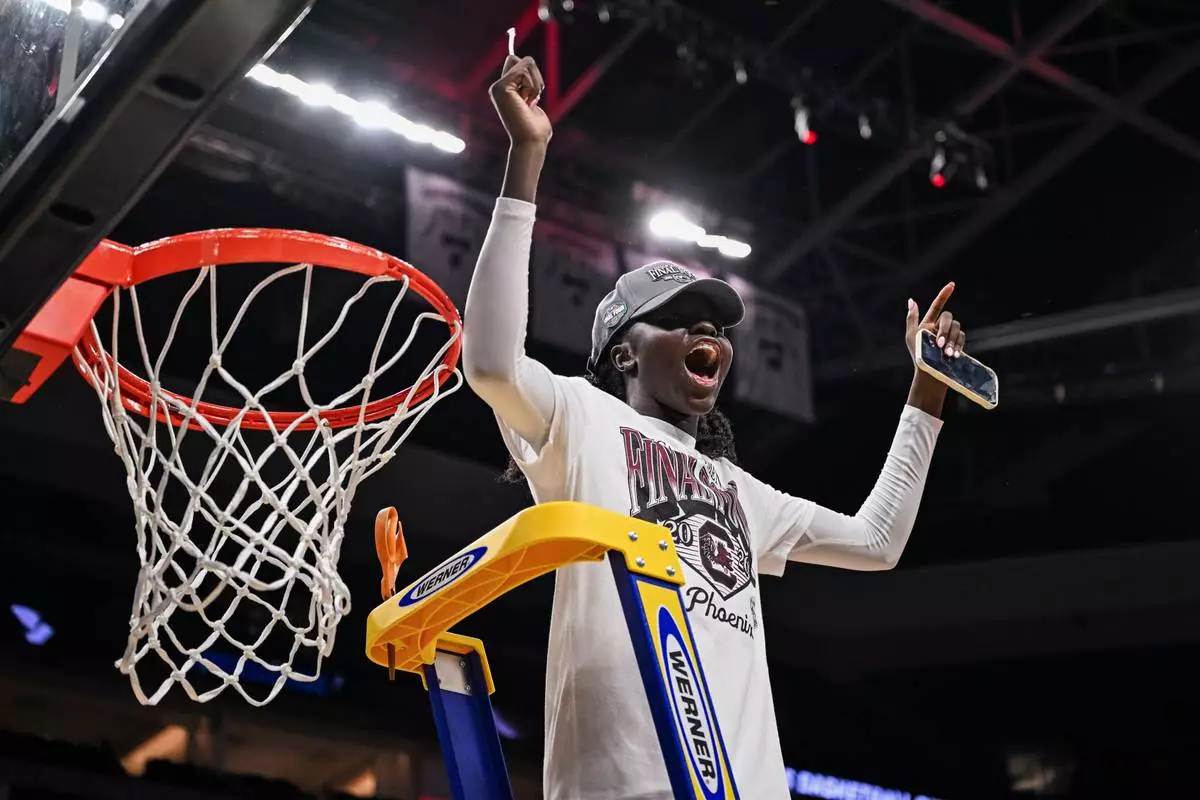
FILE - South Carolina guard Agot Makeer (44) celebrates cutting the net after South Carolina beats TCU in the Elite Eight of the NCAA college basketball tournament March 30, 2026, in Sacramento, Calif. (AP Photo/Justine Willard, File)

FILE - South Carolina guard Agot Makeer (44) celebrates cutting the net after South Carolina beats TCU in the Elite Eight of the NCAA college basketball tournament March 30, 2026, in Sacramento, Calif. (AP Photo/Justine Willard, File)

Recommended Articles