GOLD COAST, Australia (AP) — The Iranian women’s soccer team left Australia without seven squad members after tearful protests of their departure outside Sydney Airport and frantic final efforts inside the terminal by Australian officials, who sought to ensure the women understood they were being offered asylum.
As the team's flight time drew nearer and they passed through security late Tuesday, each woman was taken aside to meet alone with officials who explained through interpreters that they could choose not to return to Iran.
Before the team traveled to the airport, seven women had accepted humanitarian visas allowing them to remain permanently in Australia and were ushered to a safe location by Australian police officers. One has since changed her mind, underscoring the tense and precarious nature of their decisions.
“In Australia, people are able to change their mind,” said Australian Home Affairs Minister Tony Burke, who had hours earlier posted photos of the seven women granted humanitarian visas to his social media accounts, their identities clearly visible.
After what Burke described as “emotional” meetings between the remaining women who reached the airport and Australian officials, the rest of the team declined offers of asylum and boarded their flight.
It was a dramatic conclusion to an episode that has gripped Australia since the Iranian team’s first game at the Asian Cup soccer tournament, when they remained silent during their national anthem. The players sang the anthem before subsequent games and haven’t publicly disclosed their views or explained their actions.
Their silence was cast as a gesture of defiance or protest by some, and an act of mourning by others.
“When those players were silent at the start of their first match in Australia, that silence was heard as a roar all around the world,” Burke said. “We responded by saying, the invitation is there. In Australia you can be safe.”
The team arrived in Australia last month, before the Iran war began Feb. 28. Iran was knocked out of the tournament over the weekend and the squad faced the prospect of returning to a country under bombardment.
The women’s fate captured international attention as Iranian Australian groups warned they could face dire consequences from Iran's theocratic government for failing to sing the anthem, even as the players remained silent on the gesture’s meaning or their own concerns about returning.
There was further outrage in Australia on Wednesday after news outlets published a photo that appeared to show a woman being led by the wrist by a teammate to the bus bound for the airport, another squad member’s hand at her shoulder.
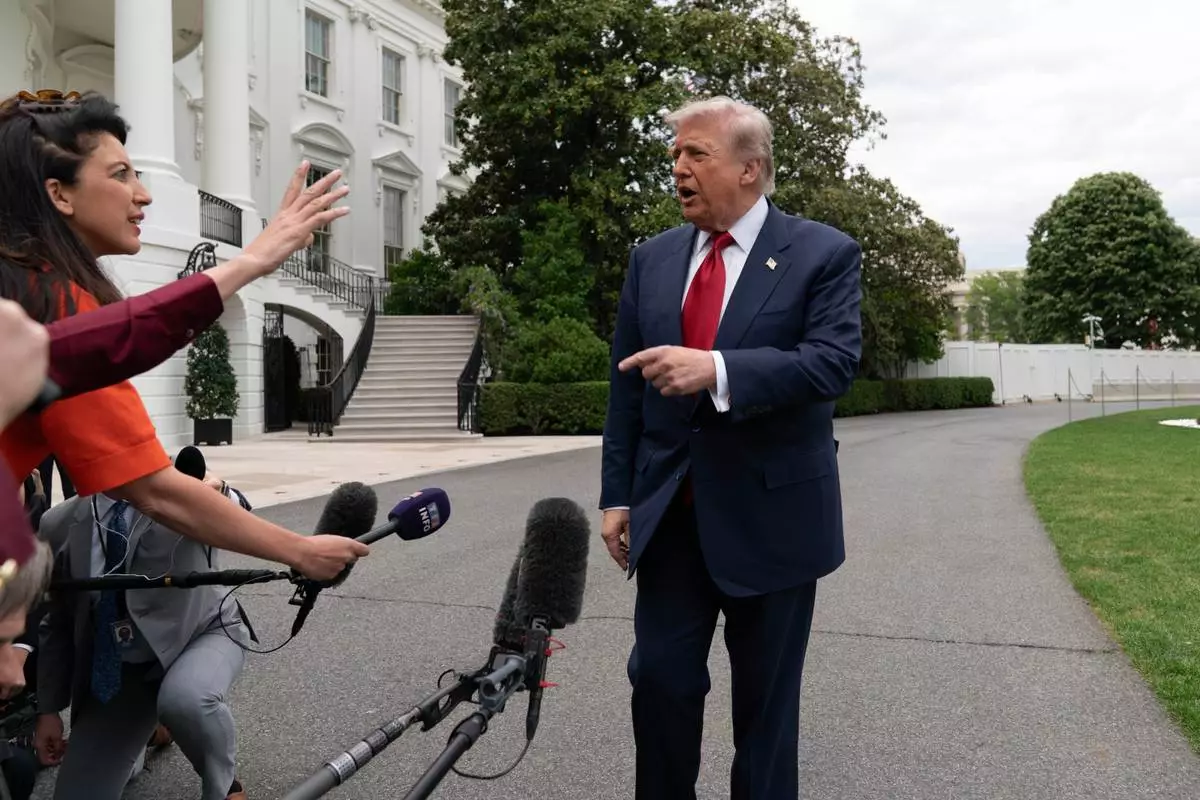
U.S. President Donald Trump waded into the matter Monday, criticizing the Australian government for not offering the women asylum. It emerged the next day that discussions between Australian officials and the women had already been unfolding privately.
Meanwhile, an Iranian official rejected suggestions that the women weren’t safe to go home.
“Iran welcomes its children with open arms and the government guarantees their security,” Iranian first Vice President Mohammad Reza Aref said Tuesday. “No one has the right to interfere in the family affairs of the Iranian nation and play the role of a nanny who is kinder than a mother,” he added.
Iranian state TV said the country’s football federation had asked international soccer bodies to review what it called Trump’s “direct political interference in football,” warning such remarks could disrupt the 2026 World Cup.
Australian officials have sought to assure the public that the women were given every opportunity to stay. But as one woman's decision to return home despite accepting asylum showed, the reality was not so simple.
After days of overtures from officials, Burke said, the efforts to ensure each team member had the chance to consider asylum offers came down to last-minute discussions at Sydney Airport, where the women who had not already accepted asylum offers were separated from their minders and had time to phone their families before deciding whether to leave.
“Everything was about ensuring the dignity for those individuals to make a choice,” he said. “We couldn’t take away the pressure of the context for these individuals, of what might have been said to them beforehand, what pressures they might have felt there were on other family members.”
No further members of the squad decided to remain in Australia before the flight departed, however, and Burke said “exhausted” officials feared they had failed the women.
“As a nation, what mattered was that we could provide the choice,” he said.
On Wednesday, many newspaper front pages bore a photo of the women who had accepted asylum below headlines like “Brave new Aussies.” But just hours later, Burke said that one of the women would return to Iran after conversations with her departed teammates.
“Unfortunately, in making that decision she was advised by her teammates and coach to contact the Iranian embassy and to get collected,” he said. “As a result of that, it meant that the Iranian embassy now knew the location of where everybody was.”
The six women planning to remain in Australia were immediately moved to a different location for security reasons, the minister said. He pledged they would not have to fight a legal battle for permanent residency and would receive health, housing and other support in Australia.
Some of the squad, who officials said had connections to Iran’s paramilitary Revolutionary Guard, were not offered visas.
“There were some people leaving Australia who I am glad they’re no longer in Australia,” Burke said.
It was not clear exactly how many people were in the delegation, but an official squad list named 26 players, plus coaching and other staff. Their route back to Iran is uncertain.
The Asian Football Confederation, which organized the tournament, confirmed Wednesday that the squad had traveled from Sydney to Kuala Lumpur, Malaysia, where they were staying in a hotel.
“The AFC will provide all necessary support to the team during their stay until their onward travel arrangements are confirmed,” a statement said, adding that the body would continue to prioritize “the welfare and safety of the players and officials.”
Graham-McLay reported from Wellington, New Zealand. Associated Press writer Eileen Ng contributed from Kuala Lumpur.

Police talk to protesters as they lay down in front of a bus believed to be carrying the Iranian women's soccer team as it attempts to leave a hotel on the Gold Coast, Australia, Tuesday, March 10, 2026. (AP Photo/John Pye)

In this photo supplied by Australia's Minister for Home Affairs, Tony Burke's office, the Minister, Tony Burke, center, with two woman from the Iranian women soccer squad who have been granted humanitarian visas, in Brisbane, Australia, Tuesday, March 10, 2026. (Australia Minister of Home Affairs via AP)

In this photo supplied by Australia's Minister for Home Affairs Tony Burke's office, the Minister Tony Burke, center, poses in an undisclosed location with five Iranian women soccer players who have been granted asylum in Australia, Tuesday, March 10, 2026. (Australia Ministry of Home Affairs via AP)