DUBAI, United Arab Emirates (AP) — The war with Iran, for all its complexity and global effects, boils down to a single question: Who can take the pain the longest?
A surge in oil prices points to what may be Iran’s most effective weapon and the United States’ biggest vulnerability in continuing the campaign: Damaging the world economy. A sharp rise in gas prices has rattled consumers and financial markets, and international travel and shipping have been severely disrupted.
Click to Gallery
FILE - People gather in a rally to support Ayatollah Mojtaba Khamenei, the successor to his late father Ayatollah Ali Khamenei as supreme leader, in Tehran, Iran, March 9, 2026. (AP Photo/Vahid Salemi, File)
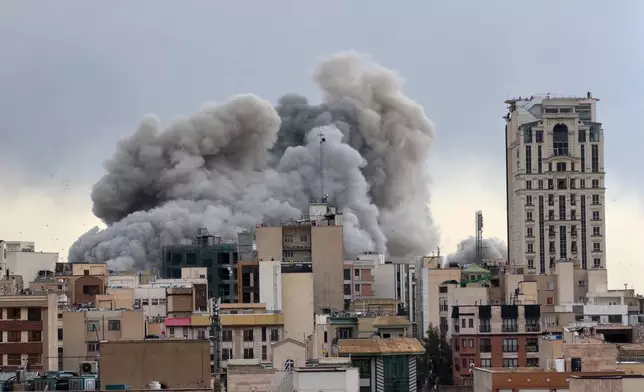
FILE - Plumes of smoke rise as strikes hit the city during the U.S.–Israeli military campaign in Tehran, Iran, March 5, 2026. (AP Photo/Vahid Salemi, File)
FILE - Drivers navigate a busy intersection past a sign displaying the current gas prices at a filling station in Plano, Texas, March 6, 2026. (AP Photo/Tony Gutierrez, File)
FILE - Policemen stand on top of their car with pictures of the late Iranian Supreme Leader Ayatollah Ali Khamenei, right and left, and his son Ayatollah Mojtaba Khamenei, the successor to him, center, during a rally to support him in Tehran, Iran, March 9, 2026. (AP Photo/Vahid Salemi, File)
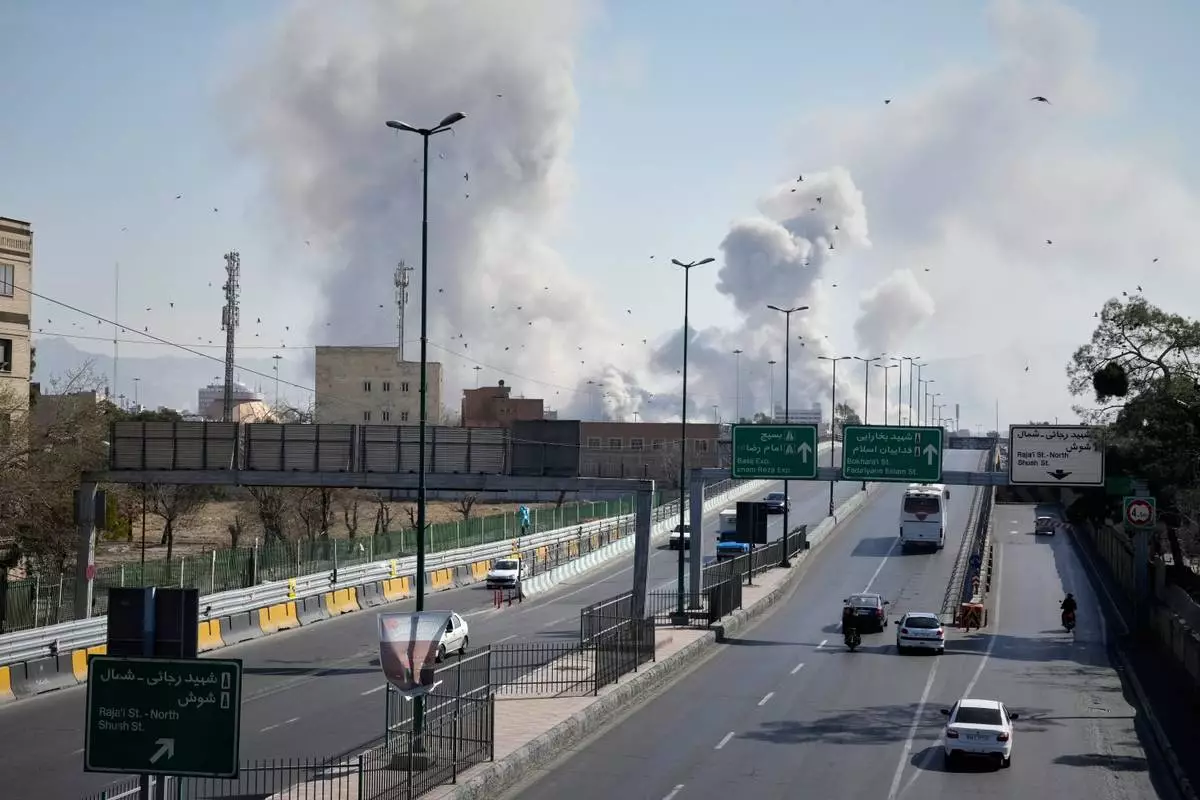
FILE - A plume of smoke rises after a strike in Tehran, Iran, Monday, March 2, 2026. (AP Photo/Mohsen Ganji, File)
U.S. President Donald Trump appears aware of the danger. As oil jumped to nearly $120 a barrel on Monday, the highest since 2022, he suggested the war would be “short-term.” That helped reassure markets and the price eased to around $90 — even as Trump, nearly in the same breath, vowed to keep up the war and the punishment on Iran.
On the other side, Iran has to endure a near-constant stream of American and Israeli airstrikes it can’t defend against. So far, the Islamic Republic has been able to keep its leadership and military cohesive and in control. The Iranian public, which already rose up against its theocracy in nationwide protests in January, still boils in anger but have stayed home as they try to survive the heavy bombardment. Security forces have been on the street every day to ensure no anti-government demonstrations form.
The pressure is on U.S. allies as well. Gulf Arab states, while still not combatants in the war, face seemingly unending and occasionally fatal Iranian fire targeting oil fields, cities and critical water works. And Israel, while boasting of inflicting heavy damage on Iran’s missile program and other military targets, continues to be targeted by increasingly sophisticated Iranian missiles that send a buckshot-like bouquet of high explosives raining down on its cities. Frequent air-raid sirens have disrupted daily life, closed schools and workplaces and created a tense atmosphere across the region.
There’s no immediate end to the war in sight — nor in the rhetoric coming from both America and Iran, whose bad blood extends back decades to the 1979 Islamic Revolution and the U.S. Embassy hostage crisis.
“We’ve already won in many ways, but we haven’t won enough,” Trump said in a speech Monday in Doral, Florida. “We go forward, more determined than ever to achieve ultimate victory that will end this long running danger once and for all.”
Iranian Foreign Ministry official Kazem Gharibabadi offered a mirror image comment from Tehran, boasting that the Islamic Republic had rejected contacts about a ceasefire that he said had come from China, France, Russia and others.
“At the moment, we hold the upper hand,” Gharibabadi told Iranian state television late Monday night. “Just look at the state of the global economy and energy markets — it has been very painful for them.”
He asserted that it was Iran that “will determine the end of the war.”
For years before Israel and the U.S. launched the war on Feb. 28, Iran warned that, if attacked, it would retaliate on the entire Middle East, targeting the oil infrastructure that made its Gulf Arab neighbors fantastically wealthy. By contrast, Tehran's economy has been crippled by international sanctions.
Iran has now backed up its threat with barrages of missiles and drones. Qatar was forced to halt its production of natural gas, and Bahrain declared its oil operations couldn’t meet their contractual obligations. Other producers like Saudi Aramco are affected, disrupting a key source of energy for Asia — particularly China, which has sent a top envoy to the region.
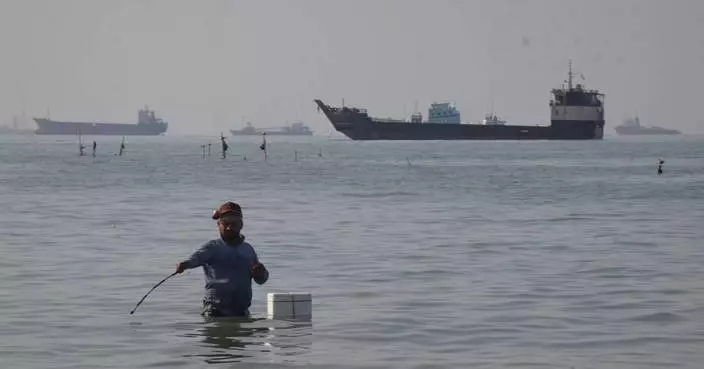
Shipping broadly has stopped in the strategic Strait of Hormuz, the narrow mouth of the Persian Gulf through which 20% of all oil and natural gas traded passes, and up to 30% of world fertilizer exports. Iran didn’t need to mine the waterway — its attacks on several ships prompted companies stop sending their vessels through the strait.
Trump has suggested U.S. warships providing escorts to tankers, but that has yet to materialize in a way to restart the traffic.
Early Tuesday morning, he threatened that if Iran stops the oil through the strait, “they will be hit by the United States of America TWENTY TIMES HARDER than they have been hit thus far.”
“Additionally, we will take out easily destroyable targets that will make it virtually impossible for Iran to ever be built back, as a Nation, again — Death, Fire, and Fury will reign upon them — But I hope, and pray, that it does not happen!” he wrote on his Truth Social platform.
Iran, however, only doubled down. The Revolutionary Guard warned on Tuesday that it won’t allow “a single liter of oil” to leave the Persian Gulf.
For Iran's theocratic rulers, victory means surviving the campaign still in power, no matter the costs to the country and the region.
Trump has been vague and contradictory about his aims in the war. At times, he seems to push for overthrowing Iran's theocracy; other times, he seems to be willing to stop short of that, saying broadly that he wants to ensure Iran is no longer a threat to Israel, the region and the U.S.
That could give him flexibility in declaring that victory has been achieved, especially if real damage starts to show to the U.S. economy.
But if the war stopped right now, both the U.S and Israel would be left with major challenges.
One is Iran’s leadership. After an Israeli airstrike killed 86-year-old Supreme Leader Ayatollah Ali Khamenei at the start of the war, Iranian clerics named his 56-year-old son Mojtaba to the position, elevating him to the rank of an ayatollah.
Now Iran’s ultimate ruler, the younger Khamenei has long been viewed by analysts as being even more hard-line than his father, with close ties to the paramilitary Revolutionary Guard. Israel already described him as a target in its campaign, while Trump has said he wanted someone else in the role.
Also, Iran still has its stockpile of highly enriched uranium – one reason for the war that Israel and the U.S. have both pointed to. Iran had been enriching up to 60% purity, a short, technical step away from weapons-grade levels of 90%.
The U.S. bombed three Iranian nuclear sites in June during the 12-day war between Israel and Iran, likely burying much of the stockpile in the debris. Those sites to this day remain out of the reach of international inspectors.
Mojtaba Khamenei could issue a religious ruling, or fatwa, reversing his father’s earlier statements and ordering it to be used to make a weapon. That’s something both America and Israel, long believed to be the Mideast’s only nuclear-armed state, don’t want to see.
__
EDITOR’S NOTE — Jon Gambrell, news director for the Gulf and Iran for The Associated Press, has reported from each of the Gulf Cooperation Council countries, Iran and other locations across the Mideast and the wider world since joining AP in 2006.
FILE - People gather in a rally to support Ayatollah Mojtaba Khamenei, the successor to his late father Ayatollah Ali Khamenei as supreme leader, in Tehran, Iran, March 9, 2026. (AP Photo/Vahid Salemi, File)
FILE - Plumes of smoke rise as strikes hit the city during the U.S.–Israeli military campaign in Tehran, Iran, March 5, 2026. (AP Photo/Vahid Salemi, File)
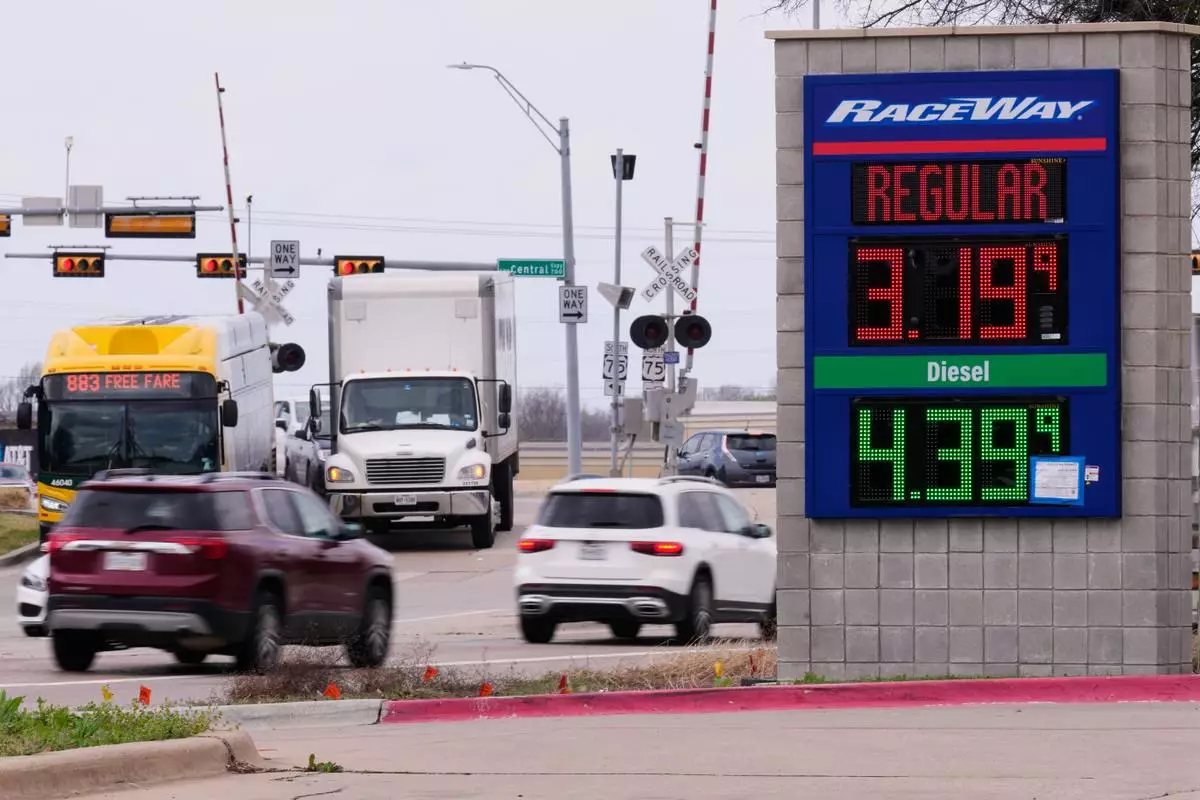
FILE - Drivers navigate a busy intersection past a sign displaying the current gas prices at a filling station in Plano, Texas, March 6, 2026. (AP Photo/Tony Gutierrez, File)
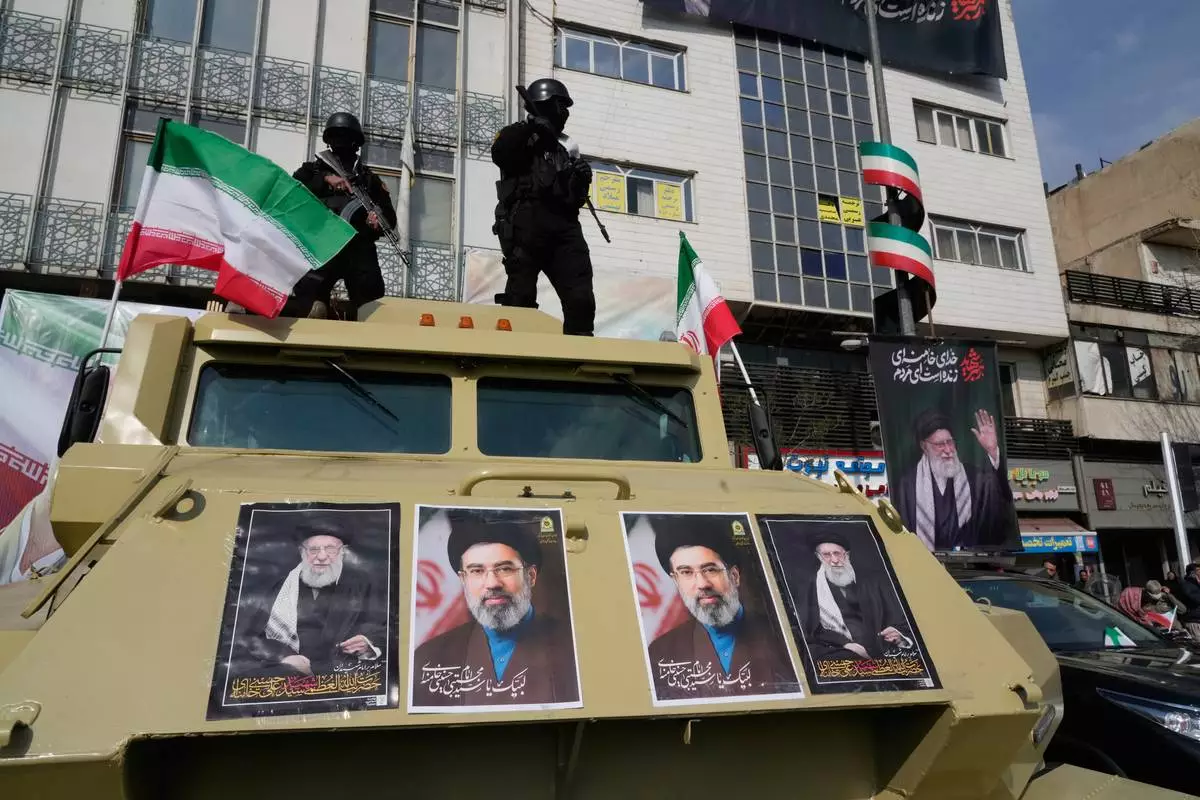
FILE - Policemen stand on top of their car with pictures of the late Iranian Supreme Leader Ayatollah Ali Khamenei, right and left, and his son Ayatollah Mojtaba Khamenei, the successor to him, center, during a rally to support him in Tehran, Iran, March 9, 2026. (AP Photo/Vahid Salemi, File)
FILE - A plume of smoke rises after a strike in Tehran, Iran, Monday, March 2, 2026. (AP Photo/Mohsen Ganji, File)
Iran fired missiles and drones at targets across the Gulf including oil infrastructure in Saudi Arabia and a ship off the coast of the Emirates, while Israeli and the United States struck targets across the Islamic Republic. Saudi Arabia and other states said they intercepted multiple drone attacks.
Six members of the Iranian women’s soccer team will remain in Australia, Home Affairs Minister Tony Burke said Wednesday, while one of the squad members who was previously granted asylum changed her mind and planned to return to Iran.
U.S. President Donald Trump said in social media posts there were no reports of Iran planting explosives in the Strait of Hormuz, through which 20% of the world’s oil is shipped. The U.S. said it took out more than a dozen minelaying Iranian vessels Tuesday to help prevent any attempt to close the waterway.
Iran's vow not to allow any oil through the strategic strait has led to market volatility and fears of shortages, especially in Asia, which is dependent on oil shipped from the region.
Israel struck a building in the center of the Lebanese capital Beirut as part of its campaign against Hezbollah. The Lebanese group has been carrying out attacks against Israel in support of Iran.
Here is the latest:
Iran held a funeral Wednesday for commanders and others killed at the start of the war with Israel and the United States.
Iranian state television aired footage of people gathered at Enqelab Square in Tehran, Iran’s capital, even as Israeli airstrikes targeted the city.
Among those being honored were Lt. Gen. Abdolrahim Mousavi, the chief of staff of Iran’s armed forces, and Lt. Gen. Mohammad Pakpour, who led the country’s paramilitary Revolutionary Guard.
The Israeli military said it is simultaneously carrying out strikes across Iran as well as Hezbollah infrastructure in Beirut.
Pope Leo XIV is praying for peace in Iran, Lebanon and the Middle East at large, saying he hopes prayers may “be a comfort to those who suffer and a seed of hope for the future.”
Speaking at the end of his weekly general audience, Leo recalled that the funeral of a Maronite priest killed in southern Lebanon was being celebrated Wednesday. He said the Rev. Pierre El Raii, who was killed Monday as he tried to rescue a wounded parishioner, was a true pastor.
“May the Lord grant that his shed blood be a seed of peace for beloved Lebanon,” he said.
The Vatican is particularly concerned about how the war is affecting Lebanon, a Muslim-majority country where about a third of the population is Christian.
Lebanon, where Leo visited late last year, has always been a priority for the Holy See since it stands as a bulwark for Christians in the region at a time when protracted conflicts have decimated Christian communities that date from the time of the Apostles.
Oman said Wednesday that it shot down an Iranian drone and another crashed into the sea near its port at Duqm. The state-run Oman News Agency, quoting an anonymous security official, made the announcement. It said there were no human or material losses in Wednesday’s drone attack. Duqm has been a key resupply point for the aircraft carrier USS Abraham Lincoln and its strike group amid the war.
China’s government said its efforts in the Iran war have been focused on “diplomatic mediation,” hoping to help ease tensions, and that it is in communication with all parties, “including parties to the conflict.”
Foreign Ministry spokesperson Guo Jiakun said Wednesday that China’s top diplomat, Wang Yi, has been holding phone conversations with different counterparts and that the special envoy to the region, Zhai Jun, is currently traveling across several countries.
“As a permanent member of the United Nations Security Council and a sincere friend of Middle Eastern countries, China will not stop its efforts for peace, nor will it cease its voice in upholding fairness and justice,” he added.
Some restaurant owners in India say they are struggling to secure liquefied petroleum gas cylinders, forcing them to scale back operations.
India has invoked emergency powers requiring refiners to divert more fuel for domestic use, a move hospitality sector groups say has tightened supplies for restaurants. The squeeze is being felt most acutely by restaurants in major cities like Mumbai, Bengaluru and Hyderabad.
“I will have to shut down my business. How can I run my restaurant without fuel?” said Amit Bhatia, a restaurant owner.
India relies heavily on oil and gas shipped through the Strait of Hormuz. Iran has attacked several ships in the strait and threatened any ships that try to pass through, effectively closing it.
Italian Premier Giorgia Meloni, a close ally of U.S. President Donald Trump, said the U.S.-Israeli attacks violate international law.
Meloni, in an address to the Italian Senate on Wednesday, described a broader international crisis “in which threats are becoming increasingly terrifying and unilateral interventions outside the confines of international law are multiplying.”
She said the “the American and Israeli intervention against the Iranian regime” should be understood as part of that broader crisis.
An Associated Press journalist in Doha, Qatar’s capital, saw air defenses intercept incoming fire.
Israeli’s air force carried out three airstrikes on Beirut’s southern suburbs Wednesday.
The strikes on the suburb of Haret Hreik and nearby areas came after the Israeli military warned that it would attack several buildings in the area.
The United Arab Emirates said Wednesday afternoon its air defenses were trying to shoot down incoming Iranian fire.
Lebanon’s Health Ministry says overnight Israeli strikes on eastern and southern Lebanon have killed 14 people and wounded more than two dozen people.
The ministry said seven were killed and 11 wounded in a strike on the southern village of Chehabiyeh, while seven were killed and 18 wounded in a separate strike on the village of Tamnine el-Tahta in the eastern Bekaa valley.
The ministry did not give further details but the state news agency said that the strike on Tamnine el-Tahta hit a home where a Syrian family lived. A resident in the area said the area struck was a small concrete block factory.
The European Union’s top official says the Iran war has already cost the 27-nation bloc’s citizens around 3 billion euros ($3.5 billion) in energy imports and warns Europe must resist the temptation to buy Russian oil and gas again.
“Gas prices have risen by 50% and oil prices have risen by 27%. If you translate that into euros — the 10 days of war have already cost European taxpayers an additional 3 billion euros in fossil fuel imports,” European Commission President Ursula von der Leyen said.
“That is the price of our dependency,” she told EU lawmakers in Strasbourg, France, noting the price of European renewables and nuclear energy has remained steady.
Von der Leyen rejected calls for the EU to return to buying Russian energy, which the bloc has stopped doing since President Vladimir Putin ordered Russian troops into Ukraine in 2022.
Ukrainian President Volodymyr Zelenskyy said Tuesday a Ukrainian is heading to Gulf countries.
The delegation including military specialists and led by Defense Council secretary and chief negotiator Rustem Umerov will help strengthen defenses as tensions rise following Iranian attacks.
In his nightly video address, Zelenskyy said Ukrainian specialists could help protect lives and stabilize the situation in the region.
He added it is impossible to predict how long the crisis will last but stressed that protecting lives and restoring stability is urgently needed, including for Ukraine.
A court in Sri Lanka has ordered a hospital to hand over the bodies of 84 Iranian sailors killed in a U.S submarine attack off the island nation’s southern coast.
Galle National Hospital Director Ranga Sabapathige said he received the order from the Galle magistrate to return the bodies to Iranian officials.
The Iranian officials will travel from the capital Colombo to Galle on Wednesday for the transfer, he said.
Bahrain sounded its air raid siren late Wednesday morning.
Lebanon’s Health Ministry says an Israeli airstrike on an apartment building in central Beirut early Wednesday wounded four people.
The strike came without warning and it was not immediately clear who was the target of the attack on an apartment in Beirut’s Aicha Bakkar neighborhood.
The strike was the second in central Beirut in less than a week.
Lebanon’s minister of social affairs says the war has displaced 780,000 people in the country so far.
Haneen Sayed told reporters after meeting President Joseph Aoun on Wednesday morning that 120,000 displaced people are staying in shelters around Lebanon.
They discussed the challenges of the response and the humanitarian aid arriving to support the displaced, Sayed said.
Sayed added that a European Union plane arrived Tuesday with aid that will be distributed in shelters.
She said additional aid shipments from Jordan, France and other countries are expected.
A joint Iranian military command said Wednesday that banks and financial institutions are now targets in the Middle East.
The Khatam al-Anbiya Headquarters issued a statement identifying the targets.
It came after Iranian media reported staff at a bank in Tehran had been killed in Israeli-American airstrikes.
The threat would put at risk particularly Dubai, which is home to many international financial institutions, as well as Saudi Arabia and the island kingdom of Bahrain.
Two Iranian drones struck near Dubai International Airport on Wednesday and wounded four people, authorities said.
The Dubai Media Office, which issues statement on behalf of the city-state’s government, said the attack caused “minor injuries to two Ghanaian nationals and one Bangladeshi national, and moderate injuries to one Indian national.”
Flights have continued, the office said.
Dubai International Airport, home to the long-haul carrier Emirates, is the world’s busiest for international travel. Authorities have been trying build up its flight schedule though the airport has been targeted in the war.
Another ship came under attack Wednesday in the Persian Gulf, the British military said.
A bulk carrier was hit by a projectile off a distance from the United Arab Emirates, the British military’s United Kingdom Maritime Trade Operations center said.
“There is no report of any environmental impact,” the center said. “The crew are reported safe and well.”
It was the third attack reported Wednesday.
Speculation over the health of Iran’s Supreme Leader Ayatollah Mojtaba Khamenei grew Wednesday after the son of Iran’s president mentioned hearing news about him “being injured.”
Mojtaba Khamenei, 56, is the son of the late Supreme Leader Ayatollah Ali Khamenei.
Mojtaba Khamenei long has been a secretive figure within Iran. His father and wife both were killed in an Israeli airstrike Feb. 28 that started the war.
Khamenei has not been seen since, nor has he given any statement since becoming supreme leader on Monday.
In an overnight post on the app Telegram, Yousef Pezeshkian, the son of President Masoud Pezeshkian, wrote: “I heard news about Mr. Mojtaba being injured. I asked friends who were in contact. They said, thank God, he is healthy and there is no problem.”
He did not elaborate.
The Iranian women’s soccer team is in a hotel in Malaysia awaiting travel arrangements to return home, officials said Wednesday.
Iran’s embassy in Malaysia confirmed the squad members landed in the capital Kuala Lumpur early Wednesday and are expected to depart when flights are available and Iran’s airspace reopens, according to the Bernama news agency.
“They want to return home,” the embassy told Bernama.
The Asian Football Confederation said the team is staying at a Kuala Lumpur hotel in the meantime and will receive support from the confederation until their travel arrangements are confirmed, a spokesperson said.
Six women from the Iranian squad will remain in Australia on humanitarian visas after accepting offers of asylum shortly before their scheduled return home.
Some tankers, believed linked to Iran, are continuing to get through the Strait of Hormuz, the narrow mouth of the Persian Gulf.
Some of the ships getting through are so-called “dark” transits, meaning they aren’t turning on their Automatic Identification System tracks, which show where vessels are.
Vessels carrying sanctioned Iranian crude often turn off their AIS trackers.
The security firm Neptune P2P Group said Wednesday that seven ships had passed through the strait since March 8. Of those, five were linked to Iranian-associated shipping, it said.
The commodity-tracking firm Kpler said Iran has restarted crude exports through its Jask oil terminal on the Gulf of Oman.
A tanker loaded roughly 2 million barrels at Jask on March 7, the firm said.
A projectile hit a cargo ship Wednesday in the Strait of Hormuz, setting the vessel ablaze after the United States targeted Iranian minelaying vessels that could target the narrow mouth of the Persian Gulf.
The United Kingdom Maritime Trade Operations center, run by the British military, said the vessel had been hit just north of Oman in the strait.
It said the crew was evacuating the ship.
Iran did not immediately claim the attack though it has been targeting ships in and around the strait, disrupting a waterway that sees a fifth of all oil and natural gas traded pass through it.
The UKMTO earlier reported on another attack targeting a vessel off Ras al-Khaimah in the United Arab Emirates.
A boy runs inside cement pipe turned into a bomb shelter as air raid sirens warn of incoming Iranian missile strike in Michmoret, Israel, Tuesday, March 10, 2026. (AP Photo/Ariel Schalit)
A man passes in front of a destroyed building that housed a branch of Al-Qard Al-Hassan, a non-bank financial institution run by Hezbollah, which was hit by an Israeli airstrike in Dahiyeh, Beirut's southern suburbs, Lebanon, Tuesday, March 10, 2026. (AP Photo/Hussein Malla)
Protesters wave Iranian flags and hold a portrait of the late Iran's Supreme Leader Ayatollah Ali Khamenei and his son Ayatollah Mojtaba Khamenei to support his selection as the new Iran's Supreme Leader in Baghdad, Monday, March 9, 2026. (AP Photo/Hadi Mizban)
A displaced woman holds a child as another stands beside her between rows of tents at the Camille Chamoun Sports City Stadium, which has been turned into a shelter for people displaced by Israeli airstrikes in southern Lebanon and Dahiyeh, Beirut's southern suburbs, in Beirut, Lebanon, Tuesday, March 10, 2026. (AP Photo/Hassan Ammar)
Smoke rise from an Israeli airstrike in Dahiyeh, Beirut's southern suburbs, Lebanon, Tuesday, March 10, 2026. (AP Photo/Bilal Hussein)