PARIS (AP) — A group representing many of the world's wealthiest countries agreed Wednesday to release the largest volume of emergency oil reserves in its history, in a bid to counter the effects of the Iran war on energy markets and the halt of cargo shipping through the Strait of Hormuz.
The International Energy Agency said it will make 400 million barrels of oil available from its members’ emergency reserves, which is more than double the 182.7 million barrels that the IEA's 32 member countries released in 2022 in response to Russia’s full-scale invasion of Ukraine.
Click to Gallery
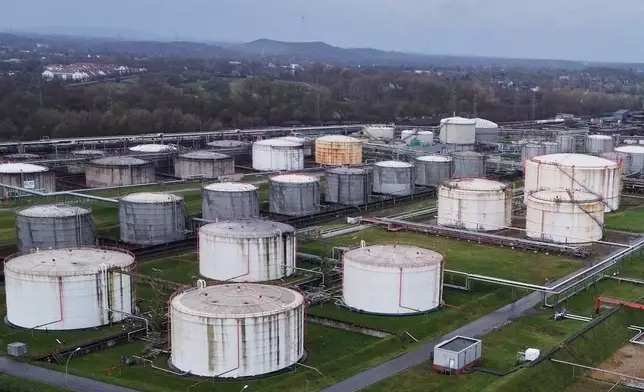
Big oil tanks are pictured in front the BP refinery in Gelsenkirchen, one of the biggest fuel producers in Germany, Wednesday, March 11, 2026. (AP Photo/Martin Meissner)
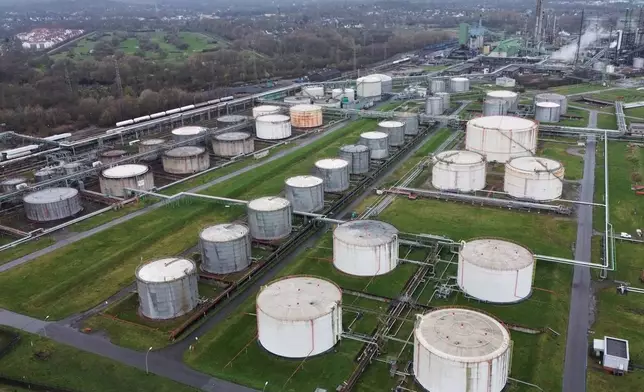
Big oil tanks are pictured in front of the BP refinery in Gelsenkirchen, one of the biggest fuel producers in Germany, Wednesday, March 11, 2026. (AP Photo/Martin Meissner)
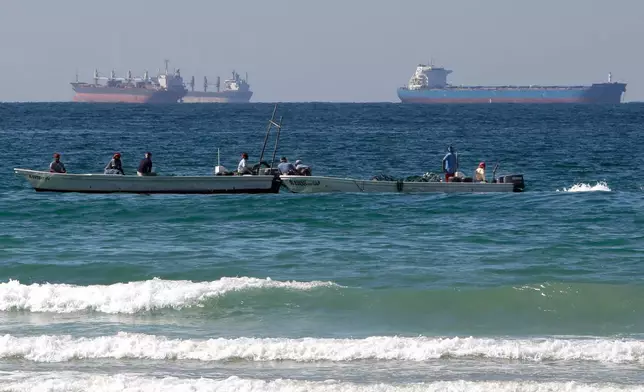
FILE - Fishermen work in front of oil tankers south of the Strait of Hormuz Jan. 19, 2012, offshore the town of Ras Al Khaimah in United Arab Emirates. (AP Photo/Kamran Jebreili, File)
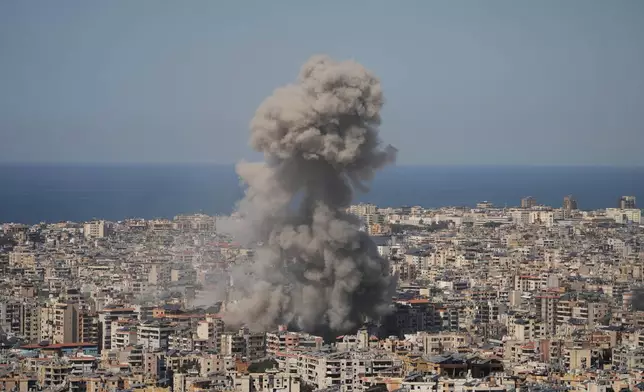
Smoke rises from a building following an Israeli airstrike in Dahiyeh, Beirut's southern suburb, Wednesday, March 11, 2026. (AP Photo/Hassan Ammar)
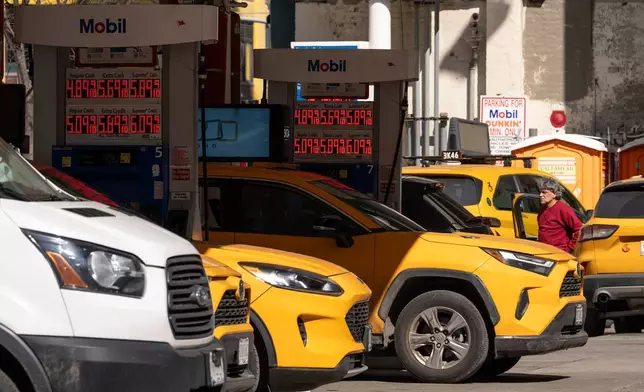
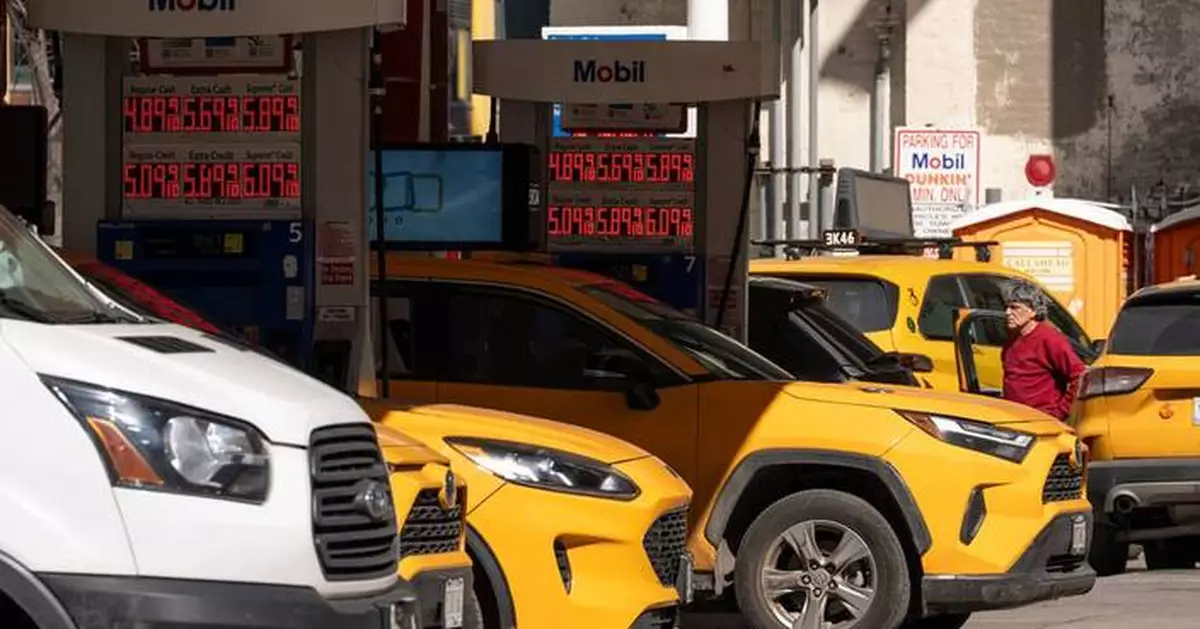
Signs show the gas prices at a gas station, Tuesday, March 10, 2026, in New York. (AP Photo/Yuki Iwamura)
“This is a major action aiming to alleviate the immediate impacts of the disruption in markets,” said Fatih Birol, executive director of the Paris-based IEA. “But, to be clear, the most important thing for a return to stable flows of oil and gas is the resumption of transit through the Strait of Hormuz.”
Iran has attacked commercial ships across the Persian Gulf in response to U.S. and Israeli strikes, escalating a campaign of squeezing the oil-rich region as global energy concerns mount and effectively stopping cargo traffic in the narrow Strait of Hormuz, through which about a fifth of all oil is shipped from the Persian Gulf toward the Indian Ocean. Iran has also targeted oil fields and refineries in Gulf Arab nations, aiming to generate enough global economic pain to pressure the U.S. and Israel to end their strikes.
According to the IEA, export volumes of crude and refined products are currently at less than 10% of prewar levels. Birol noted that the situation in natural gas markets is also very challenging, with Asia the most severely affected region.
“There are few options to replace the missing LNG cargoes from Qatar and the Emirates,” he said. “Global energy supply has been reduced by around 20%."
The IEA's announcement came a day after energy ministers from the Group of Seven — the leading industrialized nations of Canada, the United States, France, Italy, Japan, Germany and Britain — met in Paris to look at ways to bring down prices. It also came just before G7 leaders, including U.S. President Donald Trump, met Wednesday via videoconference.
During his introductory remarks during Wednesday's video call, French President Emmanuel Macron praised the IEA decision to release emergency oil stocks, saying it is “very important” to do everything possible to increase global production and that the 400 million barrels amounted to the equivalent of “20 days of the volume being exported through the Strait of Hormuz.”
The amount pledged by the G7 nations alone comprises 70% of the total, including 14.5 million barrels France will contribute, Macron said, noting that the IEA decision was prepared at the G7 level.
Trump said hours later his administration would tap the U.S. Strategic Petroleum Reserve to try and reduce gasoline prices, telling WKRC Local 12 in Cincinnati, “Well, we’ll do that and then we’ll fill it up.”
Secretary of Energy Chris Wright later confirmed the U.S. would release 172 million barrels of oil from the SPR as part of the IEA's effort. Wright said the release would begin next week and take roughly 120 days for delivery — and that the administration would then work to replace about 200 million barrels in the next year.
Trump frequently criticized his predecessor Joe Biden's administration for tapping the reserve to try and bring down gas prices.
Maksim Sonin, an energy executive who works with Stanford University’s Hydrogen Initiative, said the release would have “a short-term stabilizing effect,” but that it would diminish if the war persists and the Strait of Hormuz remains essentially at a standstill.
“It’s not a silver bullet to solve everything,” Sonin said. “You have to solve the underlying problem.”
Neil Crosby, a vice president of oil analytics at Sparta, which tracks oil trading, said as big as the release is, it amounts to “a little Band-Aid.”
“This scenario was always written off by large parts of the industry: In case we get to the scenario of where there’s a war with Iran, the U.S. Navy will ensure that Hormuz doesn’t stay closed,” Crosby said. “And then we got there, and it’s closed. ... It’s a complete disaster.”
Oil follows snaking journeys that can take weeks to go from drill sites to gas pumps. It must pass through refineries, where it is turned to fuel, before it is shipped off via pipelines and tankers to terminals, and then on to gas stations.
Because of this, no single decision has an immediate impact.
But Kenneth Medlock, senior director of the Center for Energy Studies at Rice University, said the release of reserves will calm markets and prevent wild price swings and could lead to lower prices at the pump in the next week or so. Still, a trade-off is involved by tapping reserves.
“You’re depleting stocks now. That’s always the catch-22,” Medlock said. “You’re selling them today but that means you can’t sell them tomorrow because they’re gone.”
Germany, Austria and Japan said earlier Wednesday that they would release parts of their oil reserves in response to the IEA's request for members to release 400 million barrels.
The IEA reserves were established in 1974 following the Arab oil embargo, and IEA member countries currently hold more than 1.2 billion barrels of public emergency oil stocks, with a further 600 million barrels of industry stocks held under government obligation.
Germany’s economy ministry, Katherina Reiche, said the IEA asked Germany to release 2.64 million tons — roughly 19.7 million barrels — of its oil reserves.
She said it would take a couple of days before the delivery of the first quantities.
“Germany stands behind the IEA’s most important principle of mutual solidarity,” Reiche said.
The German government also said it will introduce a measure to allow gas stations in Germany to raise fuel prices no more than once a day. The federal government wants to introduce this as quickly as possible, Reiche said.
It wasn’t immediately clear how much oil Austria was releasing.
Starting Monday in Austria, price increases at gas stations will be allowed only three times a week, said the country’s economy minister, Wolfgang Hattmannsdorfer. He said Austria was releasing part of its emergency oil reserve and extending the national strategic gas reserve, adding: “One thing is clear: in a crisis, there must be no crisis winners at the expense of commuters and businesses.”
IEA nations have released emergency stocks on five previous occasions: During the 1990-1991 Gulf War, after Hurricane Katrina in 2005, during the Libyan civil war in 2011, and twice after the Russian invasion of Ukraine.
Grieshaber reported from Berlin. Associated Press reporters Matt Sedensky, Cathy Bussewitz and Wyatte Grantham-Philips in New York, and John Leicester and Sylvie Corbet in Paris contributed to this report.

Big oil tanks are pictured in front the BP refinery in Gelsenkirchen, one of the biggest fuel producers in Germany, Wednesday, March 11, 2026. (AP Photo/Martin Meissner)

Big oil tanks are pictured in front of the BP refinery in Gelsenkirchen, one of the biggest fuel producers in Germany, Wednesday, March 11, 2026. (AP Photo/Martin Meissner)

FILE - Fishermen work in front of oil tankers south of the Strait of Hormuz Jan. 19, 2012, offshore the town of Ras Al Khaimah in United Arab Emirates. (AP Photo/Kamran Jebreili, File)
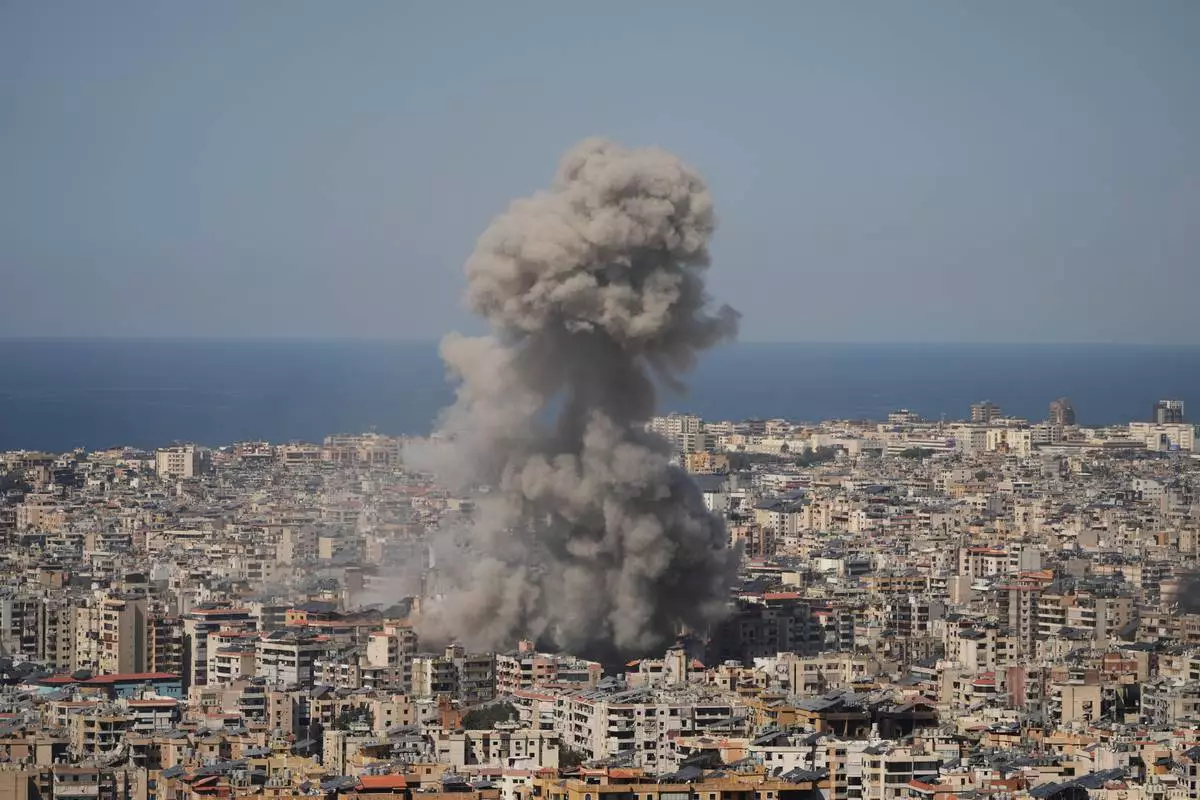
Smoke rises from a building following an Israeli airstrike in Dahiyeh, Beirut's southern suburb, Wednesday, March 11, 2026. (AP Photo/Hassan Ammar)

Signs show the gas prices at a gas station, Tuesday, March 10, 2026, in New York. (AP Photo/Yuki Iwamura)