Skip to Content Facebook Feature Image

A civil rights lawyer will lead the billionaire eBay founder's philanthropy for more inclusive AI

TECH

A civil rights lawyer will lead the billionaire eBay founder's philanthropy for more inclusive AI
TECH

TECH

A civil rights lawyer will lead the billionaire eBay founder's philanthropy for more inclusive AI

2026-03-12 04:43 Last Updated At:11:58

NEW YORK (AP) — There will be a new leader at billionaire eBay founder Pierre Omidyar's philanthropic group that aims to expand access to the digital revolution's economic opportunities.

Omidyar Network President Michele Jawando takes over as CEO next month, according to a Wednesday announcement from the left-leaning organization that blends charitable grantmaking with for-profit impact investments. A civil rights lawyer and former Google executive who managed the company's public policy partnerships, Jawando will helm one of the best-financed technology organizations looking to loosen Silicon Valley's grip on artificial intelligence's development, deployment and regulation.

More Images
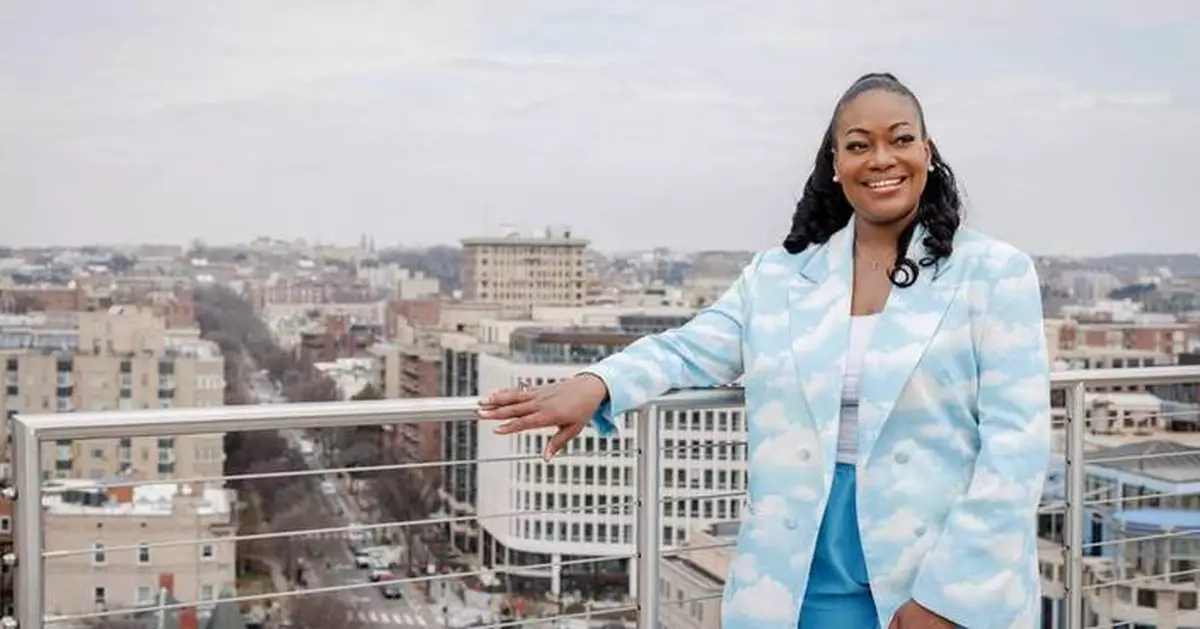
Michele Jawando, the next CEO of the Omidyar Network, poses for a photo at the company's office in Washington, Wednesday, March 11, 2026. (AP Photo/Moriah Ratner)
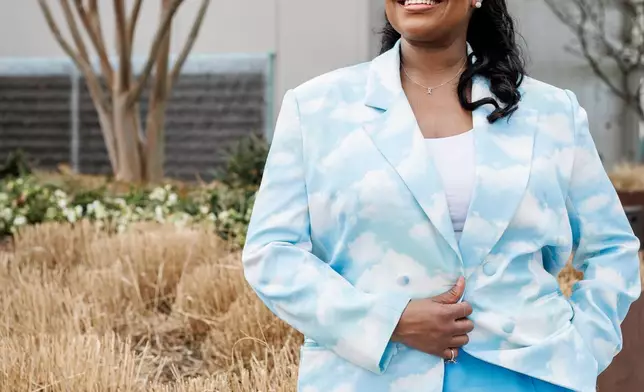
Michele Jawando, the next CEO of the Omidyar Network, poses for a photo at the company's office in Washington, Wednesday, March 11, 2026. (AP Photo/Moriah Ratner)

Michele Jawando, the next CEO of the Omidyar Network, poses for a photo at the company's office in Washington, Wednesday, March 11, 2026. (AP Photo/Moriah Ratner)
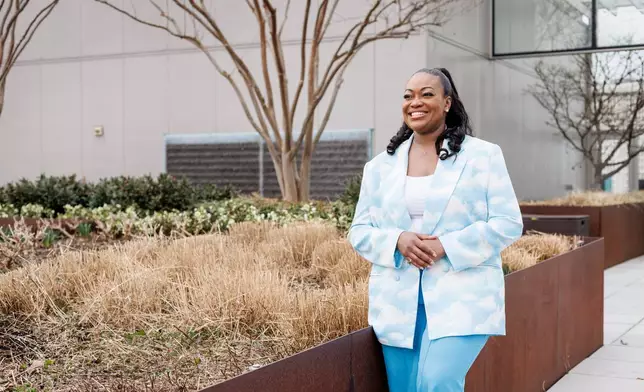
Michele Jawando, the next CEO of the Omidyar Network, poses for a photo at the company's office in Washington, Wednesday, March 11, 2026. (AP Photo/Moriah Ratner)
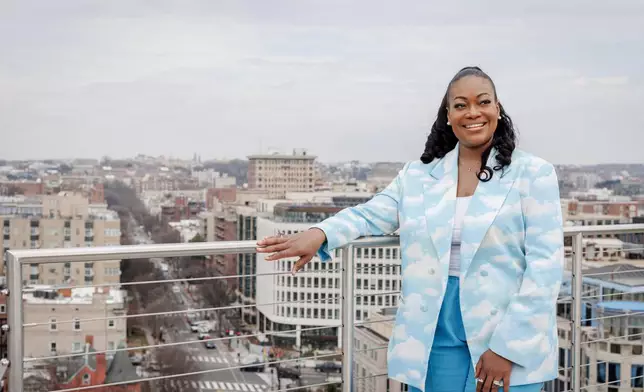
Michele Jawando, the next CEO of the Omidyar Network, poses for a photo at the company's office in Washington, Wednesday, March 11, 2026. (AP Photo/Moriah Ratner)

Michele Jawando, the next CEO of the Omidyar Network, poses for a photo at the company's office in Washington, Wednesday, March 11, 2026. (AP Photo/Moriah Ratner)

Michele Jawando, the next CEO of the Omidyar Network, poses for a photo at the company's office in Washington, Wednesday, March 11, 2026. (AP Photo/Moriah Ratner)

Michele Jawando, the next CEO of the Omidyar Network, poses for a photo at the company's office in Washington, Wednesday, March 11, 2026. (AP Photo/Moriah Ratner)

Michele Jawando, the next CEO of the Omidyar Network, poses for a photo at the company's office in Washington, Wednesday, March 11, 2026. (AP Photo/Moriah Ratner)

Michele Jawando, the next CEO of the Omidyar Network, poses for a photo at the company's office in Washington, Wednesday, March 11, 2026. (AP Photo/Moriah Ratner)

“Our focus will be making sure that there is a much more diverse set of views and people and coalitions and voices shaping the moments, the opportunities and the rules for the AI era,” Jawando said.

“I just want people to feel agency and power in this moment,” she added. “I hate the fact that most people feel like this technology is happening to them.”

Philanthropy often lacks the financial heft and political clout of AI companies that are valuated at hundreds of billions of dollars and have secured favorable policies under U.S. President Donald Trump. This week, the social sector has watched with concern as the Trump administration retaliated against Anthropic over the artificial intelligence company's refusal to allow the government unrestricted military use of its technology.

The Anthropic episode underscores Jawando's insistence that a handful of companies shouldn't determine the guardrails for what she called “really powerful super tools.” Omidyar Network recently refined its focus to fill what leaders saw as gaps in philanthropy's engagement with the rapidly evolving landscape of artificial intelligence, putting together a $30 million generative AI portfolio in recent years.

Acknowledging the “David and Goliath kind of asymmetry" in resources, Jawando said her role is to build bridges across philanthropy that can elevate working people's perspectives.

“The responsible and safe use of AI shouldn’t be just one company’s mantra,” Jawando said. “It’s not that some companies are too responsible and others aren’t. It’s just that we don’t have a public governance framework.”

Outgoing Omidyar Network CEO Mike Kubzansky said philanthropy will always be outspent by big tech companies and acknowledged that the sector isn’t known for strong coordination.

But he highlighted Jawando’s role as co-chair of a philanthropic coalition putting $500 million behind AI that prioritizes the public's interests. Kubzansky said his successor is the one who involved several funders that hadn’t been as active in the AI space, such as the Doris Duke Foundation and the Lumina Foundation.

“She rarely jumps to the oppositional card first,” he said. “She finds new partners for us and she brings people along.”

A self-described bridge builder, Jawando said Omidyar Network will double down on consulting underrepresented communities, influencing state legislatures and supporting research that applies this “marvelous technology” for everyday people's benefit.

That means partnering with advocacy nonprofits such as the Model Alliance, which championed a recently implemented New York State law that requires fashion workers' consent to create digital replicas of their likenesses. The firm aims to empower overlooked populations by supporting leaders such as #BlackTechFutures Research Institute co-founder Fallon Wilson, who is working with HBCUs and African American churches on AI literacy.

Omidyar Network will keep supporting tech regulation advocates despite Trump's executive order curtailing state AI guardrails. As public outcry grows against energy-hungry data centers that are expanding in size and number, Jawando said the network wants to identify models for responsible data centers that consider factors such as carbon neutrality and community engagement. And it funds AI researchers who want to advance health care, for example, not business-to-business services.

“I think we have the people. I think we have the will. I think we have the creativity,” she said. “In a way that, if you only are forced to think about shareholders every three months, you start to lower and really narrow the window of your ambition.”

One nonprofit tech proponent hoped other funders would take inspiration from Omidyar Network’s commitment to AI, reinforced by the announcement of Jawando’s promotion. Fast Forward executive director Shannon Farley, whose accelerator helps nonprofits that apply technological solutions to social problems, said philanthropy stands at an “inflection point” where AI is rapidly accelerating but those most impacted have the fewest protections.

She welcomed Jawando’s collaborative approach. Farley said she hopes the new CEO can galvanize her peers, considering Omidyar Network’s status as one of the earliest “tech for good” investors.

“We’re asking nonprofits to solve 21st-century problems with 20th-century tech,” Farley said. “They can’t do that if funders aren’t understanding AI and backing people with lived experience to solve the problems in front of them.”

The Associated Press receives financial assistance from the Omidyar Network to support coverage of artificial intelligence and its impact on society. AP is solely responsible for all content. Find AP’s standards for working with philanthropies, a list of supporters and funded coverage areas at AP.org.

——-

Associated Press coverage of philanthropy and nonprofits receives support through the AP’s collaboration with The Conversation US, with funding from Lilly Endowment Inc. For all of AP’s philanthropy coverage, visit https://apnews.com/hub/philanthropy.
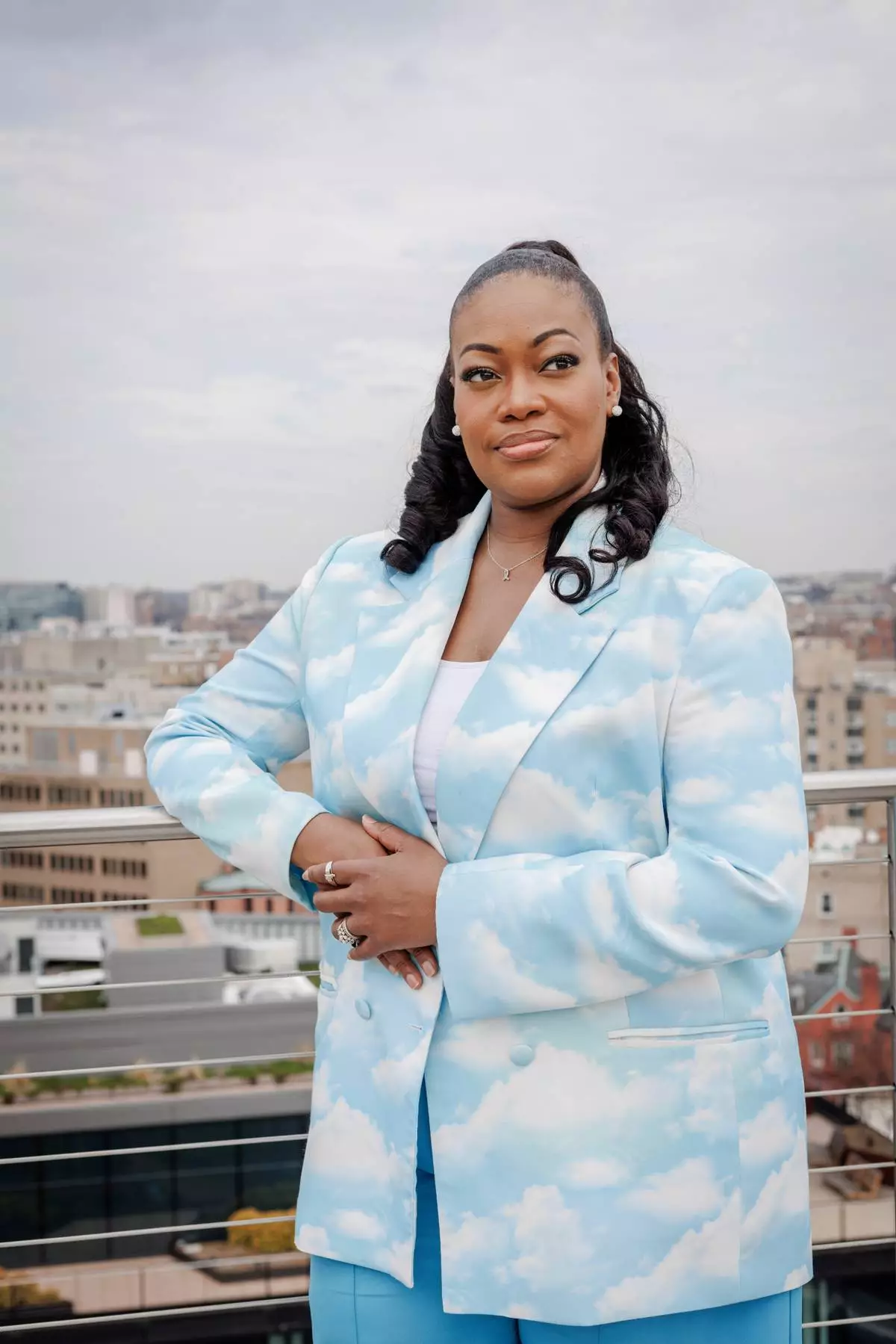
Michele Jawando, the next CEO of the Omidyar Network, poses for a photo at the company's office in Washington, Wednesday, March 11, 2026. (AP Photo/Moriah Ratner)
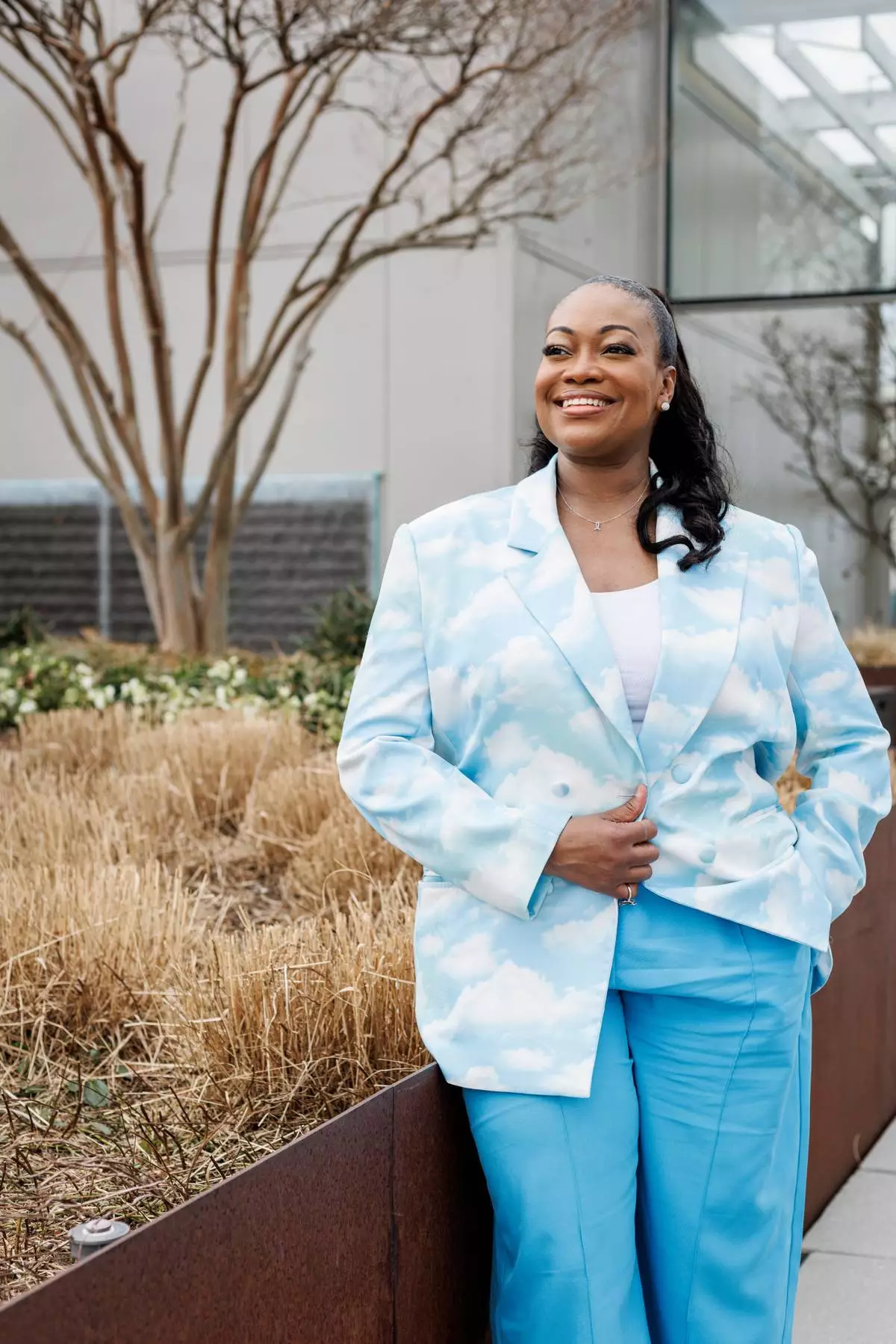
Michele Jawando, the next CEO of the Omidyar Network, poses for a photo at the company's office in Washington, Wednesday, March 11, 2026. (AP Photo/Moriah Ratner)
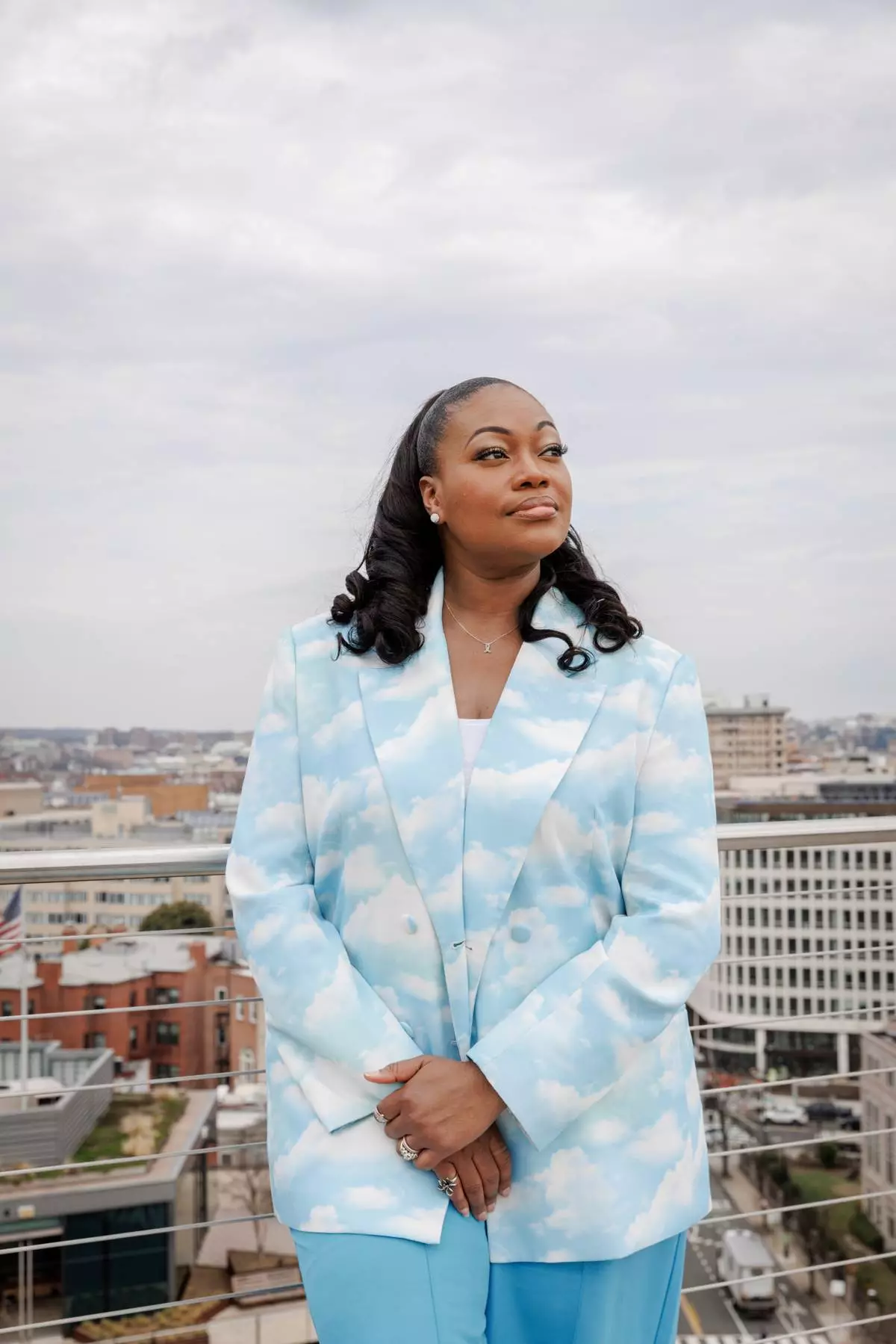
Michele Jawando, the next CEO of the Omidyar Network, poses for a photo at the company's office in Washington, Wednesday, March 11, 2026. (AP Photo/Moriah Ratner)
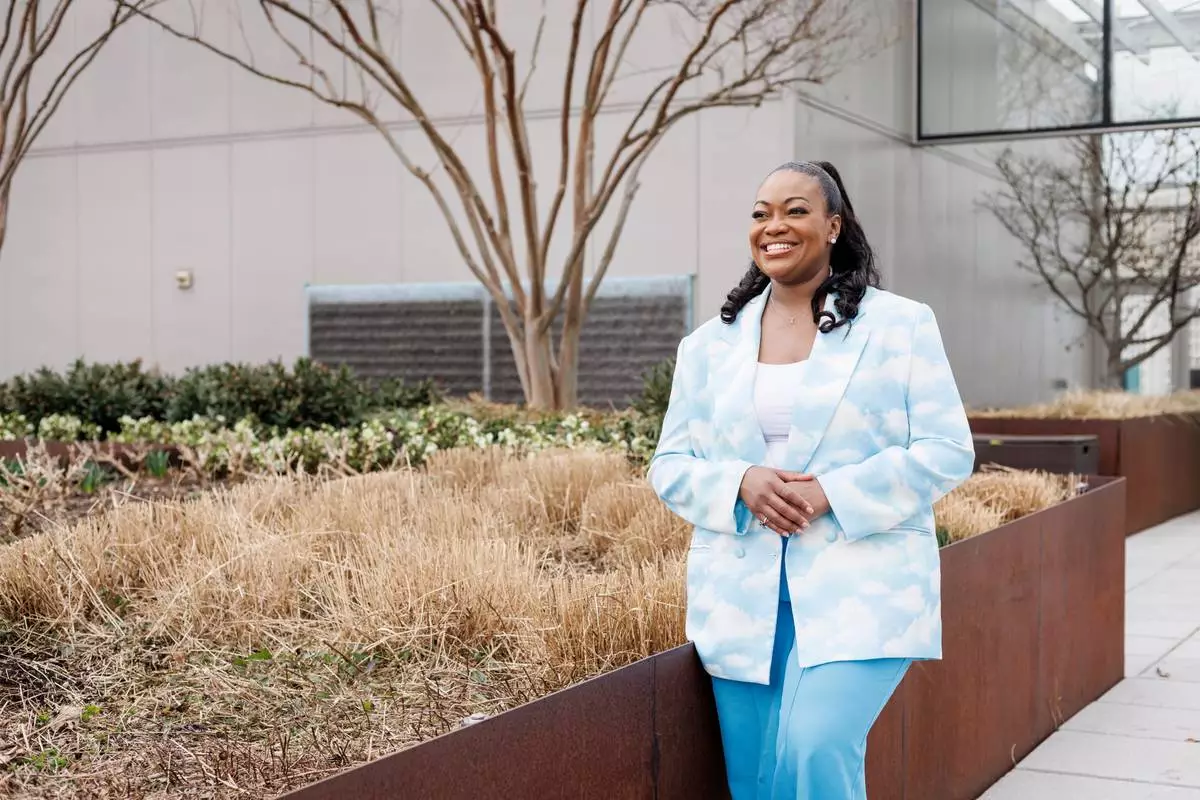
Michele Jawando, the next CEO of the Omidyar Network, poses for a photo at the company's office in Washington, Wednesday, March 11, 2026. (AP Photo/Moriah Ratner)
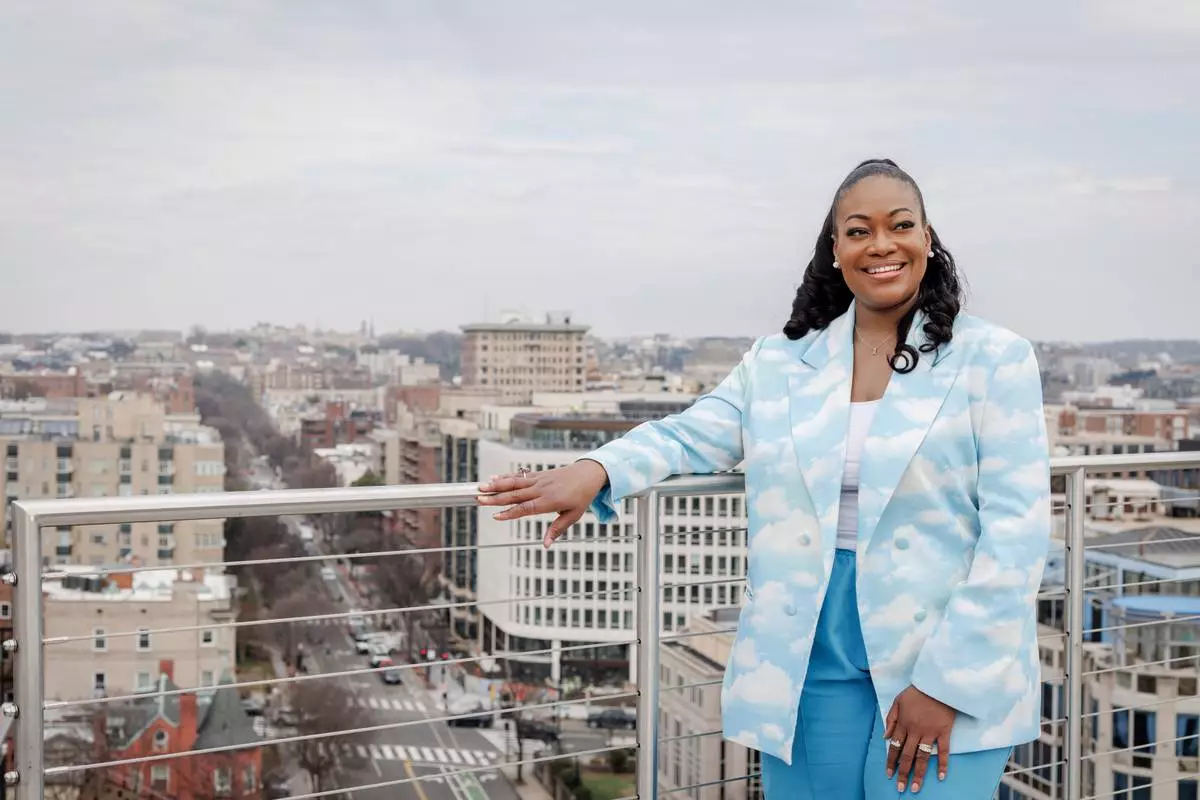
Michele Jawando, the next CEO of the Omidyar Network, poses for a photo at the company's office in Washington, Wednesday, March 11, 2026. (AP Photo/Moriah Ratner)


Michele Jawando, the next CEO of the Omidyar Network, poses for a photo at the company's office in Washington, Wednesday, March 11, 2026. (AP Photo/Moriah Ratner)

Michele Jawando, the next CEO of the Omidyar Network, poses for a photo at the company's office in Washington, Wednesday, March 11, 2026. (AP Photo/Moriah Ratner)

Michele Jawando, the next CEO of the Omidyar Network, poses for a photo at the company's office in Washington, Wednesday, March 11, 2026. (AP Photo/Moriah Ratner)

Michele Jawando, the next CEO of the Omidyar Network, poses for a photo at the company's office in Washington, Wednesday, March 11, 2026. (AP Photo/Moriah Ratner)
Michele Jawando, the next CEO of the Omidyar Network, poses for a photo at the company's office in Washington, Wednesday, March 11, 2026. (AP Photo/Moriah Ratner)

NEWARK, N.J. (AP) — Sky-high ticket prices won’t be the only thing emptying the wallets of soccer fans attending World Cup matches at some U.S. venues this spring.

Fans trying to get to MetLife Stadium from New York City can expect to shell out $150 for a round-trip train fare for each match, transportation officials confirmed Friday.

That’s nearly 12 times the regular $12.90 fare for the roughly 15-minute, 9-mile (14-kilometer) ride from Manhattan’s Penn Station to the stadium in East Rutherford, New Jersey. On-site parking won’t be available for most fans, so New Jersey officials anticipate that around 40,000 fans will use mass transit for each match.

The home stadium for both the NFL’s New York Giants and New York Jets is set to host eight World Cup matches, including the tournament final on July 19. Group stage matches for soccer powerhouses Brazil, France, Germany and England, along with other nations, begin June 13.

New Jersey officials said the upcharge was necessary to cover the cost of hosting the World Cup on its return to the U.S. for the first time since 1994.

NJ Transit officials said they planned to spend $62 million transporting fans to and from the stadium over the duration of the tournament. Outside grants had defrayed only $14 million of those anticipated expenses. A fare increase was needed to cover the rest, according to NJ Transit President and CEO Kris Kolluri.

“This isn’t price gouging,” he told reporters Friday. “We’re literally trying to recoup our costs.”

Gov. Mikie Sherrill, a Democrat, called on FIFA, international soccer’s governing body, to cover the transportation costs.

“If it won’t, we will not be subsidizing World Cup ticket holders on the backs of New Jerseyans who rely on NJ TRANSIT every day,” she said in a statement.

But FIFA has bristled at the suggestion that it should shoulder New Jersey's transit costs. On Friday, it pointed to other U.S. host cities, including Los Angeles, Dallas and Houston, that are keeping their transit rates unchanged.

One notable exception is Boston, where express buses from various locations to Gillette Stadium, home of the NFL’s New England Patriots, will cost $95, officials announced this week.

Thousands of fans have also already snapped up $80 round-trip train tickets from the Massachusetts capital to the commuter rail station near the stadium, which is located in Foxborough, a town some 30 miles (48 kilometers) from Boston. That’s four times the $20 riders are normally charged for a round-trip ticket during game days and other special events at Gillette.

Meanwhile in Los Angeles, one-way fares will remain $1.75; in Atlanta, they’re locked at $2.50; in Houston, a single ride will still cost $1.25 and in Philadelphia the base fare for the subway will remain $2.90. Kansas City is running shuttles from locations around the city to Arrowhead Stadium that cost just $15 round trip.

Some of those cities have noted that the U.S. government has provided some $100 million in transit grants to provide enhanced bus and rail service during the games.

The soccer federation on Friday warned that New Jersey's transit pricing could have a “chilling effect."

It argued that no other global event has been asked to absorb the costs of “arbitrarily set” transit prices and noted that the agreements signed with World Cup host cities back in 2018 called for free transportation for fans to all matches.

“Elevated fares inevitably push fans toward alternative transportation options,” FIFA said in a statement. “This increases concerns of congestion, late arrivals, and creates broader ripple effects that ultimately diminish the economic benefit and lasting legacy the entire region stands to gain from hosting the World Cup.”

The huge fare increase has also drawn protest from New York Gov. Kathy Hochul.

“Charging over $100 for a short train ride sounds awfully high to me,” the Democrat posted on X earlier this week. The surge pricing was first reported by sports outlet The Athletic.

Alternatives to taking the train to MetLife Stadium will also be pricey.

Shuttle buses with a capacity for about 10,000 riders will set off from the midtown Manhattan bus terminal and other locations for $80 roundtrip.

Some 5,000 parking spots at the nearby American Dream Mall are also being sold in advance, currently priced at $225.

MetLife Stadium has a huge parking lot, but for World Cup matches much of that space is being used for a fan village, shuttle buses, a staging area and FIFA staff, officials said.

When the stadium hosted the NFL's Super Bowl under similar conditions in 2014, New Jersey Transit struggled to accommodate an estimated 33,000 passengers leaving the game. Platforms at a train transfer station became jammed with passengers unable to get space on trains. Some waited for hours to get on board.

AP Sports Writer Mark Long in Gainesville, Florida, contributed to this report.

Follow Philip Marcelo at https://x.com/philmarcelo

FILE - An NJ Transit train leaves the Secaucus Junction station in Secaucus, N.J., Wednesday, May 14, 2025. (AP Photo/Seth Wenig, File)

FILE - An NJ Transit train leaves the Secaucus Junction station in Secaucus, N.J., Wednesday, May 14, 2025. (AP Photo/Seth Wenig, File)

FILE - PSG fans cheer before the start of the Club World Cup final soccer match between Chelsea and PSG in East Rutherford, N.J., Sunday, July 13, 2025. (AP Photo/Adam Hunger, File)

FILE - PSG fans cheer before the start of the Club World Cup final soccer match between Chelsea and PSG in East Rutherford, N.J., Sunday, July 13, 2025. (AP Photo/Adam Hunger, File)

FILE - Fans play with a ball outside the Metlife Stadium prior to the Club World Cup final soccer match between Chelsea and PSG in East Rutherford, N.J., Sunday, July 13, 2025. (AP Photo/Pamela Smith, File)

FILE - Fans play with a ball outside the Metlife Stadium prior to the Club World Cup final soccer match between Chelsea and PSG in East Rutherford, N.J., Sunday, July 13, 2025. (AP Photo/Pamela Smith, File)

Recommended Articles