WASHINGTON (AP) — The State Department will permanently close the U.S. consulate in Peshawar, Pakistan, which has been America’s closest diplomatic mission to the Afghan border and was a primary operations and logistics point before, during and after the 2001 invasion of Afghanistan.
The department notified Congress this week of its intent to close the consulate and said it would save $7.5 million per year, while not adversely affecting its ability to advance U.S. national interests in Pakistan, according to a copy of the notification obtained by The Associated Press on Wednesday.
Click to Gallery
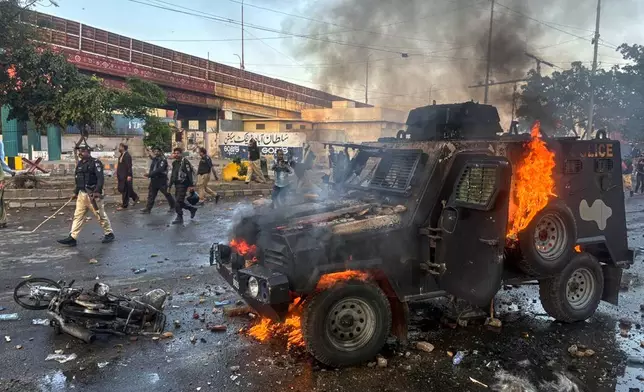
Paramilitary soldiers and police officers walk past a burning police's armoured vehicle, which was set on fire by Shiite Muslims during a protest over the killing of Iranian Supreme Leader Ayatollah Ali Khamenei, in Karachi, Pakistan, Sunday, March 1, 2026. (AP Photo/Muhammad Farooq)
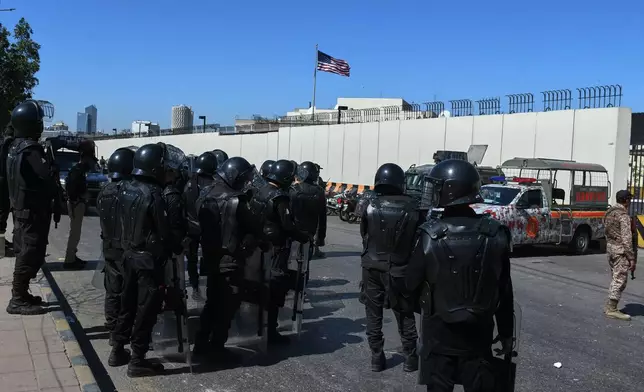
Pakistani security officers stand guard to ensure security outside the U.S. Consulate in Karachi, Pakistan, Wednesday, March 4, 2026. (AP Photo/Ali Raza)
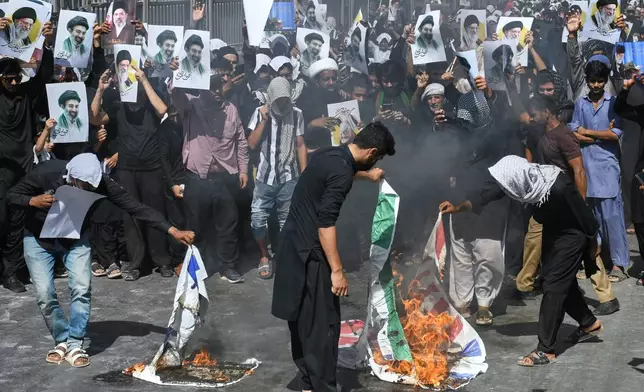
Shiite Muslims burn representation of U.S. Indian and Israeli flags during a procession, in Karachi, Pakistan, Wednesday, March 11, 2026. (AP Photo/Ali Raza)
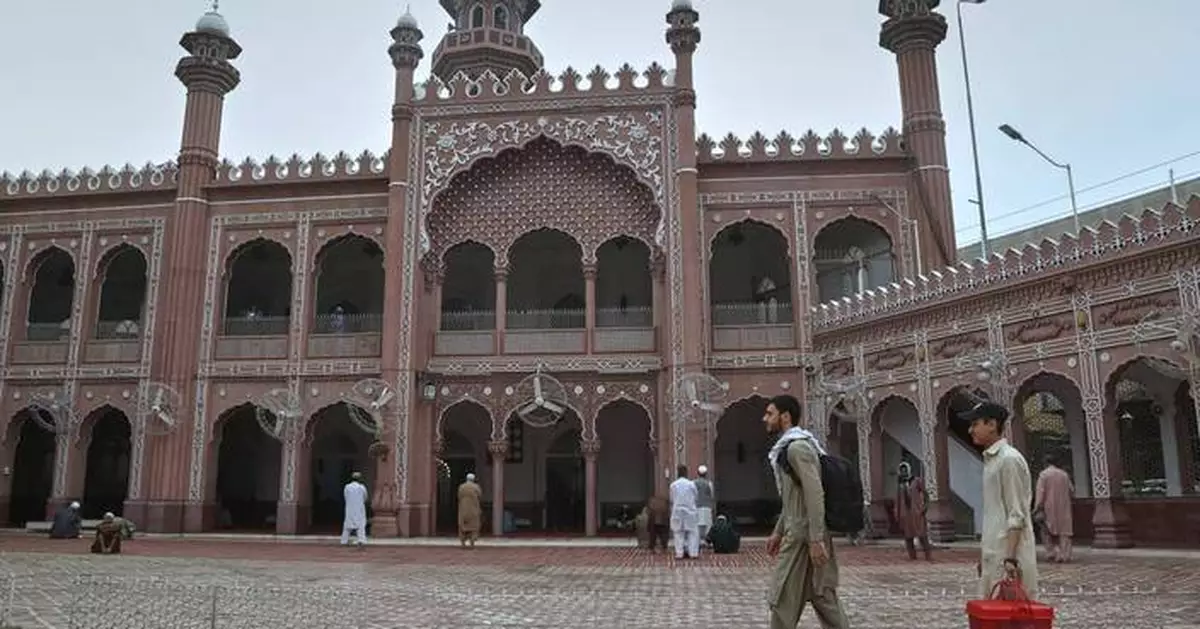
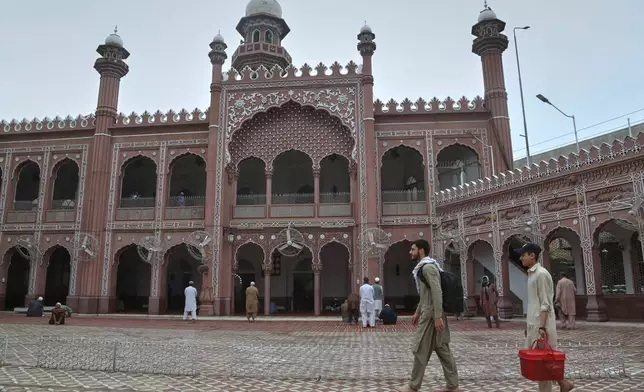
Muslim worshippers arrive to observes "Itikaf," during the last ten days of the Islamic fasting on month of Ramadan, at a mosque, in Peshawar, Pakistan, Tuesday, March 10, 2026. (AP Photo/Muhammad Sajjad)
The move has been under consideration for more than a year since the Trump administration began downsizing nearly all federal agencies and is not related to the Iran war, which has sparked protests in various Pakistani cities, including Karachi and Peshawar, where the U.S. consulates temporarily suspended operations.
The administration's cuts to the State Department last year included the dismissal of several thousand diplomatic personnel and the near wholesale firing of staffers with the U.S. Agency for International Development, which it entirely dismantled. The Peshawar consulate, however, is the first overseas diplomatic mission to be closed down entirely because of the State Department's reorganization.
The Peshawar consulate employs 18 American diplomats and other government personnel and 89 local staff, according to the notice, which is dated Tuesday and said the department would spend $3 million to close it down. More than half of that amount, $1.8 million, would pay for the relocation of armored trailers that had served as temporary office space, it said.
The rest will go toward moving the consulate's motor pool fleet, electronic and telecommunications equipment and office furniture to the U.S. Embassy in Islamabad and the remaining consulates in Karachi and Lahore, the notice said.
Because of its proximity to the Afghan border and Kabul, the Peshawar consulate had been a key jumping-off facility for overland travel into Afghanistan as well as a point of contact for American citizens in northwestern Pakistan and Afghan nationals seeking U.S. assistance.
The notification said consular services for American citizens and others would be handled by the embassy in Islamabad, which is about 114 miles (184 kilometers) away.
“The closure would not adversely affect the mission’s ability to advance core U.S. national interests, assist U.S. citizens, or to conduct adequate oversight of foreign assistance programs because all of those functions would continue to be performed by U.S. Embassy Islamabad," it said.
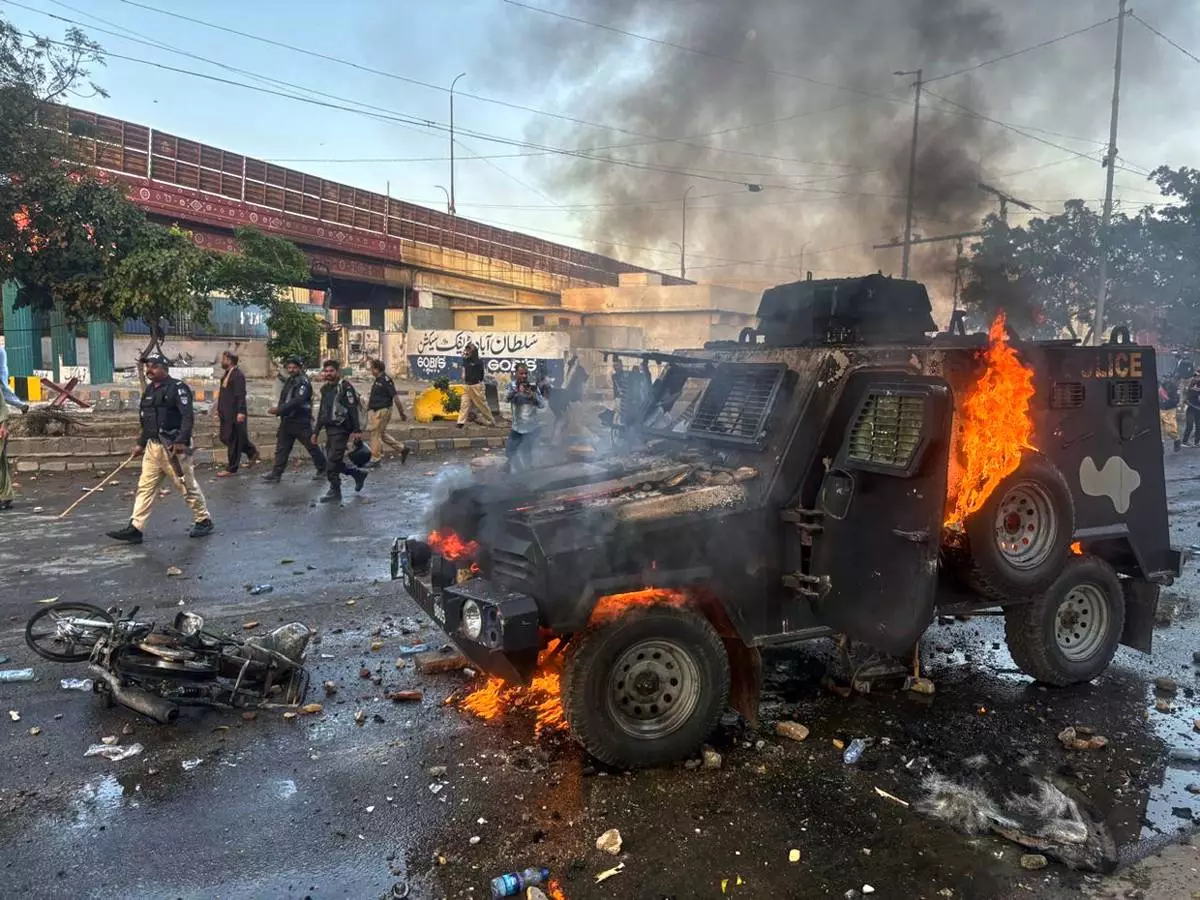
Paramilitary soldiers and police officers walk past a burning police's armoured vehicle, which was set on fire by Shiite Muslims during a protest over the killing of Iranian Supreme Leader Ayatollah Ali Khamenei, in Karachi, Pakistan, Sunday, March 1, 2026. (AP Photo/Muhammad Farooq)
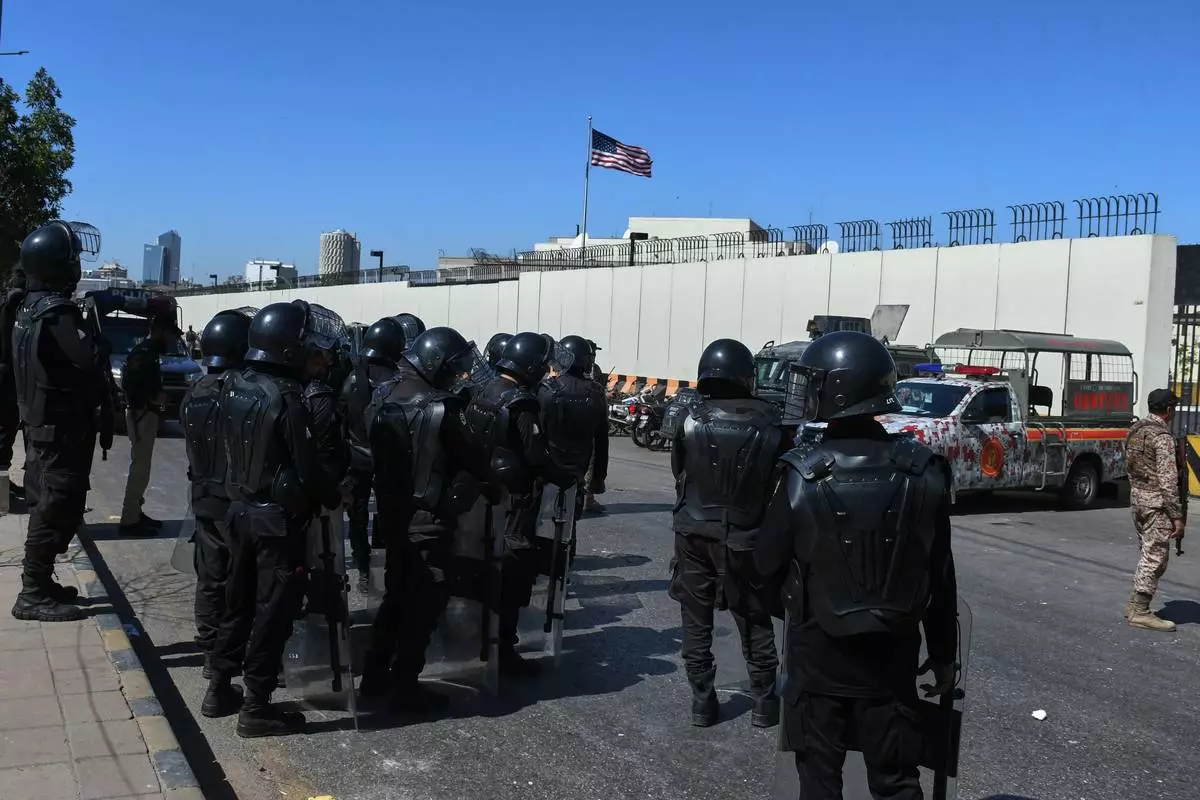
Pakistani security officers stand guard to ensure security outside the U.S. Consulate in Karachi, Pakistan, Wednesday, March 4, 2026. (AP Photo/Ali Raza)
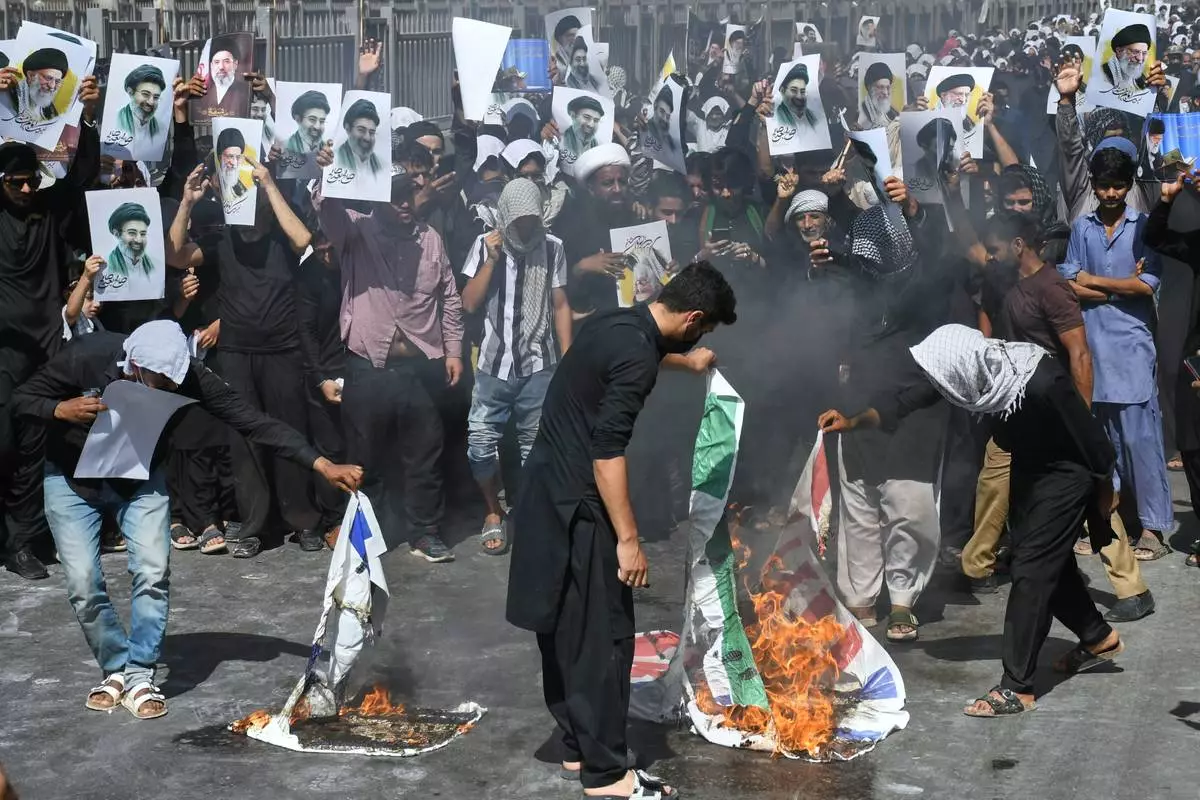
Shiite Muslims burn representation of U.S. Indian and Israeli flags during a procession, in Karachi, Pakistan, Wednesday, March 11, 2026. (AP Photo/Ali Raza)
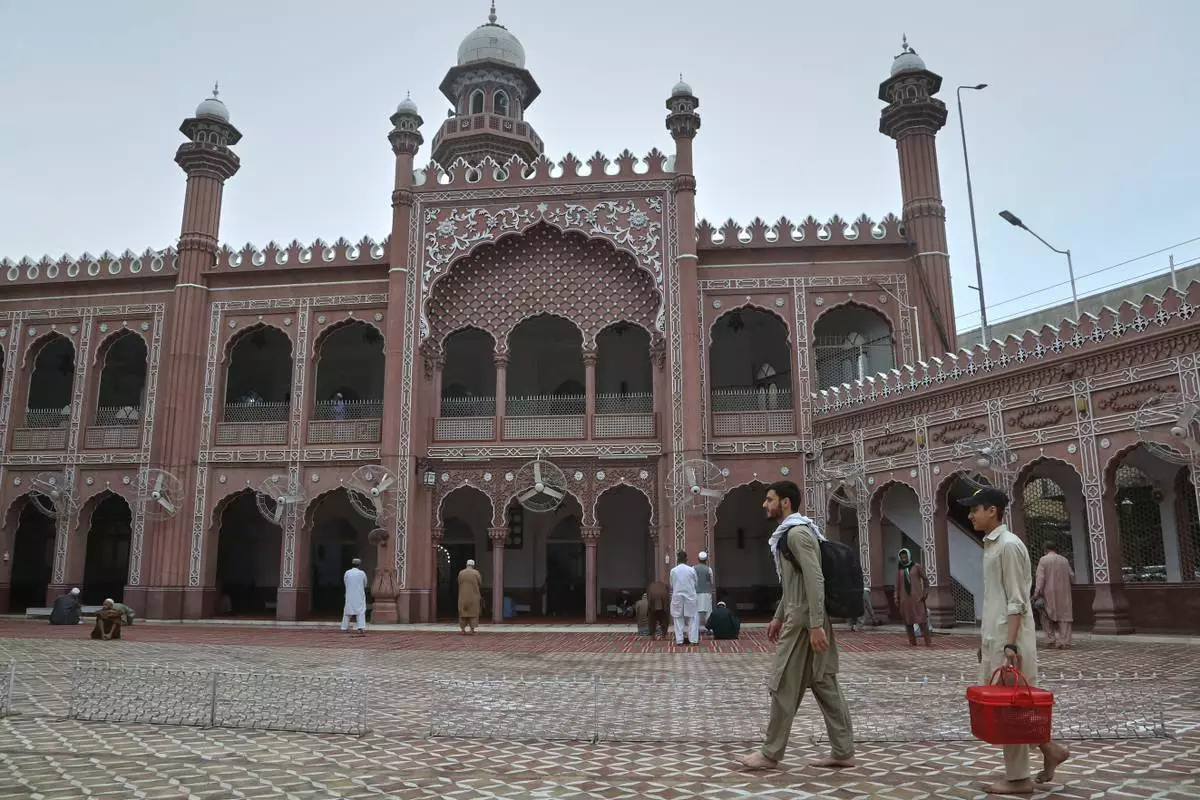
Muslim worshippers arrive to observes "Itikaf," during the last ten days of the Islamic fasting on month of Ramadan, at a mosque, in Peshawar, Pakistan, Tuesday, March 10, 2026. (AP Photo/Muhammad Sajjad)
HUNTSVILLE, Texas (AP) — A North Texas man who claimed he wasn’t the shooter in a fatal robbery that killed two people nearly 18 years ago and who said prosecutors misused rap lyrics he wrote to secure his death sentence was executed Thursday evening.
James Broadnax was pronounced dead after receiving a lethal injection at the state penitentiary in Huntsville, about 70 miles (113 kilometers) north of Houston.
Earlier Thursday, the U.S. Supreme Court denied a request by Broadnax’s attorneys to stop his execution.
He was condemned for the 2008 shooting deaths of two men outside a suburban Dallas music studio. Prosecutors say Broadnax and his cousin, Demarius Cummings, fatally shot and robbed Stephen Swan and Matthew Butler in the parking lot of Butler’s recording studio in Garland. Cummings was sentenced to life without parole.
Broadnax was defiant in a final statement in which he also sought forgiveness from the victims' relatives. Seven relatives, including parents of each of the victims, were present.
“I prayed to God for your forgiveness," he said, when asked by the warden if he had a final statement. “Despite what you think about me, I hope to God that prayer was answered. But no matter what you think about me, Texas got it wrong. I’m innocent, the facts of my case should speak for itself. Period," he said.
The execution also was punctuated by screams of “I love you” from his wife, who also was among witnesses to the punishment. She was emotional at times during the procedure, leaning up to the death chamber window with arms spread, and had to be helped out of the prison.
As the lethal dose of the sedative pentobarbital began, Broadnax urged his supporters to keep fighting. “Don’t give up,” he said, and was stopped in another mid-sentence by a gasp. He shook his head briefly and all movement stopped. He was pronounced dead 21 minutes later, at 6:47 p.m. CDT.
Prosecutors said Broadnax, 37, confessed to the shooting, telling reporters during jailhouse interviews that “I pulled the trigger” and that he had no remorse.
His lawyers had focused his final appeals on two issues: Cummings had recently confessed to being the shooter; and Broadnax’s constitutional rights were violated because prosecutors eliminated potential jurors during his trial on the basis of race.
“I’m really gonna tell it like it’s supposed to be told, that it was me, that I was the killer. I shot Matthew Bullard, Steve Swan,” Cummings said recently from prison in a video created as part of the efforts to stop Broadnax’s execution.
His attorneys also alleged prosecutors dismissed all seven potential Black jurors on the basis of their race, “utilizing a spreadsheet during jury selection that bolded only the names of every Black juror,” according to court documents. One Black juror was later reinstated to the jury. Broadnax was Black.
In a 1986 ruling known as Batson v. Kentucky, the U.S. Supreme Court determined that excluding jurors because of their race violated the Equal Protection Clause of the 14th Amendment.
Broadnax’s attorneys had argued in an earlier appeal that prosecutors had violated his constitutional rights by using some of the rap lyrics he wrote to portray him as a violent and dangerous person in order to secure a death sentence. A number of A-list rappers, including Travis Scott,T.I. and Killer Mike, had filed briefs at the Supreme Court in support of Broadnax’s appeal.
Theresa Butler, Matthew Butler’s mother, had asked that the execution proceed.
“This so called confession from cummings is just a stall tactic by Broadnax’s desperate defense team. Its all a lie,” Butler wrote in a post on social media.
Broadnax was the third person put to death this year in Texas and the 10th in the country. Texas has historically held more executions than any other state.
About an hour before Broadnax’s execution on Thursday, Florida put to death James Ernest Hitchcock, 70, for beating and choking his 13-year-old step-niece to death.
Lozano reported from Houston. Follow Juan A. Lozano: https://x.com/juanlozano70
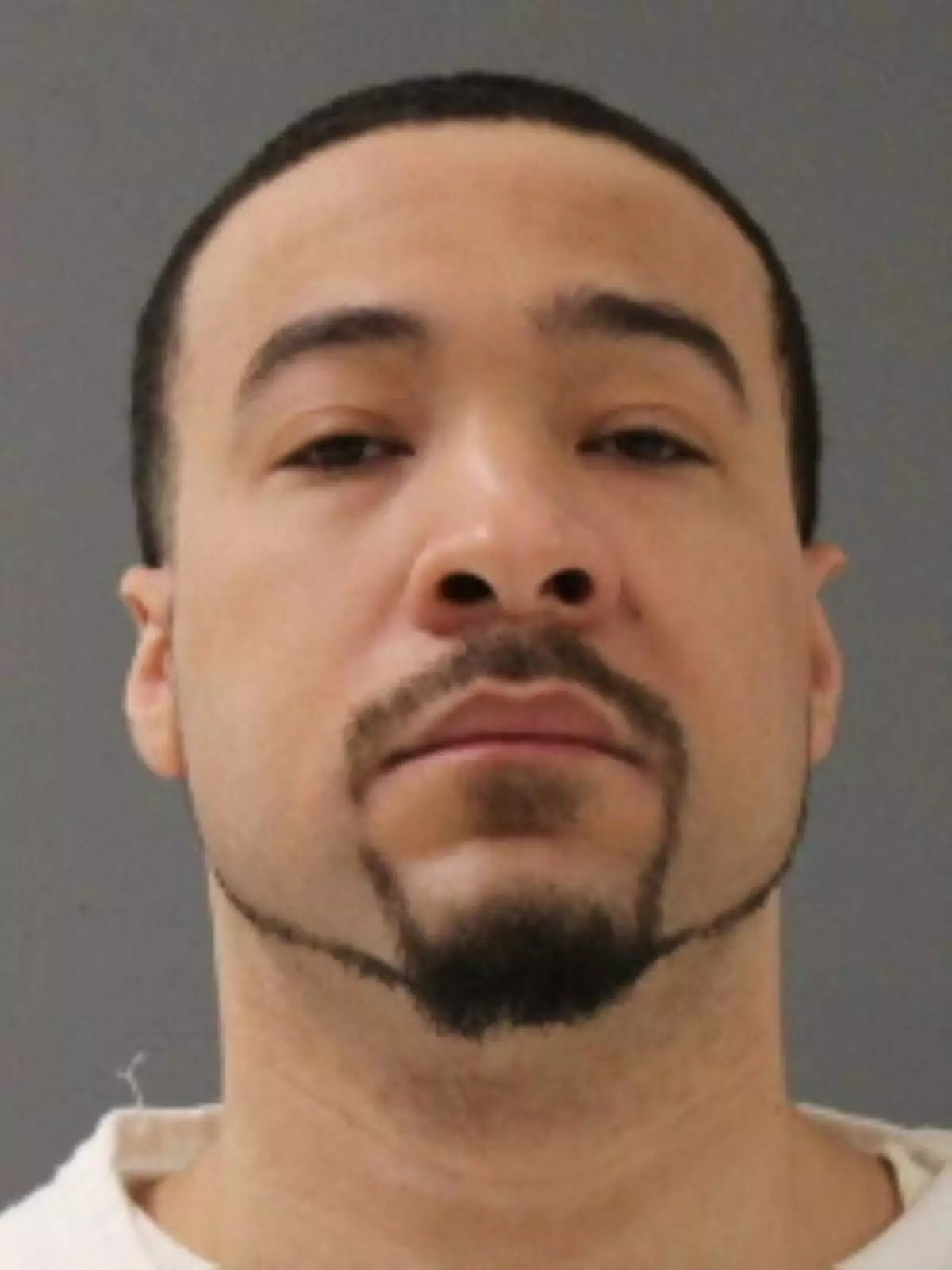
This undated photo provided by the Texas Department of Criminal Justice on Wednesday, April 29, 2026, shows Texas death row inmate James Broadnax. (Texas Department of Criminal Justice via AP)
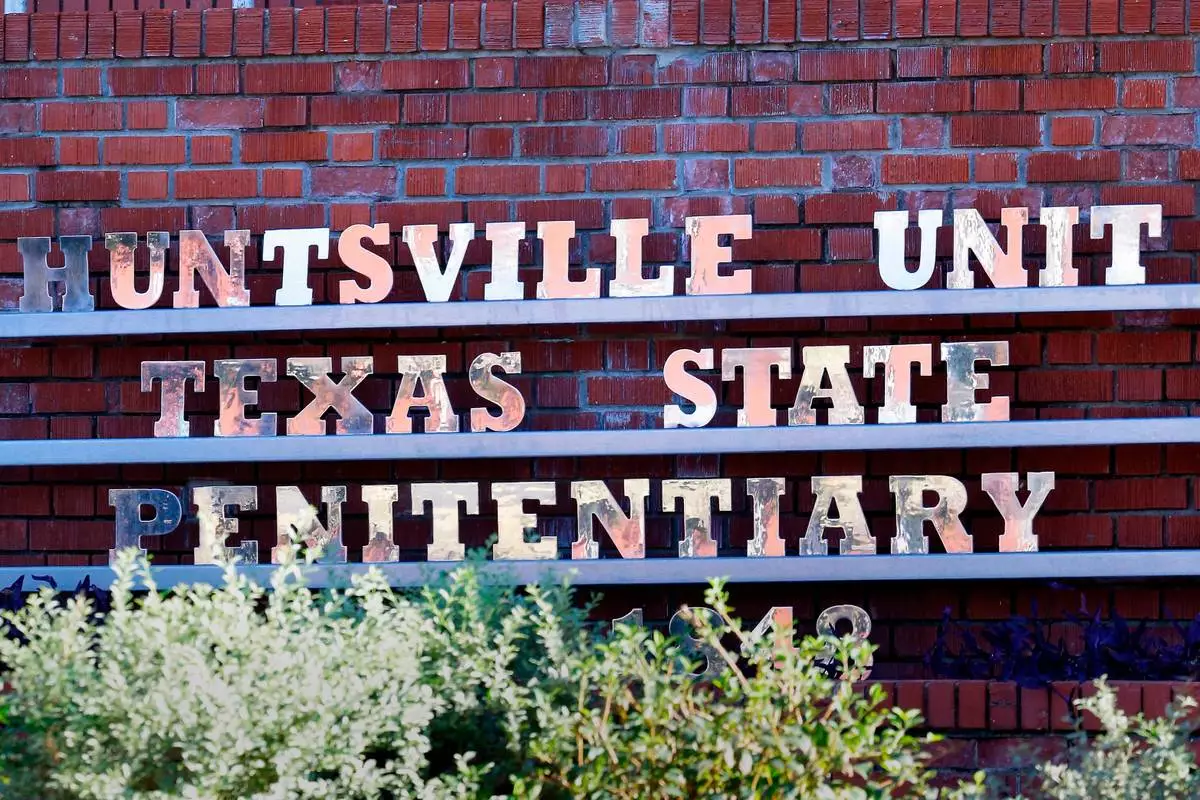
FILE - The main entrance of the building housing the execution chamber at the Huntsville Unit of the Texas State Penitentiary is seen, Oct. 17, 2024, in Huntsville, Texas. (AP Photo/Michael Wyke, File)