Skip to Content Facebook Feature Image

Outdated intel likely led US to carry out deadly strike on Iranian elementary school, AP sources say

News

Outdated intel likely led US to carry out deadly strike on Iranian elementary school, AP sources say
News

News

Outdated intel likely led US to carry out deadly strike on Iranian elementary school, AP sources say

2026-03-12 10:43 Last Updated At:10:50

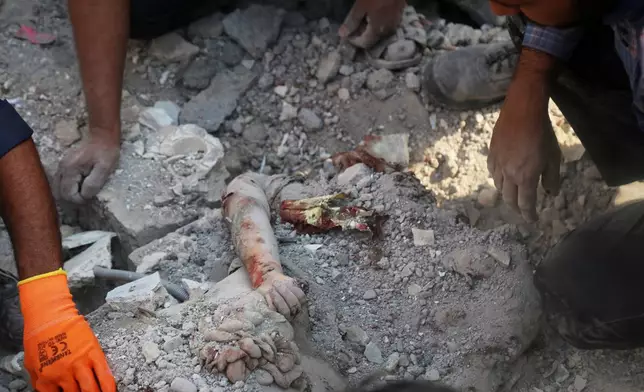
WASHINGTON (AP) — Outdated intelligence likely led to the United States carrying out a deadly missile strike on an elementary school in Iran that killed over 165 people, many of them children, in the opening hours of the conflict, according to a U.S. official and a second person briefed on findings of a preliminary U.S military investigation into the incident.

The bombing of the school and its casualties involving children has become a focal point of the war, and if ultimately confirmed to be at the hands of the U.S., would also stand among the highest civilian casualty events caused by the American military operations in the last two decades.

More Images
The arm of a deceased person is seen protruding from the rubble as rescue workers and residents search in the aftermath a strike on a girls' elementary school in Minab, Iran, Saturday, Feb. 28, 2026. (Abbas Zakeri/Mehr News Agency via AP)
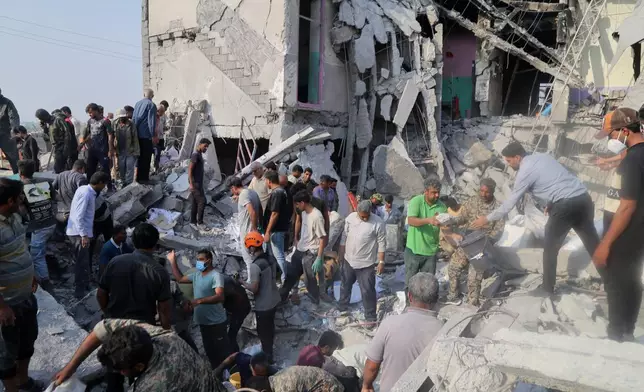
The arm of a deceased person is seen protruding from the rubble as rescue workers and residents search in the aftermath a strike on a girls' elementary school in Minab, Iran, Saturday, Feb. 28, 2026. (Abbas Zakeri/Mehr News Agency via AP)
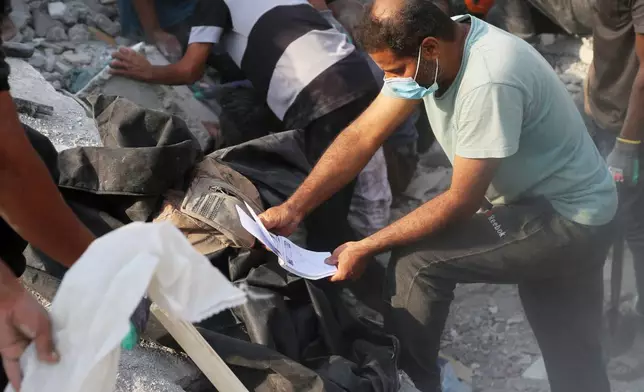
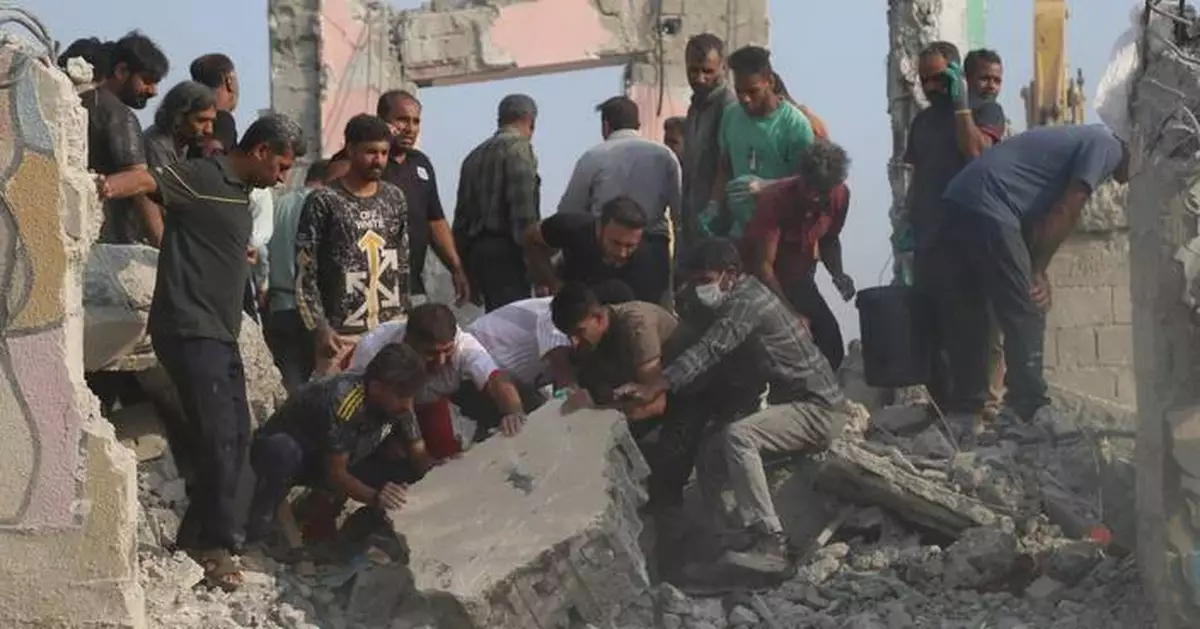
Rescue workers and residents search through the rubble in the aftermath of a strike on a girls' elementary school in Minab, Iran, Saturday, Feb. 28, 2026. (Abbas Zakeri/Mehr News Agency via AP)
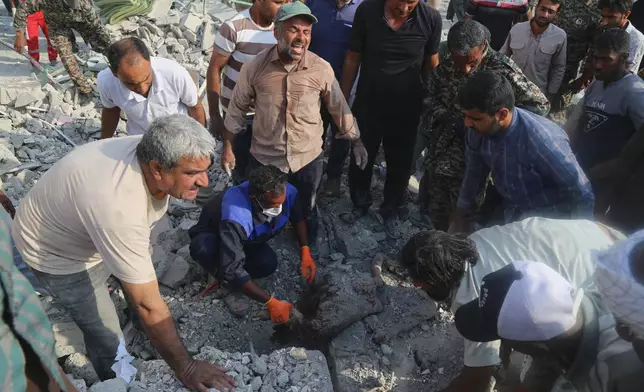
Rescue workers and residents search through the rubble in the aftermath of a strike on a girls' elementary school in Minab, Iran, Saturday, Feb. 28, 2026. (Abbas Zakeri/Mehr News Agency via AP)
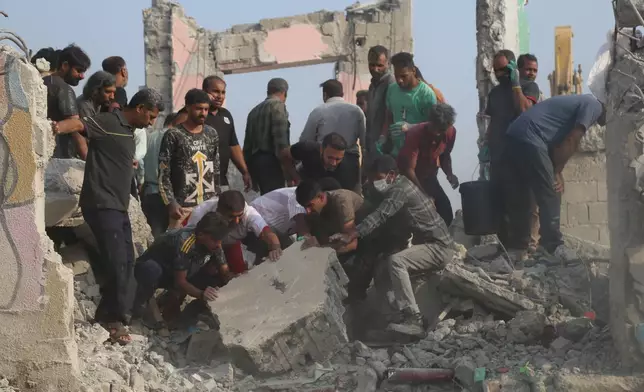
Rescue workers and residents search through the rubble in the aftermath of a strike on a girls' elementary school in Minab, Iran, Saturday, Feb. 28, 2026. (Abbas Zakeri/Mehr News Agency via AP)

Rescue workers and residents search through the rubble in the aftermath of a strike on a girls' elementary school in Minab, Iran, Saturday, Feb. 28, 2026. (Abbas Zakeri/Mehr News Agency via AP)

Rescue workers and residents search through the rubble in the aftermath of a strike on a girls' elementary school in Minab, Iran, Saturday, Feb. 28, 2026. (Abbas Zakeri/Mehr News Agency via AP)

Rescue workers and residents search through the rubble in the aftermath of a strike on a girls' elementary school in Minab, Iran, Saturday, Feb. 28, 2026. (Abbas Zakeri/Mehr News Agency via AP)

Rescue workers and residents search through the rubble in the aftermath of a strike on a girls' elementary school in Minab, Iran, Saturday, Feb. 28, 2026. (Abbas Zakeri/Mehr News Agency via AP)

Rescue workers and residents search through the rubble in the aftermath of a strike on a girls' elementary school in Minab, Iran, Saturday, Feb. 28, 2026. (Abbas Zakeri/Mehr News Agency via AP)

President Donald Trump initially blamed Iran for the attack, later said he wasn’t certain who was to blame, and then said he would accept the results of the Pentagon’s investigation. The issue took on added urgency on Wednesday after the New York Times first reported that a preliminary investigation found that the U.S. was responsible.

U.S. Central Command relied on target coordinates for the strike using outdated data provided by the Defense Intelligence Agency, according to the person familiar with the preliminary finding.

The agency did not respond to a request for comment.

The preliminary finding prompted immediate calls for more information from the Pentagon. White House press secretary Karoline Leavitt said that “the investigation is still ongoing.”

Both the U.S. official and the person familiar with the matter spoke to The Associated Press on the condition of anonymity to discuss the sensitive matter.

Dozens of Democratic senators demanded answers from the Trump administration on Wednesday as a growing body of evidence suggested that the U.S. was likely responsible for the strike.

The letter from more than 45 senators pressed Defense Secretary Pete Hegseth on whether the U.S. was culpable for the strike and what previous analysis of the building had been done. The senators also raised concerns about the Pentagon hollowing-out a congressionally mandated office set up specifically to reduce civilian casualties.

“Under this administration, budgetary and personnel cuts at the Department have robbed military commands of crucial resources to prevent and respond to civilian casualties,” the senators wrote. Those include cuts at U.S. Central Command, whose forces are leading the military campaign against Iran, and the Civilian Protection Center of Excellence, which was signed into law in 2022 as part of a Pentagon ambition to reduce death tolls from strikes.

The revelation could threaten to erode public support in the U.S. effort against Iran at a time when Trump, who as a candidate railed against American involvement in “stupid” overseas wars, faces persistent questions about the purpose and of the conflict and what would bring it to an end.

One former Pentagon official said the Feb. 28 strike that hit Shajareh Tayyebeh Elementary School, which is located near a neighboring base for the Iranian Revolutionary Guard, came as a natural result of changes made by the Trump administration to reduce staff to mitigate civilian harm and Hegseth’s emphasis on lethality over legality.

There are several indications that the strike on the school may have been avoidable.

It happened Saturday morning, the start of the Iranian school week, when the building was full of young children. Satellite analysis by the AP shows that the school, as well as other targets struck the same day, had characteristics visible from the air that could have identified them as civilian sites before they were struck.

The AP reported last week that satellite images, expert analysis, a U.S. official and public information released by the U.S. military all suggested it was likely a U.S. strike. That evidence grew stronger on Monday, as new footage emerged showing what experts identified as a U.S.-made Tomahawk cruise missile slamming into the military compound as smoke was already rising from the area where the school was located.

Publicly available satellite imagery shows the school building was part of the military compound until about 2017, when a new wall was added to separate the two. A watchtower on the property was also removed. Around the same time, the imagery shows the walls surrounding the building were painted with murals in vibrant colors, primarily blue and pink, so bright they're visible from space

The school was clearly labeled as such in online maps and has an easily-accessible website full of information about students, teachers and administrators.

International law governing warfare bars strikes on structures, vehicles and people that are not military objectives and combatants. Civilian homes, schools, medical facilities and cultural sites are generally off limits for military strikes. The proximity of a school to a valid military target does not change its status as a civilian site, said Elise Baker, a senior staff lawyer at the Atlantic Council, a Washington-based nonprofit think tank.

If the U.S. is found responsible, said Sen. Tim Kaine during a briefing with journalists on Wednesday: “It’s either we’ve changed our traditional targeting rules or we made a mistake.”

“If we’ve changed our traditional targeting rules and we no longer provide the same level of protection for civilians, that would be tragic,” Kaine said.

Some Republicans, too, are sounding alarms.

Sen. Kevin Cramer of North Dakota told reporters that an investigation needs to “get to the bottom of it,” and then “admit if you know whose fault it is.”

If the U.S. was behind it, Cramer said, the military must “do everything you can to eliminate those mistakes going forward.”

He added: “But you also can’t undo it.”

Congress directed the Pentagon to create the Civilian Protection Center of Excellence in late 2022 as part of the wide-ranging annual defense authorization bill, which passed both chambers with broad bipartisan support. The bill said the center was to “institutionalize and advance knowledge, practices, and tools for preventing, mitigating, and responding to civilian harm.”

The measure put into law an initiative that had already been started by Defense Secretary Lloyd Austin earlier that year. The 36-step action plan was “ambitious and necessary,” Austin said at the time.

In April 2023, that office had a full-time director hired by the Army and an initial core staff of 30 civilians, according to a 2024 Pentagon report that said that the workforce was expected to grow.

Wes Bryant began working there in 2024 as the Branch Chief of Civil Harm Assessments. One of the things the office was discussing was updating the “no strike list,” he said, a series of civilian targets in other countries that the Pentagon keeps. When he was working at the Pentagon, it was well known that the list was out-of-date, he said. But under Hegseth, the office's size was slashed and the work on updating the no-strike lists stopped, he said.

“They have no budget. They're just sitting there trying to maintain any semblance of the mission,” he said.

Capt. Tim Hawkins, the spokesman for U.S. Central Command, denied reports that the military command only had a single person assigned to the mission but would not offer any further details, citing the ongoing investigation.

Frankel reported from Jerusalem. Associated Press writers Mary Clare Jalonick, Konstantin Toropin and Joey Cappelletti in Washington contributed to this report.

The arm of a deceased person is seen protruding from the rubble as rescue workers and residents search in the aftermath a strike on a girls' elementary school in Minab, Iran, Saturday, Feb. 28, 2026. (Abbas Zakeri/Mehr News Agency via AP)
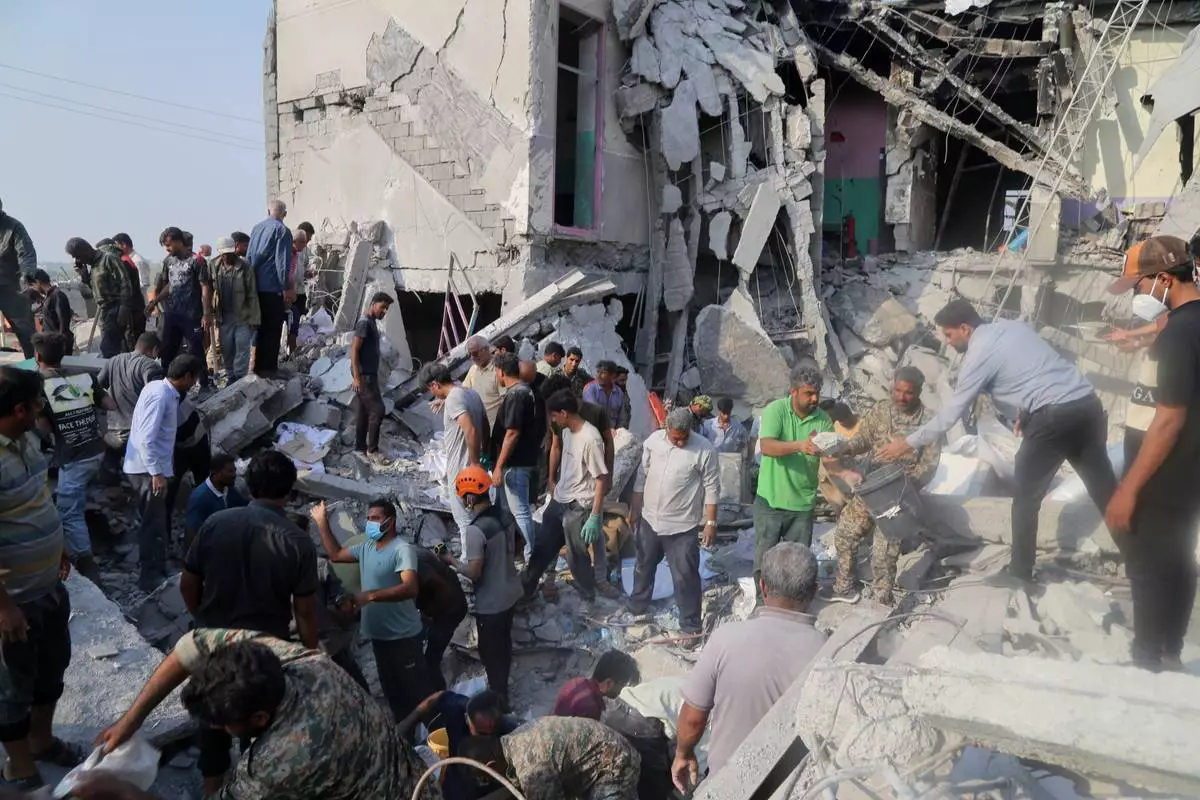
The arm of a deceased person is seen protruding from the rubble as rescue workers and residents search in the aftermath a strike on a girls' elementary school in Minab, Iran, Saturday, Feb. 28, 2026. (Abbas Zakeri/Mehr News Agency via AP)
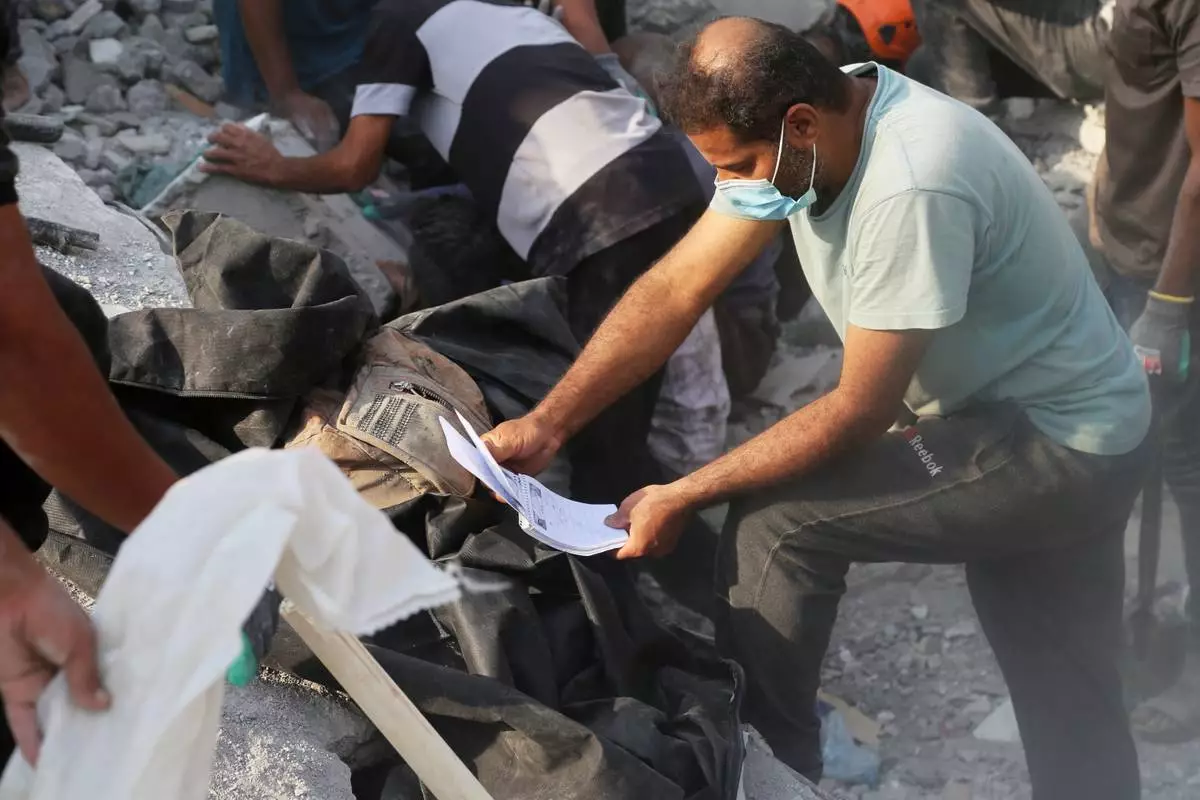
Rescue workers and residents search through the rubble in the aftermath of a strike on a girls' elementary school in Minab, Iran, Saturday, Feb. 28, 2026. (Abbas Zakeri/Mehr News Agency via AP)
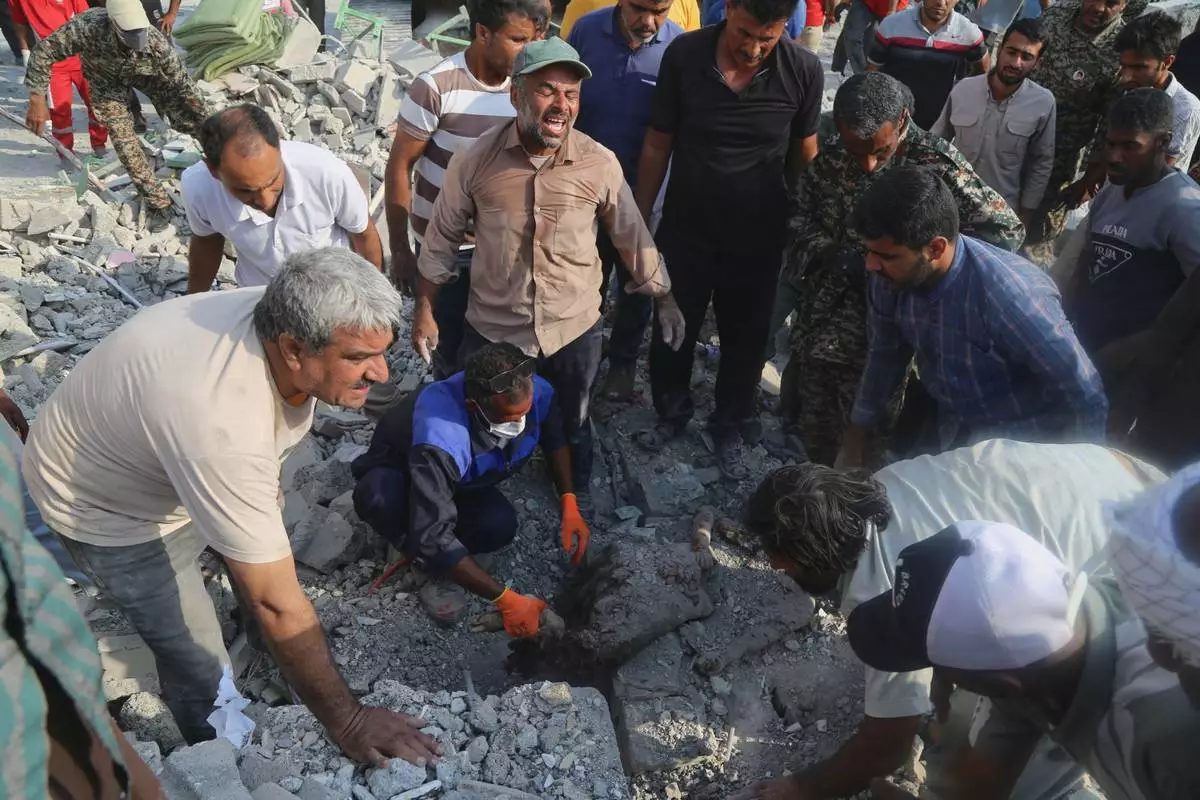
Rescue workers and residents search through the rubble in the aftermath of a strike on a girls' elementary school in Minab, Iran, Saturday, Feb. 28, 2026. (Abbas Zakeri/Mehr News Agency via AP)
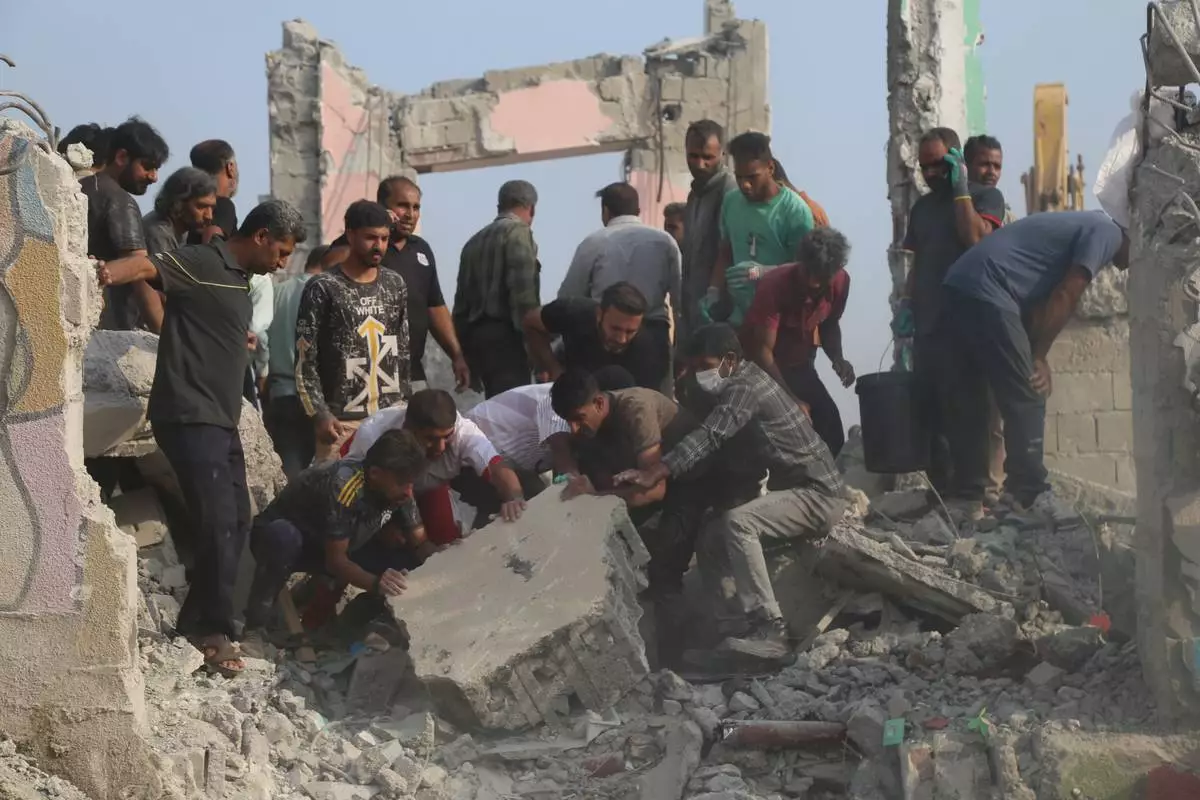
Rescue workers and residents search through the rubble in the aftermath of a strike on a girls' elementary school in Minab, Iran, Saturday, Feb. 28, 2026. (Abbas Zakeri/Mehr News Agency via AP)

Rescue workers and residents search through the rubble in the aftermath of a strike on a girls' elementary school in Minab, Iran, Saturday, Feb. 28, 2026. (Abbas Zakeri/Mehr News Agency via AP)

Rescue workers and residents search through the rubble in the aftermath of a strike on a girls' elementary school in Minab, Iran, Saturday, Feb. 28, 2026. (Abbas Zakeri/Mehr News Agency via AP)
Rescue workers and residents search through the rubble in the aftermath of a strike on a girls' elementary school in Minab, Iran, Saturday, Feb. 28, 2026. (Abbas Zakeri/Mehr News Agency via AP)

Rescue workers and residents search through the rubble in the aftermath of a strike on a girls' elementary school in Minab, Iran, Saturday, Feb. 28, 2026. (Abbas Zakeri/Mehr News Agency via AP)

Rescue workers and residents search through the rubble in the aftermath of a strike on a girls' elementary school in Minab, Iran, Saturday, Feb. 28, 2026. (Abbas Zakeri/Mehr News Agency via AP)
DUBAI, United Arab Emirates (AP) — Iran targeted the world’s busiest international airport Wednesday and attacked commercial ships as U.S. and Israeli strikes rocked Tehran, while the United Nations' most powerful body demanded a halt to the Islamic Republic’s strikes on its Gulf neighbors that threaten global oil supplies.

The latest attacks marked an escalation in Iran's campaign aimed at generating enough global economic pain to pressure the United States and Israel to end the war that started 12 days ago. But there were no signs that the conflict was subsiding.

On Thursday, an Iranian attack sparked a major fire on Bahrain’s Muharraq Island, home to the island kingdom’s international airport. Authorities urged people to stay indoors and close windows to avoid smoke. The airport has jet fuel tanks, and other tanks in the area serve the kingdom’s oil industry.

Also, an attack on Iraq’s Basra port killed at least one person and forced a halt to operations at all the country’s oil terminals. Farhan al-Fartousi, the director-general of the General Company for Ports of Iraq, said the attack targeted a vessel in a ship-to-ship transfer area at the port on the Persian Gulf. Iraq’s commercial ports remained open, though the oil terminals had been shut, according to his statement carried by the state-run Iraqi News Agency.

The first week of war with Iran cost the United States $11.3 billion, according to the Pentagon, which provided the estimate to Congress in a briefing earlier this week, according to a person familiar with the situation who spoke on condition of anonymity to discuss the private meeting. The military reported spending $5 billion on munitions alone in the war's first weekend.

Both sides have dug in, hoping to outlast the other as the conflict upends trade routes, chokes supplies of fuel and fertilizer coming out of the Gulf and threatens air traffic through one of the world’s most-traveled regions.

Iran has targeted oil fields and refineries in Gulf Arab nations and effectively stopped cargo traffic through the narrow Strait of Hormuz, through which a fifth of all traded oil passes.

In response, the International Energy Agency agreed to release 400 million barrels of oil, the largest volume of emergency oil reserves in its history, in a bid to counter the war's effects on energy markets. The U.S. planned to release 172 million barrels of oil next week from its Strategic Petroleum Reserve to combat steep prices.

The U.N. Security Council voted Wednesday to approve a resolution demanding a halt to Iran’s “egregious attacks” on its Gulf neighbors.

Among the most recent attacks, four people were wounded after two Iranian drones hit near Dubai International Airport in the United Arab Emirates, though flights continued, the Dubai Media Office said. Firefighters extinguished a blaze early Thursday at a luxury apartment tower in Dubai Creek Harbor after an Iranian drone strike.

At Oman’s Port of Salalah, crews battled a blaze at fuel storage tanks there, according to the Oman News Agency.

“The international community is resolute in rejecting these Iranian attacks against sovereign countries that are threatening the stability of the peoples, especially in a region of strategic importance to global economy, energy, security and security of global trade,” said Bahrain’s U.N. ambassador, Jamal Alrowaiei.

The 13-0 vote in the U.N.’s most powerful body reflects Iran’s isolated position as it has aggressively responded to Israeli and U.S. strikes. China and Russia — two Iranian allies — abstained from the vote.

Their U.N. ambassadors called the proposal “extremely unbalanced” in not mentioning the strikes against Tehran that began the war.

Russia’s U.N. ambassador, Vassily Nebenzia, said it might leave the impression that Iran, “on its own volition and out of malice, conducted an unprovoked attack on Arab states.” Iranian U.N. Ambassador Amir Saeid Iravani said the resolution “deliberately ignores the root causes of the current crisis.”

Meanwhile, more attacks in Gulf countries were reported.

Drones were launched toward the cities of Irbil and Sulaymaniyah in Iraq’s Kurdistan region, while in the southern part of the country, an oil vessel flying the Australian flag was struck near Khor Al-Zubair Port, according to two Iraqi navy officials who also spoke on condition of anonymity because they were not authorized to comment publicly.

The official said 25 members of the crew were rescued. It was not immediately clear whether any others were missing.

On Thursday, sirens wailed and loud explosions were heard shortly after midnight in Jerusalem and other parts of Israel. The Israeli military said it was responding with another “wide-scale wave of strikes” in Tehran.

The fallout across the Middle East widened as Israel also struck what it said were targets connected to Iran-backed Hezbollah militants in Lebanon.

An Israeli strike hit a car Thursday in Ramlet al-Bayda, a major seaside tourist area on the eastern side of Beirut where dozens of displaced people have been sheltering. Seven people were killed and 21 others were wounded, the Lebanese Health Ministry said. The Israeli military press office told The Associated Press it was “not aware” of a strike at that location.

Blasts shook Beirut’s southern suburbs Wednesday, producing fires and plumes of smoke. Israel's military said the strikes were in response to Hezbollah firing dozens of rockets fired simultaneously across northern Israel. It marked some of the heaviest fighting between the two since the war began.

One rocket hit a house near the Israeli town of Karmiel, lightly injuring two people, according to Israeli rescue services.

At least 634 people have been killed in Lebanon since the latest fighting began, the Lebanese Health Ministry said Wednesday.

The U.N. refugee agency said at least 759,000 people have been internally displaced in Lebanon.

Iranian authorities say more than 1,300 people have been killed there, and Israel has reported 12 people dead. The U.S. has lost seven soldiers while another eight have suffered severe injuries.

This story has been corrected to fix a misspelling of the first name of Bahrain's U.N. ambassador.

Abou AlJoud reported from Beirut. Mascaro reported from Washington. Associated Press writer Sam Mednick in Tel Aviv, Israel, also contributed to this report, along with AP journalists around the world.

Israel Ambassador to the United Nations Danny Danon speaks during a meeting of the Security Council at U.N. headquarters, Wednesday, March 11, 2026. (AP Photo/Seth Wenig)

Israel Ambassador to the United Nations Danny Danon speaks during a meeting of the Security Council at U.N. headquarters, Wednesday, March 11, 2026. (AP Photo/Seth Wenig)

A family enjoys the sunset with the view of the city skyline and Burj Khalifa, at Dubai Creek Harbour in Dubai, United Arab Emirates, Wednesday, March 11, 2026. (AP Photo/Fatima Shbair)

A family enjoys the sunset with the view of the city skyline and Burj Khalifa, at Dubai Creek Harbour in Dubai, United Arab Emirates, Wednesday, March 11, 2026. (AP Photo/Fatima Shbair)

Oil tankers and cargo ships line up in the Strait of Hormuz as seen from Khor Fakkan, United Arab Emirates, Wednesday, March 11, 2026. (AP Photo/Altaf Qadri)

Oil tankers and cargo ships line up in the Strait of Hormuz as seen from Khor Fakkan, United Arab Emirates, Wednesday, March 11, 2026. (AP Photo/Altaf Qadri)

Smoke rises after an explosion at the airport in Irbil, Iraq, late Wednesday, March 11, 2026. (AP Photo/Leo Correa)

Smoke rises after an explosion at the airport in Irbil, Iraq, late Wednesday, March 11, 2026. (AP Photo/Leo Correa)

A man inspects a car damaged in an Israeli airstrike at the Ramlet al-Baida public beach in Beirut, Lebanon, early Thursday, March 12, 2026. (AP Photo/Bilal Hussein)

A man inspects a car damaged in an Israeli airstrike at the Ramlet al-Baida public beach in Beirut, Lebanon, early Thursday, March 12, 2026. (AP Photo/Bilal Hussein)

A man, left, carries the body of his son, Kassem Younis, who was killed in an Israeli airstrike, during his funeral procession in the southern village of Chehabiyeh, Lebanon, Wednesday, March 11, 2026. (AP Photo/Mohammed Zaatari)

A man, left, carries the body of his son, Kassem Younis, who was killed in an Israeli airstrike, during his funeral procession in the southern village of Chehabiyeh, Lebanon, Wednesday, March 11, 2026. (AP Photo/Mohammed Zaatari)

Flames rise from an Israeli airstrike in Dahiyeh, Beirut's southern suburbs, Wednesday, March 11, 2026. (AP Photo/Hassan Ammar)

Flames rise from an Israeli airstrike in Dahiyeh, Beirut's southern suburbs, Wednesday, March 11, 2026. (AP Photo/Hassan Ammar)

Children and adults play on swings on the beach as oil tankers and cargo ships line up in the Strait of Hormuz near Khor Fakkan, United Arab Emirates, Wednesday, March 11, 2026. (AP Photo/Altaf Qadri)

Children and adults play on swings on the beach as oil tankers and cargo ships line up in the Strait of Hormuz near Khor Fakkan, United Arab Emirates, Wednesday, March 11, 2026. (AP Photo/Altaf Qadri)

A man holds a picture of late Defense Minister Aziz Nasirzadeh beside his coffin as mourners attend the funeral procession for senior Iranian military officials and civilians killed during the U.S.-Israel campaign in Tehran, Iran, Wednesday, March 11, 2026. (AP Photo/Vahid Salemi)

A man holds a picture of late Defense Minister Aziz Nasirzadeh beside his coffin as mourners attend the funeral procession for senior Iranian military officials and civilians killed during the U.S.-Israel campaign in Tehran, Iran, Wednesday, March 11, 2026. (AP Photo/Vahid Salemi)

A mourner holds a poster depicting Ayatollah Mojtaba Khamenei, right, the successor to his late father Ayatollah Ali Khamenei, left, as supreme leader, during the funeral procession for senior Iranian military officials and civilians killed during the U.S.-Israel campaign in Tehran, Iran, Wednesday, March 11, 2026. (AP Photo/Vahid Salemi)

A mourner holds a poster depicting Ayatollah Mojtaba Khamenei, right, the successor to his late father Ayatollah Ali Khamenei, left, as supreme leader, during the funeral procession for senior Iranian military officials and civilians killed during the U.S.-Israel campaign in Tehran, Iran, Wednesday, March 11, 2026. (AP Photo/Vahid Salemi)

Smoke rises from a building following an Israeli airstrike in Dahiyeh, Beirut's southern suburb, Wednesday, March 11, 2026. (AP Photo/Hassan Ammar)

Smoke rises from a building following an Israeli airstrike in Dahiyeh, Beirut's southern suburb, Wednesday, March 11, 2026. (AP Photo/Hassan Ammar)

Mourners attend the funeral procession for senior Iranian military officials and some civilians killed during the U.S.-Israel campaign, in Tehran, Iran, Wednesday, March 11, 2026. (AP Photo/Vahid Salemi)

Mourners attend the funeral procession for senior Iranian military officials and some civilians killed during the U.S.-Israel campaign, in Tehran, Iran, Wednesday, March 11, 2026. (AP Photo/Vahid Salemi)

FILE - A plume of smoke rises after a strike in Tehran, Iran, Monday, March 2, 2026. (AP Photo/Mohsen Ganji, File)

FILE - A plume of smoke rises after a strike in Tehran, Iran, Monday, March 2, 2026. (AP Photo/Mohsen Ganji, File)

Rescue workers gather at the site where Israeli airstrikes hit apartments in Beirut, Lebanon, Wednesday, March 11, 2026. (AP Photo/Hussein Malla)

Rescue workers gather at the site where Israeli airstrikes hit apartments in Beirut, Lebanon, Wednesday, March 11, 2026. (AP Photo/Hussein Malla)

People take shelter in an underground metro station as air raid sirens warn of incoming Iranian missile strike, in Ramat Gan, Israel, Tuesday, March 10, 2026. (AP Photo/Oded Balilty)

People take shelter in an underground metro station as air raid sirens warn of incoming Iranian missile strike, in Ramat Gan, Israel, Tuesday, March 10, 2026. (AP Photo/Oded Balilty)

A man passes in front of a destroyed building that housed a branch of Al-Qard Al-Hassan, a non-bank financial institution run by Hezbollah, which was hit by an Israeli airstrike in Dahiyeh, Beirut's southern suburbs, Lebanon, Tuesday, March 10, 2026. (AP Photo/Hussein Malla)

A man passes in front of a destroyed building that housed a branch of Al-Qard Al-Hassan, a non-bank financial institution run by Hezbollah, which was hit by an Israeli airstrike in Dahiyeh, Beirut's southern suburbs, Lebanon, Tuesday, March 10, 2026. (AP Photo/Hussein Malla)

People walk past closed shops at the nearly empty traditional main bazaar in Tehran, Iran, Tuesday, March 10, 2026. (AP Photo/Vahid Salemi)

People walk past closed shops at the nearly empty traditional main bazaar in Tehran, Iran, Tuesday, March 10, 2026. (AP Photo/Vahid Salemi)

Motorbikes drive past a billboard depicting Iran’s late Supreme Leader Ayatollah Ali Khamenei, center, handing the country’s flag to his son and successor Ayatollah Mojtaba Khamenei, right, as the late revolutionary founder Ayatollah Ruhollah Khomeini stands at left, in a square in downtown Tehran, Iran, Tuesday, March 10, 2026. (AP Photo/Vahid Salemi)

Motorbikes drive past a billboard depicting Iran’s late Supreme Leader Ayatollah Ali Khamenei, center, handing the country’s flag to his son and successor Ayatollah Mojtaba Khamenei, right, as the late revolutionary founder Ayatollah Ruhollah Khomeini stands at left, in a square in downtown Tehran, Iran, Tuesday, March 10, 2026. (AP Photo/Vahid Salemi)

Smoke rises from an Israeli airstrike in Dahiyeh, Beirut's southern suburbs, Lebanon, Tuesday, March 10, 2026. (AP Photo/Bilal Hussein)

Smoke rises from an Israeli airstrike in Dahiyeh, Beirut's southern suburbs, Lebanon, Tuesday, March 10, 2026. (AP Photo/Bilal Hussein)

Recommended Articles