ANN ARBOR, Mich. (AP) — Former Michigan linebackers coach Chris Partridge sued the university, its board of regents and its athletics director Wednesday for firing him in 2023 while the NCAA investigated allegations of in-person scouting and sign-stealing.
Partridge's lawsuit filed in U.S. District Court in Michigan argues that his “termination was wholly unjustified and without legitimate cause," saying that the school violated his Fourteenth Amendment right to due process.
“The University of Michigan unjustly terminated Partridge’s employment and spread false and damaging information regarding his professional conduct, tarnishing Partridge’s hard-earned reputation and inflicting irreparable harm on to his career and personal well-being,” the lawsuit said.
Michigan did not immediately respond to an email from The Associated Press requesting comment. The Big Ten declined to comment on the lawsuit.
Partridge was fired from Michigan in November 2023 as the NCAA investigated allegations that former university staffer Connor Stalions purchased tickets to scout the school's opponents and sent people to those games to record teams signaling in their plays. In-person scouting is banned by the NCAA. Stalions resigned earlier that month.
In 2025, the NCAA’s Committee on Infractions determined that Stalions had orchestrated a scouting scheme for years. It also found recruiting violations and fined the school millions of dollars. Partridge was largely cleared of any wrongdoing.
But just after Partridge's firing, rumors swirled about why he was let go. He took to social media at the time to say that he had no knowledge of any scouting scheme and that he was fired for failing to abide by the school’s directive to avoid discussing the inquiry with “anyone associated with the program.”
“Additionally, at no point did I destroy any evidence related to the ongoing investigation,” he had said in an online post.
Partridge went on to serve as outside linebackers coach for the Seattle Seahawks, helping them clinch a Super Bowl win last month.
The lawsuit states that Partridge was told by the university that he was fired for telling a player that he should “get an attorney," despite being instructed not to communicate with the athletes during the investigation.
Partridge confirmed that he did say that to a player. But, he said in the lawsuit, the football staff was never told to stop communication with players, which would have caused the football program to “come to a screeching halt.”
“Partridge was a scapegoat who was wrongly fired simply because he told a player he had the right to have counsel,” the lawsuit said.
The lawsuit also said that the school smeared his reputation, including when some athletics department employees and at least one Board of Regents member told a sportswriter that Partridge was fired for “destroying evidence." That information was then reported by several news organizations, including the AP, which cited reporting by Yahoo Sports that Partridge "allegedly tried to cover up evidence."
Partridge was fired just before the Wolverines became football national champions. One day after he was fired, the school and the Big Ten Conference agreed that then head coach Jim Harbaugh would serve the final two games of his three-game suspension in return for the conference ending its investigation into the sign-stealing allegations.
The lawsuit seeks damages to be determined at trial, along with clearing Partridge’s name and reputation.
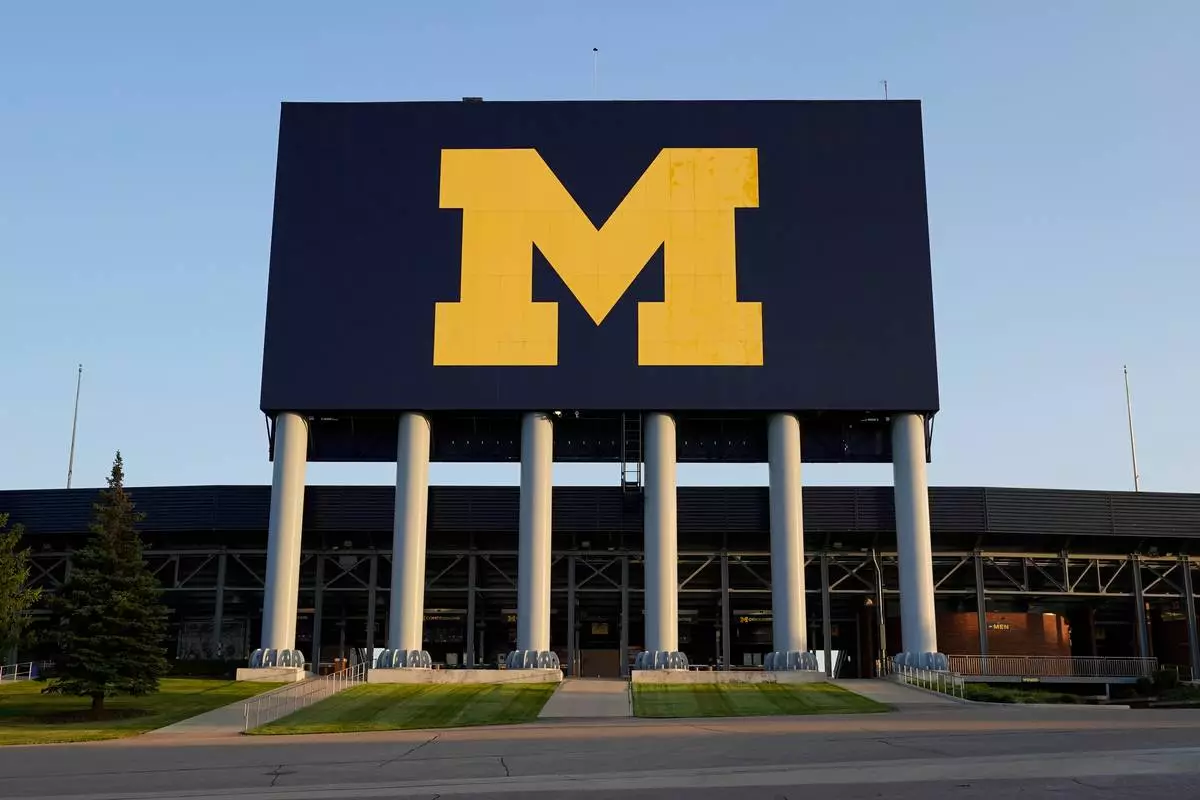
FILE - The University of Michigan football stadium is seen, in Ann Arbor, Mich., Aug. 13, 2020. (AP Photo/Paul Sancya, File)
A Supreme Court decision striking down a majority Black congressional district in Louisiana has amplified an already intense national redistricting battle by providing Republican officials in several states new grounds to redraw voting districts.
In Alabama, Republican Gov. Kay Ivey announced Friday that she is calling a special legislative session to begin Monday in hopes that the Supreme Court allows the state to change its U.S. House map ahead of the November midterm elections. In Tennessee, Republican Gov. Bill Lee also announced a special session for the GOP-controlled Legislature to break up the state's one Democratic-held House district, centered on the majority-Black city of Memphis.
Louisiana already has suspended its May 16 congressional primary to allow time for lawmakers to approve new U.S. House districts, though that is being challenged in court. Meanwhile, President Donald Trump is pressuring other states such as Tennessee to also redistrict ahead of the midterm elections that will determine whether Republicans maintain control of the closely divided House.
Trump urged Texas Republicans last year to redraw U.S. House districts to give the party an advantage. Democrats in California responded by doing the same. Then other states joined the battle. Lawmakers, commissions or courts have adopted new House districts in eight states.
That total could grow following the Supreme Court’s decision that significantly weakened a provision in the federal Voting Rights Act.
Here’s a look at how some states are responding to the Supreme Court ruling:
Current House map: two Democrats, four Republicans
Early in-person voting was to begin Saturday for Louisiana’s primaries. But Republican Gov. Jeff Landry moved quickly Thursday to postpone the congressional primary while allowing elections for other offices to go forward.
A federal lawsuit filed later Thursday, on behalf of a Democratic congressional candidate and voter, asked a court to block Landry’s order and allow the House primary to occur as originally scheduled. Two more lawsuits asserting that the congressional primary should go forward were filed Friday in state court on behalf of voters who already had cast absentee ballots and several civil rights organizations.
Among other things, the lawsuits contend that Landry lacked authority to suspend the primary and that thousands of absentee ballots already have been mailed to people, with a substantial number filled out and returned.
District court judges in Baton Rouge late Friday denied requests in two of those cases to temporarily block Landry’s executive order.
Separately, a three-judge federal court panel that heard the case that was appealed to the Supreme Court also issued an order Thursday suspending Louisiana’s congressional primary.
Republican state House and Senate leaders said they are prepared to pass new U.S. House districts — and set a new primary election date — before their legislative session ends in a month.
Current House map: two Democrats, five Republicans
The state’s primaries are set for May 19. But Alabama officials on Thursday filed an emergency motion with the Supreme Court seeking an expedited review of a pending appeal in a redistricting case that could affect the election.
A federal court in 2023 ordered the creation of a new near majority-Black district in Alabama, resulting in the election of a second Black representative to the U.S. House. Alabama is under a court order to use the new map until after the next census in 2030.
An appeal pending before the Supreme Court argues that the map is an illegal racial gerrymander, a claim similar to that made in Louisiana.
The state is seeking to lift an injunction blocking the use of a 2023 map drawn by the Republican-controlled Legislature that did not include the new district. The state is making a similar request for two state Senate districts impacted by a separate redistricting case.
Ivey said the special legislative session will focus on a contingency plan to have special primary elections in case the Supreme Court acts quickly enough to allow Alabama’s previously drawn districts to be used this year.
Current House map: eight Democrats, 20 Republicans
Hours after the Supreme Court’s decision, Florida’s Republican-led Legislature approved new U.S. House districts that could help the GOP win up to four additional seats in November.
Republican Gov. Ron DeSantis called a special legislative session without knowing when the Supreme Court would issue its opinion in the Louisiana case. But DeSantis expressed confidence that the court would rule as it did. Among other things, the new map reshapes a southeastern Florida district that DeSantis said was created to help elect a Black representative in an attempt to comply with the federal Voting Rights Act.
A Florida constitutional amendment approved by voters in 2010 prohibits districts from being drawn to deny or diminish the ability of racial or language minorities to elect the representatives of their choice. DeSantis said he considers that amendment a violation of the U.S. Constitution. That question is expected to be decided by the courts.
Lee announced the special session in a statement late Friday afternoon, saying, “We owe it to Tennesseans to ensure our congressional districts accurately reflect the will of Tennessee voters.”
That came after a pressure campaign by Trump and other Republicans to reconfigure the state's 9th Congressional District. Republicans have always been checkmated by the Voting Rights Act in their desire to spread the district's Democratic voters around neighboring conservative districts and make it winnable, but the law may no longer be an impediment.
The candidate qualifying period ended in March, and the primary election is scheduled for Aug. 6. Democrats noted that in 2022 the state supreme court checked additional redistricting because it was too close to an election. They argued that the court is their best hope this time around too.
“We cannot keep doing things like this and calling ourselves a democracy, Democratic State Sen. Ramesh Akbari said at a news conference outside the Civil Rights Museum in Memphis, which includes the structure of the motel where the Rev. Martin Luther King Jr. was assassinated in 1968.
Current House map: one Democrat, three Republicans
Mississippi held its U.S. House primaries in March. But the Supreme Court’s decision could affect elections for other offices.
Republican Gov. Tate Reeves announced previously that he would call a special legislative session to redraw voting districts for the state Supreme Court that would begin 21 days after the U.S. Supreme Court ruled in the Louisiana case. That would put the special session's start at around May 20.
A federal judge last year ordered Mississippi to redraw its Supreme Court voting districts after finding that they violated the Voting Rights Act by diluting the power of Black voters. Mississippi lawmakers had been waiting on a decision in the Louisiana case before moving forward, but their legislative session ended in April.
Reeves said in his proclamation that the Supreme Court’s decision would provide guidance to lawmakers on whether “race-conscious redistricting” violates the U.S. Constitution.
Current House map: five Democrats, nine Republicans
Early in-person voting began April 27 and continues for the next few weeks ahead of Georgia’s primary elections on May 19.
Republican Gov. Brian Kemp said it’s too late for Georgia officials to try to change congressional districts for this year’s elections, because voting already is underway. But he said the rationale in the Supreme Court’s decision “requires Georgia to adopt new electoral maps before the 2028 election cycle.”
Associated Press writers Jeff Amy, Jack Brook, Travis Loller, Nicholas Riccardi and Kim Chandler contributed to this report.
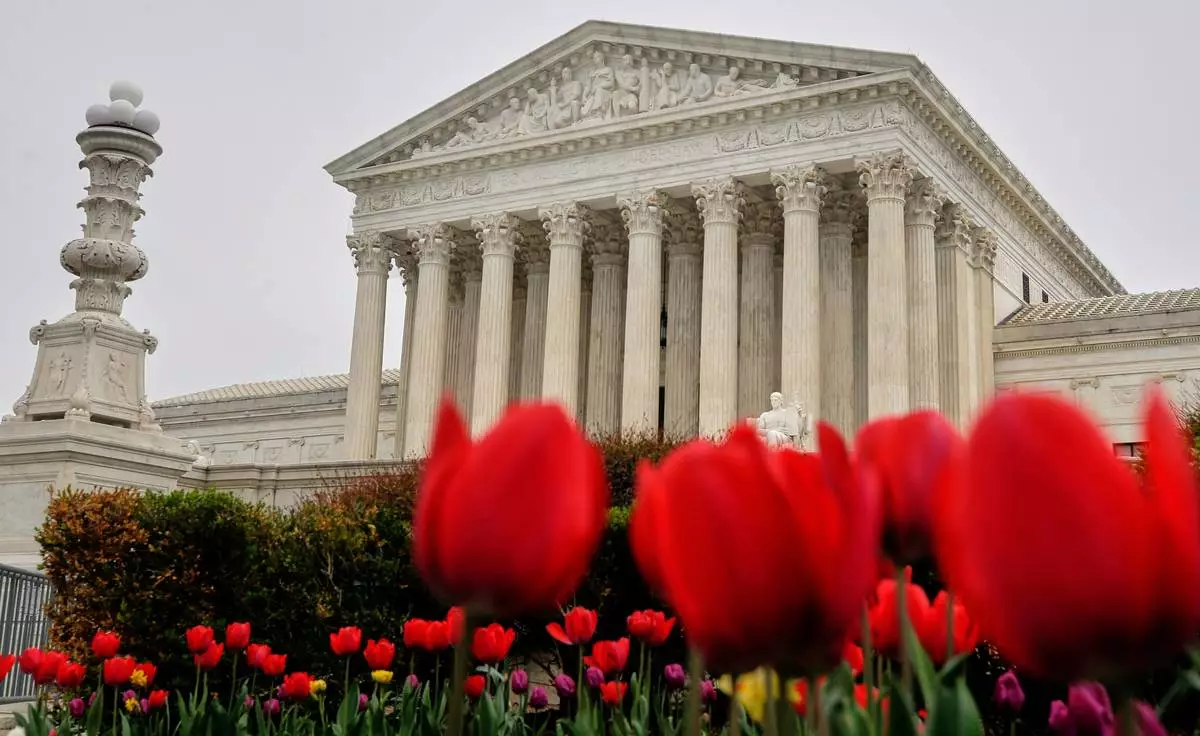
FILE - The U.S. Supreme Court is seen in Washington, Friday, April 3, 2026. (AP Photo/Rahmat Gul, File)
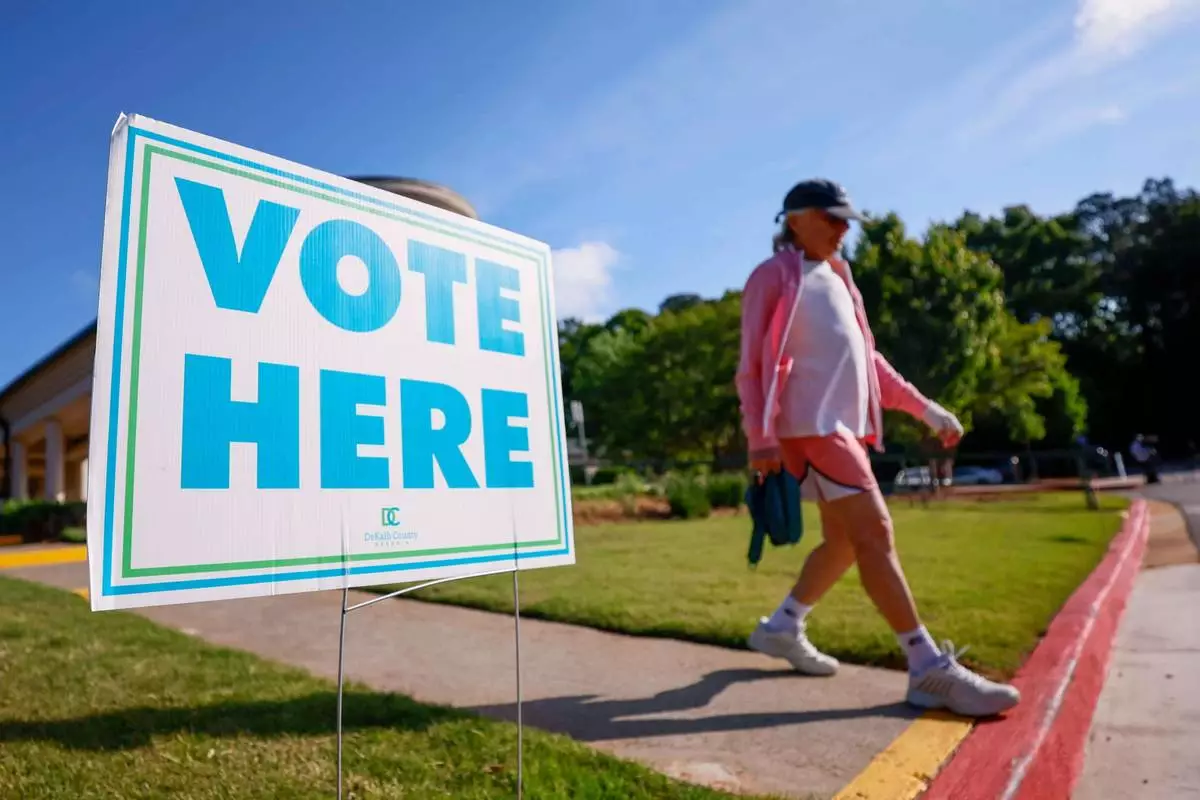
A person walks past a voting sign during the first day of early voting for the primary elections at the Dunwoody Library in Atlanta, Monday, April 27, 2026. (Miguel Martinez/Atlanta Journal-Constitution via AP)