SHANGHAI (AP) — Max Verstappen's blunt assessment: “It's a jungle” in Formula 1.
The four-time F1 world champion isn't a fan of the new 2026 technical regulations, despite working his way up from No. 20 on the grid to place sixth at the season-opening Australian Grand Prix last weekend.
Verstappen predicted his Red Bull probably couldn’t go any higher than fifth place this weekend in the Chinese Grand Prix — even if he starts much closer to the front in Sunday's race in Shanghai — because of the big gap between Mercedes and Ferrari and all the other teams.
“Honestly, it’s such a jungle out there at the moment," Verstappen said Thursday at the driver news conferences in Shanghai. “I mean, I would hope that it gets a bit closer ... but it’s clear that at the moment we cannot fight with those cars.”
It's not the first time Verstappen has taken a swipe at the sport's new regulations, which he thinks are anti-fun, anti-racing and could potentially be dangerous.
F1’s new cars are complex, with unprecedented changes across the chassis and power unit, which now feature an almost 50:50 output split between the turbo 1.6-liter V6 engine and electrical energy harvested from the brakes — one that requires a new, often counterintuitive driving style.
One of Verstappen's concerns is starting the race with empty batteries in the hybrid cars. Franco Colapinto only very narrowly avoided Liam Lawson at the start of the Australian Grand Prix, with the Racing Bulls car was slow off the line with minimal battery power — many drivers started with depleted batteries among the teething issues with the new rules.
“There are a few simple solutions, but they need to be allowed by the FIA, with the battery related stuff, because, yeah, starting with the 0% battery — not a lot of fun and also quite dangerous,” Verstappen said. "You can see, I mean, we almost had a massive shunt in Melbourne in the start.
“This is something that I think can be easily fixed.”
As for speculation he may quit if reforms aren't made quickly, Verstappen said: “I don’t want to leave, but I also hope, of course, that it gets better.
“I’ve had discussions with F1 and FIA and, I think, we are working toward something, hopefully, and, hopefully that will improve everything," he said, without elaborating on what the changes might be. “I hope already for next year we can already make a decent improvement.”
In the meantime, in the search of more “fun,” he has confirmed this week he'll be driving his first 24-hour sportscar race at the historic Nürburgring Nordschleife circuit in May. F1 hasn’t used it since 1976, when then-reigning champion Niki Lauda suffered severe burns in a crash.
“It’s one of the best races in the world, it’s one of the best tracks. I mean, honestly, in a GT car for me that’s like the perfect speed round there," Verstappen said. "I think if you go anything faster it can be a bit dangerous in places."
“I mean, I’ve been watching it, of course, for a long time. I know a lot of my friends, of course, that have been racing in it already. They say it’s one of the best things ever, and I like racing other cars as well.”
The 28-year Verstappen says he still has career ambitions.
“I don’t need to be only a Formula 1 driver, I can also do other things," he said. "I’ve done this for a while and I’ve achieved everything that I wanted to achieve, so that’s why I want to explore other things, and I don’t want to do them when I’m 40 years old. So now I think this is the perfect age to do it.”
AP auto racing: https://apnews.com/hub/auto-racing
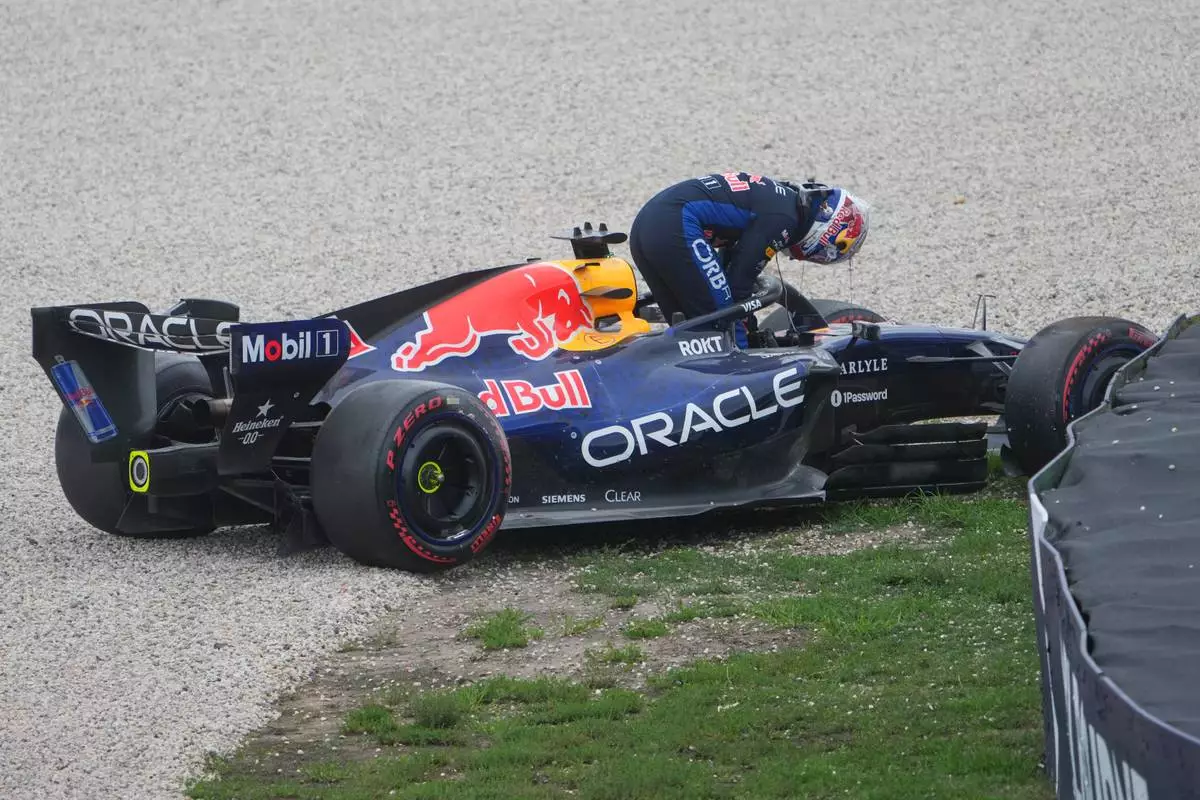
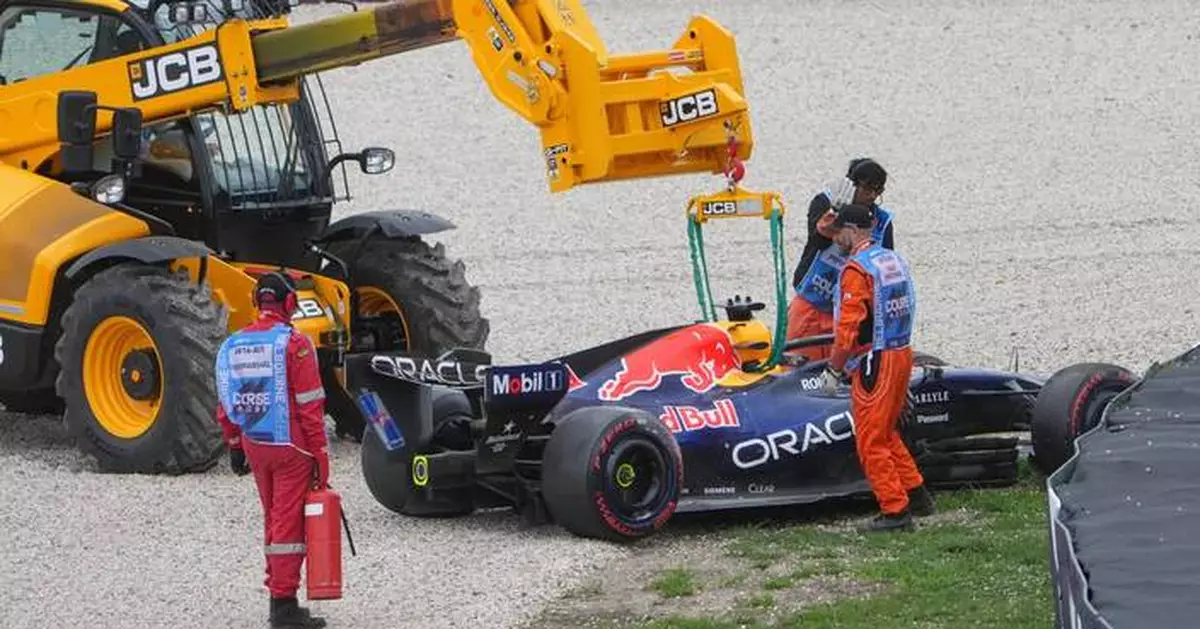
Red Bull driver Max Verstappen of the Netherlands gets out of his car after a crash during the qualifying session for the Australian Formula One Grand Prix at Albert Park, in Melbourne, Australia, Saturday, March 7, 2026. (AP Photo/Asanka Brendon Ratnayake)
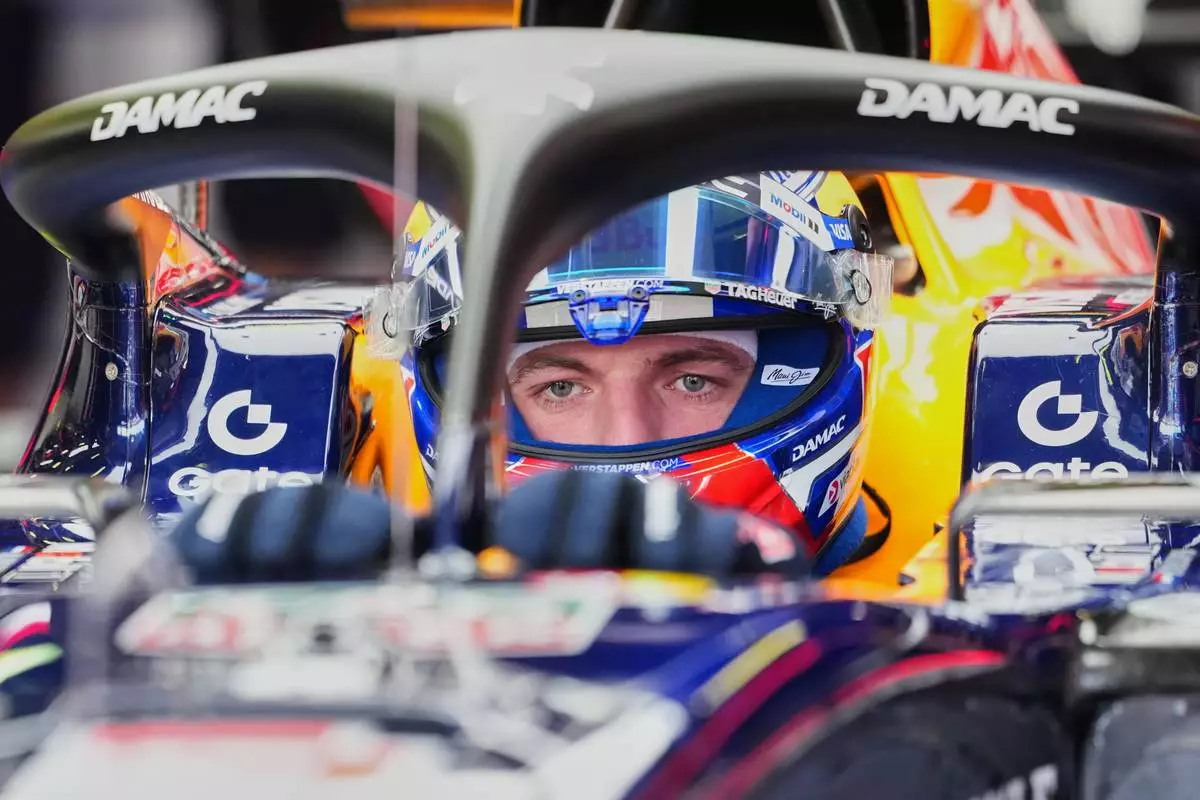
Red Bull driver Max Verstappen of the Netherlands waits his car during the third practice session for the Australian Formula One Grand Prix at Albert Park, in Melbourne, Australia, Saturday, March 7, 2026. (AP Photo/Scott Barbour)
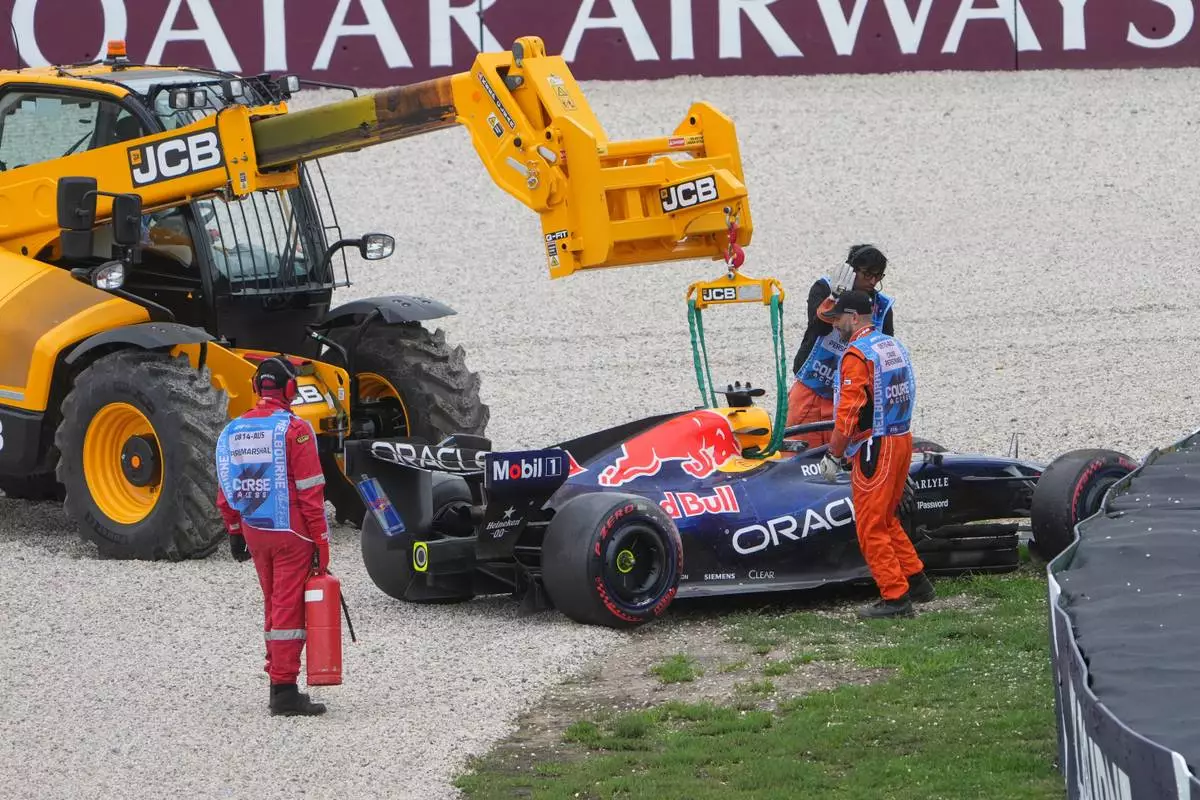
Red Bull driver Max Verstappen of the Netherlands' car is taken from the track after a crash during the qualifying session for the Australian Formula One Grand Prix at Albert Park, in Melbourne, Australia, Saturday, March 7, 2026. (AP Photo/Asanka Brendon Ratnayake)
BANGKOK (AP) — The price of a barrel of Brent crude oil briefly topped $100 a barrel early Thursday, just days after it spiked near $120 in the latest jolts to financial markets and the global economy as a whole.
Oil prices initially shot more than 9% higher as supply concerns worsened with Iranian attacks on commercial shipping around the Strait of Hormuz. The U.S. campaign of airstrikes in Iran is now in its 13th day.
U.S. benchmark crude oil jumped 6.5% to about $93 a barrel. Brent, the international standard, was trading 6.6% higher at about $98 per barrel.
Iran has escalated its attacks aimed at generating enough global economic pain to pressure the United States and Israel to end the war. But there were no signs the conflict was subsiding.
Iran has targeted oil fields and refineries in Gulf Arab nations and effectively stopped cargo traffic through the narrow Strait of Hormuz, through which a fifth of all traded oil passes.
In response, the International Energy Agency agreed Wednesday to release 400 million barrels of oil, the largest volume of emergency oil reserves in its history, in a bid to counter the war’s effects on energy markets. The U.S. planned to release 172 million barrels of oil next week from its Strategic Petroleum Reserve to combat steep prices.
The IEA’s announcement came a day after energy ministers from the Group of Seven — the leading industrialized nations of Canada, the United States, France, Italy, Japan, Germany and Britain — met in Paris to look at ways to bring down prices.
But the continued strife and uncertainty have fueled speculation prices could push still higher.
Markets in Asia fell back, with Tokyo's Nikkei 225 losing 1% to 54,452.96. In South Korea, the Kospi lost 0.5% to 5,583.25, while Hong Kong's Hang Seng gave up 0.9% to 25,678.92.
The Shanghai Composite index shed 0.1% to 4,129.10 and in Australia, the S&P/ASX 200 dropped 1.3% to 8,529.00.
U.S. futures declined.
The dollar fell to 158.84 Japanese yen from 158.95 yen. The euro fell to $1.1553 from $1.1566.
On Wednesday, U.S. stocks were little changed as the S&P 500 edged 0.1% lower for a second day of modest moves following a wild stretch caused by the war with Iran. The Dow Jones Industrial Average dropped 0.6%, to its lowest level this year, and the Nasdaq composite rose 0.1%.
Since the start of the war, sharp moves for oil prices have triggered swings up and down for financial markets worldwide, sometimes by the hour. Oil prices briefly spiked to their highest levels since 2022 this week because of the possibility that production in the Middle East could be blocked for a long time, which in turn raised worries about a surge of debilitating inflation for the global economy.
In a report, Oxford Economics said “the swings in Brent crude oil prices over the past several days are eye-catching and odds are volatility will remain because of the absence of a timeline for when the conflict will de-escalate and when the Strait of Hormuz, which is effectively closed, will see traffic begin to recover.”
It said the volatility suggests that depending on news developments, oil prices could spike as high as $140 per barrel.
A report released Wednesday showed U.S. consumers paid prices for groceries, gasoline and other costs of living that were 2.4% higher in February than a year earlier.
That's the same level as the month before and better than the 2.5% that economists expected, but it remains above the Federal Reserve's 2% target and doesn’t include the spike in gasoline prices this month due to the war.
High inflation combined with a stagnating economy would create a worst-case scenario called “stagflation” that the Federal Reserve has no good tools to fix. Stagflation fears are rising not just because of higher oil prices but also because of weakness in hiring by U.S. employers.
Because of the spike for oil prices, traders have pushed back forecasts for when the Fed could resume its cuts to interest rates. President Donald Trump has been angrily calling for such cuts, which would give the economy and job market a boost but also potentially worsen inflation.
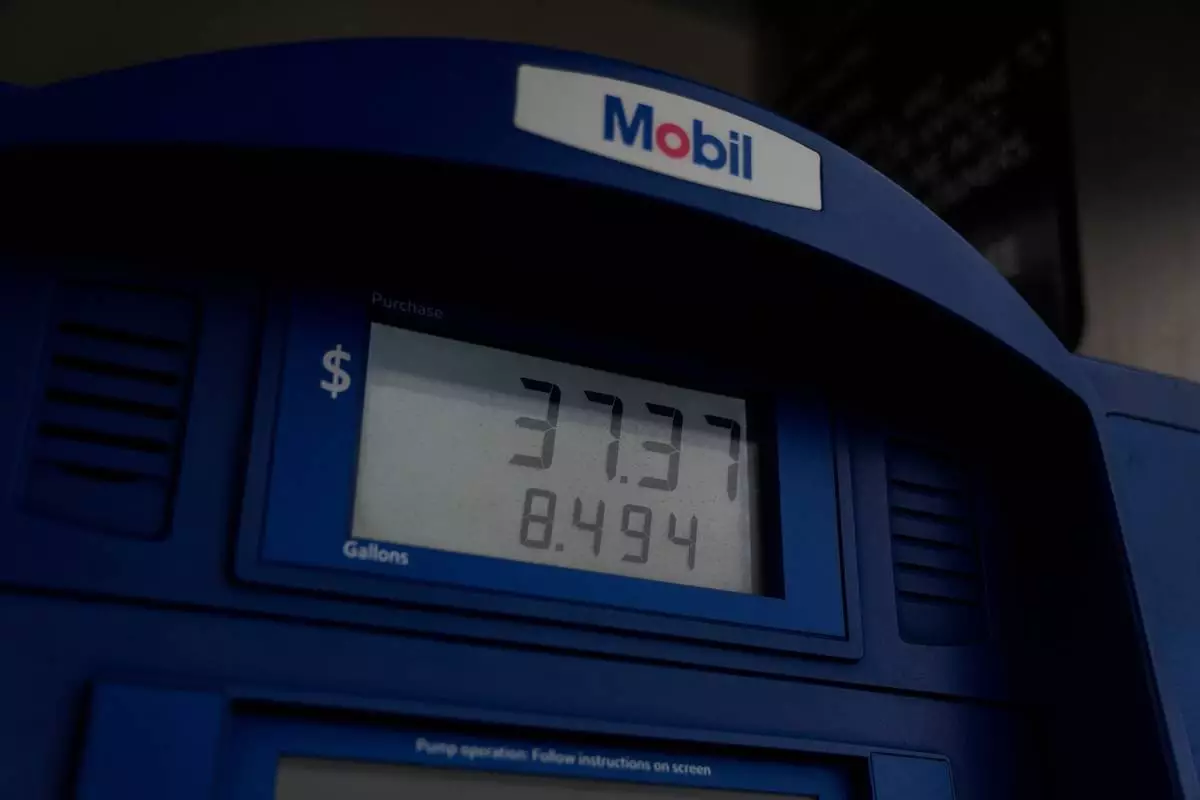
Gas prices are displayed at a station Wednesday, March 11, 2026, in Evanston Ill. (AP Photo/Erin Hooley)
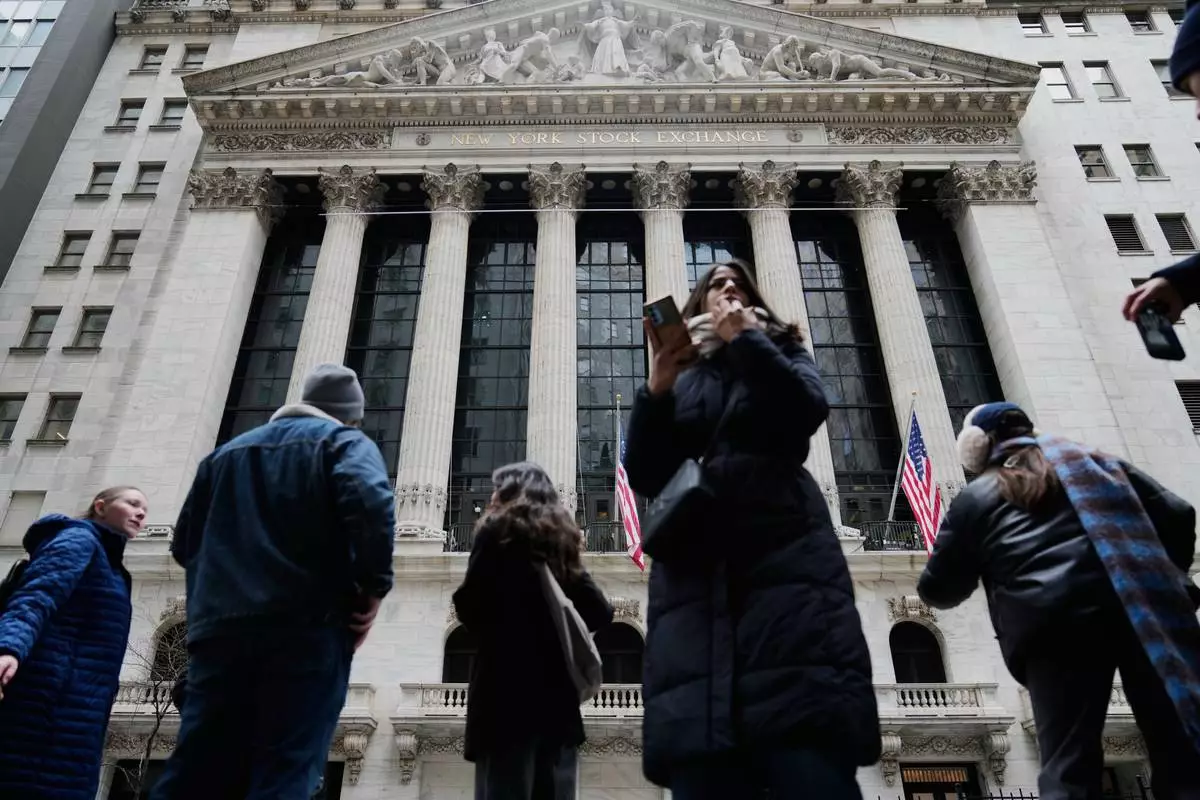
Pedestrians mill about outside the New York Stock Exchange in New York, Friday, March 6, 2026. (AP Photo/Seth Wenig)
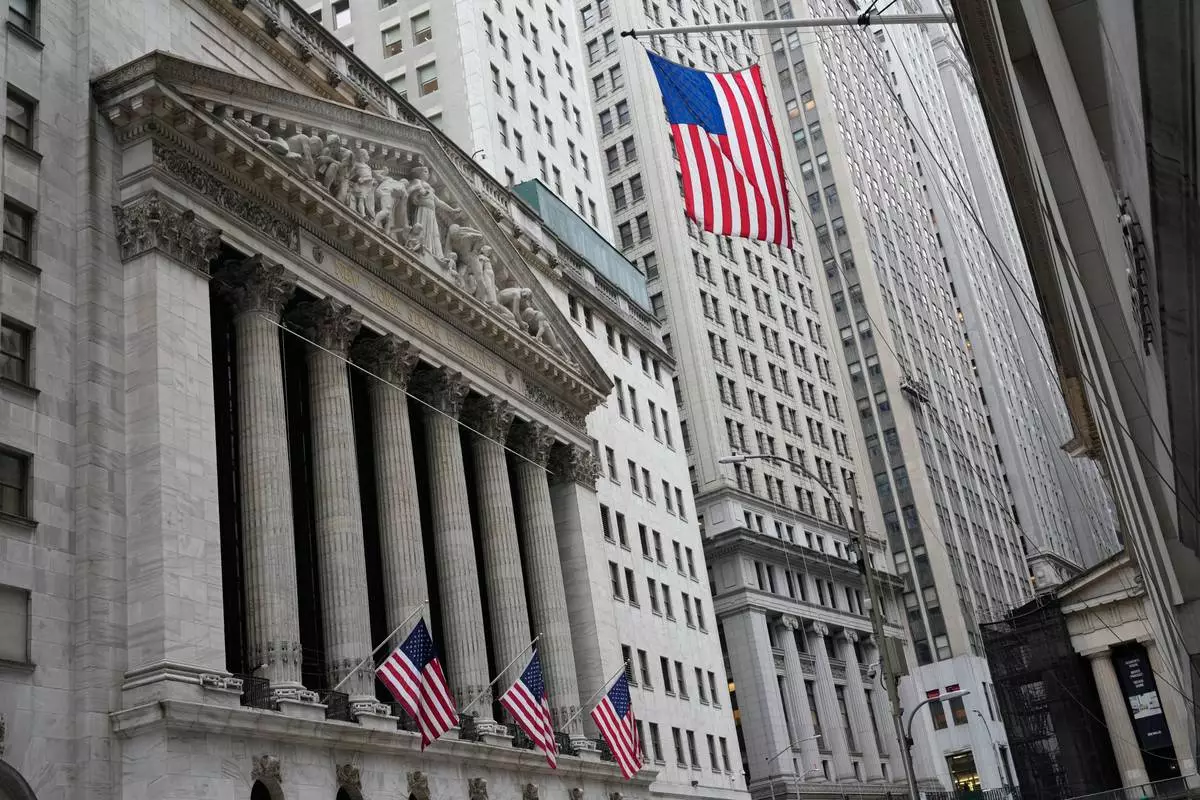
The New York Stock Exchange is seen in New York, Friday, March 6, 2026. (AP Photo/Seth Wenig)
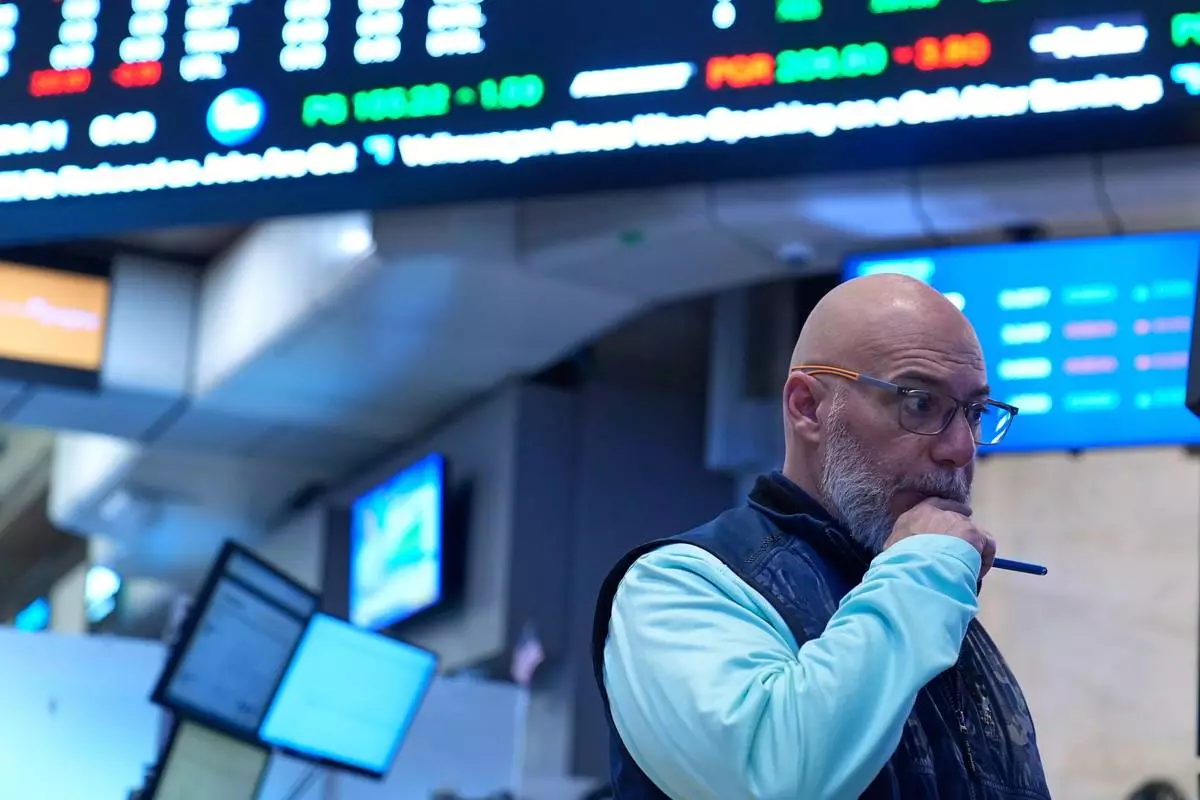
Traders work on the floor at the New York Stock Exchange in New York, Tuesday, March 10, 2026. (AP Photo/Seth Wenig)