|
BEIJING, March 12, 2026 /PRNewswire/ -- Roborock today announced that it has become the world's No. 1 smart cleaning robot brand in 2025, according to the IDC Worldwide Quarterly Smart Vacuum Robotics Tracker, 2025 (1). This recognition reflects Roborock's technology leadership and accelerated global expansion in an industry that is currently entering a new stage of development defined by an expanding product portfolio. According to IDC, even when considering companies selling Robotic Vacuum Cleaners, Robotic Lawn Mowers, and other types of household clinic robots, Roborock has been found to be the #1 brand in terms of shipments (5.8m in 2025) and market share (17.7%). In terms of, specifically, Robot Vacuum Cleaners (RVC), Roborock has continuously ranked #1 in IDC's ranking since 2023 H2, and repeats its success in 2025 H2 with an all-time-high 27.0% market share, becoming once again the number 1 RVC brand for third consecutive year.
Roborock is #1 Globally—and #1 in Major National Markets across America, Europe, and Asia
IDC's analysis highlights the accelerating shift in global competitive dynamics, driven by rapid product iteration, AI development, and the growing influence of Chinese brands expanding overseas. Against this challenging backdrop, Roborock claimed for the first time the #1 global shipments and market share position not only in the Robotic Vacuum category, as it had done since 2023, but also, for the first time, as the number one vendor amongst all competitors that sell wider product categories that include robot vacuum, robotic lawn mowers, and other household cleaning products.
Narrowing down its analysis to, specifically, the Robot Vacuum Cleaner (RVC) product segment, Roborock dominated IDC's tracking as the #1 vendor quarter after quarter, achieving its highest 27.0% market share in the second half of 2025. IDC further notes that Roborock ranked Number 1 in key national markets including the United States (Americas), Germany (Europe), and South Korea (Asia Pacific)—underscoring the strength of Roborock's global brand and its product competitiveness across continents, diverse user needs, home types, and cleaning habits. According to IDC, Roborock's success is supported by technological advantages, overseas expansion, and an expanded product portfolio.
Source : Global Home Cleaning Robot Market 2025: Chinese Brands Dominate as Lawn, Window, and Pool Robots Surge
(1) Sources:
IDC Worldwide Quarterly Smart Vacuum Robotics Tracker, 2025Q4
IDC Worldwide Quarterly Pool Cleaning Robotics Tracker, 2025Q4
IDC Worldwide Quarterly Lawn Mower Robotics Tracker, 2025Q4
IDC Worldwide Quarterly Smart Vacuum Robotics Tracker, 2025Q4
BEIJING, March 12, 2026 /PRNewswire/ -- Roborock today announced that it has become the world's No. 1 smart cleaning robot brand in 2025, according to the IDC Worldwide Quarterly Smart Vacuum Robotics Tracker, 2025 (1). This recognition reflects Roborock's technology leadership and accelerated global expansion in an industry that is currently entering a new stage of development defined by an expanding product portfolio. According to IDC, even when considering companies selling Robotic Vacuum Cleaners, Robotic Lawn Mowers, and other types of household clinic robots, Roborock has been found to be the #1 brand in terms of shipments (5.8m in 2025) and market share (17.7%). In terms of, specifically, Robot Vacuum Cleaners (RVC), Roborock has continuously ranked #1 in IDC's ranking since 2023 H2, and repeats its success in 2025 H2 with an all-time-high 27.0% market share, becoming once again the number 1 RVC brand for third consecutive year.
Roborock is #1 Globally—and #1 in Major National Markets across America, Europe, and Asia
IDC's analysis highlights the accelerating shift in global competitive dynamics, driven by rapid product iteration, AI development, and the growing influence of Chinese brands expanding overseas. Against this challenging backdrop, Roborock claimed for the first time the #1 global shipments and market share position not only in the Robotic Vacuum category, as it had done since 2023, but also, for the first time, as the number one vendor amongst all competitors that sell wider product categories that include robot vacuum, robotic lawn mowers, and other household cleaning products.
Narrowing down its analysis to, specifically, the Robot Vacuum Cleaner (RVC) product segment, Roborock dominated IDC's tracking as the #1 vendor quarter after quarter, achieving its highest 27.0% market share in the second half of 2025. IDC further notes that Roborock ranked Number 1 in key national markets including the United States (Americas), Germany (Europe), and South Korea (Asia Pacific)—underscoring the strength of Roborock's global brand and its product competitiveness across continents, diverse user needs, home types, and cleaning habits. According to IDC, Roborock's success is supported by technological advantages, overseas expansion, and an expanded product portfolio.
Source : Global Home Cleaning Robot Market 2025: Chinese Brands Dominate as Lawn, Window, and Pool Robots Surge
(1) Sources:
IDC Worldwide Quarterly Smart Vacuum Robotics Tracker, 2025Q4
IDC Worldwide Quarterly Pool Cleaning Robotics Tracker, 2025Q4
IDC Worldwide Quarterly Lawn Mower Robotics Tracker, 2025Q4
IDC Worldwide Quarterly Smart Vacuum Robotics Tracker, 2025Q4
** This press release is distributed by PR Newswire through automated distribution system, for which the client assumes full responsibility. **

Roborock Becomes the World's No. 1 Smart Cleaning Robot Brand, According to IDC

Roborock Becomes the World's No. 1 Smart Cleaning Robot Brand, According to IDC

Roborock Becomes the World's No. 1 Smart Cleaning Robot Brand, According to IDC
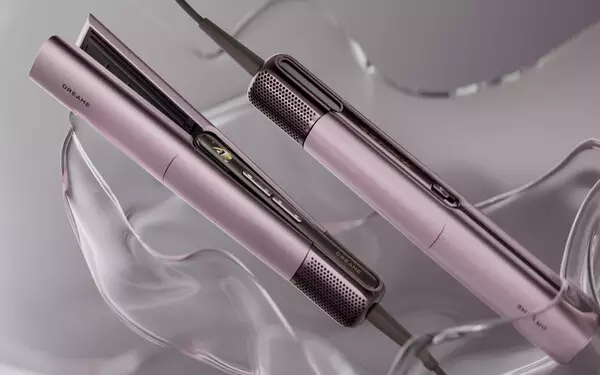
The Aero Straight Pro 2-in-1 Air Straightener introduces dual airflow engineered for use on both wet and dry hair, to deliver smooth, glossy results while helping reduce heat exposure and elevate everyday styling performance.
LOS ANGELES, June 2, 2026 /PRNewswire/ -- Dreame Technology (Dreame) today announced the launch of the Aero Straight Pro 2-in-1 Air Straightener, its most advanced hair styling device to date. Combining high-velocity airflow, intelligent thermal sensing, and advanced hair protection technologies, the Aero Straight Pro introduces a new approach to straightening that prioritizes speed, shine, and hair care without relying on excessive heat or heavy compression.
Designed for both wet and dry styling, the Aero Straight Pro 2-in-1 Air Straightener streamlines the styling process by drying, straightening, and setting hair simultaneously. The result is a faster, more efficient styling experience engineered to deliver sleek, long-lasting results with greater comfort and control.
"As Dreame continues to expand its hair tool portfolio, our focus remains on developing intelligent, intuitive technologies that enhance everyday routines," said Ana Wang, CEO of Dreame Technology North America. "The Aero Straight Pro 2-in-1 Air Straightener represents a new era of airflow-based styling, delivering smoother, healthier-looking results with less heat, greater speed, and more personalization."
A New Approach to Straightening with Intelligent Airflow
At the core of the Aero Straight Pro 2-in-1 Air Straightener is Dreame's Dual Airflow Technology, which combines heated airflow for styling with cool airflow to immediately set the look in a single pass. This continuous styling-and-setting process is designed to help improve style longevity while reducing prolonged heat exposure during use.
Powered by a up to 120,000 RPM high-speed motor, the device generates concentrated airflow that smooths and straightens hair efficiently while minimizing reliance on extreme plate temperatures or mechanical compression. The airflow-based system is engineered to create sleek, polished results with enhanced shine and movement.
Wet-to-Straight Styling Designed for Faster Everyday Routines
The Aero Straight Pro 2-in-1 Air Straightener is designed to simplify styling by combining drying and straightening into one streamlined process. Using airflow powered by the Coandă effect, the device can simultaneously dry and smooth hair, improving styling efficiency by up to 50%.
Multiple styling modes allow users to customize the experience for different routines and hair needs, including a dedicated 57°C Root Care Mode engineered for gentler root-level drying and styling.
Intelligent Heat Control and Personalized Styling
To help maintain consistent styling performance, the Aero Straight Pro 2-in-1 Air Straightener incorporates an advanced NTC Smart Temperature Control system with six sensors that monitor heat levels 200 times per second. This continuous regulation helps maintain precise airflow temperatures while supporting smoother styling results and reduced heat stress on the hair.
Triple Protection Care for Smoother, Shinier Hair
Beyond styling performance, the Aero Straight Pro 2-in-1 Air Straightener was developed with a strong emphasis on hair care and long-term hair appearance. Its Triple Hair Protection System combines negative ion technology, keratin-coated components, and Moroccan argan oil infusion to help reduce frizz, enhance shine, and support softer-looking results throughout the styling process.
A built-in smart display provides clear visibility into styling modes, airflow settings, and real-time temperature monitoring, while intelligent safety features automatically adjust airflow during use, pause operation after inactivity, and power down the device after three minutes to help prevent overheating.
The Aero Straight Pro has already received international recognition, earning both a Publisher Awards CES 2026 and a Digital Trends Publisher Award for its engineering innovation and consumer-focused design.
The Dreame Aero Straight Pro 2-in-1 Air Straightener is now available for $349.99 on Amazon and Dreame's official website, offering a streamlined, high-performance solution for next-generation at-home hair styling.
For more information about the Aero Straight Pro 2-in-1 Air Straightener and Dreame Technology's expanding beauty and hair portfolio, visit beauty.dreametech.com.
About Dreame Technology:
Established in 2017, Dreame Technology is an innovative consumer product company specializing in smart home appliances, with a vision to empower lives through technology. With a focus on innovation and user experience, Dreame's award-winning products deliver powerful, intelligent cleaning solutions that transform everyday living. Follow us on Facebook, Instagram, TikTok and Twitter. For more information, please visit https://www.dreametech.com/.
** This press release is distributed by PR Newswire through automated distribution system, for which the client assumes full responsibility. **
Dreame Technology Launches Aero Straight Pro 2-in-1 Air Straightener, a Breakthrough Intelligent Air Hair Straightener