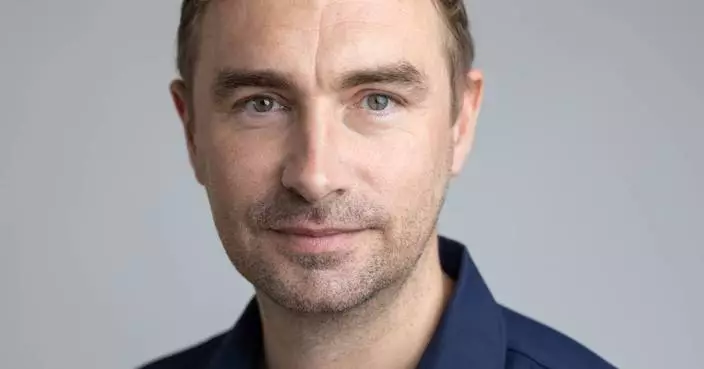
COLUMBUS, Ohio (AP) — Ohio State elevated its chief academic officer to president Thursday, acting swiftly to move past the abrupt resignation of former President Walter “Ted” Carter Jr. following revelations about his “inappropriate relationship” with the female host of a podcast for military veterans.
Trustees voted unanimously to appoint Executive Vice President and Provost Ravi Ballamkonda as Carter’s successor — bypassing the traditional nationwide search — and Ohio State's fourth president since 2020.
The board of trustees want what's best for the university, chair John Zeiger said, and "the answer to this all-important test is close at hand.”
“The right leader is already at our university," he said during a special board meeting, "and his vast experience, his personal values and management skills, his strong record here at Ohio State and his ability to inspire excellence in all those around him give this board great confidence that Dr. Ravi Bellamkonda is the right person to lead this university into the future as our president.”
Days earlier, the board of trustees confronted Carter about a tip from outside the university. He disclosed that he had “made a mistake in allowing inappropriate access to Ohio State leadership,” according to his public statement, and submitted his resignation. The retired Navy vice admiral was just two years into a five-year contract under which he made more than $1.1 million a year, plus bonuses and residency at Ohio State’s president’s mansion.
Expressing surprise and disappointment, Zeiger accepted his resignation Sunday and the university said it was investigating Carter’s “inappropriate relationship with someone seeking public resources to support her personal business.”
JobsOhio, the state’s privatized economic development office, said Carter’s resignation was “possibly connected” to his relationship to Krisanthe Vlachos, host of what was supposed to be a four-episode veterans’ podcast pilot, The Callout, for which it paid $15,000 an episode. It’s now moving to claw back its $60,000, the office said.
“Ohio State is a trusted partner and Admiral Carter, sharing our passion for military and veterans, recommended The Callout Podcast as an opportunity to build and engage a military and veteran audience in Ohio,” the office posted on X, “and connect them to the massive job opportunities coming to Ohio’s super sectors like advanced aerospace/defense and energy.”
Carter had been a guest on the podcast.
VetEarnUSA LLC, an Ohio business registered by Vlachos on Dec. 20, is part of the investigation, said Ohio State spokesperson Ben Johnson. She listed the address of the operation as that of WOSU Public Media. WOSU has reported that Vlanchos had a contract with them to record her podcast inside their studios, which are located just off the university's main campus in Columbus. The business filing also listed a St. Louis ZIP code.
Vlachos was also paid $10,000 by JobsOhio toward a theater production for veterans called “Last Out: Elegy of a Green Beret,” the office said. It was part of JobsOhio's Hometown Heroes program, which brings free programming to military, veterans and their families.
After the board meeting, Ballamkonda told reporters that stakeholders are certain to have a spectrum of reactions to Carter’s swift departure and potential misconduct, and he pledged to move forward and hold the university to a high standard.
The university brought Carter on board in 2023 from the University of Nebraska system. He is also a former superintendent of the U.S. Naval Academy and he attended the Navy Fighter Weapons School, known as Top Gun. He holds the national record for carrier-arrested landings with over 2,000 mishap-free touchdowns.
Ballamkonda, a bioengineer and neuroscientist, joined the university after holding leadership, research or teaching positions at Emory University, Duke, Georgia Tech and Case Western Reserve University in Cleveland. He earned his Ph.D. in medical science and biomaterials at Brown.
Ballamkonda pledged to redouble the university's commitment to excellence.
“Looking ahead, knowing our collective strengths, I promise you this: Together we will take on hard things that are worth doing,” he said. “Hard things that are worth doing in athletics, in healthcare, in education, in fact in all the things we do. We will lead and we will not be afraid to lead.”

FILE - This May 8, 2019, file photo, shows a sign for Ohio State University in Columbus, Ohio. (AP Photo/Angie Wang, File)
KYIV, Ukraine (AP) — Ukraine is awaiting White House approval for a major drone production agreement proposed by Kyiv last year, Ukrainian President Volodymyr Zelenskyy said Thursday, as countries scramble to modernize their air defenses after the Iran war exposed shortcomings.
The proposed U.S.-Ukraine deal would cover various types of drones and air defenses that operate as a single system capable of protecting against swarms of hundreds or even thousands of Iranian-designed Shahed drones and missiles, Zelenskyy said in a message on social media.
“We have not yet had the opportunity to sign this document,” Zelenskyy said.
Russia, which invaded its neighbor just over four years ago, has fired more than 57,000 Shahed drones at Ukraine, the Ukrainian Foreign Ministry said earlier this week. It launched more than 800 drones and decoys in its biggest nighttime barrage of Ukraine.
Iran has responded to joint U.S.-Israeli strikes by firing the same type of drones at targets in the Middle East.
A Patriot air defense missile costs $3 million–$4 million, while a Shahed costs about $130,000–$150,000, Zelenskyy said during a visit to Romania, adding that the United States produces about 60–65 Patriot missiles per month.
Ukraine has pioneered the development of cut-price drone killers, some of which cost a few thousand dollars, that have rewritten the air defense rule book. The conflict unfolding in the Middle East might prompt American officials to sign the drone production proposal, Zelenskyy said.
Ukraine is keen to lock in future foreign support for its ongoing effort to thwart Russia’s invasion, and drone production agreements could bring Kyiv some diplomatic leverage in negotiations with Moscow.
U.S.-mediated talks seeking to stop Europe’s biggest conflict since World War II are on hold due to the Iran war, though they could resume next week, according to the Ukrainian leader.
Zelenskyy was in NATO member Romania a day before he visits French President Emmanuel Macron in Paris, as new research indicated Russian oil revenue that helps drive its invasion of Ukraine has risen since the Iran war began.
Russia’s daily revenue from oil sales during the Iran conflict, which has brought a sharp increase in the price of crude, has been on average 14% higher than in February, according to the nonprofit Centre for Research on Energy and Clean Air. Oil revenue is crucial for Moscow's war effort.
Russia has been earning 510 million euros ($588 million) every day this month from oil and liquefied natural gas exports, according to Isaac Levi of the CREA. Most Russian LNG goes to the European Union, while China, Turkey and India currently make up 90% of all Russia’s crude oil exports, he told The Associated Press in an interview.
The windfall is boosting the Russian economy, which previously was feeling the pinch of international sanctions, he said.
Macron’s office said his talks with the Ukrainian leader will focus on efforts to counter Russia’s so-called shadow fleet of tankers that are shipping oil in violation of international sanctions but are hard to stop.
Zelenskyy met in Bucharest with Romanian President Nicușor Dan, who told a news conference that the two countries signed documents for joint drone production and energy sector cooperation.
Ukraine has exported a significant amount of its grain through Romania during the war, and Bucharest has provided energy support to Kyiv as Moscow’s forces blast Ukraine’s power grid.
Long-range drones operated by a special operations unit of the Ukraine Security Service struck a major oil depot and transshipment terminal in southern Russia’s Krasnodar region, a senior Ukrainian official claimed Thursday.
The attack dealt a significant blow to Russia’s fuel logistics, according to the official, who spoke on condition of anonymity because he was not authorized to comment publicly.
Kremlin spokesman Dmitry Peskov said that a separate drone attack on a compressor station serving a natural gas pipeline to Turkey was an “absolutely reckless action.”
The Russian Defense Ministry said air defenses shot down 10 Ukrainian drones overnight around the compressor station in the Krasnodar region. It said there was no damage to the facility.
Associated Press writer Samuel Petrequin in Paris contributed to this report.
Follow AP’s coverage of the war in Ukraine at https://apnews.com/hub/russia-ukraine
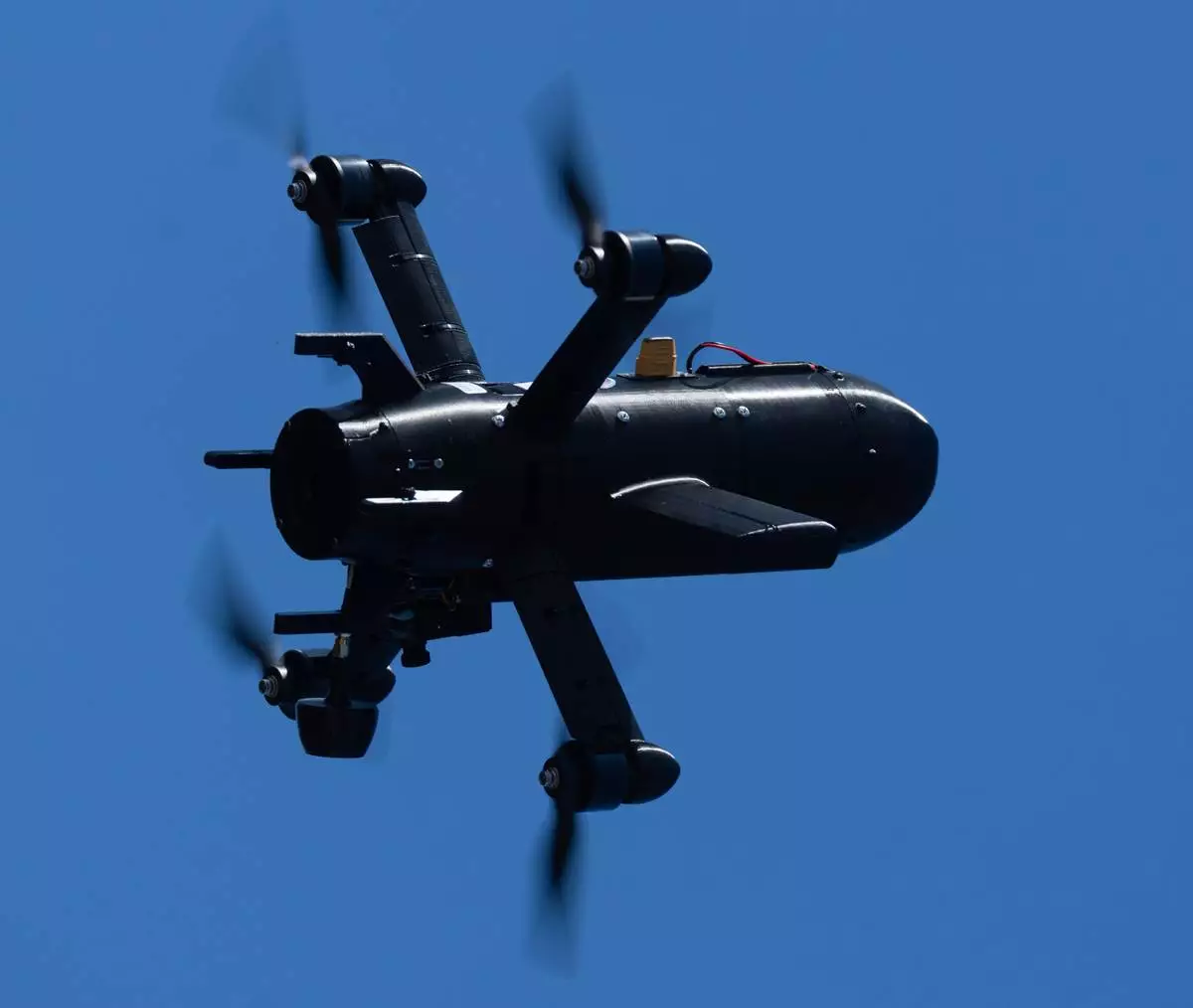
An anti-air interceptor drone designed to destroy Russian attack drones from the Ukrainian company General Cherry is seen during a demonstration in Kyiv region, Wednesday, March 11, 2026. (AP Photo/Efrem Lukatsky)
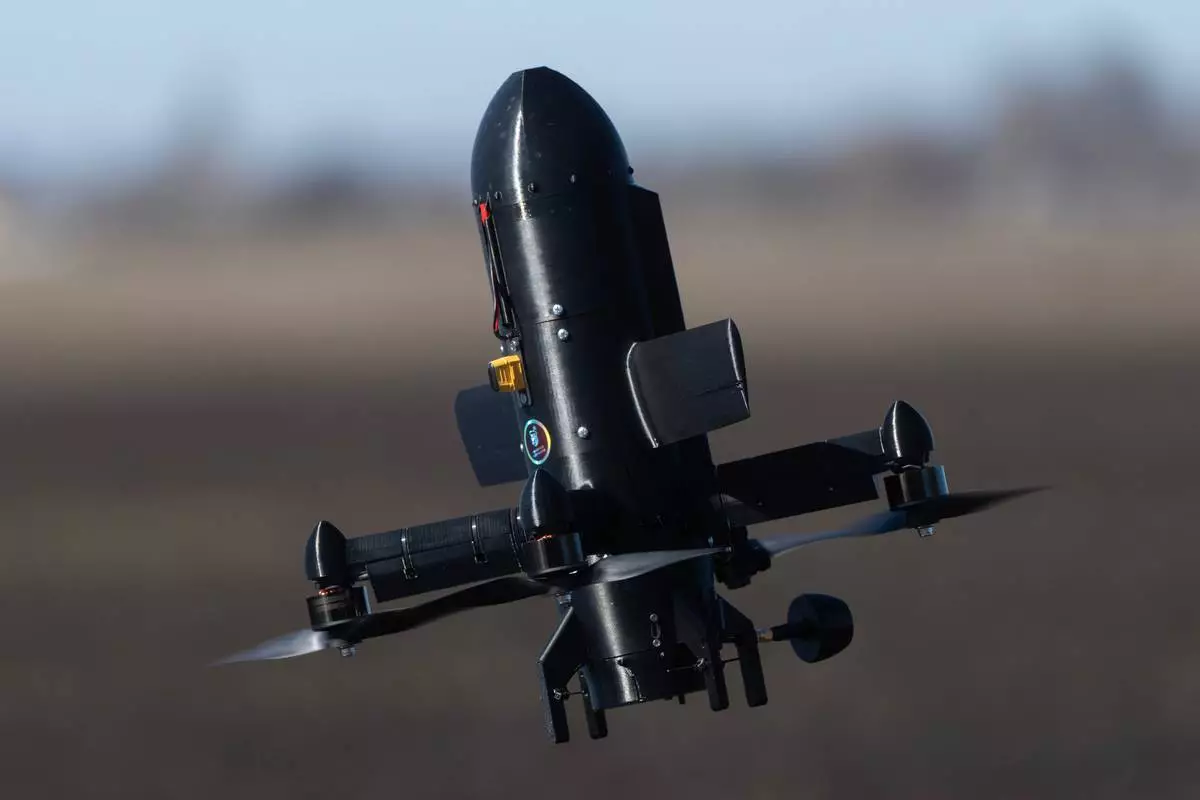
An anti-air interceptor drone designed to destroy Russian attack drones from the Ukrainian company General Cherry is seen during a demonstration in Kyiv region, Wednesday, March 11, 2026. (AP Photo/Efrem Lukatsky)
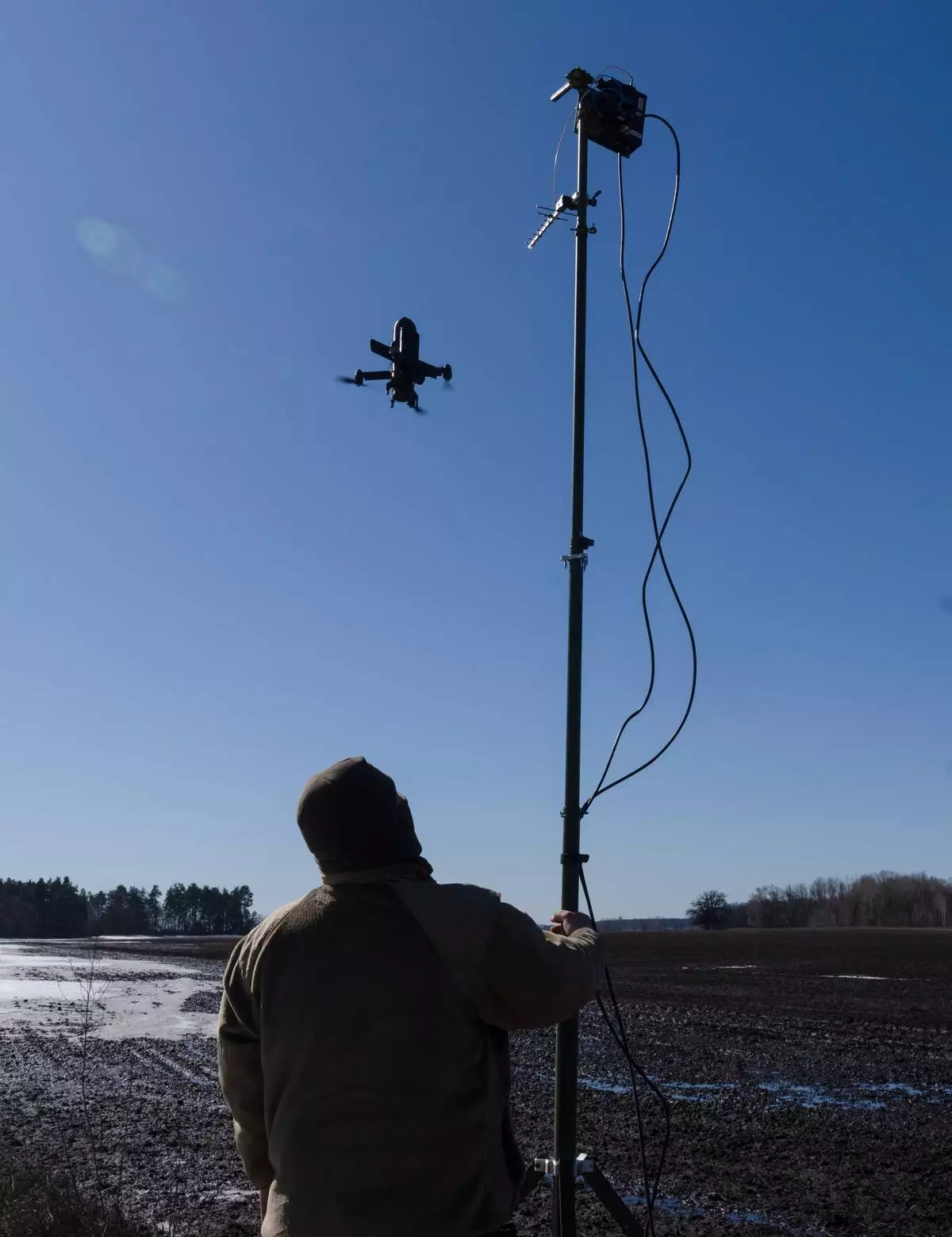
An instructor from the Ukrainian company General Cherry demonstrates the operation of an anti-air interceptor drone designed to destroy Russian attack drones in Kyiv region, Wednesday, March 11, 2026. (AP Photo/Efrem Lukatsky)
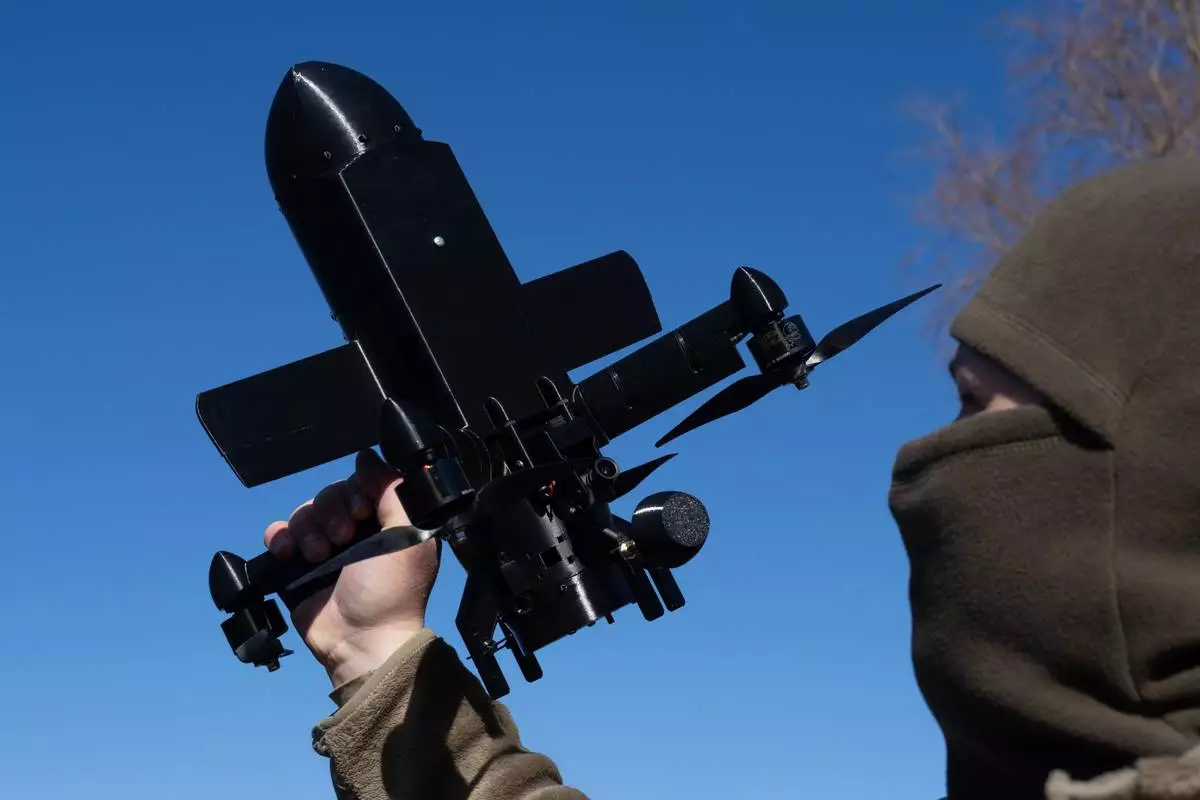
An instructor from the Ukrainian company General Cherry demonstrates the operation of an anti-air interceptor drone designed to destroy Russian attack drones in Kyiv region, Wednesday, March 11, 2026. (AP Photo/Efrem Lukatsky)