Iran and Israel continued to exchange airstrikes on Thursday as hostilities showed no signs of abating.
Iran's new Supreme Leader Mojtaba Khamenei on Thursday published his first message since Sunday's announcement of his appointment as Iran's supreme leader.
He called for the continued closure of the Strait of Hormuz and pledged to open new fronts in his country's conflict with the United States and Israel.
He also advised Iran's neighbors to shut down U.S. bases in their territories as soon as possible, "as they must have realized by now that the U.S. claim of establishing security and peace was nothing more than a lie."
Following his statement, Iran's General Staff of the Armed Forces issued a statement, affirming that under the Supreme Leader's orders, the armed forces would defend the achievements of the Islamic Revolution and safeguard national interests with greater determination and spirit than ever before.
The Islamic Revolutionary Guard Corps' Navy Commander Alireza Tangsiri also posted on social media that in response to the Supreme Leader's order, his forces will continue to block the Strait of Hormuz and inflict the harshest blows to the aggressor enemy.
Also on Thursday, the IRGC launched the 42nd wave of its military operation "True Promise 4," conducting missile and drone strikes targeting Tel Aviv and U.S. military bases in the region.
In a separate operation, the IRGC Navy struck the headquarters of the U.S. Fifth Fleet in Bahrain's Mina Salman port with missiles and drones.
Announcing in a statement on its official news outlet Sepah News, the IRGC said it conducted two waves of attacks early Thursday, dealing crushing blows to the U.S. base.
It added that it had carried out precision strikes with its kamikaze drones as well as cruise and ballistic missiles against an anti-drone system and a depot of remotely operated underwater vehicles, among others.
On Thursday evening, Israeli Prime Minister Benjamin Netanyahu held his first press conference after nearly two weeks at war with Iran.
Netanyahu said Iran was suffering crushing blows from Israeli strikes, adding that the goals of the operation were to prevent Iran from developing nuclear weapons and ballistic missiles, among others.
He also warned that Hezbollah would pay a heavy price for its aggression.
His remarks came as Israel pounded Beirut and southern Lebanon and Hezbollah fired dozens of projectiles toward northern Israel amid the conflict with Iran.
The Israel Defense Forces (IDF) announced Thursday that it had begun a wide-scale wave of strikes targeting infrastructure across Iran.
The IDF also confirmed that missiles launched from Iranian territory had been detected and that its air defense systems had been activated to intercept them.
On Feb. 28, Israel and the United States launched joint attacks on Tehran and several other Iranian cities, killing Iran's then Supreme Leader Ali Khamenei, along with senior military commanders and civilians. The attacks took place while negotiations were ongoing. Iran responded by launching waves of missile and drone strikes targeting Israel and U.S. bases and assets in the Middle East.
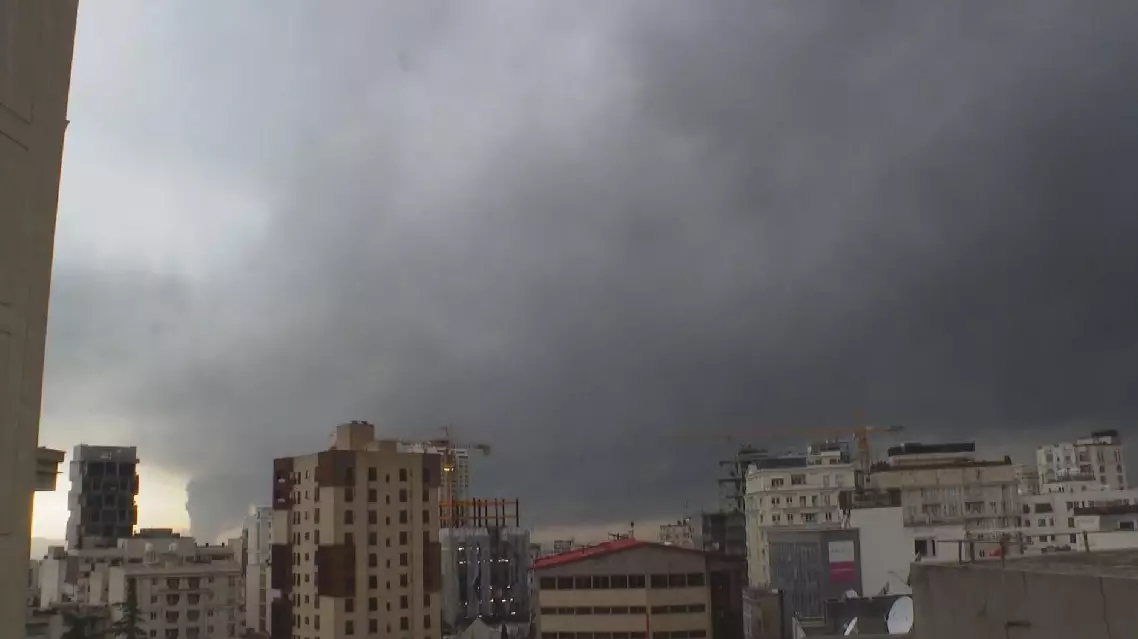
Iran, Israel exchange fresh strikes amid ongoing hostilities