Skip to Content Facebook Feature Image

FSTB Unveils New Regulations to Curb Excessive Borrowing by Licensed Money Lenders

HK

FSTB Unveils New Regulations to Curb Excessive Borrowing by Licensed Money Lenders
HK

HK

FSTB Unveils New Regulations to Curb Excessive Borrowing by Licensed Money Lenders

2026-03-13 16:30 Last Updated At:17:13

FSTB publishes consultation conclusions and plans to implement first-phase measures as early as August to enhance regulation of licensed money lenders

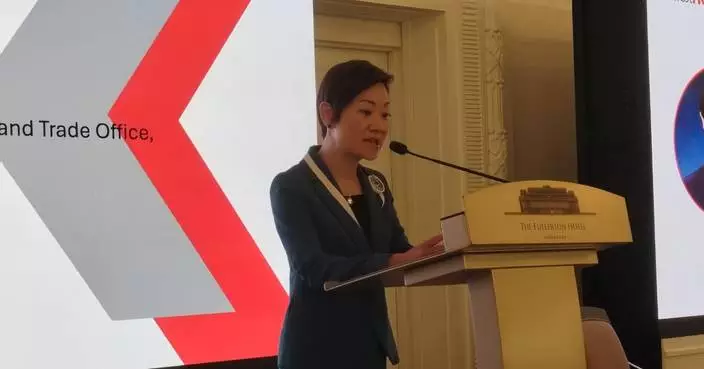
The Financial Services and the Treasury Bureau (FSTB) published today (March 13) the consultation conclusions and specific measures on enhancing the regulation of licensed money lenders (money lenders) to address the issue of excessive borrowing and better protect the public. The FSTB will implement relevant measures in two phases.

The measures under the first phase mainly include introducing "debt servicing ratio" caps for unsecured personal loans of low-income earners, prohibiting money lenders from requesting borrowers to provide loan referees, and requiring money lenders to include a risk warning statement specified by the Companies Registry (CR) in their money lending advertisements. These measures will be implemented in August this year. Meanwhile, the measures relating to the Credit Data Smart (CDS) under the second phase will be rolled outin June next year. The FSTB and the CR are drafting the revised licensing conditions of the money lenders' licences and administrative guidelines and have held discussions with the Judiciary on updating issued money lender licences in phases to dovetail with the implementation of the measures (see Annex).

With a view to enhancing the regulation of money lenders, the FSTB conducted from June to August last year a public consultation covering key features on enhancing regulation of unsecured personal loans, strengthening protection of the public interest, optimising and improving the affordability assessment of borrowers in respect of unsecured personal loans, strengthening the complaint-handling process, stepping up publicity and education, and enhancing the regulatory regime of money lenders. During the consultation period, a total of 150 submissions were received from the community. The FSTB also briefed the Panel on Financial Affairs of the Legislative Council (LegCo FA panel) and organised briefing sessions for the money-lending industry, professional bodies and non-governmental organisations to explain to them the details.

A spokesman for the FSTB said, "The Government is committed to further strengthening the regulation of money lenders to protect the public interest. We are pleased to note that the community is very supportive of enhancing the regulation of money lenders and agrees that targeted measures should be adopted to address the issue of excessive borrowing. Respondents generally support the major measures put forward by the Government and provided valuable comments on the specific details of various measures. We will brief the LegCo FA panel next month on the consultation conclusions and the details of the various measures."

The FSTB hopes that the community will continue to support the implementation of the measures, with a view to addressing the issue of excessive borrowing via a multipronged approach. The FSTB and the CR will maintain close liaison with industry associations through different channels and provide information and guidance to money lenders, in order to ensure smooth implementation of the measures.

The consultation conclusions have been uploaded to the FSTB website atwww.fstb.gov.hk/fsb/en/publication/consult/doc/ConsultationConclusionsMoneyLenders-e.pdf.

Source: AI-found images
Source: AI-found images

FEHD releases second batch of gravidtrap indexes for Aedes albopictus in March

The Food and Environmental Hygiene Department (FEHD) today (March 13) released the second batch of gravidtrap indexes and density indexes for Aedes albopictus in March, covering 18 survey areas, as follows:

District

Survey Area

March 2026

First Phase Gravidtrap Index

First Phase Density Index

Eastern

Chai Wan

1.6%

1.0

North Point and Quarry Bay

0.0%

N/A

Shau Kei Wan and Sai Wan Ho

0.0%

N/A

Southern

Aberdeen and Ap Lei Chau

1.9%

1.0

Deep Water Bay and Repulse Bay

0.0%

N/A

Wan Chai

Tin Hau and Causeway Bay

0.0%

N/A

Wan Chai

0.0%

N/A

Kowloon City

Kai Tak

2.2%

1.0

Sha Tin

Ma On Shan

3.3%

1.0

Sha Tin Town Centre and Fo Tan

0.0%

N/A

Tai Wai

0.0%

N/A

Kwai Tsing

Kwai Chung East

0.0%

N/A

Tsuen Wan

Tsuen Wan Town

0.0%

N/A

Tuen Mun

Tuen Mun West

0.0%

N/A

District

Survey Area

March 2026

Area Gravidtrap Index

Area Density Index

Kowloon City

Kowloon City

0.0%

N/A

Yau Tsim

Tsim Sha Tsui East and King's Park

0.0%

N/A

Kwai Tsing

Tsing Yi South

0.0%

N/A

Tuen Mun

So Kwun Wat

1.8%

1.0

Among the second batch of First Phase Gravidtrap Indexes covering 14 survey areas and Area Gravidtrap Indexes covering four survey areas in March, most of the areas recorded 0 per cent, indicating that the distribution of Aedes albopictus mosquitoes was not extensive.

The FEHD has so far released two batches of gravidtrap indexes for Aedes albopictus in March 2026, covering 28 survey areas. Among these 28 survey areas, 21 recorded a decrease or remained unchanged as compared to the Area Gravidtrap Index last month (i.e. February 2026), representing that the areas' mosquito infestation improved or maintained a low level. Seven other areas recorded a slight increase, but the indexes were lower than 10 per cent.

The warm and humid weather of spring is favourable for mosquito breeding. Members of the public should strengthen prevention work against mosquito breeding before the rainy season, and eliminate potential mosquito breeding sites in advance, with a view to avoiding the nuisances caused by rapid mosquito breeding during the rainy season and reducing the risk of transmitting mosquito-borne diseases.

Public participation is crucial to the effective control of mosquito problems. The FEHD appeals to members of the public to continue to work together in strengthening personal mosquito control measures, including:

  • tidy up their premises and check for any accumulation of water inside their premises;
  • remove all unnecessary water collections and eliminate the sources;
  • check household items (those placed in outdoor and open areas in particular), such as refuse containers, vases, air conditioner drip trays, and laundry racks to prevent stagnant water;
  • change water in flower vases and scrub their inner surfaces thoroughly, and remove water in saucers under potted plants at least once a week;
  • properly cover all containers that hold water to prevent mosquitoes from accessing the water;
  • properly dispose of articles that can contain water, such as disposable meal boxes and empty cans; and
  • scrub drains and surface sewers with alkaline detergent at least once a week to remove any mosquito eggs.
  • Starting in August 2025, following the completion of the surveillance of individual survey areas, and once the latest gravidtrap index and the density index are available, the FEHD has been disseminating relevant information through press releases, its website and social media. It aims to allow members of the public to quickly grasp the mosquito infestation situation and strengthen mosquito control efforts, thereby reducing the risk of chikungunya fever (CF) transmission.

    Following recommendations from the World Health Organization and taking into account the local situation in Hong Kong, the FEHD sets up gravidtraps in districts where mosquito-borne diseases have been recorded in the past, as well as in densely populated places such as housing estates, hospitals and schools to monitor the breeding and distribution of Aedes albopictus mosquitoes, which can transmit CF and dengue fever. At present, the FEHD has set up gravidtraps in 62 survey areas of the community, with a surveillance period of two weeks. During the surveillance period, the FEHD will collect the gravidtraps once a week. After the first week of surveillance, the FEHD will immediately examine the glue boards inside the retrieved gravidtraps for the presence of adult Aedine mosquitoes to compile the Gravidtrap Index (First Phase) and Density Index (First Phase). At the end of the second week of surveillance, the FEHD will instantly check the glue boards for the presence of adult Aedine mosquitoes. Data from the two weeks of surveillance will be combined to obtain the Area Gravidtrap Index and the Area Density Index. The gravidtrap and density indexes for Aedes albopictus in different survey areas, as well as information on mosquito prevention and control measures, are available on the department's webpage (www.fehd.gov.hk/english/pestcontrol/dengue_fever/Dengue_Fever_Gravidtrap_Index_Update.html#).

    Source: AI-found images

    Source: AI-found images

    Recommended Articles