GENEVA (AP) — Pushing back on U.S. President Donald Trump’s comments, Iran's national soccer team says “no one can exclude” it from playing in the men's World Cup in the United States.
Instead, a post on the team's official Instagram account Thursday suggested maybe the U.S. team should be excluded after Trump indicated that the host country couldn't guarantee the safety of the Iranian players.
Trump wrote in a social media post Thursday that the Iranian team was welcome at the World Cup despite the ongoing war with Iran but that “I really don’t believe it is appropriate that they be there, for their own life and safety.”
Iran is set to play all three of its World Cup group games in the U.S., which is co-hosting the tournament with Mexico and Canada.
The regional war has put doubt on Iran’s ability to fulfil its World Cup entry, and sports minister Ahmad Donyamali told state TV this week the current circumstances meant it was not possible to play.
But the Iran team’s riposte on Instagram confirmed it still wants to participate, and pointed out that the tournament is run by FIFA — not Trump or the U.S.
“The World Cup is a historic and international event and its governing body is FIFA — not any individual, country,” the post said. “Certainly, no one can exclude Iran’s national team from the World Cup; the only country that could be excluded is one that merely carries the title of ‘host’ yet lacks the ability to provide security for the teams participating in this global event.”
Iran is scheduled to play in Inglewood, California, against New Zealand on June 15 and Belgium on June 21, before finishing group play in Seattle against Egypt on June 26.
Trump’s mixed messages on the subject include saying last week “I really don’t care” if Iran plays, then assuring FIFA President Gianni Infantino at the White House on Tuesday that Iran’s team was welcome.
Iran is a power in Asian soccer, ranked No. 20 in the world by FIFA and has qualified for its fourth straight World Cup edition.
Iran’s soccer federation has planned to use a tournament base camp in Arizona, at the Kino Sports Complex in Tucson.
Before the World Cup, Iranian soccer officials are due to attend FIFA's annual congress on April 30 in Vancouver. The Iranian federation was unable to attend meetings in Atlanta last week to help teams prepare for the 48-nation tournament.
AP soccer: https://apnews.com/hub/soccer

FILE - President Donald Trump stands on stage next to the FIFA World Cup after receiving the FIFA Peace Prize during the draw for the 2026 soccer World Cup at the Kennedy Center in Washington, Dec. 5, 2025. (AP Photo/Jacquelyn Martin, File)
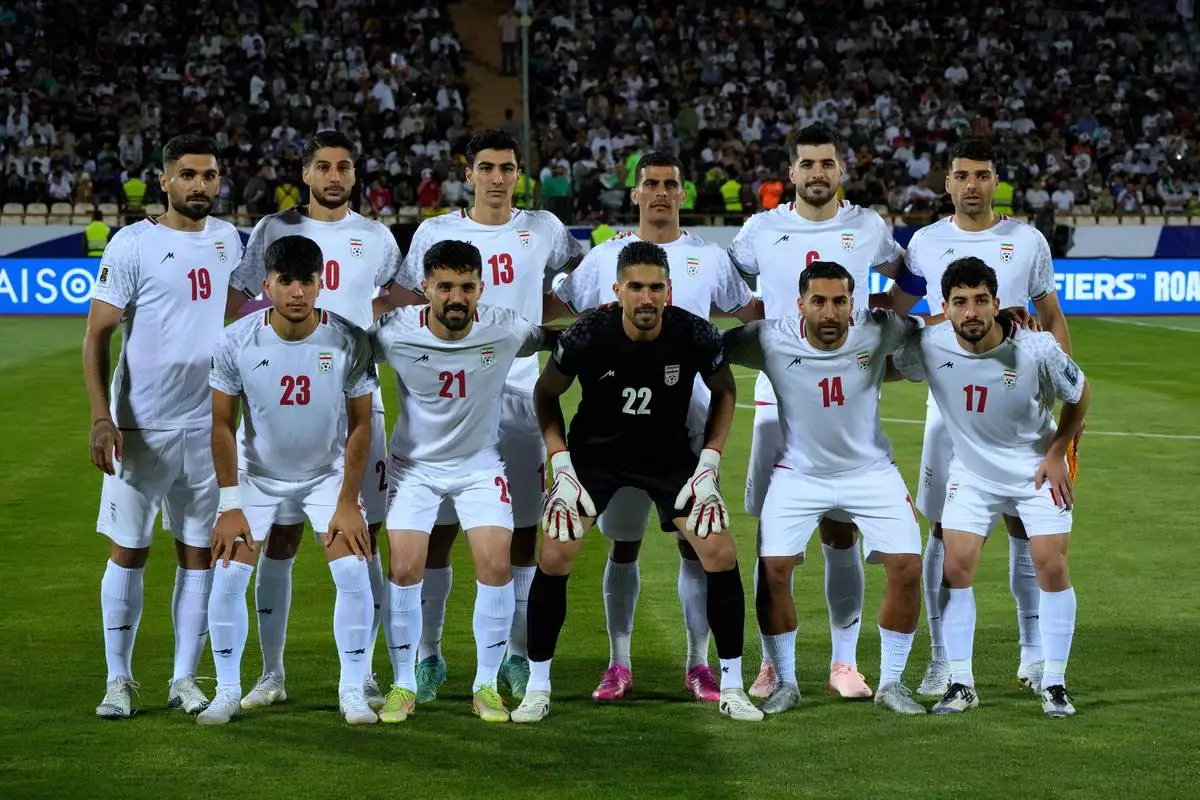
FILE - Irans's players pose for a team photo before an Asian group A qualifying soccer match against North Korea for the 2026 World Cup, June 10, 2025, at Azadi Stadium in Tehran, Iran. (AP Photo/Vahid Salemi, file)
KLEINFELTERSVILLE, Pa. (AP) — A few dozen birdwatchers gathered in the predawn darkness to wait for the moment when thousands of migrating snow geese stopped honking and preening to suddenly take flight from a Pennsylvania reservoir.
The mesmerizing display, about an hour after sunrise, was over almost as soon as it began. The birds circled a few times and then headed out to neighboring farm fields, seeking unharvested grains and other sustenance on their epic annual spring flight northward into New York state and Quebec.
The Pennsylvania reservoir was built a half-century ago to attract waterfowl and over the years the gaggle has grown. Pennsylvania Game Commission environmental education specialist Payton Miller described it as a raucous bird tornado that lifts off the water.
“All it takes is for me to come out here on a really nice morning where there’s a huge morning flight and I’m kind of reminded how awesome it is to see such a large number of such a beautiful bird,” Miller said. “I never get sick of it.”
Among those taking it all in was Adrian Binns, a safari guide from Paoli, Pennsylvania, who went to the Middle Creek Wildlife Management Area for “the whole enjoyment of seeing something you don't see every day.”
Snow geese have been arriving in growing numbers at the 6,300-acre (25 square kilometers) Middle Creek property since the late 1990s. At this time of year, they have just spent months along the Atlantic coast, from New Jersey south to the Carolinas, with many of them overwintering on the Delmarva Peninsula that forms the Chesapeake Bay.
See the full AP photo gallery by photographer Robert F. Bukaty of snow geese at Middle Creek here.
They don’t stay long at Middle Creek — it’s just a way station on their journey to summer breeding grounds in the Canadian Arctic and western Greenland. But for a few short weeks they are the main attraction at Middle Creek, which draws about 150,000 visitors annually — including about a thousand hunters.
The Pennsylvania Game Commission, which owns Middle Creek, says about 100,000 snow geese were roosting there on the busiest day last year, on par with recent peak activity but below the single-day record of about 200,000 on Feb. 21, 2018.
Snow geese are doing well, but their large numbers have come with a cost. According to a 2017 study published by Springer Nature, greater snow geese grew in population from about 3,000 in the early 20th century to some 700,000 by the 1990s. By some estimates, there are about a million of the birds now — along with maybe 10 million of lesser snow geese, which are smaller — that also breed in the Arctic.
The number of migrating tundra swans at Middle Creek, while far lower, has also increased over time, from a dozen or so in the mid-1970s to 5,000 or more in recent years. Middle Creek birders have also identified more than 280 bird species on the site, among them bald eagles, northern harriers, ospreys and owls.
As snow geese numbers have boomed in recent decades, wildlife officials in the U.S. and Canada have navigated a balancing act involving hunting regulations, concerns about crop damage, shifts in snow geese migration and changes to overwintering patterns. Environmental damage from overgrazing in the Arctic has led experts to conclude the birds are overabundant.
David M. Bird, a McGill University wildlife biology professor, described the population as “probably one of the biggest conservation problems facing wildlife biologists in North America today.” Snow geese feed by pulling up plants by the roots, which damages habitats for themselves, various birds and other kinds of wildlife.
The Pennsylvania Game Commission reported recently that avian influenza viruses, present in the state since 2022, continue to circulate among the state’s wild birds. The game agency asked for the public’s help in reporting sick or dead wild birds and reported that about 2,000 wild bird carcasses — mostly snow geese — had to be removed from a quarry a few miles north of Bethlehem in December and January.
Bird said that for nature lovers, snow geese can be a delight but for farmers, they're a pest. For hunters, they're food but for animal rights advocates, they're a species that needs protection, he said.
“But if you are a paid professional wildlife manager at a municipal, state or federal level whose challenging job is to try to please all of the aforementioned parties, then you will undoubtedly experience many sleepless nights in the fall when the geese arrive,” Bird said.
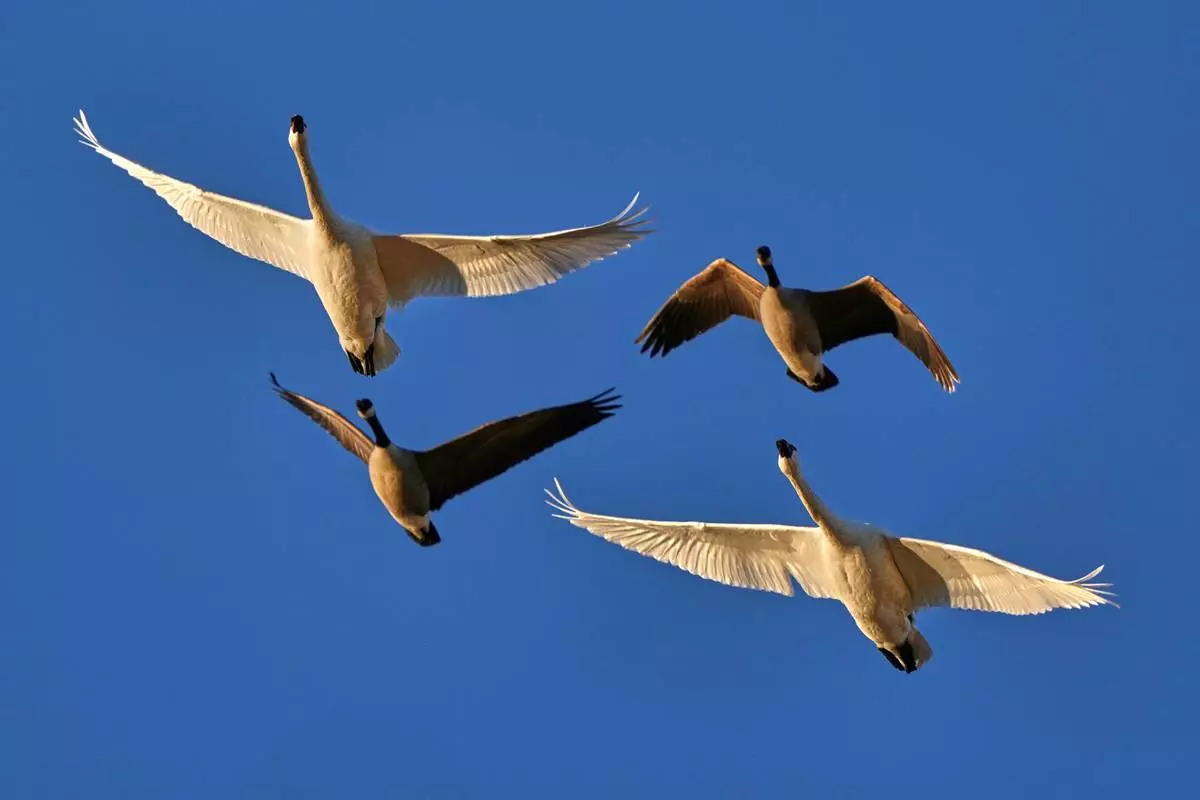
Pairs of tundra swans (larger birds) and Canada geese fly over the Middle Creek Wildlife Management Area, Monday, March 9, 2026, in Kleinfeltersville, Pa. (AP Photo/Robert F. Bukaty)
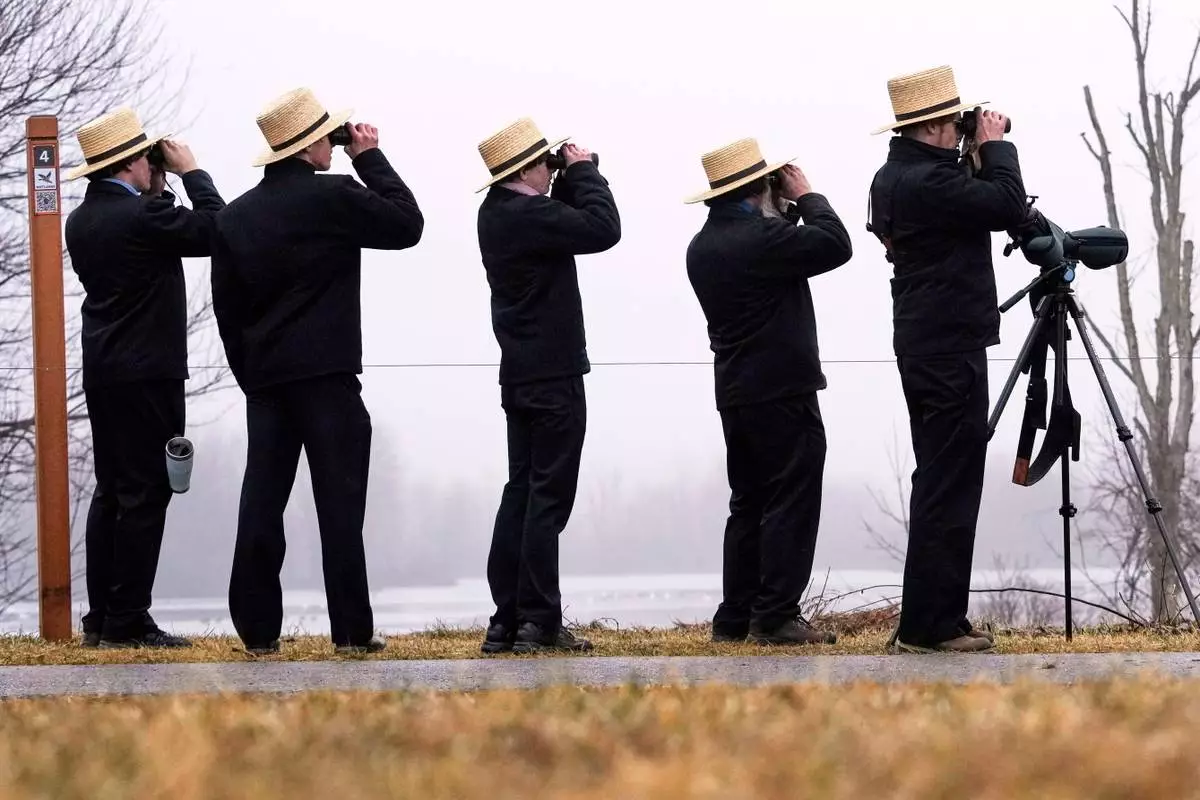
Amish birders focus their binoculars on waterfowl at Middle Creek Wildlife Management Area, Saturday, March 7, 2026, in Kleinfeltersville, Pa. (AP Photo/Robert F. Bukaty)
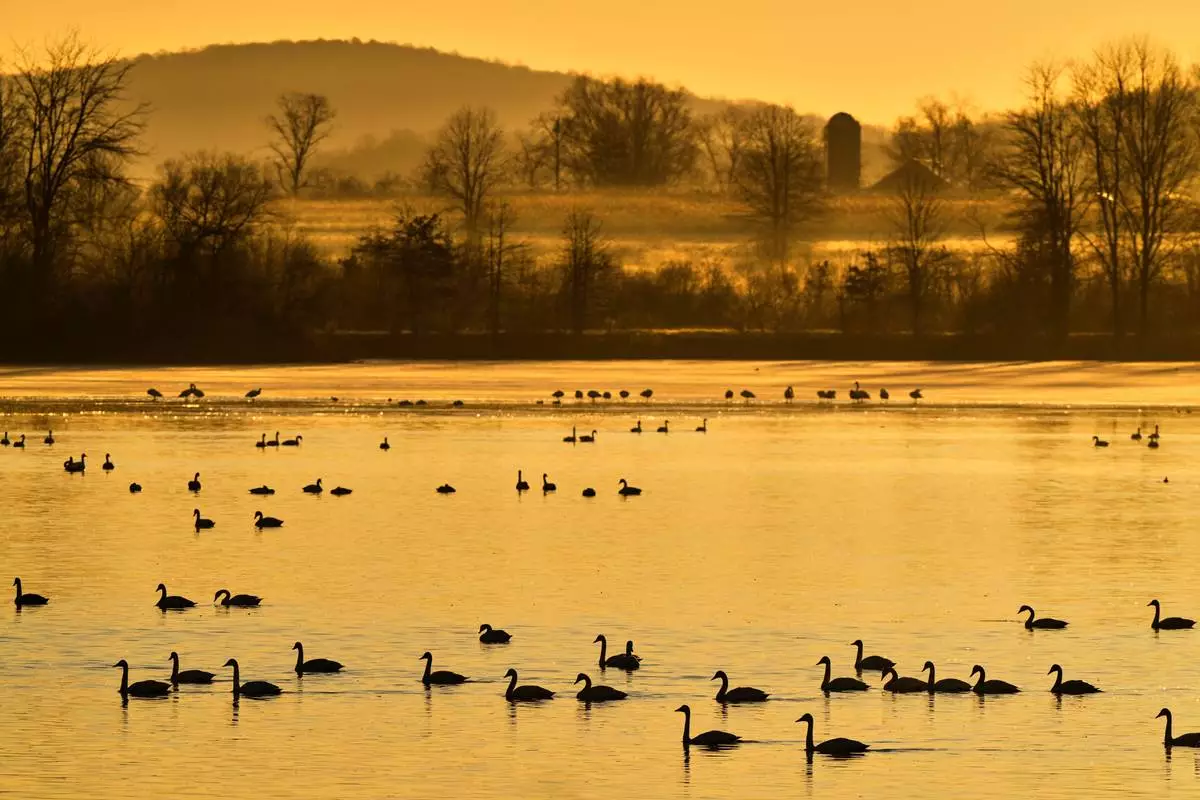
Tundra swans and other waterfowl gather on a manmade reservoir at the Middle Creek Wildlife Management Area for a stopover, Monday, March 9, 2026, in Kleinfeltersville, Pa. (AP Photo/Robert F. Bukaty)
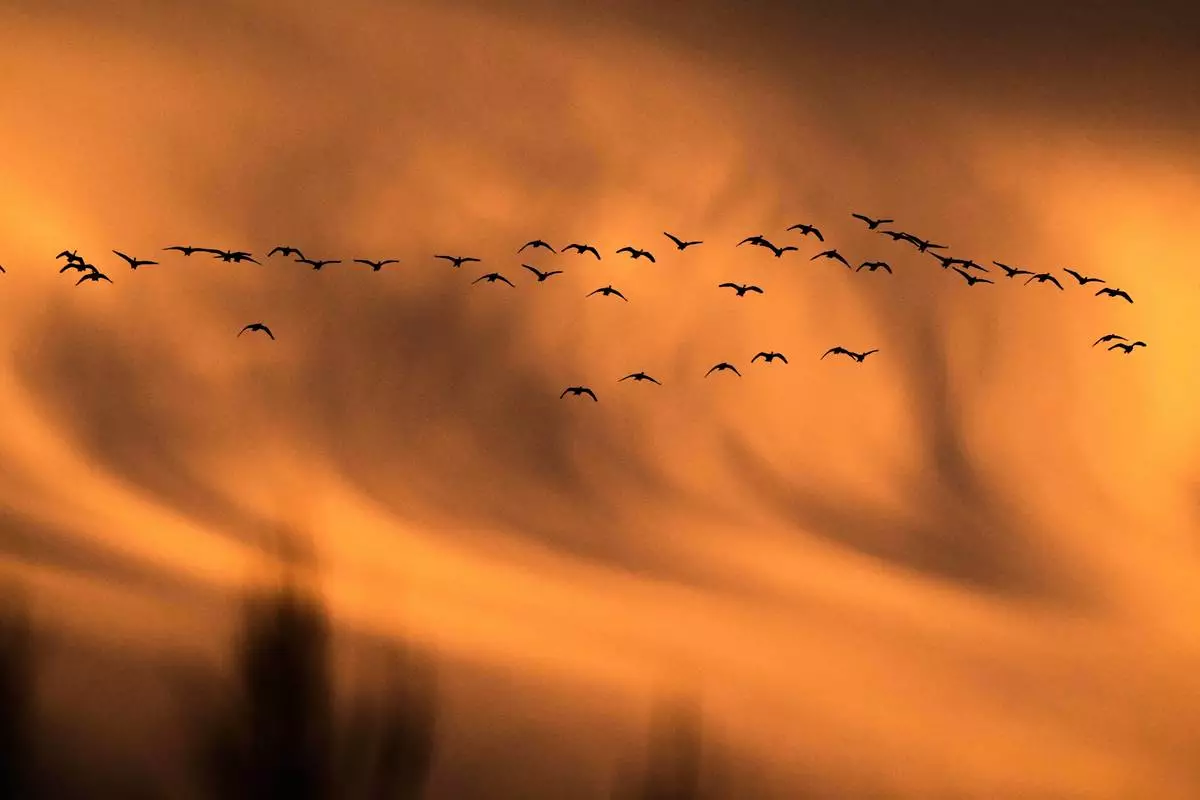
A flock of snow geese arrives to spend the night at the Middle Creek Wildlife Management Area, Sunday, March 8, 2026, in Kleinfeltersville, Pa. (AP Photo/Robert F. Bukaty)
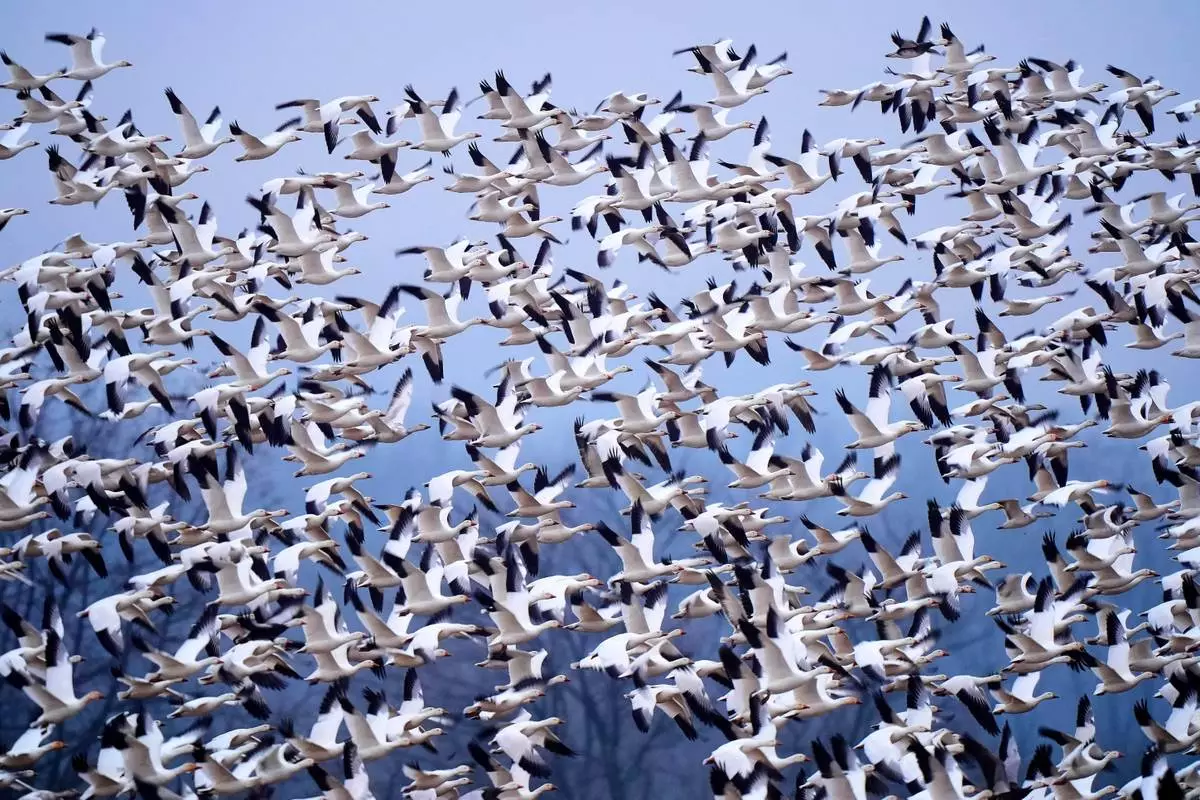
Snow geese take off from a reservoir at the Middle Creek Wildlife Management Area, Friday, March 6, 2026, in Kleinfeltersville, Pa. (AP Photo/Robert F. Bukaty)
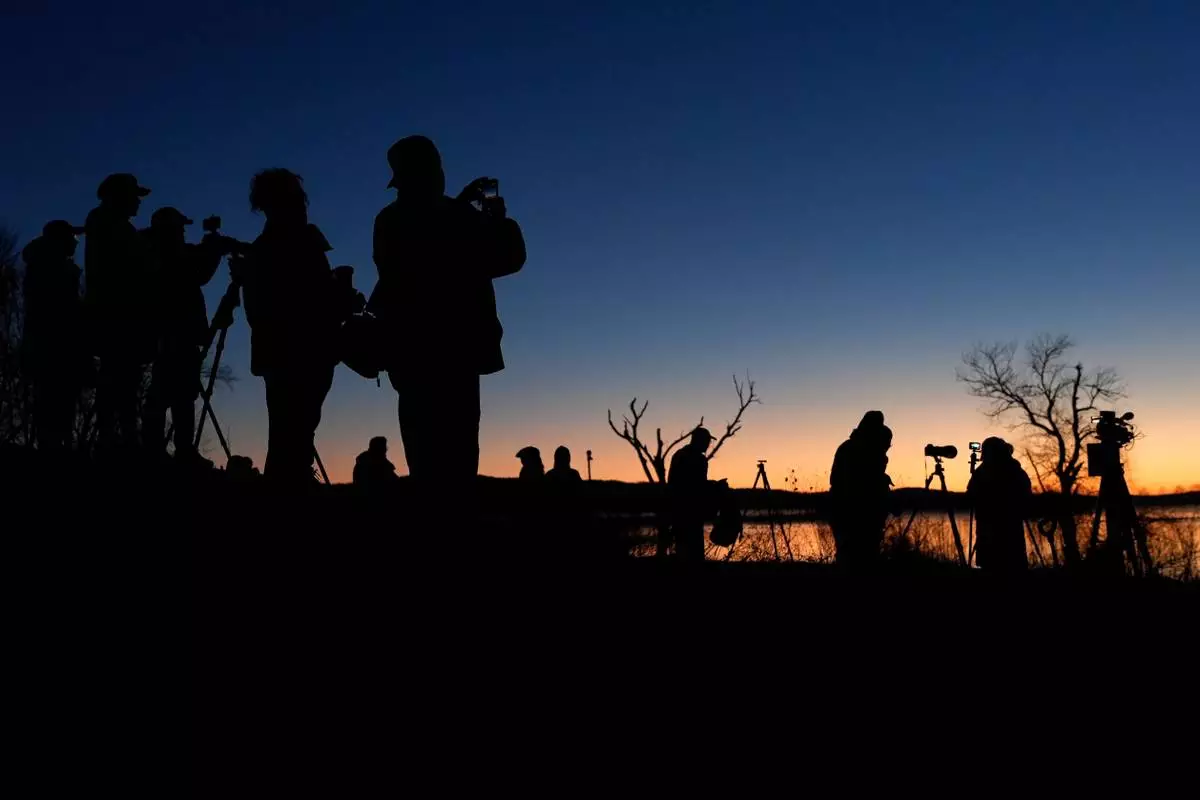
Early-rising birders await sunrise at Middle Creek Wildlife Management Area, Monday, March 9, 2026, in Kleinfeltersville, Pa. (AP Photo/Robert F. Bukaty)
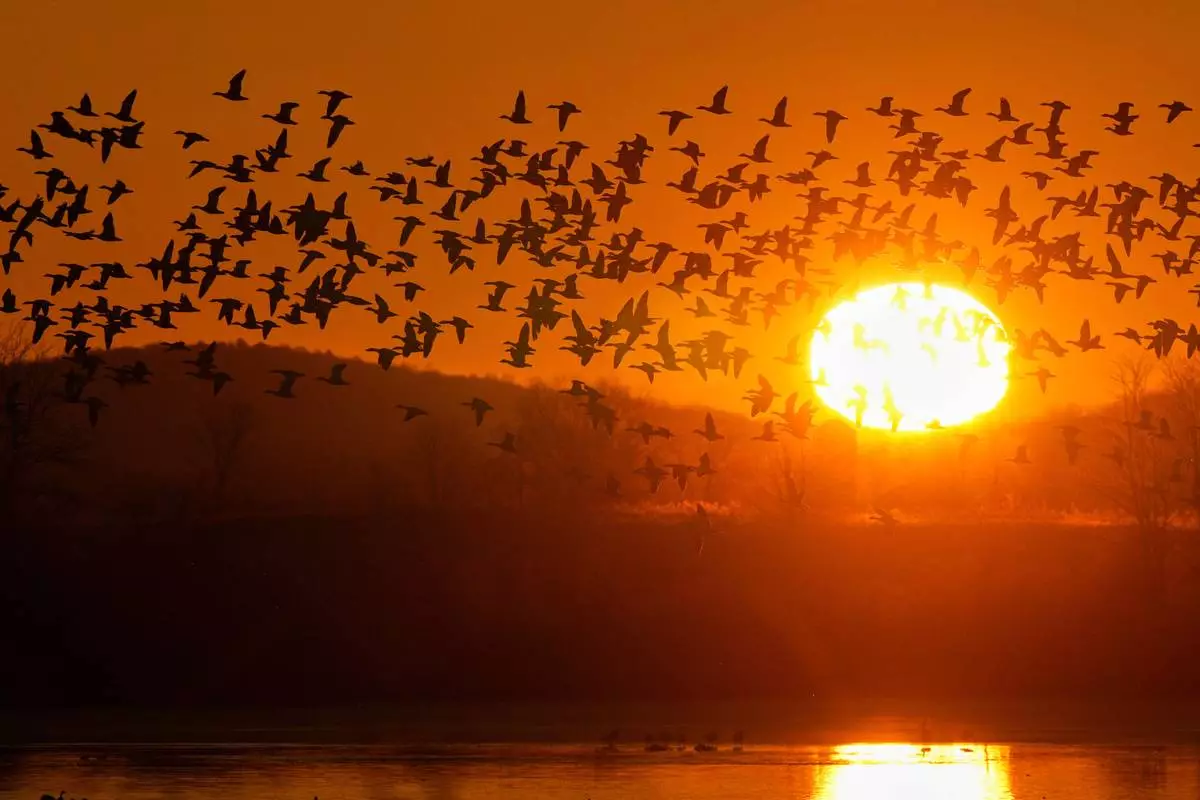
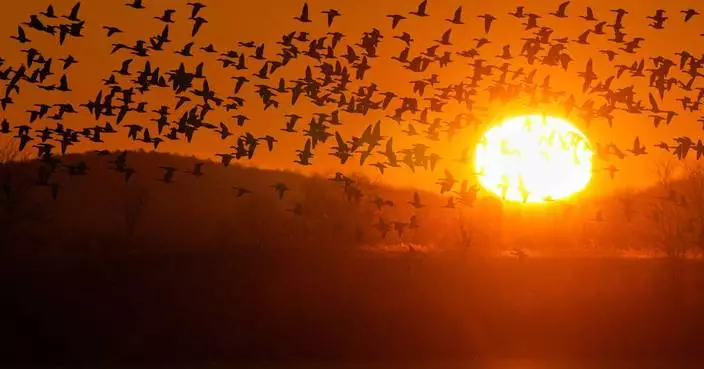
Snow geese take to the sky at sunrise after a stopover at the Middle Creek Wildlife Management Area, Monday, March 9, 2026, in Kleinfeltersville, Pa. (AP Photo/Robert F. Bukaty)
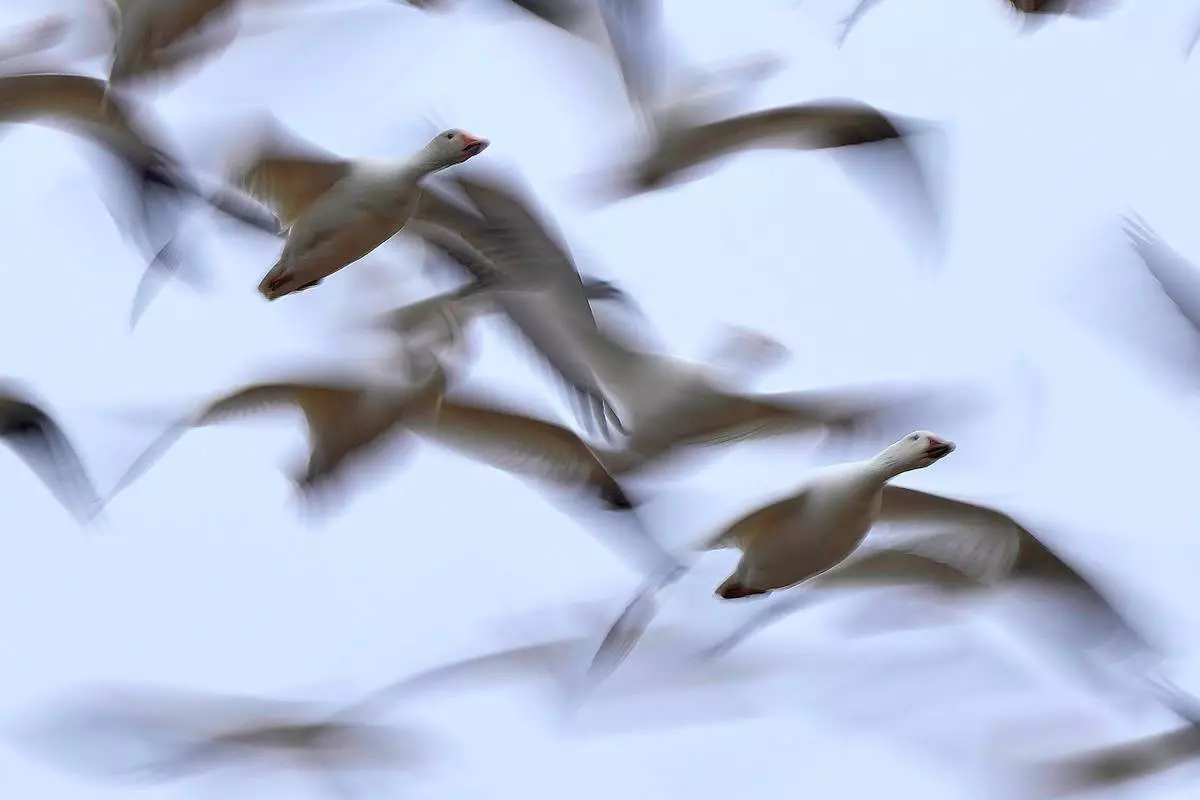
Snow geese resume their annual northern migration after a stopover at the Middle Creek Wildlife Management Area, Friday, March 6, 2026, in Kleinfeltersville, Pa. (AP Photo/Robert F. Bukaty)
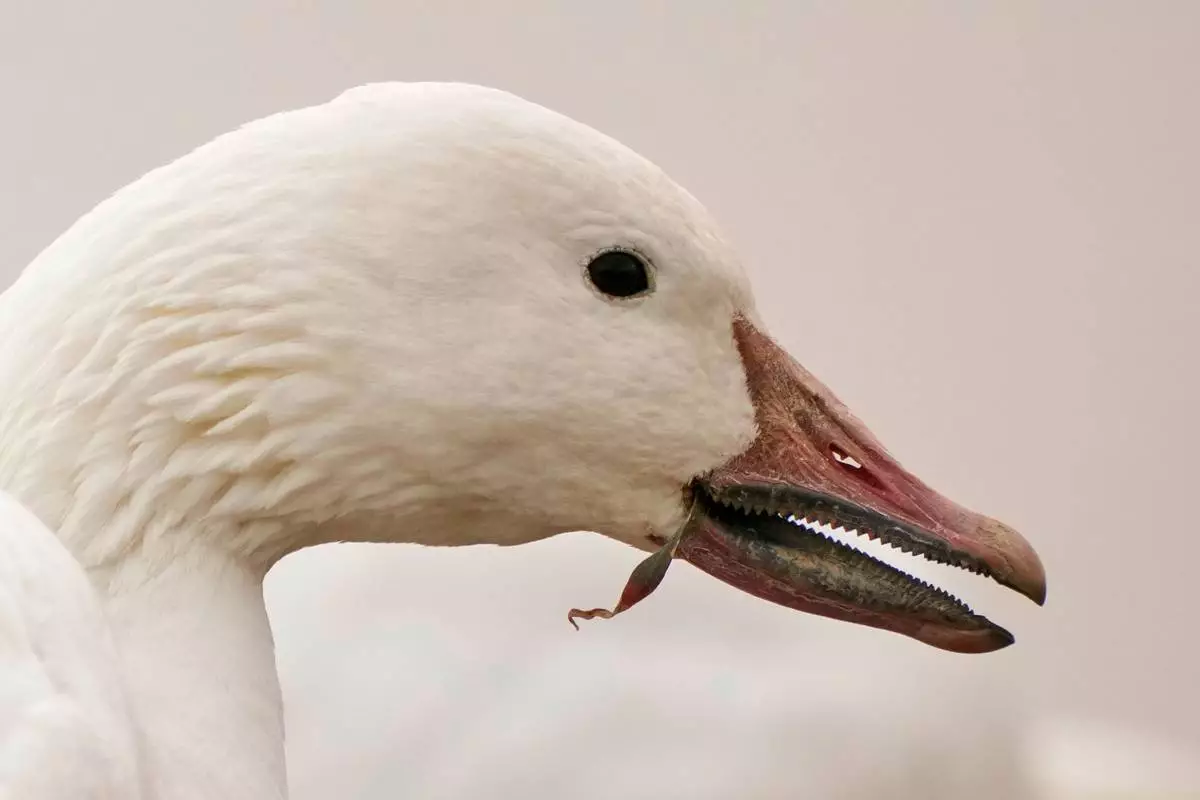
The serrated edges of a snow goose's bill helps it grip the plants it eats, near the Middle Creek Wildlife Management Area, Sunday, March 8, 2026, in Kleinfeltersville, Pa. (AP Photo/Robert F. Bukaty)
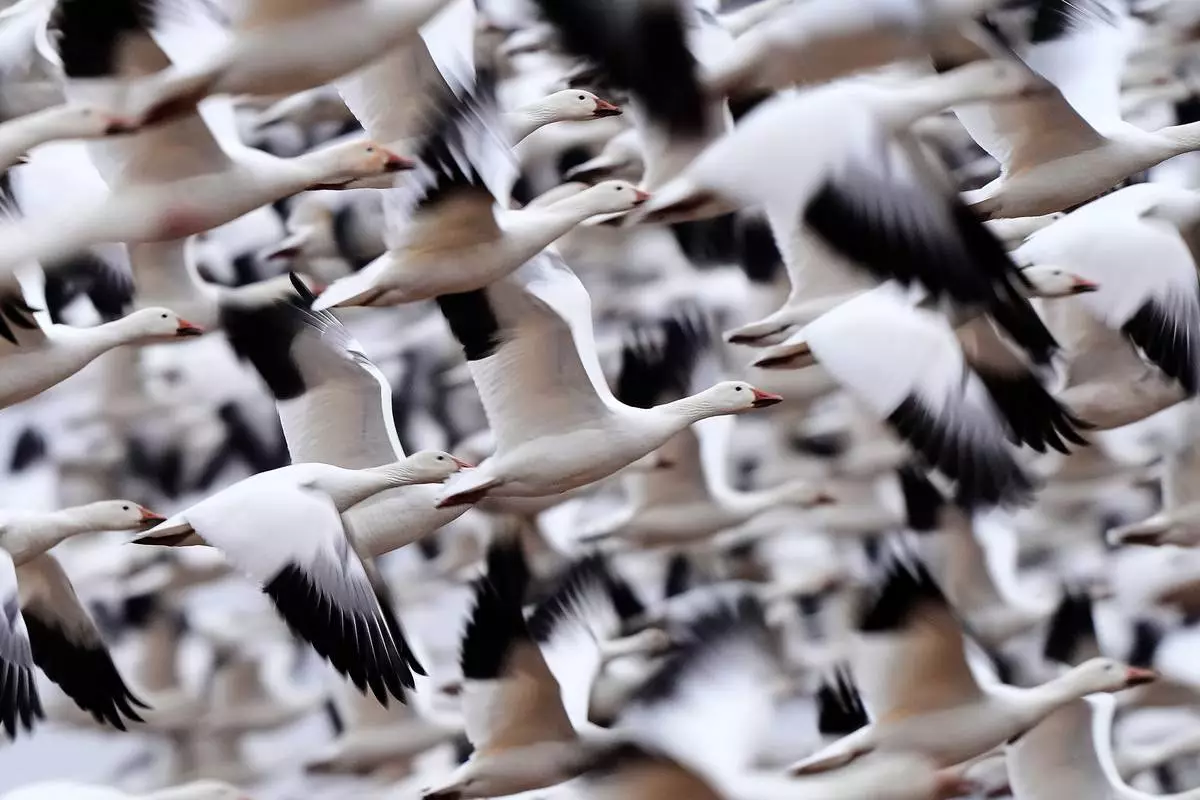
Snow geese take off to resume their northern migration after a stopover at the Middle Creek Wildlife Management Area, Friday, March 6, 2026, in Kleinfeltersville, Pa. (AP Photo/Robert F. Bukaty)