Skip to Content Facebook Feature Image

Brazil's telenovela industry is the secret agent behind powerful films at the Oscars

ENT

Brazil's telenovela industry is the secret agent behind powerful films at the Oscars
ENT

ENT

Brazil's telenovela industry is the secret agent behind powerful films at the Oscars

2026-03-14 06:20 Last Updated At:12:32

RIO DE JANEIRO (AP) — Hollywood actors might rule the silver screen — as Sunday’s Academy Awards are poised to prove — but Brazil’s path to stardom often starts under the bright lights of a TV studio rather than a sprawling movie set.

Since at least the 1960s, the telenovelas, Latin American TV series often compared to soap operas, produced by Brazil's leading broadcaster TV Globo have evolved from simple daily dramas into a multi-million-dollar industry with 13 studios, three set towns, 122 edit bays and reaching up to 60 million of Brazil's 213 million people every week.

More Images
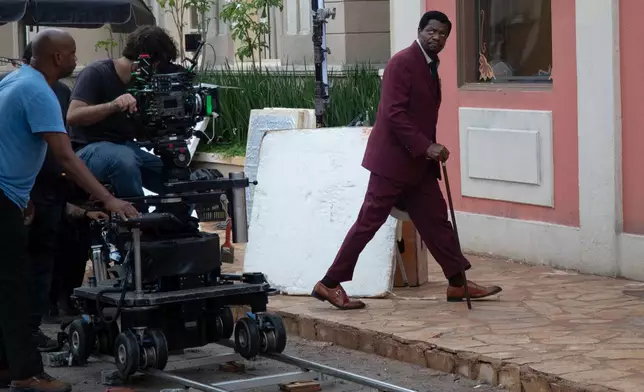
Actor Bukassa Kabengele, right, takes part in the filming of the soap opera "A Nobreza do Amor" at a TV Globo set in Rio de Janeiro, Thursday, March 12, 2026. (AP Photo/Bruna Prado)

Actor Bukassa Kabengele, right, takes part in the filming of the soap opera "A Nobreza do Amor" at a TV Globo set in Rio de Janeiro, Thursday, March 12, 2026. (AP Photo/Bruna Prado)

Actors Alana Cabral, behind left, Dira Paes, center, Sophie Charlotte, behind right, and Paulo Mendes, behind everyone, take part in the filming of the soap opera "Três Garças" at a TV Globo set in Rio de Janeiro, Thursday, March 12, 2026. (AP Photo/Bruna Prado)

Actors Alana Cabral, behind left, Dira Paes, center, Sophie Charlotte, behind right, and Paulo Mendes, behind everyone, take part in the filming of the soap opera "Três Garças" at a TV Globo set in Rio de Janeiro, Thursday, March 12, 2026. (AP Photo/Bruna Prado)

Brazilian actor Dira Paes smiles before an interview at the TV Globo studio in Rio de Janeiro, Thursday, March 12, 2026. (AP Photo/Bruna Prado)

Brazilian actor Dira Paes smiles before an interview at the TV Globo studio in Rio de Janeiro, Thursday, March 12, 2026. (AP Photo/Bruna Prado)

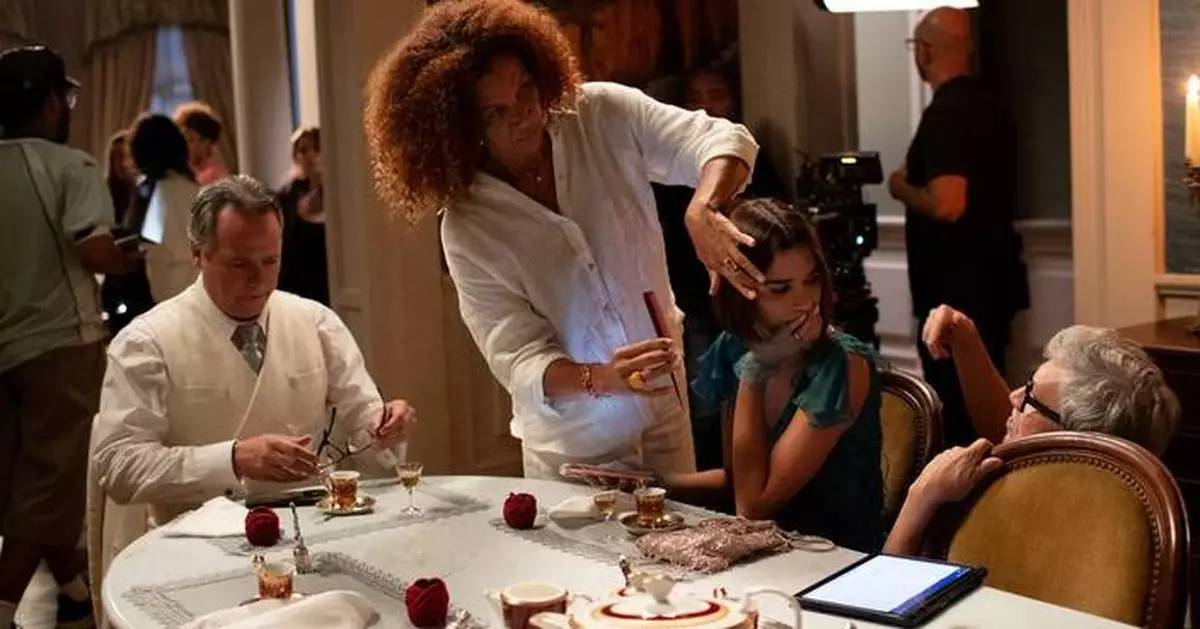
Actors film a scene of the soap opera "A Nobreza do Amor," at a TV Globo set in Rio de Janeiro, Thursday, March 12, 2026. (AP Photo/Bruna Prado)
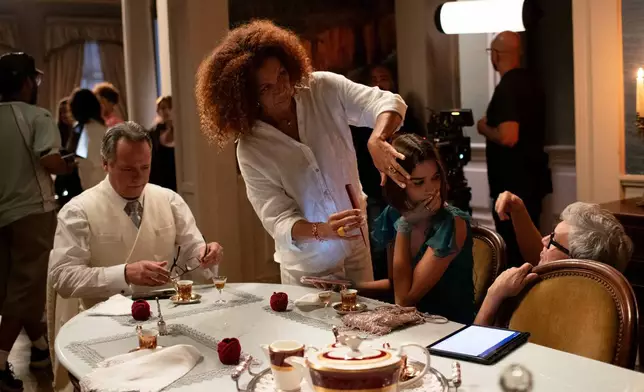
Actors film a scene of the soap opera "A Nobreza do Amor," at a TV Globo set in Rio de Janeiro, Thursday, March 12, 2026. (AP Photo/Bruna Prado)

Actors Danton Mello, left, and Theresa Fonseca, second from right, prepare to film a scene of the soap opera "A Nobreza do Amor," at a TV Globo set in Rio de Janeiro, Thursday, March 12, 2026. (AP Photo/Bruna Prado)

Actors Danton Mello, left, and Theresa Fonseca, second from right, prepare to film a scene of the soap opera "A Nobreza do Amor," at a TV Globo set in Rio de Janeiro, Thursday, March 12, 2026. (AP Photo/Bruna Prado)

Many Brazilian actors associated with Oscar-contending films — such as “Central Station” (1998), “I’m Still Here” (2024) and this year’s four-category nominee “The Secret Agent” — first became household names via TV Globo. Actors like Wagner Moura and Fernanda Torres gained broad national visibility through telenovelas.

In contrast, Brazil only has about 3,500 movie theaters, mostly located in major cities and where U.S. blockbusters feature prominently. This creates an ecosystem where success on TV may lead to big cinema roles, which then circle back to popular telenovelas, and then on to movies again.

Moura, the lead actor in “The Secret Agent," starred in the telenovela “A Lua Me Disse” (The Moon told Me) 21 years ago. Similarly, Fernanda Torres, the star of “I’m Still Here,” which won Brazil’s first best international feature Oscar, was already a beloved actor due to two major TV Globo comedic series that many in the public see as telenovelas.

“Globo’s telenovelas are key for Brazil’s audiovisual production," said Amauri Soares, director of TV Globo and Globo Studios, hailing them as “a continuous platform of creation and production of content.”

"‘The Secret Agent’ has actors and staffers who worked at Globo, who will work at Globo again and the film itself has Globo investment despite being independent,” Soares said.

TV Globo broadcasts three telenovelas simultaneously from early evening to prime-time. They are produced at studios in Rio de Janeiro and often run for six months from Mondays to Saturdays, involving more than 1,000 people. A finale can turn into a national viewing event, with bars, restaurants and gyms airing main episodes.

The industry requires adaptability. With some episodes written only days in advance based on audience ratings, telenovelas allow viewers to indirectly co-create the narrative. And their economic impact is powerful: a remake of the hit “Vale Tudo” (Anything Goes) reportedly generated over 200 million reais ($38 million) in advertising — fourfold the global box office of “The Secret Agent.”

Each year, TV Globo recruits up to 70 new actors from theater, film and regional productions. Soares says they hone their skills with high-end equipment and new techniques for a year. Then many leave for other productions, some just stay at the broadcaster for more short series.

Dira Paes, a veteran actor and one of TV Globo’s frequent pundits during Oscars’ night, notes that Brazil’s telenovelas and cinema industries are increasingly intertwined, as professionals can move from one to the other to create and also make more money. She was recently in another popular series,“Pantanal” (Wetlands), and in “Manas,” a film praised by Julia Roberts and Sean Penn.

“Telenovelas are not only about ratings, but also heart and affection. When you do it on prime-time, you experience the power of an entire nation watching you. When the public loves your character ... it is a very special popularity,” said Paes, the star of “Tres Gracas” (Three Gracas), a show filmed in Rio but set in an impoverished area of Sao Paulo.

Mauricio Stycer, an author and critic of TV culture, says Brazil's inequality boosted free TV channels like Globo in a way that reduced the general public's interest in cinema. Ultimately, he argues, that led to “Brazilian cinema holding a grudge for not having the same reach of telenovelas.”

Stycer added that many actors have a Hamletian dilemma whenever recruited for a telenovela.

“To be popular and have a sure income every month or to take risks in a career that involves theater and cinema? TV was always a safe haven for most actors,” he said.

While rival Brazilian TV networks have tried to challenge Globo’s supremacy in the genre, few have achieved success. But even TV Globo productions are no longer as dominant as they were up until the early 2010s. And company executives have acknowledged they face growing competition from streaming video.

Even so, “Globo is still Brazil’s biggest company for actors,” Stycer said. “Up until the year 2000, Globo alone was responsible for about 50% of TV ratings in Brazil."

Actor and director Lázaro Ramos first appeared in telenovelas after he had kicked off his career in theater and cinema. He says Brazilians have learned to love both telenovelas and films with the same intensity when they succeed in portraying the country’s joyful and sometimes dark personality.

“Brazilians see themselves in telenovelas, more and more. Our acclaimed writers created many of them based on literature classics,” Ramos said. “They are an investment in a national voice through characters, language and esthetics that viewers greatly identify with."

Ramos — a lifelong friend of Moura — will attend the Academy Awards but will fly back to Brazil soon after to continue working on his new show, “A Nobreza do Amor” (Love's Nobility).

For him, the ability to transition between theater, cinema and TV is what keeps Brazilian performers afloat.

“An American actor could get $10 million for a film. That’s not the Brazilian reality,” he said. “But telenovelas are not a lesser product; they are a product of the highest quality.”

Savarese reported from Sao Paulo.

Actor Bukassa Kabengele, right, takes part in the filming of the soap opera "A Nobreza do Amor" at a TV Globo set in Rio de Janeiro, Thursday, March 12, 2026. (AP Photo/Bruna Prado)

Actor Bukassa Kabengele, right, takes part in the filming of the soap opera "A Nobreza do Amor" at a TV Globo set in Rio de Janeiro, Thursday, March 12, 2026. (AP Photo/Bruna Prado)

Actors Alana Cabral, behind left, Dira Paes, center, Sophie Charlotte, behind right, and Paulo Mendes, behind everyone, take part in the filming of the soap opera "Três Garças" at a TV Globo set in Rio de Janeiro, Thursday, March 12, 2026. (AP Photo/Bruna Prado)

Actors Alana Cabral, behind left, Dira Paes, center, Sophie Charlotte, behind right, and Paulo Mendes, behind everyone, take part in the filming of the soap opera "Três Garças" at a TV Globo set in Rio de Janeiro, Thursday, March 12, 2026. (AP Photo/Bruna Prado)

Brazilian actor Dira Paes smiles before an interview at the TV Globo studio in Rio de Janeiro, Thursday, March 12, 2026. (AP Photo/Bruna Prado)

Brazilian actor Dira Paes smiles before an interview at the TV Globo studio in Rio de Janeiro, Thursday, March 12, 2026. (AP Photo/Bruna Prado)

Actors film a scene of the soap opera "A Nobreza do Amor," at a TV Globo set in Rio de Janeiro, Thursday, March 12, 2026. (AP Photo/Bruna Prado)
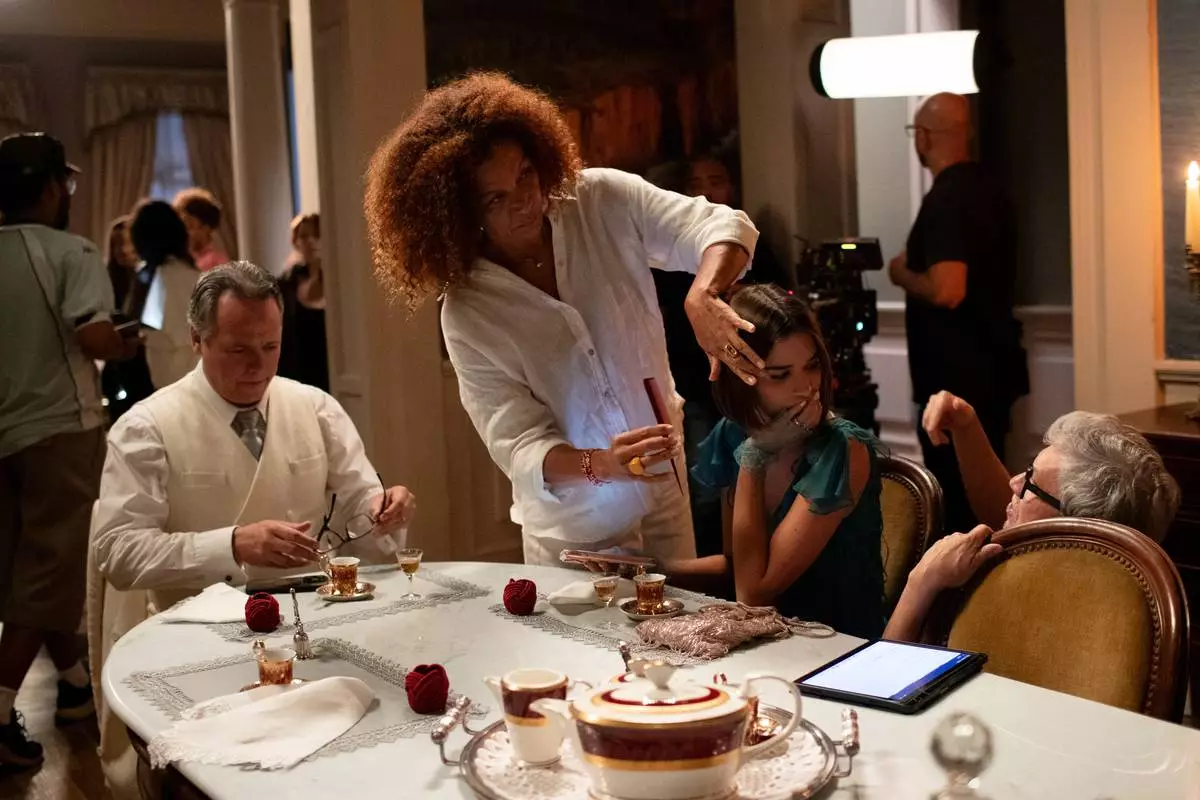
Actors film a scene of the soap opera "A Nobreza do Amor," at a TV Globo set in Rio de Janeiro, Thursday, March 12, 2026. (AP Photo/Bruna Prado)


Actors Danton Mello, left, and Theresa Fonseca, second from right, prepare to film a scene of the soap opera "A Nobreza do Amor," at a TV Globo set in Rio de Janeiro, Thursday, March 12, 2026. (AP Photo/Bruna Prado)

Actors Danton Mello, left, and Theresa Fonseca, second from right, prepare to film a scene of the soap opera "A Nobreza do Amor," at a TV Globo set in Rio de Janeiro, Thursday, March 12, 2026. (AP Photo/Bruna Prado)

WASHINGTON (AP) — Anti-Muslim rhetoric from some Republicans in Congress intensified this week against the backdrop of the Iran war, with multiple lawmakers — including one who said “Muslims don’t belong in American society” — drawing condemnation from Democrats for their remarks but little pushback from GOP leaders.

The derogatory language has been percolating among Republican officials for months, often prominent when criticizing New York Mayor Zohran Mamdani, who is Muslim. But against the backdrop of the Iran war, a country with an overwhelmingly Muslim population, and attacks at a synagogue in Michigan and a college in Virginia, the tone sharpened this week.

“The enemy is inside our gates,” Alabama Sen. Tommy Tuberville wrote Thursday in response to a photo of Mamdani sitting on the ground during an iftar dinner at New York City Hall. The photo was juxtaposed with a picture of the Sept. 11 attacks.

Hours later, Tuberville doubled down: “To be clear, I didn’t ‘suggest’ Islamists are the enemy. I said it plainly.”

The rhetoric intensified Friday as GOP lawmakers responded to the attacks in Michigan and Virginia by urging a halt to all immigration into the United States. Some singled out Muslims specifically.

For many Muslims, it's a political moment that carries echoes from the early 2000s, when the 9/11 attacks and the Afghanistan and Iraq wars generated hostility toward Muslim communities in the United States, often accompanied by discrimination and racist violence.

“When members of Congress speak, it’s not just words,” said Iman Awad, the national director for policy and advocacy for the Muslim American advocacy group Emgage Action. “It shapes public perception. It legitimizes prejudice.”

Tennessee Rep. Andy Ogles in his social media post stated flatly that Muslims don't belong in the United States. He stood behind it after criticism mounted, later writing that “paperwork doesn’t magically make you American” and that “Muslims are unable to assimilate; they all have to go back.”

Asked about Ogles’ post on Tuesday, House Speaker Mike Johnson said he had spoken to members “about our tone and our message and what we say.” He said Ogles used “different language than I would use,” but added that he believes the issue raised by the comments is “serious.”

“There’s a lot of energy in the country, and a lot of popular sentiment that the demand to impose Sharia law in America is a serious problem," Johnson said. "That’s what animates this.”

Sharia is a religious framework that guides many Muslims’ moral and spiritual conduct. References to “Sharia law” have often been invoked by officials to suggest Muslims are attempting to impose religious practices on communities in the United States.

Many Republicans point to a Muslim-centered planned community near Dallas as proof of “Sharia law” — though the developers have denied the allegations and said they are being targeted because they are Muslim.

With Johnson not condemning Ogles’ remarks — or to recent comments from Florida Rep. Randy Fine that “the choice between dogs and Muslims is not a difficult one” — the anti-Muslim rhetoric grew louder. After the photo circulated of Mamdani at the iftar dinner, several Republicans responded with critical posts.

Democrats broadly condemned the GOP messages. Chuck Schumer, the leader of Senate Democrats, called Tuberville's post “mindless hate.”

“Islamophobic hate like this is fundamentally un-American and we must confront and overcome it whenever it rears its ugly head,” Schumer said.

Mamdani — in response to Tuberville's post that “the enemy is inside our gates" — said: "Let there be as much outrage from politicians in Washington when kids go hungry as there is when I break bread with New Yorkers.”

Federal officials identified a man who rammed his vehicle into a hallway at Temple Israel in West Bloomfield Township, Michigan, this week as a naturalized citizen born in Lebanon. Officials have said that the man had lost four family members in an Israeli airstrike in his native Lebanon last week, just after sunset as they were having their fast-breaking meal during the Muslim holy month of Ramadan

In Virginia, Mohamed Bailor Jalloh opened fire in a classroom at Old Dominion University before ROTC students subdued and killed him. Court documents showed that he had previously served time for attempting to aid the Islamic State and was released less than two years ago.

Some Republican lawmakers claimed vindication for their views. Others pushed for legislation. Minnesota Rep. Tom Emmer, the House GOP’s whip, said “the security of our nation hinges on our ability to denaturalize and deport terrorists.”

West Virginia Rep. Riley Moore said he would introduce a bill to denaturalize and deport any naturalized citizen who “commits an act of terrorism, plots to commit an act of terrorism, joins a terrorist organization or otherwise aids and abets terrorism against the American people.”

Similar rhetoric and policy pushes have surfaced before and drawn controversy. Last year, protesters connected to demonstrations over the Israel-Hamas war were arrested and targeted by authorities, including former Columbia University graduate student Mahmoud Khalil, a Palestinian activist the government has sought to detain and deport.

Middle East conflicts bringing domestic tensions is nothing new. With the war in Gaza, both Muslim and Jewish communities have faced faith-based discrimination and attacks.

Mamdani said the posts invoking the 9/11 attacks are problematic not just because of the words, but because of "the actions that often accompany them.”

“I think too of the smaller indignities, the indignities that many New Yorkers face, but that Muslims are expected to face in silence,” Mamdani said. “Of the exhaustion of having to explain yourself to those who are not interested in understanding. Of the men who introduce themselves by their given name only to be called Muhammad for years on end.”

The stark silence from Republican leaders, including President Donald Trump, reflects a broader change in the party. After the Sept. 11 attacks in 2001, Republican President George W. Bush visited the Islamic Center of Washington, D.C., to explicitly warn against Muslim discrimination.

“America counts millions of Muslims amongst our citizens, and Muslims make an incredibly valuable contribution to our country,” Bush said during the visit, adding: “They need to be treated with respect. In our anger and emotion, our fellow Americans must treat each other with respect.”

“Those who feel like they can intimidate our fellow citizens to take out their anger don’t represent the best of America, they represent the worst of humankind, and they should be ashamed of that kind of behavior,” Bush said.

New York City Mayor Zohran Mamdani speaks during a Rental Ripoff Hearing at Fordham University on Wednesday, March 11, 2026, in New York. (AP Photo/Andres Kudacki)

New York City Mayor Zohran Mamdani speaks during a Rental Ripoff Hearing at Fordham University on Wednesday, March 11, 2026, in New York. (AP Photo/Andres Kudacki)

Police tape hangs outside the Temple Israel synagogue Friday, March 13, 2026, in West Bloomfield Township, Mich. (AP Photo/Paul Sancya)

Police tape hangs outside the Temple Israel synagogue Friday, March 13, 2026, in West Bloomfield Township, Mich. (AP Photo/Paul Sancya)

FILE - Rep. Andy Ogles, R-Tenn., arrives for a meeting with Speaker of the House Mike Johnson, R-La., at the Capitol in Washington, Dec. 20, 2024. (AP Photo/J. Scott Applewhite, File)

FILE - Rep. Andy Ogles, R-Tenn., arrives for a meeting with Speaker of the House Mike Johnson, R-La., at the Capitol in Washington, Dec. 20, 2024. (AP Photo/J. Scott Applewhite, File)

FILE - The U.S. Capitol is seen at sunrise March 9, 2026, in Washington. (AP Photo/Jose Luis Magana, File)

FILE - The U.S. Capitol is seen at sunrise March 9, 2026, in Washington. (AP Photo/Jose Luis Magana, File)

Recommended Articles